
 ISO 9001:2015 & QCI Approved
STP and ETP Plants Manufacturers in Saharanpur
Trity Environ Solutions manufactures STP and ETP plants for Saharanpur's wood carving units, paper mills, and sugar industry. UPPCB-compliant engineering for a water-stressed district. Get a free quote.
SPCB / CPCB Norm Compliant
Heavy Fabrication
STP and ETP Plant Manufacturer for Saharanpur's Craft and Industrial Base
Saharanpur is known globally as India's woodcraft capital, home to roughly 50,000 artisans producing the carved jaali screens and vine-leaf patterned furniture the district has exported for over a century. Less visible is that Saharanpur is also officially listed among Uttar Pradesh's most water-stressed districts, a result of decades of groundwater over-extraction and surface water contamination, and a 2020 National Mission for Clean Ganga report found the city's sewerage network only partially developed. A study on the Star Paper Mill, one of India's oldest and largest, found that undiluted effluent released into the River Hindon caused complete fish mortality in testing, a reminder of what happens when a real industrial base sits on a seasonal, low-flow river with limited dilution capacity.
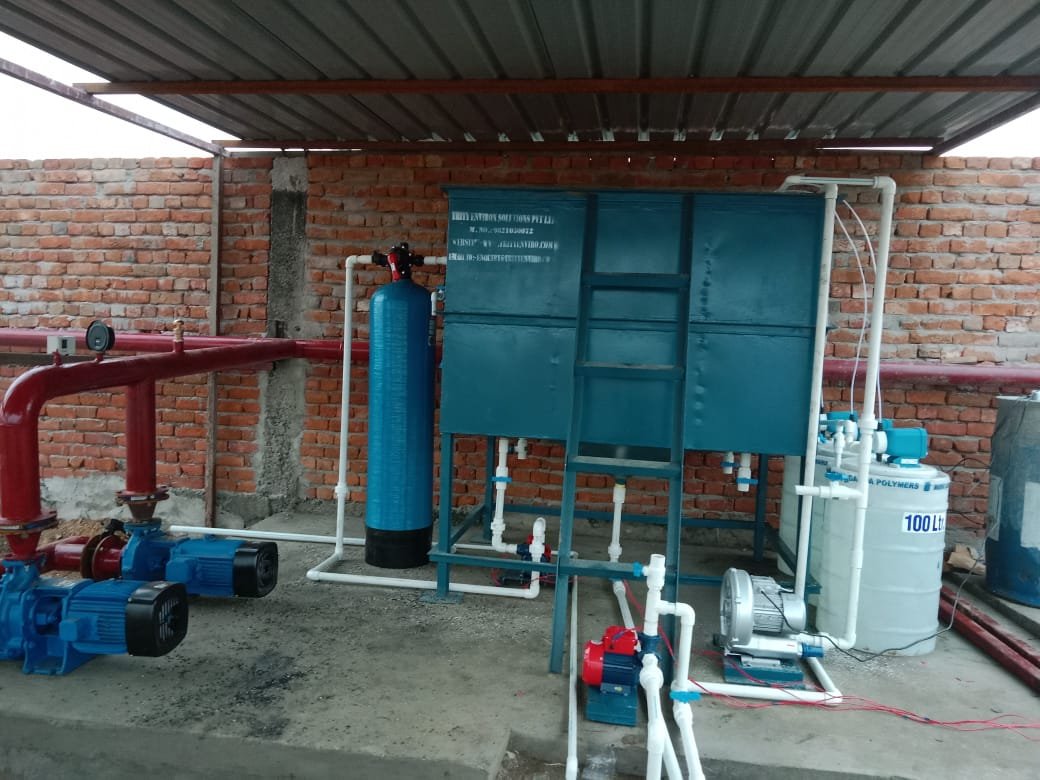
Trity Environ Solutions manufactures Sewage Treatment Plant (STP) and Effluent Treatment Plant (ETP) systems for Saharanpur built around this exact combination of craft-sector demand, heavy industry, and water scarcity. As a trusted Sewage Treatment Plant Manufacturer in Saharanpur and Effluent Treatment Plant Manufacturer in Saharanpur, we also serve as a reliable Wastewater Treatment Plant Manufacturer in Saharanpur for the district's institutions, residential developments, and small commercial operations.
STP Plant Manufacturing for Saharanpur's Institutions and Residential Sites
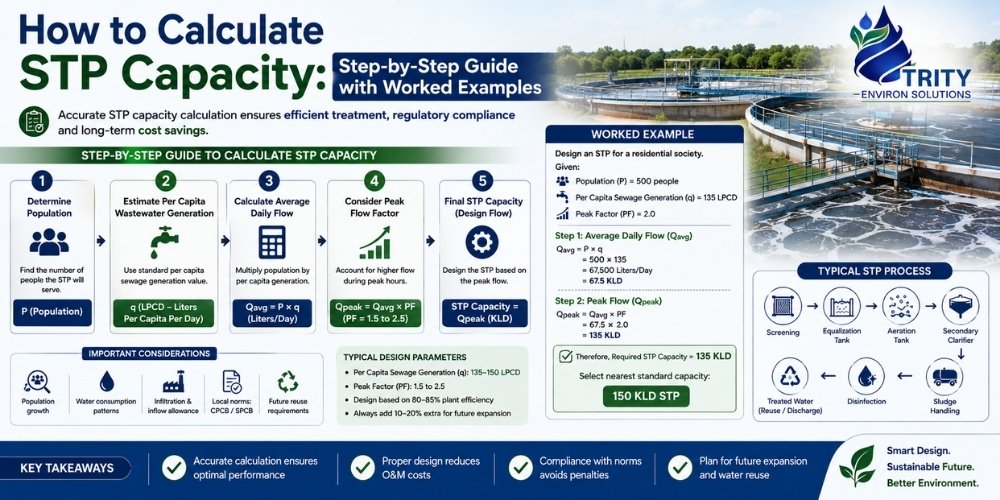
As a leading STP Plant Manufacturer in Saharanpur, we build systems for the city's hospitals, educational institutions, and growing residential developments. A properly designed STP runs through three stages: preliminary treatment to remove physical solids and debris, secondary treatment using biological processes such as MBBR or SBR to break down organic load, and tertiary treatment for disinfection before the water is reused or discharged. Given how water-stressed the district already is, we design every STP with reuse in mind by default, treated water for gardening, flushing, or cooling rather than a one-way discharge.
With the city's own sewerage network still only partially developed according to recent NMCG reporting, many institutions and residential developments here need a fully standalone STP rather than a supplement to municipal infrastructure that hasn't reached them yet.
ETP Plant Solutions for Saharanpur's Paper, Sugar, and Craft Industries
Saharanpur's industrial base is genuinely varied, and as a trusted ETP Plant Manufacturer in Saharanpur, our Effluent Treatment Plant (ETP) systems are built around that variety rather than a single generic design:
- Paper mills: effluent carrying chlorinated lignins, chlorides, and heavy suspended solids from the pulping process, needing dedicated chemical treatment before any biological stage
- Sugar mills: classified red category under India's pollution index, meaning UPPCB inspects these units monthly and requires continuous ETP outlet monitoring linked directly to state and central pollution boards
- Wood carving and finishing units: wastewater from staining, polishing, and surface-treatment processes carrying organic solvents and fine particulate matter
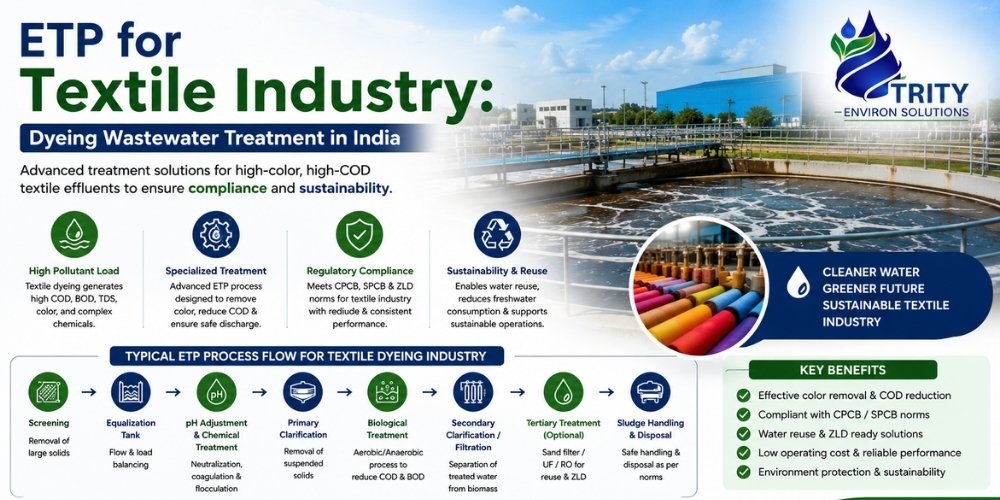
- Hosiery and textile units: dye and chemical-laden effluent from the district's roughly 1,000 micro and small units
- Tobacco and cigarette manufacturing: process wastewater requiring standard physical-chemical-biological treatment
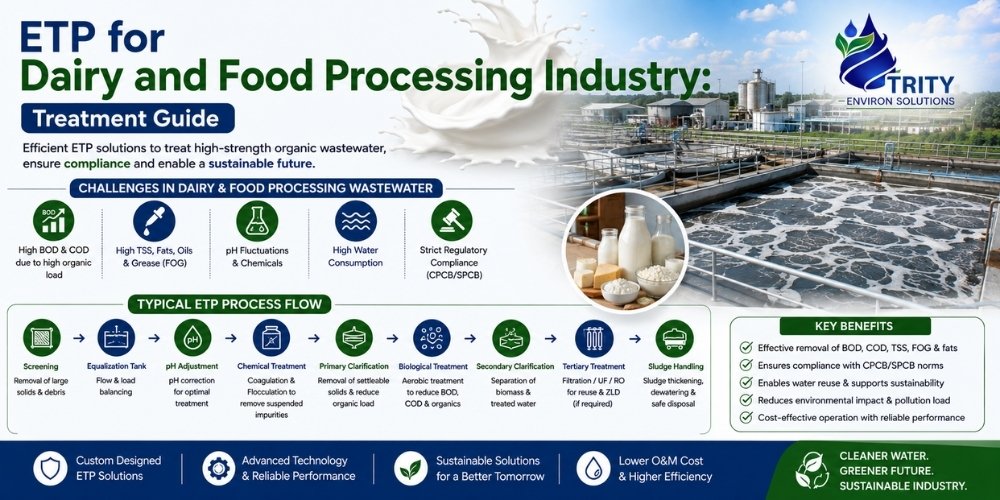
Our ETPs run through physical treatment to remove suspended solids, chemical treatment using coagulation and flocculation for dissolved contaminants, and biological treatment to reduce organic load before discharge, with the exact configuration built around whichever of these effluent profiles applies to your site.
Turnkey Execution: Design to Commissioning
Our scope on Saharanpur projects typically covers:
- Site assessment and effluent or sewage characterisation
- Process design suited to your specific industry, from paper and sugar to wood carving finishing
- Civil and structural coordination with your contractor
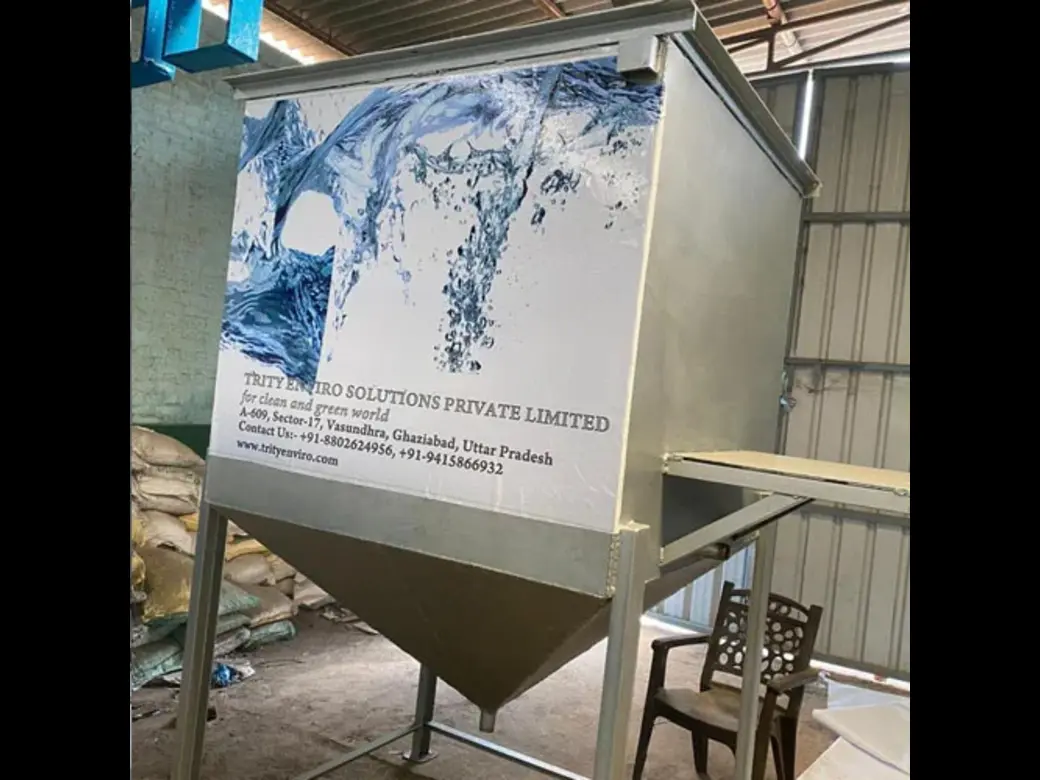
- Equipment manufacturing at our own facility
- Installation, piping, and electrical integration
- Trial runs, commissioning, and UPPCB documentation support, including continuous monitoring integration for red-category industries
- Annual Maintenance Contracts (AMC) after commissioning
Given how strictly UPPCB monitors red-category units like sugar mills here, with monthly inspections and continuous data feeds to state and central boards, we build in margin above minimum discharge limits rather than designing to the exact figure, since inspection frequency in this district leaves little room for a plant that only just scrapes by.
Capacity Options We Manufacture
| Plant Type | Capacity Range | Typical Application in Saharanpur |
|---|---|---|
| STP | 1 KLD to 300 KLD, modular for larger sites | Hospitals, institutions, residential developments |
| ETP | 5 KLD to 2 MLD+ | Paper mills, sugar mills, textile and hosiery units |
| Craft-sector ETP | Custom-engineered | Wood finishing, staining, and polishing wastewater |
Treatment Technologies We Deploy
UPPCB and CPCB recognise several treatment technologies, and we manufacture across the ones best suited to Saharanpur's specific mix:
- MBBR (Moving Bed Biofilm Reactor): compact footprint, effective for institutional and residential sewage loads
- SBR (Sequencing Batch Reactor): suited to larger sugar and paper mill sewage-adjacent flows
- Chemical precipitation and coagulation: essential for paper mill lignin and chloride removal, and for dye-heavy textile effluent
- Extended Aeration: cost-effective for smaller residential or institutional setups
Given how many of the district's industries fall under stricter monitoring categories, technology selection here directly affects how consistently a plant clears UPPCB's ongoing inspection cycle, not just the initial commissioning test.
Industries and Institutions We Serve in Saharanpur
- Wood carving and handicraft export units: a defining industry for the district, needing dedicated treatment for finishing-process wastewater
- Paper mills: effluent requiring dedicated chemical treatment for lignin and chloride content
- Sugar mills: red-category industries under continuous UPPCB monitoring
- Textile and hosiery manufacturing: dye-heavy effluent from the district's micro and small unit cluster
- Hospitals and educational institutions: dedicated STP systems with disinfection stages
- Residential developments: STP systems designed for reuse given the district's water stress
UPPCB Compliance and Discharge Norms
Every plant we design for Saharanpur is built to clear these baseline requirements:
- BOD: at or below 10 mg/L for reuse-grade discharge, tighter than the older 30 mg/L benchmark still cited in some general guidance
- COD: typically capped around 50 mg/L
- TSS: 10 to 20 mg/L depending on intended reuse
- Mandatory Consent to Establish (CTE) and Consent to Operate (CTO) from UPPCB before any discharge
- Monthly inspection and continuous ETP outlet monitoring for red-category industries including sugar mills
Given the district's status as one of UP's most water-stressed, and the low-flow, seasonal nature of the River Hindon that receives much of the area's industrial discharge, we treat reuse-oriented design as standard rather than optional wherever it's feasible.
Engineering Considerations Specific to Saharanpur
A few conditions specific to this district shape how we design differently here.
Water scarcity makes reuse a practical necessity, not just good practice. With groundwater already over-extracted and the district officially flagged as water-stressed, treated water reused for flushing, gardening, or process use directly reduces pressure on a resource that's already under strain.
The Hindon's seasonal low flow limits dilution capacity. Effluent that might disperse relatively harmlessly into a larger, faster river can concentrate to dangerous levels in a seasonal stream like the Hindon, which is part of why paper mill and sugar mill effluent here needs treatment closer to reuse-grade than bare discharge-grade.
Red-category industries face inspection frequency most towns don't. Monthly UPPCB visits and continuous online monitoring for sugar mills mean a plant with inconsistent performance gets caught quickly, unlike districts with less intensive inspection cycles.
Craft-sector wastewater doesn't fit a standard industrial template. Wood finishing effluent, carrying solvents, stains, and fine particulates rather than heavy metals or high BOD, needs a treatment approach distinct from what a paper or sugar mill requires, even though all three sit within the same district.
Areas We Cover Across Saharanpur
We supply, install, and service STP and ETP systems across Saharanpur city and district, including areas with concentrated wood carving and handicraft activity, and the wider paper and sugar mill industrial belt.
Why Saharanpur Projects Choose Trity Environ Solutions
Most manufacturers covering Saharanpur run a generic Uttar Pradesh template without engaging with what actually makes this district distinct, a globally recognised craft economy sitting alongside heavy paper and sugar milling, all of it operating in one of the state's most water-stressed districts.
We design ETPs around each industry's actual effluent profile rather than a one-size-fits-all approach, and we build reuse into STP design by default given how much water stress the district already faces. For a place where a paper mill and a woodcraft workshop might sit a few kilometres apart with completely different treatment needs, that specificity matters.
Quality, Certification, and After-Sales Support
Trity Environ Solutions is ISO 9001:2015 certified, and every plant we manufacture goes through in-house quality inspection before dispatch. After installation, we provide AMC support, spare parts availability, and remote troubleshooting. You can review our project history on our Achievement page, or read more about our full Services.
Frequently Asked Questions
1. What is the cost of an STP or ETP plant in Saharanpur?
Cost depends on capacity, technology, and effluent characteristics. A paper mill's chemical-heavy ETP and a wood carving unit's finishing-wastewater system will differ significantly, since the treatment stages required are genuinely different. We provide a site-specific quote after reviewing your effluent profile.
2. Why does Saharanpur face stricter effluent scrutiny for sugar mills specifically?
Sugar mills are classified red category under India's pollution index system, which means UPPCB inspects them monthly and requires continuous online monitoring of ETP outlet quality, linked directly to state and central pollution boards.
3. Does wood carving and finishing work really need an ETP?
Yes. Staining, polishing, and surface-treatment processes generate wastewater carrying organic solvents and fine particulate matter that needs treatment before discharge, even though the industry doesn't involve heavy metals the way paper or sugar processing does.
4. How long does the UPPCB Consent to Establish and Consent to Operate process take?
Timelines vary by project scale, but generally run 60 to 90 days once your site plan and treatment design are submitted. We assist with documentation to avoid delays.
5. Given how water-stressed Saharanpur is, is treated water reuse actually practical for a small business?
Yes, and increasingly necessary. Even a modest STP or ETP with a reuse-oriented design can meaningfully reduce a site's dependence on borewell or municipal water for non-drinking uses like cleaning, flushing, and gardening.
6. Can an older paper or sugar mill ETP be upgraded to meet current UPPCB monitoring requirements?
In many cases, yes. Adding continuous online monitoring integration and upgrading chemical treatment capacity can bring an older plant into compliance without a full rebuild. We assess this during site evaluation.
7. Do you service craft-sector export units as well as larger industrial clients?
Yes. We work with both large paper and sugar mills and smaller wood carving and handicraft export units, sizing systems appropriately for each rather than applying an industrial-scale design to a small workshop.
Ready to discuss your Saharanpur project? Get a free quote or explore our full product range for STP, ETP, and related water treatment systems.
WHY THIS SYSTEM?
Key Benefits of STP and ETP Plants Manufacturers in Saharanpur
Engineered for high biological efficiency, full environmental compliance, and low lifecycle operational costs.
100% CPCB / SPCB Compliance
Strict adherence to national and state pollution control board parameters for BOD, COD, TSS, and heavy metals discharge.
Low Power & Operational Cost
Optimized hydraulic design and energy-efficient aeration reduce kilowatt consumption per cubic meter of treated water.
Compact & Modular Footprint
Skid-mounted and modular civil layouts save valuable industrial floor space and allow seamless capacity expansion.
Automated PLC / SCADA Control
Real-time water quality monitoring, automated dosing systems, and remote telemetry for hassle-free plant operation.
Zero Liquid Discharge (ZLD) Ready
Seamless integration with downstream RO and evaporator systems for maximum water recycling and recovery.
Robust Engineering & Longevity
Heavy-gauge anti-corrosive construction ensures 15+ years of reliable, uninterrupted service life.
SYSTEM CONFIGURATIONS
Types of STP and ETP Plants Manufacturers in Saharanpur Configurations
Tailored industrial configurations matched to specific effluent composition, flow rates, and space constraints.
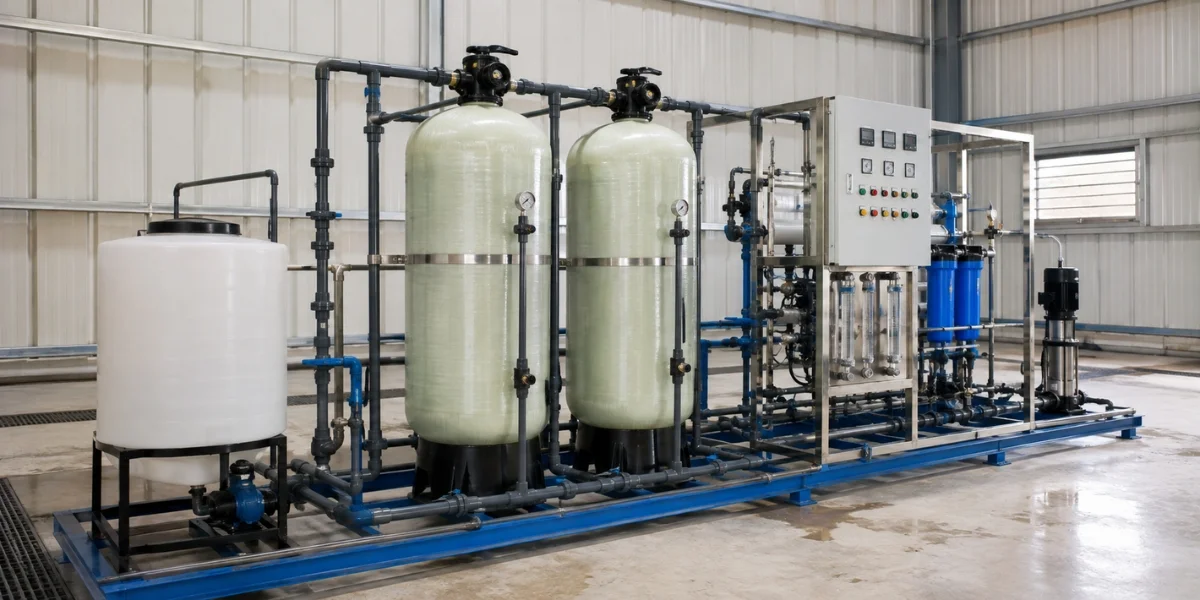
RO & Water Recycling Plant Manufacturer in India
Trity Environ Solutions manufactures RO and water recycling systems for industries and commercial facilities, engineered for reliable purity and reuse.
Explore Configuration
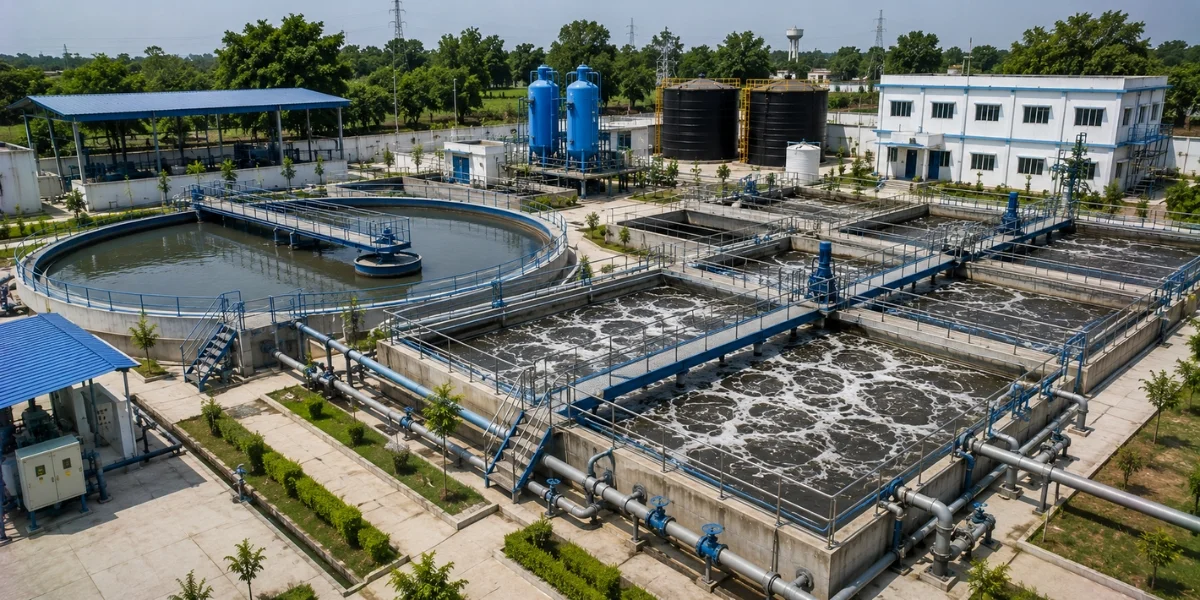
Tertiary Treatment Plant Manufacturer in India
Trity Environ Solutions manufactures tertiary treatment plants that polish treated water beyond secondary treatment, enabling genuine reuse and stricter discharge compliance.
Explore Configuration
Wastewater Recycling System Manufacturer in India
Trity Environ Solutions manufactures wastewater recycling systems using UF and RO technology, turning treated wastewater into reuse-grade water for cooling, flushing, and gardening.
Explore Configuration
STEP-BY-STEP WORKFLOW
How the STP and ETP Plants Manufacturers in Saharanpur Process Works
A sequential, multi-stage treatment methodology engineered for maximum contaminant removal and water recovery.
01
Primary Collection & Screening
Raw effluent equalization, coarse bar screening, and pH neutralization to stabilize influent parameters.
02
Physico-Chemical Coagulation
Flash mixing of coagulants and flocculants followed by primary clarifier separation for heavy suspended solids.
03
Advanced Biological Digestion
Aerobic/anaerobic microbial digestion (MBBR / SBR / ASP) for drastic reduction of dissolved BOD & COD.
04
Tertiary Polishing & Disinfection
Dual media sand and activated carbon filtration with UV/ozonation for clean, reusable output water.
CATALOGUE
Related Engineering Products
RO & Water Recycling Plant Manufacturer in India
Trity Environ Solutions manufactures RO and water recycling systems for industries and commercial facilities, engineered for reliable purity and reuse.
Tertiary Treatment Plant Manufacturer in India
Trity Environ Solutions manufactures tertiary treatment plants that polish treated water beyond secondary treatment, enabling genuine reuse and stricter discharge compliance.
Wastewater Recycling System Manufacturer in India
Trity Environ Solutions manufactures wastewater recycling systems using UF and RO technology, turning treated wastewater into reuse-grade water for cooling, flushing, and gardening.
PAN-INDIA CAPABILITIES
Regional Solutions & State Coverage
TECHNICAL KNOWLEDGE
Related Insights & Engineering Guides
PROVEN EXCELLENCE
Featured Turnkey Installations




Need a Custom Water or Wastewater Treatment Solution?
Our engineering team can help design the right system for your capacity, industry, and compliance requirements.