TRITY ENVIRO
WATER • WASTEWATER • RECYCLING

Frequently Asked Questions

Here we have answered the questions we hear most often from clients planning a Sewage Treatment Plant or Effluent Treatment Plant, covering topics like plant capacity, installation timelines, maintenance costs, and pollution control board compliance. If you don't find the answer you're looking for, feel free to contact our engineering team directly for a more specific consultation.

KNOWLEDGE BASE

How Can We Help You?

Explore comprehensive answers to technical questions about sewage treatment (STP), effluent treatment (ETP), industrial water recycling, maintenance, and CPCB regulatory compliance.

STP & Sewage Treatment

What is a MBBR Media?

Moving bed biofilm reactor (MBBR) is a type of wastewater treatment process that was first invented by Prof. Hallvard Ødegaard at Norwegian University of Science and Technology in the late 1980s. For more detail call us on 8802624956
STP & Sewage Treatment

What is a digester tank?

The wet anaerobic digestion process is applied to liquid waste streams that are conveyable by liquid pumping. Sometimes wet systems are called Low Solids AD (LSAD). The Wet AD process can be done in reactors of two main configurations, continuously stirred tank reactors (CSTR) and plug flow reactors.

Compliance & Regulations

Which air pollutant is produced in anaerobic decomposition of organic matter?

Methane is the largest natural source of hydrocarbons. It's produced by the anaerobic decomposition of organic matter in bodies of water. -Trees and plants produce most of the remaining natural VOC's called terpenes. Volatile Organic Compounds - VOCs -Petroleum is the key source of man-made VOC pollution.

STP & Sewage Treatment

What is a sewage treatment plant?

The Sewage Treatment Plant process is similar to the way that a Septic Tank works but mechanical components provide a process to help break down solids to produce a cleaner, more environmentally friendly effluent.

STP & Sewage Treatment

What is the tertiary treatment of sewage?

Tertiary treatment is the final cleaning process that improves wastewater quality before it is reused, recycled or discharged to the environment. The treatment removes remaining inorganic compounds, and substances, such as the nitrogen and phosphorus.

STP & Sewage Treatment

What is the purpose of secondary wastewater treatment?

Wastewater treatment is a process to convert wastewater - which is water no longer needed or suitable for its most recent use - into an effluent that can be either returned to the water cycle with minimal environmental issues or reused

ETP & Industrial Effluent

What type of wastewater treatment plants do you manufacture?

We manufacture various types of wastewater treatment plants like sewage treatment plants, effluent treatment, plants, decanter centrifuges, and many more. Also, we do manufacture these plants based on the requirements of our customers to meet their needs.

General & Turnkey Projects

What is the typical cost range for your wastewater treatment plants?

There are various types of wastewater treatment plants for the purpose of wastewater treatment but as far as the price range of these plants is concerned then it totally depends upon its capacity. For example- a plant with a capacity of 8-10 KLD along with its installation would cost you around Rs. 2.5-3 lakhs.

Maintenance & Operations

What is the expected lifespan of your wastewater treatment plants?

First of all, it depends upon the use of wastewater treatment plants but usually, these plants are long-lasting and it survives for 40 to 50 years and the lifespan of its equipment runs for 15-20 years.

Maintenance & Operations

Do you provide installation services, and what is the estimated installation timeline?

Yes, we do provide installation services to our customers. Once, our product gets delivered to the customers and then we send our representatives to the site where the plant is supposed to be installed and get all the work done within the prescribed time.

Maintenance & Operations

What kind of maintenance is required for your wastewater treatment plants?

Regular maintenance is required for the reliability as well as efficiency of the plant and it includes inspecting, cleaning and servicing equipment like pumps, motors, blowers and other control systems which ensures the extended life of the plant.

General & Turnkey Projects

Can your treatment plants be customized to suit specific project requirements?

Yes, we provide all kinds of services related to wastewater treatment plants and that’s why we also provide customized products to our customers according to their needs and as per their demand.

Compliance & Regulations

Are your wastewater treatment plants compliant with relevant environmental regulations and standards?

Since we are a reputed company, so we focus on the rules and regulations prescribed by the government but as far as the environmental regulation is concerned then we are very particular about it because we know its value.

General & Turnkey Projects

What is the average lead time for manufacturing a wastewater treatment plant?

Although it takes a few weeks to months to manufacture a wastewater treatment plant but it heavily depends upon its uses and the demand of the customers because customization requires time.

Maintenance & Operations

Do you provide after-sales support and technical assistance?

Yes, we provide complete support to our customers and after the purchase process is completed then we provide complete care to our customers including after-sales support and technical support whenever it is required.

ETP & Industrial Effluent

What are the key factors that affect the performance and efficiency of your wastewater treatment plants?

There are a few factors that highly influence the performance as well as efficiency of wastewater treatment plants which include the capacity of the plant, resource availability, presence of toxic substances, maintenance of equipment and many more.

ETP & Industrial Effluent

Which industries require an Effluent Treatment Plant (ETP)?

Industries such as pharmaceuticals, textiles, food processing, chemicals, and manufacturing units require ETP plants to treat industrial wastewater before discharge.

STP & Sewage Treatment

Is a Sewage Treatment Plant (STP) mandatory for residential or commercial projects?

Yes, STPs are often required for residential societies, commercial buildings, hotels, and large infrastructure projects to comply with environmental regulations.

STP & Sewage Treatment

What is the difference between MBBR, SBR, and MBR STP technologies, and which is best for my project?

Choosing the right Sewage Treatment Plant (STP) technology depends on space availability, capital budget (CAPEX), operating expenditure (OPEX), and the required treated water quality:

  • MBBR (Moving Bed Biofilm Reactor): Uses floating virgin polypropylene media inside aeration tanks to cultivate attached biofilm. It offers a compact footprint, easy retrofitting, minimal sludge return, and high shock-load tolerance. Best for residential societies, commercial complexes, and industrial colonies.
  • SBR (Sequential Batch Reactor): Operates in cyclical batch stages (Fill, React/Aerate, Settle, Decant) within the same basin. Eliminates the need for separate secondary clarifiers, providing excellent nutrient (nitrogen and phosphorus) removal. Ideal for municipal corporations and large-scale townships.
  • MBR (Membrane Bioreactor): Combines biological activated sludge with ultrafiltration submerged membranes (0.04 to 0.1 micron). Delivers the highest purity water (turbidity < 1 NTU, BOD < 5 mg/L, pathogen-free) with up to 60% smaller footprint. Best for high-end commercial malls, hospitals, and zero-discharge projects where treated water is recycled for cooling towers and toilet flushing.
STP & Sewage Treatment

How much land area and space is required to install an on-site STP plant?

The land footprint of a Sewage Treatment Plant depends primarily on the treatment technology used and plant capacity (KLD):

  • Conventional Activated Sludge Process (ASP): Requires the largest area, approximately 2.5 to 3.5 sq. ft. per KLD, due to large aeration basins and primary/secondary clarifiers.
  • MBBR Technology: Compact design requiring approximately 1.2 to 1.8 sq. ft. per KLD, easily accommodated in basements or utility podiums.
  • MBR Technology: Ultra-compact requiring only 0.6 to 1.0 sq. ft. per KLD, making it the top choice for space-constrained urban high-rises and hospitals.
  • Packaged / Containerized STP: Prefabricated MS-FRP or SS units that can be installed on terrace slabs, basements, or open landscaped corners with zero civil construction delays.

Trity Enviro engineers customize plant civil layouts and underground tank configurations to fit your exact site constraints without compromising aeration retention times.

STP & Sewage Treatment

How can bad odour and foul smell from a Sewage Treatment Plant be prevented?

Foul odour in an STP is primarily caused by anaerobic conditions (septic wastewater) producing hydrogen sulfide (H2S), ammonia (NH3), and volatile fatty acids. Effective odour elimination methods include:

  • Adequate Dissolved Oxygen (DO): Maintain continuous DO levels between 2.0 and 3.0 mg/L in the aeration tank using high-efficiency fine bubble diffused aeration grids.
  • Pre-aeration in Equalization Tank: Install coarse bubble diffusers in the raw sewage equalization tank to prevent septic settling before biological treatment.
  • Odor Control Systems: For underground and basement STPs, install negative pressure air extraction ducted to Activated Carbon Scrubbers or Chemical Bio-trickling Wet Scrubbers.
  • Regular Sludge Dewatering: Avoid prolonged accumulation of settled sludge in clarifiers by running filter presses or decanters daily.
STP & Sewage Treatment

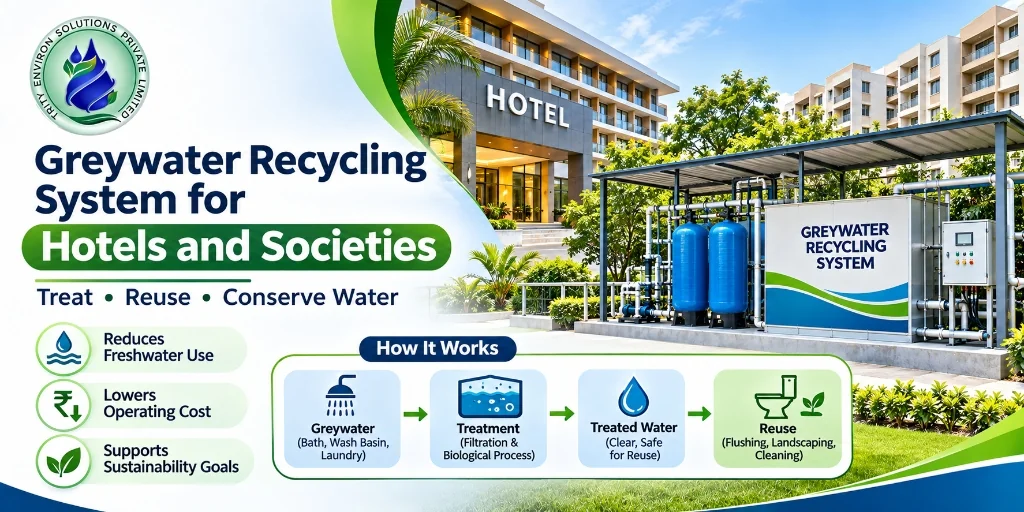
Can treated STP wastewater be reused for toilet flushing, gardening, and cooling towers?

Yes, treated STP wastewater can be safely recycled and reused for non-potable applications if it passes through tertiary and polishing treatment stages:

  • Gardening & Landscaping: Requires Dual Media Filter (DMF) and Activated Carbon Filter (ACF) with chlorine or UV disinfection (BOD < 10 mg/L, TSS < 10 mg/L).
  • Toilet Flushing: Mandates tertiary filtration with post-chlorination (residual chlorine 1.0 mg/L) or UV sterilization to ensure 100% fecal coliform destruction.
  • Cooling Tower Make-up Water: Requires Ultrafiltration (UF) and Industrial Reverse Osmosis (RO) or Demineralization to eliminate silica, hardness, and TDS that cause heat-exchanger scaling.
  • Construction & Road Dust Suppression: Complies directly with CPCB discharge standards following standard tertiary Sand & Carbon filtration.
ETP & Industrial Effluent

How do you treat high COD and BOD wastewater from chemical and pharmaceutical industries?

Industrial effluents with high Chemical Oxygen Demand (COD > 5,000–50,000 mg/L) and refractory organic pollutants require a multi-stage advanced treatment train:

  • Advanced Oxidation Processes (AOP): Applying Fenton's reagent (Fe2+/H2O2), Ozone (O3), or UV-photo-catalysis to break down non-biodegradable aromatic compounds and refractory toxins into biodegradable intermediates.
  • Anaerobic High-Rate Reactors (UASB / EGSB): Handles bulk COD reduction (70–85% removal) while converting organic carbon into renewable biogas/methane without high electrical aeration power.
  • Aerobic Biological Polishing (MBBR / MBR): Reduces residual BOD below 10–30 mg/L using specialized acclimatized bacterial cultures.
  • Tertiary Membrane Separation & Evaporation: Passing polished effluent through Ultrafiltration, Brackish Water RO, and Multi-Effect Evaporators (MEE) for Zero Liquid Discharge (ZLD).
ETP & Industrial Effluent

What is the difference between an individual ETP and a Common Effluent Treatment Plant (CETP)?

Both systems treat industrial wastewater, but their ownership, capacity, and operational models differ:

  • Individual ETP (Effluent Treatment Plant): Installed within the boundary of a single manufacturing factory or industrial unit. Tailored specifically to treat the exact chemical composition and peak volume of that single plant. The industry bears full CAPEX, OPEX, and SPCB compliance liability.
  • CETP (Common Effluent Treatment Plant): A centralized facility serving an entire industrial cluster, GIDC, RIICO, or KIADB industrial estate. Member units perform primary equalization and heavy-metal pre-treatment at their premises before discharging into the CETP conveyance pipeline. Cost is shared among participating industries based on volumetric flow and pollution load parameters.
ETP & Industrial Effluent

What chemicals are commonly used in primary Effluent Treatment Plants (ETP)?

Primary chemical treatment neutralizes pH and coagulates colloidal suspended particles, oils, and heavy metals:

  • pH Neutralization: Caustic Soda Lye (NaOH) or Hydrated Lime (Ca(OH)2) to raise acidic pH, and Hydrochloric Acid (HCl) or Sulfuric Acid (H2SO4) to lower alkaline streams.
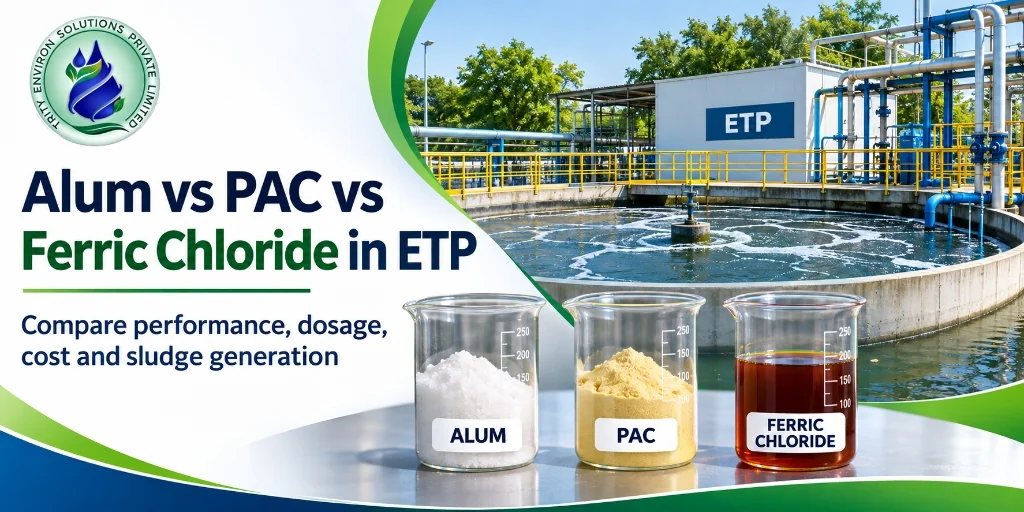
  • Coagulants: Polyaluminium Chloride (PAC), Ferric Chloride (FeCl3), and Alum (Al2(SO4)3) to neutralize surface electrical charges on colloidal particles.
  • Flocculants / Polyelectrolytes: Anionic and Cationic Polyacrylamide (Polymers) to bridge micro-flocs into large settleable macro-flocs for rapid clarification in Tube Settlers and DAF units.
  • De-emulsifiers & Anti-foam Agents: Used to break chemical oil-water emulsions and control surface foaming inside aeration tanks.
ETP & Industrial Effluent

How should industrial hazardous sludge be dewatered and safely disposed of?

Hazardous chemical sludge generated from primary ETP clarification and tertiary settling must comply with CPCB Hazardous & Other Wastes (Management & Transboundary Movement) Rules:

  • Dewatering Equipment: High-pressure Recessed Plate Filter Presses, Volute Dewatering Presses, or Decanter Centrifuges reduce sludge moisture content from 98% down to 60–65% solid dry cake.
  • Sludge Drying Beds: Secondary solar or thermal drying beds further reduce cake volume to minimize transportation logistics costs.
  • Authorized TSDF Disposal: Dried hazardous chemical sludge must be packed in HDPE bags, barcoded, manifest-tracked, and dispatched to authorized Treatment, Storage, and Disposal Facilities (TSDF) for secure landfilling or co-processing in cement kilns.
Industrial RO & Water Treatment

What is the typical recovery rate of an Industrial RO Plant and how is reject handled?

Standard Industrial Reverse Osmosis (RO) plants achieve recovery rates between 70% to 80% depending on raw water silica, hardness, and Total Dissolved Solids (TDS):

  • Permeate (Clean Water - 70-80%): Purified water with > 98.5% salt rejection, ideal for boiler feed, process formulations, and cooling towers.
  • RO Reject / Brine (20-30%): Concentrated mineral stream containing elevated TDS, hardness, and sulfates.
  • Reject Management Solutions: In ZLD facilities, RO reject is concentrated further through High-Pressure RO (HPRO / Disc Tube DTRO) up to 100,000–120,000 ppm TDS before feeding to Multi-Effect Evaporators (MEE) or Agitated Thin Film Dryers (ATFD). For non-ZLD sites, it can be utilized for floor washing, dust suppression, or gardening depending on local SPCB discharge consents.
Industrial RO & Water Treatment

How can scaling and fouling be prevented in Industrial RO membranes?

Membrane longevity and flux efficiency require robust pre-treatment and proactive chemical conditioning:

  • Pre-Treatment Filtration: Maintain Silt Density Index (SDI < 3.0) and turbidity (< 0.2 NTU) using Multi-Grade Sand Filters, Activated Carbon Filters, and 5-micron Cartridge Filters.
  • Antiscalant Dosing: Continuous dosing of high-performance polymer antiscalants to inhibit calcium carbonate, calcium sulfate, and silica crystallization on membrane surfaces.
  • Dechlorination: Dosing Sodium Metabisulfite (SMBS) or passing through carbon beds to keep Free Residual Chlorine at 0.0 ppm, preventing polyamide membrane oxidation.
  • Periodic Clean-In-Place (CIP): Performing chemical CIP with low pH solutions (citric acid for inorganic scale) and high pH solutions (caustic/EDTA for organic biofouling) whenever normalized permeate flow drops by 10–15%.
Industrial RO & Water Treatment

What is the difference between an Industrial Water Softener, DM Plant, and RO Plant?

Each water purification technology serves distinct industrial purity requirements:

  • Water Softener: Uses strong acid cation (SAC) resin in sodium form to exchange calcium and magnesium ions with sodium. Reduces total hardness to < 5 ppm but does not reduce TDS. Best for low-pressure steam boilers and cooling towers.
  • Demineralization (DM) Plant: Uses dual-bed Cation (H+) and Anion (OH-) resins (plus Mixed Bed polishers) to exchange all ionic mineral salts for pure H2O. Produces ultra-pure water with electrical conductivity < 0.1 μS/cm and silica < 0.02 ppm. Indispensable for high-pressure power plant boilers and pharmaceuticals.
  • Reverse Osmosis (RO) Plant: Uses semi-permeable spiral-wound composite membranes driven by high-pressure pumps to remove 98–99% of dissolved salts, bacteria, pyrogens, and organic molecules without requiring daily acid/caustic regeneration chemicals.
Zero Liquid Discharge (ZLD)

What is a Zero Liquid Discharge (ZLD) system and when is it legally mandatory in India?

Zero Liquid Discharge (ZLD) is an advanced wastewater treatment process designed to purify and recycle 100% of industrial effluent, leaving zero liquid discharge into public drains or natural water bodies. Only dry solid mineral cakes remain for authorized disposal.

Where is ZLD Mandatory in India?

  • Distilleries, Tanneries, Textile Dyeing units, and Pulp & Paper mills categorized under CPCB 17-heavily polluting categories.
  • Bulk Drug / Active Pharmaceutical Ingredient (API) and synthetic chemical manufacturers operating in critically polluted industrial clusters.
  • Thermal power plants and electroplating units discharging into sensitive river basins (e.g., National Mission for Clean Ganga).
  • Any industrial unit where local State Pollution Control Boards (SPCBs) have stipulated zero-discharge conditions in their Consent to Operate (CTO).
Zero Liquid Discharge (ZLD)

What are the key equipment components in a turnkey ZLD plant?

A complete turnkey Zero Liquid Discharge (ZLD) plant integrates three primary processing blocks:

  • 1. Pre-Treatment & High-Recovery Membranes: Chemical precipitation (softening), Ultrafiltration (UF), Primary Reverse Osmosis (RO), and High-Recovery RO / DTRO systems to recover 85–92% clean permeate water.
  • 2. Thermal Concentration (Evaporation): Multi-Effect Evaporators (MEE - Falling Film or Forced Circulation) and Mechanical Vapor Recompression (MVR) units that concentrate high-TDS reject slurry up to 25–30% Total Solids.
  • 3. Solid Crystallization & Drying: Agitated Thin Film Dryers (ATFD) or Centrifuge Crystallizers that extract remaining moisture, converting concentrated brine into dry crystalline salt cakes ready for TSDF disposal or industrial byproduct reuse.
Zero Liquid Discharge (ZLD)

How can industries reduce the steam consumption and operating cost (OPEX) of ZLD plants?

Thermal evaporation accounts for 60–75% of total ZLD operating expenditure. Proven strategies to slash ZLD OPEX include:

  • Maximizing Membrane Concentration: Upgrading to Disc Tube RO (DTRO) or Brackish High-Pressure RO to concentrate effluent up to 100,000–120,000 ppm TDS before thermal stages, cutting thermal evaporator feed volume by up to 50%.
  • Adopting Mechanical Vapor Recompression (MVR): Utilizes electrical blowers to recompress evaporated steam rather than consuming live boiler steam, reducing energy consumption by up to 60–70%.
  • Condensate Heat Recovery: Installing plate heat exchangers (PHE) to pre-heat incoming raw feed using outgoing hot condensate and distillate streams.
  • Effective Anti-Scalant & Antifoam Program: Prevents heat transfer tube scaling, maintaining high overall heat transfer coefficients (U-values) and steam economy.
Air Pollution Control Systems

What are the latest CAQM particulate emission norms (50 mg/Nm3) for industrial boilers in Delhi-NCR?

The Commission for Air Quality Management (CAQM) mandates strict particulate matter (PM) emission standards across Delhi-NCR:

  • Particulate Matter Limit: Maximum permissible PM emission is 50 mg/Nm3 for all industrial boilers, thermic fluid heaters, and furnaces operating on approved biomass fuels, PNG, or dual-fuel systems.
  • Diesel Generator (DG) Sets: Mandatory retrofit of Dual-Fuel kits (70% PNG + 30% Diesel) and CAQM-certified Emission Control Devices (RECD) providing > 70% PM reduction on DG sets from 125 kVA to 1000+ kVA.
  • Continuous OCEMS: Industrial stacks must be equipped with calibrated Continuous Emission Monitoring Systems (CEMS) transmitting real-time PM, SO2, and NOx telemetry directly to CPCB/DPCC portals.

Trity Enviro manufactures CAQM-compliant Bag House Filter systems and Multi-Cyclone Separators guaranteed to achieve < 30–50 mg/Nm3 particulate levels.

Air Pollution Control Systems

When should an industry use a Bag Filter vs. a Wet Scrubber vs. a Cyclone Separator?

Selecting the right Air Pollution Control (APC) equipment depends on gas temperature, moisture content, particle size, and chemical corrosiveness:

  • Cyclone & Multi-Cyclone Separators: Best as primary mechanical pre-cleaners for coarse dust particles (> 10 microns). Handles high temperatures and heavy dust loads with low pressure drop.
  • Pulse Jet Bag Filter (Baghouse): Best for dry fine particulate matter (< 1 micron) achieving ultra-high collection efficiency (> 99.5%) with outlet dust < 10–30 mg/Nm3. Ideal for cement plants, grain milling, metal grinding, and biomass/coal boilers. (Not suitable for sticky, moist, or oily flue gases).
  • Wet Scrubbers (Packed Bed / Venturi): Best when the flue gas contains corrosive acid fumes (SO2, HCl, HF, Cl2, ammonia) and combustible or moist particulates. Provides simultaneous gas absorption, chemical neutralization, and particulate scrubbing.
Air Pollution Control Systems

How do Packed Bed Wet Scrubbers neutralize acidic gases from chemical and electroplating processes?

Packed Bed Wet Scrubbers operate on the principle of counter-current mass transfer and chemical absorption:

  • Process Mechanism: Contaminated flue gas enters the bottom of the scrubber vessel and flows upward through a bed of high-surface-area random polypropylene packing (Tellerettes / Pall Rings).
  • Alkaline Liquid Recirculation: A chemical scrubbing liquor—typically diluted Caustic Soda (NaOH) or Sodium Carbonate (Na2CO3)—is continuously sprayed downward through non-clogging spiral spray nozzles.
  • Chemical Neutralization: The intimate liquid-gas contact neutralizes acidic vapors:
    2 NaOH + SO2 → Na2SO3 + H2O
    NaOH + HCl → NaCl + H2O
  • Demisting & Stack Discharge: Cleaned gas passes through a chevron blade or mesh droplet demister before exiting via the ID fan to the chimney stack, maintaining compliance with SPCB emission standards.
Compliance & Regulations

What is the difference between Consent to Establish (CTE) and Consent to Operate (CTO) from State Pollution Control Boards?

Both consents are statutory legal licenses issued under the Water (Prevention & Control of Pollution) Act, 1974 and Air (Prevention & Control of Pollution) Act, 1981:

  • Consent to Establish (CTE / NOC): Must be obtained before initiating any site civil construction, plant expansion, or machinery installation. The SPCB reviews site suitability, proposed pollution control equipment designs (STP/ETP/Scrubbers), stack heights, and raw material mass balances.
  • Consent to Operate (CTO): Must be applied for and granted after the pollution control equipment is fully erected and commissioned, but before commencing commercial production. SPCB officials inspect the installed systems and verify baseline effluent and stack emission test reports.
  • Renewal: CTOs are issued for fixed tenures (1 to 5 years depending on Red, Orange, or Green industry categorization) and require timely periodic renewal.
Compliance & Regulations

What is an Online Continuous Effluent Monitoring System (OCEMS) and who must install it?

An Online Continuous Effluent Monitoring System (OCEMS) is an automated instrumentation panel that continuously measures wastewater discharge quality and transmits real-time telemetry directly to CPCB and SPCB central servers 24/7.

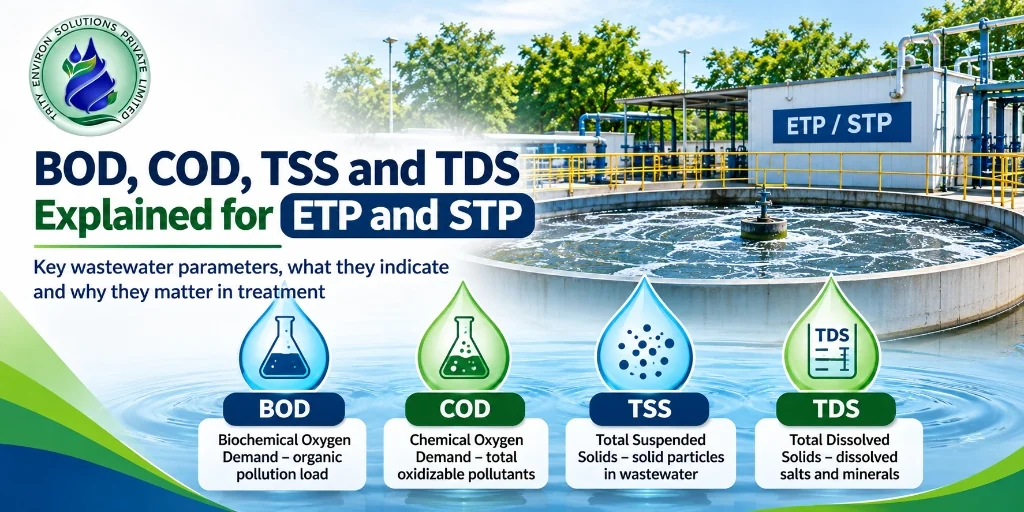
  • Monitored Parameters: pH, Total Suspended Solids (TSS), Chemical Oxygen Demand (COD), Biological Oxygen Demand (BOD), Flow Rate, and specific heavy metals or ammoniacal nitrogen depending on the industry sector.
  • Who Must Install OCEMS?
    • All 17-categories of highly polluting industries (Pharmaceuticals, Fertilizers, Distilleries, Paper & Pulp, Tanneries, Cement, Refineries, etc.).
    • Common Effluent Treatment Plants (CETP) and Common Bio-Medical Waste Treatment Facilities (CBWTF).
    • Large commercial townships, IT parks, and major urban STPs with discharge flow exceeding specified SPCB thresholds.
  • Compliance Requirement: Systems must maintain > 85% data uptime with automated zero/span calibration and camera surveillance at the final discharge weir.
Compliance & Regulations

What are the latest SPCB / HMWSSB compliance guidelines for private STP operations?

State Pollution Control Boards and urban water utilities (such as HMWSSB, DPCC, KSPCB, and MPCB) enforce strict operational standards for private residential and commercial STPs:

  • Mandatory Registration & Audits: Private STPs operating within municipal jurisdictions must register on dedicated board portals, maintain updated operation logs, and undergo third-party structural and performance audits (e.g., EPTRI certification).
  • Discharge Standards: Treated water must consistently meet revised standards: BOD ≤ 10 mg/L, TSS ≤ 10 mg/L, COD ≤ 50 mg/L, and Fecal Coliform ≤ 100 MPN/100 mL.
  • Dual Plumbing & Recycling: Mandatory dual-piping networks inside buildings to utilize 100% of treated wastewater for flushing and horticulture, prohibiting untreated discharge into municipal stormwater drains.
  • Smart Flow Meters: Installation of electromagnetic water flow meters with IoT data loggers at both inlet and outlet streams.
Maintenance & Operations

What is covered under a Comprehensive Annual Maintenance Contract (AMC) for STP and ETP plants?

Trity Enviro offers turnkey Comprehensive and Non-Comprehensive Operation & Maintenance (O&M / AMC) contracts designed to eliminate downtime and ensure 100% pollution control board compliance:

  • Dedicated Manpower Deployment: Certified plant operators, mechanics, and environmental engineers operating the plant on 24x7 or 8-hour shift schedules.
  • Preventive Maintenance: Scheduled servicing of raw effluent pumps, air blowers, dosing pumps, agitators, filter press hydraulics, and motorized valves.
  • Chemical Supply & Dosing Optimization: Procurement and precise dosing of coagulants, flocculants, neutralizing chemicals, and biological bacterial cultures.
  • Laboratory Testing & Analysis: Routine weekly and monthly laboratory testing of inlet/outlet wastewater parameters (pH, BOD, COD, TSS, TDS, Oil & Grease).
  • Statutory Record Keeping: Maintaining daily logbooks, energy consumption logs, sludge manifests, and statutory audit documentation for SPCB inspections.
Maintenance & Operations

How often should specialized bacterial culture or microbial bio-enzymes be dosed in an aeration tank?

Microbial dosing requirements depend on plant operational conditions:

  • Plant Commissioning & Initial Startup: Daily high-potency bacterial seed culture dosing for 15 to 21 days until Mixed Liquor Suspended Solids (MLSS) reaches optimal concentration (2,500 to 4,000 mg/L in MBBR/ASP, or 8,000 to 12,000 mg/L in MBR).
  • Shock Load & Toxic Recovery: Shock dosing following sudden spikes in toxic chemical intake, high salinity, or accidental pH drops that cause bacterial die-off.
  • Routine Maintenance Dosing: In standard operating plants with consistent organic food-to-mass (F/M) ratios, regular biomass self-replicates. A maintenance booster dose once every 30 to 60 days improves sludge settling and odor control.
Maintenance & Operations

What daily key operating parameters must an STP/ETP operator log to prevent plant failure?

To ensure steady state efficiency and avoid sudden biological shock loads, plant operators should record the following daily logbook parameters:

  • Flow Rates: Daily cumulative influent and treated effluent volume (KLD).
  • Aeration Tank Parameters: Dissolved Oxygen (DO ≥ 2.0 mg/L), MLSS concentration, and 30-minute Sludge Volume Index (SV30).
  • pH Levels: Raw equalization tank pH, coagulation stage pH, and final treated water discharge pH (6.5–8.5).
  • Chemical Consumption: Daily quantities of PAC, polymer, chlorine, acid/caustic, and antiscalant consumed.
  • Equipment Run Hours: Operating hours and amperage of air blowers, filter feed pumps, and sludge dewatering presses to trigger preventive lubrication cycles.
  • Differential Pressure (ΔP): Pressure drop across Dual Media Filters, Carbon Filters, and RO pre-filter cartridges to schedule backwashes.
NEED EXPERT ASSISTANCE?

Didn't Find the Answer You Were Looking For?

Connect directly with our environmental engineering consultants for custom plant feasibility, technical calculations, and turnkey project proposals.

TECHNICAL INSIGHTS

Related Engineering Articles & Guides

View All Articles →
PROVEN TRACK RECORD

Featured Turnkey Installations Across India

QCI Approved
seller
whatsapp-image