Sewage Treatment Plant (STP) Manufacturer in India
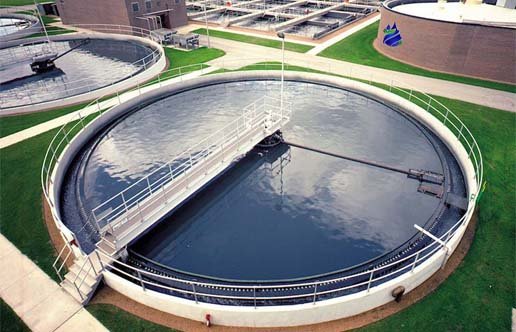
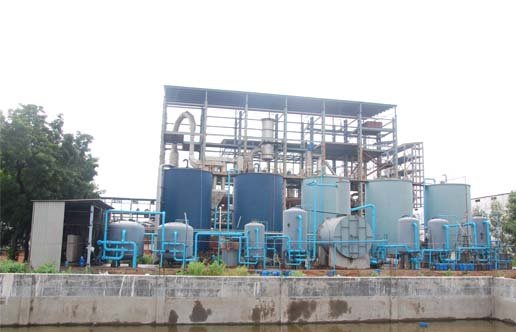
No.1 Sewage Treatment Plant Manufacturer & Supplier in India, Trity Environ Solutions manuf....
| Automation Grade | : Automatic |
| Control Module | : Available |
| Secondary Treatment Technology | : MBBR |
| Feed Flow Rate(m3/day) | : 51-100 m3/day |
| Capacity (KLD) | : 100 KLD |
Reliable Sewage Treatment Solutions for Residential, Commercial, and Industrial Applications
Every day, millions of litres of untreated sewage flow out of India’s homes, hotels, hospitals, and factories. Most of it ends up in rivers, groundwater, and soil — not because people don’t care, but because the right infrastructure was never put in place. The Central Pollution Control Board has made responsible discharge non-negotiable, and for good reason.
At Trity Environ Solutions, we’ve spent over 14 years fixing that gap as a trusted STP plant manufacturer in India, delivering systems that perform reliably in real-world conditions. For clients searching for a dependable sewage treatment plant manufacturer near me, we provide end-to-end design, installation, and support across India.
What Is a Sewage Treatment Plant (STP)?
A sewage treatment plant takes domestic or commercial wastewater — from toilets, kitchens, and bathrooms — and removes the biological and physical contaminants before that water is safely discharged or reused on-site.
The treatment challenge with domestic sewage is primarily biological: removing BOD (Biological Oxygen Demand), suspended solids, coliform bacteria, and nutrients like nitrogen and phosphorus down to levels safe for river discharge or reuse in flushing and irrigation. Unlike industrial process water, domestic sewage doesn’t require heavy chemical treatment — it needs the right biological process, properly designed and correctly operated.
In India, an STP is legally required for most residential projects above a certain built-up area, all commercial establishments generating sewage beyond a prescribed daily volume, and any facility near ecologically sensitive zones. Missing this requirement isn’t just an environmental problem — it’s a legal and financial one. Occupancy certificates in several states are now directly linked to a functional STP being in place.
A well-designed STP also makes economic sense. Facilities that recycle treated water for flushing and irrigation typically cut freshwater consumption by 30–50%. Over a 10-year period, that’s a significant operational saving — especially in cities where water tariffs are rising.
STP Technologies We Manufacture
There’s no universal technology that works for every site. The right choice depends on your daily sewage volume, available space, treated water quality requirements, and budget. We manufacture all four major technologies and recommend what genuinely fits your project.
MBBR (Moving Bed Biofilm Reactor)
MBBR uses thousands of small plastic carrier media in the aeration tank. Microorganisms grow as a biofilm on these carriers and break down organic matter as wastewater flows through. Because the biomass is attached — not suspended freely — MBBR systems are significantly more compact than conventional processes and handle fluctuating loads well. Best for residential societies, hotels, and hospitals with limited space. Capacity: 50 KLD to 500 KLD.
SBR (Sequencing Batch Reactor)
SBR operates in timed cycles — fill, react, settle, decant — within a single tank. This eliminates the need for a separate clarifier, reducing both footprint and mechanical complexity. It’s excellent for sites where sewage generation is uneven across the day, and it achieves strong nutrient removal for nitrogen and phosphorus. Best for industrial campuses, educational institutions, and large townships. Capacity: 100 KLD to 5 MLD.
MBR (Membrane Bioreactor)
MBR combines biological treatment with ultrafiltration membranes. After the biological stage, wastewater passes through membranes that retain bacteria, viruses, and fine solids — consistently delivering BOD below 5 mg/L and TSS below 5 mg/L. This is the highest effluent quality available in any STP technology. Best for hospitals, pharmaceutical facilities, and luxury hotels where treated water will be reused. Capacity: 50 KLD to 2,000 KLD.
SAFF (Submerged Aerated Fixed Film)
SAFF uses fixed plastic media submerged in an aeration tank. Unlike MBBR where carriers move freely, SAFF media is stationary. With no moving parts in the biological zone, it’s the lowest-maintenance option available and works reliably where electricity supply is inconsistent. Best for small residential buildings, individual commercial properties, and semi-urban locations. Capacity: 10 KLD to 100 KLD.
If your facility also generates industrial process effluent, you may need an Effluent Treatment Plant (ETP) alongside your STP — or an integrated system combining both streams.
How Our STP Systems Treat Sewage — The 5-Stage Process
Every STP we build follows the same five-stage treatment sequence. Each stage targets a specific category of pollutant, and our design parameters consistently meet or exceed CPCB Schedule-VI discharge standards.
- Stage 1 — Screening removes rags, plastics, grit, and sand before they reach the biological system.
- Stage 2 — Primary Treatment settles heavier organic matter as sludge and skims off grease, cutting incoming suspended solids by 50–70% before the water reaches the reactor.
- Stage 3 — Secondary Biological Treatment is where the core work happens: microorganisms consume dissolved organic matter, reducing BOD by 85–95% and TSS by 80–90%.
- Stage 4 — Tertiary Filtration passes the effluent through sand and activated carbon filters to remove residual solids, colour, and odour.
- Stage 5 — Disinfection eliminates residual pathogens via chlorination, UV, or ozonation depending on the end use of the treated water.
CPCB-Compliant Systems — Designed to Pass Every Inspection
Every STP we design is engineered to consistently hit CPCB Schedule-VI parameters in day-to-day operation — not just on inspection day. Our internal design targets run significantly below the mandated norms: BOD below 10 mg/L against the 30 mg/L CPCB limit, TSS below 10 mg/L against the 50 mg/L limit, pH between 6.5 and 8.5, and total coliform below 1,000 MPN/100 mL for standard discharge.
At commissioning, we provide a full performance test report for your SPCB submission and support you through the inspection process. For facilities near sensitive water bodies, we design to even stricter discharge parameters as standard.
In India, an STP is legally required for most residential projects above a certain built-up area, all commercial establishments generating sewage beyond a prescribed daily volume, and any facility near ecologically sensitive zones. Missing this requirement isn’t just an environmental problem — it’s a legal and financial one. Occupancy certificates in several states are now directly linked to a functional STP being in place.
This is why working with an experienced STP plant manufacturer in India becomes critical — not just for compliance, but for long-term operational reliability.
Who We Build For
Our installed base covers residential housing societies, hotels and resorts, hospitals and healthcare facilities, industrial complexes, educational campuses, and municipal projects across India. Each sector has its own wastewater characteristics and compliance pressures, and our approach always starts with your specific situation.
Residential societies typically benefit most from compact MBBR or SAFF systems that fit within existing basement or ground-floor space, with treated water recycled for flushing and landscaping. Hotels need systems that handle wide occupancy swings without performance drop. Hospitals require MBR-based systems with UV disinfection to address pathogen concentration and pharmaceutical residues. Industrial zones benefit from integrated designs that handle both domestic sewage from the workforce and low-strength process water within a single plant.
From Inquiry to Handover
Our project process has been refined across 14 years and 2,300+ installations. It starts with a free site assessment where our engineer reviews your daily sewage generation, available footprint, and local PCB discharge norms. From there, we move to custom engineering and design (1–2 weeks), followed by manufacturing at our ISO 9001:2015-certified facility in Ghaziabad, on-site installation, and finally commissioning with effluent quality testing, biological seeding, and full operator training.
You don’t get a generic packaged plant. You get a system designed for your numbers, installed by our team, and handed over with a performance report and a trained operator who knows how to run it.
For ongoing reliability, we offer Annual Maintenance Contracts (AMC) covering scheduled preventive maintenance, priority breakdown response, consumable supply, and quarterly effluent testing with a NABL-accredited lab. An STP that isn’t regularly serviced will degrade in performance and eventually fail compliance — an AMC is the cheapest form of insurance you can buy for a plant of this value.
Get a Site-Specific Quotation
STP cost and technology selection depend entirely on your actual site conditions and wastewater profile. Generic package pricing leads to undersized or incorrectly specified plants — and fixing those after installation costs far more than getting it right the first time. Contact our team for a free site assessment and quotation.
Related Products
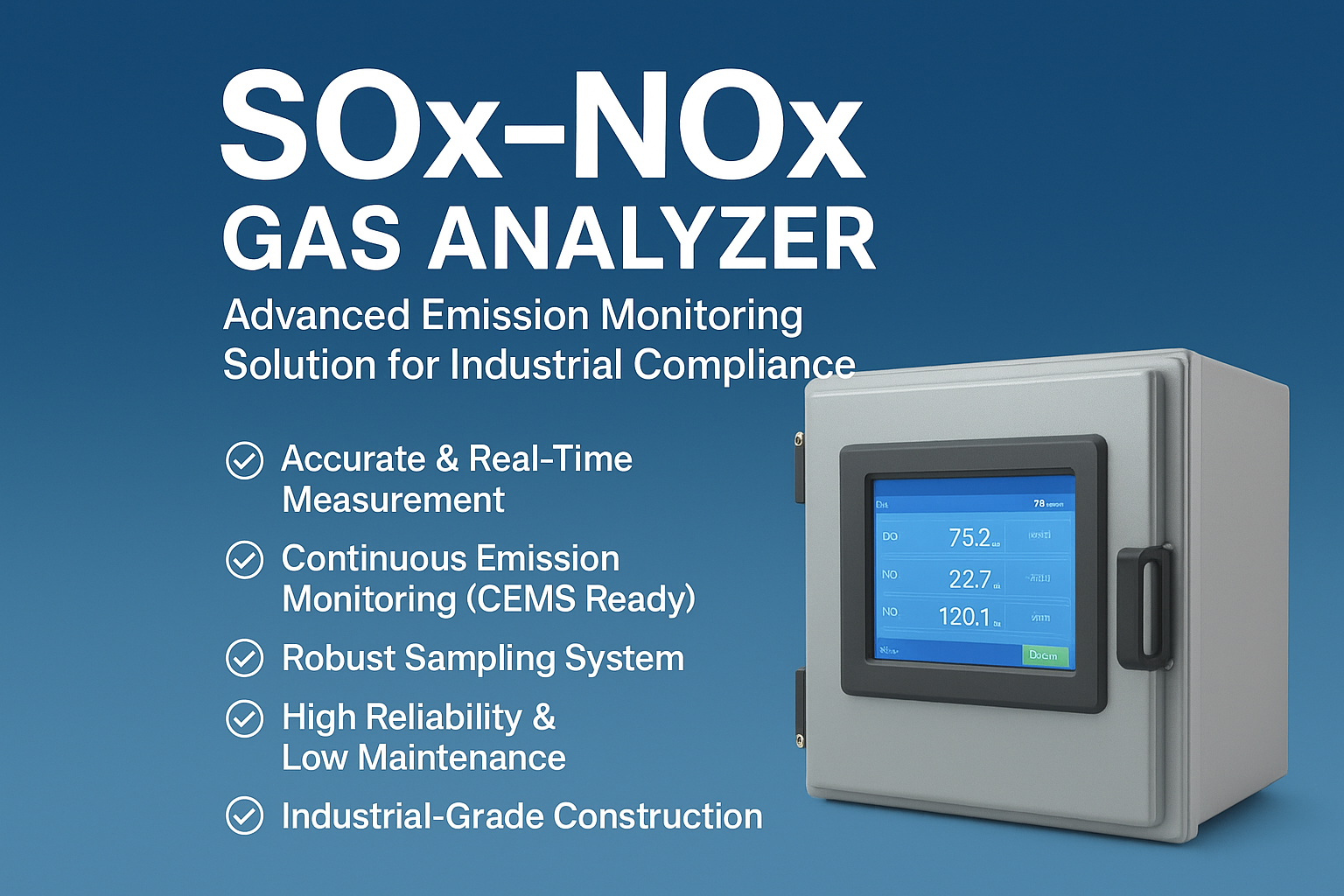
Sox Nox Gas Analyzer Supplier in Ghaziabad India
High-precision SOx–NOx Gas Analyzer designed for continuous emission monitoring with accurate SO₂ and NOx measurement for industrial compliance.
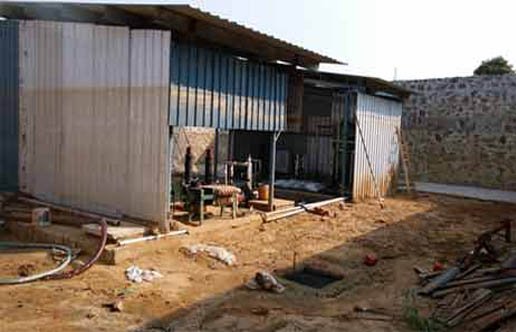
Wastewater Treatment Plant Manufacturer in India
Trity Environ Solutions is Best Wastewater Treatment Plant Manufacturer and supplier in India. For M...

Effluent Treatment Plant for Hospital
We are the leading manufacturer & supplier of Effluent Treatment Plants for Hospitals.....

Industrial Anaerobic Digestion Systems for ETP & STP Plants
Trity Enviro is leading Anaerobic Digester Manufacturers & Suppliers in India, offering industrial anaerobic digestion systems for wastewater treatment, sludge stabilization, and biogas generation across diverse industries.

STP and ETP Plant Manufacturer in Agra
Trity Enviro Solutions is a trusted STP and ETP plant manufacturer in Agra, delivering customized wastewater treatment systems for industries, hotels, and hospitals with full UPPCB compliance.

STP and ETP Plant Manufacturer in Firozabad
Firozabad-based STP and ETP plants engineered around your site's actual influent load and flow pattern, including glass and bangle manufacturing effluent. We handle design, manufacturing, installation, commissioning and AMC end-to-end, serving industries, hospitals, hotels and housing societies across Firozabad and the wider region.

STP and ETP Plant Manufacturer in Delhi/NCR
Trity Environ Solutions is a leading STP and ETP plant manufacturer in Delhi/NCR, providing customized wastewater treatment solutions for industries, commercial buildings, residential societies, hospitals, hotels, educational institutions, and government projects. We offer complete turnkey services, including design, manufacturing, installation, commissioning, AMC, and CPCB/DPCC-compliant treatment systems that ensure efficient water reuse, environmental compliance, and long-term operational performance.
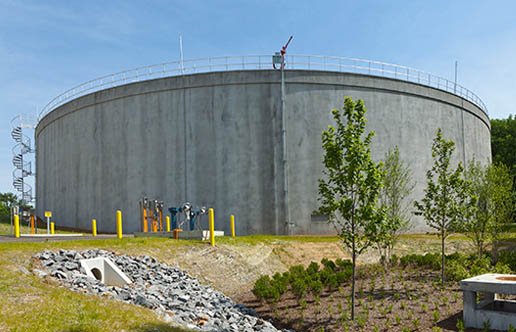
Equalization Tank Manufacturer in India
Trity Environ Solutions is India's best manufacturer and supplier of Sewage Water Equalization Tanks...

Bubble Air Diffuser Manufacturer in India
Trity Environ Solutions is a trusted Bubble Air Diffuser manufacturer in India. We supply fine bubble disc diffusers, tube diffusers, and EPDM membrane diffusers for STP, ETP, MBBR, and SBR systems. PAN India supply and installation support available.
Effluent Treatment Plant For Chemical Industries
Trity Enviro is the top leading manufacturer of ETP Plants for the Chemical industries....