
 ISO 9001:2015 & QCI Approved
STP and ETP Plant Manufacturer in Baddi
Trity Environ Solutions is a trusted STP and ETP plant manufacturer in Baddi, engineering wastewater systems for one of India's largest pharmaceutical manufacturing belts. Over 3,000 factories operate across Baddi, Barotiwala, and Nalagarh, generating a scale of pharma, FMCG, and industrial wastewater that shared regional infrastructure hasn't always kept pace with, and we build with pan India installation support behind every system. Whether you need a sewage treatment plant manufacturer in Baddi or an effluent treatment plant manufacturer in Baddi, Trity Environ Solutions builds both in-house, from design to commissioning.
CPCB & SPCB Ready
Turnkey Design & Installation
A Pharma Hub Where Shared Infrastructure Hasn't Always Kept Up
A Pharma Hub Where Shared Infrastructure Hasn't Always Kept Up
The Baddi-Barotiwala-Nalagarh belt in Himachal Pradesh's Solan district hosts over 3,000 factories, including manufacturing plants for Dr. Reddy's Laboratories, Cadila Healthcare, Torrent Pharmaceuticals, Abbott, and Glenmark, generating an annual industrial turnover exceeding Rs 60,000 crore. That scale creates a genuine infrastructure challenge: legal petitions have documented that the region's central effluent treatment facility was not connected to every pharmaceutical unit across the three towns, with some plants discharging directly into the Sirsa and Sutlej rivers, and the shared facility itself was reportedly not designed to neutralise active pharmaceutical ingredients before release.
We don't raise this to criticise the region's existing infrastructure, we raise it because it's exactly why a properly engineered, unit-level effluent treatment plant matters here more than in most places. A pharma unit that depends entirely on shared downstream treatment is exposed to gaps outside its own control; one with its own correctly specified system, addressing API residues directly rather than assuming a central facility will catch what standard biological treatment misses, isn't.
Operating a pharma, FMCG, or chemical unit across the BBN belt? Request a free technical assessment and our engineering team will assess what your specific process actually needs.
KEY BENEFITS
Key Benefits of STP and ETP Plant Manufacturer in Baddi
Engineered for genuine API residue neutralisation, standalone unit-level treatment, and reliable HPPCB compliance.
Dedicated API Neutralisation Capacity
Engineered with dedicated API neutralisation capacity, addressing a documented gap where a central facility here was found not designed to break down pharmaceutical residues before discharge.
Sized for the BBN Belt's Actual Scale
Sized for the BBN belt actual scale, where over 3,000 factories generate a daily wastewater load few regions in India match, spanning pharma, FMCG, and textile production.
Standalone, Not Dependent on Shared Infrastructure
Built as a standalone unit-level system rather than depending solely on shared infrastructure, since a single central facility connecting every plant across three towns carries real coordination risk.
Closes the Sludge Disposal Gap
Addresses sludge disposal directly, closing a gap flagged where a regional treatment storage facility was not receiving sludge generated by certain industrial units.
Faster Response Across the BBN Belt
Faster response across Baddi, Barotiwala, and Nalagarh, since our engineering team already understands the compliance history and infrastructure gaps this belt has faced.
Depending Entirely on Shared Treatment Carries Real Risk Here
Legal petitions in this region have specifically raised concerns about untreated pharmaceutical waste release, including allegations that a central effluent facility connecting the belt wasn't reaching every unit it was meant to serve, and that active pharmaceutical ingredients were still present in discharge even after treatment. This isn't a hypothetical scenario, it's documented history in exactly the industrial belt you're operating in, and it's the strongest argument for a unit having its own properly engineered ETP rather than assuming shared infrastructure will fully handle its effluent.
Standard Biological Treatment Alone Doesn't Touch Pharmaceutical Residues
API residues, solvents, and high COD loads typical of pharmaceutical manufacturing pass through conventional biological treatment largely unchanged, which is exactly the gap that led to documented compliance issues in this region previously. Trity Environ Solutions designs a layered treatment train, solvent stripping, advanced oxidation, and biological polishing in sequence, backed by an Annual Maintenance Contract for ongoing compliance support. Talk to our team about AMC coverage for your unit.
Sludge Disposal Needs Planning From Day One, Not After Commissioning
Reports have flagged that treatment storage and disposal facilities serving this belt weren't receiving sludge generated by certain industrial units, leaving a genuine gap between treatment and final disposal. We factor sludge dewatering and disposal logistics into system design from the outset for BBN belt projects, rather than treating it as a problem to solve once the plant is already running.
SYSTEM CONFIGURATIONS
Types of STP and ETP Plant Manufacturer in Baddi Configurations
Technologies selected to match your industry sector, API load, and HPPCB consent category.
Pharmaceutical Effluent Treatment
Our layered pharmaceutical treatment train handles API residues, solvents, and high COD loads that standard biological treatment alone cannot break down for Baddi pharma units.
Explore Configuration
FMCG & Food Processing STP
Standard biological and physico-chemical treatment for FMCG and food processing plants generating organic load without pharmaceutical-grade complexity.
Chemical & Textile ETP
Our chemical process wastewater system treats textile, dye, and general chemical manufacturing units operating alongside pharma plants across the BBN belt.
Explore Configuration
Standalone Unit-Level System
Standalone unit-level ETP for facilities in Barotiwala or Nalagarh not reliably served by shared central treatment infrastructure connecting the wider belt.
TURNKEY WORKFLOW
How the STP and ETP Plant Manufacturer in Baddi Process Works
A layered treatment process engineered for consistent API residue and organic load removal.
01
Site Assessment & Process Characterisation
Sampling and analysis establish your actual effluent profile, whether pharmaceutical, FMCG, or chemical, before design begins.
02
Design & Engineering
Treatment sequencing is engineered around HPPCB consent conditions and your specific API or organic load, not a generic BBN template.
03
Manufacturing & Installation
Components are manufactured under ISO 9001:2015 quality controls, then installed by our team familiar with this region's regulatory environment.
04
Commissioning & AMC Support
The plant is tested against consent conditions, operators are trained, and ongoing AMC support keeps performance consistent as production scales.
COMMON INQUIRIES
Frequently Asked Questions
Clear answers regarding regulatory consent, installation timelines, and plant capacities for Baddi.
Q1. Why does a Baddi pharma unit need its own ETP if shared infrastructure exists?
Legal petitions have documented that shared central treatment facilities in this belt weren't connecting every unit reliably, and weren't designed to fully neutralise pharmaceutical residues, making a properly engineered unit-level ETP the more dependable option.
Q2. What treatment technology addresses pharmaceutical API residues?
A layered treatment train combining solvent stripping, advanced oxidation, and biological polishing is typically required, since standard biological treatment alone doesn't reliably break down API residues and solvents.
Q3. Which pollution control board governs discharge norms in Baddi?
The Himachal Pradesh Pollution Control Board (HPPCB) governs consent and discharge norms for units in Baddi, Barotiwala, and Nalagarh, alongside overarching CPCB requirements.
Q4. What capacity ETP does a typical Baddi pharma unit need?
Capacity depends on production scale and process type, ranging from smaller units for FMCG plants to larger systems for full-scale API manufacturing, confirmed through site assessment.
Q5. How long does installation take for a BBN belt project?
Prefabricated modular plants typically commission within 45 to 90 days, while larger pharma-grade systems with advanced oxidation stages take 3 to 6 months from design approval.
Q6. Can an existing Baddi plant be upgraded to handle API residues better?
Yes, we undertake retrofits adding advanced oxidation or solvent stripping stages to existing plants, starting with a technical audit to identify exactly what current treatment is missing.
Q7. How do I choose a reliable STP and ETP plant manufacturer in Baddi?
Look for in-house manufacturing, experience with HPPCB consent requirements, a design based on your own effluent analysis, and a clear maintenance offering after commissioning. Trity Environ Solutions builds its plants under ISO 9001:2015 quality controls and supports every installation with operator training and an annual maintenance contract.
CATALOGUE
Related Engineering Products
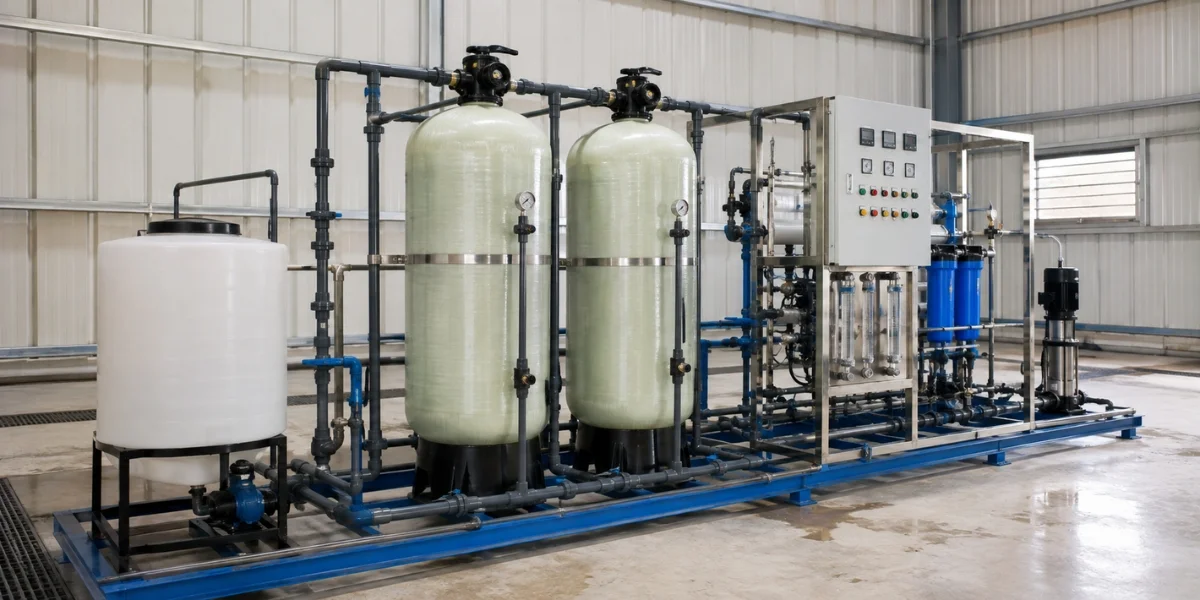
RO & Water Recycling Plant Manufacturer in India
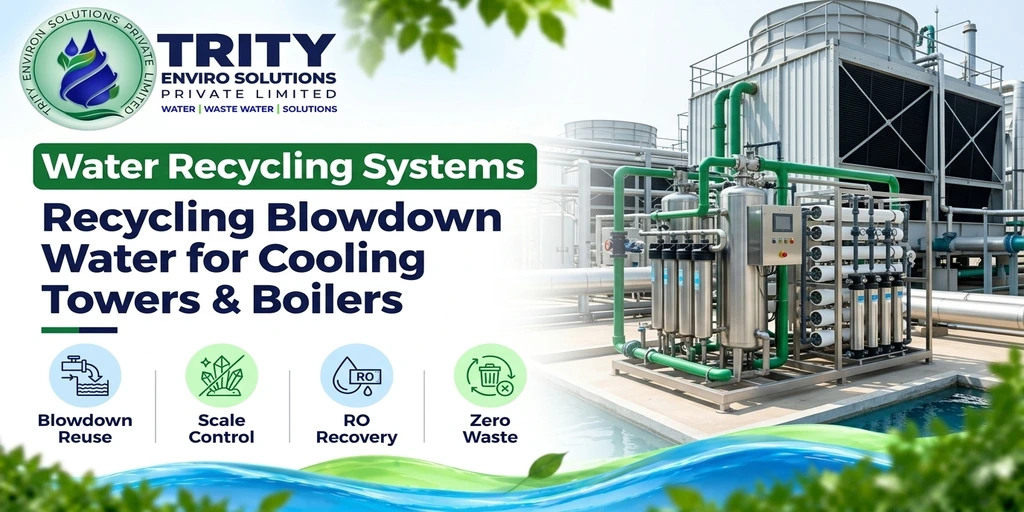
Trity Environ Solutions manufactures RO and water recycling systems for industries and commercial facilities, engineered for reliable purity and reuse.
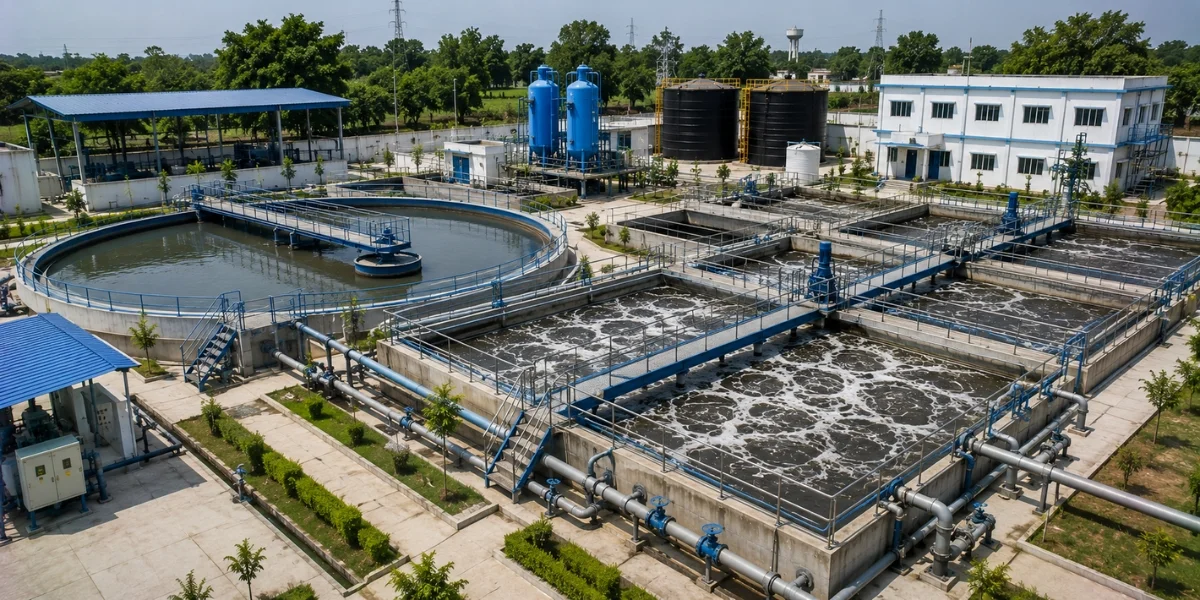
Tertiary Treatment Plant Manufacturer in India
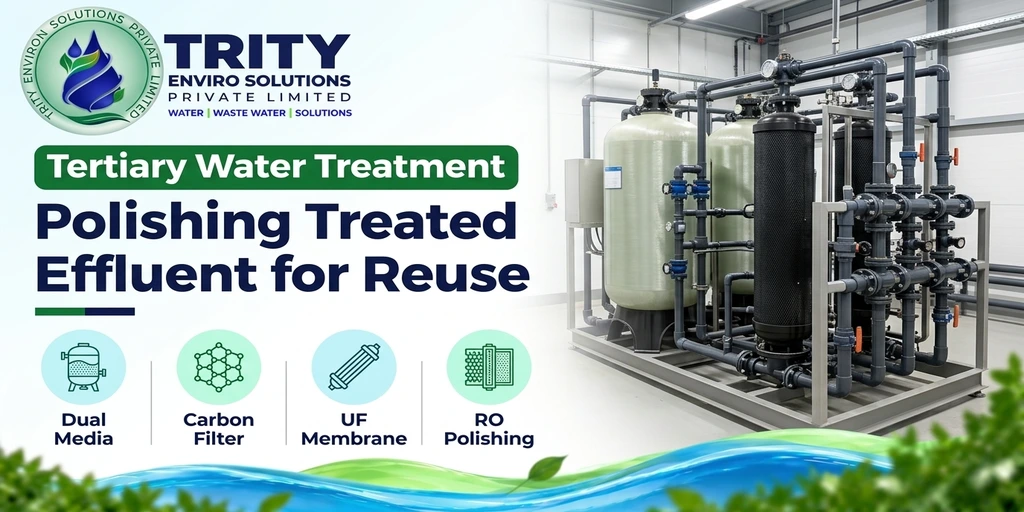
Trity Environ Solutions manufactures tertiary treatment plants that polish treated water beyond secondary treatment, enabling genuine reuse and stricter discharge compliance.
Wastewater Recycling System Manufacturer in India
Trity Environ Solutions manufactures wastewater recycling systems using UF and RO technology, turning treated wastewater into reuse-grade water for cooling, flushing, and gardening.
PAN-INDIA CAPABILITIES
Regional Solutions & State Coverage
TECHNICAL KNOWLEDGE
Related Insights & Engineering Guides
PROVEN EXCELLENCE
Featured Turnkey Installations











Need a Custom Water or Wastewater Treatment Solution?
Our engineering team can help design the right system for your capacity, industry, and compliance requirements.

