
 ISO 9001:2015 & QCI Approved
STP and ETP Plant Manufacturer in Jharsuguda
Trity Environ Solutions is a leading STP and ETP plant manufacturer in Jharsuguda, engineering turnkey wastewater treatment systems for Vedanta aluminium smelter, thermal power stations, and sponge iron plants. We build heavy-duty effluent treatment plants and sewage treatment plants engineered for strict OSPCB compliance across the Ib and Bheden river catchments, backed by pan India installation support.
Ib River Catchment Protection
High-Efficiency ZLD Recycling
Rugged Wastewater Treatment and ZLD for Western Odisha's Industrial Powerhouse
Jharsuguda has emerged as western Odisha's premier industrial and logistics epicenter, famously termed the 'Powerhouse of Odisha'. Dominated by world-scale aluminium smelting operations like Vedanta Limited, massive pithead thermal power stations, coal washeries, and extensive sponge iron and rolling mills in Kalmangi, Badmal, and Brundamal, the region handles staggering volumes of industrial process water.
Concurrently, rapid economic expansion has driven the development of sprawling corporate townships, commercial infrastructure, and institutional complexes that generate substantial municipal sewage volumes.
The industrial corridor drains primarily into the Ib River and Bheden River, critical tributaries that discharge directly into the massive Hirakud Reservoir. Because Hirakud provides drinking water and agricultural irrigation to millions across western and central Odisha, the Odisha State Pollution Control Board (OSPCB) and Central Pollution Control Board (CPCB) enforce zero tolerance for toxic or untreated effluent discharge.
Parameters such as fluorides, total suspended solids, coal slurry, heavy hydrocarbons, phenols, and dissolved heavy metals are scrutinized via continuous online monitoring. As a dedicated STP and ETP plant manufacturer in Jharsuguda, Trity Enviro engineers heavy-duty wastewater systems designed to withstand demanding industrial conditions.
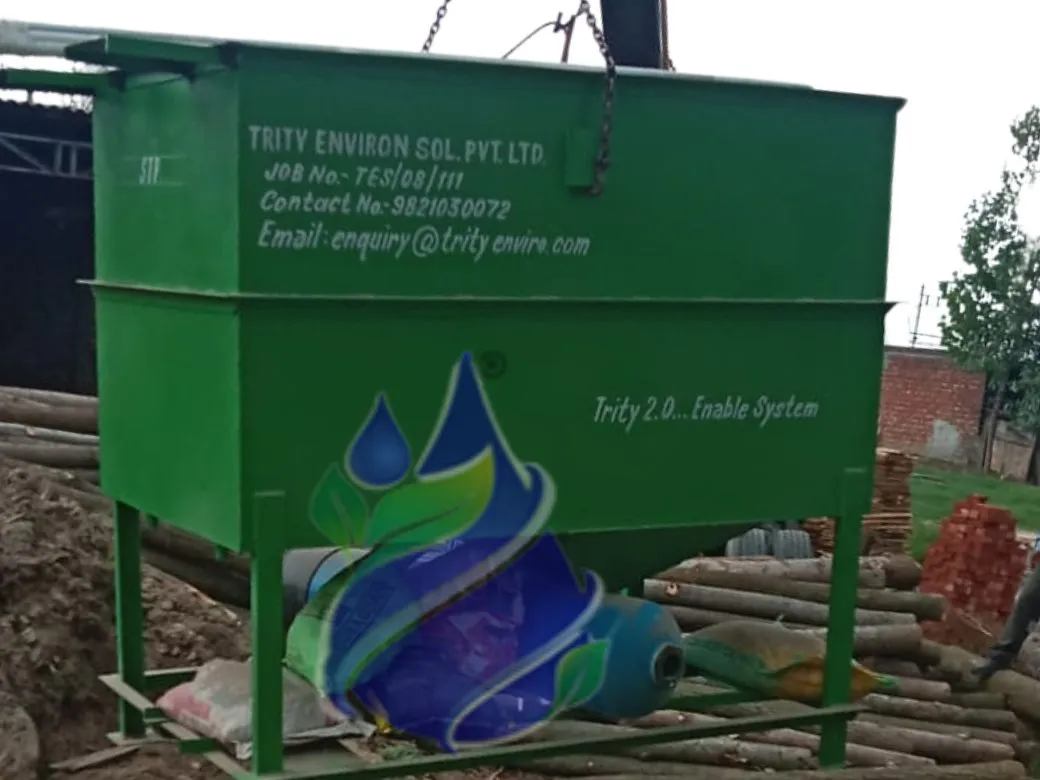
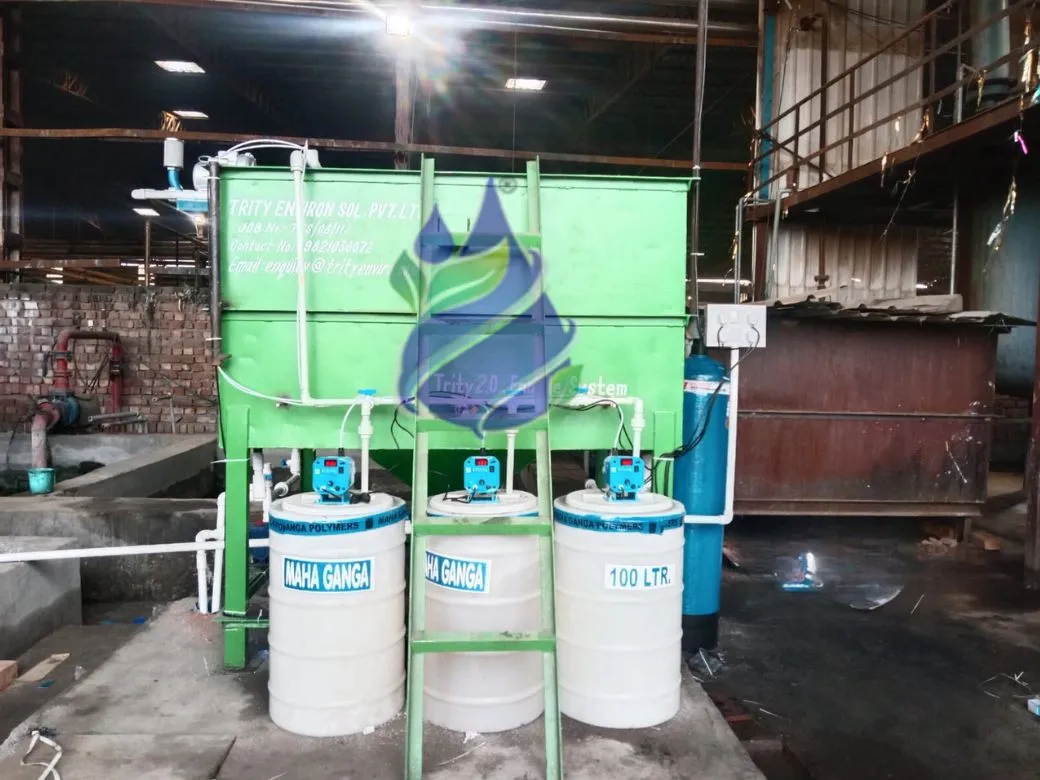
Our engineered effluent treatment plant systems utilize multi-stage chemical precipitation, high-rate lamella settling, dissolved air flotation, and sludge dewatering to address harsh industrial streams. For corporate housing colonies and municipal facilities, our automated sewage treatment plant units deliver crystal-clear recycled water for dust suppression and green belt landscaping. Partnering with Trity Enviro guarantees total OSPCB compliance and robust water independence for Jharsuguda facilities.
Key Advantages
Engineered Wastewater Advantages for Jharsuguda Facilities
Customized systems built to solve high fluoride concentrations, heavy coal slurry, and strict zero-discharge mandates.
Hirakud and Ib River Basin Safeguards
Engineered to eliminate harmful runoff into the Ib River and Hirakud catchment, meeting the most rigorous OSPCB inland surface water standards.
Heavy Fluoride and Anode Effluent Treatment
Two-stage chemical precipitation and clariflocculation delivering verified fluoride reduction below 1.5 mg/L for aluminium smelting processes.
Proven Zero Liquid Discharge (ZLD) Technology
High-recovery reverse osmosis skids and forced-circulation thermal evaporators enabling 95 percent plus water recovery for cooling and boiler makeup.
Coal Dust and Slag Slurry Recovery
Heavy-duty clarifiers and automatic filter presses designed to recover clean process water from coal washery tailings and slag yard runoffs.
Continuous OCEMS Telemetry Integration
Automated transmitters for real-time monitoring of pH, TSS, COD, and flow rates with direct cloud connection to OSPCB central servers.
Managing High-Toxicity Effluents in Aluminium Smelting and Power Sectors
The vast industrial footprint of Jharsuguda creates unique wastewater dynamics. Aluminium potline scrubbing water, anode roaster washings, and rod shop effluents carry substantial concentrations of toxic fluorides, cyanides, polyaromatic hydrocarbons, and heavy suspended solids.
Furthermore, large thermal power complexes produce boiler blowdown with high silica, cooling tower blowdown with high sulfate and TDS, and ash pond runoff carrying trace heavy metals. Unregulated discharge into the Ib River basin risks irreversible contamination of regional water tables.
Trity Enviro builds specialized chemical effluent treatment plant setups featuring stoichiometric calcium dosing, coagulation with poly-aluminium chloride, and flocculation inside automated lamella clarifiers. For mechanical workshops, compressor stations, and vehicle maintenance bays, our mechanical oil skimmer systems remove tramp and engine oils before chemical treatment, ensuring prolonged service life for filtration skids and reverse osmosis membranes.
Township Sewage Treatment and Coal Dust Suppression Recycling
In addition to heavy manufacturing operations, Jharsuguda accommodates major residential townships, executive housing colonies, and commercial infrastructure supporting industrial workforces. Domestic wastewater from these colonies contains substantial biochemical oxygen demand, nitrogenous compounds, and pathogenic bacteria. During the dry pre-monsoon summer season, freshwater extraction from the Ib River is heavily restricted by regulatory authorities.
Our automated Sequential Batch Reactor (SBR) and Moving Bed Biofilm Reactor (MBBR) sewage treatment plant units convert domestic wastewater into a reliable, high-quality recycled water resource. With secondary clarification and tertiary pressure sand and activated carbon filtration, treated sewage reaches BOD under 10 mg/L and TSS under 10 mg/L.
This water is directly recycled for industrial dust suppression across coal handling yards, railway sidings, and extensive green belt perimeters, conserving massive volumes of raw water.
Full-Scope ZLD Engineering and Proactive AMC Services
For large-scale industrial complexes in Jharsuguda, adopting zero liquid discharge is essential to maintain operating licenses and fulfill corporate sustainability commitments. Trity Enviro provides complete zero liquid discharge plant systems incorporating high-flux ultrafiltration, brackish water RO water recycling plant stages, and mechanical vapor recompression (MVR) evaporators to convert wastewater into demineralized distillate.
To sustain optimal performance year-round, Trity Enviro delivers reliable on-ground annual maintenance contract services across Jharsuguda, Belpahar, and Brajrajnagar. Our engineers manage filter press maintenance, chemical dosing recalibration, membrane cleaning cycles, and regulatory compliance reporting. Contact our technical team today via our contact us page to schedule an engineering consultation.
Proven Technologies
Industrial Treatment Systems Engineered for Jharsuguda
Engineered treatment configurations tailored to severe industrial chemistry, high suspended solids, and zero liquid discharge mandates.
Two-Stage Fluoride Precipitation ETPs
Advanced chemical reaction and lamella clarification systems designed to precipitate soluble fluorides from aluminium smelting to below 1.5 mg/L.
Explore Configuration
Clariflocculators for Coal Slurry and Ash Water
Heavy-duty settling tanks with central flocculators and automatic filter presses designed to dewater coal fines and fly ash slurry.
Explore Configuration
Sequential Batch Reactor (SBR) Townships STPs
Automated cyclic biological systems delivering sparkling treated water for coal dust suppression, slag yard spraying, and landscaping.
Explore Configuration
High Recovery RO and ZLD Systems
Advanced multi-stage membrane filtration coupled with forced-circulation crystallizers to achieve total zero liquid discharge compliance.
Explore Configuration
Execution Excellence
Turnkey Project Delivery Workflow in Jharsuguda
Structured engineering methodology from initial effluent testing to installation, telemetry integration, and operational handover.
01
Comprehensive Effluent and Site Analysis
Detailed laboratory assays of fluorides, phenols, heavy metals, suspended solids, and TDS at your Jharsuguda manufacturing plant.
02
Process Engineering and P&ID Design
Custom calculation of chemical precipitation kinetics, clarifier settling areas, and heavy-duty structural tank engineering.
03
Off-Site Heavy-Duty Skid Fabrication
Precision fabrication using corrosion-resistant steel, heavy epoxy-coal tar coatings, and high-performance chemical pumps with full hydro-testing.
04
Turnkey Installation and OCEMS Integration
On-site mechanical erection, piping hookups, PLC panel cabling, and continuous telemetry transmitter setup connected to OSPCB portals.
05
Chemical Optimization and Operator Training
Fine-tuning of coagulant, polymer, and precipitation chemical feed rates, sludge cake dryness optimization, and full operator training.
Key Inquiries
Frequently Asked Questions About Jharsuguda Wastewater Systems
Practical insights regarding wastewater compliance, technology selection, and maintenance in Jharsuguda.
Q1. Why is effluent treatment critical for units near the Ib River and Hirakud Reservoir?
The Ib River feeds directly into the Hirakud Reservoir, the primary drinking and agricultural lifeline for millions. OSPCB enforces strict zero-bypass standards and heavy penalties for units causing runoff contamination.
Q2. How does Trity Enviro reduce fluorides in aluminium smelter wastewater?
We employ a proven two-stage chemical precipitation process using lime and calcium chloride to form insoluble calcium fluoride, followed by PAC coagulation and lamella clarification to meet OSPCB discharge norms under 1.5 mg/L.
Q3. Can treated sewage water be used for coal dust suppression at railway sidings?
Yes. Treated sewage from our SBR and MBR plants undergoes multi-grade filtration and chlorination, producing odor-free, pathogen-free water ideal for coal yard misting and dust suppression.
Q4. What type of sludge dewatering is best for abrasive coal washery slurry?
Automatic recessed plate filter presses or high-torque decanter centrifuges are ideal, producing dry, stackable filter cakes with over 60 percent solid content while recovering clarified water.
Q5. Does Trity Enviro provide round-the-clock O&M support in Jharsuguda?
Yes. We offer complete round-the-clock operation and maintenance contracts staffed with qualified environmental chemists and mechanical technicians across Jharsuguda and Belpahar.
Q6. How long does it take to deploy an industrial ETP in Jharsuguda?
Standard packaged units take 3 to 4 weeks for fabrication and 7 to 10 days for site erection, while large custom ZLD plants require 6 to 8 weeks for complete engineering and commissioning.
CATALOGUE
Related Engineering Products
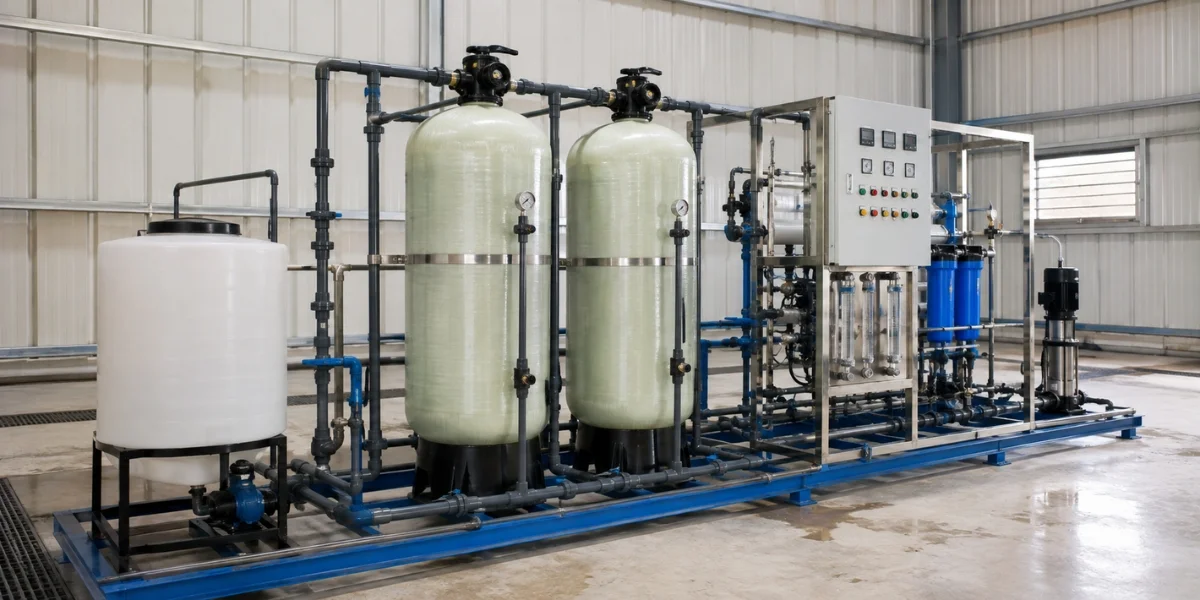
RO & Water Recycling Plant Manufacturer in India
Trity Environ Solutions manufactures RO and water recycling systems for industries and commercial facilities, engineered for reliable purity and reuse.
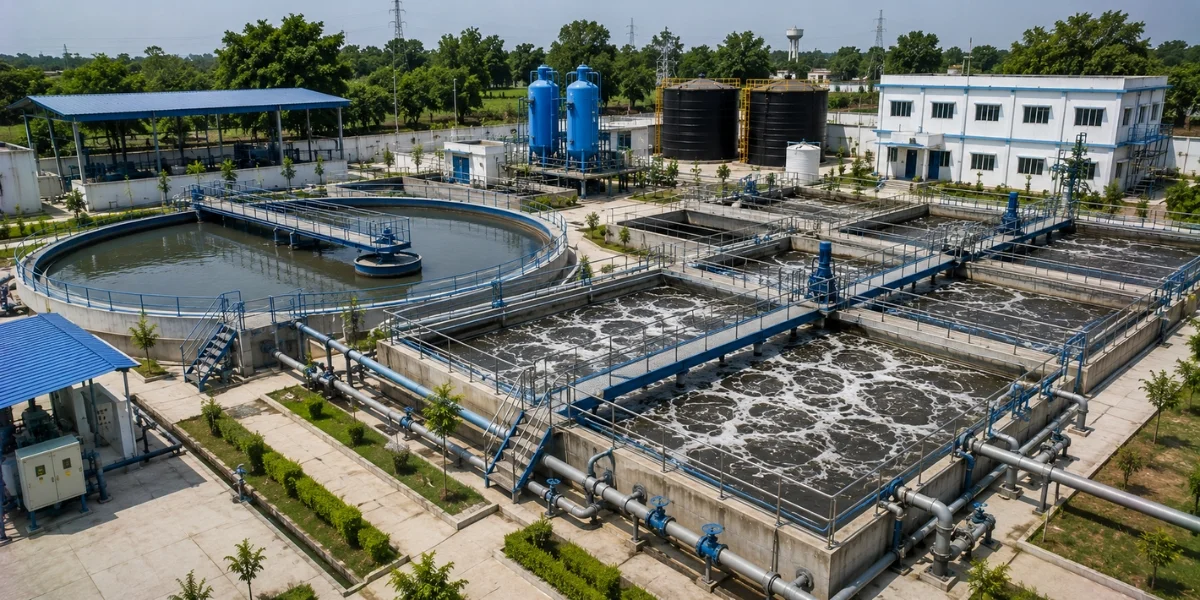
Tertiary Treatment Plant Manufacturer in India
Trity Environ Solutions manufactures tertiary treatment plants that polish treated water beyond secondary treatment, enabling genuine reuse and stricter discharge compliance.
Wastewater Recycling System Manufacturer in India
Trity Environ Solutions manufactures wastewater recycling systems using UF and RO technology, turning treated wastewater into reuse-grade water for cooling, flushing, and gardening.
PAN-INDIA CAPABILITIES
Regional Solutions & State Coverage
TECHNICAL KNOWLEDGE
Related Insights & Engineering Guides
PROVEN EXCELLENCE
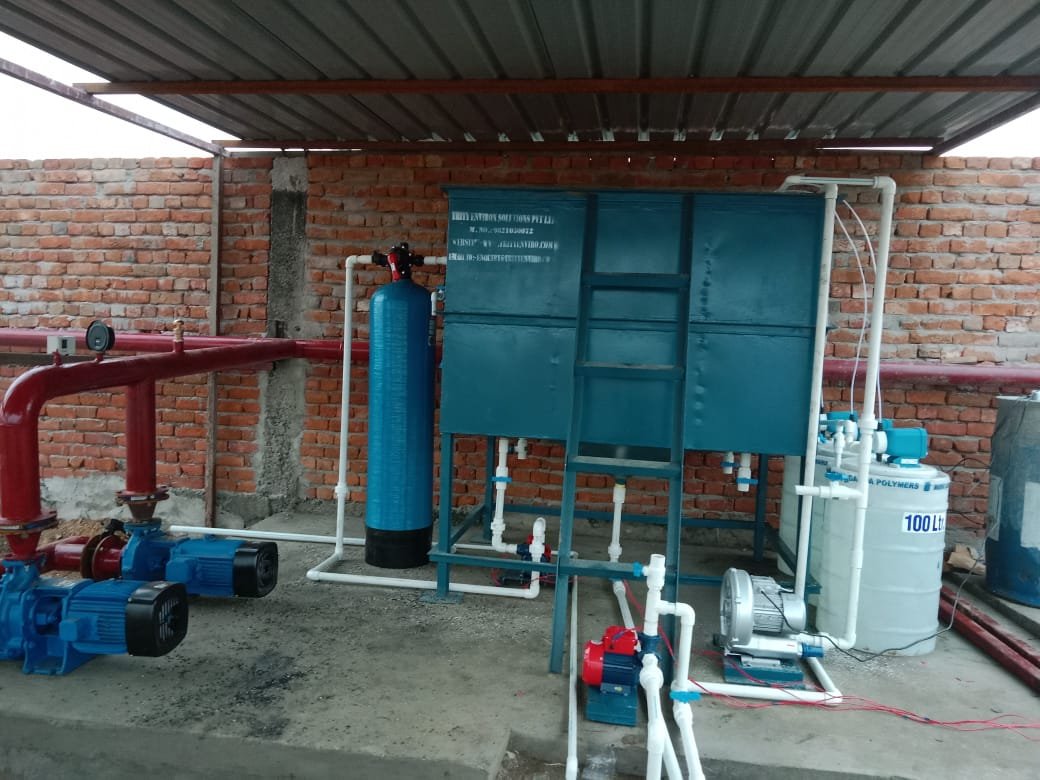
Featured Turnkey Installations




Need a Custom Water or Wastewater Treatment Solution?
Our engineering team can help design the right system for your capacity, industry, and compliance requirements.