
 ISO 9001:2015 & QCI Approved
STP and ETP Plant Manufacturer in Tamil Nadu
Trity Environ Solutions is a trusted STP and ETP plant manufacturer in Tamil Nadu, building wastewater systems for the textile dyeing and bleaching units of Tirupur, the engineering and foundry industry of Coimbatore, and the industries, hospitals, hotels, and housing projects of Chennai. In a state where zero liquid discharge has been enforced by the courts, it designs plants that keep discharge measurably inside limits, with pan India installation support behind every project. Whether you need a sewage treatment plant manufacturer in Tamil Nadu or an effluent treatment plant manufacturer in Tamil Nadu, Trity Environ Solutions builds both in-house, from design to commissioning.
SPCB / CPCB Norm Compliant
Heavy Fabrication
Tamil Nadu Is Where Zero Liquid Discharge Became a Court Order
Few states have seen wastewater rules enforced as hard as Tamil Nadu. In 2006 the Madras High Court required Tirupur's dyeing and bleaching units to reach zero liquid discharge, and in February 2011, after a contempt petition on the Noyyal river, it ordered about 700 units shut until they complied. Down To Earth reported in May 2011 that around 20 common effluent plants were operating in Tirupur, that no liquid effluent could be released into the open, and that dissolved solids in the river had fallen from 5,000 mg/L to 3,000 mg/L after the closures, against a norm of 250. Those figures are more than a decade old, but they set the expectation that textile effluent here must be treated and recovered, not just diluted. More recently, TNPCB issued a circular dated 2 January 2025 directing its engineers to use prescribed adequacy check slips to assess the reverse osmosis and reject management systems of ZLD units, including textile units, so inspections now look at how well the recovery stages actually work.
The official data today is detailed. TNPCB's Policy Note for 2025-26 lists 36 common effluent plants in the scheme, 19 of them for textile bleaching and dyeing, requires the 17 Red-Large industries to provide zero liquid discharge, and records real-time effluent monitoring of 390 industrial units. On the sewage side it counts 119 sewage treatment plants, with online monitoring directed at all common plants, and records that 44 sewage tanker lorry registrations were recommended for cancellation up to October 2024 for illegal discharge. The Cooum and Adyar are listed as Priority I polluted stretches, with untreated domestic sewage named as the main cause. For an industry, hospital, or housing project, Tamil Nadu Pollution Control Board (TNPCB) consent is checked against the plant you actually run. Trity Environ Solutions builds effluent treatment plants for textile, engineering, and food units, and sewage treatment plants for the state's cities, designed against your real load and consent conditions.
Planning a project anywhere in Tamil Nadu? Request a free site assessment and our engineering team will confirm the right configuration for your site.
Looking for only one side of the problem? Trity Environ Solutions has dedicated pages for a sewage treatment plant manufacturer in Tamil Nadu covering city sewage, hospitals, and housing, and an effluent treatment plant manufacturer in Tamil Nadu covering industrial effluent.
WHY THIS SYSTEM?
Key Benefits of STP and ETP Plant Manufacturer in Tamil Nadu
Engineered for high biological efficiency, full environmental compliance, and low lifecycle operational costs.
Dyeing and Bleaching Effluent Expertise
Colour, COD, and TDS handling designed for the dyeing and bleaching units of Tirupur, where effluent chemistry changes with every fabric and dye lot.
Zero Liquid Discharge Ready
RO and evaporation stages that recover water and leave no liquid effluent, built for units that must meet the ZLD standard.
Water Recovery and Reuse
Treated water returned to process washing, cooling, and flushing, which cuts fresh water and tanker demand in a water-stressed state.
Compact for City Projects
Modular MBBR and MBR layouts for towers, hospitals, and hotels in Chennai and Coimbatore where land is limited.
Support Across the State
Installation, operator training, and AMC response across Tamil Nadu's industrial and urban belts, backed by Trity's engineering team.
Zero Discharge Is a Design Standard, Not a Slogan
The Tirupur orders show that a unit can be shut down for failing to treat. A plant with the right evaporation and recovery stages, sampling points, and a dated log of treated water quality is the strongest position when TNPCB inspects. Where a unit wants to reuse more water, a wastewater recycling system can be added after the main treatment train.
Plants Fail Through Operation, Not Drawings
The 2011 reporting noted that evaporators were inefficient because RO reject was far weaker than what they needed. Operation and process matching decide results. Trity Environ Solutions supports every Tamil Nadu installation with operator training, performance checks, and an Annual Maintenance Contract, so dosing, membranes, and blowers stay within limits. Talk to our team about AMC coverage for your facility.
City Pages Across Tamil Nadu
Trity Environ Solutions has dedicated pages for the state's main wastewater markets: the STP and ETP plant manufacturer in Tirupur page for textile dyeing and bleaching, and the STP and ETP plant manufacturer in Chennai page for the capital's hospitals, housing, IT campuses, and industry. For projects in neighbouring southern states, it also serves clients as an STP and ETP plant manufacturer in Bangalore and an STP and ETP plant manufacturer in Andhra Pradesh, so south India projects can be handled by one team.
SYSTEM CONFIGURATIONS
Types of STP and ETP Plant Manufacturer in Tamil Nadu Configurations
Tailored industrial configurations matched to specific effluent composition, flow rates, and space constraints.
Textile Dyeing and Bleaching ETP
Our textile dyeing effluent treatment plant removes colour, COD, and dissolved solids from dyeing and bleaching units.
Zero Liquid Discharge
Our zero liquid discharge system recovers water from high TDS effluent for units that must stop discharging altogether.
Engineering and Foundry ETP
Our physico-chemical effluent treatment plant removes metals and suspended solids through pH correction, coagulation, and clarification.
High-Rise and Commercial STP
Our MBBR sewage treatment plant fits basement and podium layouts and holds treated quality across peak swings.
Hospitals, Hotels and Malls
Our MBR sewage treatment plant delivers high quality, low odour treated water in very little space, suited to reuse for cooling and flushing.
Not sure which configuration fits your Tamil Nadu site? Get a free consultation and we will recommend the right setup based on your effluent and consent conditions.
STEP-BY-STEP WORKFLOW
How the STP and ETP Plant Manufacturer in Tamil Nadu Process Works
A sequential, multi-stage treatment methodology engineered for maximum contaminant removal and water recovery.
01
Site Assessment & Influent Characterisation
Flow measurement and sampling establish your actual load, whether dyeing, engineering, or domestic sewage.
02
Design & Engineering
Technology and layout are fixed against TNPCB consent conditions, available footprint, and reuse or ZLD targets.
03
Manufacturing & Installation
Components are manufactured under ISO 9001:2015 quality controls, then installed and commissioned by Trity's site team.
04
Commissioning & AMC Support
The plant is tested against consent limits, operators are trained, and ongoing AMC support keeps performance consistent afterward.
COMMON INQUIRIES
Frequently Asked Questions
Q1. Which pollution control board governs STP and ETP discharge in Tamil Nadu?
The Tamil Nadu Pollution Control Board (TNPCB) issues consent to establish and consent to operate, alongside CPCB guidelines and National Green Tribunal directions.
Q2. Do dyeing units in Tirupur need zero liquid discharge?
The Madras High Court has required zero liquid discharge from Tirupur's dyeing and bleaching units, so the plant must recover water and leave no liquid effluent. Confirm the current norm for your unit with TNPCB before design.
Q3. Can you build an ETP for a textile unit in Tirupur?
Yes. Dyeing effluent needs colour removal, equalisation, and TDS handling beyond a standard biological plant, so each plant is designed from your own effluent analysis.
Q4. Is an STP mandatory for hospitals and housing projects in Tamil Nadu?
Large residential, commercial, and healthcare projects generally need an STP as part of environmental clearance and TNPCB consent conditions. Requirements vary by built-up area and project category.
Q5. How long does installation take in Tamil Nadu?
Prefabricated modular plants typically commission within 45 to 90 days, while civil-based plants for larger capacities take 3 to 6 months from design approval to handover.
Q6. Can an existing Tamil Nadu plant be upgraded or maintained?
Yes. We audit existing plants, retrofit capacity or technology, and take them under an annual maintenance contract.
Q7. How do I choose a reliable STP and ETP plant manufacturer in Tamil Nadu?
Look for in-house manufacturing, experience with TNPCB consent requirements, a design based on your own effluent analysis, and a clear maintenance offering after commissioning. Trity Environ Solutions builds its plants under ISO 9001:2015 quality controls and supports every installation with operator training and an annual maintenance contract.
CATALOGUE
Related Engineering Products
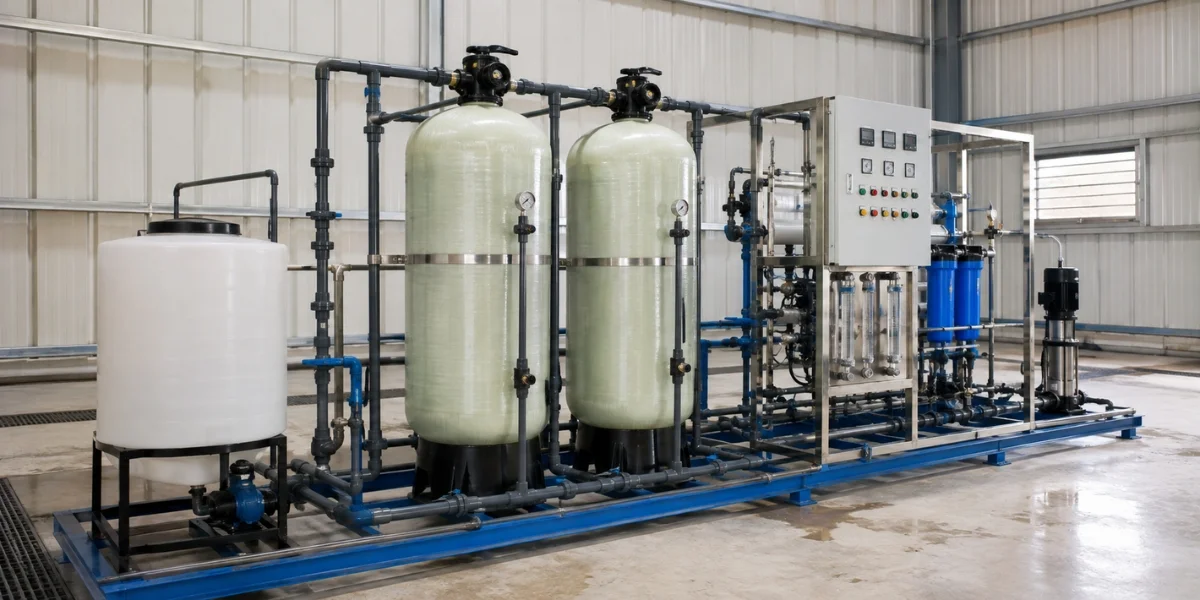
RO & Water Recycling Plant Manufacturer in India
Trity Environ Solutions manufactures RO and water recycling systems for industries and commercial facilities, engineered for reliable purity and reuse.
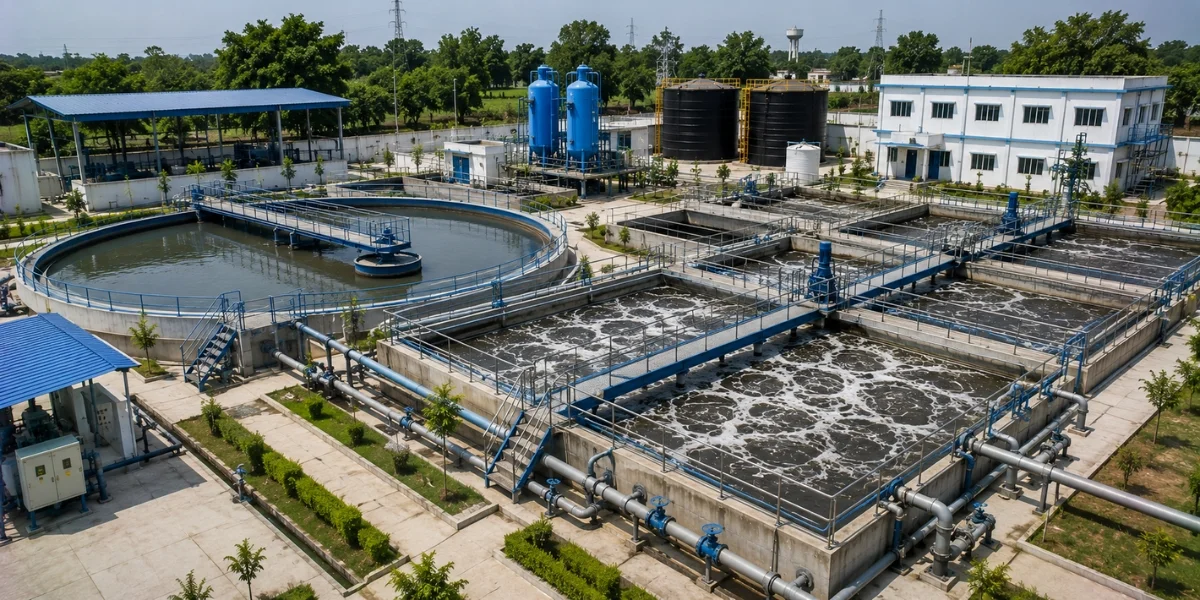
Tertiary Treatment Plant Manufacturer in India
Trity Environ Solutions manufactures tertiary treatment plants that polish treated water beyond secondary treatment, enabling genuine reuse and stricter discharge compliance.
Wastewater Recycling System Manufacturer in India
Trity Environ Solutions manufactures wastewater recycling systems using UF and RO technology, turning treated wastewater into reuse-grade water for cooling, flushing, and gardening.
PAN-INDIA CAPABILITIES
Regional Solutions & State Coverage
TECHNICAL KNOWLEDGE
Related Insights & Engineering Guides
PROVEN EXCELLENCE
Featured Turnkey Installations











Need a Custom Water or Wastewater Treatment Solution?
Our engineering team can help design the right system for your capacity, industry, and compliance requirements.

