
 ISO 9001:2015 & QCI Approved
STP and ETP Plant Manufacturer in Noida
Trity Environ Solutions manufactures STP and ETP plants for Noida and Greater Noida's group housing societies and industrial units. UPPCB-compliant engineering. Get a free quote.
SPCB / CPCB Norm Compliant
Heavy Fabrication
STP and ETP Plant Manufacturer for Noida and Greater Noida
In 2023, the Greater Noida Industrial Development Authority (GNIDA) sent notices to 37 housing societies after finding their STPs either non-functional or built below standard, some of them discharging sewage straight into drains. One high-profile case, Supertech Eco Village One, was penalized ₹1 crore by GNIDA after inspectors found untreated sewage being released from the site. Under Greater Noida rules, any project built on 20,000 square metres or more is required to have a working STP, and enforcement has clearly moved from warning letters to real financial penalties. Trity Environ Solutions manufactures Sewage Treatment Plant (STP) and Effluent Treatment Plant (ETP) systems for Noida and Greater Noida engineered to actually stay compliant after commissioning, not just pass an initial inspection.
We work with developers, RWAs, industrial units, and institutions across Noida's sectors and Greater Noida's industrial corridors, and every system we design accounts for the Uttar Pradesh Pollution Control Board's (UPPCB) discharge norms as a baseline, not a stretch target.
STP Plant Manufacturing for Noida's Group Housing Societies
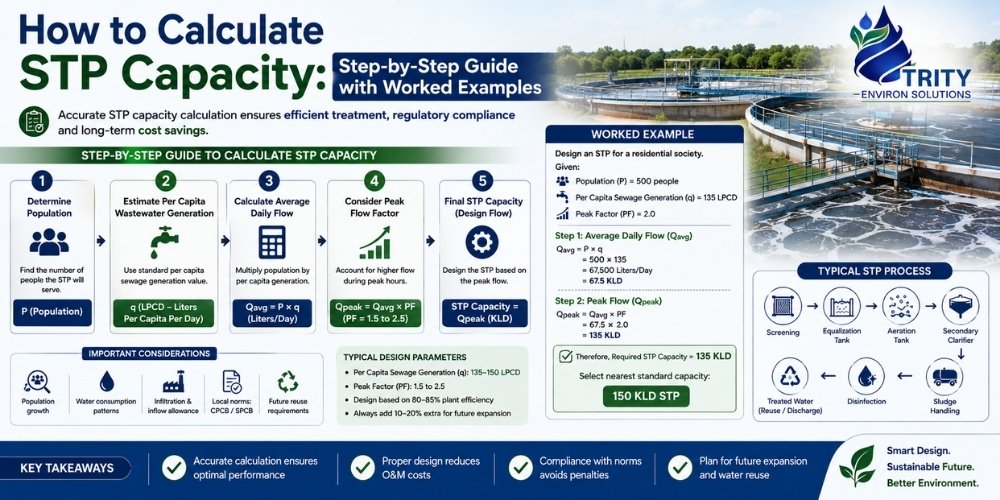
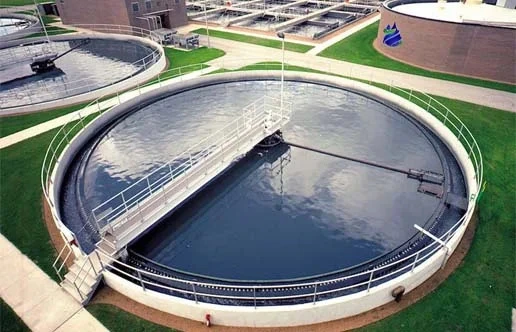
Noida's residential landscape is dominated by large group housing societies, and our Sewage Treatment Plant systems are built specifically for that scale. The city currently runs on four sewerage districts feeding an estimated 288 MLD of sewage, with the Noida Authority targeting 100 percent sewage treatment coverage by 2031 and upgrading its SBR technology to get there. A well-designed STP runs through three stages: preliminary treatment to remove physical solids and debris, secondary treatment using biological processes such as MBBR or SBR to break down organic load, and tertiary treatment for disinfection before the water is reused for flushing, landscaping, or firefighting reserves, which is exactly how the Authority's own treated water gets used across the city.
Given what happened at Supertech Eco Village One and the 37 societies flagged by GNIDA, we design and size every STP against a society's actual peak occupancy, not a rough estimate based on unit count, since undersized plants are the most common reason societies end up non-compliant years after construction.
ETP Plant Solutions for Noida and Greater Noida's Industrial Corridors
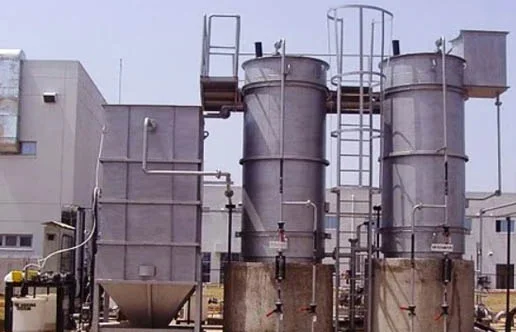
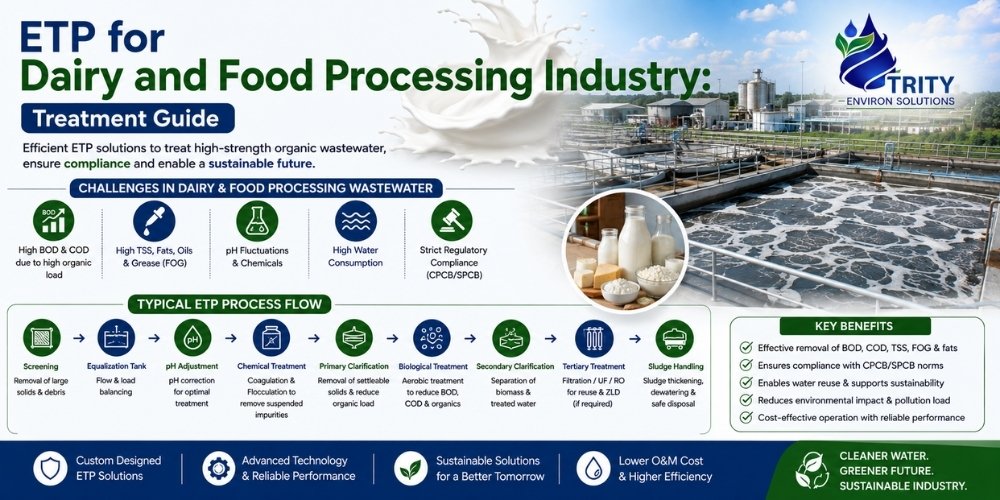
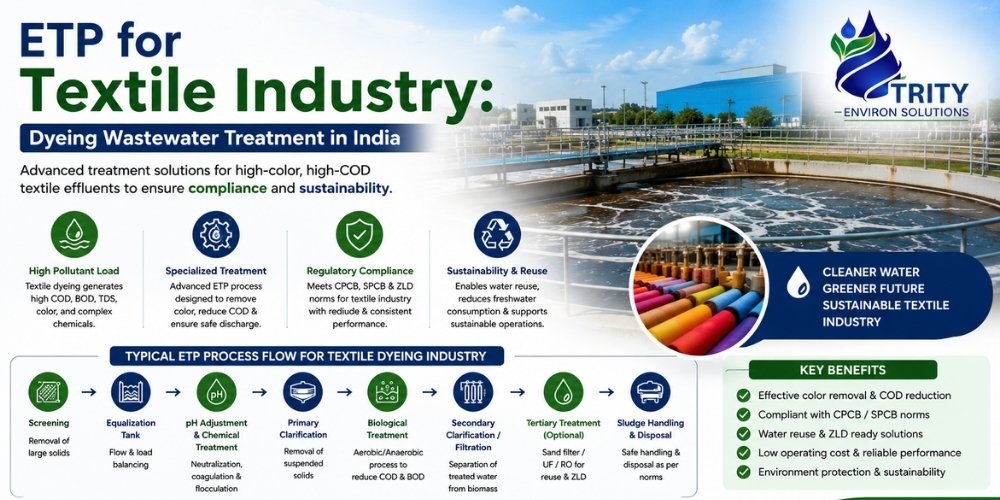
Noida and Greater Noida host one of the densest industrial belts in the NCR, spanning Sector 58 to 65, Phase II, and Greater Noida's Knowledge Park, Ecotech, Surajpur, Kasna, and Yamuna Expressway zones. Our Effluent Treatment Plant systems are built around three stages: physical treatment to remove suspended solids and oil, chemical treatment using coagulation and flocculation for dissolved contaminants, and biological treatment to reduce organic load before final discharge.
For industries connected to a Common Effluent Treatment Plant (CETP), we design pre-treatment systems that bring effluent within the CETP's inlet standards, since discharging above those limits risks disconnection notices from the industrial area's operating authority in addition to UPPCB action.
Turnkey Execution: Design to Commissioning
Our scope on Noida and Greater Noida projects typically covers:
- Site assessment and effluent or sewage characterisation
- Process design and technology selection
- Civil and structural coordination with your contractor or RWA
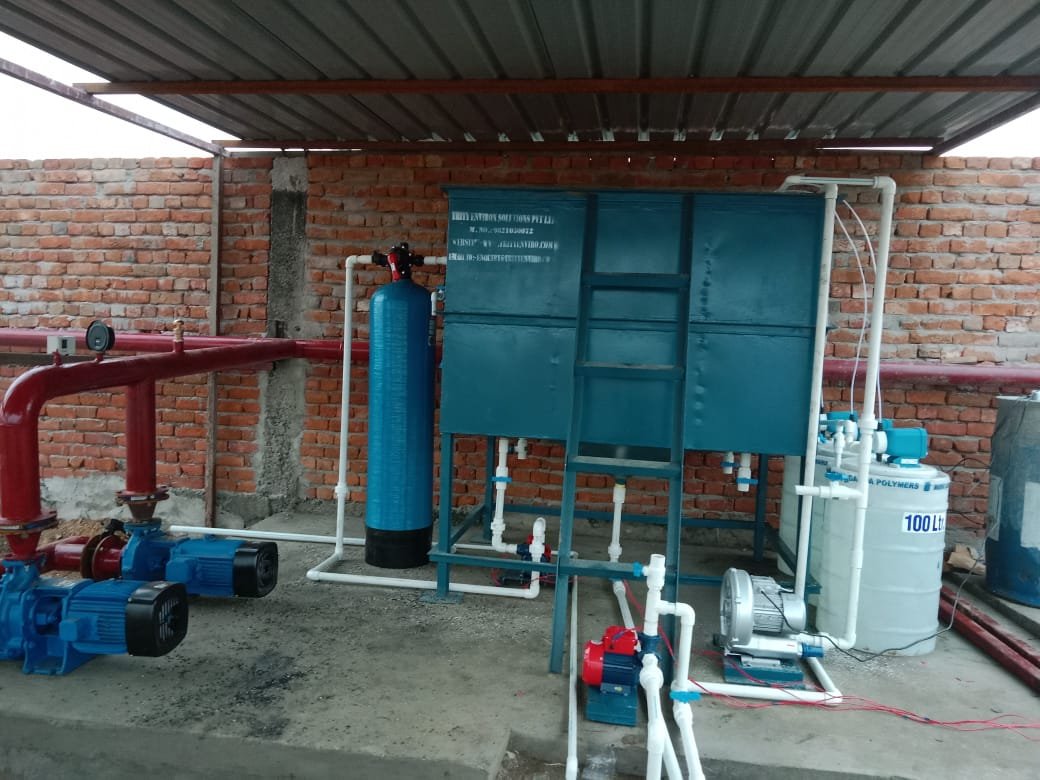
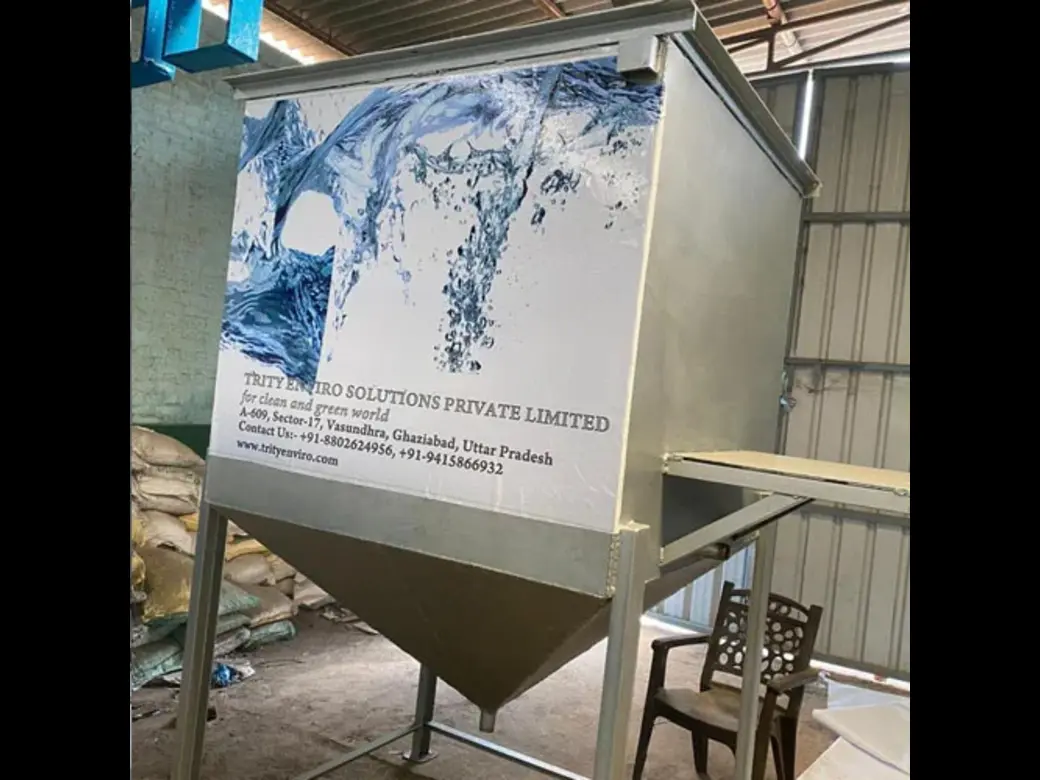
- Equipment manufacturing at our own facility
- Installation, piping, and electrical integration
- Trial runs, commissioning, and UPPCB documentation support
- Annual Maintenance Contracts (AMC) after commissioning
For group housing societies specifically, we also support RWAs through the Consent to Establish (CTE) and Consent to Operate (CTO) application process with UPPCB, since an STP that's built but never formally consented still leaves the society exposed to the same penalties as having no plant at all.
Capacity Options We Manufacture
STP and ETP Plant Manufacturer for Noida and Greater NoidaIn 2023, the Greater Noida Industrial Development Authority (GNIDA) sent notices to 37 housing societies after finding their STPs either non-functional or built below standard, some of them discharging sewage straight into drains. One high-profile case, Supertech Eco Village One, was penalized ₹1 crore by GNIDA after inspectors found untreated sewage being released from the site. Under Greater Noida rules, any project built on 20,000 square metres or more is required to have a working STP, and enforcement has clearly moved from warning letters to real financial penalties. Trity Environ Solutions manufactures Sewage Treatment Plant (STP) and Effluent Treatment Plant (ETP) systems for Noida and Greater Noida engineered to actually stay compliant after commissioning, not just pass an initial inspection. We work with developers, RWAs, industrial units, and institutions across Noida's sectors and Greater Noida's industrial corridors, and every system we design accounts for the Uttar Pradesh Pollution Control Board's (UPPCB) discharge norms as a baseline, not a stretch target. STP Plant Manufacturing for Noida's Group Housing SocietiesNoida's residential landscape is dominated by large group housing societies, and as a leading STP Plant Manufacturer in Noida, our Sewage Treatment Plant (STP) systems are built specifically for that scale. The city currently runs on four sewerage districts feeding an estimated 288 MLD of sewage, with the Noida Authority targeting 100 percent sewage treatment coverage by 2031 and upgrading its SBR technology to get there. A well-designed STP runs through three stages: preliminary treatment to remove physical solids and debris, secondary treatment using biological processes such as MBBR or SBR to break down organic load, and tertiary treatment for disinfection before the water is reused for flushing, landscaping, or firefighting reserves, which is exactly how the Authority's own treated water gets used across the city. Given what happened at Supertech Eco Village One and the 37 societies flagged by GNIDA, we design and size every STP against a society's actual peak occupancy, not a rough estimate based on unit count, since undersized plants are the most common reason societies end up non-compliant years after construction. ETP Plant Solutions for Noida and Greater Noida's Industrial CorridorsNoida and Greater Noida host one of the densest industrial belts in the NCR, spanning Sector 58 to 65, Phase II, and Greater Noida's Knowledge Park, Ecotech, Surajpur, Kasna, and Yamuna Expressway zones. As a trusted ETP Plant Manufacturer in Noida, our Effluent Treatment Plant (ETP) systems are built around three stages: physical treatment to remove suspended solids and oil, chemical treatment using coagulation and flocculation for dissolved contaminants, and biological treatment to reduce organic load before final discharge. For industries connected to a Common Effluent Treatment Plant (CETP), we design pre-treatment systems that bring effluent within the CETP's inlet standards, since discharging above those limits risks disconnection notices from the industrial area's operating authority in addition to UPPCB action. Turnkey Execution: Design to CommissioningOur scope on Noida and Greater Noida projects typically covers:
For group housing societies specifically, we also support RWAs through the Consent to Establish (CTE) and Consent to Operate (CTO) application process with UPPCB, since an STP that's built but never formally consented still leaves the society exposed to the same penalties as having no plant at all. Capacity Options We Manufacture
Treatment Technologies We DeployUPPCB and CPCB recognise several treatment technologies, and we manufacture across the ones best suited to Noida's mix of high-density residential and industrial demand:
Technology choice affects your running cost and how consistently the plant clears UPPCB inspection, particularly for CETP-connected industries where inlet standards are strictly enforced. Industries and Institutions We Serve in Noida
UPPCB Compliance and Discharge NormsEvery plant we design for Noida and Greater Noida is built to clear these baseline requirements without last-minute rework:
Non-compliance here isn't hypothetical. Beyond the Supertech Eco Village One penalty, GNIDA has openly warned that societies with non-functional STPs face strict action, and NGT rulings against sewage discharge into the Yamuna basin have set penalty precedents running into crores of rupees in nearby NCR cases. Areas We Cover Across Noida and Greater NoidaWe supply, install, and service STP and ETP systems across Noida's sectors, Greater Noida's Knowledge Park, Ecotech, Surajpur, and Kasna industrial areas, and the Yamuna Expressway industrial corridor, along with Greater Noida West and the wider NCR region. Engineering Considerations Specific to NoidaA few site conditions shape how we design differently for Noida and Greater Noida compared to other NCR cities. High water table in low-lying sectors. Several sectors closer to the Yamuna floodplain, including parts of the Noida Extension and Greater Noida West belt, have a shallow water table that affects underground STP tank design. We specify waterproofing and structural detailing rated for groundwater pressure rather than assuming standard soil conditions across every site. Vertical, high-density construction. Noida's group housing societies increasingly go higher and denser on smaller footprints, which limits available plot space for the STP itself. Compact SBR or MBBR configurations, sometimes stacked or built partially underground, tend to fit better than a sprawling conventional layout. Rapid occupancy ramp-up in new societies. A newly handed-over society may go from near-empty to majority-occupied within a year or two as buyers move in. We size STPs against projected full occupancy from day one rather than current occupancy, since retrofitting capacity later in a completed building is far more disruptive than in an under-construction site. CETP dependency for industrial units. Many Noida and Greater Noida industries don't operate a standalone ETP but instead pre-treat and discharge into a shared Common Effluent Treatment Plant. This changes the design brief entirely, since the target isn't final discharge-grade water but meeting the CETP operator's inlet specification, which is often stricter on certain parameters than the general UPPCB limit. Noida's STP and ETP market is crowded with a mix of Noida-based specialists and larger national suppliers, and most of the content in this space online reads like it was written to rank rather than to inform, some of it visibly machine-translated with odd phrasing. What tends to separate a plant that stays compliant from one that ends up on a GNIDA notice isn't the brochure. It's whether the system was sized against actual peak load, whether the RWA or facility team actually completed CTE and CTO paperwork, and whether anyone is maintaining the plant three years after handover. We manufacture at our own facility, handle design through commissioning ourselves, and provide AMC coverage that includes documentation support, not just equipment servicing. For a market where a ₹1 crore penalty has already been handed down to a major society, that combination matters more than the lowest quote. Quality, Certification, and After-Sales SupportTrity Environ Solutions is ISO 9001:2015 certified, and every plant we manufacture goes through in-house quality inspection before dispatch. After installation, we provide AMC support, spare parts availability, and remote troubleshooting. You can review our project history on our Achievement page, or read more about our full Services. Frequently Asked Questions1. What is the cost of an STP or ETP plant in Noida?Cost depends on capacity, technology, and site conditions. A 10 KLD society STP and a 500 KLD large group housing system will differ significantly. We provide a site-specific quote after reviewing your flow data and occupancy. 2. Is an STP mandatory for group housing societies in Noida and Greater Noida?Yes. In Greater Noida, any project on 20,000 square metres or more is required to have a functional STP. Noida Authority enforces similar requirements across its sewerage districts, and non-compliance has resulted in penalties running into crores of rupees. 3. What happened with the Supertech Eco Village One case?GNIDA penalized the society ₹1 crore after finding untreated sewage being discharged from the site. It's one of the clearest examples of how seriously Greater Noida authorities are now enforcing STP compliance. 4. How long does the UPPCB Consent to Establish and Consent to Operate process take?Timelines vary by project scale, but generally run 60 to 90 days once your site plan and treatment design are submitted. We assist RWAs and industrial clients with documentation to avoid delays. 5. What discharge standards does my STP need to meet in Noida?Reuse-grade discharge typically requires BOD at or below 10 mg/L, COD around 50 mg/L, and TSS between 10 and 20 mg/L depending on end use. We design with margin above these limits rather than to the exact figure. 6. Do you service industrial units connected to a Common Effluent Treatment Plant (CETP)?Yes. We design pre-treatment ETP systems that bring your effluent within the CETP's inlet standards, which is a separate requirement from UPPCB's own discharge norms. 7. Can an existing but non-compliant STP be upgraded instead of rebuilt?In many cases, yes. Adding an additional treatment stage or upgrading to SBR technology can bring an older or undersized plant within current UPPCB limits without a full rebuild. We assess this during site evaluation, which is often the faster and cheaper route for societies already flagged in an inspection. Ready to discuss your Noida or Greater Noida project? Get a free quote or explore our full product range for STP, ETP, and related water treatment systems. |
||||||||||||||
|---|---|---|---|---|---|---|---|---|---|---|---|---|---|---|
Treatment Technologies We Deploy
UPPCB and CPCB recognise several treatment technologies, and we manufacture across the ones best suited to Noida's mix of high-density residential and industrial demand:
- SBR (Sequencing Batch Reactor): the technology the Noida Authority itself is upgrading to across its municipal STPs, a strong fit for larger societies and institutions
- MBBR (Moving Bed Biofilm Reactor): compact footprint, well suited to mid-sized societies and commercial buildings with limited plot space
- Extended Aeration: cost-effective for smaller residential or institutional setups
- DAF (Dissolved Air Flotation): useful as a pre-treatment stage for industrial effluent with high oil and grease content before biological treatment
Technology choice affects your running cost and how consistently the plant clears UPPCB inspection, particularly for CETP-connected industries where inlet standards are strictly enforced.
Industries and Institutions We Serve in Noida
- Group housing societies and RWAs: the largest single source of demand given GNIDA and Noida Authority's mandatory STP rules
- IT and business parks: commercial-scale sewage treatment for large campus developments
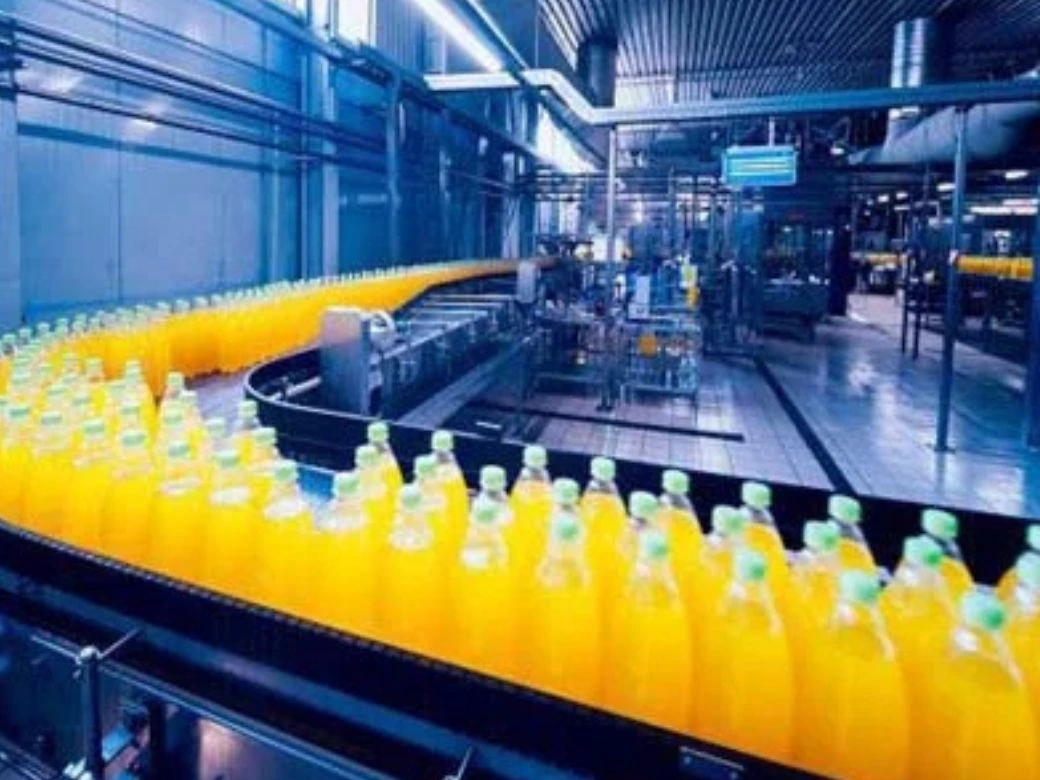
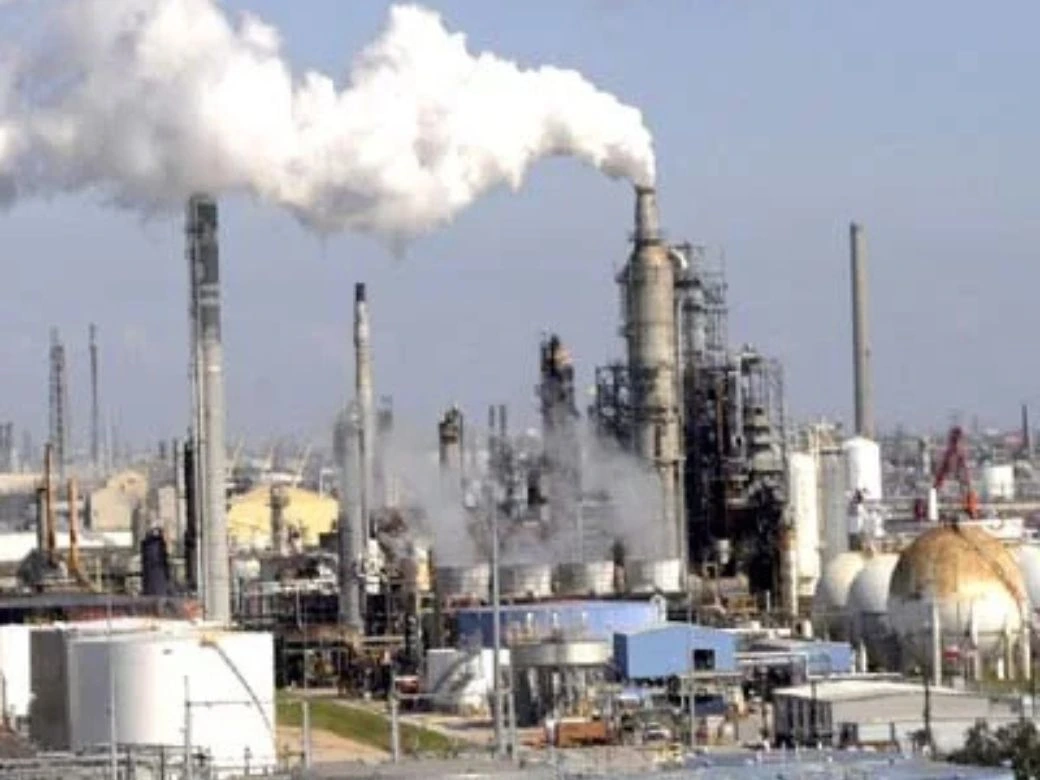
- Pharmaceutical and chemical manufacturing: effluent treatment for units across Noida's industrial sectors
- Automotive and electronics manufacturing: a major share of Noida and Greater Noida's industrial base
- Hospitals and healthcare facilities: dedicated disinfection stages for sewage carrying biomedical contamination risk
- Educational institutions: centralised STPs for large campus and hostel developments
- Hotels and commercial complexes: STP systems sized for variable daily occupancy
UPPCB Compliance and Discharge Norms
Every plant we design for Noida and Greater Noida is built to clear these baseline requirements without last-minute rework:
- BOD: generally required at 10 mg/L or below for reuse-grade discharge, tighter than the older 30 mg/L benchmark still cited in some older guidance
- COD: typically capped around 50 mg/L
- TSS: 10 to 20 mg/L depending on the intended reuse
- Mandatory Consent to Establish (CTE) and Consent to Operate (CTO) from UPPCB before any discharge
- For Greater Noida, mandatory STP for any project on 20,000 square metres or more, enforced directly by GNIDA
Non-compliance here isn't hypothetical. Beyond the Supertech Eco Village One penalty, GNIDA has openly warned that societies with non-functional STPs face strict action, and NGT rulings against sewage discharge into the Yamuna basin have set penalty precedents running into crores of rupees in nearby NCR cases.
Areas We Cover Across Noida and Greater Noida
We supply, install, and service STP and ETP systems across Noida's sectors, Greater Noida's Knowledge Park, Ecotech, Surajpur, and Kasna industrial areas, and the Yamuna Expressway industrial corridor, along with Greater Noida West and the wider NCR region.
Engineering Considerations Specific to Noida
A few site conditions shape how we design differently for Noida and Greater Noida compared to other NCR cities.
High water table in low-lying sectors. Several sectors closer to the Yamuna floodplain, including parts of the Noida Extension and Greater Noida West belt, have a shallow water table that affects underground STP tank design. We specify waterproofing and structural detailing rated for groundwater pressure rather than assuming standard soil conditions across every site.
Vertical, high-density construction. Noida's group housing societies increasingly go higher and denser on smaller footprints, which limits available plot space for the STP itself. Compact SBR or MBBR configurations, sometimes stacked or built partially underground, tend to fit better than a sprawling conventional layout.
Rapid occupancy ramp-up in new societies. A newly handed-over society may go from near-empty to majority-occupied within a year or two as buyers move in. We size STPs against projected full occupancy from day one rather than current occupancy, since retrofitting capacity later in a completed building is far more disruptive than in an under-construction site.
CETP dependency for industrial units. Many Noida and Greater Noida industries don't operate a standalone ETP but instead pre-treat and discharge into a shared Common Effluent Treatment Plant. This changes the design brief entirely, since the target isn't final discharge-grade water but meeting the CETP operator's inlet specification, which is often stricter on certain parameters than the general UPPCB limit.
Noida's STP and ETP market is crowded with a mix of Noida-based specialists and larger national suppliers, and most of the content in this space online reads like it was written to rank rather than to inform, some of it visibly machine-translated with odd phrasing. What tends to separate a plant that stays compliant from one that ends up on a GNIDA notice isn't the brochure. It's whether the system was sized against actual peak load, whether the RWA or facility team actually completed CTE and CTO paperwork, and whether anyone is maintaining the plant three years after handover.
We manufacture at our own facility, handle design through commissioning ourselves, and provide AMC coverage that includes documentation support, not just equipment servicing. For a market where a ₹1 crore penalty has already been handed down to a major society, that combination matters more than the lowest quote.
Quality, Certification, and After-Sales Support
Trity Environ Solutions is ISO 9001:2015 certified, and every plant we manufacture goes through in-house quality inspection before dispatch. After installation, we provide AMC support, spare parts availability, and remote troubleshooting. You can review our project history on our Achievement page, or read more about our full Services.
Frequently Asked Questions
1. What is the cost of an STP or ETP plant in Noida?
Cost depends on capacity, technology, and site conditions. A 10 KLD society STP and a 500 KLD large group housing system will differ significantly. We provide a site-specific quote after reviewing your flow data and occupancy.
2. Is an STP mandatory for group housing societies in Noida and Greater Noida?
Yes. In Greater Noida, any project on 20,000 square metres or more is required to have a functional STP. Noida Authority enforces similar requirements across its sewerage districts, and non-compliance has resulted in penalties running into crores of rupees.
3. What happened with the Supertech Eco Village One case?
GNIDA penalized the society ₹1 crore after finding untreated sewage being discharged from the site. It's one of the clearest examples of how seriously Greater Noida authorities are now enforcing STP compliance.
4. How long does the UPPCB Consent to Establish and Consent to Operate process take?
Timelines vary by project scale, but generally run 60 to 90 days once your site plan and treatment design are submitted. We assist RWAs and industrial clients with documentation to avoid delays.
5. What discharge standards does my STP need to meet in Noida?
Reuse-grade discharge typically requires BOD at or below 10 mg/L, COD around 50 mg/L, and TSS between 10 and 20 mg/L depending on end use. We design with margin above these limits rather than to the exact figure.
6. Do you service industrial units connected to a Common Effluent Treatment Plant (CETP)?
Yes. We design pre-treatment ETP systems that bring your effluent within the CETP's inlet standards, which is a separate requirement from UPPCB's own discharge norms.
7. Can an existing but non-compliant STP be upgraded instead of rebuilt?
In many cases, yes. Adding an additional treatment stage or upgrading to SBR technology can bring an older or undersized plant within current UPPCB limits without a full rebuild. We assess this during site evaluation, which is often the faster and cheaper route for societies already flagged in an inspection.
Ready to discuss your Noida or Greater Noida project? Get a free quote or explore our full product range for STP, ETP, and related water treatment systems.
WHY THIS SYSTEM?
Key Benefits of STP and ETP Plant Manufacturer in Noida
Engineered for high biological efficiency, full environmental compliance, and low lifecycle operational costs.
100% CPCB / SPCB Compliance
Strict adherence to national and state pollution control board parameters for BOD, COD, TSS, and heavy metals discharge.
Low Power & Operational Cost
Optimized hydraulic design and energy-efficient aeration reduce kilowatt consumption per cubic meter of treated water.
Compact & Modular Footprint
Skid-mounted and modular civil layouts save valuable industrial floor space and allow seamless capacity expansion.
Automated PLC / SCADA Control
Real-time water quality monitoring, automated dosing systems, and remote telemetry for hassle-free plant operation.
Zero Liquid Discharge (ZLD) Ready
Seamless integration with downstream RO and evaporator systems for maximum water recycling and recovery.
Robust Engineering & Longevity
Heavy-gauge anti-corrosive construction ensures 15+ years of reliable, uninterrupted service life.
SYSTEM CONFIGURATIONS
Types of STP and ETP Plant Manufacturer in Noida Configurations
Tailored industrial configurations matched to specific effluent composition, flow rates, and space constraints.
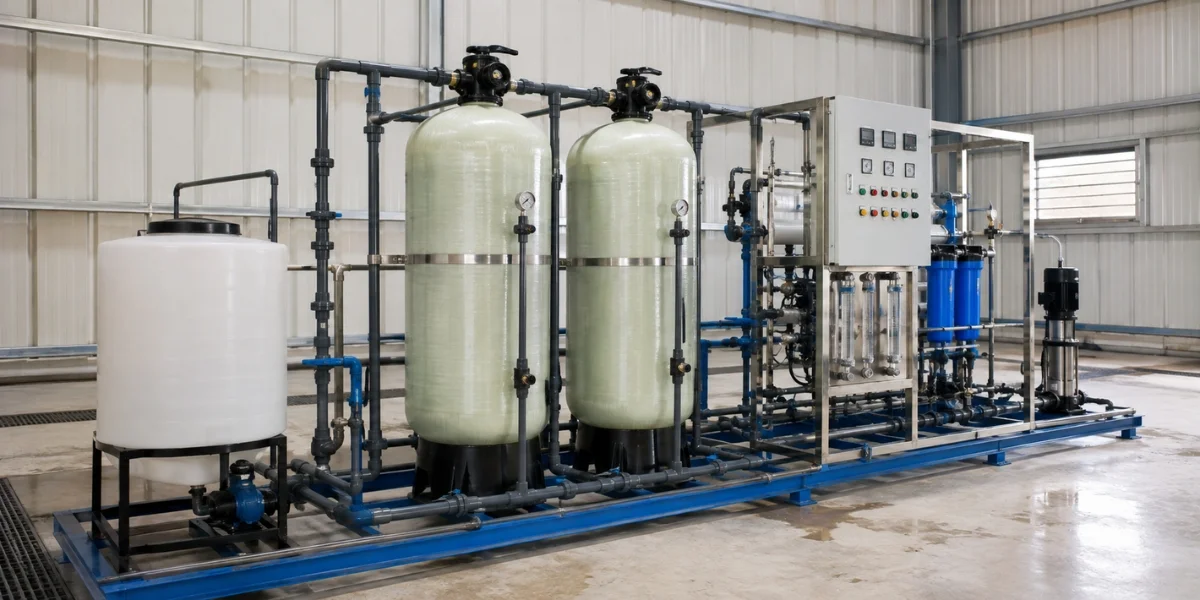
RO & Water Recycling Plant Manufacturer in India
Trity Environ Solutions manufactures RO and water recycling systems for industries and commercial facilities, engineered for reliable purity and reuse.
Explore Configuration
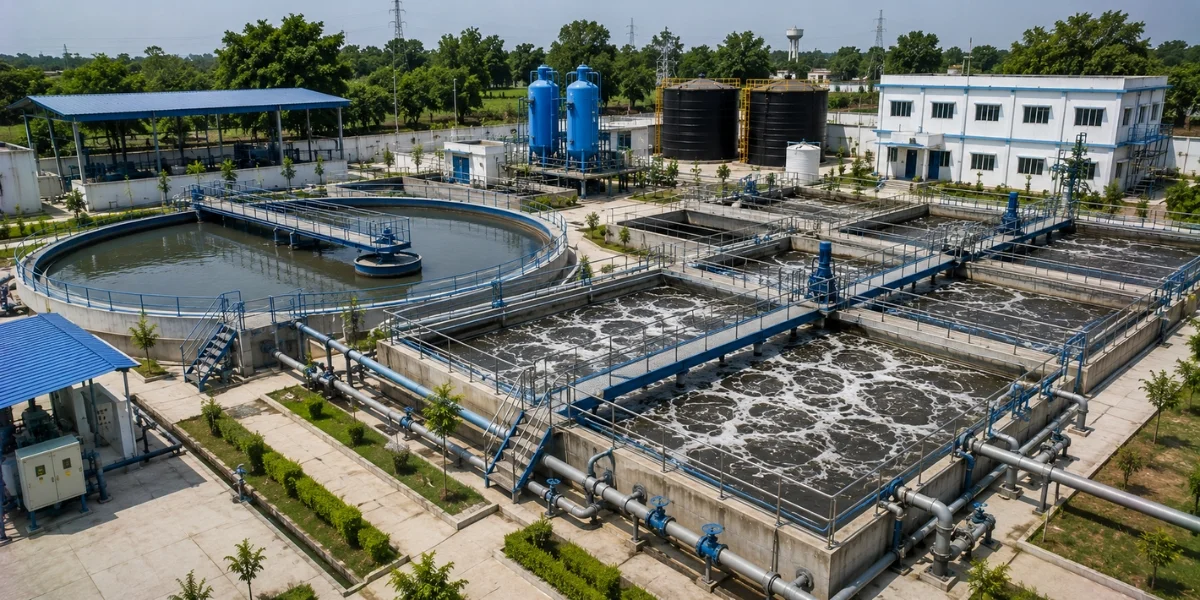
Tertiary Treatment Plant Manufacturer in India
Trity Environ Solutions manufactures tertiary treatment plants that polish treated water beyond secondary treatment, enabling genuine reuse and stricter discharge compliance.
Explore Configuration
Wastewater Recycling System Manufacturer in India
Trity Environ Solutions manufactures wastewater recycling systems using UF and RO technology, turning treated wastewater into reuse-grade water for cooling, flushing, and gardening.
Explore Configuration
STEP-BY-STEP WORKFLOW
How the STP and ETP Plant Manufacturer in Noida Process Works
A sequential, multi-stage treatment methodology engineered for maximum contaminant removal and water recovery.
01
Primary Collection & Screening
Raw effluent equalization, coarse bar screening, and pH neutralization to stabilize influent parameters.
02
Physico-Chemical Coagulation
Flash mixing of coagulants and flocculants followed by primary clarifier separation for heavy suspended solids.
03
Advanced Biological Digestion
Aerobic/anaerobic microbial digestion (MBBR / SBR / ASP) for drastic reduction of dissolved BOD & COD.
04
Tertiary Polishing & Disinfection
Dual media sand and activated carbon filtration with UV/ozonation for clean, reusable output water.
CATALOGUE
Related Engineering Products
RO & Water Recycling Plant Manufacturer in India
Trity Environ Solutions manufactures RO and water recycling systems for industries and commercial facilities, engineered for reliable purity and reuse.
Tertiary Treatment Plant Manufacturer in India
Trity Environ Solutions manufactures tertiary treatment plants that polish treated water beyond secondary treatment, enabling genuine reuse and stricter discharge compliance.
Wastewater Recycling System Manufacturer in India
Trity Environ Solutions manufactures wastewater recycling systems using UF and RO technology, turning treated wastewater into reuse-grade water for cooling, flushing, and gardening.
PAN-INDIA CAPABILITIES
Regional Solutions & State Coverage
TECHNICAL KNOWLEDGE
Related Insights & Engineering Guides
PROVEN EXCELLENCE
Featured Turnkey Installations




Need a Custom Water or Wastewater Treatment Solution?
Our engineering team can help design the right system for your capacity, industry, and compliance requirements.