
 ISO 9001:2015 & QCI Approved
STP and ETP Plant Manufacturer in Gurgaon
Trity Environ Solutions is a trusted STP and ETP plant manufacturer in Gurgaon, building wastewater systems for the city's high-rise societies, commercial towers, Behrampur textile and dyeing units, and Manesar manufacturing plants. With public drains still carrying far more pollution than discharge norms allow, we engineer on-site treatment that keeps your campus compliant, with pan India installation support behind every plant.
GMDA & HSPCB Ready
High-Rise & Industrial ETP
A Fast-Growing City Where Public Treatment Is Still Catching Up
A Fast-Growing City Where Public Treatment Is Still Catching Up
Gurugram has grown faster than its sewage infrastructure. A recent CAG audit of Haryana's urban local bodies found that the Gurugram Metropolitan Development Authority (GMDA) area generated about 550 MLD of domestic sewage against 415 MLD of installed capacity across 12 STPs, leaving roughly 14 percent of the sewage that reached those plants untreated, and the city's main drains recorded BOD between 88 and 106 mg/L against a limit of 10 mg/L.
The same audit noted that only 12 of the district's 16 STPs met discharge norms, and GMDA has itself acknowledged that builders dumping untreated wastewater through tankers is a major obstacle to cleaning up the drains.
For a society, hotel, hospital, or factory in Gurgaon, the lesson is practical: an on-site treatment system that performs reliably is the only dependable way to stay inside HSPCB norms and reuse water for flushing, landscaping, and cooling. Trity Environ Solutions builds effluent treatment plants for Behrampur's dyeing units, Udyog Vihar and Manesar factories, and sewage treatment plants for the residential towers and commercial campuses along Golf Course Road, Sohna Road, and the Dwarka Expressway.
Planning a new project or fixing an underperforming plant in Gurugram? Request a free site assessment and our engineering team will confirm the right configuration for your site.
KEY BENEFITS
Key Benefits of STP and ETP Plant Manufacturer in Gurgaon
Engineered for reliable HSPCB compliance, treated water reuse, and a compact footprint on land-constrained Gurugram sites.
Built to Meet Strict Discharge Limits
Systems engineered to consistently achieve the BOD, COD, and TSS limits HSPCB applies, which matters in a city where public drains have recorded BOD levels many times above the permitted 10 mg/L.
Compact Designs for Costly Land
Compact, modular layouts that fit basements, podium levels, and tight industrial plots, since land in Gurugram is too expensive to give away to oversized treatment tanks.
Treated Water You Can Reuse
Polished effluent suitable for flushing, horticulture, cooling towers, and HVAC makeup, reducing dependence on tanker water and groundwater in an area facing severe depletion.
Dyeing and Textile Effluent Expertise
Colour, COD, and TDS removal engineered for the garment and dyeing units around Behrampur, where industrial effluent reaching public sewers has drawn regulatory attention.
Local Response Across NCR
Quicker site access and AMC response across Gurugram and Manesar from Trity's Ghaziabad base, with trained operators and documentation support for every installation.
Public Drains Cannot Be Your Compliance Plan
Audit findings on Gurugram's three main drains showed average BOD of 88, 97, and 106 mg/L, roughly nine to ten times the permitted limit, and the same audit recorded a large gap between the inspections HSPCB should have carried out and those actually completed. Enforcement can tighten at any time, so a campus that relies on shared drainage carries a risk it does not control. A properly designed on-site plant removes that dependency and gives you documented, repeatable treated water quality.
Plants Fail Slowly Without Operation and Maintenance
The same audit found plants that missed discharge norms for hundreds of days, which usually points to operation, not just design. Trity Environ Solutions supports every Gurgaon installation with operator training, performance monitoring, and an Annual Maintenance Contract, so blowers, diffusers, and dosing systems keep the plant within consent limits. Talk to our team about AMC coverage for your facility.
Behrampur's Dyeing Units Need Industrial Treatment, Not Shared Sewers
The Behrampur industrial area has more than 200 units, and several garment and textile units run dyeing operations whose effluent has been flagged as reaching sewers connected to municipal STPs that are not built for it. GMDA has planned a common effluent treatment plant for the area, but an individual unit still needs its own colour and COD removal to stay compliant in the meantime. Pairing a dedicated ETP with an effluent recycling system also cuts fresh water use in a district that is already water stressed.
High-Rise Societies Have to Treat Their Own Wastewater
With public capacity under pressure and GMDA actively penalising tanker dumping by builders, residential societies and commercial towers are expected to run their own STPs and reuse the output. Trity Environ Solutions designs STP systems that handle the peak morning and evening flows typical of dense housing, deliver reusable flushing and landscape water, and are laid out so that maintenance staff can reach every blower and valve safely.
SYSTEM CONFIGURATIONS
Types of STP and ETP Plant Manufacturer in Gurgaon Configurations
Technologies selected to match your site type, available footprint, and HSPCB consent requirements.
High-Rise Society and Commercial Tower STP
Our MBBR based sewage treatment plant fits basement and podium layouts and keeps treated water quality steady across the peak and off-peak swings of Gurugram's residential towers and offices.
Explore Configuration
Hotels, Hospitals and Malls
Our MBR sewage treatment plant delivers high quality, low odour treated water in very little space, which suits hotels, hospitals, and malls that reuse water for cooling towers and flushing.
Explore Configuration
Textile and Dyeing ETP
Our textile dyeing effluent treatment plant removes colour, COD, and dissolved solids from the garment and dyeing units concentrated around Behrampur.
Explore Configuration
Manufacturing and Industrial ETP
Our physico-chemical effluent treatment plant handles metal finishing, automotive component, and general manufacturing effluent at Udyog Vihar and Manesar.
Explore Configuration
Water Reuse and Recycling
Our wastewater recycling system polishes treated effluent through ultrafiltration and RO so it can return to the process, cooling tower, or landscaping.
Explore Configuration
TURNKEY WORKFLOW
How the STP and ETP Plant Manufacturer in Gurgaon Process Works
A turnkey process engineered for consistent HSPCB compliant performance on compact urban and industrial sites.
01
Site Assessment & Influent Characterisation
Flow measurement and sampling establish your actual load, whether residential sewage, dyeing effluent, or mixed industrial discharge, before design begins.
02
Design & Engineering
Technology and tank layout are fixed against your HSPCB consent category, available footprint, and reuse targets.
03
Manufacturing & Installation
Components are manufactured under ISO 9001:2015 quality controls, then installed and commissioned by Trity's NCR-based site team.
04
Commissioning & AMC Support
The plant is tested against consent limits, operators are trained, and ongoing AMC support keeps performance consistent afterward.
COMMON INQUIRIES
Frequently Asked Questions
Clear answers regarding HSPCB regulations, high-rise STPs, Behrampur textile ETPs, and installation timelines.
Q1. Is an STP mandatory for residential societies and commercial buildings in Gurgaon?
Large residential and commercial projects generally need an STP as part of environmental clearance and HSPCB consent conditions, and many authorities expect treated water to be reused for flushing and landscaping. Requirements vary by built-up area and project category.
Q2. Which pollution control board governs STP and ETP discharge in Gurgaon?
The Haryana State Pollution Control Board (HSPCB) issues consent to establish and consent to operate, alongside CPCB guidelines and any directions from the National Green Tribunal.
Q3. Can you build an ETP for textile and dyeing units in Behrampur?
Yes. Dyeing effluent needs colour removal and COD reduction beyond a standard biological plant, and the treatment train is designed around your dye types, volumes, and reuse targets.
Q4. What capacity STP is needed for a high-rise society?
Capacity depends on the number of flats, occupancy, and the flushing and landscaping demand. Society plants commonly range from about 100 KLD to several hundred KLD, confirmed after a site assessment.
Q5. How long does installation take in Gurgaon?
Prefabricated modular plants typically commission within 45 to 90 days, while civil-based plants for larger capacities take 3 to 6 months from design approval to handover.
Q6. Can an existing Gurgaon STP be upgraded or put under maintenance?
Yes. We audit existing plants, retrofit capacity or technology, and take them under an annual maintenance contract so they stay within consent limits.
Q7. How do I choose a reliable STP and ETP plant manufacturer in Gurgaon?
Look for in-house manufacturing, experience with HSPCB consent requirements, a design based on your own effluent analysis, and a clear maintenance offering after commissioning. Trity Environ Solutions builds its plants under ISO 9001:2015 quality controls and supports every installation with operator training and an annual maintenance contract.
CATALOGUE
Related Engineering Products
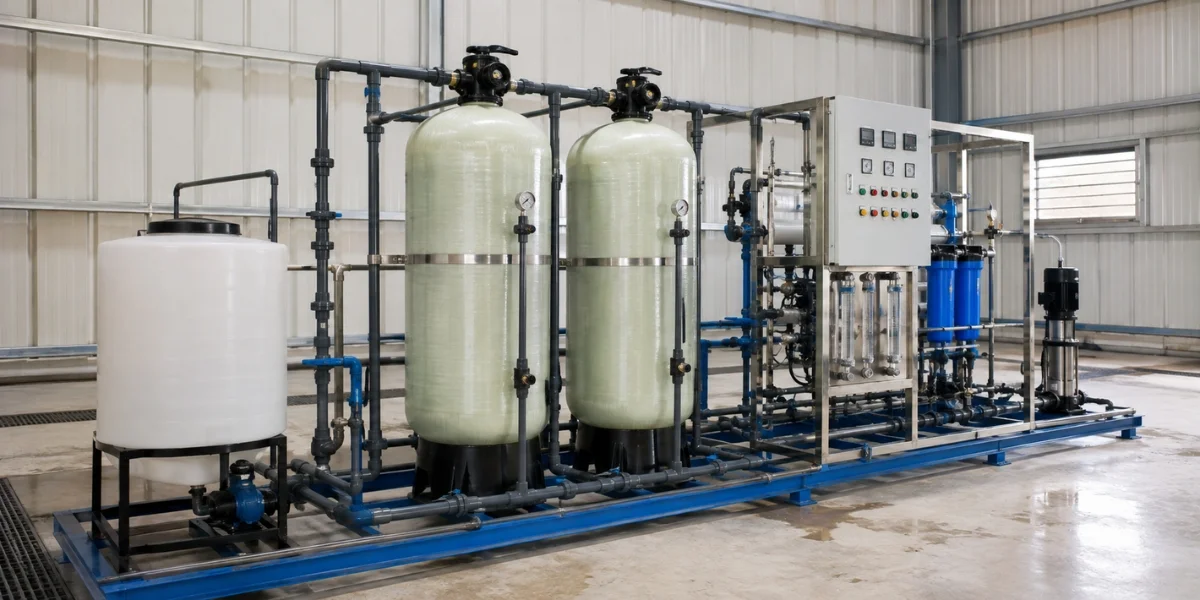
RO & Water Recycling Plant Manufacturer in India
Trity Environ Solutions manufactures RO and water recycling systems for industries and commercial facilities, engineered for reliable purity and reuse.
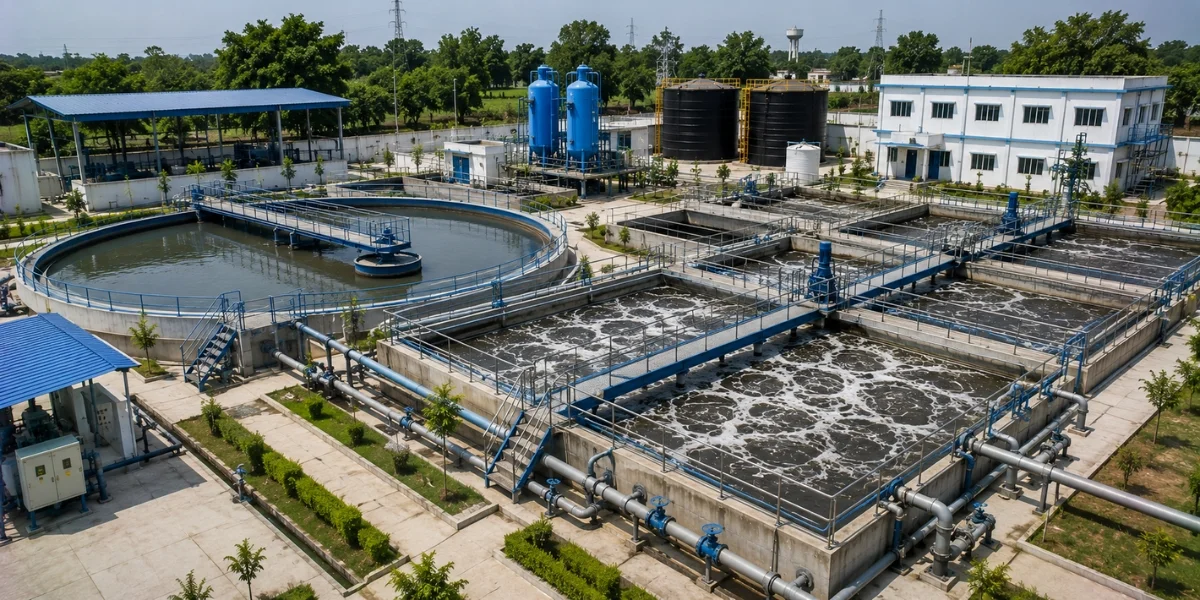
Tertiary Treatment Plant Manufacturer in India
Trity Environ Solutions manufactures tertiary treatment plants that polish treated water beyond secondary treatment, enabling genuine reuse and stricter discharge compliance.
Wastewater Recycling System Manufacturer in India
Trity Environ Solutions manufactures wastewater recycling systems using UF and RO technology, turning treated wastewater into reuse-grade water for cooling, flushing, and gardening.
PAN-INDIA CAPABILITIES
Regional Solutions & State Coverage
TECHNICAL KNOWLEDGE
Related Insights & Engineering Guides
PROVEN EXCELLENCE
Featured Turnkey Installations











Need a Custom Water or Wastewater Treatment Solution?
Our engineering team can help design the right system for your capacity, industry, and compliance requirements.

