
 ISO 9001:2015 & QCI Approved
STP and ETP Plant Manufacturer in Bhadohi
Trity Environ Solutions is a trusted STP and ETP plant manufacturer in Bhadohi, engineering wastewater systems for the largest hand-knotted carpet weaving hub in South Asia. From artisan cluster workshops to large export-oriented manufacturers, we build systems around the colour and chemical load carpet dyeing actually generates, with pan India installation support behind every plant. Whether you need a sewage treatment plant manufacturer in Bhadohi or an effluent treatment plant manufacturer in Bhadohi, Trity Environ Solutions builds both in-house, from design to commissioning.
CPCB & SPCB Ready
Turnkey Design & Installation
An Industry Defined by Colour, Not Chemicals in the Usual Sense
An Industry Defined by Colour, Not Chemicals in the Usual Sense
Bhadohi anchors the northern end of India's carpet belt, a manufacturing corridor running along the Ganga between Prayagraj and Varanasi, and the city alone supports an industry employing lakhs of artisans producing hand-knotted carpets exported to the United States, United Kingdom, and Germany. That production generates a specific kind of wastewater, heavy in dye colour, wool fibre residue, and washing chemicals, that behaves differently from standard industrial effluent and needs treatment engineered around it specifically, not a generic template borrowed from an unrelated sector.
Trity Environ Solutions builds effluent treatment plants sized for this exact profile, whether that's a smaller artisan workshop generating moderate wash water or a large export unit running production at industrial scale. Given how closely this belt runs alongside the Ganga, discharge quality here carries weight beyond routine UPPCB compliance.
Running a carpet manufacturing or dyeing unit in Bhadohi? Request a free technical assessment and our engineering team will size the right system for your actual production volume.
For the wider picture across the state, see our STP and ETP plant manufacturer in Uttar Pradesh page.
KEY BENEFITS
Key Benefits of STP and ETP Plant Manufacturer in Bhadohi
Engineered for reliable colour and dye removal, Ganga-proximity discharge standards, and scale flexibility across the carpet sector.
Built for Carpet Dyeing & Washing Discharge
Sized for carpet washing and dyeing discharge specifically, addressing colour, wool fibre residue, and dye chemical load that generic effluent treatment underestimates.
Protects Ganga-Proximity Discharge Standards
Protects Ganga proximity discharge standards, since Bhadohi sits within the carpet belt running directly along the river between Prayagraj and Varanasi.
Scales From Artisan Workshop to Export Unit
Scales from small artisan cluster workshops to large export-oriented manufacturing units, matching the genuinely mixed scale this industry actually operates at.
Reduces Colour & TDS Load
Reduces colour and TDS load before discharge, addressing the specific compliance gap dyeing-heavy industries face compared to standard industrial effluent.
Faster Response Across the Carpet Belt
Faster local response across Bhadohi and the wider carpet belt, since our engineering team understands the seasonal export production cycles this sector runs on.
Wool Fibre Residue Fouls Standard Treatment Stages Differently Than People Expect
Carpet washing discharge carries suspended wool fibre alongside dissolved dye, and if the primary screening and settling stages aren't sized for fibrous material specifically, it accumulates and clogs downstream biological treatment in ways a typical industrial effluent design doesn't anticipate. We factor this into primary treatment sizing for every carpet sector project, rather than treating fibre content as an afterthought behind colour and COD.
Export Buyers Are Increasingly Asking About Wastewater Compliance Directly
International buyers sourcing from Bhadohi's carpet manufacturers have grown more attentive to environmental compliance documentation as part of their own sourcing due diligence, which means a properly functioning ETP is becoming a commercial requirement, not just a regulatory one. Trity Environ Solutions backs every installation with an Annual Maintenance Contract and compliance documentation support. Talk to our team about AMC coverage for your unit.
Seasonal Export Demand Means Flow Doesn't Stay Constant Year-Round
Carpet production often follows export order cycles rather than a flat daily average, with washing and dyeing volume climbing sharply ahead of shipment deadlines and easing between order cycles. We size equalisation capacity against these realistic production swings for Bhadohi units, rather than a plant that only performs adequately at average, non-peak output.
SYSTEM CONFIGURATIONS
Types of STP and ETP Plant Manufacturer in Bhadohi Configurations
Technologies selected to match your production scale, dye chemistry, and export compliance needs.
Carpet Dyeing & Washing ETP
Our colour removal and COD reduction system is engineered specifically for carpet dyeing and washing discharge typical of Bhadohi manufacturing units.
Explore Configuration
Artisan Cluster Compact System
Compact treatment configuration for smaller artisan cluster workshops generating moderate wash water volume without large-scale production capacity.
Export-Grade Manufacturing ETP
Full-scale wastewater treatment for large export-oriented carpet manufacturers, engineered to the consistency international buyers increasingly expect.
Residential & Commercial STP
Standard biological treatment for residential colonies, offices, and commercial establishments across Bhadohi outside the carpet manufacturing sector.
TURNKEY WORKFLOW
How the STP and ETP Plant Manufacturer in Bhadohi Process Works
A turnkey process engineered for consistent colour and dye load removal across Bhadohi's carpet sector.
01
Site Assessment & Influent Characterisation
Sampling and analysis establish your actual dye chemistry, fibre content, and flow pattern before design begins.
02
Design & Engineering
Technology selection accounts for both UPPCB norms and the elevated environmental sensitivity of this Ganga-proximity carpet belt.
03
Manufacturing & Installation
Components are manufactured under ISO 9001:2015 quality controls, then installed by our team experienced with textile and dye sector effluent.
04
Commissioning & AMC Support
The plant is tested against consent conditions, operators are trained, and ongoing AMC support keeps performance consistent through seasonal export cycles.
COMMON INQUIRIES
Frequently Asked Questions
Clear answers regarding regulatory consent, installation timelines, and plant capacities for Bhadohi.
Q1. Why does carpet dyeing effluent need different treatment than standard industrial wastewater?
Carpet washing and dyeing discharge carries significant colour, wool fibre residue, and dye chemical load that standard industrial effluent treatment underestimates, requiring dedicated colour removal and fibre-tolerant primary treatment stages.
Q2. Does Bhadohi's location near the Ganga affect discharge requirements?
Bhadohi sits within the carpet belt running along the Ganga between Prayagraj and Varanasi, and proximity to the river means discharge quality carries added environmental weight beyond routine UPPCB compliance.
Q3. Can a small artisan carpet workshop afford a properly sized ETP?
Yes, compact treatment configurations are available for smaller wash water volumes typical of artisan cluster workshops, scaled appropriately rather than requiring the capacity of a large export unit.
Q4. Are international carpet buyers actually checking wastewater compliance?
Increasingly yes, export buyers sourcing from Bhadohi have grown more attentive to environmental compliance as part of their own sourcing due diligence, making a functioning ETP a commercial as well as regulatory requirement.
Q5. How long does installation take for a Bhadohi carpet unit?
Prefabricated modular plants typically commission within 45 to 90 days, while larger systems for export-scale manufacturers take 3 to 6 months from design approval.
Q6. Can an existing Bhadohi carpet unit upgrade its ETP for better colour removal?
Yes, we undertake capacity expansions and colour removal retrofits on existing plants, starting with a technical audit against your current dye chemistry and discharge performance.
Q7. How do I choose a reliable STP and ETP plant manufacturer in Bhadohi?
Look for in-house manufacturing, experience with UPPCB consent requirements, a design based on your own effluent analysis, and a clear maintenance offering after commissioning. Trity Environ Solutions builds its plants under ISO 9001:2015 quality controls and supports every installation with operator training and an annual maintenance contract.
CATALOGUE
Related Engineering Products
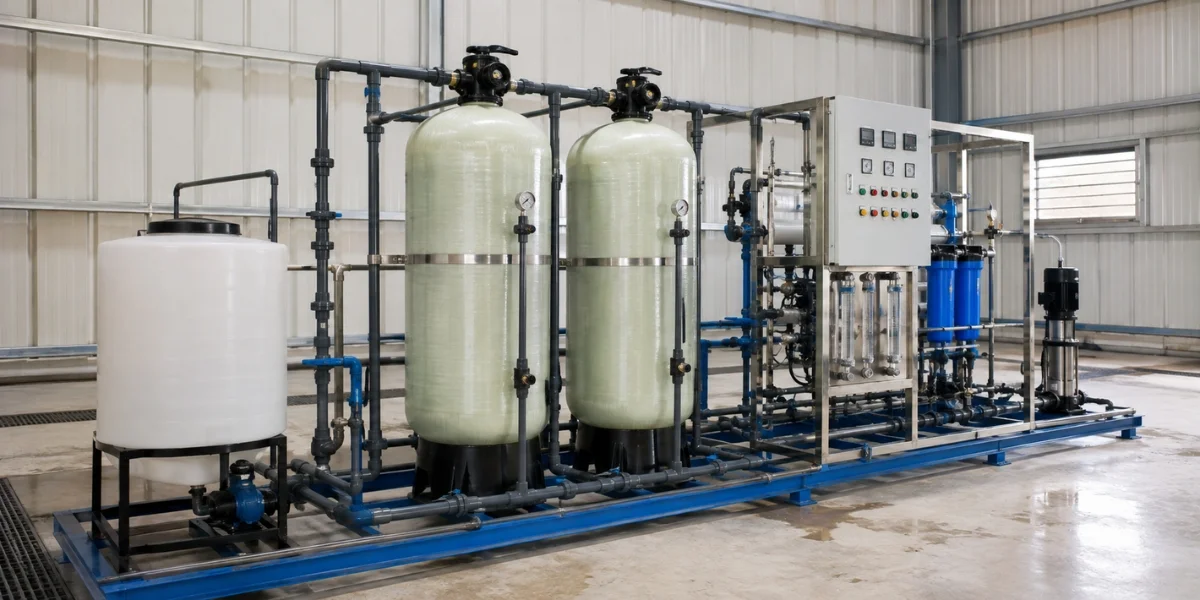
RO & Water Recycling Plant Manufacturer in India
Trity Environ Solutions manufactures RO and water recycling systems for industries and commercial facilities, engineered for reliable purity and reuse.
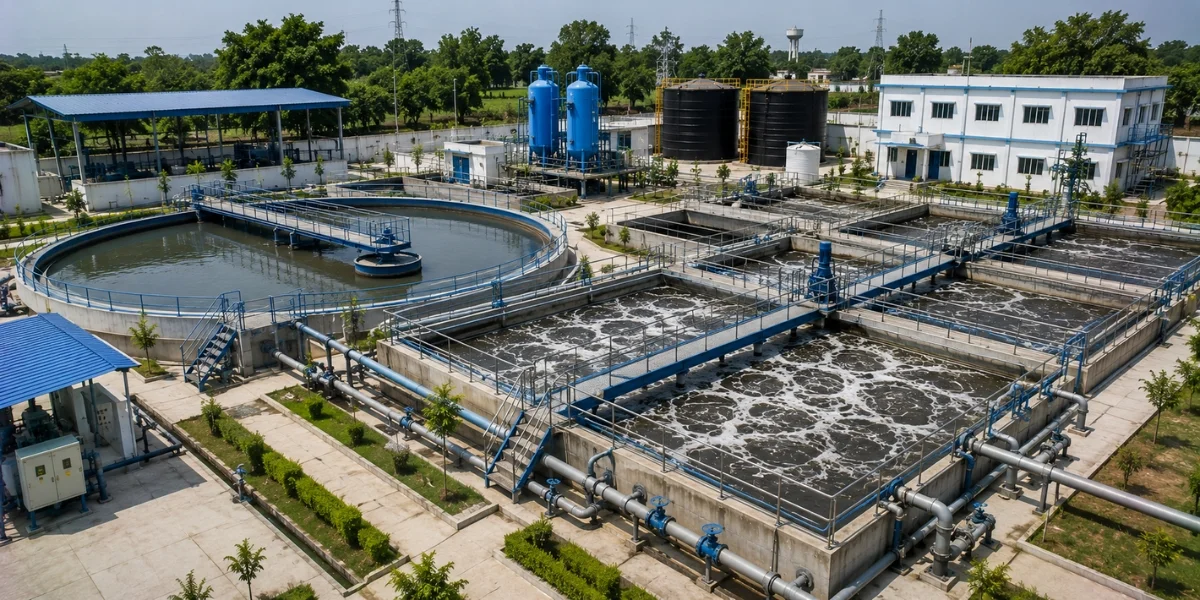
Tertiary Treatment Plant Manufacturer in India
Trity Environ Solutions manufactures tertiary treatment plants that polish treated water beyond secondary treatment, enabling genuine reuse and stricter discharge compliance.
Wastewater Recycling System Manufacturer in India
Trity Environ Solutions manufactures wastewater recycling systems using UF and RO technology, turning treated wastewater into reuse-grade water for cooling, flushing, and gardening.
PAN-INDIA CAPABILITIES
Regional Solutions & State Coverage
TECHNICAL KNOWLEDGE
Related Insights & Engineering Guides
PROVEN EXCELLENCE
Featured Turnkey Installations











Need a Custom Water or Wastewater Treatment Solution?
Our engineering team can help design the right system for your capacity, industry, and compliance requirements.

