
 ISO 9001:2015 & QCI Approved
STP and ETP Plant Manufacturer in Tirupur
Trity Environ Solutions is a trusted STP and ETP plant manufacturer in Tirupur, building wastewater and zero liquid discharge systems for the dyeing, bleaching, and processing units that supply the knitwear capital of India, and for hotels, hospitals, and housing projects in the city. With the Noyyal river and court-enforced discharge rules at stake, it designs plants that recover water and keep discharge measurably inside limits, with pan India installation support behind every project. Whether you need a sewage treatment plant manufacturer in Tirupur or an effluent treatment plant manufacturer in Tirupur, Trity Environ Solutions builds both in-house, from design to commissioning.
SPCB / CPCB Norm Compliant
Heavy Fabrication
In Tirupur, Zero Liquid Discharge Is the Standard Every Unit Is Measured Against
Tirupur's wastewater history is among the most documented in India. A 1998 report described the Noyyal as mostly carrying untreated sewage and effluent from the town and Coimbatore, and noted about 800 dyeing and bleaching units, groundwater turning brackish, and the Orathupalayam dam built in 1992 but unusable for irrigation because of its water quality. The courts then required common effluent plants, and in 2006 the Madras High Court required zero liquid discharge. In February 2011 it ordered about 700 units shut for failing that standard, with reopening only after the Tamil Nadu Pollution Control Board (TNPCB) and a court-appointed committee verified compliance.
Down To Earth reported in May 2011 that about 20 common effluent plants were operating and that no liquid effluent could be released, with membrane reject evaporated instead. Owners said ZLD raised costs by 25 to 30 percent, and about 200,000 people were reported out of work after the shutdown. Those figures are more than a decade old, but they explain why a unit here needs a plant that recovers water reliably. More recently, TNPCB issued a circular dated 2 January 2025 directing its engineers to use prescribed adequacy check slips to assess the reverse osmosis and reject management systems of ZLD units, including textile units, so inspections now look at how well the recovery stages actually work. Trity Environ Solutions builds effluent treatment plants and ZLD systems for dyeing and bleaching units, and sewage treatment plants for the hotels, hospitals, and housing of the city.
The regulator's own data shows the scrutiny continuing. TNPCB's Policy Note for 2025-26 lists 19 common effluent plants for textile bleaching and dyeing in its scheme, records real-time effluent monitoring of 390 industrial units, and runs Noyyal monitoring stations at Kasipalayam Bridge, near a dyeing unit, and at Orathapalayam. Tiruppur appears in its comprehensive environmental pollution index table with scores of 42.14 for pre-monsoon 2023 and 23.31 for pre-monsoon 2024.
Running a dyeing, bleaching, or processing unit in Tirupur? Request a free site assessment and our engineering team will confirm the right configuration for your site.
For the wider picture across the state, see our STP and ETP plant manufacturer in Tamil Nadu page.
WHY THIS SYSTEM?
Key Benefits of STP and ETP Plant Manufacturer in Tirupur
Engineered for high biological efficiency, full environmental compliance, and low lifecycle operational costs.
Dyeing and Bleaching Expertise
Colour, COD, and TDS removal designed for reactive dye and bleaching effluent, with equalisation to absorb lot to lot changes.
ZLD Matched to Your Effluent
RO and evaporation stages sized for the TDS you actually produce, so evaporators are fed what they can handle.
Water Recovery That Cuts Costs
Recovered water returned to process washing, which reduces fresh water purchases and tanker demand.
Hotel and Hospital Ready
Compact, low odour sewage treatment for hotels, hospitals, and housing in the city.
Support Across Tirupur
Installation, operator training, and AMC response across Tirupur's dyeing clusters and urban projects.
A Plant That Fails Costs More Than a Plant That Works
The 2011 order closed about 700 units until they complied. A plant designed from effluent analysis, with sampling points and a dated log of treated water quality, is the strongest position when TNPCB inspects. Where a unit wants to reuse more water, a wastewater recycling system can be added after the main treatment train.
Dyeing Effluent Is Not Ordinary Wastewater
Dye batches change colour load and pH from day to day, which breaks fixed designs. Trity Environ Solutions builds equalisation, colour removal, and polishing stages that absorb that variation, supported by an Annual Maintenance Contract so the plant keeps up as production changes. Talk to our team about AMC coverage for your facility.
Related Wastewater Services in Tirupur
Trity Environ Solutions also has state level pages for a sewage treatment plant manufacturer in Tamil Nadu covering hospitals, hotels, and housing, and an effluent treatment plant manufacturer in Tamil Nadu covering industrial effluent.
SYSTEM CONFIGURATIONS
Types of STP and ETP Plant Manufacturer in Tirupur Configurations
Tailored industrial configurations matched to specific effluent composition, flow rates, and space constraints.
Dyeing and Bleaching ETP
Our textile dyeing effluent treatment plant removes colour, COD, and dissolved solids from dyeing and bleaching units.
Zero Liquid Discharge
Our zero liquid discharge system recovers water from high TDS effluent for units that must stop discharging altogether.
Water Recycling
Our wastewater recycling system polishes treated effluent through ultrafiltration and RO so it can return to the process.
Sludge Handling
Our filter press for sludge dewatering cuts the volume of chemical sludge before disposal.
Hotels, Hospitals and Housing
Our MBBR sewage treatment plant is a compact, low maintenance option for hotels, hospitals, and residential projects.
Not sure which configuration fits your Tirupur site? Get a free consultation and we will recommend the right setup based on your effluent and consent conditions.
STEP-BY-STEP WORKFLOW
How the STP and ETP Plant Manufacturer in Tirupur Process Works
A sequential, multi-stage treatment methodology engineered for maximum contaminant removal and water recovery.
01
Site Assessment & Influent Characterisation
Flow measurement and sampling establish your actual load, including dye chemistry, COD, and TDS, whether dyeing, bleaching, or domestic sewage.
02
Design & Engineering
Technology and layout are fixed against TNPCB consent conditions, available footprint, and ZLD or reuse targets.
03
Manufacturing & Installation
Components are manufactured under ISO 9001:2015 quality controls, then installed and commissioned by Trity's site team.
04
Commissioning & AMC Support
The plant is tested against consent limits, operators are trained, and ongoing AMC support keeps performance consistent afterward.
COMMON INQUIRIES
Frequently Asked Questions
Q1. Which pollution control board governs STP and ETP discharge in Tirupur?
The Tamil Nadu Pollution Control Board (TNPCB) issues consent to establish and consent to operate, alongside CPCB guidelines, National Green Tribunal directions, and Madras High Court orders.
Q2. Does my dyeing or bleaching unit in Tirupur need zero liquid discharge?
The Madras High Court has required zero liquid discharge from Tirupur's dyeing and bleaching units. Confirm the current norm for your unit with TNPCB before design.
Q3. Can you build an ETP for a dyeing unit in Tirupur?
Yes. Dyeing effluent needs colour removal, equalisation, and TDS handling beyond a standard biological plant, so each plant is designed from your own effluent analysis.
Q4. Does a unit connected to a common effluent plant still need its own treatment?
Often yes. Units usually need pre-treatment to meet the common plant's inlet norms, and a plant of your own is the safer position.
Q5. How long does installation take in Tirupur?
Prefabricated modular plants typically commission within 45 to 90 days, while civil-based plants for larger capacities take 3 to 6 months from design approval to handover.
Q6. Can an existing Tirupur plant be upgraded or maintained?
Yes. We audit existing plants, retrofit capacity or technology, and take them under an annual maintenance contract.
Q7. How do I choose a reliable STP and ETP plant manufacturer in Tirupur?
Look for in-house manufacturing, experience with TNPCB consent requirements, a design based on your own effluent analysis, and a clear maintenance offering after commissioning. Trity Environ Solutions builds its plants under ISO 9001:2015 quality controls and supports every installation with operator training and an annual maintenance contract.
CATALOGUE
Related Engineering Products
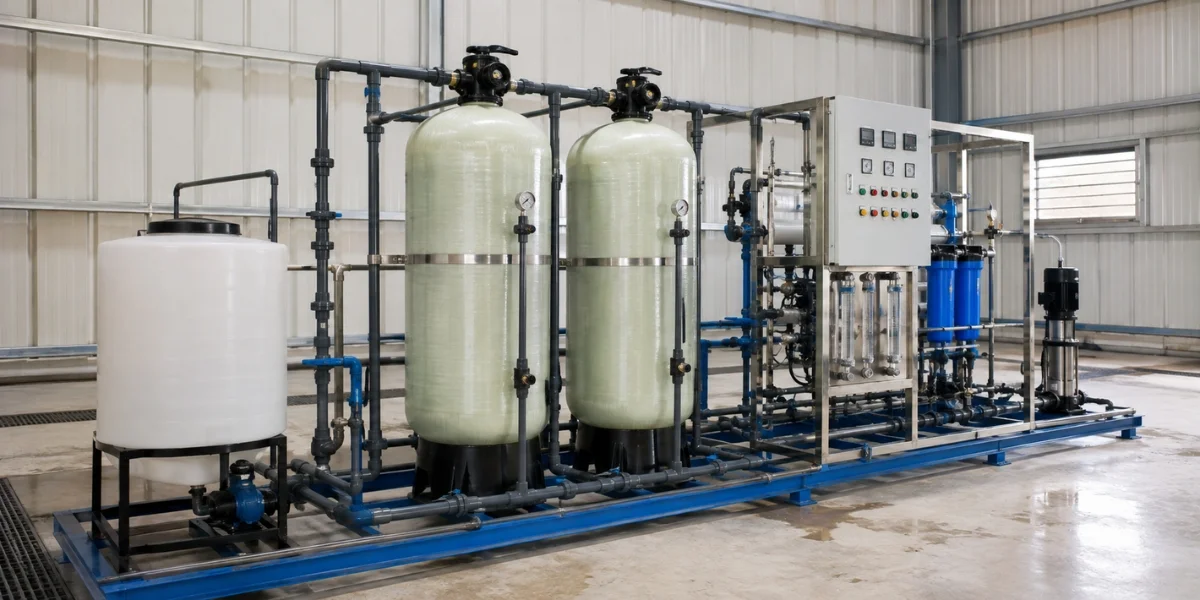
RO & Water Recycling Plant Manufacturer in India
Trity Environ Solutions manufactures RO and water recycling systems for industries and commercial facilities, engineered for reliable purity and reuse.
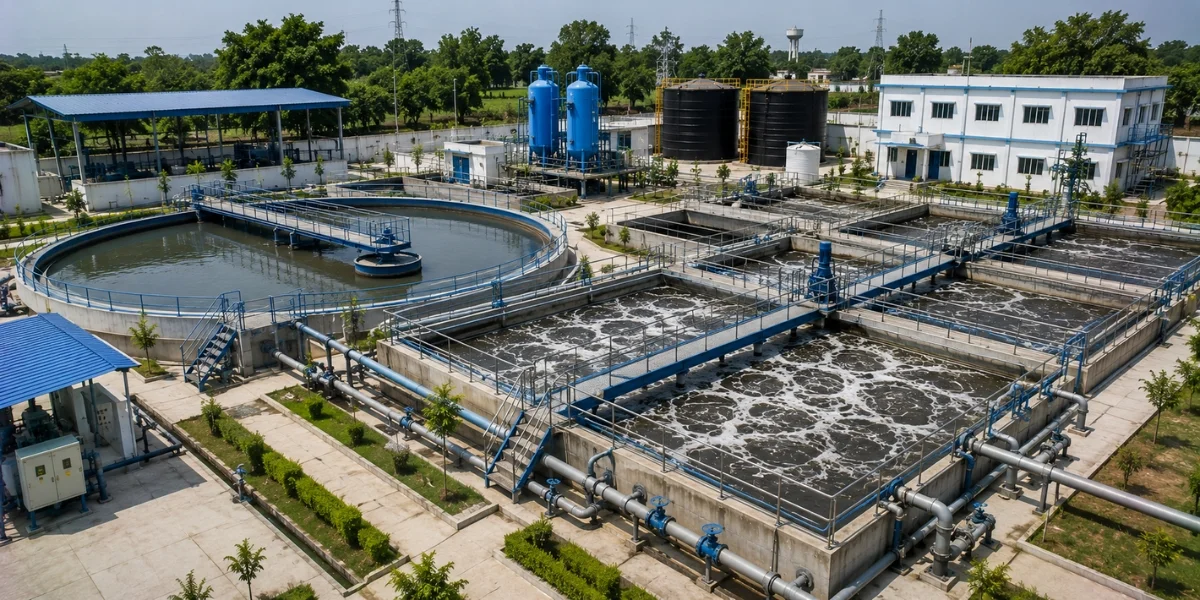
Tertiary Treatment Plant Manufacturer in India
Trity Environ Solutions manufactures tertiary treatment plants that polish treated water beyond secondary treatment, enabling genuine reuse and stricter discharge compliance.
Wastewater Recycling System Manufacturer in India
Trity Environ Solutions manufactures wastewater recycling systems using UF and RO technology, turning treated wastewater into reuse-grade water for cooling, flushing, and gardening.
PAN-INDIA CAPABILITIES
Regional Solutions & State Coverage
TECHNICAL KNOWLEDGE
Related Insights & Engineering Guides
PROVEN EXCELLENCE
Featured Turnkey Installations











Need a Custom Water or Wastewater Treatment Solution?
Our engineering team can help design the right system for your capacity, industry, and compliance requirements.

