
 ISO 9001:2015 & QCI Approved
STP and ETP Plant Manufacturer in Haryana
Trity Environ Solutions is a trusted STP and ETP plant manufacturer in Haryana, building wastewater systems for the dyeing units of Panipat, the factories of Manesar, Faridabad, and Kundli, and the high-rise societies and commercial towers of Gurugram. With drains from across the state flowing toward the Yamuna and enforcement tightening, it designs plants that keep discharge measurably inside limits, with pan India installation support behind every project. Whether you need a sewage treatment plant manufacturer in Haryana or an effluent treatment plant manufacturer in Haryana, Trity Environ Solutions builds both in-house, from design to commissioning.
SPCB / CPCB Norm Compliant
Heavy Fabrication
Haryana Sits on the Yamuna's Most Pressured Stretch
Haryana's industrial and urban belt lies right where the Yamuna enters the NCR, and the numbers show how hard that is to manage. A CAG audit tabled in 2026, covering eight districts, found that 1,522.83 MLD of sewage was generated and only 51.03 percent was treated to standard, that the Haryana State Pollution Control Board (HSPCB) had not imposed Rs 902.97 crore of environmental compensation on local bodies for failing to treat all sewage, and that inspections fell 71.93 percent short of target (Gurugram: 2,184 of 9,815). In Panipat, the Textile City, a 2025 report put sewage at about 100 MLD with 21 MLD going untreated into Drains 1 and 2, and tests on Drain 2 at Khojkipur showed BOD of 60 mg/L, TDS above 2,000 mg/L, and oil and grease of 42.5 against a limit of 10. In October 2025, dyeing units in Panipat were ordered to shut until Chhath Puja to keep the Yamuna clean; about 400 dyeing units operate in the city, against two common plants in Sector 29 with a combined 42 MLD capacity.
For a factory, hospital, or housing project in Haryana, the practical meaning is clear: a plant that merely exists is not enough, and one that is monitored and operated properly is. Trity Environ Solutions builds effluent treatment plants for dyeing, electroplating, engineering, and food units, and sewage treatment plants for the state's fast-growing cities, designed against your real load and HSPCB consent conditions.
Planning a project anywhere in Haryana? Request a free site assessment and our engineering team will confirm the right configuration for your site.
Looking for only one side of the problem? Trity Environ Solutions has dedicated pages for a sewage treatment plant manufacturer in Haryana covering city sewage, hospitals, and housing, and an effluent treatment plant manufacturer in Haryana covering industrial effluent.
WHY THIS SYSTEM?
Key Benefits of STP and ETP Plant Manufacturer in Haryana
Engineered for high biological efficiency, full environmental compliance, and low lifecycle operational costs.
Dyeing and Textile Effluent Expertise
Colour, COD, TDS, and oil removal designed for Panipat's dyeing and textile units, where drain tests have shown values far above limits.
Built for NCR Land Costs
Compact, modular layouts that fit basements, podiums, and tight industrial plots across Gurugram, Faridabad, and Kundli.
Heavy Metal and Process Water Control
Precipitation and filtration stages for the electroplating, pickling, and engineering units of Faridabad and Kundli.
Treated Water for Reuse
Polished water for cooling, flushing, gardens, and process use, which cuts fresh water and tanker demand.
Quick Response From the NCR
Short travel time from Trity's Ghaziabad base for installation, operator training, and AMC support across the state.
Enforcement Gaps Do Not Mean Compliance Is Optional
The same audit that recorded unimposed compensation also found inspections 71.93 percent below target, which can change quickly under tribunal pressure. A plant with documented performance and a log of treated water quality is protected when enforcement tightens, while one that depends on lax inspection is exposed.
Plants Fail Through Operation, Not Drawings
Treatment gaps like Panipat's untreated 21 MLD and the audit's 51 percent figure usually come down to operation, dosing, and capacity, not drawings alone. Trity Environ Solutions supports every Haryana installation with operator training, performance checks, and an Annual Maintenance Contract, so blowers, diffusers, and dosing systems keep the plant inside limits. Talk to our team about AMC coverage for your facility.
City and Cluster Pages Across Haryana
Trity Environ Solutions has dedicated pages for the state's main wastewater markets: the STP and ETP plant manufacturer in Gurgaon page for high-rises and industrial units, Faridabad for dyeing and electroplating, and Kundli for the Sonipat industrial belt. Each page covers that city's own industries and regulatory history.
SYSTEM CONFIGURATIONS
Types of STP and ETP Plant Manufacturer in Haryana Configurations
Tailored industrial configurations matched to specific effluent composition, flow rates, and space constraints.
Textile and Dyeing ETP
Our textile dyeing effluent treatment plant removes colour, COD, and dissolved solids from dyeing and processing units.
Explore Configuration
Metal Finishing and Engineering ETP
Our physico-chemical effluent treatment plant removes heavy metals and suspended solids through pH correction, coagulation, and clarification.
Explore Configuration
Zero Liquid Discharge
Our zero liquid discharge system recovers water from high TDS effluent for units that must stop discharging altogether.
Explore Configuration
High-Rise and Commercial STP
Our MBBR sewage treatment plant fits basement and podium layouts and holds treated quality across peak swings.
Explore Configuration
Hospitals, Hotels and Malls
Our MBR sewage treatment plant delivers high quality, low odour treated water in very little space, suited to reuse for cooling towers and flushing.
Explore Configuration
STEP-BY-STEP WORKFLOW
How the STP and ETP Plant Manufacturer in Haryana Process Works
A sequential, multi-stage treatment methodology engineered for maximum contaminant removal and water recovery.
01
Site Assessment & Influent Characterisation
Flow measurement and sampling establish your actual load, whether dyeing, metal, food, or domestic sewage.
02
Design & Engineering
Technology and layout are fixed against HSPCB consent conditions, available footprint, and reuse targets.
03
Manufacturing & Installation
Components are manufactured under ISO 9001:2015 quality controls, then installed and commissioned by Trity's site team.
04
Commissioning & AMC Support
The plant is tested against consent limits, operators are trained, and ongoing AMC support keeps performance consistent afterward.
COMMON INQUIRIES
Frequently Asked Questions
Q1. Which pollution control board governs STP and ETP discharge in Haryana?
The Haryana State Pollution Control Board (HSPCB) issues consent to establish and consent to operate, alongside CPCB guidelines and National Green Tribunal directions.
Q2. Can you build an ETP for dyeing units in Panipat?
Yes. Dyeing effluent needs colour removal, equalisation, and TDS handling beyond a standard biological plant, so each plant is designed from your own effluent analysis.
Q3. Is an STP mandatory for residential societies and commercial buildings in Haryana?
Large residential and commercial projects generally need an STP as part of environmental clearance and HSPCB consent conditions, and many authorities expect treated water to be reused. Requirements vary by built-up area and project category.
Q4. Can treated water be reused in Haryana?
Yes. Treated water can go to flushing, gardens, cooling towers, and process washing, and with RO polishing it can meet stricter process quality.
Q5. How long does installation take in Haryana?
Prefabricated modular plants typically commission within 45 to 90 days, while civil-based plants for larger capacities take 3 to 6 months from design approval to handover.
Q6. Can an existing Haryana plant be upgraded or maintained?
Yes. We audit existing plants, retrofit capacity or technology, and take them under an annual maintenance contract.
Q7. How do I choose a reliable STP and ETP plant manufacturer in Haryana?
Look for in-house manufacturing, experience with HSPCB consent requirements, a design based on your own effluent analysis, and a clear maintenance offering after commissioning. Trity Environ Solutions builds its plants under ISO 9001:2015 quality controls and supports every installation with operator training and an annual maintenance contract.
CATALOGUE
Related Engineering Products
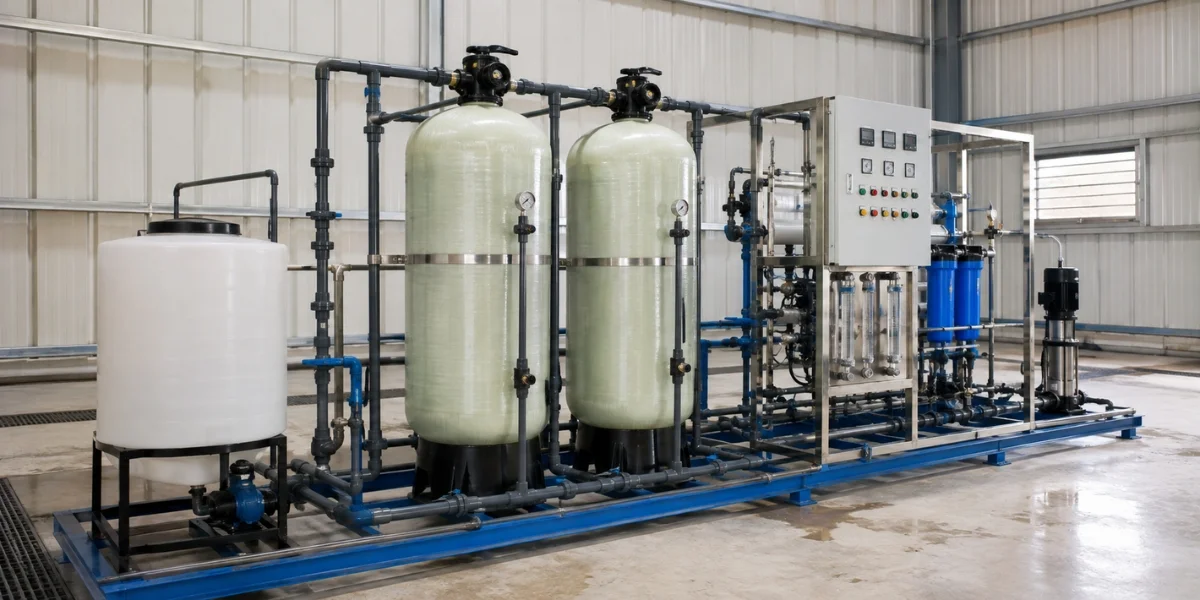
RO & Water Recycling Plant Manufacturer in India
Trity Environ Solutions manufactures RO and water recycling systems for industries and commercial facilities, engineered for reliable purity and reuse.
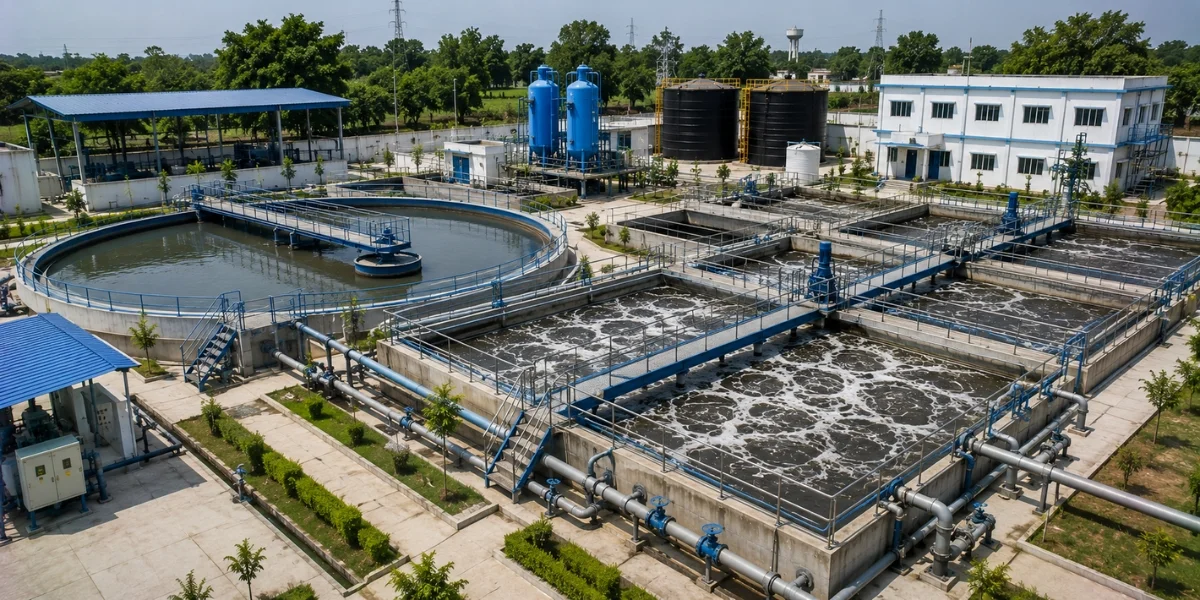
Tertiary Treatment Plant Manufacturer in India
Trity Environ Solutions manufactures tertiary treatment plants that polish treated water beyond secondary treatment, enabling genuine reuse and stricter discharge compliance.
Wastewater Recycling System Manufacturer in India
Trity Environ Solutions manufactures wastewater recycling systems using UF and RO technology, turning treated wastewater into reuse-grade water for cooling, flushing, and gardening.
PAN-INDIA CAPABILITIES
Regional Solutions & State Coverage
TECHNICAL KNOWLEDGE
Related Insights & Engineering Guides
PROVEN EXCELLENCE
Featured Turnkey Installations











Need a Custom Water or Wastewater Treatment Solution?
Our engineering team can help design the right system for your capacity, industry, and compliance requirements.

