
 ISO 9001:2015 & QCI Approved
ETP and STP Plant Manufacturers in Andhra Pradesh
Trity Environ Solutions is a trusted ETP and STP plant manufacturer in Andhra Pradesh, building wastewater systems for the state's pharma and chemical clusters around Visakhapatnam, aquaculture and food processing units in the Godavari delta, and the hotels, hospitals, and housing projects of its growing cities. With the state pollution control board tightening reviews of industry and the Godavari under continuous inspection, it engineers on-site treatment that keeps a plant or property compliant, with pan India installation support behind every plant. Whether you need a sewage treatment plant manufacturer in Andhra Pradesh or an effluent treatment plant manufacturer in Andhra Pradesh, Trity Environ Solutions builds both in-house, from design to commissioning.
CPCB & SPCB Ready
Turnkey Design & Installation
Regulators Are Watching Both the Industrial Belt and the Rivers
Andhra Pradesh's wastewater story has two fronts. On the industrial side, the Andhra Pradesh Pollution Control Board (APPCB) held a review meeting in Vijayawada on 25 August 2026 with industries of the Visakhapatnam bowl, and its chairman expressed dissatisfaction with water and air pollution from JN Pharmacity at Parawada and the APIIC Atchutapuram area. Visakha Pharmacity was told to stop contaminated runoff reaching downstream tanks, another operator was told to upgrade its common effluent treatment plant, and the board warned of stringent action against non-compliant industries. JN Pharma City itself, established in 2005, had 104 industries established and 94 operating, with a 50 MLD CETP, according to APPCB's July 2024 report to the National Green Tribunal.
On the river side, a 29 May 2026 announcement by the Deputy Chief Minister directed APPCB to carry out continuous inspections to stop industrial effluent entering the Godavari. The figures cited there include about 104 MLD of municipal sewage from six districts, up to 32 million litres a day from a paper mill, about 13.24 million litres a day of aquaculture wastewater from Konaseema and West Godavari, and 50 MLD of Rajamahendravaram's 75 MLD of sewage going directly into the river. Sewage treatment plants are planned for every municipality in the basin. Trity Environ Solutions builds effluent treatment plants for the pharma, chemical, and food processing units of these belts, and sewage treatment plants for the hotels, hospitals, and housing projects of Visakhapatnam, Vijayawada, Guntur, and the Godavari towns.
Planning a new project or fixing an underperforming plant in Andhra Pradesh? Request a free site assessment and our engineering team will confirm the right configuration for your site.
Looking for only one side of the problem? Trity Environ Solutions has dedicated pages for a sewage treatment plant manufacturer in Andhra Pradesh covering city sewage, hospitals, and housing, and an effluent treatment plant manufacturer in Andhra Pradesh covering industrial effluent.
KEY BENEFITS
Key Benefits of ETP and STP Plant Manufacturers in Andhra Pradesh
Engineered for reliable APPCB compliance, pharma and food effluent performance, and treated water reuse across coastal and delta industrial belts.
Built for APPCB Consent Limits
Systems engineered to hold the BOD, COD, and TSS limits written into your consent, so your discharge stays defensible when inspections increase.
Pharma and Chemical Effluent Know-How
Treatment trains designed around high COD, variable batches, and solvent traces typical of bulk drug and chemical units, sized for pre-treatment ahead of a common plant or for stand-alone discharge.
Aquaculture and Food Processing Ready
Oil, grease, and high organic load handled by plants designed for seafood, aqua feed, and food processors of the coastal and delta districts.
Treated Water You Can Reuse
Polished effluent for gardening, cooling, flushing, and process use, which reduces discharge and the demand on canal and groundwater supply.
Local Response Across the State
Site assessment, installation, and AMC response across Andhra Pradesh's main industrial and urban belts, with operator training and documentation support on every installation.
Regulators Are Reviewing Industry More Closely
The August 2026 APPCB review gave industries short-term targets of three to six months and long-term targets of one year, and asked that corrective measures be in place before the coming winter. A plant that meets consent limits on paper but struggles in practice is the first to draw attention in such a review. An ETP designed around your actual effluent analysis, and kept in good order, is the most direct protection.
A Plant Only Protects You If It Keeps Running
Continuous inspection means performance is checked repeatedly, not only at consent renewal. Trity Environ Solutions supports every Andhra Pradesh installation with operator training, performance monitoring, and an Annual Maintenance Contract, so blowers, diffusers, and dosing systems keep the plant within consent limits. Talk to our team about AMC coverage for your facility.
Pharma Clusters Run on Strict Discharge Discipline
APPCB's 2024 report on JN Pharma City noted that 24 of 358 marine outfall samples between April 2023 and March 2024 were rejected, about 6.7 percent, and that environmental compensation was imposed for the period. Even with a large common plant, each member unit's own pre-treatment decides how stable the shared system stays. Units inside or outside the cluster benefit from a dedicated ETP that handles solvents, high COD, and batch variation before effluent leaves the plant.
Godavari Towns Need Their Own Sewage Capacity
With Rajamahendravaram alone generating about 75 MLD of sewage and half of it reported to reach the Godavari directly, and with Tanuku, Bhimavaram, Narasapuram, and Kovvur also draining into the river system, authorities are pushing for treatment in every municipality. Hotels, hospitals, and large housing projects in these towns can reduce risk and reuse water by running their own STP.
SYSTEM CONFIGURATIONS
Types of ETP and STP Plant Manufacturers in Andhra Pradesh Configurations
Technologies selected to match your site type, effluent load, and APPCB consent requirements.
Pharma and Bulk Drug ETP
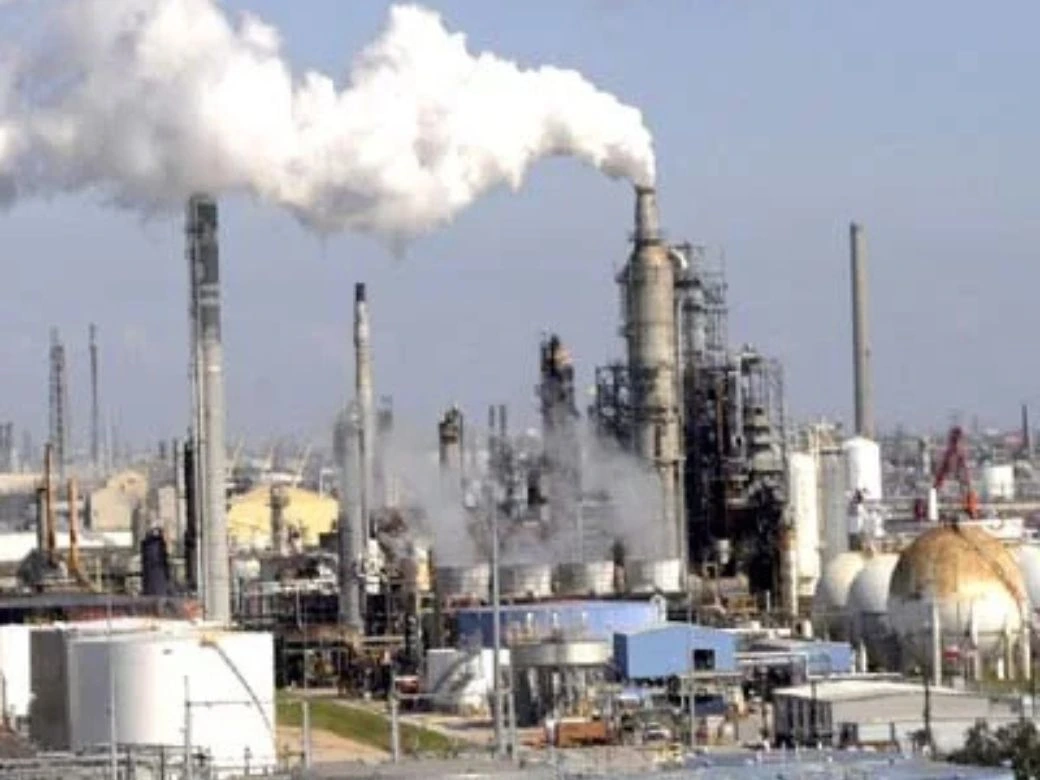
Our pharmaceutical effluent treatment plant is designed around the high COD and batch variation of pharma effluent, whether pre-treating for a common plant or discharging on its own.
Explore Configuration
Chemical Industry ETP
Our chemical industry effluent treatment plant handles the variable load of process effluent from specialty chemical and allied units.
Explore Configuration
Aquaculture and Food Processing ETP
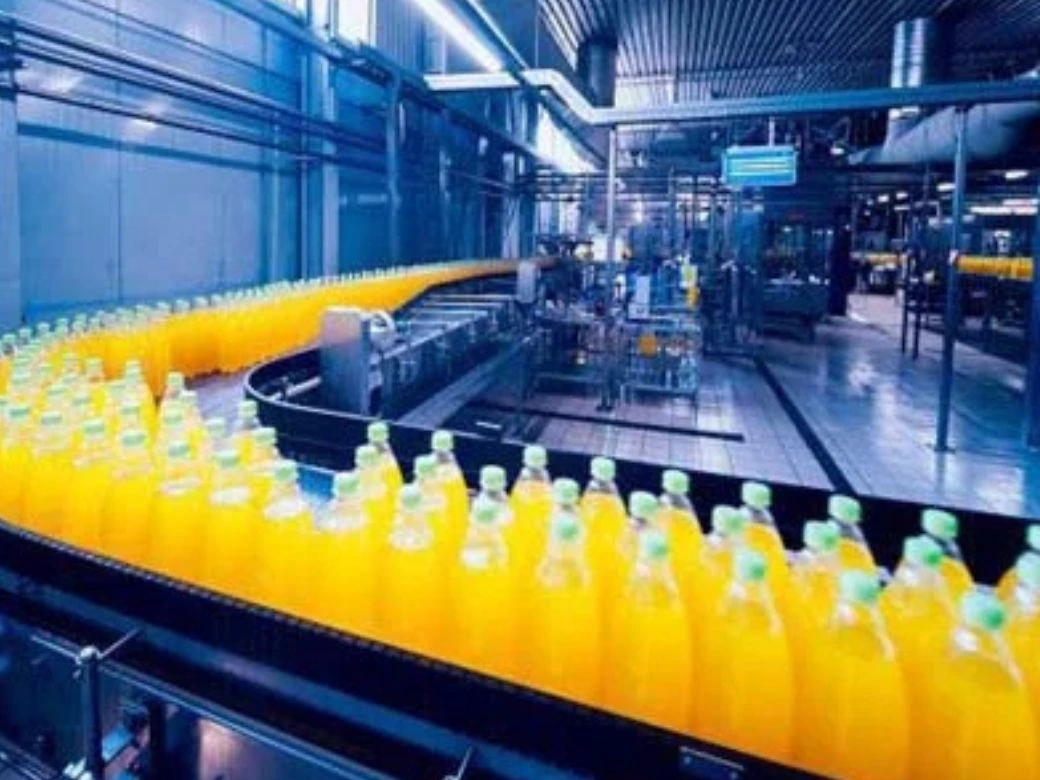
Our food and beverage effluent treatment plant removes oil, grease, and organic load from food and seafood processing units before discharge.
Explore Configuration
Hotels, Hospitals and Housing Projects
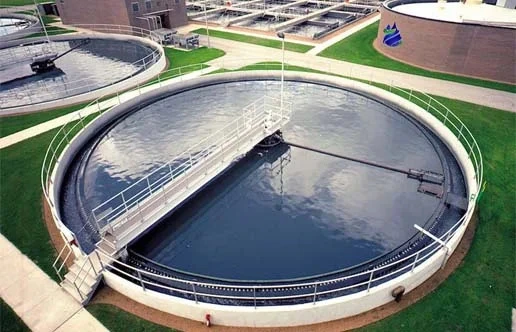
Our MBBR based sewage treatment plant handles daily peaks in a compact footprint for the hospitality, healthcare, and residential sites of Visakhapatnam, Vijayawada, and the Godavari towns.
Explore Configuration
Water Reuse and Recycling
Our wastewater recycling system polishes treated effluent through ultrafiltration and RO so it can return to the process, cooling tower, or landscaping.
Not sure which configuration fits your Andhra Pradesh site? Get a free consultation and we will recommend the right setup based on your flow, footprint, and consent conditions.
Explore Configuration
TURNKEY WORKFLOW
How the ETP and STP Plant Manufacturers in Andhra Pradesh Process Works
A turnkey process engineered for consistent APPCB compliant performance across pharma, food processing, and urban sites.
01
Site Assessment & Influent Characterisation
Flow measurement and sampling establish your actual load, whether pharma effluent, food processing wastewater, or sewage, before design begins.
02
Design & Engineering
Technology and tank layout are fixed against your APPCB consent category, available footprint, and reuse targets.
03
Manufacturing & Installation
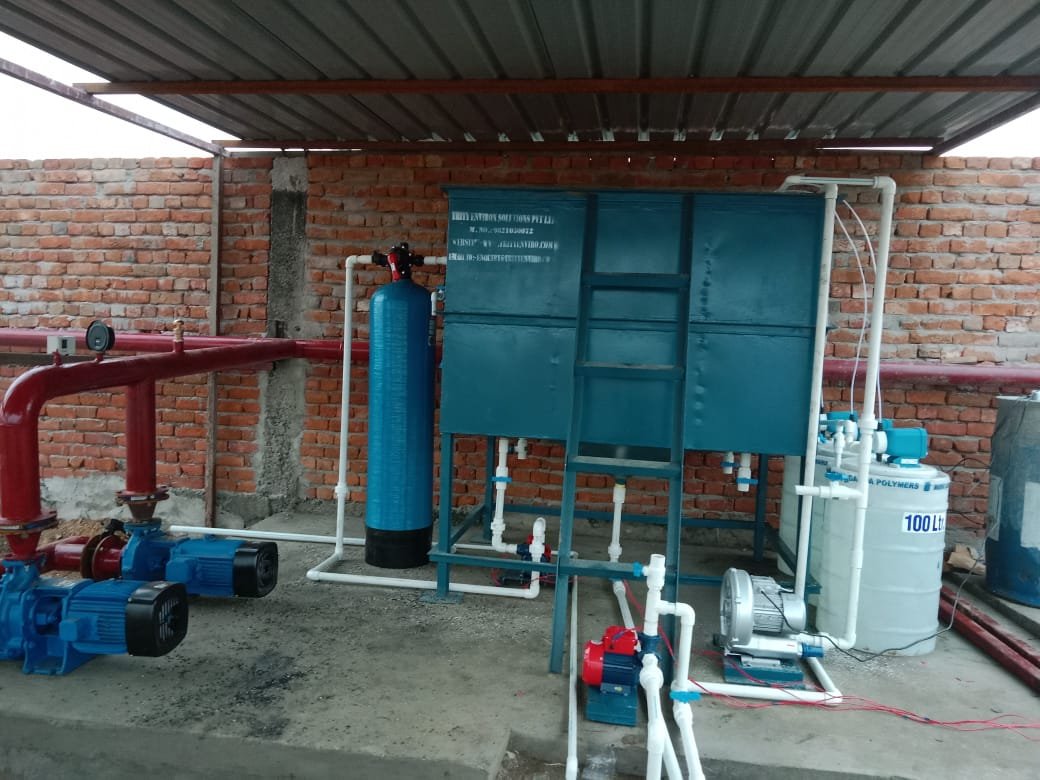
Components are manufactured under ISO 9001:2015 quality controls, then installed and commissioned by Trity's site team.
04
Commissioning & AMC Support
The plant is tested against consent limits, operators are trained, and ongoing AMC support keeps performance consistent afterward.
COMMON INQUIRIES
Frequently Asked Questions
Clear answers regarding regulatory consent, installation timelines, and plant capabilities in Andhra Pradesh.
Q1. Which pollution control board governs STP and ETP discharge in Andhra Pradesh?
The Andhra Pradesh Pollution Control Board (APPCB) issues consent to establish and consent to operate, alongside CPCB guidelines and any directions from the National Green Tribunal.
Q2. Can you build an ETP for a pharma unit near Visakhapatnam?
Yes. Pharma effluent carries high COD and varies with each batch, so the plant is designed around your product list, solvent use, and discharge route, whether you pre-treat for a common plant or treat to final discharge norms.
Q3. Do units in a pharma city or industrial park still need their own ETP?
Usually yes. Member units are generally expected to pre-treat effluent to the inlet norms of a common plant, and the exact requirement is set in your consent and membership terms.
Q4. Can you treat aquaculture or food processing wastewater?
Yes. These effluents carry oil, grease, and a high organic load, so the plant is designed around your product mix and daily volumes, with biological treatment after primary separation.
Q5. How long does installation take in Andhra Pradesh?
Prefabricated modular plants typically commission within 45 to 90 days, while civil-based plants for larger capacities take 3 to 6 months from design approval to handover.
Q6. Can an existing Andhra Pradesh STP or ETP be upgraded or put under maintenance?
Yes. We audit existing plants, retrofit capacity or technology, and take them under an annual maintenance contract so they stay within consent limits.
Q7. How do I choose a reliable ETP and STP plant manufacturer in Andhra Pradesh?
Look for in-house manufacturing, experience with APPCB consent requirements, a design based on your own effluent analysis, and a clear maintenance offering after commissioning. Trity Environ Solutions builds its plants under ISO 9001:2015 quality controls and supports every installation with operator training and an annual maintenance contract.
CATALOGUE
Related Engineering Products
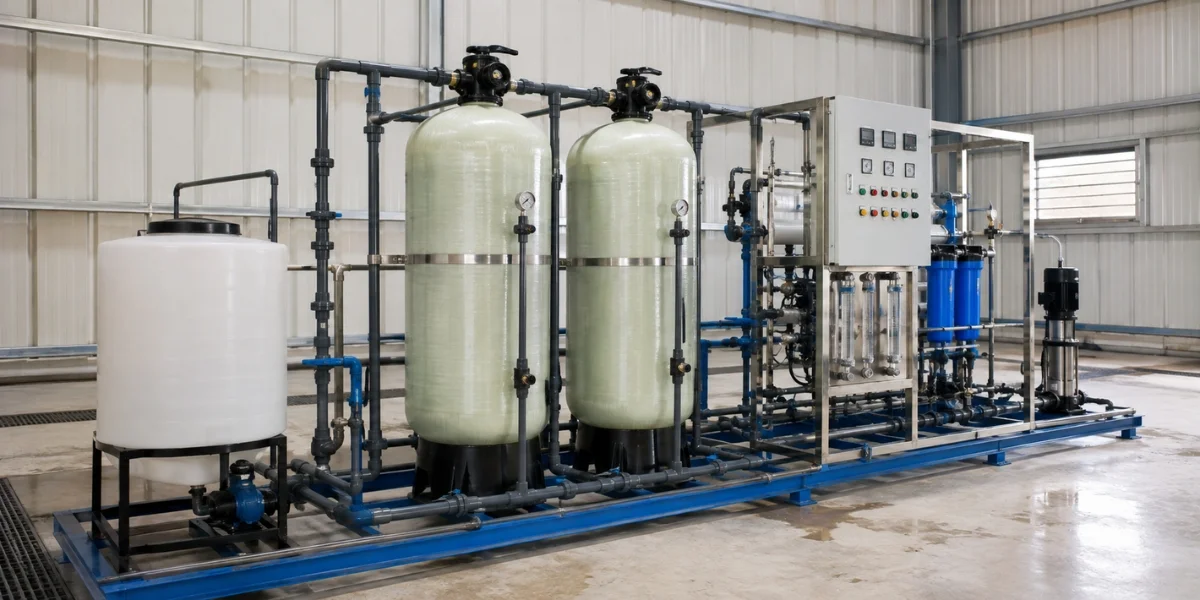
RO & Water Recycling Plant Manufacturer in India
Trity Environ Solutions manufactures RO and water recycling systems for industries and commercial facilities, engineered for reliable purity and reuse.
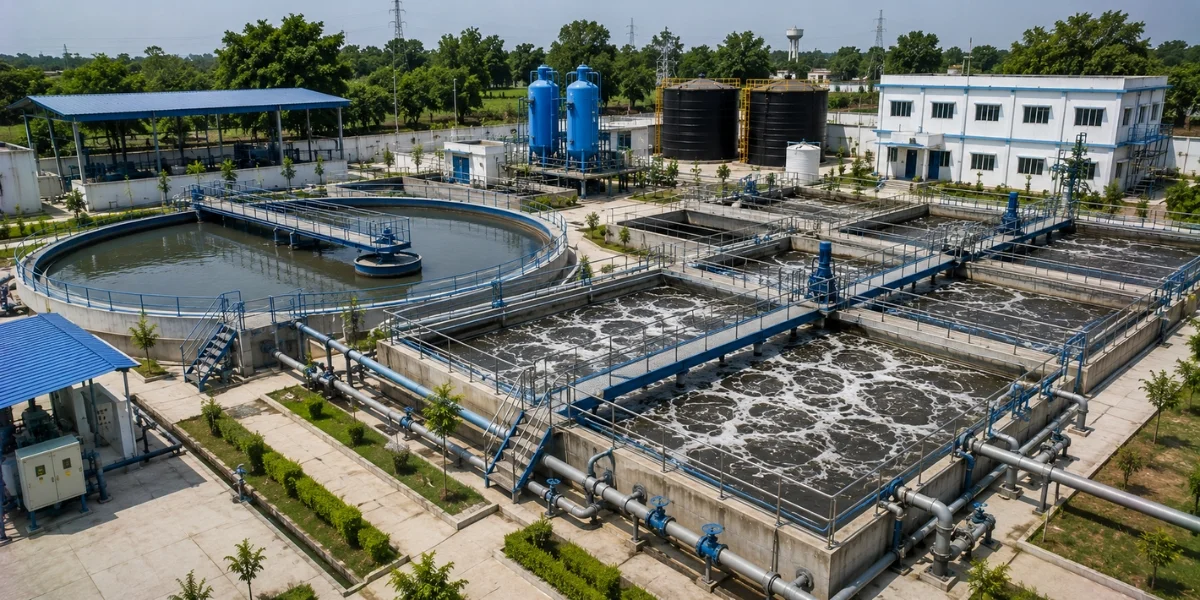
Tertiary Treatment Plant Manufacturer in India
Trity Environ Solutions manufactures tertiary treatment plants that polish treated water beyond secondary treatment, enabling genuine reuse and stricter discharge compliance.
Wastewater Recycling System Manufacturer in India
Trity Environ Solutions manufactures wastewater recycling systems using UF and RO technology, turning treated wastewater into reuse-grade water for cooling, flushing, and gardening.
PAN-INDIA CAPABILITIES
Regional Solutions & State Coverage
TECHNICAL KNOWLEDGE
Related Insights & Engineering Guides
PROVEN EXCELLENCE
Featured Turnkey Installations




Need a Custom Water or Wastewater Treatment Solution?
Our engineering team can help design the right system for your capacity, industry, and compliance requirements.