
 ISO 9001:2015 & QCI Approved
STP and ETP Plant Manufacturer in Bikaner
Trity Environ Solutions is a leading STP and ETP plant manufacturer in Bikaner, engineering turnkey wastewater systems for Bikaneri Bhujia, food processing, and woollen mills across Bichhwal and Karni Industrial Areas. We build heavy-duty effluent treatment plants and sewage treatment plants engineered for strict RSPCB compliance, backed by pan India installation support.
Bhujia & Food Processing Solutions
Woollen Scouring & Ceramic ETP
Engineered Industrial Wastewater Treatment for North-Western Rajasthan's Food and Wool Hub
Bikaner represents the economic and agro-industrial capital of north-western Rajasthan, situated in the heart of the Thar Desert. The city is celebrated worldwide for its GI-tagged Bikaneri Bhujia, snacks, sweets, and food processing complexes, along with being Asia's largest wool market supporting carpet yarn spinning and wool scouring units, ceramics, and chemical packaging in Bichhwal and Karni Industrial Areas.
Food processing operations generate immense volumes of wastewater heavily contaminated with fried edible oils, dissolved starches, spices, and elevated chemical oxygen demand (COD exceeding 6,000 mg/L). Simultaneously, wool scouring and carpet yarn dyeing discharge heavy animal grease (lanolin), dirt, and synthetic dye pigments.
As a leading STP and ETP plant manufacturer in Bikaner, Trity Enviro delivers heavy-duty wastewater systems designed to handle severe organic loads and extreme desert water scarcity. Groundwater aquifers across Bikaner are deep and saline, prompting the Rajasthan State Pollution Control Board (RSPCB) to enforce zero liquid discharge and maximum water reclamation under RSPCB compliance.
For snack and food manufacturing units, our custom effluent treatment plants incorporate specialized Dissolved Air Flotation (DAF) systems that remove up to 95 percent of free oils, edible fats, and colloidal solids. Clarified effluent then passes through high-rate biological aeration basins to break down remaining organic loads.
Concurrently, expanding residential townships, hotels, and institutional campuses across Bikaner require dependable domestic sewage treatment. We engineer compact sewage treatment plants based on MBBR and MBR technology, delivering crystal-clear recycled water for toilet flushing, green belts, and boiler make-up.
Key Advantages
Why Bikaner Food and Textile Units Rely on Trity Enviro
Built for high edible fats, heavy woollen grease, extreme desert salinity, and strict RSPCB recycling mandates.
High-Rate Edible Oil and Fat Flotation
Advanced DAF systems engineered to extract fried oils, fats, and colloidal starches from Bhujia processing effluents down to below 10 mg/L.
Wool Grease and Lanolin Separation
Specialized chemical coagulation and DAF flotation skids designed to separate animal grease and dirt from raw wool scouring washings.
High Recovery Process Water Recycling
Integrated reverse osmosis systems recovering up to 85 percent of treated wastewater for direct reuse in boiler make-up and cooling towers.
Strict RSPCB and Desert Groundwater Protection
Guarantees treated discharge parameters well within RSPCB limits, eliminating regulatory shutdown notices and environmental penalties.
Pre-Engineered Packaged Skids
Skid-mounted modular configurations designed for fast installation within congested factory utility spaces across Bichhwal and Karni.
Treating High-Fat Food Processing Effluents from Bikaneri Bhujia Units
Bikaner's food industry includes major snack manufacturing plants, namkeen clusters, and traditional sweet makers. The production of Bhujia involves extensive dough preparation, deep frying in vegetable oils, and packaging. Wastewater from kettle washing and floor cleaning carries extreme concentrations of emulsified edible oils, spices, starches, and COD levels exceeding 6,000 mg/L.
Discharging these oily, high-BOD effluents into municipal drains causes severe fat blockages, generates foul septic sulfur odors, and pollutes regional sandy aquifers. The Rajasthan State Pollution Control Board (RSPCB) strictly mandates captive primary oil separation and multi-stage biological treatment.
Trity Enviro builds specialized agro-industrial effluent treatment plants combining rotary wedge-wire screens, equalization tanks, and advanced Dissolved Air Flotation (DAF) systems. Micro-fine bubbles float coagulated fats and suspended starch flocs to the surface for automatic scraping into recovery drums.
Clarified wastewater then enters extended biological aeration or Moving Bed Biofilm Reactors (MBBR) where resilient bacterial cultures break down residual organics. Dewatered organic sludge is processed through recessed plate filter presses, producing nutrient-rich compost cake.
Woollen Carpet Dyeing and Ceramic Effluent Remediation in Bikaner
Bikaner is Asia's largest hub for raw wool, hosting spinning mills, carpet yarn scouring, and package dyeing plants, alongside ceramic tableware and tile units. Wool scouring produces wastewater laden with natural sheep grease (lanolin), dirt, and detergents, while yarn dyeing produces intense synthetic color and elevated TDS.
With freshwater extremely scarce across the Thar Desert, textile processors and ceramic units cannot afford single-pass water usage. Treating and recycling process wastewater represents an absolute economic necessity to maintain manufacturing viability.
Our engineered textile chemical effluent treatment plants integrate chemical decolorizing polymers, PAC coagulant dosing, primary settling, and extended diffused aeration. For ceramic units, our clariflocculators separate ball clay solids efficiently, producing dry cake via filter presses.
For facilities seeking process water reuse, we install high-pressure commercial RO plants and RO water recycling plants. Treated effluent is desalinated and returned to fabric washing tanks and ball mills, reducing freshwater procurement expenses significantly.
Turnkey Installation, ZLD Engineering, and Local AMC Services
Operating in a drought-prone desert environment requires continuous technical diligence. Many snack food manufacturers and woollen dyeing units in Bikaner are adopting zero liquid discharge to insulate their operations against future regulatory restrictions. Trity Enviro delivers turnkey zero liquid discharge plants integrating ultrafiltration, industrial RO plants, and thermal evaporators.
This closed-loop system recovers over 95 percent of industrial wastewater as high-purity water for food processing and cooling systems while converting separated salts into dry solids. Our engineering network coordinates with regional service centers in nearby Jodhpur and Jaipur to provide fast technical response.
We provide full-scope annual maintenance contract programs across Bikaner and Bichhwal industrial corridors. Our field engineers handle bio-culture maintenance, chemical dosing pump calibration, membrane clean-in-place cycles, and RSPCB compliance testing. Reach out today via our contact us page for an engineering evaluation.
Proven Configurations
Wastewater Treatment Systems Engineered for Bikaner
Selecting the most dependable configuration based on edible oils, woollen grease, ceramic clay solids, and regulatory water reclamation standards.
Dissolved Air Flotation (DAF) Food Processing ETPs
High-efficiency micro-bubble flotation units designed specifically to remove edible oils, fats, and starches from Bikaneri Bhujia processing effluents.
Explore Configuration
Wool Scouring and Textile Dyeing Biological ETPs
Specialized chemical coagulation and extended aeration plants designed to separate lanolin grease and decolorize carpet yarn dyeing wastewater.
Explore Configuration
Membrane Bioreactor (MBR) Packaged STPs
Ultrafiltration submerged membrane plants delivering pathogen-free, odorless treated water for worker colonies and commercial complexes.
Explore Configuration
High Recovery RO and ZLD Systems
Multi-stage reverse osmosis and thermal evaporation plants engineered for manufacturing units requiring complete zero liquid discharge.
Explore Configuration
Execution Discipline
Our Project Delivery Methodology in Bikaner
Structured engineering discipline from initial chemical profiling to skid fabrication, commissioning, and RSPCB sign-off.
01
Wastewater Sampling and Oil Profiling
Detailed laboratory testing of raw wastewater for edible fats, starches, COD, lanolin grease, and pH at your Bikaner facility.
02
Process Engineering and DAF Sizing
Detailed calculation of flotation kinetics, biological aeration retention times, diffuser layouts, and sludge production.
03
Factory Skid Fabrication and Assembly
Precision manufacturing of modular skids using chemical-resistant alloys, FRP, and epoxy-coated vessels with full hydrostatic inspection.
04
On-Site Installation and Commissioning
Turnkey civil integration, mechanical erection, internal piping, and automated control panel wiring executed by experienced engineers.
05
Chemical Optimization and Staff Training
Chemical dosing stabilization, sludge cake dryness validation, treated water parameter verification, and operator training.
Helpful FAQs
Frequently Asked Questions About Bikaner Wastewater Plants
Clear answers regarding RSPCB regulations, Bhujia snack wastewater treatment, and maintenance in Bikaner.
Q1. How does a DAF system benefit Bhujia and snack manufacturers in Bikaner?
A Dissolved Air Flotation (DAF) system uses micro-bubbles to float emulsified vegetable oils and starches from snack processing wash water. It removes up to 95 percent of free fats before biological treatment to prevent equipment clogging.
Q2. What are the RSPCB discharge limits for food and textile units in Bikaner?
RSPCB mandates that treated industrial effluent must achieve pH between 6.5 and 8.5, TSS below 100 mg/L, BOD below 30 mg/L, COD below 250 mg/L, and oil and grease below 10 mg/L for surface water disposal.
Q3. How do you treat lanolin grease from wool scouring mills in Bikaner?
We implement chemical emulsion cracking using acid/alum dosing followed by DAF flotation to separate heavy lanolin grease, followed by extended diffused aeration to degrade remaining dissolved organics.
Q4. Can treated food processing wastewater be reused in factory boilers?
Yes. Following biological clarification and sand-carbon filtration, routing water through our high-recovery RO skids yields demineralized water suitable for high-pressure boilers and cooling towers.
Q5. Does Trity Enviro provide regular AMC support in Bikaner?
Yes. We offer complete annual maintenance contracts across Bikaner, providing regular site inspections, bacterial culture replenishment, filter backwashing, and emergency repair services.
Q6. How long does it take to manufacture and commission an ETP in Bikaner?
Standard packaged units of 10 KLD to 100 KLD are fabricated within 3 to 4 weeks and installed on site within 7 to 10 days once civil foundations are completed.
CATALOGUE
Related Engineering Products
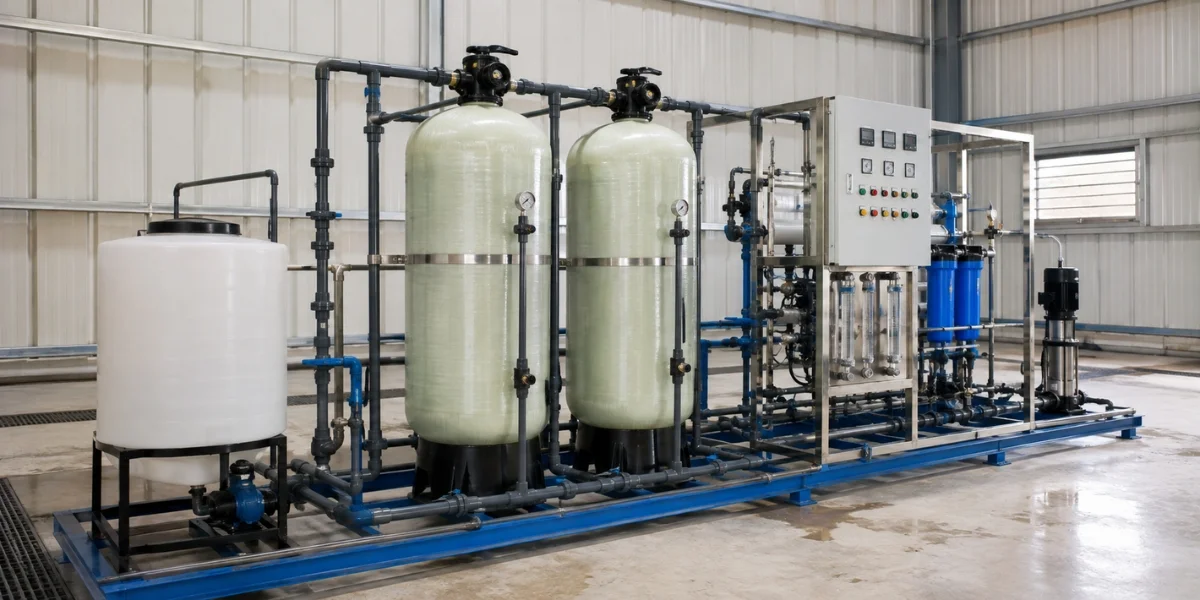
RO & Water Recycling Plant Manufacturer in India
Trity Environ Solutions manufactures RO and water recycling systems for industries and commercial facilities, engineered for reliable purity and reuse.
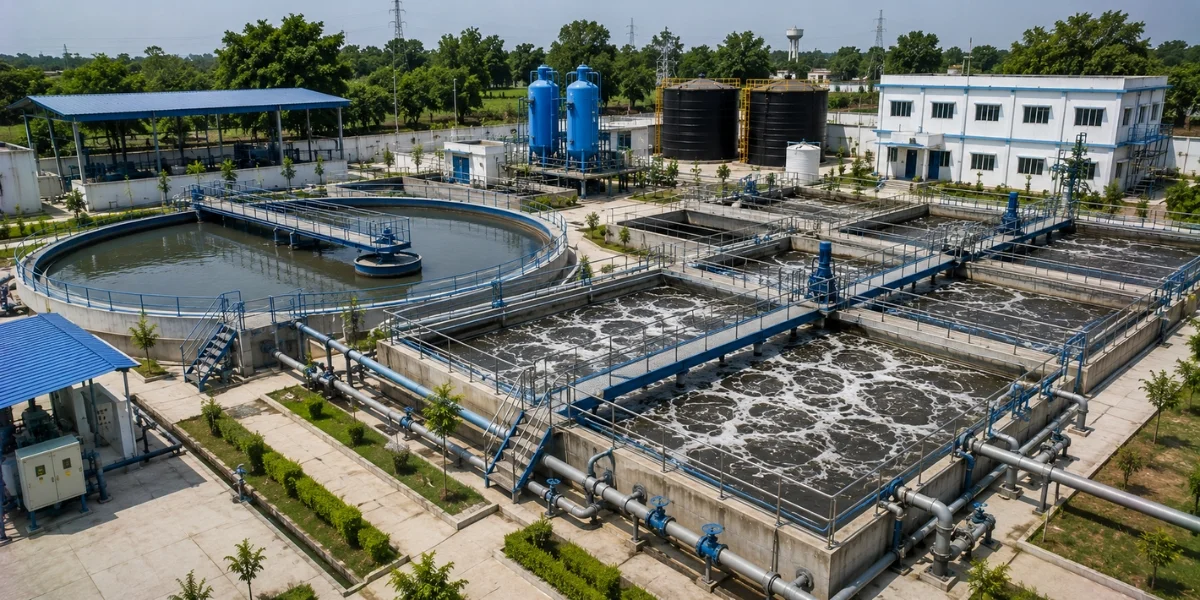
Tertiary Treatment Plant Manufacturer in India
Trity Environ Solutions manufactures tertiary treatment plants that polish treated water beyond secondary treatment, enabling genuine reuse and stricter discharge compliance.
Wastewater Recycling System Manufacturer in India
Trity Environ Solutions manufactures wastewater recycling systems using UF and RO technology, turning treated wastewater into reuse-grade water for cooling, flushing, and gardening.
PAN-INDIA CAPABILITIES
Regional Solutions & State Coverage
TECHNICAL KNOWLEDGE
Related Insights & Engineering Guides
PROVEN EXCELLENCE
Featured Turnkey Installations




Need a Custom Water or Wastewater Treatment Solution?
Our engineering team can help design the right system for your capacity, industry, and compliance requirements.