
 ISO 9001:2015 & QCI Approved
STP and ETP Plant Manufacturer in Delhi/NCR
Trity Environ Solutions is a trusted STP and ETP plant manufacturer in Delhi/NCR, delivering DPCC and CPCB compliant wastewater treatment systems for industries, residential societies, hospitals, and hotels across the region. Based in Ghaziabad, we provide turnkey design, installation, and pan India installation support with faster local response across the NCR corridor.
SPCB / CPCB Norm Compliant
Heavy Fabrication
Built for a Region Where Discharge Norms Are Not Negotiable
Built for a Region Where Discharge Norms Are Not Negotiable
Delhi NCR generates millions of litres of sewage and industrial effluent daily, and the Delhi Pollution Control Committee (DPCC) monitors plants closely, with current norms commonly citing BOD under 10 mg/L, COD under 50 mg/L, and TSS under 10 mg/L for many project categories. Trity Environ Solutions designs Sewage Treatment Plants (STP) and Effluent Treatment Plants (ETP) across Delhi, Noida, Greater Noida, Gurugram, Faridabad, and Ghaziabad, engineered around each site's actual influent load rather than a fixed template.
Our base in Ghaziabad puts us directly inside the NCR region, not serving it remotely, which means faster site access and shorter response times when your plant needs support.
Planning an STP or ETP project in Delhi NCR? Request a free site assessment and our engineering team will confirm the right configuration for your DPCC consent category.
WHY THIS SYSTEM?
Key Benefits of STP and ETP Plant Manufacturer in Delhi/NCR
Engineered for reliable *DPCC and CPCB compliance, a compact footprint, and faster local service response*.
DPCC & CPCB Compliant Systems
Systems engineered to consistently meet DPCC discharge norms, including BOD, COD, and TSS limits, along with CPCB and neighbouring state PCB requirements across the NCR corridor.
Compact for Space-Constrained Sites
Compact, modular designs suit the space-constrained industrial and commercial sites common across Okhla, Sahibabad, and Noida Phase II, without compromising treatment capacity.
Faster Local Service Response
Faster site access and shorter AMC response times, since our Ghaziabad base sits directly within the NCR region rather than serving it remotely.
Technology Matched to Each Sub-Region
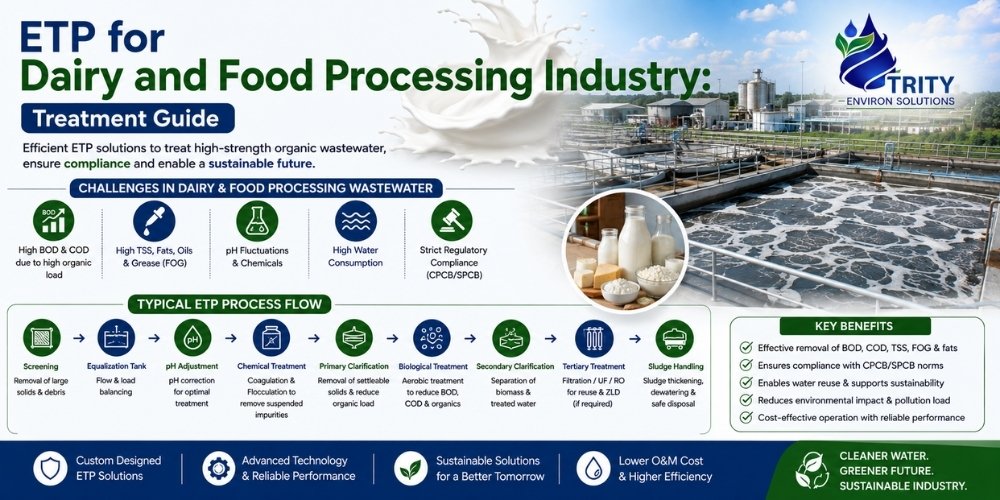
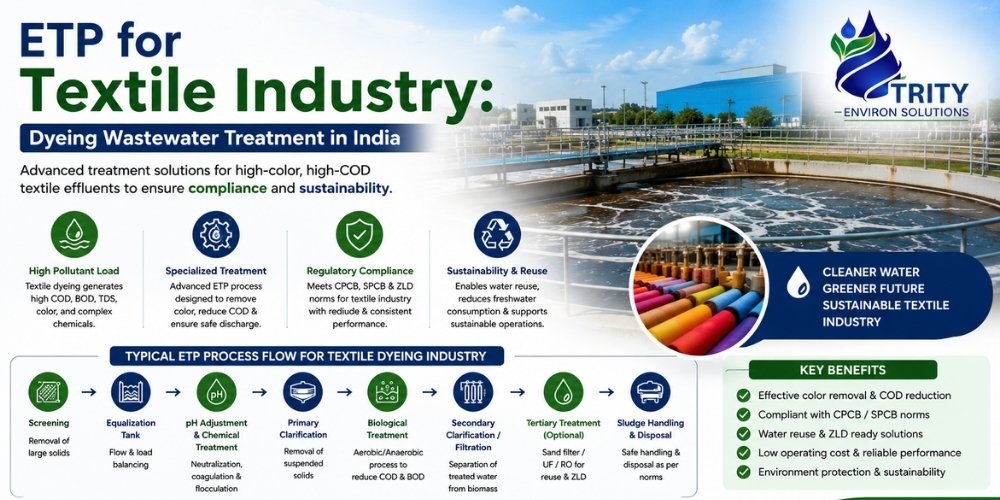
Technology matched to each sub-region industry, from textile dyeing effluent in Gurugram to food processing load in Kundli and Bahadurgarh.
OCEMS-Ready Monitoring
OCEMS-ready online monitoring integration for plants that fall under mandatory continuous emission monitoring requirements set by CPCB and DPCC.
NCR Isn't One Market, It's Several Different Ones
A textile unit in Gurugram, a food processing plant in Kundli, and a hospital in Noida all generate fundamentally different wastewater, even though they sit within the same broader NCR region. Trity Environ Solutions studies your specific effluent characteristics and local PCB consent category, whether DPCC, UPPCB, or HSPCB, before finalizing plant design, rather than applying one standard specification across every NCR site.
DPCC Enforcement Is a Live Cost, Not a Paperwork Formality
DPCC monitors plants closely and levies environmental compensation for non-compliance, making ongoing plant performance genuinely important, not just initial installation quality. Trity Environ Solutions backs every Delhi NCR installation with operator training, compliance documentation support, and an Annual Maintenance Contract, so your plant stays within consent limits. Talk to our team about AMC coverage for your facility.
Areas We Serve Across Delhi/NCR
Trity Environ Solutions installs and services STP and ETP systems across Central and South Delhi, Dwarka, Okhla, and Narela, along with Noida, Greater Noida, and Noida Extension in Uttar Pradesh, Gurugram, Manesar, and Faridabad in Haryana, and Ghaziabad, Sahibabad, and Loni close to its own manufacturing base. Whether your site sits in an established industrial zone or a newer residential development, our NCR-based team reaches your site quickly for both installation and ongoing AMC support.
Industries We Serve in Delhi/NCR
We work across the industry mix that actually defines NCR's effluent landscape, including textile and garment units in Gurugram and Faridabad, chemical and electroplating clusters in Sahibabad and Narela, food and beverage processing around Kundli and Bahadurgarh, pharmaceutical manufacturing in Baddi-adjacent supply chains, and hospitality, hospitals, and residential townships throughout the region. Each sector gets a plant designed around its actual effluent, not a shared generic specification.
Plant Capacity Options
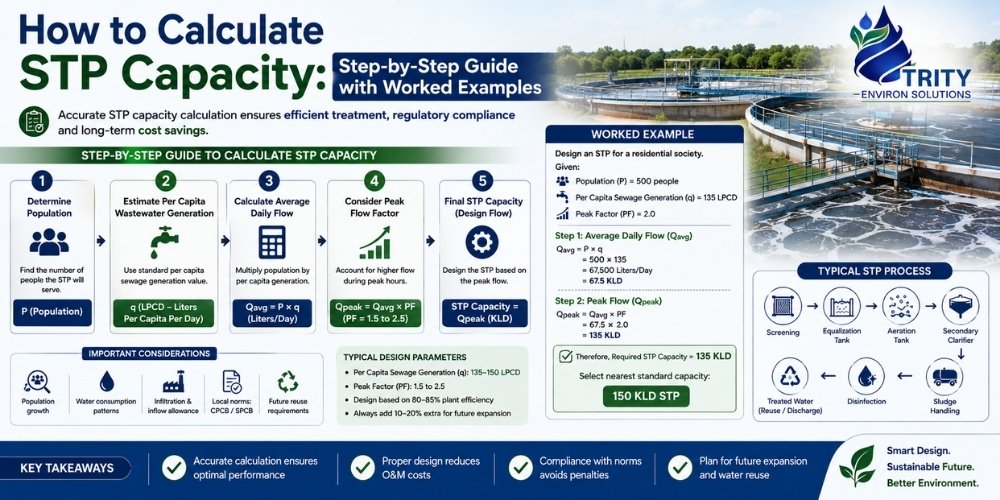
Our Delhi NCR installations typically range from 10 KLD packaged units for small residential buildings and clinics, through 50 to 500 KLD systems for mid-sized societies, hotels, and commercial complexes, up to multi-MLD civil construction plants for large townships, industrial parks, and institutional campuses. Actual capacity is always confirmed against your measured or projected daily flow, not assigned off a generic size chart.
Environmental Compliance Framework
Projects within Delhi fall under DPCC oversight, while surrounding NCR districts are governed by UPPCB in Uttar Pradesh and HSPCB in Haryana, each with its own consent process alongside overarching CPCB and NGT requirements. Trity Environ Solutions tracks these region-specific frameworks closely, helping clients navigate Consent to Establish, Consent to Operate, and OCEMS integration correctly for their specific location.
Energy Efficient Solutions
Aeration typically accounts for the largest share of an STP or ETP's power bill, which is why Trity Environ Solutions incorporates VFD-controlled blowers, fine bubble diffusers, and optimized aeration cycles into Delhi NCR installations. These measures reduce energy consumption meaningfully over the plant's operating life without compromising treatment performance or DPCC compliance.
SYSTEM CONFIGURATIONS
Types of STP and ETP Plant Manufacturer in Delhi/NCR Configurations
Technologies selected to match your *industry, site constraints, and DPCC consent category* across the NCR region.
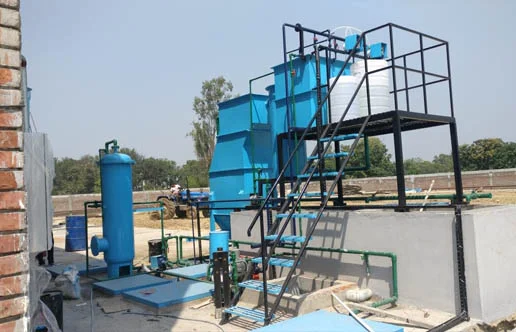
MBBR Sewage Treatment Plant
Our MBBR based STP uses floating HDPE bio-carrier media in a compact, retrofit friendly aeration tank, well suited for residential and hospitality projects across NCR.
SBR Sewage Treatment Plant
Our SBR batch treatment STP uses a time-sequenced batch process ideal for residential societies in Noida Extension and Dwarka needing consistent effluent quality with a smaller footprint.
ETP for Chemical Industries
Our chemical processing ETP is engineered around CPCB Red Category compliance for the chemical and electroplating clusters concentrated in Sahibabad, Ghaziabad, and Narela.
Textile & Dyeing ETP
Our textile dyeing effluent solution is built for colour, COD, and TDS reduction typical of the textile and garment units operating across Gurugram, Faridabad, and Okhla.
Commercial RO Plant
Our commercial RO system delivers safe, consistent drinking water for hotels, offices, and institutions across Delhi, Gurugram, and Noida commercial hubs.
STEP-BY-STEP WORKFLOW
How the STP and ETP Plant Manufacturer in Delhi/NCR Process Works
A turnkey process engineered for consistent *DPCC and CPCB compliant* performance across NCR sites.
01
Site Assessment & Influent Characterisation
Flow measurement, sampling, and laboratory analysis establish your actual effluent characteristics and DPCC consent category before design begins.
02
Design & Engineering
Hydraulic calculations, mass balance, and technology selection are finalized based on your influent data, site constraints, and reuse goals.
03
Manufacturing & Installation
Components are manufactured under ISO 9001:2015 quality controls, then installed and commissioned by our NCR-based site team.
04
Commissioning & AMC Support
The plant is tested against DPCC and CPCB norms, operators are trained, and ongoing AMC support keeps performance consistent afterward.
COMMON INQUIRIES
Frequently Asked Questions
Frequently asked questions about STP and ETP plant manufacturing, DPCC compliance, capacities, and installation in Delhi/NCR.
Q1. What STP and ETP capacities do you supply in Delhi NCR?
We supply plants from 10 KLD to 10 MLD and above, with capacity selected based on your daily wastewater generation, peak flow, and available site space.
Q2. Do you handle DPCC consent documentation?
Yes, we assist with technical documentation required for Consent to Establish and Consent to Operate applications, along with treated water test reports for DPCC inspections.
Q3. How long does installation take in Delhi NCR?
Prefabricated modular plants typically commission within 45 to 90 days, while civil-based plants for larger capacities take 3 to 6 months from design approval to handover.
Q4. Do you serve areas outside Delhi within the wider NCR?
Yes, we serve Noida, Greater Noida, Gurugram, Faridabad, Ghaziabad, Bahadurgarh, and Sonipat, working with the applicable UPPCB, HSPCB, or DPCC consent framework for each location.
Q5. Can you retrofit an existing STP or ETP in NCR?
Yes, we undertake capacity expansions, technology retrofits, and compliance upgrades on existing plants, beginning with a technical audit before recommending changes.
Q6. Do you supply Zero Liquid Discharge systems in Delhi NCR?
Yes, we design ZLD systems for industries mandated by NGT or CPCB, integrating evaporation and condensate recovery with the primary ETP.
CATALOGUE
Related Engineering Products
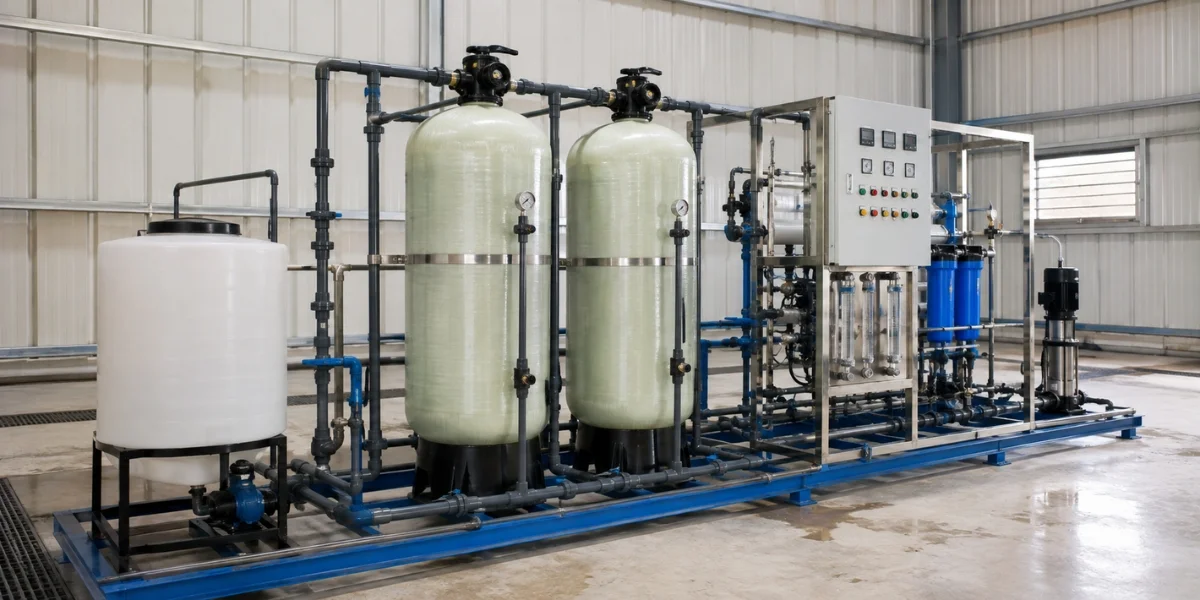
RO & Water Recycling Plant Manufacturer in India
Trity Environ Solutions manufactures RO and water recycling systems for industries and commercial facilities, engineered for reliable purity and reuse.
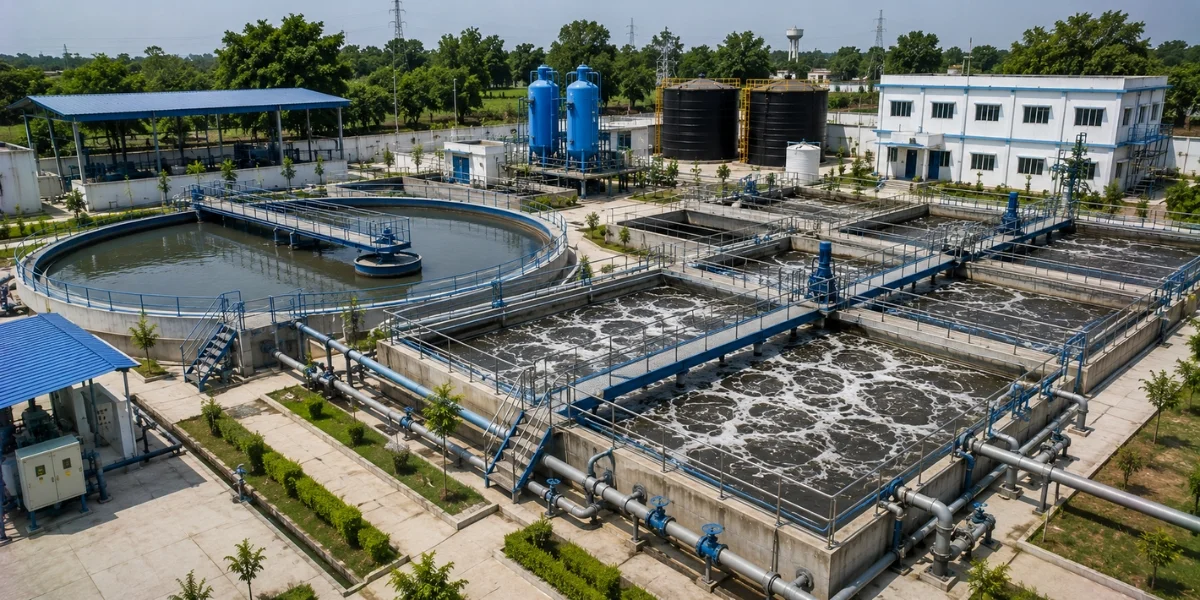
Tertiary Treatment Plant Manufacturer in India
Trity Environ Solutions manufactures tertiary treatment plants that polish treated water beyond secondary treatment, enabling genuine reuse and stricter discharge compliance.
Wastewater Recycling System Manufacturer in India
Trity Environ Solutions manufactures wastewater recycling systems using UF and RO technology, turning treated wastewater into reuse-grade water for cooling, flushing, and gardening.
PAN-INDIA CAPABILITIES
Regional Solutions & State Coverage
TECHNICAL KNOWLEDGE
Related Insights & Engineering Guides
PROVEN EXCELLENCE
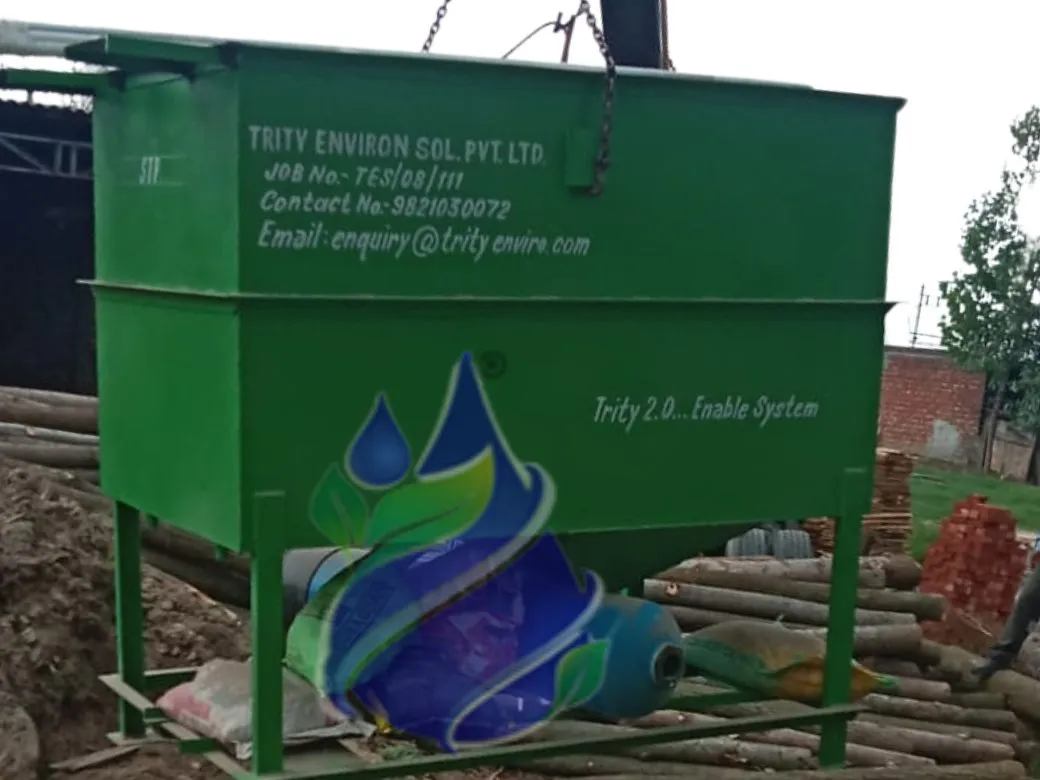
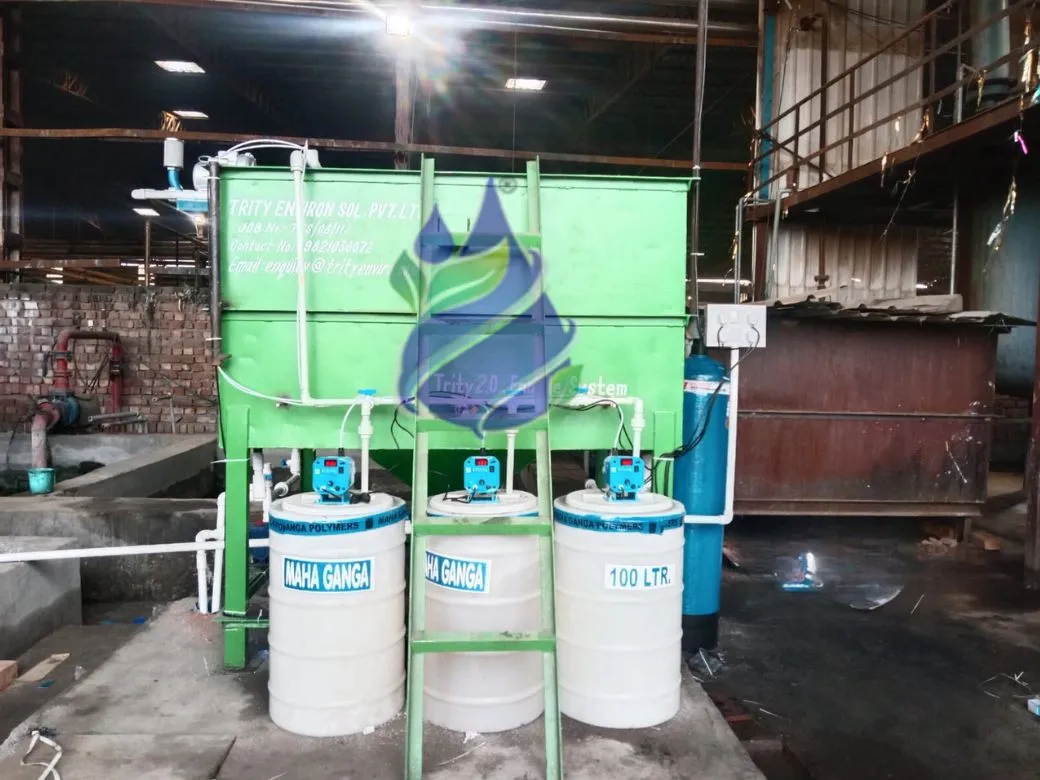
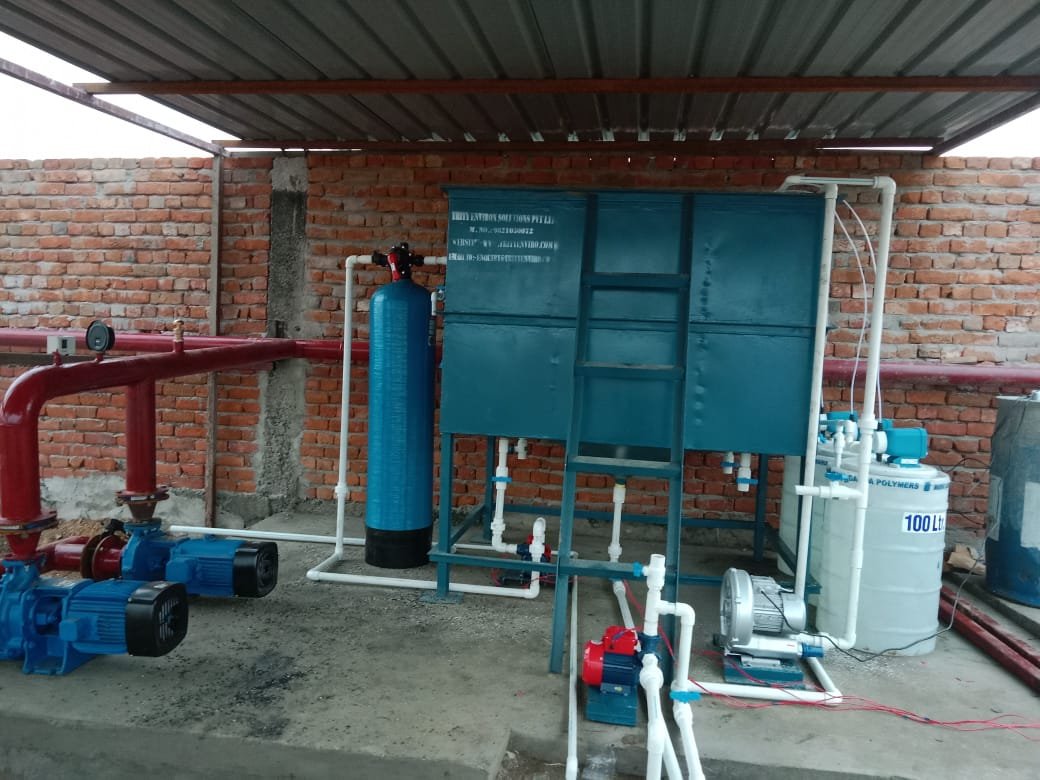
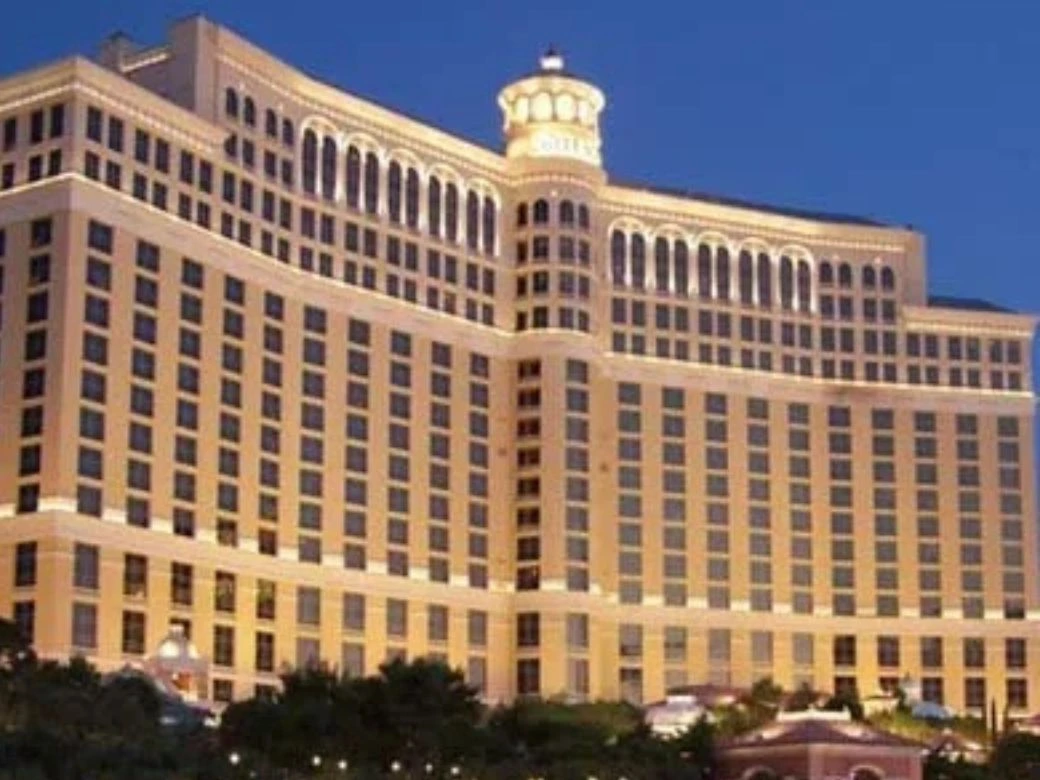
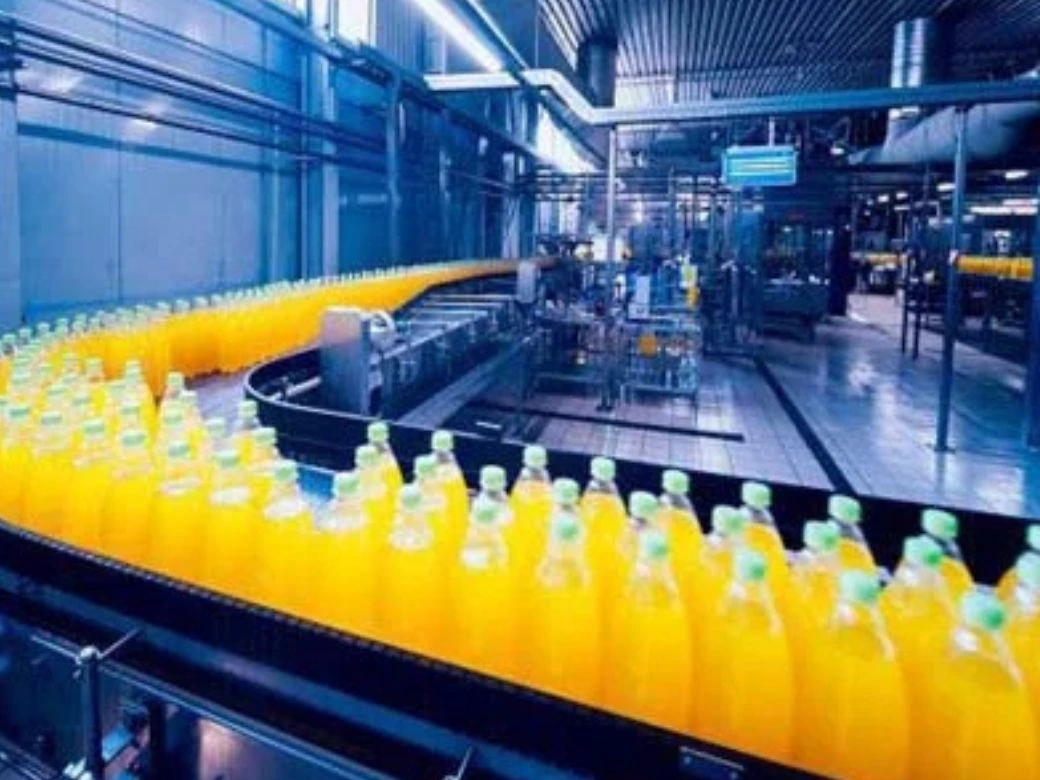
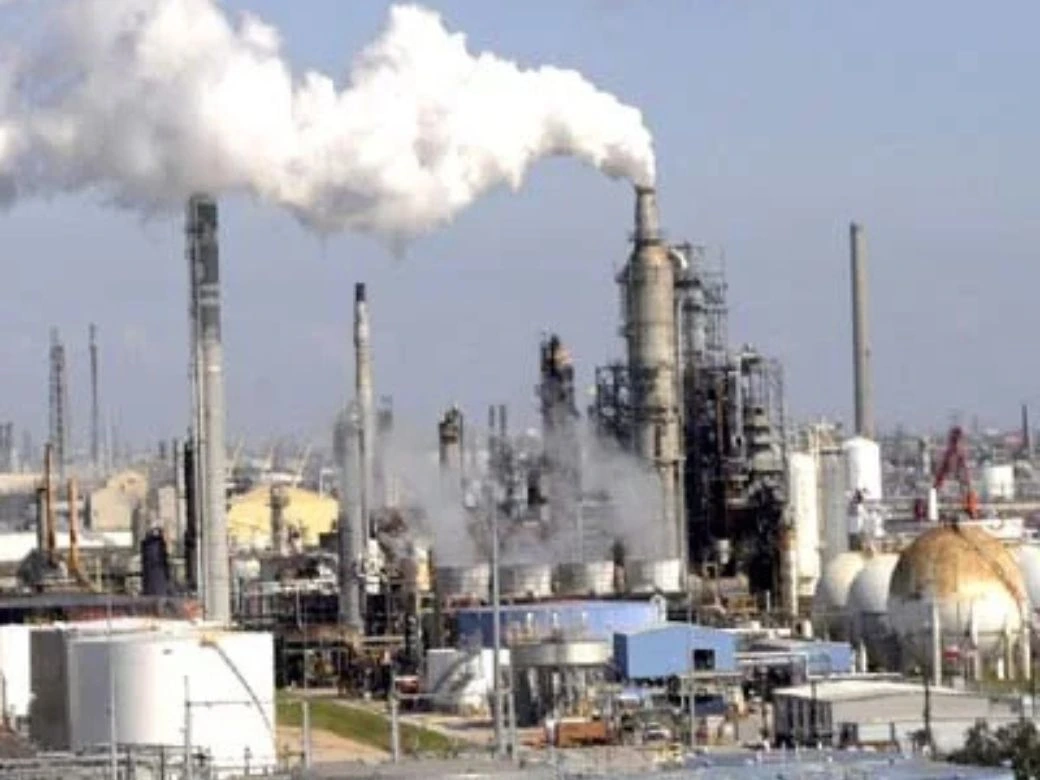
Featured Turnkey Installations



Need a Custom Water or Wastewater Treatment Solution?
Our engineering team can help design the right system for your capacity, industry, and compliance requirements.