
 ISO 9001:2015 & QCI Approved
STP and ETP Plant Manufacturer in Solan
Trity Environ Solutions manufactures STP and ETP plants for Solan's brewery, mushroom processing, and institutional sectors. HPSPCB-compliant engineering. Get a free quote.
SPCB / CPCB Norm Compliant
Heavy Fabrication
STP and ETP Plant Manufacturer for Solan's Brewery and Mushroom Industries
Solan carries two identities that most generic wastewater pages miss entirely. It's known as the Mushroom City of India for its concentration of mushroom cultivation and processing units, and it's home to Solan Brewery, established in 1855 and one of the oldest breweries in India, still producing the well-known Solan No. 1 lager. Both industries generate wastewater with genuinely high organic and biochemical oxygen demand load, brewing effluent from fermentation and cleaning cycles, mushroom processing runoff from washing and substrate handling, and neither is well served by a generic treatment design borrowed from a plains city.
Trity Environ Solutions manufactures Sewage Treatment Plant (STP) and Effluent Treatment Plant (ETP) systems for Solan town, engineered around this specific industry mix and Himachal Pradesh State Pollution Control Board (HPSPCB) compliance. If your unit sits in the Baddi-Barotiwala-Nalagarh pharmaceutical and chemical belt within the wider district, our dedicated Baddi page covers that industrial cluster in depth. This page focuses on Solan town itself and its surrounding hill terrain.
STP Plant Manufacturing for Solan's Institutions and Residential Sites
Solan hosts a number of educational institutions, government offices, and a growing residential base, and our Sewage Treatment Plant systems are sized for exactly this mix. A properly designed STP runs through three stages: preliminary treatment to remove physical solids and debris, secondary treatment using biological processes such as MBBR to break down organic load, and tertiary treatment for disinfection before the water is reused or discharged.
Given Solan's hill terrain, plot space is often limited compared to a plains city, so compact technology choices matter more here than they would in a large flat industrial estate.
ETP Plant Solutions for Solan's Brewery and Food Processing Sector
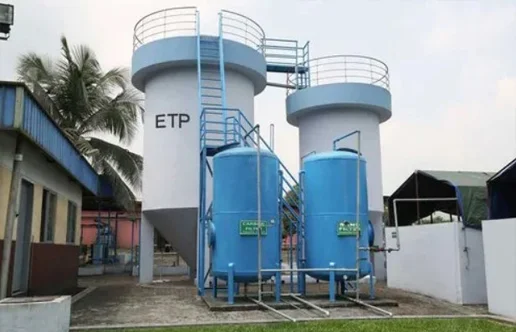
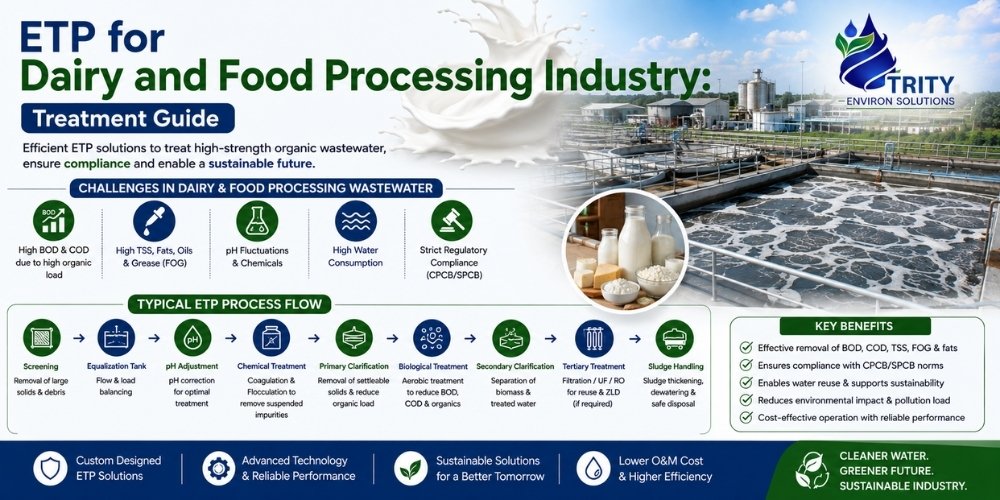
Brewing wastewater carries high BOD and COD from fermentation residues, spent grain washing, and cleaning-in-place cycles, and it needs a treatment approach built around that specific organic load rather than a standard industrial template. Our Effluent Treatment Plant systems for Solan's brewery and food processing clients run through physical treatment to remove suspended solids, biological treatment sized for the high organic load typical of fermentation and washing effluent, and a final polishing stage before discharge or reuse.
Mushroom processing units generate a related but distinct profile, wastewater carrying organic matter from substrate washing and compost handling, which we treat with a similar biological-heavy approach adjusted for the specific load characteristics of that process.
Turnkey Execution: Design to Commissioning
Our scope on Solan projects typically covers:
- Site assessment and effluent or sewage characterisation
- Process design suited to brewery, food processing, or institutional load profiles
- Civil and structural coordination adapted to hill terrain
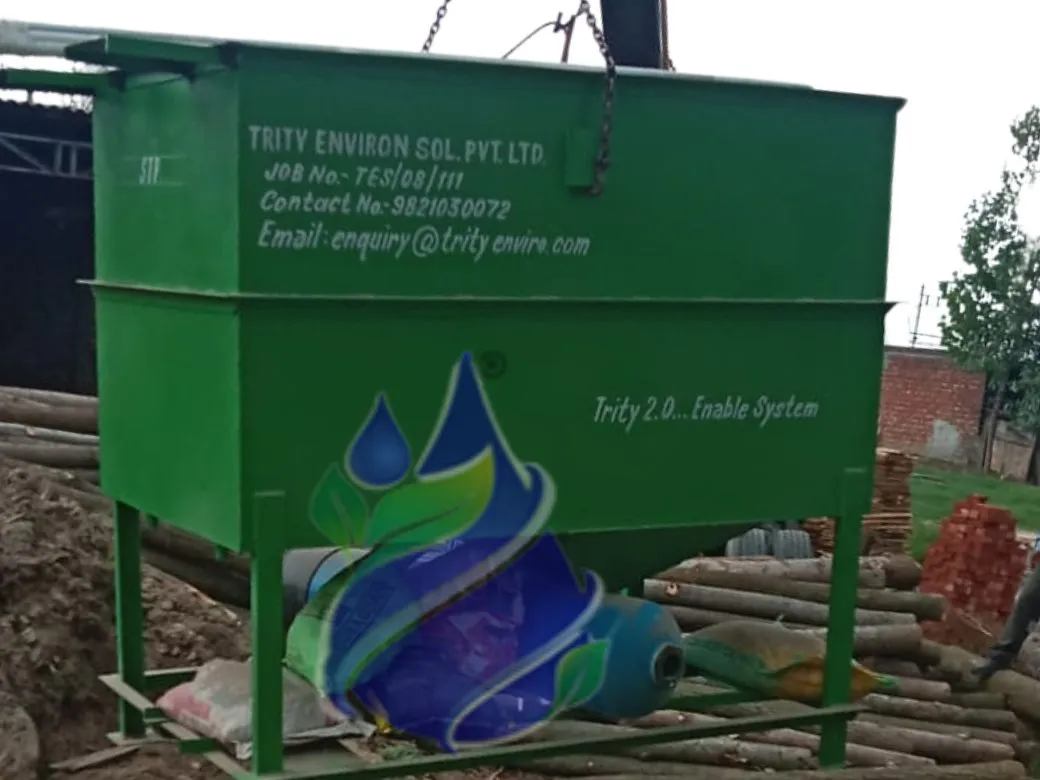
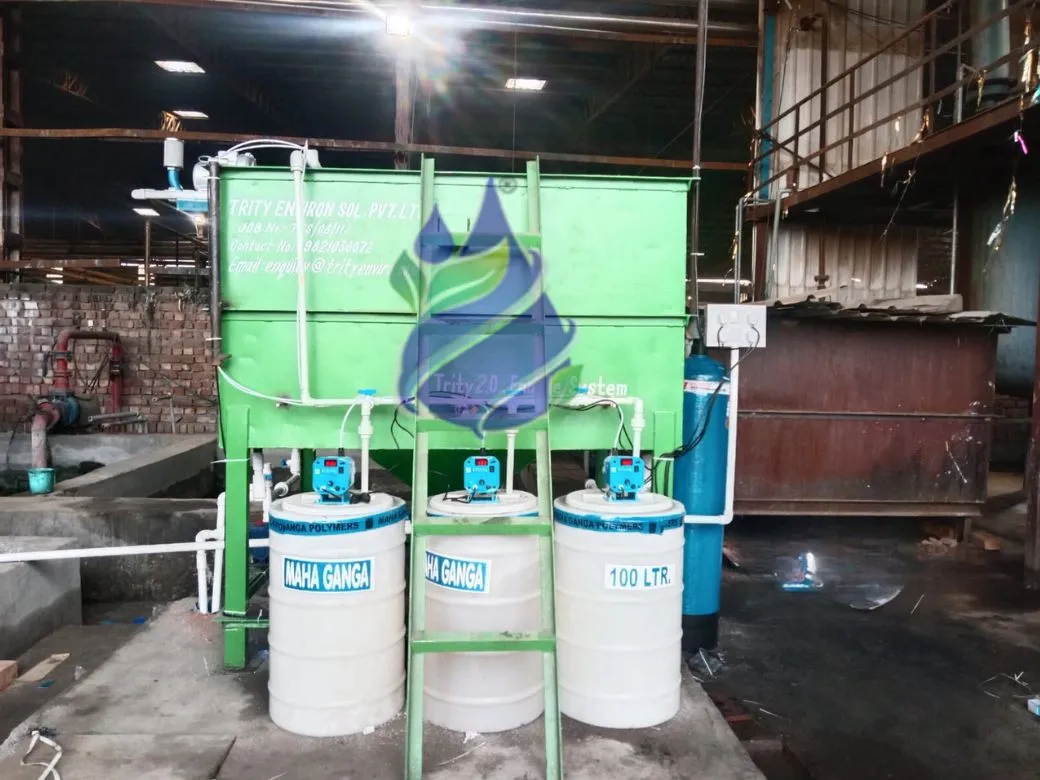
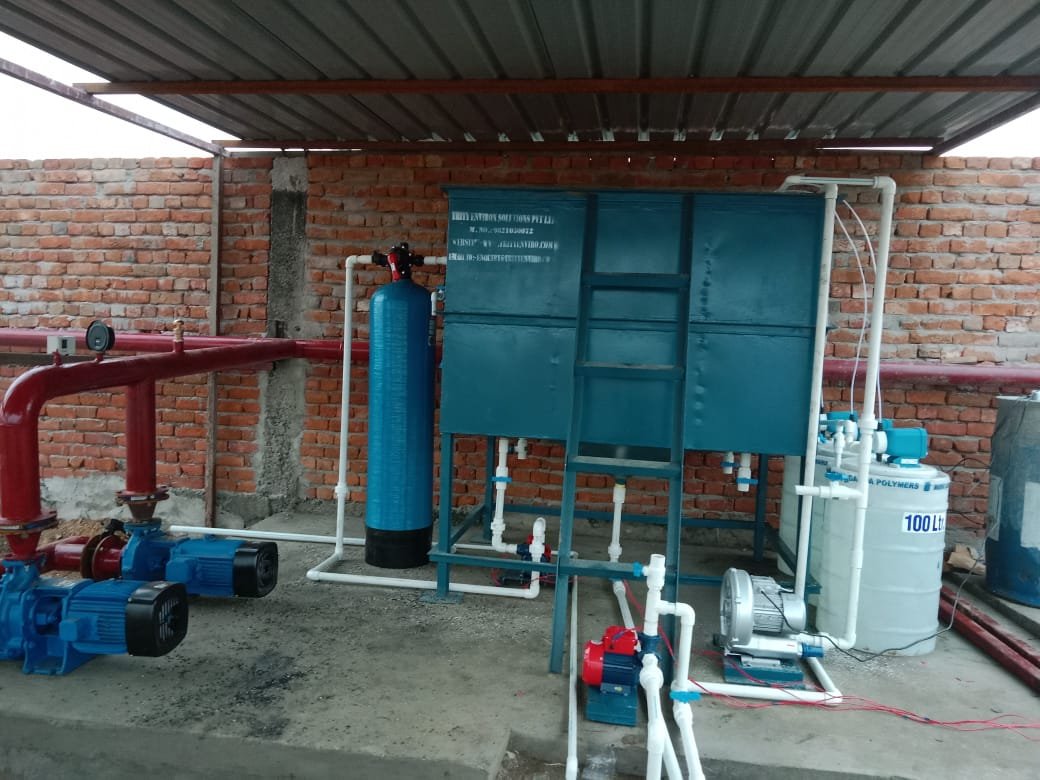
- Equipment manufacturing at our own facility
- Installation, piping, and electrical integration, with backup power sizing built in
- Trial runs, commissioning, and HPSPCB documentation support
- Annual Maintenance Contracts (AMC) after commissioning
Solan's hill terrain and periodic power reliability issues mean backup power sizing for the biological treatment stage is a standard part of our design here, not an optional add-on, since losing power for an extended stretch can set back a biological treatment culture by days.
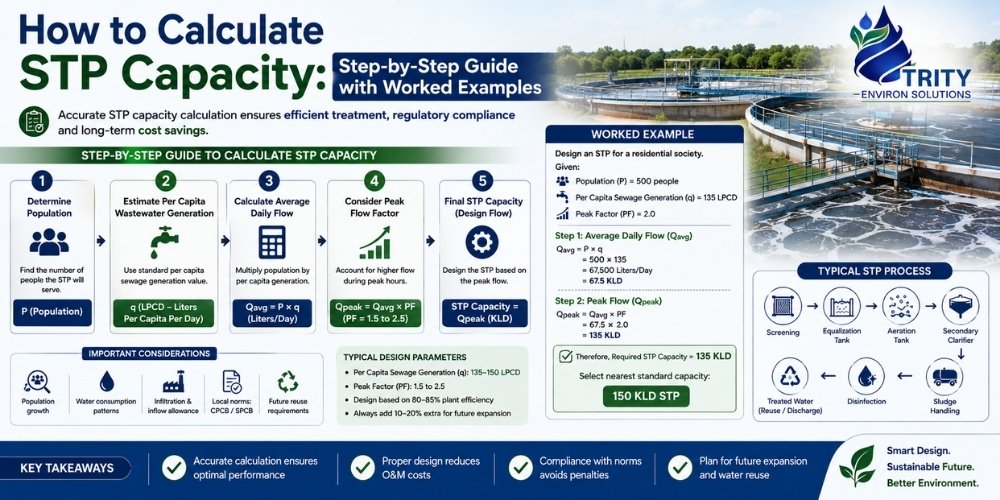
Capacity Options We Manufacture
STP and ETP Plant Manufacturer for Solan's Brewery and Mushroom IndustriesSolan carries two identities that most generic wastewater pages miss entirely. It's known as the Mushroom City of India for its concentration of mushroom cultivation and processing units, and it's home to Solan Brewery, established in 1855 and one of the oldest breweries in India, still producing the well-known Solan No. 1 lager. Both industries generate wastewater with genuinely high organic and biochemical oxygen demand load, brewing effluent from fermentation and cleaning cycles, mushroom processing runoff from washing and substrate handling, and neither is well served by a generic treatment design borrowed from a plains city. Trity Environ Solutions manufactures Sewage Treatment Plant (STP) and Effluent Treatment Plant (ETP) systems for Solan town, engineered around this specific industry mix and Himachal Pradesh State Pollution Control Board (HPSPCB) compliance. If your unit sits in the Baddi-Barotiwala-Nalagarh pharmaceutical and chemical belt within the wider district, our dedicated Baddi page covers that industrial cluster in depth. This page focuses on Solan town itself and its surrounding hill terrain. STP Plant Manufacturing for Solan's Institutions and Residential SitesSolan hosts a number of educational institutions, government offices, and a growing residential base, and as a leading STP Plant Manufacturer in Solan, our Sewage Treatment Plant (STP) systems are sized for exactly this mix. A properly designed STP runs through three stages: preliminary treatment to remove physical solids and debris, secondary treatment using biological processes such as MBBR to break down organic load, and tertiary treatment for disinfection before the water is reused or discharged. Given Solan's hill terrain, plot space is often limited compared to a plains city, so compact technology choices matter more here than they would in a large flat industrial estate. ETP Plant Solutions for Solan's Brewery and Food Processing SectorBrewing wastewater carries high BOD and COD from fermentation residues, spent grain washing, and cleaning-in-place cycles, and it needs a treatment approach built around that specific organic load rather than a standard industrial template. As a trusted ETP Plant Manufacturer in Solan, our Effluent Treatment Plant (ETP) systems for Solan's brewery and food processing clients run through physical treatment to remove suspended solids, biological treatment sized for the high organic load typical of fermentation and washing effluent, and a final polishing stage before discharge or reuse. Mushroom processing units generate a related but distinct profile, wastewater carrying organic matter from substrate washing and compost handling, which we treat with a similar biological-heavy approach adjusted for the specific load characteristics of that process. Turnkey Execution: Design to CommissioningOur scope on Solan projects typically covers:
Solan's hill terrain and periodic power reliability issues mean backup power sizing for the biological treatment stage is a standard part of our design here, not an optional add-on, since losing power for an extended stretch can set back a biological treatment culture by days. Capacity Options We Manufacture
Treatment Technologies We DeployHPSPCB and CPCB recognise several treatment technologies, and we manufacture across the ones best suited to Solan's specific industry mix:
Getting this right matters because brewery effluent that isn't pre-treated for its organic strength can overload a standard aerobic system entirely, leading to treatment failure rather than just reduced efficiency. Industries and Institutions We Serve in Solan
HPSPCB Compliance and Discharge NormsEvery plant we design for Solan is built to clear these baseline requirements:
Because Solan's brewery and food processing effluent runs at higher organic strength than typical municipal sewage, HPSPCB inspections here tend to focus closely on BOD and COD compliance specifically, which is why we design with margin above the minimum rather than to the exact limit. Engineering Considerations Specific to SolanA few conditions shape how we design differently for Solan compared to a plains industrial town. High-strength brewery effluent needs staged treatment. Fermentation and cleaning-in-place wastewater from brewing operations carries organic load well above typical municipal sewage. Treating it with a standard aerobic system alone often leads to overload rather than steady underperformance, which is why we specify anaerobic pre-treatment for high-strength brewery effluent before it reaches the main biological stage. Hill terrain limits plot space. Like much of Himachal Pradesh, sites in and around Solan town don't always offer a flat, rectangular plot. Compact MBBR configurations tend to fit better than designs assuming a standard layout. Power reliability affects biological treatment continuity. Periodic outages on hill terrain can interrupt aeration long enough to damage a biological reactor's microbial culture. We size backup power to cover the aeration stage specifically, not just controls and lighting. Mushroom processing wastewater has distinct seasonal patterns. Cultivation and processing volumes can vary through the year depending on production cycles, so we size systems against realistic peak throughput rather than an averaged annual figure. We supply, install, and service STP and ETP systems across Solan town and its surrounding areas. For the Baddi-Barotiwala-Nalagarh pharmaceutical and chemical belt within the wider district, see our dedicated Baddi page for coverage specific to that industrial cluster. Why Solan Projects Choose Trity Environ SolutionsMost manufacturers listing Solan run a generic Himachal Pradesh page, or worse, a listicle ranking themselves first without engaging with what actually makes the town's industry mix distinct. None of them mention brewery or mushroom processing wastewater by name, despite these being two of Solan's most established industries. We design ETPs around the specific organic load characteristics of fermentation and food processing effluent rather than applying a standard industrial template, and we build backup power into every design given the hill terrain's periodic reliability issues. That specificity matters more than a generic claim to serve "all of Himachal Pradesh." Quality, Certification, and After-Sales SupportTrity Environ Solutions is ISO 9001:2015 certified, and every plant we manufacture goes through in-house quality inspection before dispatch. After installation, we provide AMC support, spare parts availability, and remote troubleshooting suited to Solan's hill terrain. You can review our project history on our Achievement page, or read more about our full Services. Frequently Asked Questions1. What is the cost of an STP or ETP plant in Solan?Cost depends on capacity, technology, and effluent characteristics. Brewery effluent typically needs more robust biological treatment capacity than standard institutional sewage at a similar flow rate, which affects pricing. We provide a site-specific quote after reviewing your effluent profile. 2. Does brewery wastewater need a different ETP design compared to standard industrial effluent?Yes. Brewery effluent carries significantly higher BOD and COD than typical wastewater, often requiring an anaerobic pre-treatment stage ahead of standard biological treatment to avoid overloading the system. 3. Do you serve the Baddi-Barotiwala-Nalagarh industrial belt as well as Solan town?We do, though that cluster has its own dedicated coverage on our Baddi page given how different pharmaceutical and chemical effluent is from Solan town's brewery and institutional wastewater profile. 4. How long does the HPSPCB Consent to Establish and Consent to Operate process take?Timelines vary by project scale, but generally run 60 to 90 days once your site plan and treatment design are submitted. We assist with documentation to avoid delays. 5. Can an existing brewery ETP be upgraded instead of replaced if it's struggling with current load?In many cases, yes. Adding an anaerobic pre-treatment stage or expanding aeration capacity can bring an overloaded system back within HPSPCB limits without a full rebuild. We assess this during site evaluation. 6. Do mushroom processing units need an ETP even though the product itself isn't chemical-based?Yes. Washing and substrate handling wastewater still carries organic load that needs treatment before discharge, and HPSPCB norms apply regardless of the industry's product category. 7. Why does brewery effluent sometimes overload a standard ETP?Standard aerobic biological treatment is designed for a certain organic load range. Brewery effluent, particularly from fermentation and CIP cleaning cycles, often exceeds that range significantly, which is why an anaerobic pre-treatment stage is usually necessary rather than optional for breweries of meaningful scale. Ready to discuss your Solan project? Get a free quote or explore our full product range for STP, ETP, and related water treatment systems. |
||||||||||||||
|---|---|---|---|---|---|---|---|---|---|---|---|---|---|---|
Treatment Technologies We Deploy
HPSPCB and CPCB recognise several treatment technologies, and we manufacture across the ones best suited to Solan's specific industry mix:
- MBBR (Moving Bed Biofilm Reactor): compact footprint, effective for high-BOD brewery and food processing effluent
- SBR (Sequencing Batch Reactor): suited to institutional and residential sewage loads
- Extended Aeration: cost-effective for smaller residential or institutional setups
- Anaerobic pre-treatment: useful ahead of biological treatment for very high-strength brewery effluent, reducing organic load before the main aerobic stage
Getting this right matters because brewery effluent that isn't pre-treated for its organic strength can overload a standard aerobic system entirely, leading to treatment failure rather than just reduced efficiency.
Industries and Institutions We Serve in Solan
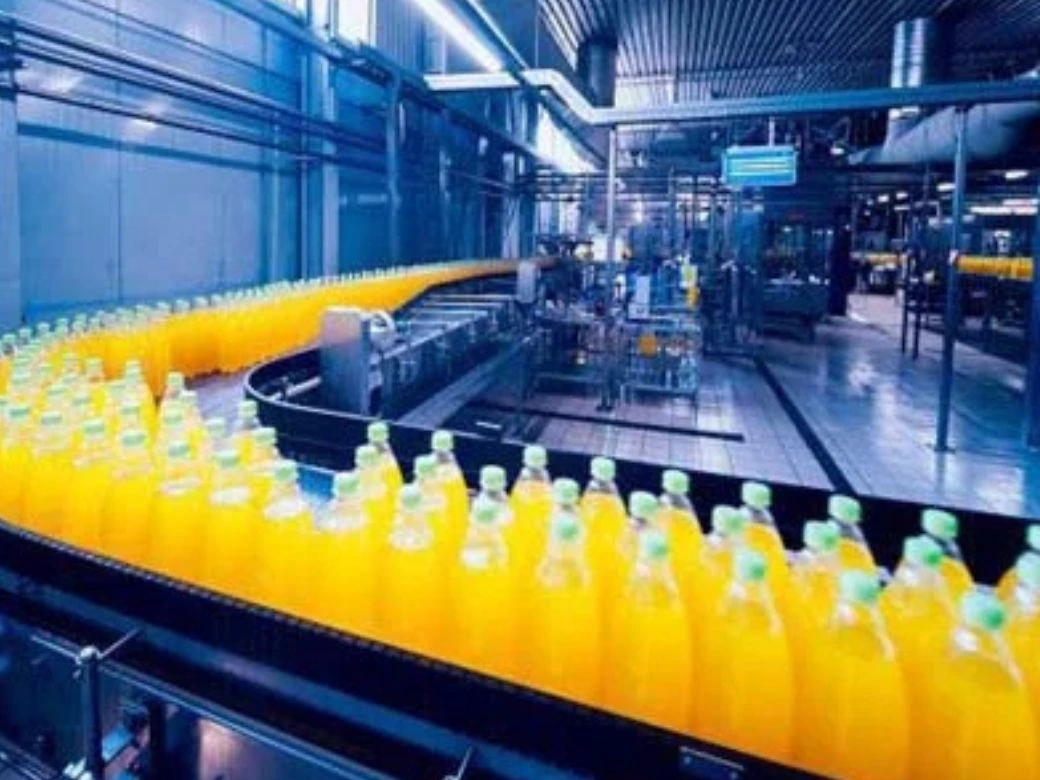
- Brewery and beverage processing: high-BOD effluent from fermentation and cleaning cycles, led by long-established operations like Solan Brewery
- Mushroom cultivation and processing: organic-heavy wastewater from substrate handling and washing, reflecting Solan's reputation as India's Mushroom City
- Educational institutions: centralised STP systems for campus and hostel sewage
- Government offices and institutions: given Solan's administrative role within the district
- Hotels and hospitality: smaller-scale tourism demand compared to Shimla, but growing steadily as Solan draws visitors passing through toward the wider hill circuit
- Residential complexes: STP systems for Solan's expanding urban footprint as the town grows beyond its traditional core
HPSPCB Compliance and Discharge Norms
Every plant we design for Solan is built to clear these baseline requirements:
- BOD and COD: kept within HPSPCB-prescribed limits, with particular attention to organic load parameters given the brewery and food processing sector's effluent profile
- pH: maintained within the standard 6.5 to 8.5 range required for discharge
- Compliance with the Water (Prevention and Control of Pollution) Act, 1974 and Environment Protection Act, 1986
- Consent to Establish (CTE) and Consent to Operate (CTO) documentation support for new installations and renewals
Because Solan's brewery and food processing effluent runs at higher organic strength than typical municipal sewage, HPSPCB inspections here tend to focus closely on BOD and COD compliance specifically, which is why we design with margin above the minimum rather than to the exact limit.
Engineering Considerations Specific to Solan
A few conditions shape how we design differently for Solan compared to a plains industrial town.
High-strength brewery effluent needs staged treatment. Fermentation and cleaning-in-place wastewater from brewing operations carries organic load well above typical municipal sewage. Treating it with a standard aerobic system alone often leads to overload rather than steady underperformance, which is why we specify anaerobic pre-treatment for high-strength brewery effluent before it reaches the main biological stage.
Hill terrain limits plot space. Like much of Himachal Pradesh, sites in and around Solan town don't always offer a flat, rectangular plot. Compact MBBR configurations tend to fit better than designs assuming a standard layout.
Power reliability affects biological treatment continuity. Periodic outages on hill terrain can interrupt aeration long enough to damage a biological reactor's microbial culture. We size backup power to cover the aeration stage specifically, not just controls and lighting.
Mushroom processing wastewater has distinct seasonal patterns. Cultivation and processing volumes can vary through the year depending on production cycles, so we size systems against realistic peak throughput rather than an averaged annual figure.
We supply, install, and service STP and ETP systems across Solan town and its surrounding areas. For the Baddi-Barotiwala-Nalagarh pharmaceutical and chemical belt within the wider district, see our dedicated Baddi page for coverage specific to that industrial cluster.
Why Solan Projects Choose Trity Environ Solutions
Most manufacturers listing Solan run a generic Himachal Pradesh page, or worse, a listicle ranking themselves first without engaging with what actually makes the town's industry mix distinct. None of them mention brewery or mushroom processing wastewater by name, despite these being two of Solan's most established industries.
We design ETPs around the specific organic load characteristics of fermentation and food processing effluent rather than applying a standard industrial template, and we build backup power into every design given the hill terrain's periodic reliability issues. That specificity matters more than a generic claim to serve "all of Himachal Pradesh."
Quality, Certification, and After-Sales Support
Trity Environ Solutions is ISO 9001:2015 certified, and every plant we manufacture goes through in-house quality inspection before dispatch. After installation, we provide AMC support, spare parts availability, and remote troubleshooting suited to Solan's hill terrain. You can review our project history on our Achievement page, or read more about our full Services.
Frequently Asked Questions
1. What is the cost of an STP or ETP plant in Solan?
Cost depends on capacity, technology, and effluent characteristics. Brewery effluent typically needs more robust biological treatment capacity than standard institutional sewage at a similar flow rate, which affects pricing. We provide a site-specific quote after reviewing your effluent profile.
2. Does brewery wastewater need a different ETP design compared to standard industrial effluent?
Yes. Brewery effluent carries significantly higher BOD and COD than typical wastewater, often requiring an anaerobic pre-treatment stage ahead of standard biological treatment to avoid overloading the system.
3. Do you serve the Baddi-Barotiwala-Nalagarh industrial belt as well as Solan town?
We do, though that cluster has its own dedicated coverage on our Baddi page given how different pharmaceutical and chemical effluent is from Solan town's brewery and institutional wastewater profile.
4. How long does the HPSPCB Consent to Establish and Consent to Operate process take?
Timelines vary by project scale, but generally run 60 to 90 days once your site plan and treatment design are submitted. We assist with documentation to avoid delays.
5. Can an existing brewery ETP be upgraded instead of replaced if it's struggling with current load?
In many cases, yes. Adding an anaerobic pre-treatment stage or expanding aeration capacity can bring an overloaded system back within HPSPCB limits without a full rebuild. We assess this during site evaluation.
6. Do mushroom processing units need an ETP even though the product itself isn't chemical-based?
Yes. Washing and substrate handling wastewater still carries organic load that needs treatment before discharge, and HPSPCB norms apply regardless of the industry's product category.
7. Why does brewery effluent sometimes overload a standard ETP?
Standard aerobic biological treatment is designed for a certain organic load range. Brewery effluent, particularly from fermentation and CIP cleaning cycles, often exceeds that range significantly, which is why an anaerobic pre-treatment stage is usually necessary rather than optional for breweries of meaningful scale.
Ready to discuss your Solan project? Get a free quote or explore our full product range for STP, ETP, and related water treatment systems.
WHY THIS SYSTEM?
Key Benefits of STP and ETP Plant Manufacturer in Solan
Engineered for high biological efficiency, full environmental compliance, and low lifecycle operational costs.
100% CPCB / SPCB Compliance
Strict adherence to national and state pollution control board parameters for BOD, COD, TSS, and heavy metals discharge.
Low Power & Operational Cost
Optimized hydraulic design and energy-efficient aeration reduce kilowatt consumption per cubic meter of treated water.
Compact & Modular Footprint
Skid-mounted and modular civil layouts save valuable industrial floor space and allow seamless capacity expansion.
Automated PLC / SCADA Control
Real-time water quality monitoring, automated dosing systems, and remote telemetry for hassle-free plant operation.
Zero Liquid Discharge (ZLD) Ready
Seamless integration with downstream RO and evaporator systems for maximum water recycling and recovery.
Robust Engineering & Longevity
Heavy-gauge anti-corrosive construction ensures 15+ years of reliable, uninterrupted service life.
SYSTEM CONFIGURATIONS
Types of STP and ETP Plant Manufacturer in Solan Configurations
Tailored industrial configurations matched to specific effluent composition, flow rates, and space constraints.
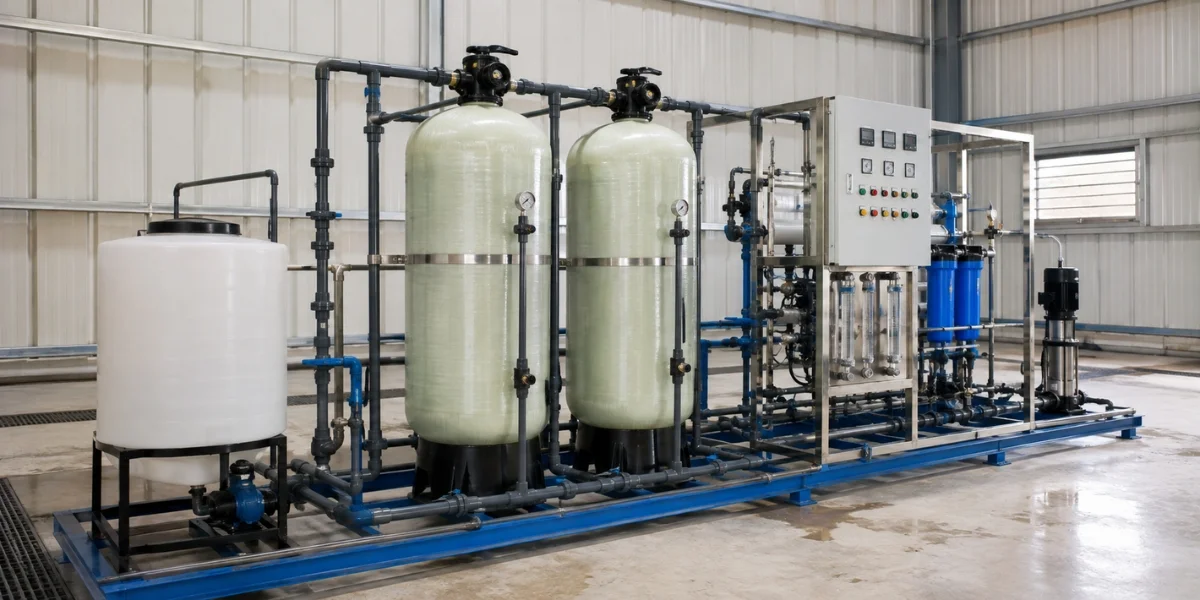
RO & Water Recycling Plant Manufacturer in India
Trity Environ Solutions manufactures RO and water recycling systems for industries and commercial facilities, engineered for reliable purity and reuse.
Explore Configuration
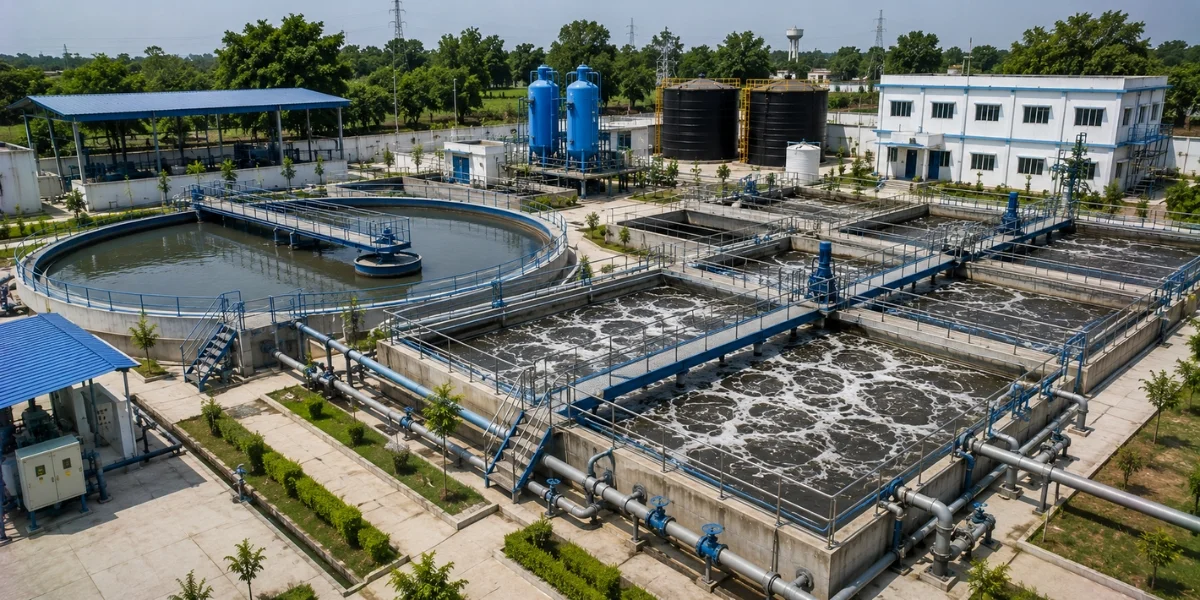
Tertiary Treatment Plant Manufacturer in India
Trity Environ Solutions manufactures tertiary treatment plants that polish treated water beyond secondary treatment, enabling genuine reuse and stricter discharge compliance.
Explore Configuration
Wastewater Recycling System Manufacturer in India
Trity Environ Solutions manufactures wastewater recycling systems using UF and RO technology, turning treated wastewater into reuse-grade water for cooling, flushing, and gardening.
Explore Configuration
STEP-BY-STEP WORKFLOW
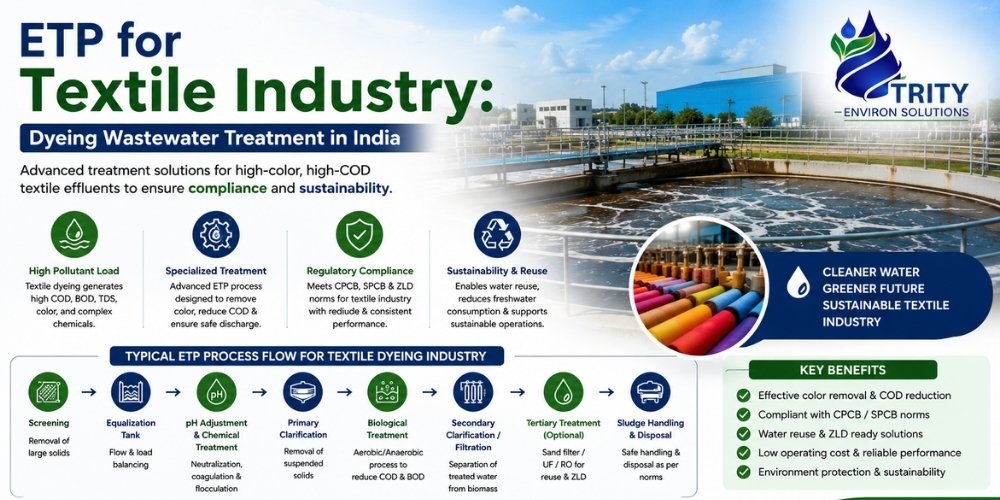
How the STP and ETP Plant Manufacturer in Solan Process Works
A sequential, multi-stage treatment methodology engineered for maximum contaminant removal and water recovery.
01
Primary Collection & Screening
Raw effluent equalization, coarse bar screening, and pH neutralization to stabilize influent parameters.
02
Physico-Chemical Coagulation
Flash mixing of coagulants and flocculants followed by primary clarifier separation for heavy suspended solids.
03
Advanced Biological Digestion
Aerobic/anaerobic microbial digestion (MBBR / SBR / ASP) for drastic reduction of dissolved BOD & COD.
04
Tertiary Polishing & Disinfection
Dual media sand and activated carbon filtration with UV/ozonation for clean, reusable output water.
CATALOGUE
Related Engineering Products
RO & Water Recycling Plant Manufacturer in India
Trity Environ Solutions manufactures RO and water recycling systems for industries and commercial facilities, engineered for reliable purity and reuse.
Tertiary Treatment Plant Manufacturer in India
Trity Environ Solutions manufactures tertiary treatment plants that polish treated water beyond secondary treatment, enabling genuine reuse and stricter discharge compliance.
Wastewater Recycling System Manufacturer in India
Trity Environ Solutions manufactures wastewater recycling systems using UF and RO technology, turning treated wastewater into reuse-grade water for cooling, flushing, and gardening.
PAN-INDIA CAPABILITIES
Regional Solutions & State Coverage
TECHNICAL KNOWLEDGE
Related Insights & Engineering Guides
PROVEN EXCELLENCE
Featured Turnkey Installations




Need a Custom Water or Wastewater Treatment Solution?
Our engineering team can help design the right system for your capacity, industry, and compliance requirements.