STP and ETP Plant Manufacturer in Shimla
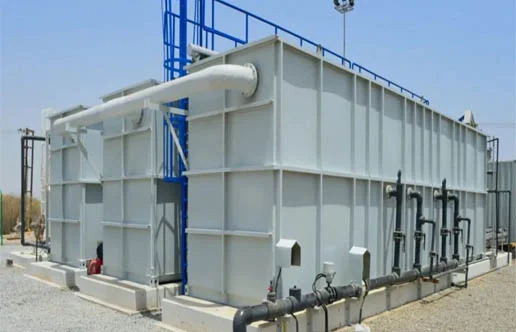
Trity Environ Solutions manufactures STP and ETP plants for Shimla, engineered for hill terrain and HPSPCB compliance from day one. Turnkey design, manufacturing, installation, and AMC support across the city and surrounding hill stations.

Get a Free Quote

STP and ETP Plant Manufacturer for Shimla's Hill Terrain

Shimla's wastewater problems aren't like those of a plains city. In 2016, the Malyana Sewage Treatment Plant discharged untreated sludge directly into the Ashwani Khad after a power failure left it without backup, and the contamination triggered a hepatitis outbreak that spread across Kasumpati, Vikas Nagar, Panthaghati, Chotta Shimla, New Shimla, and Khalini. More recently, in 2025, the Himachal Pradesh State Pollution Control Board (HPSPCB) fined Shimla Jal Prabandhan Nigam over ₹31 lakh after sampling at the Golcha plant showed BOD, COD, and suspended solids well above permissible limits. Both cases point to the same underlying issue: a plant that looks fine on paper but fails on power backup, siting, or ongoing operation causes real public health damage in a hill city where sewage runs into khads that double as water sources downstream.

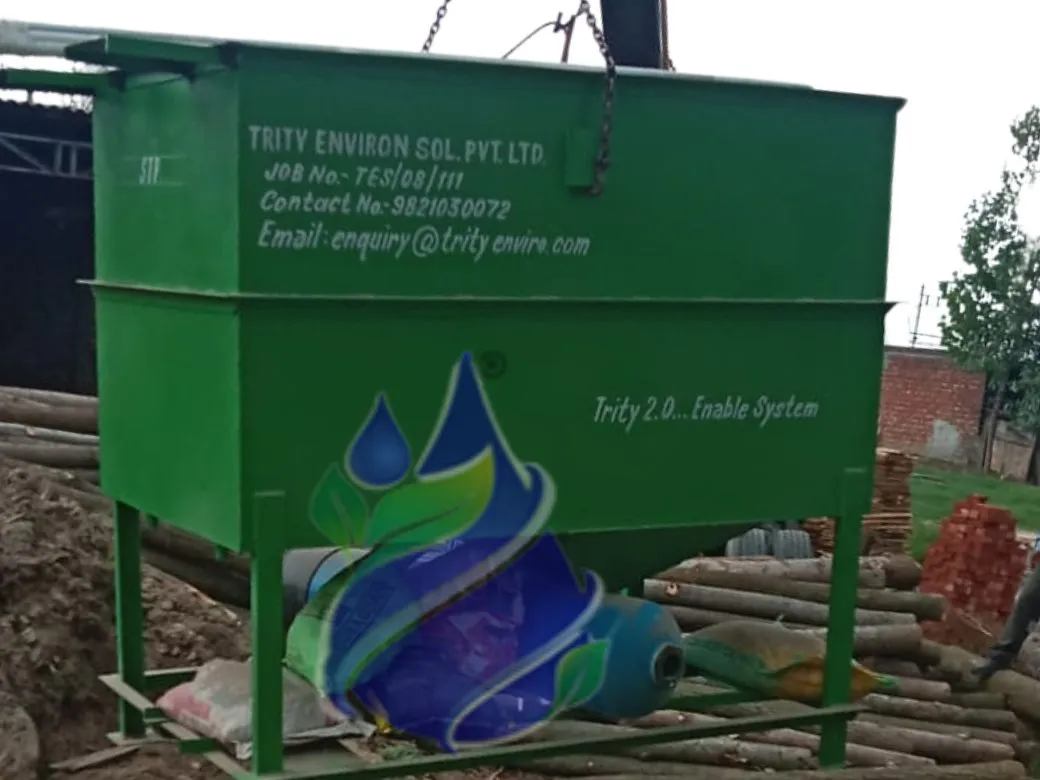
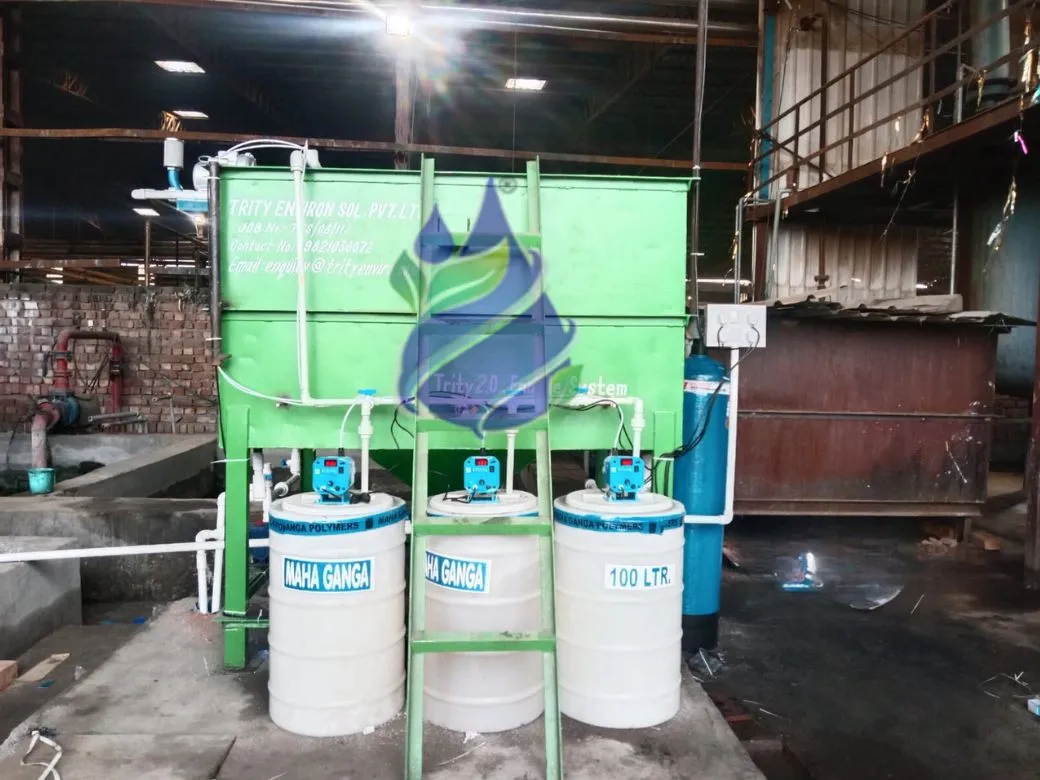
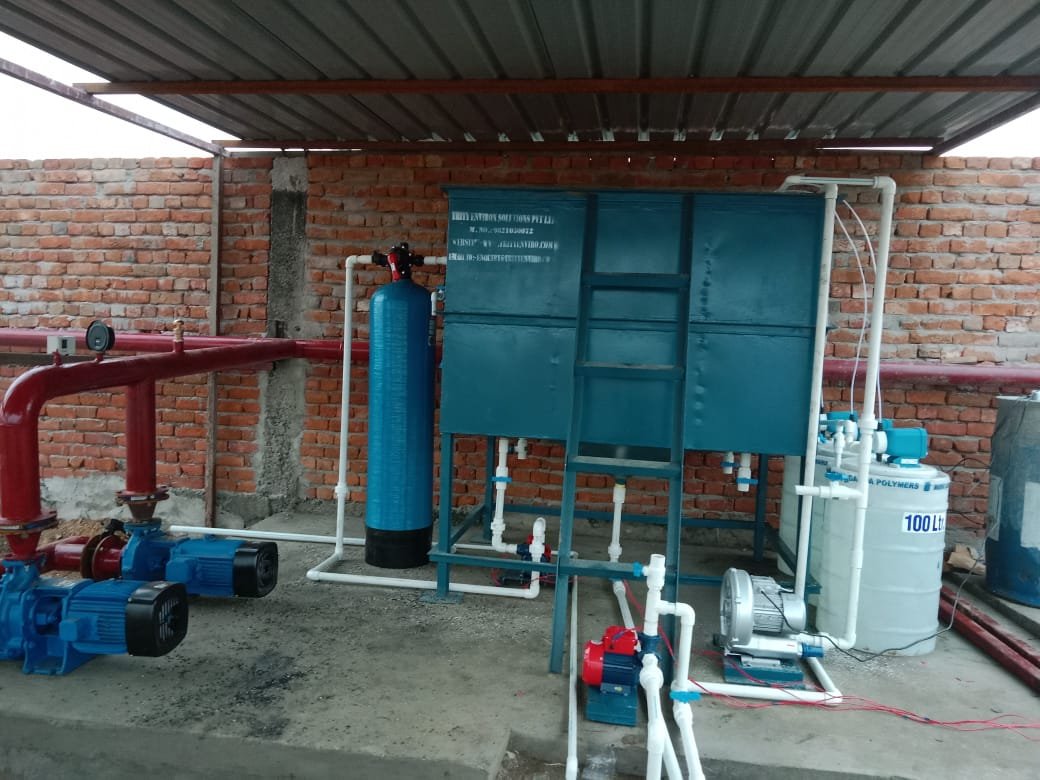
Trity Environ Solutions manufactures Sewage Treatment Plant (STP) and Effluent Treatment Plant (ETP) systems for Shimla built around this exact risk. Every plant we design accounts for terrain, power reliability, and HPSPCB compliance from the start, not as an afterthought once something has already gone wrong.

STP Plant Manufacturing for Shimla's Hotels and Residential Complexes

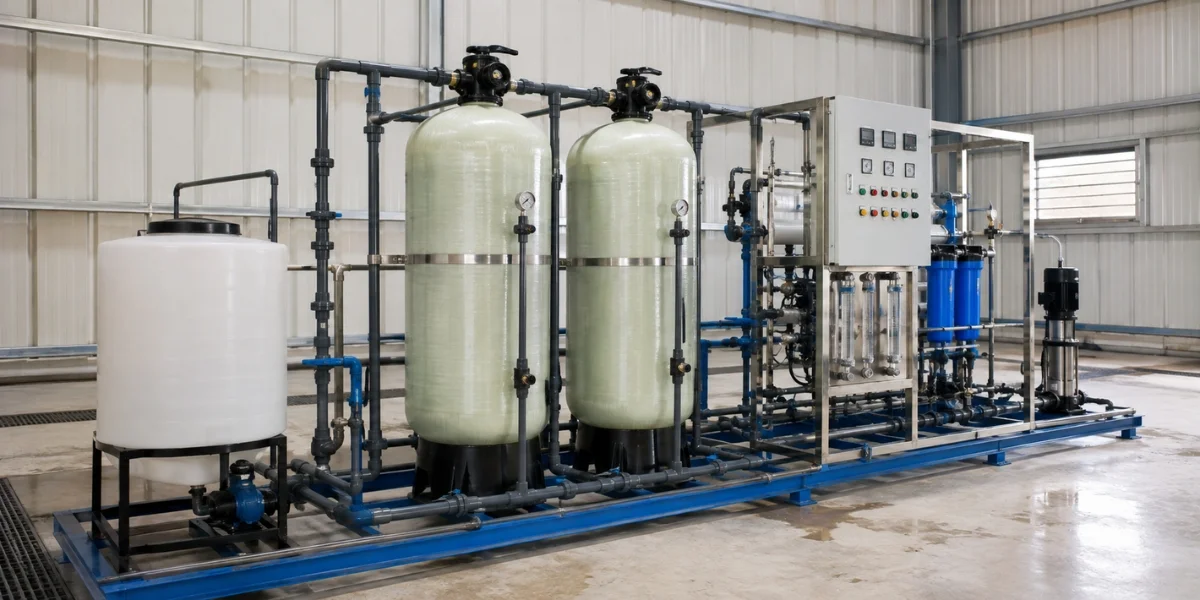
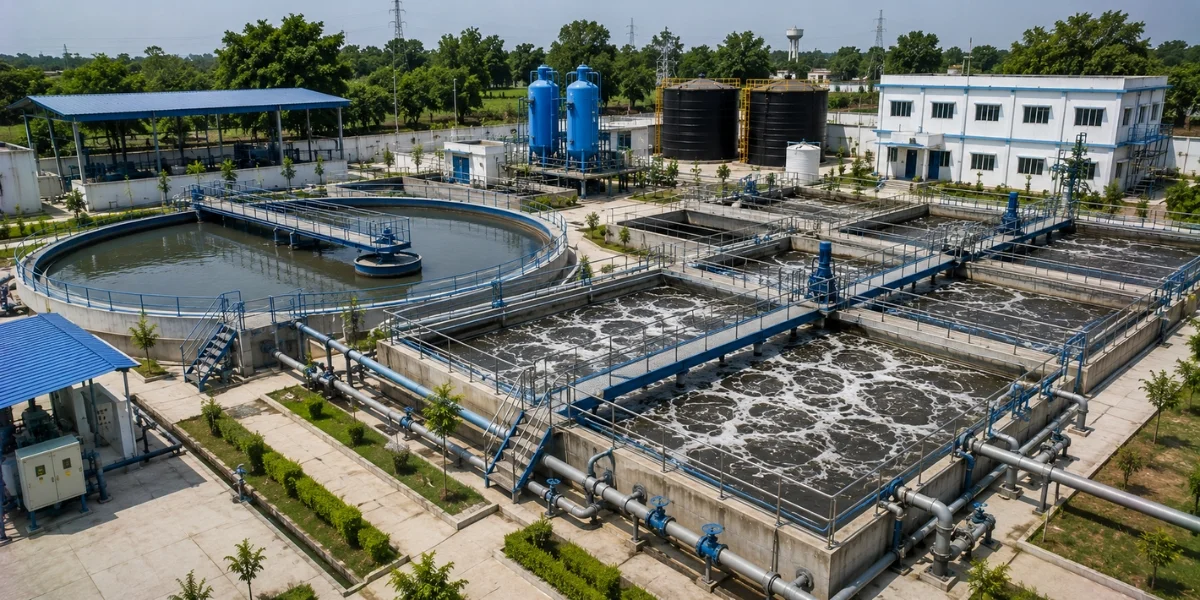
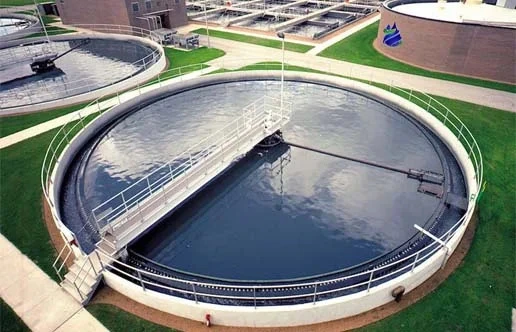
Shimla's economy runs heavily on tourism, and our Sewage Treatment Plant systems are built to handle the sharp seasonal swings that come with it. A hotel near the Mall Road or Sanjauli that runs near capacity during the April to June and December holiday season, then drops to a fraction of that in the monsoon months, needs a plant that doesn't lose treatment efficiency at either extreme. Our STPs work through three stages: preliminary treatment to remove physical solids and debris, secondary treatment using biological processes such as MBBR to break down organic load, and tertiary treatment for disinfection before the water is reused or discharged.

Given what happened at Malyana, we build in redundant power backup as a standard specification rather than an optional extra for any plant here, since a few hours without power during an outage is enough to send raw effluent straight into a khad.

ETP Plant Solutions for Shimla and the Wider Hill Belt

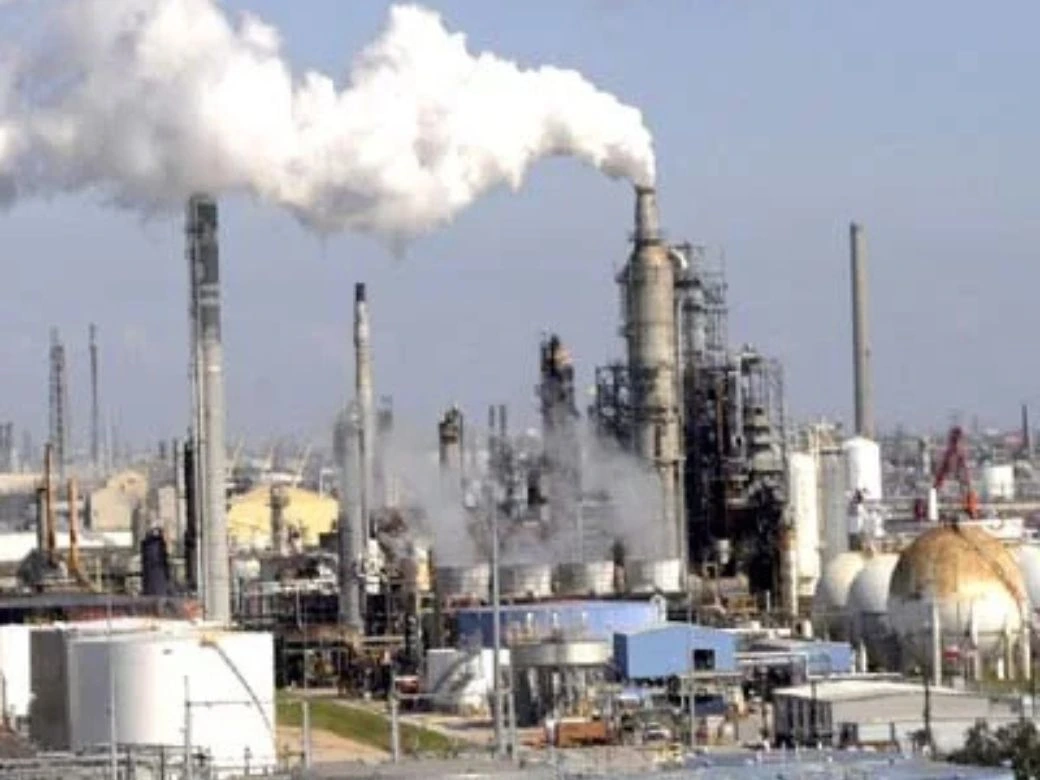
Shimla town itself has limited heavy industry, but the surrounding Solan and Baddi-Barotiwala-Nalagarh (BBN) belt is one of India's largest pharmaceutical and industrial clusters, and many of our Shimla-area clients also operate units in that stretch. Our Effluent Treatment Plant systems are built around three stages, physical treatment to remove suspended solids, chemical treatment using coagulation and flocculation for dissolved contaminants, and biological treatment to reduce organic load before discharge.

For pharmaceutical and chemical units in the wider region, we design with the tighter margins HPSPCB has been enforcing since the Golcha and Malyana incidents drew scrutiny to the state's compliance record.

Turnkey Execution: Design to Commissioning

Our scope on Shimla projects typically covers:

  • Site assessment, including terrain and drainage analysis given the hill slope
  • Process design and technology selection
  • Civil and structural coordination with your contractor
  • Equipment manufacturing at our own facility
  • Installation, piping, and electrical integration, with backup power sizing built in
  • Trial runs, commissioning, and HPSPCB documentation support
  • Annual Maintenance Contracts (AMC) after commissioning

Site access is a real constraint in Shimla that flatland cities don't face. Narrow hill roads and steep gradients mean equipment has to be sized and routed for delivery well before installation day, and we plan this into the project timeline rather than discovering it on-site.

Capacity Options We Manufacture

STP and ETP Plant Manufacturer for Shimla's Hill Terrain

Shimla's wastewater problems aren't like those of a plains city. In 2016, the Malyana Sewage Treatment Plant discharged untreated sludge directly into the Ashwani Khad after a power failure left it without backup, and the contamination triggered a hepatitis outbreak that spread across Kasumpati, Vikas Nagar, Panthaghati, Chotta Shimla, New Shimla, and Khalini. More recently, in 2025, the Himachal Pradesh State Pollution Control Board (HPSPCB) fined Shimla Jal Prabandhan Nigam over ₹31 lakh after sampling at the Golcha plant showed BOD, COD, and suspended solids well above permissible limits. Both cases point to the same underlying issue: a plant that looks fine on paper but fails on power backup, siting, or ongoing operation causes real public health damage in a hill city where sewage runs into khads that double as water sources downstream.

Trity Environ Solutions manufactures Sewage Treatment Plant (STP) and Effluent Treatment Plant (ETP) systems for Shimla built around this exact risk. Every plant we design accounts for terrain, power reliability, and HPSPCB compliance from the start, not as an afterthought once something has already gone wrong.

STP Plant Manufacturing for Shimla's Hotels and Residential Complexes

Shimla's economy runs heavily on tourism, and as a leading STP Plant Manufacturer in Shimla, our Sewage Treatment Plant (STP) systems are built to handle the sharp seasonal swings that come with it. A hotel near the Mall Road or Sanjauli that runs near capacity during the April to June and December holiday season, then drops to a fraction of that in the monsoon months, needs a plant that doesn't lose treatment efficiency at either extreme. Our STPs work through three stages: preliminary treatment to remove physical solids and debris, secondary treatment using biological processes such as MBBR to break down organic load, and tertiary treatment for disinfection before the water is reused or discharged.

Given what happened at Malyana, we build in redundant power backup as a standard specification rather than an optional extra for any plant here, since a few hours without power during an outage is enough to send raw effluent straight into a khad.

ETP Plant Solutions for Shimla and the Wider Hill Belt

Shimla town itself has limited heavy industry, but the surrounding Solan and Baddi-Barotiwala-Nalagarh (BBN) belt is one of India's largest pharmaceutical and industrial clusters, and many of our Shimla-area clients also operate units in that stretch. As a trusted ETP Plant Manufacturer in Shimla, our Effluent Treatment Plant (ETP) systems are built around three stages, physical treatment to remove suspended solids, chemical treatment using coagulation and flocculation for dissolved contaminants, and biological treatment to reduce organic load before discharge.

For pharmaceutical and chemical units in the wider region, we design with the tighter margins HPSPCB has been enforcing since the Golcha and Malyana incidents drew scrutiny to the state's compliance record.

Turnkey Execution: Design to Commissioning

Our scope on Shimla projects typically covers:

  • Site assessment, including terrain and drainage analysis given the hill slope
  • Process design and technology selection
  • Civil and structural coordination with your contractor
  • Equipment manufacturing at our own facility
  • Installation, piping, and electrical integration, with backup power sizing built in
  • Trial runs, commissioning, and HPSPCB documentation support
  • Annual Maintenance Contracts (AMC) after commissioning

Site access is a real constraint in Shimla that flatland cities don't face. Narrow hill roads and steep gradients mean equipment has to be sized and routed for delivery well before installation day, and we plan this into the project timeline rather than discovering it on-site.

Capacity Options We Manufacture

Plant Type Capacity Range Typical Application in Shimla
STP 1 KLD to 200 KLD, modular for larger sites Hotels, residential complexes, institutions, government buildings
ETP 5 KLD to 1 MLD+ Pharmaceutical and chemical units in the wider Solan and BBN belt
Hybrid STP-ETP Custom-engineered Mixed-use sites with staff housing alongside light manufacturing

Treatment Technologies We Deploy

HPSPCB and CPCB recognise several treatment technologies, and we manufacture across the ones best suited to hill-station conditions:

  • MBBR (Moving Bed Biofilm Reactor): compact footprint, a strong fit for hotels and institutions where plot space is limited by hill terrain
  • SBR (Sequencing Batch Reactor): suited to larger residential or institutional sites with more consistent daily load
  • Extended Aeration: cost-effective for smaller sites with modest sewage volumes
  • Package units with elevated electrical panels: for sites near natural drainage channels where flooding or seepage risk is higher

Technology choice matters more here than in flatter terrain, since a plant that needs a large footprint simply may not fit on a typical Shimla plot.

Industries and Institutions We Serve in Shimla

  • Hotels and hospitality: seasonal occupancy swings tied to tourist inflow during peak months
  • Residential complexes: growing demand from newer developments in New Shimla and surrounding areas
  • Government buildings and institutions: Shimla's role as the state capital means a concentration of large institutional campuses
  • Schools and educational institutions: centralised STPs for hostel and campus sewage
  • Hospitals: dedicated disinfection stages for sewage carrying biomedical contamination risk
  • Pharmaceutical and chemical units in the wider Solan and BBN belt: ETP systems for process effluent under HPSPCB's tightened enforcement

HPSPCB Compliance and Discharge Norms

Every plant we design for Shimla is built to clear these baseline HPSPCB requirements, with margin built in rather than designed to the exact limit:

  • BOD, COD, and suspended solids: kept below the levels that triggered the 2025 Golcha penalty, not just below the nominal limit
  • Compliance with the Water (Prevention and Control of Pollution) Act, 1974 and the Environment (Protection) Act, 1986
  • Adherence to National Green Tribunal (NGT) directives specific to Shimla's water bodies
  • Consent to Establish (CTE) and Consent to Operate (CTO) documentation support for both new installations and renewals

Any hotel, residential complex, industry, or institution generating significant sewage is required to install an STP under HPSPCB guidelines, and non-compliance now carries real financial consequences, not just a warning notice.

Why Terrain Changes the Engineering

A few conditions specific to Shimla and the wider hill belt shape how we design differently here compared to plains cities.

Power backup isn't optional. The Malyana failure happened because the plant had no backup power and simply stopped treating sewage during an outage. We size backup generation to cover the biological treatment stage specifically, not just lighting and controls, since losing the microbial culture in a biological reactor can take days to recover from.

Siting near khads needs extra caution. Natural drainage channels in Shimla often feed directly into water sources used downstream. We design discharge points and overflow protection with this in mind rather than treating a khad as a convenient outfall.

Plot space is limited and irregular. Hill terrain rarely gives a flat, rectangular site. Compact technologies like MBBR and package units that can be configured to an irregular footprint generally work better than designs that assume a standard layout.

Delivery logistics affect equipment choice. Narrow roads and steep access mean large pre-fabricated units aren't always practical. We factor transportability into equipment selection during the design stage, not after ordering.

Why Shimla Projects Choose Trity Environ Solutions

Search for an STP or ETP manufacturer in Shimla and most of what comes up is generic. National suppliers based out of Greater Noida run near-identical pages across dozens of Himachal towns with the same claims repeated word for word, and a few directory-style sites simply rank themselves first without much substance behind the listing. Neither approach engages with what actually makes Shimla different: the terrain, the power reliability issues, and a regulator that has shown in the last few years it will levy real fines when a plant underperforms.

We manufacture at our own facility, handle design through commissioning ourselves rather than outsourcing critical stages, and build backup power and terrain-appropriate siting into every quote by default rather than as an add-on a client has to ask for. For a hill city where a single power outage caused a hepatitis outbreak, that's not a minor detail. It's the difference between a plant that works on paper and one that keeps working when the grid doesn't.

We supply, install, and service STP and ETP systems across Shimla, including Kasumpati, New Shimla, Chotta Shimla, Khalini, Sanjauli, and Totu, along with the wider Solan and Baddi-Barotiwala-Nalagarh industrial belt.

Quality, Certification, and After-Sales Support

Trity Environ Solutions is ISO 9001:2015 certified, and every plant we manufacture goes through in-house quality inspection before dispatch. After installation, we provide AMC support, spare parts availability, and remote troubleshooting, since a plant on a Shimla hillside needs reliable servicing that accounts for access difficulty, not a generic maintenance schedule. You can review our project history on our Achievement page, or read more about our full Services.

Frequently Asked Questions

1. What is the cost of an STP or ETP plant in Shimla?

Cost depends on capacity, technology, and site conditions, including terrain and access. A 5 KLD hotel STP and a 100 KLD institutional system will differ significantly. We provide a site-specific quote after reviewing your flow data and site access.

2. Why did the Malyana Sewage Treatment Plant fail in 2016?

The plant had no power backup, so when the electricity failed, treatment stopped and untreated sludge flowed into the Ashwani Khad, triggering a hepatitis outbreak across several Shimla localities. We treat backup power as a mandatory design element for exactly this reason.

3. Does every hotel in Shimla need its own STP?

Yes, under HPSPCB guidelines, any hotel generating significant sewage volume is required to install and maintain an STP, regardless of size, though capacity requirements scale with occupancy.

4. How long does the HPSPCB Consent to Establish and Consent to Operate process take?

Timelines vary by project scale, but generally run 60 to 90 days once your site plan and treatment design are submitted. We assist with documentation to avoid delays.

5. Can you supply STP or ETP equipment to sites with difficult road access?

Yes. We plan equipment sizing and delivery logistics around site access during the design stage, including modular or smaller-footprint options where large equipment can't reach the site directly.

6. Do you service pharmaceutical units in the Baddi-Barotiwala-Nalagarh belt as well as Shimla town?

Yes. Our AMC coverage extends across the wider Solan and BBN industrial belt, not just Shimla's municipal limits.

7. What happens if an existing STP in Shimla is found non-compliant during an HPSPCB inspection?

Penalties can be significant, as seen with the 2025 Golcha fine. We assess existing plants for BOD, COD, and suspended solids performance and can often retrofit an additional treatment stage to bring an older system back within limits.

8. Is a smaller, cheaper STP a safe option for a small hotel or guesthouse in Shimla?

Only if it's sized correctly for actual peak occupancy, not average occupancy. A plant undersized for the April to June or December rush will overload during exactly the period it matters most, which is a common reason smaller properties end up non-compliant during a season when inspections tend to increase.


Ready to discuss your Shimla project? Get a free quote or explore our full product range for STP, ETP, MBBR media, and related water treatment systems.


Treatment Technologies We Deploy

HPSPCB and CPCB recognise several treatment technologies, and we manufacture across the ones best suited to hill-station conditions:

  • MBBR (Moving Bed Biofilm Reactor): compact footprint, a strong fit for hotels and institutions where plot space is limited by hill terrain
  • SBR (Sequencing Batch Reactor): suited to larger residential or institutional sites with more consistent daily load
  • Extended Aeration: cost-effective for smaller sites with modest sewage volumes
  • Package units with elevated electrical panels: for sites near natural drainage channels where flooding or seepage risk is higher

Technology choice matters more here than in flatter terrain, since a plant that needs a large footprint simply may not fit on a typical Shimla plot.

Industries and Institutions We Serve in Shimla

  • Hotels and hospitality: seasonal occupancy swings tied to tourist inflow during peak months
  • Residential complexes: growing demand from newer developments in New Shimla and surrounding areas
  • Government buildings and institutions: Shimla's role as the state capital means a concentration of large institutional campuses
  • Schools and educational institutions: centralised STPs for hostel and campus sewage
  • Hospitals: dedicated disinfection stages for sewage carrying biomedical contamination risk
  • Pharmaceutical and chemical units in the wider Solan and BBN belt: ETP systems for process effluent under HPSPCB's tightened enforcement

HPSPCB Compliance and Discharge Norms

Every plant we design for Shimla is built to clear these baseline HPSPCB requirements, with margin built in rather than designed to the exact limit:

  • BOD, COD, and suspended solids: kept below the levels that triggered the 2025 Golcha penalty, not just below the nominal limit
  • Compliance with the Water (Prevention and Control of Pollution) Act, 1974 and the Environment (Protection) Act, 1986
  • Adherence to National Green Tribunal (NGT) directives specific to Shimla's water bodies
  • Consent to Establish (CTE) and Consent to Operate (CTO) documentation support for both new installations and renewals

Any hotel, residential complex, industry, or institution generating significant sewage is required to install an STP under HPSPCB guidelines, and non-compliance now carries real financial consequences, not just a warning notice.

Why Terrain Changes the Engineering

A few conditions specific to Shimla and the wider hill belt shape how we design differently here compared to plains cities.

Power backup isn't optional. The Malyana failure happened because the plant had no backup power and simply stopped treating sewage during an outage. We size backup generation to cover the biological treatment stage specifically, not just lighting and controls, since losing the microbial culture in a biological reactor can take days to recover from.

Siting near khads needs extra caution. Natural drainage channels in Shimla often feed directly into water sources used downstream. We design discharge points and overflow protection with this in mind rather than treating a khad as a convenient outfall.

Plot space is limited and irregular. Hill terrain rarely gives a flat, rectangular site. Compact technologies like MBBR and package units that can be configured to an irregular footprint generally work better than designs that assume a standard layout.

Delivery logistics affect equipment choice. Narrow roads and steep access mean large pre-fabricated units aren't always practical. We factor transportability into equipment selection during the design stage, not after ordering.

Why Shimla Projects Choose Trity Environ Solutions

Search for an STP or ETP manufacturer in Shimla and most of what comes up is generic. National suppliers based out of Greater Noida run near-identical pages across dozens of Himachal towns with the same claims repeated word for word, and a few directory-style sites simply rank themselves first without much substance behind the listing. Neither approach engages with what actually makes Shimla different: the terrain, the power reliability issues, and a regulator that has shown in the last few years it will levy real fines when a plant underperforms.

We manufacture at our own facility, handle design through commissioning ourselves rather than outsourcing critical stages, and build backup power and terrain-appropriate siting into every quote by default rather than as an add-on a client has to ask for. For a hill city where a single power outage caused a hepatitis outbreak, that's not a minor detail. It's the difference between a plant that works on paper and one that keeps working when the grid doesn't.

We supply, install, and service STP and ETP systems across Shimla, including Kasumpati, New Shimla, Chotta Shimla, Khalini, Sanjauli, and Totu, along with the wider Solan and Baddi-Barotiwala-Nalagarh industrial belt.

Quality, Certification, and After-Sales Support

Trity Environ Solutions is ISO 9001:2015 certified, and every plant we manufacture goes through in-house quality inspection before dispatch. After installation, we provide AMC support, spare parts availability, and remote troubleshooting, since a plant on a Shimla hillside needs reliable servicing that accounts for access difficulty, not a generic maintenance schedule. You can review our project history on our Achievement page, or read more about our full Services.

Frequently Asked Questions

1. What is the cost of an STP or ETP plant in Shimla?

Cost depends on capacity, technology, and site conditions, including terrain and access. A 5 KLD hotel STP and a 100 KLD institutional system will differ significantly. We provide a site-specific quote after reviewing your flow data and site access.

2. Why did the Malyana Sewage Treatment Plant fail in 2016?

The plant had no power backup, so when the electricity failed, treatment stopped and untreated sludge flowed into the Ashwani Khad, triggering a hepatitis outbreak across several Shimla localities. We treat backup power as a mandatory design element for exactly this reason.

3. Does every hotel in Shimla need its own STP?

Yes, under HPSPCB guidelines, any hotel generating significant sewage volume is required to install and maintain an STP, regardless of size, though capacity requirements scale with occupancy.

4. How long does the HPSPCB Consent to Establish and Consent to Operate process take?

Timelines vary by project scale, but generally run 60 to 90 days once your site plan and treatment design are submitted. We assist with documentation to avoid delays.

5. Can you supply STP or ETP equipment to sites with difficult road access?

Yes. We plan equipment sizing and delivery logistics around site access during the design stage, including modular or smaller-footprint options where large equipment can't reach the site directly.

6. Do you service pharmaceutical units in the Baddi-Barotiwala-Nalagarh belt as well as Shimla town?

Yes. Our AMC coverage extends across the wider Solan and BBN industrial belt, not just Shimla's municipal limits.

7. What happens if an existing STP in Shimla is found non-compliant during an HPSPCB inspection?

Penalties can be significant, as seen with the 2025 Golcha fine. We assess existing plants for BOD, COD, and suspended solids performance and can often retrofit an additional treatment stage to bring an older system back within limits.

8. Is a smaller, cheaper STP a safe option for a small hotel or guesthouse in Shimla?

Only if it's sized correctly for actual peak occupancy, not average occupancy. A plant undersized for the April to June or December rush will overload during exactly the period it matters most, which is a common reason smaller properties end up non-compliant during a season when inspections tend to increase.


Ready to discuss your Shimla project? Get a free quote or explore our full product range for STP, ETP, MBBR media, and related water treatment systems.

Related Products

whatsapp-image