
 ISO 9001:2015 & QCI Approved
Sewage Treatment Plant Manufacturer in Uttar Pradesh
Trity Environ Solutions is a trusted sewage treatment plant manufacturer in Uttar Pradesh, headquartered in Ghaziabad and building domestic wastewater systems for hospitals, hotels, universities, housing societies, and townships across the state. With city drains still carrying untreated sewage into the Ganga basin, it designs on-site plants that deliver measured BOD and reusable water, with pan India installation support behind every project. For factory and process wastewater, Trity Environ Solutions also works as an effluent treatment plant manufacturer in Uttar Pradesh.

SPCB / CPCB Norm Compliant
Heavy Fabrication
Uttar Pradesh's Cities Are Growing Faster Than Their Sewerage
Public sewage capacity in the state has not kept pace with population. A CPCB analysis cited by the National Green Tribunal in 2024 found that 247 of 326 drains in Uttar Pradesh were untapped and releasing wastewater into the Ganga and its tributaries, that six of 41 sewage plants in 16 Ganga-front towns were not operating, and that only one of the 35 working plants met the regulations. The city records tell the same story. Lucknow told the Tribunal in September 2025 that it had 445 MLD of STP capacity in operation against a stated requirement of 786.80 MLD. In Noida, the Authority reported in February 2025 that its plants produce about 260 MLD of treated water, of which roughly 192 MLD goes unused into drains. Recent reporting puts Kanpur's domestic sewage at about 450 MLD with only around 20 percent of households on a sewer, and in Varanasi the Tribunal noted in February 2026 that 31 of 76 drains across Varanasi and Chandauli were still partly tapped or untapped.
For a hospital, hotel, university, or housing project, the practical conclusion is that a plant on your own premises is the only treatment you fully control, and the only one whose records you can show the Uttar Pradesh Pollution Control Board (UPPCB). Trity Environ Solutions builds sewage treatment plants sized for real occupancy and peak flow, with design choices explained to the project team rather than hidden in a drawing.
Planning a new campus or a retrofit anywhere in Uttar Pradesh? Request a free site assessment and the engineering team will confirm a suitable configuration for your project.
WHY THIS SYSTEM?
Key Benefits of Sewage Treatment Plant Manufacturer in Uttar Pradesh
Engineered for high biological efficiency, full environmental compliance, and low lifecycle operational costs.
BOD Performance You Can Show
Biological stages sized for peak load and fitted with sampling points, so treated BOD is something you can record and present rather than assume.
Designed for Peak Flows
Hostels, hotels, and apartment blocks have sharp morning and evening peaks, and tanks, blowers, and clarifiers are sized for those peaks instead of the daily average.
Reuse Built Into the Design
Treated water routed to flushing, gardens, cooling towers, and washing, which lowers tanker and borewell dependence for campuses and townships.
Hospital Grade Disinfection
Biological treatment followed by filtration and disinfection for hospitals, nursing homes, and medical college hostels, with odour control for dense sites.
Local Base and Faster Response
A Ghaziabad manufacturing base inside the state shortens site access, commissioning, and AMC response compared with suppliers based outside UP.
Capacity on Paper Is Not the Same as Treatment Delivered
The state's own plant data shows how a plant can exist and still fail to meet norms, and Noida's 192 MLD of unused treated water shows how capacity can sit idle. Regulators ask for measured numbers, so a design should start from your actual flow, include sampling points, and keep a log of treated water quality. That record is the strongest position at the time of a consent inspection or a complaint.
Operation Decides Whether a Plant Keeps Working
Sewage plants fail quietly through choked diffusers, worn blowers, and unattended dosing. Trity Environ Solutions backs every Uttar Pradesh installation with operator training, performance checks, and an Annual Maintenance Contract so the plant stays inside limits month after month. Talk to our team about AMC coverage for a facility you already run.
Different Cities, Different Sewage Problems
A hospital in Lucknow, a tower in Noida, a hotel in Varanasi, and a college in Gorakhpur each generate sewage with a different rhythm, so one template does not fit them all. City pages cover each market in detail: Lucknow, Noida, Ghaziabad, Kanpur, Varanasi, Allahabad (Prayagraj), and Gorakhpur. Hostel and institutional loads can often use a FAB sewage treatment plant, which is simple to run, while projects that want to recycle bathroom and kitchen water separately can add a grey water treatment plant.
Related Wastewater Services in Uttar Pradesh
Process wastewater from factories needs a different treatment train from household sewage. Industrial clients can read about Trity Environ Solutions as an effluent treatment plant manufacturer in Uttar Pradesh, and the STP and ETP plant manufacturer in Uttar Pradesh page covers both services in one place.
SYSTEM CONFIGURATIONS
Types of Sewage Treatment Plant Manufacturer in Uttar Pradesh Configurations
Tailored industrial configurations matched to specific effluent composition, flow rates, and space constraints.
Housing Societies and Hotels
Our MBBR sewage treatment plant uses media carriers to keep treatment compact and stable, which suits apartments and hotels in Noida, Lucknow, and Ghaziabad where land is limited and load varies through the day.
Explore Configuration
Townships and Institutions
Our SBR sewage treatment plant treats sewage in timed batches within a single tank, giving reliable nutrient and BOD removal for townships, universities, and larger residential layouts.
Explore Configuration
High Quality Reuse in Small Space
Our MBR sewage treatment plant produces clear, low odour water in a small footprint, a good fit for hotels and commercial towers that recycle water for cooling or flushing.
Explore Configuration
Hospitals and Medical Colleges
Our sewage treatment plant for hospital combines biological treatment with disinfection, designed for the higher load and hygiene needs of hospitals and nursing homes.
Explore Configuration
Remote and Fast Track Sites
Our packaged containerized sewage treatment plant is built and tested at the factory, then shipped and commissioned quickly, which helps at colonies, camps, and project sites far from city networks.
Explore Configuration
STEP-BY-STEP WORKFLOW
How the Sewage Treatment Plant Manufacturer in Uttar Pradesh Process Works
A sequential, multi-stage treatment methodology engineered for maximum contaminant removal and water recovery.
01
Load Survey & Sampling
Occupancy, water use, and sewage sampling establish the real flow and BOD before any tank is sized.
02
Technology Selection & Layout
The treatment route and tank layout are fixed against consent conditions, available land, and how you plan to reuse the water.
03
Fabrication & Installation
Equipment is manufactured under ISO 9001:2015 quality controls at Trity's Ghaziabad facility and installed by its site team, with civil and mechanical work coordinated.
04
Trial Run & AMC Support
Treated water is tested against norms, operators are trained, and AMC visits keep the plant consistent after handover.
COMMON INQUIRIES
Frequently Asked Questions
Q1. Is an STP required for hospitals, hotels, and housing projects in Uttar Pradesh?
Large residential, commercial, and healthcare projects generally need an STP as part of environmental clearance and consent from the Uttar Pradesh Pollution Control Board. Requirements vary by built-up area and project category, so confirm yours before design.
Q2. Which technology suits an apartment complex in Noida or Lucknow, MBBR or SBR?
MBBR is compact and handles changing loads well, which suits most apartment blocks. SBR works well where there is room for batch tanks and a higher capacity is needed. The choice follows your flow, land, and operator availability.
Q3. Can a hospital in Uttar Pradesh reuse its treated sewage?
Yes, for gardening, flushing, and cooling make-up, provided the water is filtered and disinfected. Hospital plants are designed with extra disinfection, and reuse targets are agreed during the design stage.
Q4. What can treated sewage be used for on a township or campus?
Treated water is commonly used for toilet flushing, landscaping, road washing, and cooling. A tertiary stage such as filtration or carbon polishing improves clarity and odour for sensitive uses.
Q5. How much space and time does a sewage plant need?
Space depends on capacity and technology, and compact MBBR and MBR layouts need far less than conventional designs. Packaged units usually commission in 45 to 90 days, while civil built plants take 3 to 6 months.
Q6. Our existing STP in Uttar Pradesh shows high BOD. Can it be corrected?
Often yes. A site audit checks aeration, media condition, sludge handling, and inflow variations. Many underperforming plants recover through blower and diffuser repair, process adjustment, and a structured maintenance schedule.
Q7. How do I choose a reliable sewage treatment plant manufacturer in Uttar Pradesh?
Look for in-house manufacturing, experience with UPPCB consent requirements, a design based on your own sewage load, and a clear maintenance offering after commissioning. Trity Environ Solutions builds its plants under ISO 9001:2015 quality controls at its Ghaziabad facility and supports every installation with operator training and an annual maintenance contract.
CATALOGUE
Related Engineering Products
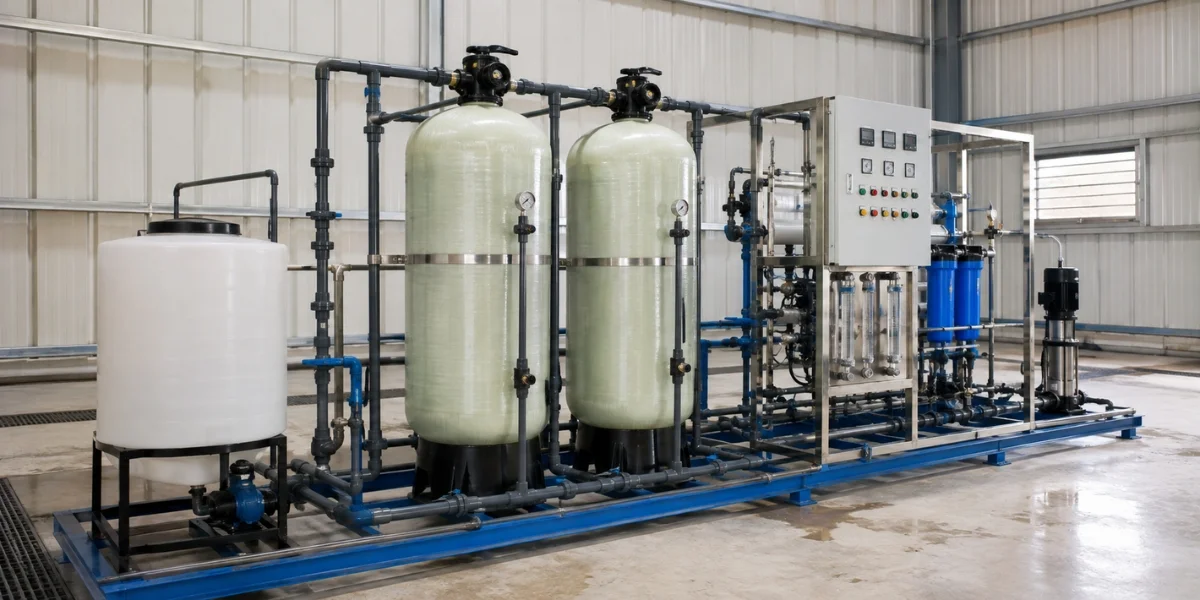
RO & Water Recycling Plant Manufacturer in India
Trity Environ Solutions manufactures RO and water recycling systems for industries and commercial facilities, engineered for reliable purity and reuse.
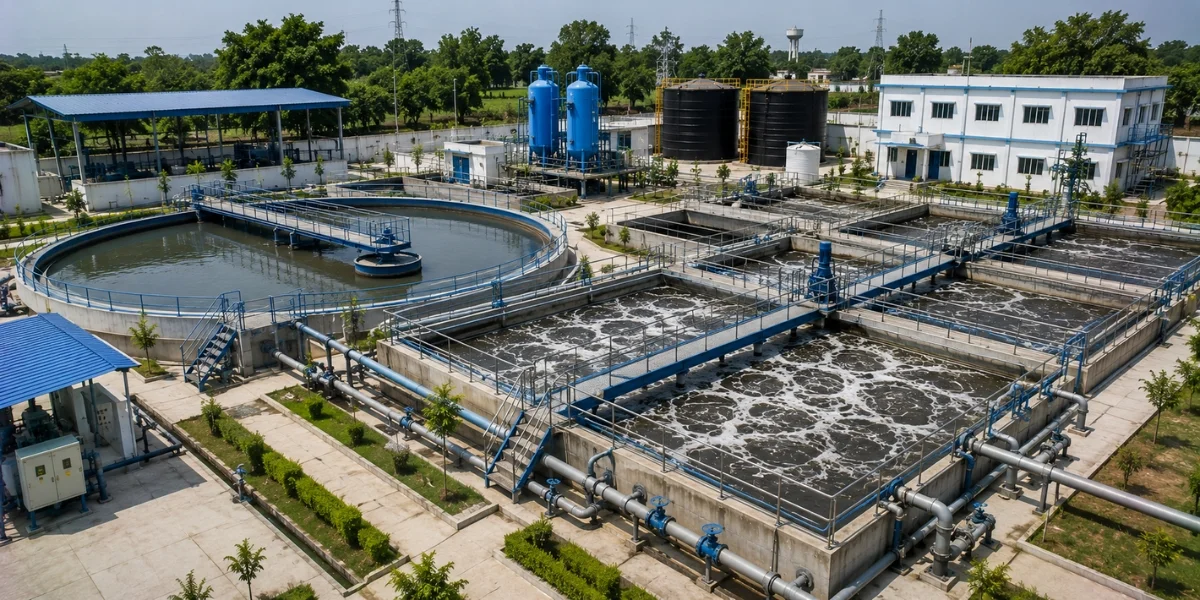
Tertiary Treatment Plant Manufacturer in India
Trity Environ Solutions manufactures tertiary treatment plants that polish treated water beyond secondary treatment, enabling genuine reuse and stricter discharge compliance.
Wastewater Recycling System Manufacturer in India
Trity Environ Solutions manufactures wastewater recycling systems using UF and RO technology, turning treated wastewater into reuse-grade water for cooling, flushing, and gardening.
PAN-INDIA CAPABILITIES
Regional Solutions & State Coverage
TECHNICAL KNOWLEDGE
Related Insights & Engineering Guides
PROVEN EXCELLENCE
Featured Turnkey Installations











Need a Custom Water or Wastewater Treatment Solution?
Our engineering team can help design the right system for your capacity, industry, and compliance requirements.

