
 ISO 9001:2015 & QCI Approved
STP and ETP Plant Manufacturer in Bulandshahr
Trity Environ Solutions manufactures STP and ETP plants for Bulandshahr and Sikandrabad's ceramics, steel, paint, and dairy industries. UPPCB-compliant engineering. Get a free quote.
SPCB / CPCB Norm Compliant
Heavy Fabrication
STP and ETP Plant Manufacturer for Bulandshahr and Sikandrabad
Bulandshahr district runs on a mix of industries that most generic wastewater pages never mention by name. Sikandrabad's industrial area is home to companies like Kajaria Ceramics, Good Luck Steel Tubes, and APL Apollo Tubes, alongside a cluster of paint manufacturers and Khurja's centuries-old pottery industry. In 2019, the National Green Tribunal ordered action against cement units in Sikandrabad's industrial area over pollution from boiler operations, a reminder that enforcement here isn't theoretical. Trity Environ Solutions manufactures Sewage Treatment Plant (STP) and Effluent Treatment Plant (ETP) systems for this exact mix of industries, and we already have live projects running in the district, including a 5 KLD ETP in Shikarpur and an operating ETP at the Bulandshahr Dairy Plant.
We work with industrial units, dairy and food processing plants, hospitals, hotels, and residential developments across Bulandshahr, Sikandrabad, and Khurja, and every system we design is built around Uttar Pradesh Pollution Control Board (UPPCB) discharge norms from the start.
STP Plant Manufacturing for Bulandshahr's Residential and Institutional Sites
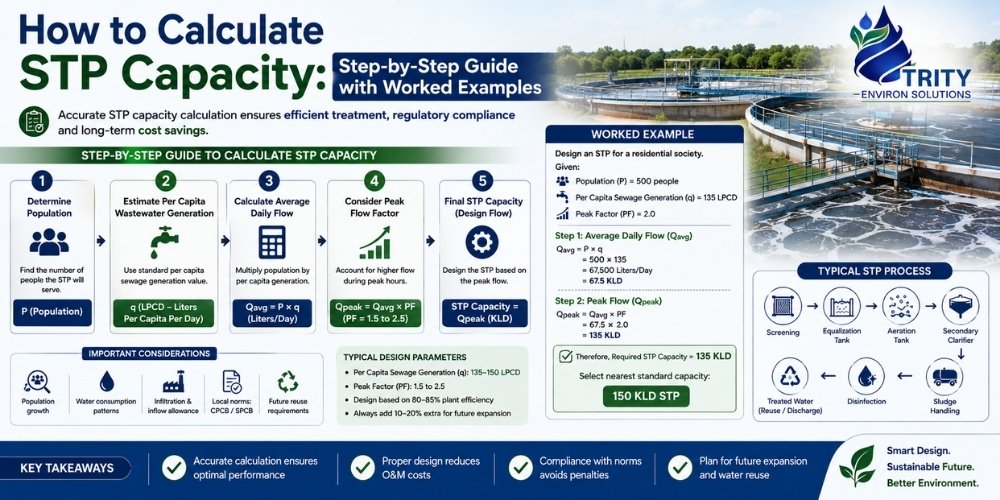
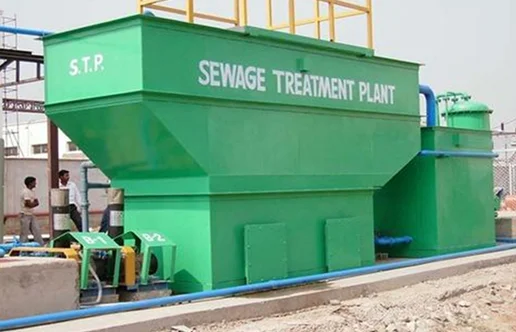
Our Sewage Treatment Plant systems are built for the residential complexes, hospitals, and educational institutions spread across Bulandshahr town, Sikandrabad, and Khurja. A properly designed STP works through three stages: preliminary treatment, where screens remove physical solids and debris, secondary treatment, where biological processes such as MBBR or SBR break down organic matter, and tertiary treatment, where disinfection removes remaining pathogens before the water is reused or discharged.
Since Bulandshahr sits in the Doaba region between the Ganga and Yamuna, discharge into local drains eventually reaches one of these two rivers, which is part of why UPPCB enforcement in this district has tightened in recent years.
ETP Plant Solutions for Bulandshahr's Industrial Base
The district's industrial economy is genuinely diverse, and our Effluent Treatment Plant systems are engineered around that variety rather than a single generic design:
- Ceramics and pottery (Khurja and Sikandrabad): wastewater carrying clay slurry, glaze chemicals, and heavy metals from firing processes
- Steel and pipe manufacturing (Sikandrabad): effluent with metal particulates and process chemicals from tube and pipe production
- Paints and chemicals (Sikandrabad): solvent and pigment-heavy wastewater requiring dedicated chemical treatment stages
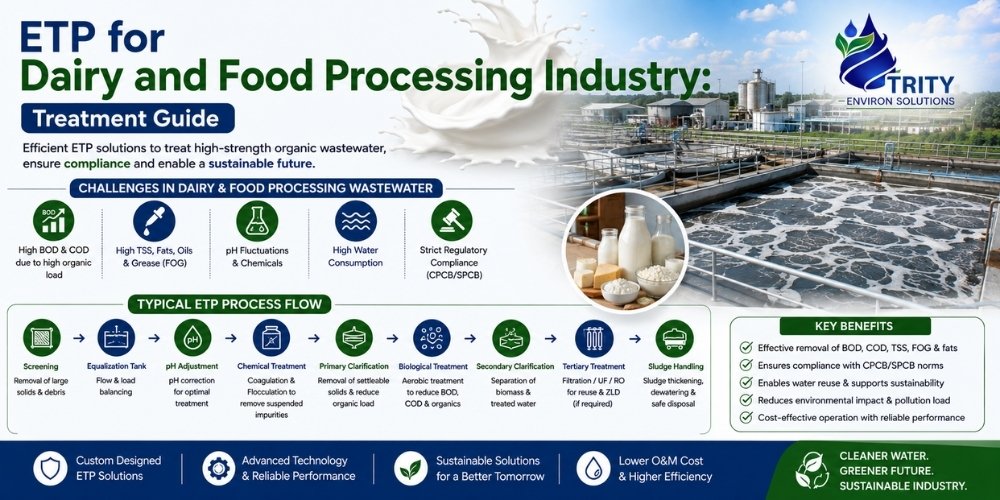
- Dairy and food processing: high BOD organic load typical of milk processing and cold storage operations, the sector we already serve directly at the Bulandshahr Dairy Plant
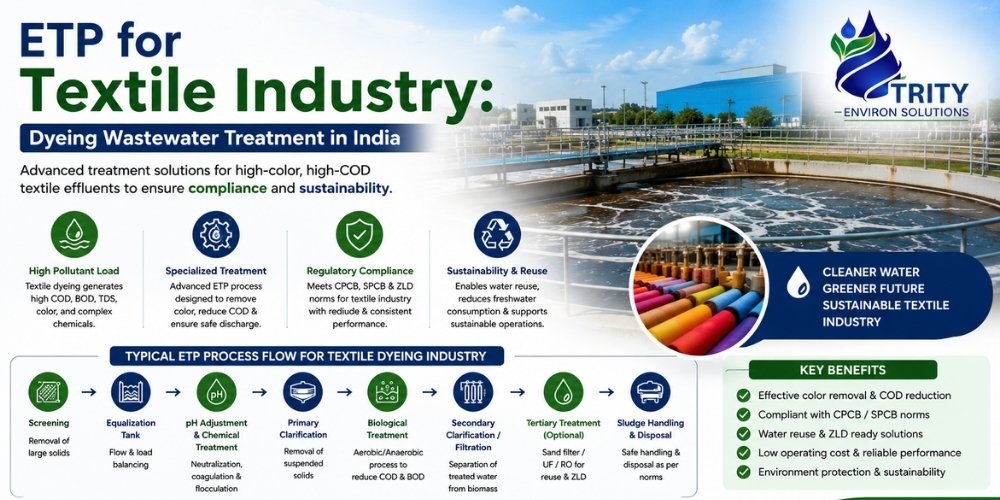
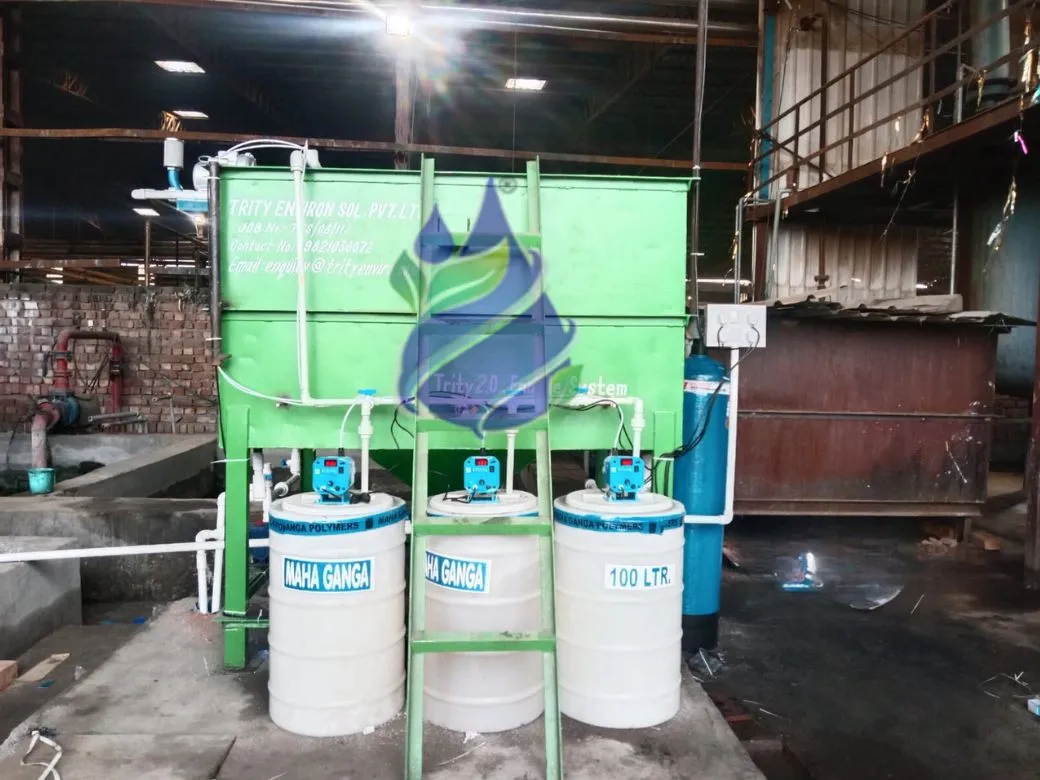
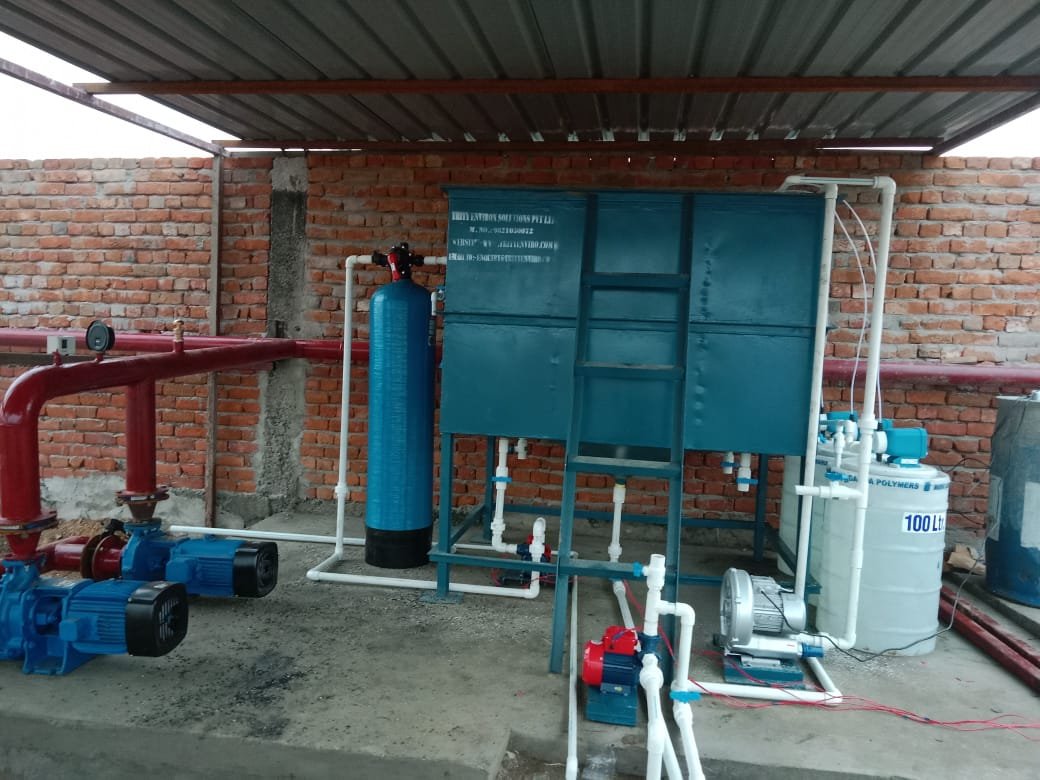
Our ETPs run through physical treatment to remove suspended solids, chemical treatment using coagulation and flocculation for dissolved contaminants, and biological treatment to reduce organic load before discharge, with the exact configuration adjusted to whichever of these effluent profiles applies.
Turnkey Execution: Design to Commissioning
Our scope on Bulandshahr and Sikandrabad projects typically covers:
- Site assessment and effluent or sewage characterisation
- Process design and technology selection based on your specific industry
- Civil and structural coordination with your contractor
- Equipment manufacturing at our own facility
- Installation, piping, and electrical integration
- Trial runs, commissioning, and UPPCB documentation support
- Annual Maintenance Contracts (AMC) after commissioning
Because Sikandrabad's industrial area has already seen NGT-level scrutiny over pollution from certain sectors, we build in margin above minimum UPPCB requirements rather than designing to the exact limit, which reduces the risk of a plant being flagged during a routine inspection.
Capacity Options We Manufacture
STP and ETP Plant Manufacturer for Bulandshahr and SikandrabadBulandshahr district runs on a mix of industries that most generic wastewater pages never mention by name. Sikandrabad's industrial area is home to companies like Kajaria Ceramics, Good Luck Steel Tubes, and APL Apollo Tubes, alongside a cluster of paint manufacturers and Khurja's centuries-old pottery industry. In 2019, the National Green Tribunal ordered action against cement units in Sikandrabad's industrial area over pollution from boiler operations, a reminder that enforcement here isn't theoretical. Trity Environ Solutions manufactures Sewage Treatment Plant (STP) and Effluent Treatment Plant (ETP) systems for this exact mix of industries, and we already have live projects running in the district, including a 5 KLD ETP in Shikarpur and an operating ETP at the Bulandshahr Dairy Plant. We work with industrial units, dairy and food processing plants, hospitals, hotels, and residential developments across Bulandshahr, Sikandrabad, and Khurja, and every system we design is built around Uttar Pradesh Pollution Control Board (UPPCB) discharge norms from the start. STP Plant Manufacturing for Bulandshahr's Residential and Institutional SitesAs a leading STP Plant Manufacturer in Bulandshahr, our Sewage Treatment Plant (STP) systems are built for the residential complexes, hospitals, and educational institutions spread across Bulandshahr town, Sikandrabad, and Khurja. A properly designed STP works through three stages: preliminary treatment, where screens remove physical solids and debris, secondary treatment, where biological processes such as MBBR or SBR break down organic matter, and tertiary treatment, where disinfection removes remaining pathogens before the water is reused or discharged. Since Bulandshahr sits in the Doaba region between the Ganga and Yamuna, discharge into local drains eventually reaches one of these two rivers, which is part of why UPPCB enforcement in this district has tightened in recent years. ETP Plant Solutions for Bulandshahr's Industrial BaseThe district's industrial economy is genuinely diverse, and as a trusted ETP Plant Manufacturer in Bulandshahr, our Effluent Treatment Plant (ETP) systems are engineered around that variety rather than a single generic design:
Our ETPs run through physical treatment to remove suspended solids, chemical treatment using coagulation and flocculation for dissolved contaminants, and biological treatment to reduce organic load before discharge, with the exact configuration adjusted to whichever of these effluent profiles applies. Turnkey Execution: Design to CommissioningOur scope on Bulandshahr and Sikandrabad projects typically covers:
Because Sikandrabad's industrial area has already seen NGT-level scrutiny over pollution from certain sectors, we build in margin above minimum UPPCB requirements rather than designing to the exact limit, which reduces the risk of a plant being flagged during a routine inspection. Capacity Options We Manufacture
Treatment Technologies We DeployUPPCB and CPCB recognise several treatment technologies, and we manufacture across the ones best suited to Bulandshahr's industry mix:
Getting the technology right matters more in a district with this much industry variety, since a ceramics unit and a dairy plant need almost entirely different treatment chemistry even at similar flow volumes. Industries and Institutions We Serve in Bulandshahr
UPPCB Compliance and Discharge NormsEvery plant we design for Bulandshahr and Sikandrabad is built to clear these baseline requirements:
Given the district's proximity to both the Ganga and Yamuna, UPPCB inspections in this belt tend to focus closely on heavy metal content, particularly for ceramics, steel, and paint units. Engineering Considerations Specific to Bulandshahr's Industry MixA few conditions specific to this district shape how we design differently here compared to a single-industry town. No single treatment template works across sectors. Unlike a city dominated by one or two industries, Bulandshahr and Sikandrabad host ceramics, steel, paints, and dairy processing side by side, often within the same industrial estate. A treatment approach that works for dairy effluent, heavy on organic load but low on heavy metals, would fail completely on a ceramics unit's glaze wastewater, and vice versa. We design each ETP around the client's actual effluent characterisation rather than a standard industrial template. Heavy metal removal is a recurring requirement. Ceramics glazing, steel tube manufacturing, and paint production all generate wastewater with heavy metal content in some form. Chemical precipitation and coagulation stages are non-negotiable for these sectors, not an optional upgrade. Proximity to both the Ganga and Yamuna raises the compliance bar. Bulandshahr's location in the Doaba region means untreated discharge eventually reaches one of India's two most scrutinised rivers. UPPCB inspections in this belt tend to look closely at heavy metal parameters specifically because of this. Older industrial units often need retrofits, not new builds. A number of Sikandrabad's industrial units have been operating for decades, often with treatment infrastructure that predates current UPPCB norms. Retrofitting an existing system with an added chemical stage is frequently faster and more practical than a full rebuild, and we assess this option first during site evaluation. We supply, install, and service STP and ETP systems across Bulandshahr town, Sikandrabad's industrial area, Khurja, Shikarpur, and Gulaothi, with live projects already operating in Shikarpur and at the Bulandshahr Dairy Plant. Why Bulandshahr Projects Choose Trity Environ SolutionsSearch results for STP and ETP manufacturers in this district are dominated by a handful of national suppliers running the same page across dozens of UP towns, some with content that reads as though it was translated rather than written, with odd phrasing that gives away the process. None of them mention Sikandrabad's actual industrial mix by name, and few, if any, can point to an operating project in the district itself. We already have live installations here, not just a page claiming coverage. That's a meaningful difference when choosing a manufacturer whose plant you'll depend on for years of UPPCB compliance, not just a one-time purchase. Quality, Certification, and After-Sales SupportTrity Environ Solutions is ISO 9001:2015 certified, and every plant we manufacture goes through in-house quality inspection before dispatch. After installation, we provide AMC support, spare parts availability, and remote troubleshooting. You can review our project history on our Achievement page, or read more about our full Services. Frequently Asked Questions1. What is the cost of an STP or ETP plant in Bulandshahr?Cost depends on capacity, technology, and effluent characteristics. A ceramics unit's ETP and a dairy plant's ETP can differ significantly even at similar flow volumes, since the treatment chemistry required is different. We provide a site-specific quote after reviewing your effluent profile. 2. Do ceramics and pottery units in Khurja need a different ETP design than other industries?Yes. Ceramics wastewater typically contains clay slurry and heavy metals from glazing and firing processes, which needs dedicated chemical precipitation stages that a standard biological-only ETP isn't built to handle. 3. Does Trity Environ have any existing projects in Bulandshahr district?Yes. We currently operate a 5 KLD ETP in Shikarpur and an ETP at the Bulandshahr Dairy Plant, alongside other installations across the district. 4. How long does the UPPCB Consent to Establish and Consent to Operate process take?Timelines vary by project scale, but generally run 60 to 90 days once your site plan and treatment design are submitted. We assist with documentation to avoid delays. 5. Why did the NGT take action against Sikandrabad's industrial area in 2019?The National Green Tribunal ordered action against cement units in Sikandrabad over air pollution from burning rubber, cloth, plastic, and wood in boiler operations. While that specific case involved air emissions rather than water discharge, it reflects the level of regulatory scrutiny industries in this belt now face across all pollution categories. 6. Can an existing ETP in a steel or paint unit be upgraded instead of replaced?In many cases, yes. Adding a chemical precipitation stage or upgrading aeration capacity can bring an older plant within current UPPCB limits without a full rebuild. We assess this during site evaluation. 7. Do you service dairy and food processing units outside the main Bulandshahr town area?Yes. Our AMC coverage extends across the district, including Shikarpur, Gulaothi, and the wider Sikandrabad industrial belt, not just Bulandshahr town. 8. Can one ETP handle effluent from both a manufacturing unit and its attached staff housing?Yes, though it usually requires two separate treatment streams within one project scope rather than a single combined system, since industrial effluent and domestic sewage have very different treatment requirements even when generated on the same site. Ready to discuss your Bulandshahr or Sikandrabad project? Get a free quote or explore our full product range for STP, ETP, and related water treatment systems. |
||||||||||||||
|---|---|---|---|---|---|---|---|---|---|---|---|---|---|---|
Treatment Technologies We Deploy
UPPCB and CPCB recognise several treatment technologies, and we manufacture across the ones best suited to Bulandshahr's industry mix:
- MBBR (Moving Bed Biofilm Reactor): compact footprint, effective for high-BOD dairy and food processing effluent
- SBR (Sequencing Batch Reactor): suited to larger institutional or residential sewage loads
- Chemical precipitation and coagulation: essential for ceramics and paint industry wastewater carrying heavy metals and pigments
- Extended Aeration: cost-effective for smaller residential or institutional setups
Getting the technology right matters more in a district with this much industry variety, since a ceramics unit and a dairy plant need almost entirely different treatment chemistry even at similar flow volumes.
Industries and Institutions We Serve in Bulandshahr
- Ceramics and pottery manufacturing: Khurja's traditional pottery industry and Sikandrabad's larger ceramics units
- Steel, tube, and pipe manufacturing: a major share of Sikandrabad's industrial output
- Paints and chemical manufacturing: solvent and pigment-based effluent requiring dedicated treatment
- Dairy and food processing: a sector we already serve directly through our Bulandshahr Dairy Plant project
- Hospitals and educational institutions: dedicated STP systems with disinfection stages
- Residential complexes: growing demand as Bulandshahr and Sikandrabad's urban areas expand
UPPCB Compliance and Discharge Norms
Every plant we design for Bulandshahr and Sikandrabad is built to clear these baseline requirements:
- BOD: kept at or below 10 mg/L for reuse-grade discharge, tighter than the older 30 mg/L benchmark still cited in some general guidance
- COD: typically capped around 50 mg/L
- TSS: 10 to 20 mg/L depending on intended reuse
- Mandatory Consent to Establish (CTE) and Consent to Operate (CTO) from UPPCB before any discharge
- Additional scrutiny for industries in notified categories following the NGT's 2019 order against Sikandrabad's cement units over pollution violations
Given the district's proximity to both the Ganga and Yamuna, UPPCB inspections in this belt tend to focus closely on heavy metal content, particularly for ceramics, steel, and paint units.
Engineering Considerations Specific to Bulandshahr's Industry Mix
A few conditions specific to this district shape how we design differently here compared to a single-industry town.
No single treatment template works across sectors. Unlike a city dominated by one or two industries, Bulandshahr and Sikandrabad host ceramics, steel, paints, and dairy processing side by side, often within the same industrial estate. A treatment approach that works for dairy effluent, heavy on organic load but low on heavy metals, would fail completely on a ceramics unit's glaze wastewater, and vice versa. We design each ETP around the client's actual effluent characterisation rather than a standard industrial template.
Heavy metal removal is a recurring requirement. Ceramics glazing, steel tube manufacturing, and paint production all generate wastewater with heavy metal content in some form. Chemical precipitation and coagulation stages are non-negotiable for these sectors, not an optional upgrade.
Proximity to both the Ganga and Yamuna raises the compliance bar. Bulandshahr's location in the Doaba region means untreated discharge eventually reaches one of India's two most scrutinised rivers. UPPCB inspections in this belt tend to look closely at heavy metal parameters specifically because of this.
Older industrial units often need retrofits, not new builds. A number of Sikandrabad's industrial units have been operating for decades, often with treatment infrastructure that predates current UPPCB norms. Retrofitting an existing system with an added chemical stage is frequently faster and more practical than a full rebuild, and we assess this option first during site evaluation.
We supply, install, and service STP and ETP systems across Bulandshahr town, Sikandrabad's industrial area, Khurja, Shikarpur, and Gulaothi, with live projects already operating in Shikarpur and at the Bulandshahr Dairy Plant.
Why Bulandshahr Projects Choose Trity Environ Solutions
Search results for STP and ETP manufacturers in this district are dominated by a handful of national suppliers running the same page across dozens of UP towns, some with content that reads as though it was translated rather than written, with odd phrasing that gives away the process. None of them mention Sikandrabad's actual industrial mix by name, and few, if any, can point to an operating project in the district itself.
We already have live installations here, not just a page claiming coverage. That's a meaningful difference when choosing a manufacturer whose plant you'll depend on for years of UPPCB compliance, not just a one-time purchase.
Quality, Certification, and After-Sales Support
Trity Environ Solutions is ISO 9001:2015 certified, and every plant we manufacture goes through in-house quality inspection before dispatch. After installation, we provide AMC support, spare parts availability, and remote troubleshooting. You can review our project history on our Achievement page, or read more about our full Services.
Frequently Asked Questions
1. What is the cost of an STP or ETP plant in Bulandshahr?
Cost depends on capacity, technology, and effluent characteristics. A ceramics unit's ETP and a dairy plant's ETP can differ significantly even at similar flow volumes, since the treatment chemistry required is different. We provide a site-specific quote after reviewing your effluent profile.
2. Do ceramics and pottery units in Khurja need a different ETP design than other industries?
Yes. Ceramics wastewater typically contains clay slurry and heavy metals from glazing and firing processes, which needs dedicated chemical precipitation stages that a standard biological-only ETP isn't built to handle.
3. Does Trity Environ have any existing projects in Bulandshahr district?
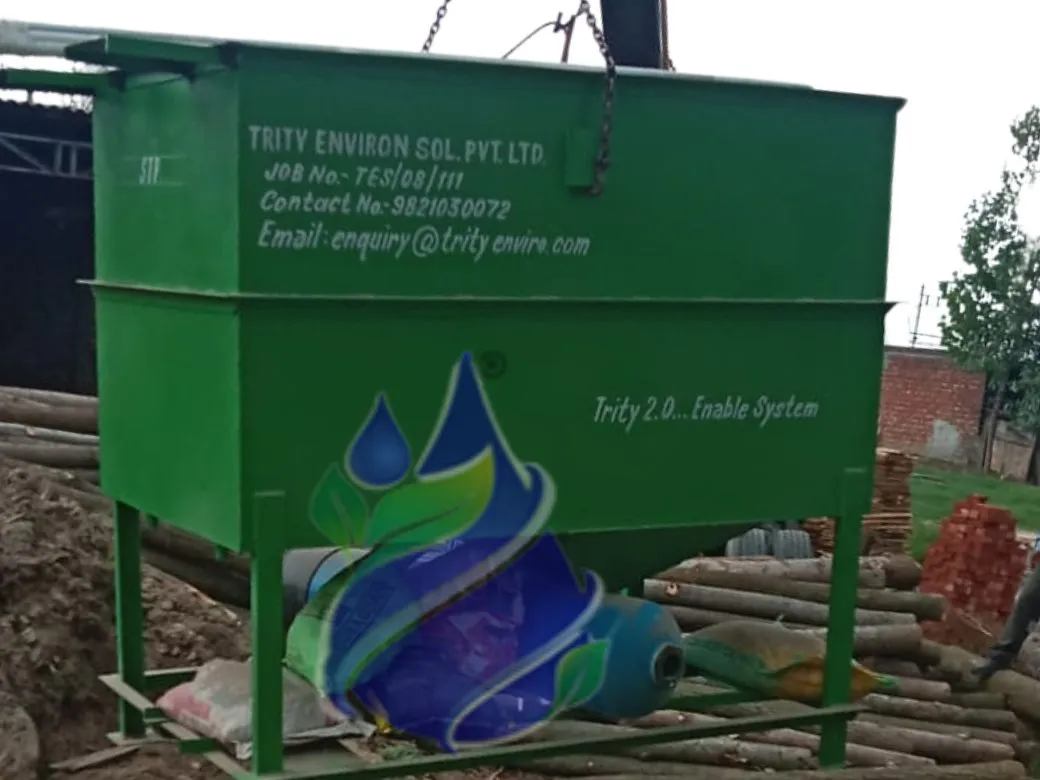
Yes. We currently operate a 5 KLD ETP in Shikarpur and an ETP at the Bulandshahr Dairy Plant, alongside other installations across the district.
4. How long does the UPPCB Consent to Establish and Consent to Operate process take?
Timelines vary by project scale, but generally run 60 to 90 days once your site plan and treatment design are submitted. We assist with documentation to avoid delays.
5. Why did the NGT take action against Sikandrabad's industrial area in 2019?
The National Green Tribunal ordered action against cement units in Sikandrabad over air pollution from burning rubber, cloth, plastic, and wood in boiler operations. While that specific case involved air emissions rather than water discharge, it reflects the level of regulatory scrutiny industries in this belt now face across all pollution categories.
6. Can an existing ETP in a steel or paint unit be upgraded instead of replaced?
In many cases, yes. Adding a chemical precipitation stage or upgrading aeration capacity can bring an older plant within current UPPCB limits without a full rebuild. We assess this during site evaluation.
7. Do you service dairy and food processing units outside the main Bulandshahr town area?
Yes. Our AMC coverage extends across the district, including Shikarpur, Gulaothi, and the wider Sikandrabad industrial belt, not just Bulandshahr town.
8. Can one ETP handle effluent from both a manufacturing unit and its attached staff housing?
Yes, though it usually requires two separate treatment streams within one project scope rather than a single combined system, since industrial effluent and domestic sewage have very different treatment requirements even when generated on the same site.
Ready to discuss your Bulandshahr or Sikandrabad project? Get a free quote or explore our full product range for STP, ETP, and related water treatment systems.
WHY THIS SYSTEM?
Key Benefits of STP and ETP Plant Manufacturer in Bulandshahr
Engineered for high biological efficiency, full environmental compliance, and low lifecycle operational costs.
100% CPCB / SPCB Compliance
Strict adherence to national and state pollution control board parameters for BOD, COD, TSS, and heavy metals discharge.
Low Power & Operational Cost
Optimized hydraulic design and energy-efficient aeration reduce kilowatt consumption per cubic meter of treated water.
Compact & Modular Footprint
Skid-mounted and modular civil layouts save valuable industrial floor space and allow seamless capacity expansion.
Automated PLC / SCADA Control
Real-time water quality monitoring, automated dosing systems, and remote telemetry for hassle-free plant operation.
Zero Liquid Discharge (ZLD) Ready
Seamless integration with downstream RO and evaporator systems for maximum water recycling and recovery.
Robust Engineering & Longevity
Heavy-gauge anti-corrosive construction ensures 15+ years of reliable, uninterrupted service life.
SYSTEM CONFIGURATIONS
Types of STP and ETP Plant Manufacturer in Bulandshahr Configurations
Tailored industrial configurations matched to specific effluent composition, flow rates, and space constraints.
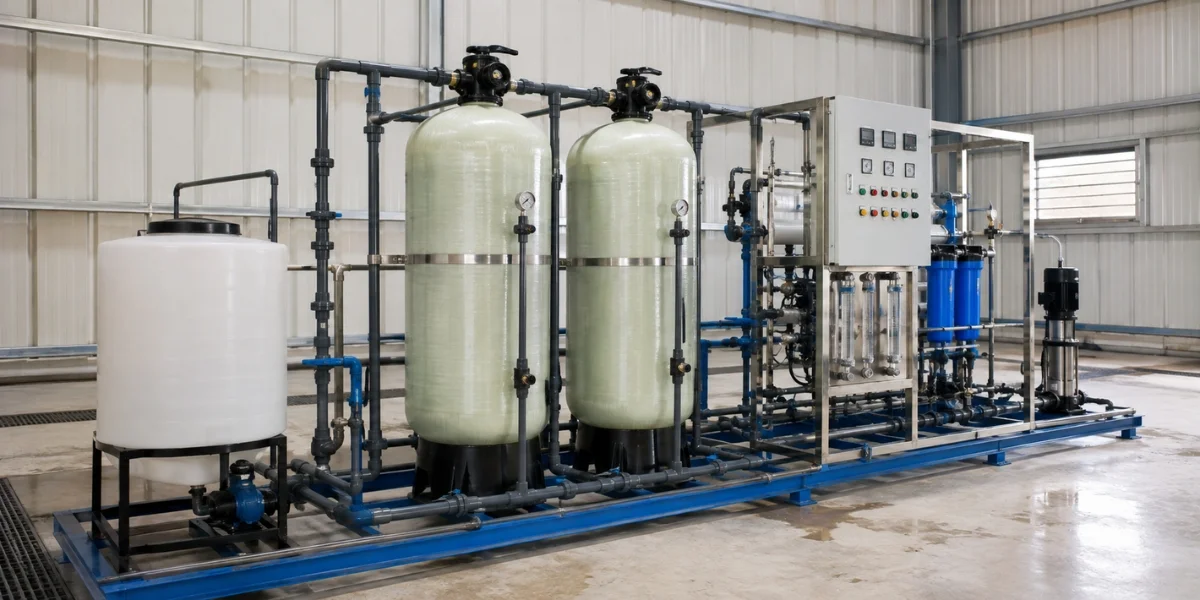
RO & Water Recycling Plant Manufacturer in India
Trity Environ Solutions manufactures RO and water recycling systems for industries and commercial facilities, engineered for reliable purity and reuse.
Explore Configuration
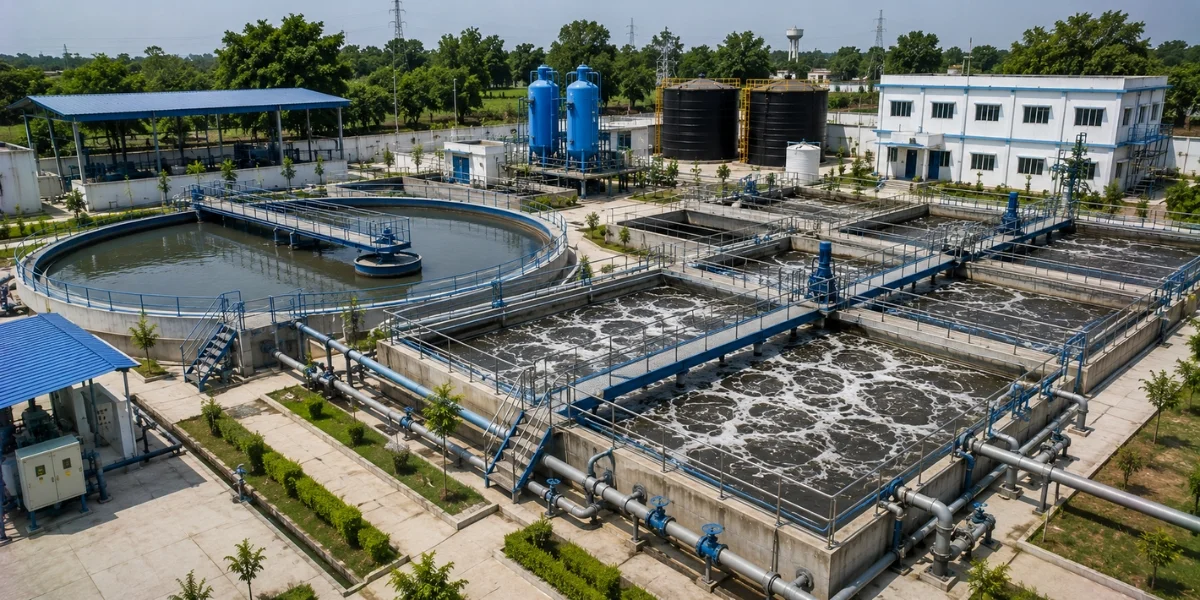
Tertiary Treatment Plant Manufacturer in India
Trity Environ Solutions manufactures tertiary treatment plants that polish treated water beyond secondary treatment, enabling genuine reuse and stricter discharge compliance.
Explore Configuration
Wastewater Recycling System Manufacturer in India
Trity Environ Solutions manufactures wastewater recycling systems using UF and RO technology, turning treated wastewater into reuse-grade water for cooling, flushing, and gardening.
Explore Configuration
STEP-BY-STEP WORKFLOW
How the STP and ETP Plant Manufacturer in Bulandshahr Process Works
A sequential, multi-stage treatment methodology engineered for maximum contaminant removal and water recovery.
01
Primary Collection & Screening
Raw effluent equalization, coarse bar screening, and pH neutralization to stabilize influent parameters.
02
Physico-Chemical Coagulation
Flash mixing of coagulants and flocculants followed by primary clarifier separation for heavy suspended solids.
03
Advanced Biological Digestion
Aerobic/anaerobic microbial digestion (MBBR / SBR / ASP) for drastic reduction of dissolved BOD & COD.
04
Tertiary Polishing & Disinfection
Dual media sand and activated carbon filtration with UV/ozonation for clean, reusable output water.
CATALOGUE
Related Engineering Products
RO & Water Recycling Plant Manufacturer in India
Trity Environ Solutions manufactures RO and water recycling systems for industries and commercial facilities, engineered for reliable purity and reuse.
Tertiary Treatment Plant Manufacturer in India
Trity Environ Solutions manufactures tertiary treatment plants that polish treated water beyond secondary treatment, enabling genuine reuse and stricter discharge compliance.
Wastewater Recycling System Manufacturer in India
Trity Environ Solutions manufactures wastewater recycling systems using UF and RO technology, turning treated wastewater into reuse-grade water for cooling, flushing, and gardening.
PAN-INDIA CAPABILITIES
Regional Solutions & State Coverage
TECHNICAL KNOWLEDGE
Related Insights & Engineering Guides
PROVEN EXCELLENCE
Featured Turnkey Installations



Need a Custom Water or Wastewater Treatment Solution?
Our engineering team can help design the right system for your capacity, industry, and compliance requirements.