
 ISO 9001:2015 & QCI Approved
Sewage Treatment Plant Manufacturer in Andhra Pradesh
Trity Environ Solutions is a trusted sewage treatment plant manufacturer in Andhra Pradesh, building compact and dependable systems for the state's apartment complexes, hospitals, hotels, hostels, and township projects in Visakhapatnam, Vijayawada, Guntur, Tirupati, and the towns along the Godavari. With public sewers and treatment plants still catching up with urban growth, it engineers on-site sewage treatment that keeps a property compliant and turns used water into a resource, with pan India installation support behind every plant. From MBBR and MBR to packaged and hospital systems, Trity Environ Solutions designs, manufactures, and commissions each plant in-house.
SPCB / CPCB Norm Compliant
Heavy Fabrication
Coastal Cities and Godavari Towns That Still Send Part of Their Sewage Untreated
Andhra Pradesh's largest cities show how far sewage collection and treatment can lag behind demand. A November 2025 report on Visakhapatnam put daily sewage generation at about 225 million litres, of which roughly 171 million litres were treated and about 54 million litres reached the sea untreated. The Greater Visakhapatnam Municipal Corporation was then adding three plants at Appughar, Sagar Nagar, and Bheemili, worth 38 MLD in all, and the same report counted 41 drains discharging to the sea, 23 of them still open. Vijayawada runs a larger fleet of older plants. A 2022 report listed units of 20 MLD at Jakkampudi (two plants, built 2017), 20 MLD at Ramalingeswara Nagar (2012), 10 MLD plants dating from 2004 and 2019, and 20 MLD and 40 MLD plants at Ajit Singh Nagar. The corporation planned a renovation of eight plants with Rs 10 crore of first-instalment UNIDO funding, so that treated water could meet the tribunal limits of 10 mg/L BOD and 50 mg/L COD.
The Godavari belt tells a similar story in smaller towns. According to a 29 May 2026 government statement, municipalities in six districts together produce about 104 MLD of sewage. Rajamahendravaram alone generates 75 MLD and sends about 50 MLD straight into the river, while Bhimavaram contributes 14 MLD, Tanuku 11.1 MLD, Narasapuram 8.5 MLD, and Kovvur 6 MLD. Guntur has its own drainage strain: an August 2026 report said the city's drainage leaves through three outlets, and during heavy rain mixed sewage and storm water overflowed into houses near Mondigate. The temple town of Tirumala shows the opposite approach. A 2019 report counted about 70,000 pilgrims a day, rising above one lakh at festivals, and about 9.5 MLD of treatment capacity that handled roughly 83 percent of the town's wastewater, with the output reused for gardens and forest areas.
The state's own open-data portal carries a ULB-wise list of sewage treatment plants built by the Public Health and Municipal Engineering Department, published in reply to a parliamentary question of 6 February 2023, and it is worth checking what exists in your town before assuming a sewer connection will help. For an apartment complex, hospital, hotel, or hostel, the practical conclusion is plain. A municipal line that may not reach you, or may not be treated at the end, cannot be your compliance plan. Trity Environ Solutions builds sewage treatment plants that treat wastewater where it is produced, so flushing, gardening, and cooling water can come back from the same building. Planning a new project or fixing a plant that no longer performs? Request a free site assessment and the engineering team will confirm the right configuration for your site.
WHY THIS SYSTEM?
Key Benefits of Sewage Treatment Plant Manufacturer in Andhra Pradesh
Engineered for high biological efficiency, full environmental compliance, and low lifecycle operational costs.
Treated Water That Meets Tight Limits
Biological and polishing stages sized for the 10 mg/L BOD and 50 mg/L COD style limits now cited for urban plants, so quality holds on peak days and not only on average ones.
Fits Basements and Podiums
Modular tank layouts planned around the constrained plots, basements, and podium levels of Visakhapatnam and Vijayawada developments.
Flushing and Garden Water on Site
Polished sewage that serves toilet flushing, landscaping, and cooling towers, which cuts the tanker and municipal water a property has to buy.
Ready for Festival and Seasonal Peaks
Equalisation and blower capacity arranged for the surges of pilgrim lodges, hotels, and function halls, where occupancy can swing sharply from one day to the next.
Support Across the State
Site assessment, commissioning, and maintenance response across Andhra Pradesh's main cities, with operator training and operating records handed over at each installation.
Open Drains and Sea Outfalls Are Not a Safe Fallback
Visakhapatnam's 41 sea-bound drains, 23 of them open, show how much sewage can bypass treatment even in a city with a large plant network. A property that depends on a shared drain carries a risk it does not manage. An on-site plant replaces that dependence with a measured, documented treated water quality at your own gate, which is easier to defend if a discharge is questioned.
Older Plants Slip Without Operation and Maintenance
Vijayawada's list of plants built between 2004 and 2019 ended up needing a renovation programme and a revival of biogas generation, which is a reminder that a plant ages quickly without steady attention. Trity Environ Solutions supports every Andhra Pradesh installation with operator training, performance monitoring, and an Annual Maintenance Contract covering blowers, diffusers, and dosing. Talk to our team about AMC coverage for your property.
Choosing the Process That Suits the Site
Technology follows the load pattern. A sequencing batch reactor sewage treatment plant suits sites with variable flow and room for batch tanks, while a FAB sewage treatment plant or a SAFF sewage treatment plant offers a simple, low-operator design for hostels, schools, and smaller campuses. Temple towns and tourist stops need a design that tolerates sharp swings, and the final choice is settled during the site assessment.
Related Wastewater Services in Andhra Pradesh
This page covers domestic sewage only. For process wastewater from pharma, chemical, and food units, see the effluent treatment plant manufacturer in Andhra Pradesh page. The combined overview of both services across the state is on the ETP and STP plant manufacturers in Andhra Pradesh page.
SYSTEM CONFIGURATIONS
Types of Sewage Treatment Plant Manufacturer in Andhra Pradesh Configurations
Tailored industrial configurations matched to specific effluent composition, flow rates, and space constraints.
Apartments and Townships
The MBBR sewage treatment plant uses floating media to hold a dense biological film, which copes with the sharp morning and evening peaks of residential complexes in a modest footprint.
Explore Configuration
Hotels, Resorts and Commercial Towers
The MBR sewage treatment plant adds a membrane stage that delivers clear, low odour water in little space, a good match for hospitality sites that reuse water for cooling and flushing.
Explore Configuration
Hospitals and Medical Campuses
A sewage treatment plant for hospital pairs biological treatment with disinfection, designed for the continuous and variable flow of wards, kitchens, and laundries.
Explore Configuration
Compact and Fast Installations
The packaged containerized sewage treatment plant arrives as a factory built unit, which shortens site work for construction camps, resorts, and small institutions.
Explore Configuration
Grey Water Reuse
A grey water treatment plant handles bathing and laundry water separately, giving a lighter load and a quick route to flushing and garden reuse in hostels and lodges.
Not sure which configuration fits your Andhra Pradesh site? Get a free consultation and the team will recommend a setup based on flow, footprint, and consent conditions.
Explore Configuration
STEP-BY-STEP WORKFLOW
How the Sewage Treatment Plant Manufacturer in Andhra Pradesh Process Works
A sequential, multi-stage treatment methodology engineered for maximum contaminant removal and water recovery.
01
Site Assessment & Influent Characterisation
Occupancy, water use, and sewage sampling establish the real daily flow and peak pattern before any design decision is made.
02
Design & Engineering
Process, tank layout, and reuse stages are fixed against the APPCB consent category, available space, and the demand for treated water.
03
Manufacturing & Installation
Components are manufactured under ISO 9001:2015 quality controls, then installed and commissioned by Trity's site team.
04
Commissioning & AMC Support
The plant is tested against consent limits, operators are trained, and ongoing AMC support keeps performance steady afterward.
COMMON INQUIRIES
Frequently Asked Questions
Q1. Which authority regulates sewage treatment plant discharge in Andhra Pradesh?
The Andhra Pradesh Pollution Control Board (APPCB) grants consent to establish and consent to operate, working with CPCB guidelines and any directions from the National Green Tribunal.
Q2. Is an STP required for an apartment complex, hotel, or hospital in Andhra Pradesh?
Larger residential, hospitality, and healthcare projects are generally expected to treat sewage on site as part of environmental and consent conditions, and often to reuse the output. The exact requirement depends on built-up area and the conditions attached to your approvals.
Q3. What size of plant does an apartment complex or hostel need?
Capacity depends on the number of residents, occupancy, and the flushing and landscaping demand. Plants for societies and hostels commonly range from about 50 KLD to several hundred KLD, confirmed after a site assessment.
Q4. Can treated sewage be reused, and for what?
Yes. After filtration and disinfection, treated water is commonly used for toilet flushing, gardening, cooling tower makeup, and washing of common areas. Drinking use is not intended.
Q5. Which technology is best for a hospital or a hotel?
Hospitals usually need a biological plant with strong disinfection, while hotels and resorts with tight space often choose MBR. The final selection is made from flow data and discharge or reuse targets.
Q6. Can an existing plant in Visakhapatnam, Vijayawada, or Tirupati be audited or upgraded?
Yes. Trity Environ Solutions audits underperforming plants, replaces worn blowers and diffusers, retrofits capacity or technology, and brings them under an annual maintenance contract.
Q7. How do I choose a reliable sewage treatment plant manufacturer in Andhra Pradesh?
Look for in-house manufacturing, familiarity with APPCB consent requirements, a design based on your own flow measurements, and a clear maintenance offering after commissioning. Trity Environ Solutions builds its plants under ISO 9001:2015 quality controls and supports every installation with operator training and an annual maintenance contract.
CATALOGUE
Related Engineering Products
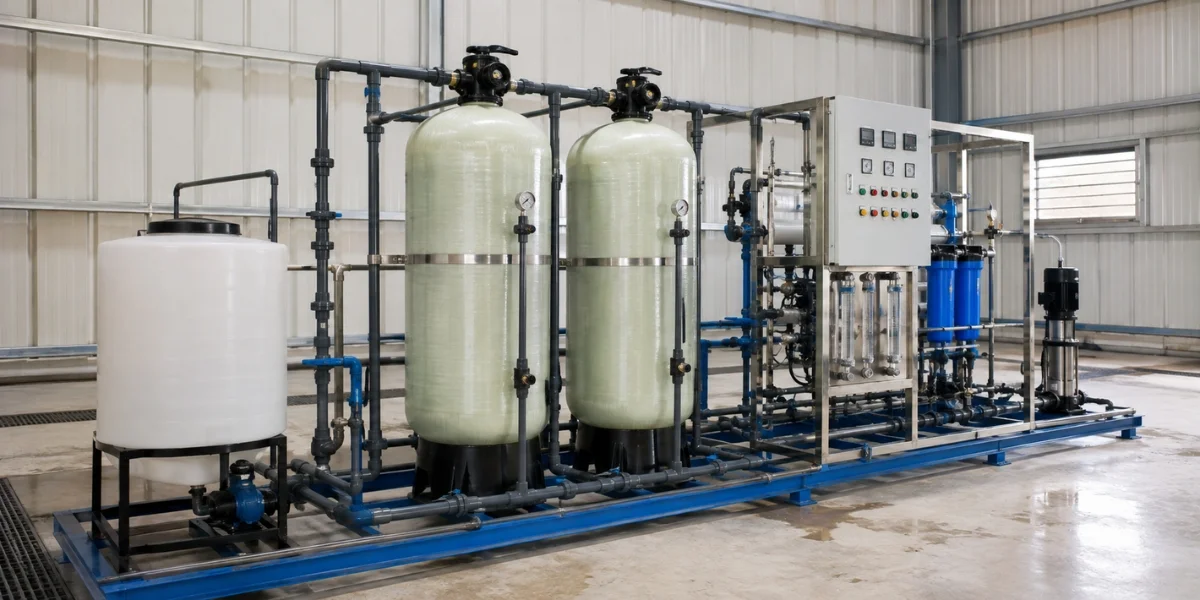
RO & Water Recycling Plant Manufacturer in India
Trity Environ Solutions manufactures RO and water recycling systems for industries and commercial facilities, engineered for reliable purity and reuse.
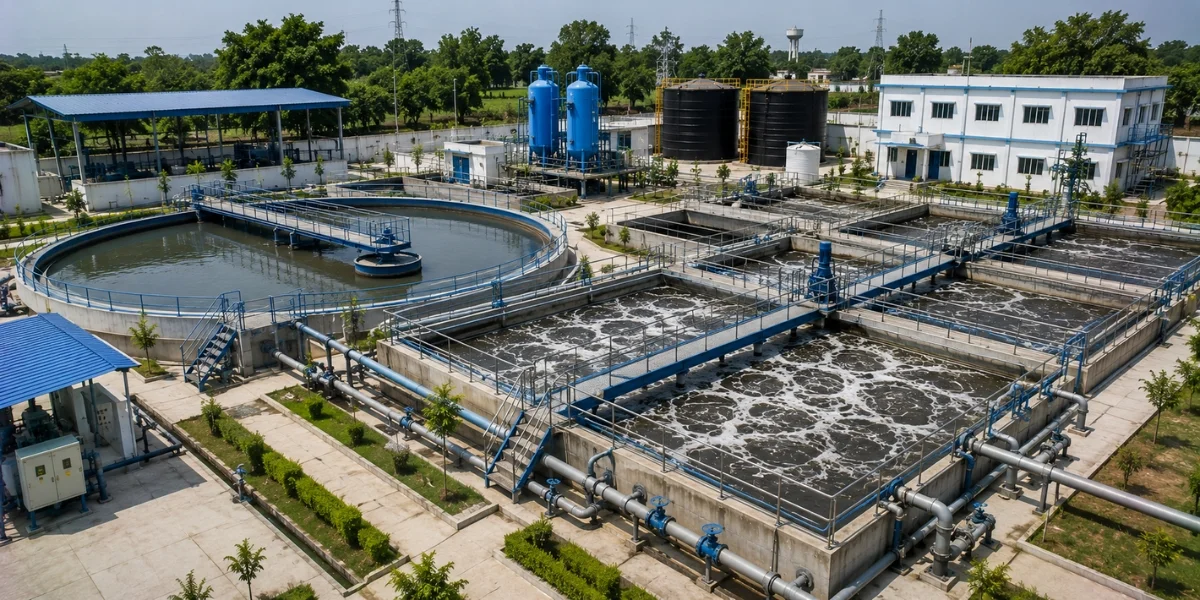
Tertiary Treatment Plant Manufacturer in India
Trity Environ Solutions manufactures tertiary treatment plants that polish treated water beyond secondary treatment, enabling genuine reuse and stricter discharge compliance.
Wastewater Recycling System Manufacturer in India
Trity Environ Solutions manufactures wastewater recycling systems using UF and RO technology, turning treated wastewater into reuse-grade water for cooling, flushing, and gardening.
PAN-INDIA CAPABILITIES
Regional Solutions & State Coverage
TECHNICAL KNOWLEDGE
Related Insights & Engineering Guides
PROVEN EXCELLENCE
Featured Turnkey Installations











Need a Custom Water or Wastewater Treatment Solution?
Our engineering team can help design the right system for your capacity, industry, and compliance requirements.

