
 ISO 9001:2015 & QCI Approved
Tertiary Treatment Plant Manufacturer in India
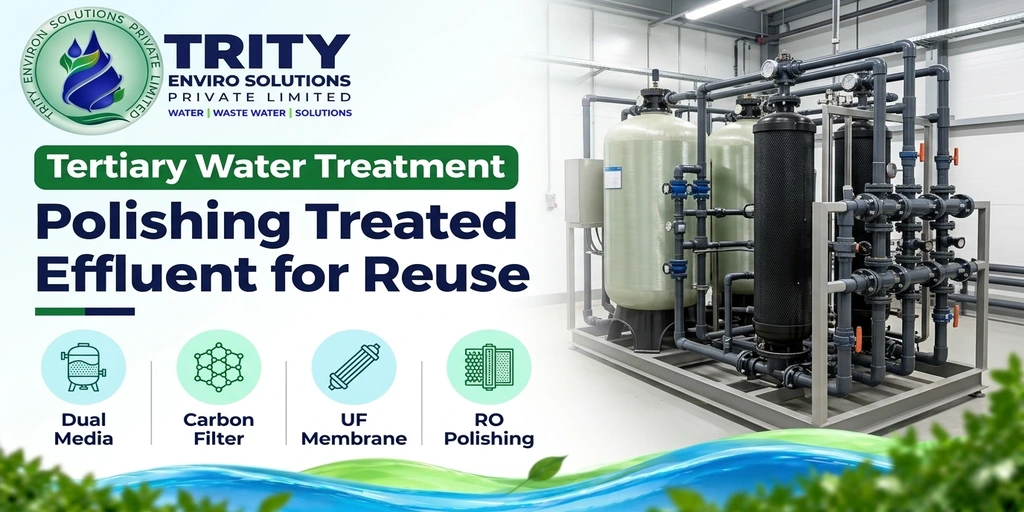
Trity Environ Solutions is a trusted tertiary treatment plant manufacturer in India, engineering advanced polishing systems that remove residual BOD, pathogens, and fine solids after secondary treatment. Our tertiary systems turn treated water into a genuine reuse resource, with pan India installation support.
SPCB / CPCB Norm Compliant
Heavy Fabrication
The Stage That Decides Whether Treated Water Is Actually Reusable
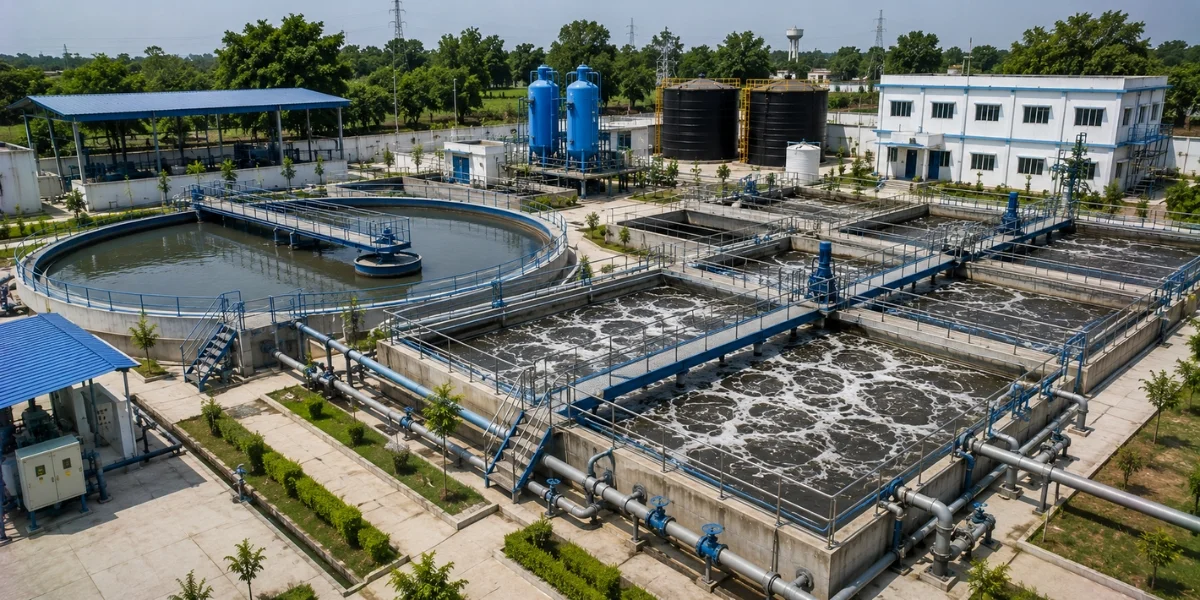
Secondary treatment in an effluent treatment plant or sewage treatment facility removes most organic pollutants, but a tertiary treatment plant is what removes the remaining fine solids, residual BOD, and pathogens that stand between compliant discharge and genuine reuse. Whether your goal is cooling tower makeup, horticultural irrigation, or acting as the front-end stage for a full water reuse and recycling system, Trity Environ Solutions designs the filtration and disinfection sequence around your specific reuse target, not a generic polishing step.
Need to turn secondary treated water into a genuine reuse resource? Request a free technical assessment and our engineering team will design the right tertiary configuration.
WHY THIS SYSTEM?
Key Benefits of Tertiary Treatment Plant Manufacturer in India
Engineered for reliable *residual pollutant removal, genuine water reuse readiness, and flexible disinfection* options.
Removes Residual BOD & Pathogens
Removes residual BOD, pathogens, and fine suspended solids that secondary treatment alone cannot eliminate, bringing treated water up to reuse-ready quality consistently.
Enables Genuine Water Reuse
Enables genuine water reuse for cooling towers, horticulture, flushing, and industrial supply, turning treated wastewater from a discharge liability into a usable resource.
Critical Front-End for ZLD Systems
Functions as the critical front-end stage for Zero Liquid Discharge systems, since tertiary treatment quality directly determines downstream RO recovery and evaporator sizing.
Reduces Discharge Pollution Load
Reduces overall discharge volume and pollution load reaching water bodies, supporting compliance with increasingly strict urban and industrial discharge regulations across India.
Flexible Disinfection Options
Provides flexible disinfection options including chlorination, UV, or ozonation, allowing the final polishing stage to be matched to your specific reuse application requirements.
Tertiary Treatment and Polishing Aren't Always the Same Thing
These terms often get used interchangeably, but they aren't identical. Tertiary treatment typically involves membrane-based processes like UF and RO that meaningfully reduce TDS, while general polishing can mean anything from sand filtration to UV disinfection without touching dissolved solids at all. Trity Environ Solutions clarifies which level your reuse application actually requires before designing the system, since over-specifying membranes adds cost your project may not need.
Tertiary Quality Determines Everything Downstream
If your facility is working toward Zero Liquid Discharge, tertiary treatment isn't a standalone stage, it's the foundation that determines RO recovery rates, concentrate TDS, and evaporator sizing for everything that follows. Trity Environ Solutions designs tertiary systems with the full downstream train in mind, backed by operator training and an Annual Maintenance Contract. Talk to our team about AMC coverage for your system.
SYSTEM CONFIGURATIONS
Types of Tertiary Treatment Plant Manufacturer in India Configurations
Configurations selected to match your *reuse application, water quality target, and downstream requirements*.
Sand Filtration & Activated Carbon System
Multi-grade sand filtration followed by activated carbon adsorption, removing residual suspended solids, colour, and odour for a cost-effective polishing solution.
UF + RO Tertiary System
Ultrafiltration and reverse osmosis based tertiary system delivering significant TDS reduction, suitable for cooling tower reuse or as a Zero Liquid Discharge front-end.
Disinfection Stage (Chlorination / UV / Ozonation)
Chlorination, UV, or ozonation based disinfection stage designed to eliminate remaining pathogens before treated water is discharged or reused within the facility.
Horticultural / Agricultural Reuse System
Tertiary system specifically configured for horticultural and agricultural reuse, meeting the water quality standards required for safe irrigation of crops and green spaces.
STEP-BY-STEP WORKFLOW
How the Tertiary Treatment Plant Manufacturer in India Process Works
A multi-stage polishing process engineered for consistent *reuse-ready water quality*.
01
Multi-Grade Filtration
Secondary treated water passes through sand filtration, removing residual suspended solids before further polishing.
02
Activated Carbon Adsorption
Water passes through activated carbon, removing residual colour, odour, and trace organic contaminants from the stream.
03
Membrane Filtration (Where Required)
For higher reuse or ZLD applications, water passes through UF and RO membranes, significantly reducing TDS and dissolved contaminants.
04
Final Disinfection
Treated water undergoes chlorination, UV, or ozonation disinfection before discharge or distribution to its intended reuse application.
COMMON INQUIRIES
Frequently Asked Questions
Q1. What is a tertiary treatment plant?
A tertiary treatment plant polishes water after secondary treatment, removing residual BOD, pathogens, and fine solids to bring it up to discharge or reuse-ready quality.
Q2. Is tertiary treatment the same as polishing treatment?
Not exactly, tertiary treatment typically involves membrane-based processes like UF and RO that reduce TDS, while polishing is a broader term covering any final clean-up step, including simpler filtration or disinfection.
Q3. Why is tertiary treatment important for Zero Liquid Discharge?
Tertiary treatment quality directly determines RO recovery rate, concentrate TDS, and evaporator sizing in a ZLD system, making it the critical front-end stage rather than an optional add-on.
Q4. Can tertiary treated water be used for drinking purposes?
Generally no, tertiary treated wastewater is intended for non-potable reuse applications such as cooling towers, flushing, and irrigation, not direct drinking water use without additional treatment.
Q5. What disinfection methods are used in tertiary treatment?
Common disinfection methods include chlorination, UV treatment, and ozonation, with the choice depending on the specific reuse application and regulatory requirements.
Q6. Does every ETP or STP need a tertiary treatment stage?
Not always, tertiary treatment is typically added when discharge norms are especially strict or when the facility wants to reuse treated water for applications beyond standard discharge.
CATALOGUE
Related Engineering Products
RO & Water Recycling Plant Manufacturer in India
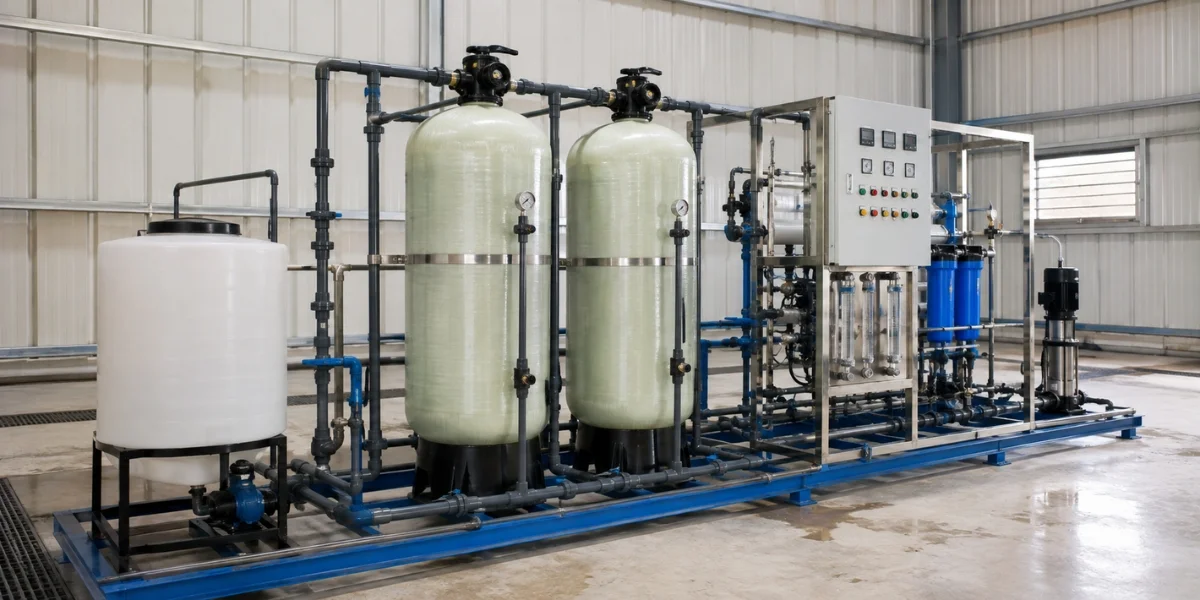
Trity Environ Solutions manufactures RO and water recycling systems for industries and commercial facilities, engineered for reliable purity and reuse.
Wastewater Recycling System Manufacturer in India
Trity Environ Solutions manufactures wastewater recycling systems using UF and RO technology, turning treated wastewater into reuse-grade water for cooling, flushing, and gardening.
Industrial RO Plant Manufacturer in India
Trity Environ Solutions manufactures industrial RO plants for high TDS and brackish water treatment, delivering process and boiler feed grade water reliably.
PAN-INDIA CAPABILITIES
Regional Solutions & State Coverage
TECHNICAL KNOWLEDGE
Related Insights & Engineering Guides
PROVEN EXCELLENCE
Featured Turnkey Installations




Need a Custom Water or Wastewater Treatment Solution?
Our engineering team can help design the right system for your capacity, industry, and compliance requirements.