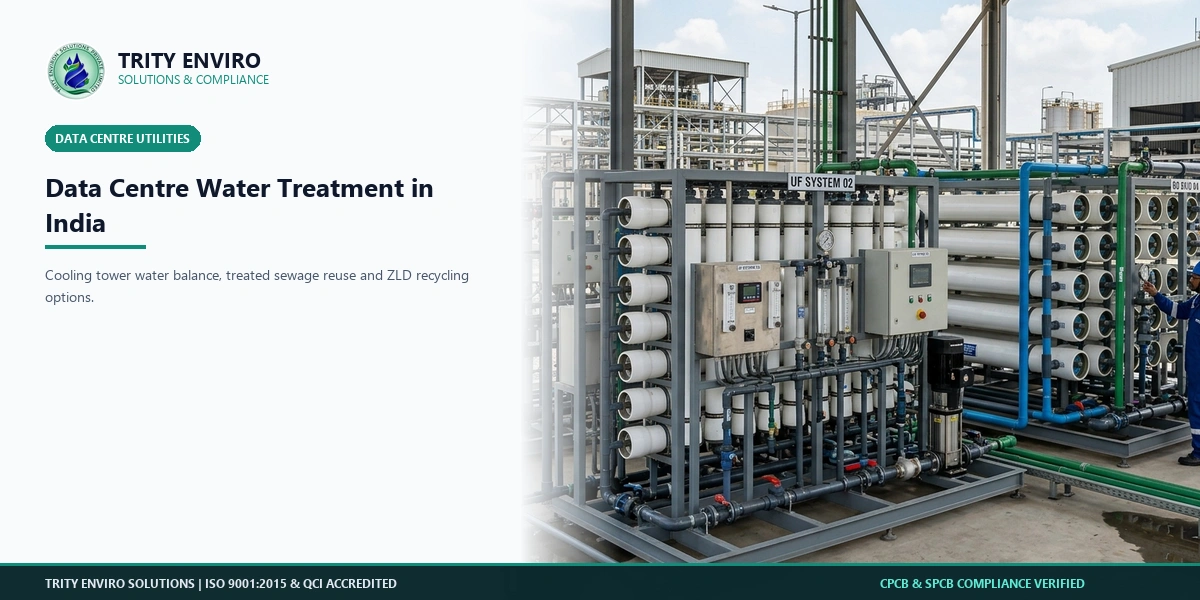
Data Centre Water Treatment in India: Cooling Water, Treated Sewage Reuse and ZLD Options
How data centres in India can cut water use: cooling tower treatment, treated sewage reuse, RO, ZLD and a worked water balance for a 10 MW facility.

 ISO 9001:2015 & QCI Approved
Greywater is the easiest wastewater to recycle. See how much you generate, how to treat it and where to use it.
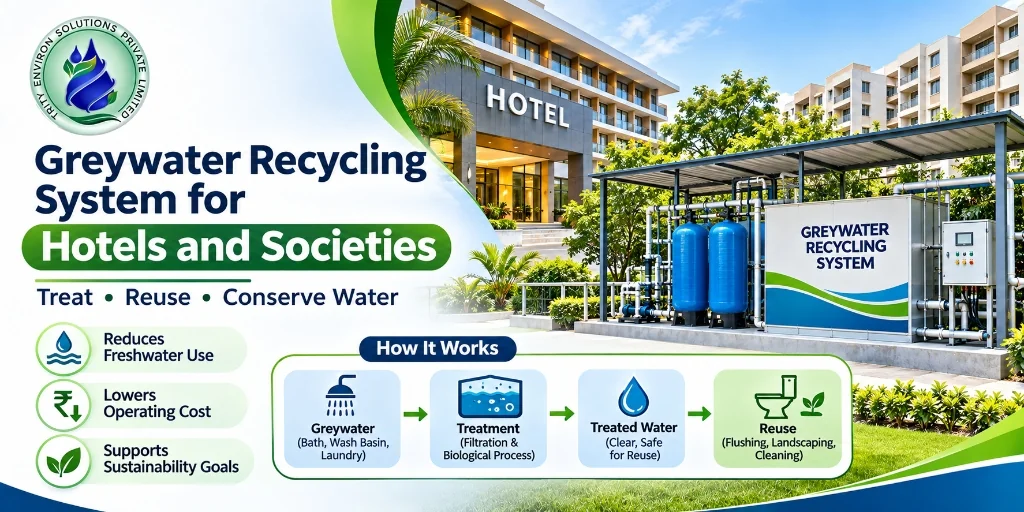
Every building drains two kinds of wastewater. Blackwater comes from toilets and carries faeces, urine and the pathogens that go with them. Greywater comes from showers, bathtubs, wash basins, laundry and, in some definitions, kitchen sinks. It is dirtier than clean water but far cleaner than sewage, and it makes up a large share of what a building discharges, often more than half of the domestic wastewater.
This is a resource that most buildings throw away. A hotel, hospital or housing society buys water, uses it once for a shower, then sends it to the sewer or to the STP, and buys more water to flush the same building's toilets. Greywater recycling closes that loop: it collects the lightly polluted water, treats it to a safe quality and sends it back for flushing, gardening, cooling or cleaning.
The case is getting stronger. Water prices and tanker costs keep rising. Large water users may face reuse obligations if the draft Liquid Waste Management Rules are finalised, as discussed in our guide to the Liquid Waste Management Rules. Green building ratings reward reuse. And greywater is easier and cheaper to treat than mixed sewage, since it has much lower BOD and no heavy faecal load.
This guide explains what greywater is, how much a typical building produces, what treatment train it needs, how to handle plumbing and safety, what it costs and what to ask a supplier, with a worked example for a 200 flat society. It is written for hotel owners, hospital administrators, society committees, builders and facility managers. Trity Enviro designs greywater recycling systems for such buildings, and the guide draws on that work.
Designers often separate greywater into two grades:
Many buildings recycle only light greywater, because it is the simplest to treat. Others combine laundry and some kitchen water with a grease trap and stronger treatment. Hospitals and some industrial uses require extra care, since their greywater may carry disinfectants and pathogens.
A housing society has 200 flats with four residents each, 800 people in all. Assume domestic water use of 135 litres per person per day, a common design figure.
On these assumptions, a greywater plant could cut the society's fresh water demand by about a third. Use your own occupancy and metered data for a real design. The same approach works for hotels, where showers and laundry produce much greywater and cooling towers add another big demand. Our guide to how to calculate STP capacity explains how to estimate flows.
Greywater carries hair, lint and fats that block pipes and pumps, so the treatment train begins with protection:
After biology, polishing steps make the water safe and pleasant to use:
Typical targets for flushing and gardening are low turbidity, little colour and odour, low BOD and TSS and a disinfectant residual, together with a faecal coliform count at or below the limit your local authority or consent sets. Check what applies in your city. Our article on tertiary water treatment for industrial reuse covers the quality side in more detail, and our grey water treatment plant page describes standard systems.
The treated water has to travel from the plant to the point of use, which needs its own pipes. In a new building, plan a dual plumbing system from the start: one network for fresh water, and a second, clearly marked network for recycled water to flushing cisterns, taps for garden use and similar points. Use a distinct pipe colour, labels and tags, and never connect the two networks.
In an existing building, retrofitting dual plumbing to every flat can be expensive and disruptive. Many societies choose a partial approach: use the treated water for gardening, car washing, common area cleaning and cooling towers, and add flushing for new blocks or for common toilets. Provide a treated water storage tank with a cover and a chlorine residual, a pump and a pressure set, and an overflow to a safe discharge, as the volume of greywater and the volume of demand rarely match. Keep a fresh water make-up connection with an air gap so that flushing never runs dry.
Suitable uses: toilet flushing, gardening and landscaping, car and floor washing, construction water, cooling tower make-up after further treatment, and some process uses.
Not suitable: drinking, cooking, bathing, laundry in contact with people unless designed for it, swimming pools and any use in patient care, food contact or sterile areas of a hospital.
Safety rules are simple and strict. Label every reuse tap, lock them where children might use them, post signs and train staff. Test the treated water regularly for turbidity, residual chlorine, BOD, TSS and coliform. Spray irrigation should avoid windy periods and contact areas. In hospitals, keep greywater reuse away from clinical zones and discuss design with infection control.
The cost of a greywater system comes from the treatment plant, tanks, pumps, filters, disinfection, instrumentation, civil work, dual plumbing and installation. Plumbing is often the largest and most variable part in existing buildings. Running cost includes power, chemicals, filter media and membranes, operator time and maintenance.
Payback comes from fresh water avoided, valued at your true cost of water including tankers and pumping, and from lower sewage load. In the society example, saving about 36 KLD of flushing water at a water cost of Rs 50 per KL, for illustration only, would be worth about Rs 6.6 lakh a year, before running costs. Use your own cost and quantity. New buildings usually have much better economics, because dual plumbing costs little when it is built in.
Design the system to grow. Hotels and hospitals change use over time, so leave room for extra modules and ultrafiltration if needed.
Trity Enviro designs greywater and sewage treatment systems for hotels, hospitals and societies, with wastewater recycling system options for larger sites, and an annual maintenance contract keeps the system safe and efficient. Our sewage treatment plant for hospital page covers special considerations in healthcare.
Treat the system like any treatment plant, with a daily logbook. Check screens and the grease trap daily, DO and pH in the biological tank, filter pressure gauges and chlorine residual in the treated water tank. Test turbidity daily and send BOD, TSS and coliform samples to a laboratory monthly, or as your authority requires. Backwash filters on schedule, inspect diffusers and pumps and clean the storage tank at least once a year. Keep a spare set of filter media, a chlorine supply and pump parts in stock. Trity Enviro's AMC visits include sampling, a written report and a check of reuse points, so that problems such as odour, staining or low residual are caught before residents notice.
| Parameter / Stage | Target Optimal Range | Failure Impact / Risk | Corrective Engineering Action |
|---|---|---|---|
| Greywater collection and screening | Hair, lint and grease removed before the plant | Blocked pipes and pumps, septic storage | Install screens and grease trap, clean regularly |
| Storage time before treatment | Short, with mixing and aeration | Septic greywater, odour | Size equalization tank for peaks, keep it mixed |
| Treated water quality for flushing and gardening | Low turbidity, no odour, low BOD and TSS, coliform within local limit, with disinfectant residual | Odour, staining, health risk | Add filtration, carbon and chlorination or UV, test often |
| Cross connection control | Separate, labelled recycled water network with air gap on make-up | Contamination of drinking water | Colour code pipes, label taps, inspect and test |
Trity Environ Solutions is an ISO 9001:2015 certified and QCI-approved greywater treatment plant and wastewater recycling system manufacturer and supplier in India, delivering robust, high-efficiency systems engineered for CPCB and SPCB regulatory compliance.
Every installation is supported by pan-India Annual Maintenance Contract and Operation and Maintenance services.
How data centres in India can cut water use: cooling tower treatment, treated sewage reuse, RO, ZLD and a worked water balance for a 10 MW facility.
In late 2025, contaminated municipal water in Indore killed dozens of people. Here's what actually goes into water purification, the real health and industrial stakes, and how Trity Environ Solutions builds systems that address them.
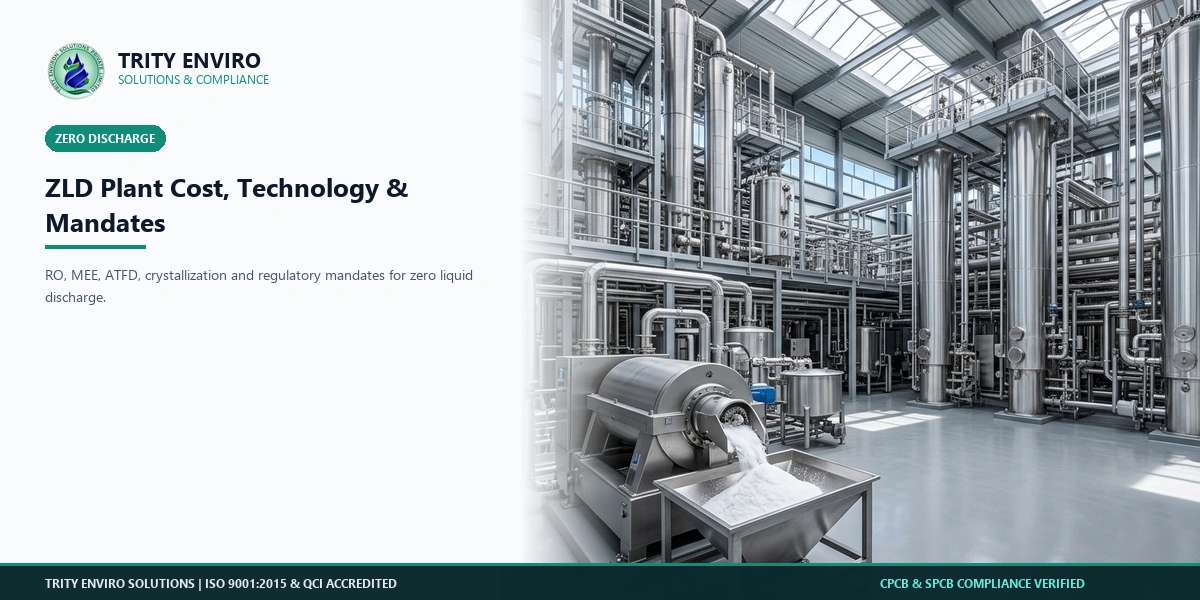
Zero liquid discharge explained: which Indian sectors face ZLD mandates, how RO, MEE and ATFD work, mass balance example, cost drivers and when to avoid it.











Discuss your requirements with our engineering team and get practical guidance for your project.

