How to Treat Legionella Bacteria With Wastewater Treatment
How Legionella bacteria establish in wastewater treatment plants, the real occupational risk, and the control methods that actually work.

 ISO 9001:2015 & QCI Approved
Choosing a coagulant by habit wastes money. Learn how alum, PAC and ferric chloride differ, and how a simple jar test picks the winner for your effluent.
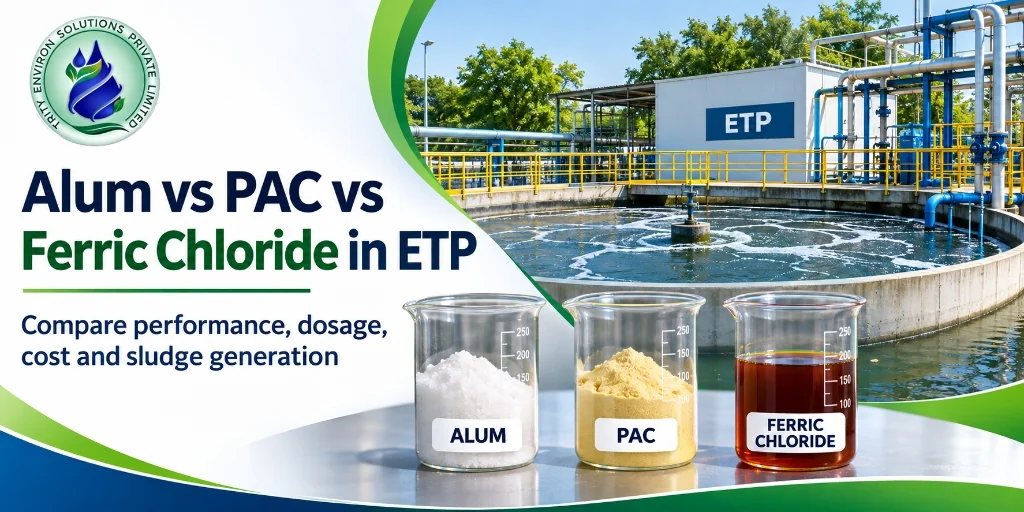
Walk into the chemical store of almost any effluent treatment plant and you will find a drum of coagulant. It may be alum because the first supplier sold alum, PAC because a neighbour uses it, or ferric chloride because it worked once on a different effluent. Few plants can say why they chose it, and fewer have compared it with the alternatives on their own wastewater.
That is a missed saving. Coagulation is the step that turns fine, stable particles, colloids and some dissolved organics into flocs that settle or float. It sits at the heart of the physico-chemical stage, before clarifiers, DAF units and filters. The coagulant you choose decides the dose, the pH you need to hold, how much alkalinity is consumed, how much sludge you make, how clear the outlet is and what you spend every month.
Alum, polyaluminium chloride (PAC) and ferric chloride are the three workhorses. Each works, and each has strengths, limits and costs that differ with the wastewater. This guide compares them in practical terms, explains how polymer fits in, shows the stoichiometry that matters for alkalinity and gives a step by step jar test you can run in your own laboratory. Trity Enviro designs physico-chemical and biological plants for many industries, and the guide reflects what we see in the field. It is written for ETP and STP operators, EHS officers and plant managers.
Most fine particles in wastewater carry a negative charge, so they repel each other and stay suspended. A coagulant adds positively charged metal ions, which neutralise that charge and let particles come together. At higher doses and suitable pH, the metal also forms a bulky hydroxide precipitate that traps particles as it settles, a mechanism called sweep flocculation. In practice both effects happen together, and the dominant one depends on dose, pH and the type of wastewater.
Coagulation needs a short, intense mix so that the chemical is spread through the water in seconds. Flocculation that follows needs a gentle mix, so that small flocs collide and grow without breaking. Then the flocs separate in a clarifier, DAF unit or filter.
A polymer or polyelectrolyte is a long chain molecule dosed in small amounts after the coagulant. It bridges small flocs into larger, stronger ones that settle faster and resist shear. Anionic polymers are common with metal hydroxide flocs, cationic polymers help with organic and oily wastewater and dye bearing streams, and non-ionic polymers suit some mineral suspensions. Too little polymer leaves small, weak flocs, and too much can restabilise particles and blind filters. Dose is usually measured in parts per million, and it is set by the jar test.
Alum (aluminium sulphate). The oldest and cheapest per kilogram. It works best in a pH window of roughly 5.5 to 7.5, performs well on turbid water and many industrial wastewaters, and is easy to handle as a solid or solution. Its drawbacks are higher sludge volume, strong pH dependence and weaker performance in cold water. It adds sulphate to the effluent.
PAC (polyaluminium chloride). A pre-hydrolysed aluminium coagulant sold at different basicities and aluminium oxide contents. It works over a wider pH range, often about 6 to 9, acts faster, works better in cold water, uses less alkalinity and typically produces less sludge. Its cost per kilogram is higher, but the effective dose is often lower. It suits many ETPs, STP tertiary stages and drinking water plants.
Ferric chloride. An iron based coagulant that works over a very wide pH range, from acidic to alkaline, and is strong on colour, phosphate and some metals. It forms dense, fast settling flocs and is often used for textile, tannery and chemical effluents. Its drawbacks are corrosiveness, which demands lined tanks, pipes and pumps, staining of equipment and surfaces, and iron colour in the effluent if overdosed.
Coagulants are acids, so they consume alkalinity and lower pH. The stoichiometry is useful to know:
If your wastewater has low alkalinity, a high dose of alum or ferric chloride can push pH below the working window. You then need lime, caustic soda or soda ash to correct it, adding cost and sludge. In such cases PAC is often the better choice.
For sludge, alum and ferric produce hydroxide sludge in proportion to dose, and PAC usually produces somewhat less, though results vary. Sludge ends up in your filter press for sludge dewatering or other system, and its weight affects disposal cost, as explained in our guide to ETP sludge disposal.
For cost, compare on the cost of treating one cubic metre to the required quality, not on the price per kilogram. A dearer coagulant used at half the dose, with less pH correction and less sludge, can cost less. A quick comparison table follows.
| Factor | Alum | PAC | Ferric chloride |
|---|---|---|---|
| Typical working pH | About 5.5 to 7.5 | About 6 to 9 | Wide, roughly 5 to 11 |
| Alkalinity used per mg | About 0.5 mg as CaCO3 | Low | About 0.9 mg as CaCO3 |
| Cold water performance | Weaker | Better | Good |
| Sludge | Higher | Often lower | Dense, depends on dose |
| Handling | Easy | Easy | Corrosive, needs lining |
| Price per kg | Lowest | Higher | Moderate |
Treat these as general tendencies, since your effluent may behave differently.
A jar test is a small scale simulation of coagulation, flocculation and settling, and it needs only a six place stirrer, beakers, pipettes and a turbidity meter or colour comparison. A standard procedure is:
The best dose is the lowest one that gives the target clarity or COD removal with firm, fast settling flocs. Plot removal against dose, and look for the knee of the curve: past it, extra chemical adds cost without added removal. Compare coagulants at their own best dose, and record pH, alkalinity use and the sludge volume in each jar.
Repeat the jar test whenever production, raw materials or effluent change. Many plants discover that the right dose in summer is wrong in winter, or that a change of dye or product has changed the optimum. Link the lessons to the plant: use feedback pH control, accurate dosing pumps with flow meters and a polymer preparation unit that ages the solution properly. In a DAF unit, coagulant and polymer control are the difference between a clean outlet and a muddy one, as covered in our guide to DAF system selection.
Add up what each option costs per cubic metre: the coagulant, the polymer, the alkali for pH correction, the extra sludge handling and the labour. Include storage and handling needs, since ferric chloride needs corrosion resistant tanks and alum needs dissolving. Check supply: some regions favour one product, and the reliability of delivery matters more than a small price difference. Buy from suppliers who give a certificate of analysis, since aluminium oxide content or iron content varies and sets the real dose.
Better pre-treatment lowers coagulant demand. Equalization, pH control and oil removal all stabilise the effluent, as set out in our guide to industrial wastewater pre-treatment before the ETP.
Trity Enviro designs physico-chemical effluent treatment plants with dosing, mixing and clarification sized from jar test data, and an annual maintenance contract includes chemical optimisation visits.
Store coagulants in lined or compatible tanks with secondary containment, label every tank and keep acids away from alkalis. Provide eye wash and gloves near the dosing area. Ferric chloride and PAC are acidic and corrosive, and alum dust irritates the skin. Keep a safety data sheet at the store and train operators in spill response.
| Parameter / Stage | Target Optimal Range | Failure Impact / Risk | Corrective Engineering Action |
|---|---|---|---|
| Coagulation pH | Within the coagulant's window, such as about 5.5 to 7.5 for alum and about 6 to 9 for PAC | Poor floc, high residual aluminium or iron, cloudy outlet | Add pH control, choose a coagulant with a wider window |
| Coagulant dose | Lowest dose that gives target removal on the jar test | Wasted chemical and sludge if high, poor clarity if low | Repeat jar tests regularly, add dose control |
| Rapid and slow mixing | Short intense mix, then gentle mix for floc growth | Weak flocs, carryover, high polymer use | Tune mixer speeds and retention, check baffles |
| Polymer dose and ageing | Set by jar test, prepared and aged as the supplier advises | Small flocs, blinded filters, wasted polymer | Use a polymer preparation unit, calibrate dosing pumps |
Trity Environ Solutions is an ISO 9001:2015 certified and QCI-approved effluent treatment plant manufacturer and supplier in India, delivering robust, high-efficiency systems engineered for CPCB and SPCB regulatory compliance.
Every installation is supported by pan-India Annual Maintenance Contract and Operation and Maintenance services.
How Legionella bacteria establish in wastewater treatment plants, the real occupational risk, and the control methods that actually work.

Learn about wastewater treatment, STP & ETP systems, their benefits, process, and applications. Get expert solutions from Trity Environ.
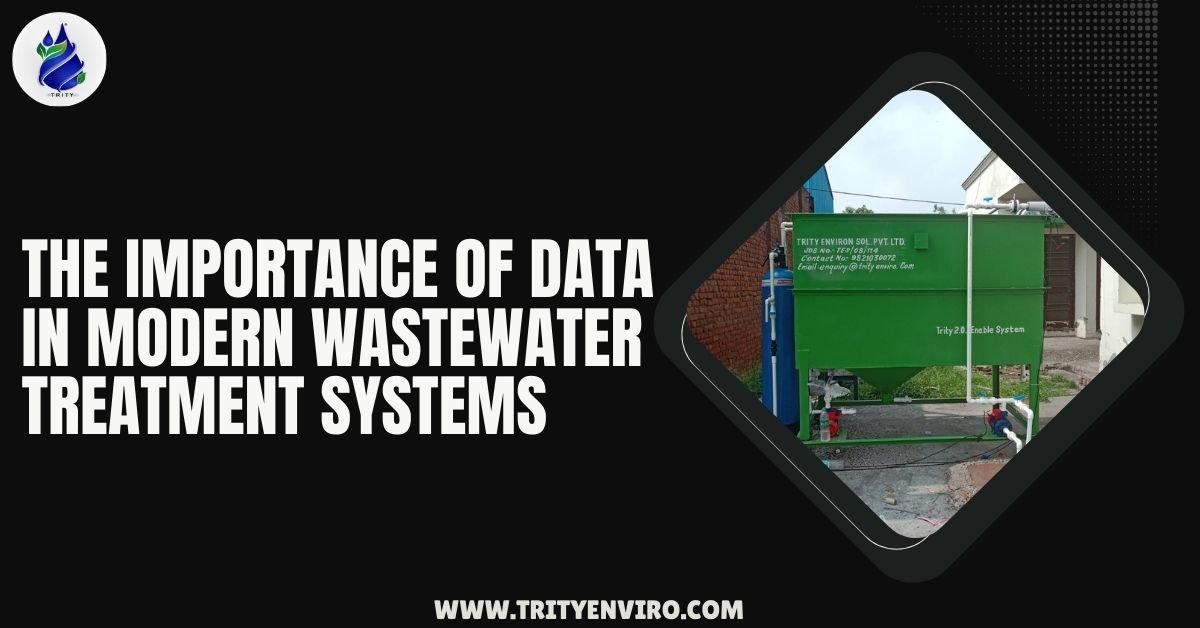
Explore how data-driven technologies improve operational efficiency, predictive maintenance, sustainability, and regulatory compliance in modern wastewater treatment systems.











Discuss your requirements with our engineering team and get practical guidance for your project.

