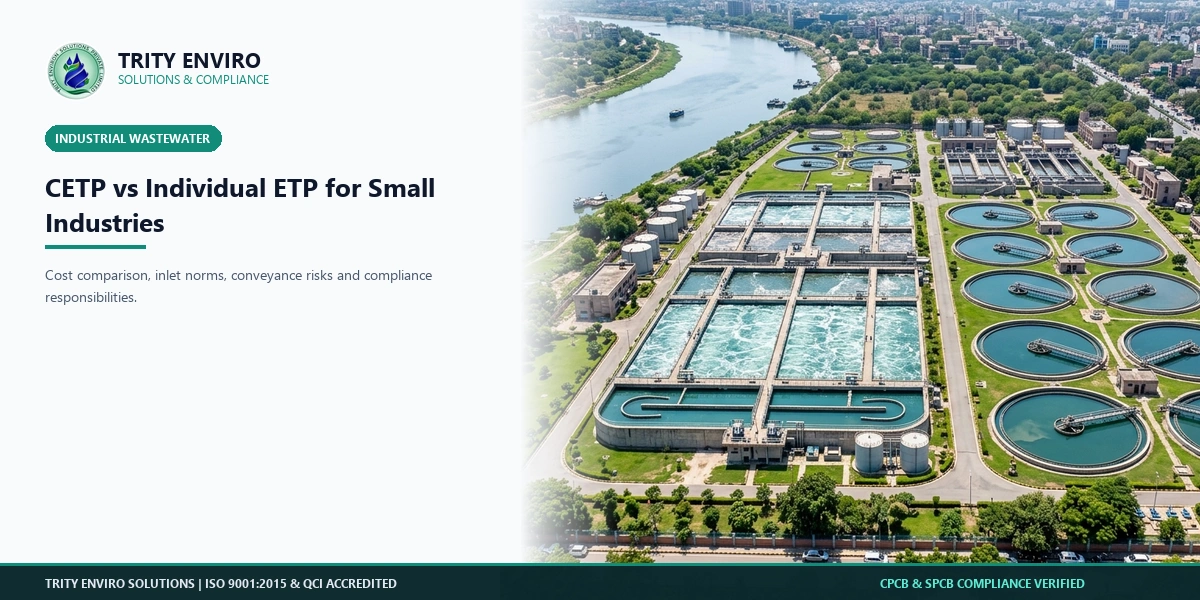

 ISO 9001:2015 & QCI Approved
Effluent Treatment Plant Manufacturer in Chhattisgarh
Trity Environ Solutions is a trusted effluent treatment plant manufacturer in Chhattisgarh, building industrial wastewater systems for steel and sponge iron units, rolling mills, ferro alloy plants, and food and process industry across Raipur, Bhilai, Korba, and Raigarh. With no common effluent plant in the state, it designs plants that handle oil, solids, and COD and recover water, with pan India installation support behind every project. Trity Environ Solutions designs, manufactures, and commissions each plant in-house, from effluent analysis to handover.
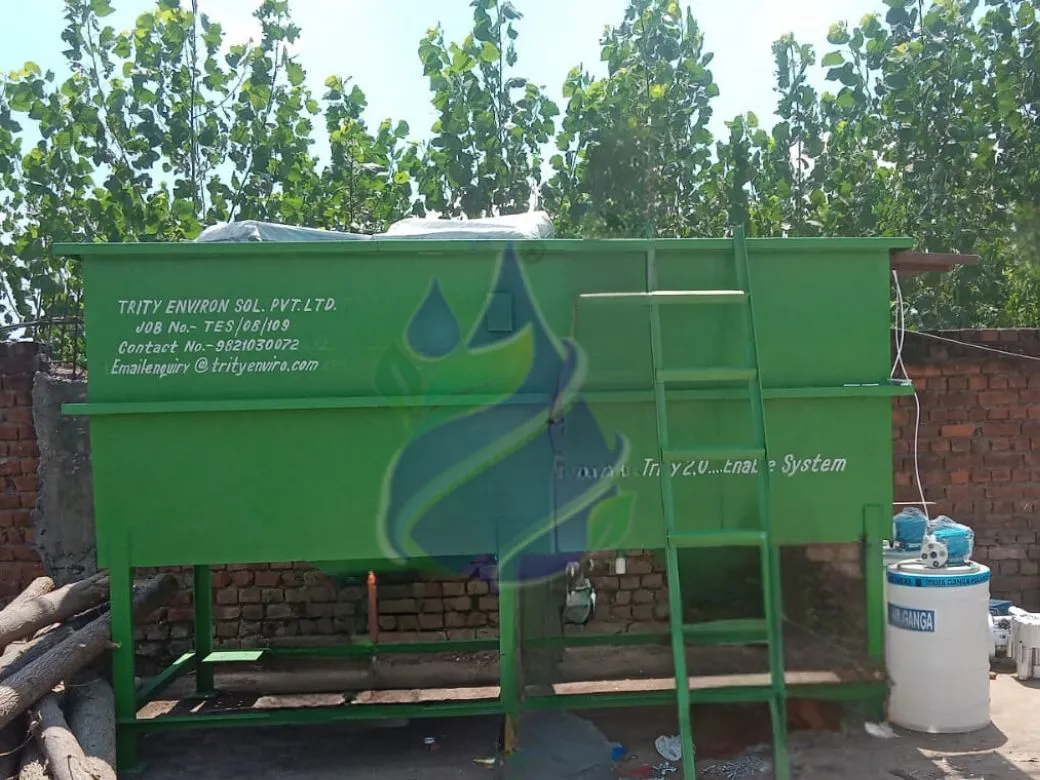
SPCB / CPCB Norm Compliant
Heavy Fabrication
No Common Plant Means Every Unit Is Its Own Treatment Works
The Chhattisgarh Environment Conservation Board told the National Green Tribunal in a 2021 report that the state has no common effluent treatment plant and that water-polluting industries have their own effluent plants. It added that all operational plants comply with effluent standards. For a new or expanding unit, that sets the bar: the plant you build is the only treatment between your process and the outlet, so it must handle the load on the worst day, not the average one.
The industrial belt is concentrated. A 2007 survey described in Down To Earth identified about 150 polluting units across Siltara, Borjhara, and Urla in Raipur, 43 of them sponge iron plants and the rest rolling mills or ferro alloy units, and a 2012 report counted close to 70 sponge iron factories in the state. Both reports focused mainly on air emissions and are more than a decade old, so treat them as a picture of the industrial base, not of current wastewater data. A 2017 Raipur Smart City proposal said the Kharun river is threatened by pollution from industries on the city's outskirts and that online monitoring had been installed at 45 units across 17 industry types, which shows that monitoring has been part of the picture for years. Trity Environ Solutions builds effluent treatment plants for steel, sponge iron, rolling mill, ferro alloy, and food units, around your own wastewater analysis rather than a template.
Running a unit anywhere in Chhattisgarh? Request a free site assessment and the engineering team will confirm a suitable configuration for your process.
WHY THIS SYSTEM?
Key Benefits of Effluent Treatment Plant Manufacturer in Chhattisgarh
Engineered for high biological efficiency, full environmental compliance, and low lifecycle operational costs.
Steel and Rolling Mill Expertise
Treatment trains for oil, scale, suspended solids, and cooling blowdown from steel and rolling mill units.
Built to Stand Alone
With no common plant in the state, designs carry buffer capacity and sampling points so a single unit can hold limits on its own.
Designed Around Your Process Effluent
Treatment trains fixed after sampling your own discharge, since a sponge iron unit, a food plant, and a foundry never produce the same wastewater.
Water Recovery and Reuse
Treated water returned to cooling and process washing, which cuts fresh water and tanker demand.
Support Across the State
Installation, operator training, and AMC response across Raipur, Bhilai, Korba, and Raigarh, backed by Trity's engineering team.
Online Monitoring Raises the Stakes
Reporting from 2017 recorded online monitoring at 45 units across 17 industry types near Raipur. Continuous data means drift shows up quickly, so sampling points and a dated log of treated water quality are the strongest position when CECB inspects. Where a unit also wants to cut fresh water use, a wastewater recycling system can be added after the main treatment train.
Industrial Plants Fail Slowly Without Operation Support
Dosing pumps drift, membranes foul, and sludge handling slips when nobody watches them, which is how a plant that passed commissioning ends up in a notice. Trity Environ Solutions supports every Chhattisgarh installation with operator training, performance checks, and an Annual Maintenance Contract, so chemical dosing and sludge handling stay within consent limits. Talk to our team about AMC coverage for your facility.
City Pages, Sludge and Neighbouring States
City pages cover the main industrial markets in Chhattisgarh: Raipur, Bhilai, Durg, Korba, Bilaspur, Raigarh, Rajnandgaon. Process sludge can be cut in volume with a filter press for sludge dewatering. For projects in neighbouring states, Trity Environ Solutions also serves clients as an STP and ETP plant manufacturer in Odisha, an STP and ETP plant manufacturer in Jharkhand, and an STP and ETP plant manufacturer in Maharashtra, so central and eastern India projects can be handled by one team.
Related Wastewater Services in Chhattisgarh
This page covers industrial effluent only. For domestic sewage from housing, hospitals, and hotels, see the sewage treatment plant manufacturer in Chhattisgarh page. The combined overview of both services is on the STP and ETP plant manufacturer in Chhattisgarh page.
SYSTEM CONFIGURATIONS
Types of Effluent Treatment Plant Manufacturer in Chhattisgarh Configurations
Tailored industrial configurations matched to specific effluent composition, flow rates, and space constraints.
Steel and Rolling Mill ETP
Our physico-chemical effluent treatment plant removes metals, oil, and suspended solids through pH correction, coagulation, flocculation, and clarification.
Oil and Grease Removal
Our oil water separator separates free oil from process and cooling water before further treatment.
Water Recycling
Our wastewater recycling system polishes treated effluent through ultrafiltration and RO so it can return to the process.
Zero Liquid Discharge
Our zero liquid discharge system recovers water through filtration, membranes, and evaporation, for units that choose or are required to send no effluent out of the site.
Food and Beverage Units
Our food and beverage effluent treatment plant handles the high organic load from rice, dairy, and packaged food units.
STEP-BY-STEP WORKFLOW
How the Effluent Treatment Plant Manufacturer in Chhattisgarh Process Works
A sequential, multi-stage treatment methodology engineered for maximum contaminant removal and water recovery.
01
Site Assessment & Effluent Characterisation
Flow measurement and sampling establish your actual load, including oil, suspended solids, and COD.
02
Design & Engineering
Technology and layout are fixed against CECB consent conditions, available footprint, and reuse targets.
03
Manufacturing & Installation
Components are manufactured under ISO 9001:2015 quality controls, then installed and commissioned by Trity's site team.
04
Commissioning & AMC Support
The plant is tested against consent limits, operators are trained, and ongoing AMC support keeps performance consistent afterward.
FREQUENTLY ASKED QUESTIONS
Got Questions? We Have Answers
Q1. Which pollution control board governs effluent discharge in Chhattisgarh?
The Chhattisgarh Environment Conservation Board (CECB) issues consent to establish and consent to operate, alongside CPCB guidelines and National Green Tribunal directions.
Q2. Can you build an ETP for a steel or sponge iron unit in Chhattisgarh?
Yes. These units produce oil, scale, suspended solids, and cooling blowdown, so the system is designed from your own effluent analysis.
Q3. Is there a common effluent plant I can connect to in Chhattisgarh?
The state board has reported that Chhattisgarh has no common effluent plant and that industries run their own, so plan for a plant of your own and confirm the current position with CECB.
Q4. What is the difference between recycling and zero liquid discharge?
Recycling returns part of the treated water to the process. Zero liquid discharge recovers essentially all the water and evaporates the rest, so no liquid effluent leaves the site.
Q5. How long does installation take in Chhattisgarh?
Prefabricated modular plants typically commission within 45 to 90 days, while civil-based plants for larger capacities take 3 to 6 months from design approval to handover.
Q6. Can an existing Chhattisgarh plant be upgraded or maintained?
Yes. We audit existing plants, retrofit capacity or technology, and take them under an annual maintenance contract.
Q7. How do I choose a reliable effluent treatment plant manufacturer in Chhattisgarh?
Look for in-house manufacturing, experience with CECB consent requirements, a design based on your own wastewater analysis, and a clear maintenance offering after commissioning. Trity Environ Solutions builds its plants under ISO 9001:2015 quality controls and supports every installation with operator training and an annual maintenance contract.
CATALOGUE
Related Engineering Products
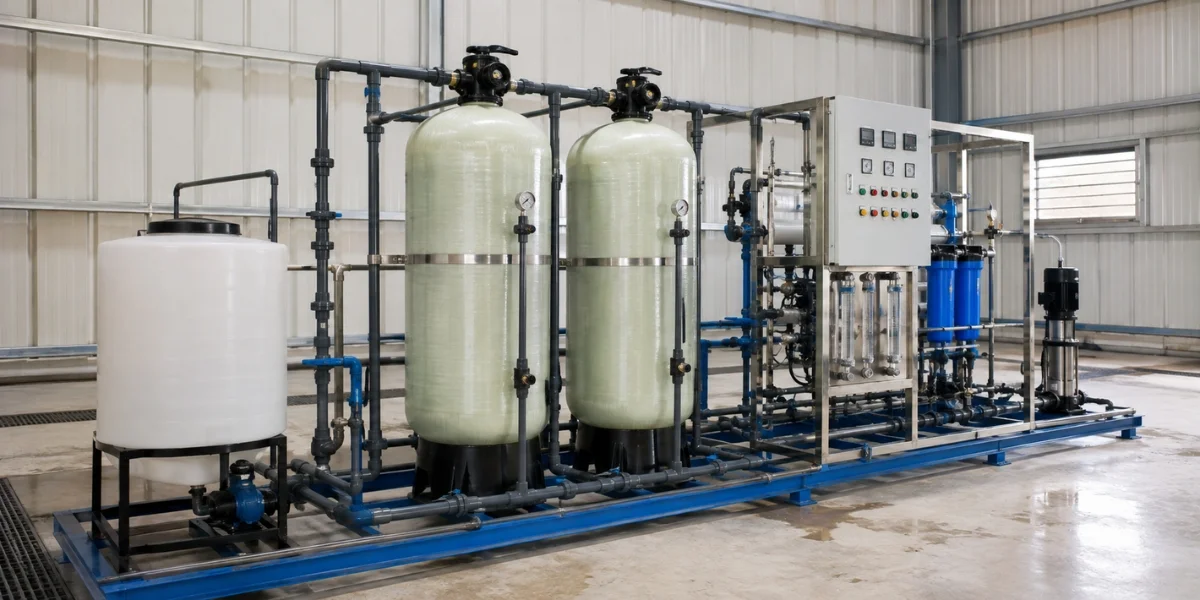
RO & Water Recycling Plant Manufacturer in India
Trity Environ Solutions manufactures RO and water recycling systems for industries and commercial facilities, engineered for reliable purity and reuse.
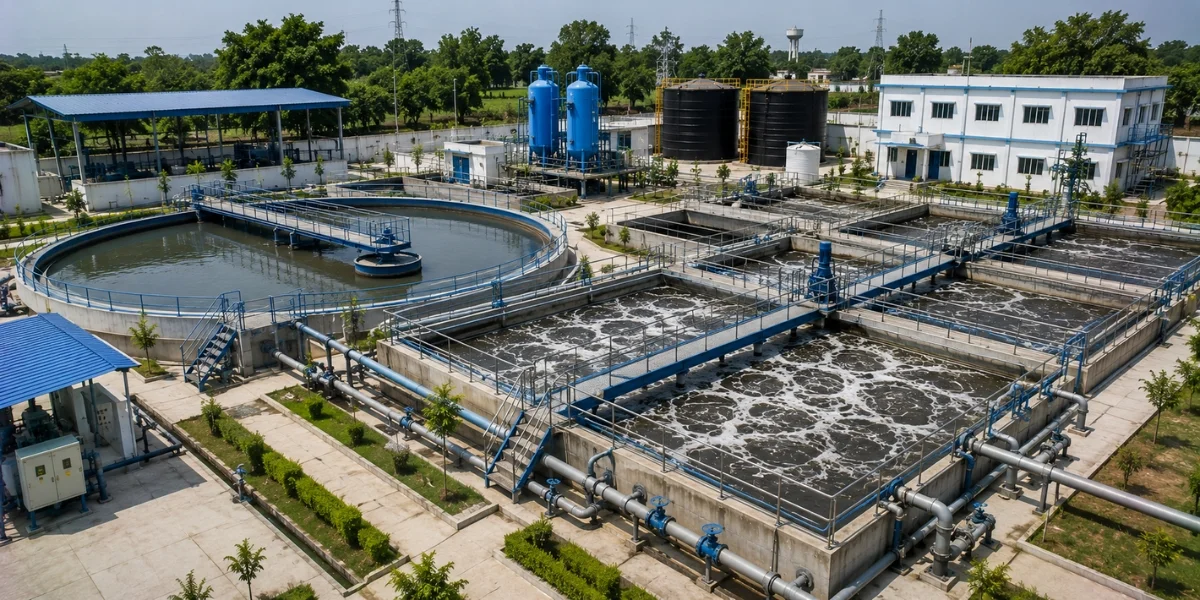
Tertiary Treatment Plant Manufacturer in India
Trity Environ Solutions manufactures tertiary treatment plants that polish treated water beyond secondary treatment, enabling genuine reuse and stricter discharge compliance.
Wastewater Recycling System Manufacturer in India
Trity Environ Solutions manufactures wastewater recycling systems using UF and RO technology, turning treated wastewater into reuse-grade water for cooling, flushing, and gardening.
PAN-INDIA CAPABILITIES
Regional Solutions & State Coverage
TECHNICAL KNOWLEDGE
Related Insights & Engineering Guides
PROVEN EXCELLENCE
Featured Turnkey Installations











Need a Custom Water or Wastewater Treatment Solution?
Our engineering team can help design the right system for your capacity, industry, and compliance requirements.

