
 ISO 9001:2015 & QCI Approved
STP and ETP Plant Manufacturer in Udaipur
Trity Environ Solutions manufactures STP and ETP plants for Udaipur's hotels, marble industry, and lakeside developments. RSPCB-compliant engineering built for the Lake City. Get a free quote.
SPCB / CPCB Norm Compliant
Heavy Fabrication
STP and ETP Plant Manufacturer for Udaipur's Lake City
Udaipur's identity is built on its lakes, Pichola, Fateh Sagar, Swaroop Sagar, Rang Sagar, and Udai Sagar among them, and that same identity is what makes the city's sewage problem so visible. Water quality studies on Fateh Sagar have recorded BOD levels between 6 and 9 mg/L, well above the 3 mg/L permissible limit for bathing-quality water set by the Central Pollution Control Board. Goverdhan Sagar, one of the connected lakes, has shown even higher pollution indices tied directly to sewage and industrial discharge. The Udaipur Municipal Corporation, Urban Improvement Trust, and Rajasthan State Pollution Control Board (RSPCB) all share jurisdiction over different pieces of the city's water infrastructure, and that overlap has historically made accountability difficult, while untreated sewage continues finding its way into a lake system the city also depends on for drinking water and tourism.
Trity Environ Solutions manufactures Sewage Treatment Plant (STP) and Effluent Treatment Plant (ETP) systems for Udaipur built around this exact pressure. Every system we design accounts for RSPCB compliance and the reality that discharge here doesn't disappear into a large river system the way it might elsewhere. It ends up in a lake the entire city relies on.
STP Plant Manufacturing for Udaipur's Hotels and Lakeside Developments
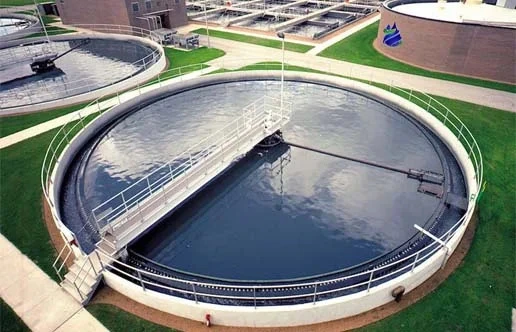
Udaipur's economy runs heavily on tourism, and hotels ringing Pichola and Fateh Sagar generate sewage loads that spike sharply during wedding season and the October to March tourist peak. Our Sewage Treatment Plant systems are sized against actual peak occupancy rather than average annual load, since a heritage hotel running near capacity during peak wedding season needs treatment capacity that doesn't fall short exactly when lake-adjacent discharge scrutiny is highest. A properly designed STP runs through three stages: preliminary treatment to remove physical solids, secondary treatment using biological processes such as MBBR to break down organic load, and tertiary treatment for disinfection, bringing treated water down toward the stricter BOD levels the lake system actually needs rather than a standard discharge limit.
Udaipur's municipal sewage treatment already runs partly on MBBR technology, with a portion of treated water piped to Hindustan Zinc's Debari facility for industrial reuse rather than discharge, a reminder that reuse infrastructure already exists here and private developments benefit from designing toward the same standard.
ETP Plant Solutions for Udaipur's Marble and Mineral Industries
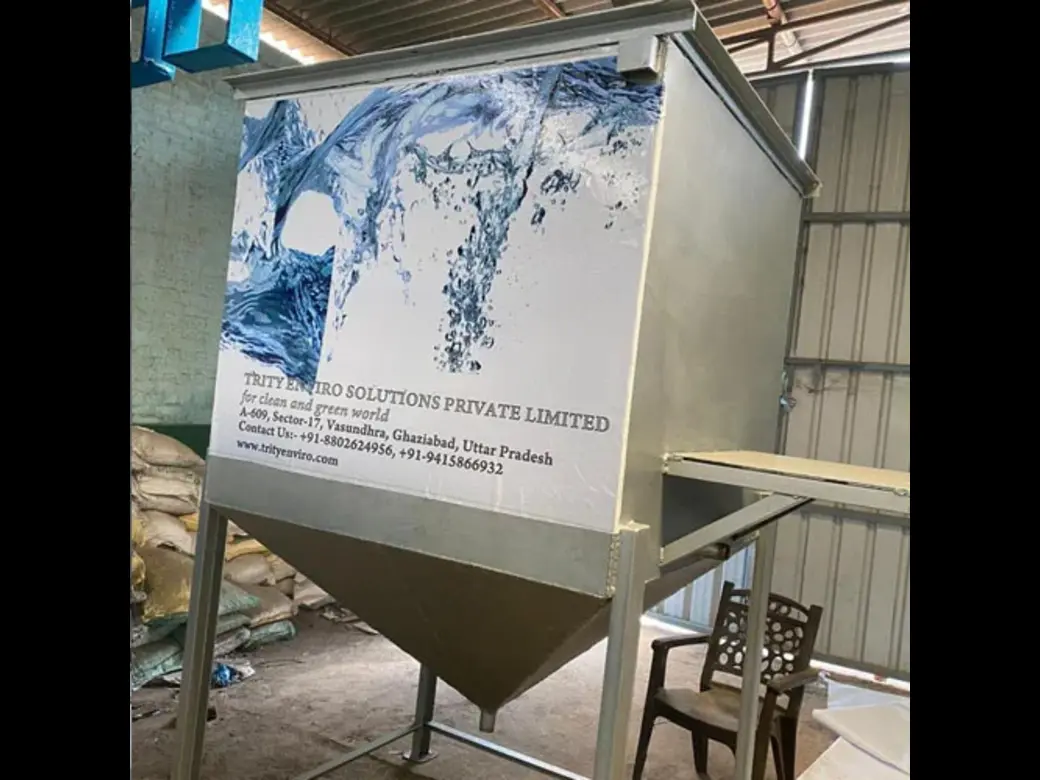
Udaipur and the surrounding Rajsamand belt form one of India's largest marble processing regions, and marble cutting and polishing generates significant volumes of slurry-heavy wastewater that standard biological treatment alone can't handle. Our Effluent Treatment Plant systems for marble units are built around dedicated slurry settling and filtration stages ahead of any biological or chemical treatment, since marble slurry left untreated causes both water pollution and long-term soil degradation around processing sites.
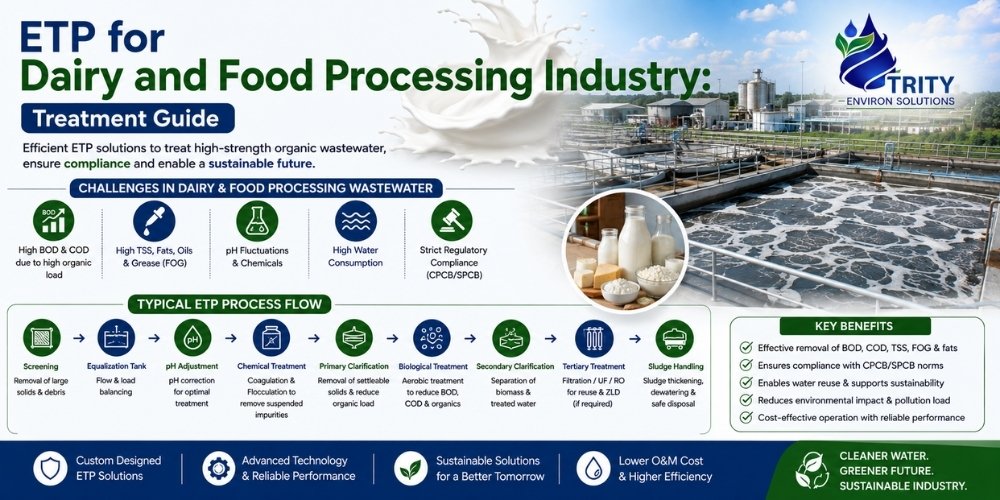
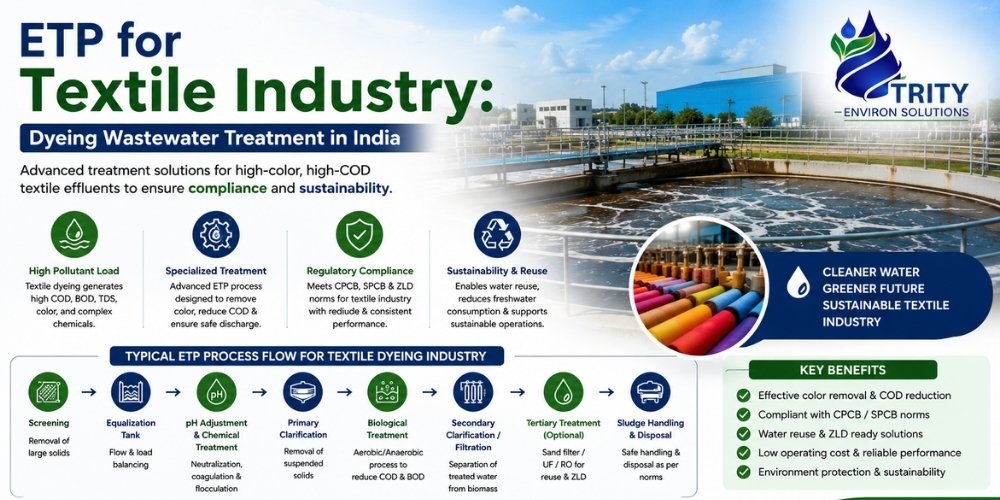
For chemical manufacturing and mineral processing units elsewhere in the district, our ETPs run through physical treatment to remove suspended solids, chemical treatment using coagulation and flocculation for dissolved contaminants, and biological treatment to reduce organic load before discharge.
Turnkey Execution: Design to Commissioning
Our scope on Udaipur projects typically covers:
- Site assessment and effluent or sewage characterisation
- Process design suited to hospitality, marble processing, or general industrial load
- Civil and structural coordination with your contractor
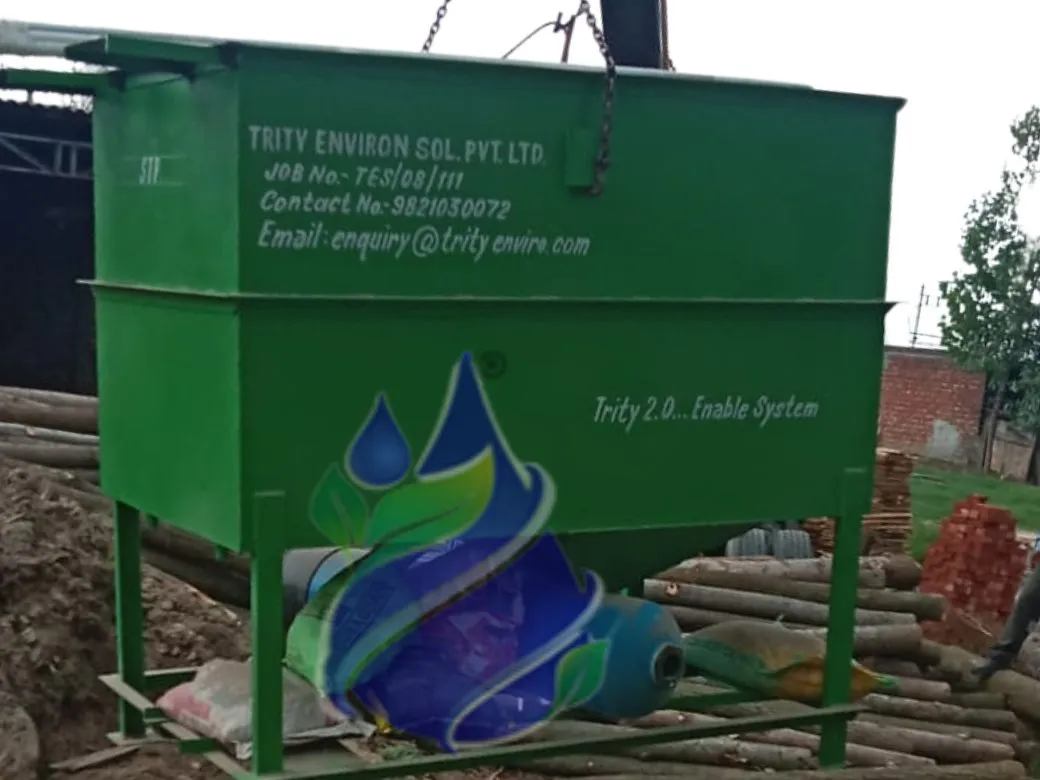
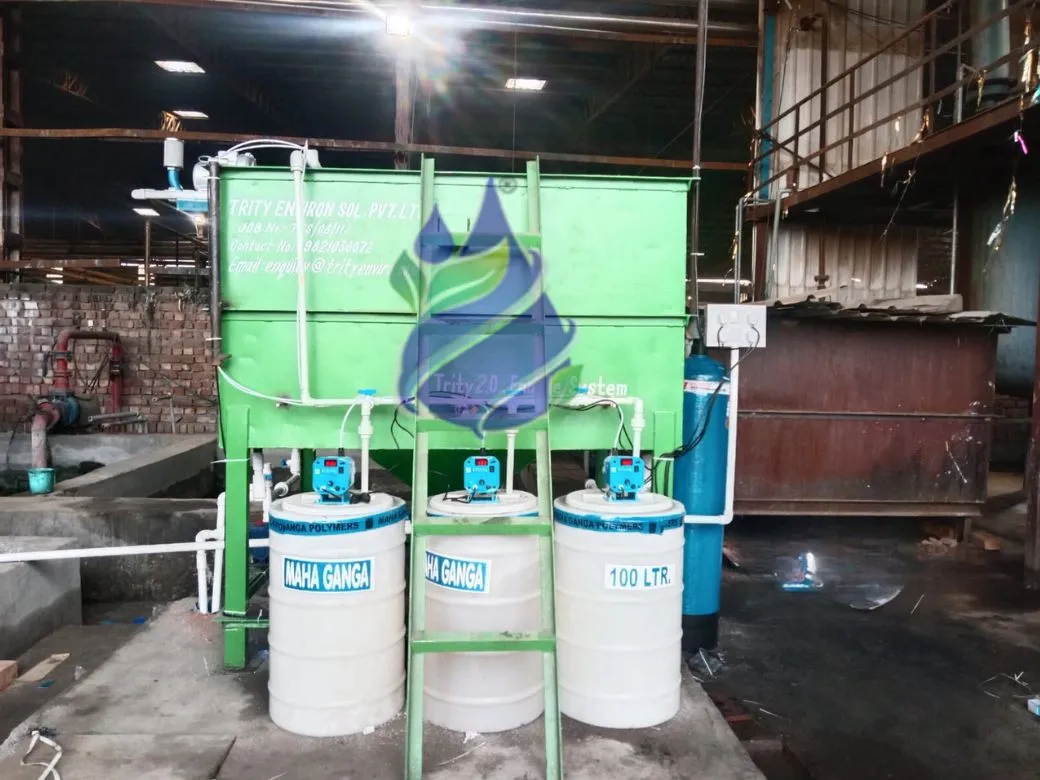
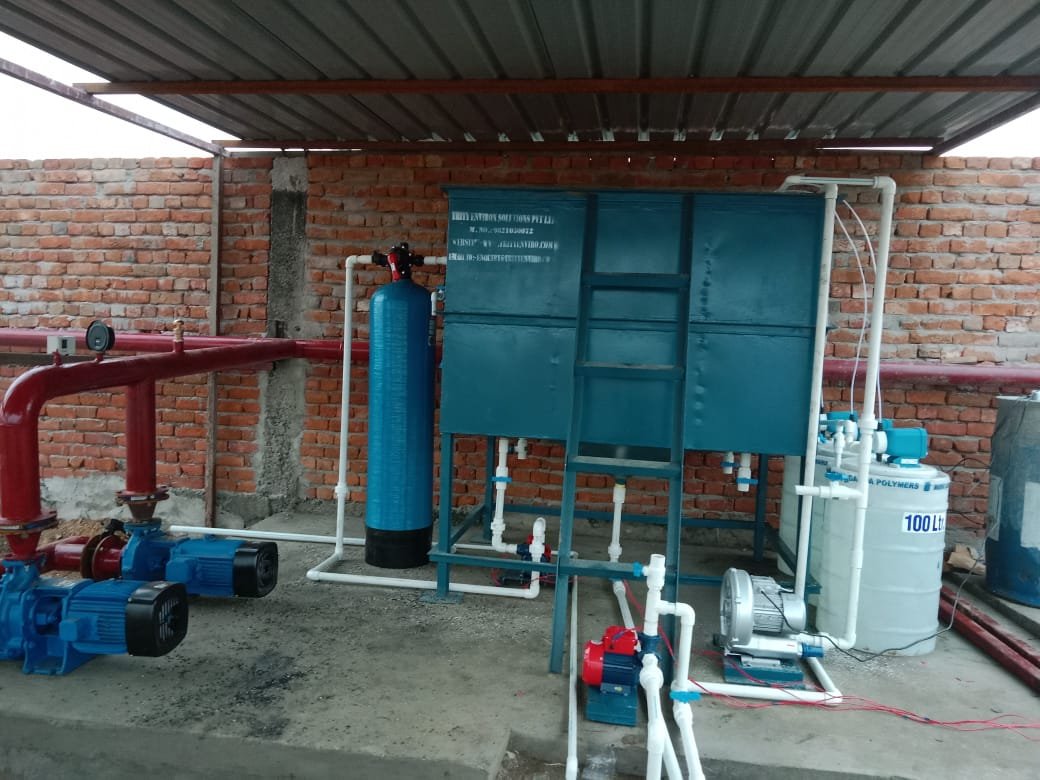
- Equipment manufacturing at our own facility
- Installation, piping, and electrical integration
- Trial runs, commissioning, and RSPCB documentation support
- Annual Maintenance Contracts (AMC) after commissioning
For lakeside hotel properties specifically, we also account for the practical reality that many older buildings around Pichola and Fateh Sagar were never designed with a treatment plant in mind, which means retrofitting often needs compact, modular equipment rather than a large conventional layout.
Capacity Options We Manufacture
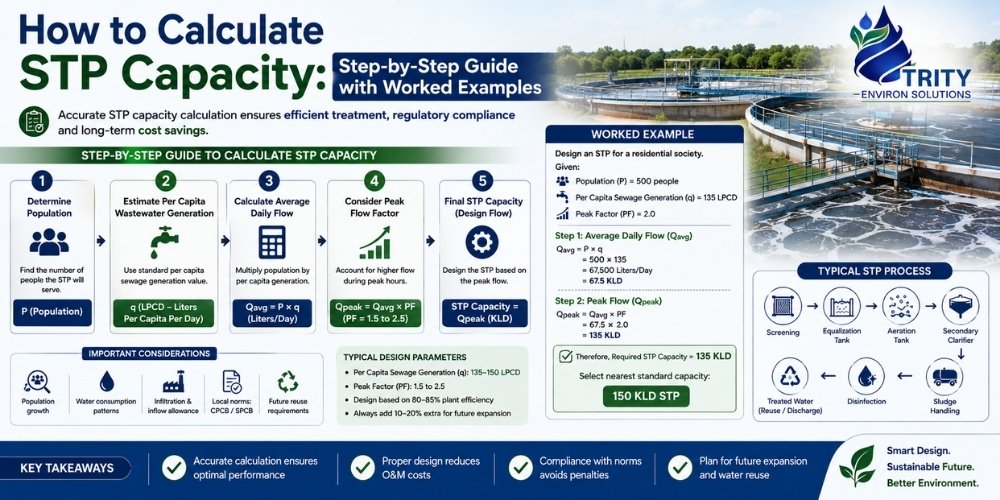
STP and ETP Plant Manufacturer for Udaipur's Lake CityUdaipur's identity is built on its lakes, Pichola, Fateh Sagar, Swaroop Sagar, Rang Sagar, and Udai Sagar among them, and that same identity is what makes the city's sewage problem so visible. Water quality studies on Fateh Sagar have recorded BOD levels between 6 and 9 mg/L, well above the 3 mg/L permissible limit for bathing-quality water set by the Central Pollution Control Board. Goverdhan Sagar, one of the connected lakes, has shown even higher pollution indices tied directly to sewage and industrial discharge. The Udaipur Municipal Corporation, Urban Improvement Trust, and Rajasthan State Pollution Control Board (RSPCB) all share jurisdiction over different pieces of the city's water infrastructure, and that overlap has historically made accountability difficult, while untreated sewage continues finding its way into a lake system the city also depends on for drinking water and tourism. Trity Environ Solutions manufactures Sewage Treatment Plant (STP) and Effluent Treatment Plant (ETP) systems for Udaipur built around this exact pressure. Every system we design accounts for RSPCB compliance and the reality that discharge here doesn't disappear into a large river system the way it might elsewhere. It ends up in a lake the entire city relies on. STP Plant Manufacturing for Udaipur's Hotels and Lakeside DevelopmentsUdaipur's economy runs heavily on tourism, and hotels ringing Pichola and Fateh Sagar generate sewage loads that spike sharply during wedding season and the October to March tourist peak. As a leading STP Plant Manufacturer in Udaipur, our Sewage Treatment Plant (STP) systems are sized against actual peak occupancy rather than average annual load, since a heritage hotel running near capacity during peak wedding season needs treatment capacity that doesn't fall short exactly when lake-adjacent discharge scrutiny is highest. A properly designed STP runs through three stages: preliminary treatment to remove physical solids, secondary treatment using biological processes such as MBBR to break down organic load, and tertiary treatment for disinfection, bringing treated water down toward the stricter BOD levels the lake system actually needs rather than a standard discharge limit. Udaipur's municipal sewage treatment already runs partly on MBBR technology, with a portion of treated water piped to Hindustan Zinc's Debari facility for industrial reuse rather than discharge, a reminder that reuse infrastructure already exists here and private developments benefit from designing toward the same standard. ETP Plant Solutions for Udaipur's Marble and Mineral IndustriesUdaipur and the surrounding Rajsamand belt form one of India's largest marble processing regions, and marble cutting and polishing generates significant volumes of slurry-heavy wastewater that standard biological treatment alone can't handle. As a trusted ETP Plant Manufacturer in Udaipur, our Effluent Treatment Plant (ETP) systems for marble units are built around dedicated slurry settling and filtration stages ahead of any biological or chemical treatment, since marble slurry left untreated causes both water pollution and long-term soil degradation around processing sites. For chemical manufacturing and mineral processing units elsewhere in the district, our ETPs run through physical treatment to remove suspended solids, chemical treatment using coagulation and flocculation for dissolved contaminants, and biological treatment to reduce organic load before discharge. Turnkey Execution: Design to CommissioningOur scope on Udaipur projects typically covers:
For lakeside hotel properties specifically, we also account for the practical reality that many older buildings around Pichola and Fateh Sagar were never designed with a treatment plant in mind, which means retrofitting often needs compact, modular equipment rather than a large conventional layout. Capacity Options We Manufacture
Treatment Technologies We DeployRSPCB and CPCB recognise several treatment technologies, and we manufacture across the ones best suited to Udaipur's specific requirements:
Getting the technology choice right matters more in Udaipur than in a city without a fragile connected lake system, since a plant that only just clears standard discharge limits still adds measurable load to water bodies already running above bathing-quality BOD levels. Industries and Institutions We Serve in Udaipur
RSPCB Compliance and Discharge NormsEvery plant we design for Udaipur is built to clear these baseline requirements:
Given how visibly Udaipur's lake pollution has been documented in recent water quality studies, RSPCB inspections in this city carry more public and regulatory attention than a comparable inland industrial town would see. Engineering Considerations Specific to UdaipurA few conditions unique to Udaipur shape how we design differently here. The receiving water body is a lake, not a river. Rivers dilute and carry discharge downstream. Udaipur's lakes are largely closed systems that the city also draws from, so pollutant load accumulates rather than moving on, which is why we design with margin above the bare minimum discharge limit wherever a site sits near the lake system. Heritage buildings weren't built for modern treatment infrastructure. Many lakeside hotels occupy centuries-old structures with limited space for a conventional plant. Compact, modular STP configurations generally fit better than a standard footprint design. Marble slurry needs dedicated pre-treatment, not an afterthought. Slurry-heavy wastewater from cutting and polishing will clog or overload a standard biological system if it isn't settled and filtered first. We treat this as a separate design stage rather than folding it into general ETP specifications. Overlapping civic jurisdiction affects project coordination. With UMC, UIT, and RSPCB all holding some authority over water infrastructure in the city, we build documentation support into our process explicitly, since navigating multiple agencies is a genuine part of getting a plant formally consented here. Areas We Cover Across UdaipurWe supply, install, and service STP and ETP systems across Udaipur city, including areas around Pichola, Fateh Sagar, and Udai Sagar, along with the wider marble processing belt extending toward Rajsamand. Why Udaipur Projects Choose Trity Environ SolutionsMost manufacturers covering Udaipur run generic Rajasthan-wide content without engaging with what actually makes the city's wastewater challenge distinct, that discharge here affects a closed lake system rather than a flowing river, and that marble processing needs a treatment approach most standard ETP templates don't address. We build slurry pre-treatment into marble industry designs from the start rather than as a retrofit, and we size hospitality STPs around real peak-season and wedding-season load. For a city where lake pollution studies get published regularly and public attention is high, that specificity matters more than a generic claim to serve "all of Rajasthan." Quality, Certification, and After-Sales SupportTrity Environ Solutions is ISO 9001:2015 certified, and every plant we manufacture goes through in-house quality inspection before dispatch. After installation, we provide AMC support, spare parts availability, and remote troubleshooting. You can review our project history on our Achievement page, or read more about our full Services. Frequently Asked Questions1. What is the cost of an STP or ETP plant in Udaipur?Cost depends on capacity, technology, and site conditions. A marble unit's ETP with dedicated slurry pre-treatment and a hotel's STP will differ significantly, since the treatment stages required are genuinely different. We provide a site-specific quote after reviewing your effluent profile. 2. Why are Udaipur's lakes more polluted than the standard discharge limit would suggest?Standard discharge limits of around 30 mg/L BOD are far higher than the 3 mg/L bathing-quality threshold that a lake used for drinking water and recreation actually needs. Even compliant discharge can gradually push a closed lake system's water quality down if enough sources contribute to it over time. 3. Does marble processing wastewater need a different ETP design than other industries?Yes. Marble slurry from cutting and polishing needs dedicated settling and filtration before it reaches any biological or chemical treatment stage, since the slurry itself will clog or overload a standard system. 4. How long does the RSPCB Consent to Establish and Consent to Operate process take?Timelines vary by project scale, but generally run 60 to 90 days once your site plan and treatment design are submitted. We assist with documentation to avoid delays, particularly given the multiple agencies involved in Udaipur's water infrastructure. 5. Can an older heritage hotel around Pichola or Fateh Sagar install an STP given limited space?Yes. Compact, modular STP configurations are specifically designed for sites where a conventional layout isn't practical, which is common among Udaipur's older lakeside properties. 6. Do you service marble processing units outside Udaipur city, closer to Rajsamand?Yes. Our coverage extends across the wider Udaipur-Rajsamand marble processing belt, not just Udaipur city itself. 7. Can an existing STP or ETP be upgraded to reduce its lake-facing discharge impact instead of being rebuilt?In many cases, yes. Adding a tertiary polishing stage or upgrading aeration capacity can bring an older plant's discharge quality closer to bathing-water standards without a full rebuild. We assess this during site evaluation. Ready to discuss your Udaipur project? Get a free quote or explore our full product range for STP, ETP, and related water treatment systems. |
||||||||||||||
|---|---|---|---|---|---|---|---|---|---|---|---|---|---|---|
Treatment Technologies We Deploy
RSPCB and CPCB recognise several treatment technologies, and we manufacture across the ones best suited to Udaipur's specific requirements:
- MBBR (Moving Bed Biofilm Reactor): compact footprint, the same technology used in the city's own municipal treatment infrastructure, well suited to hotels and institutions
- SBR (Sequencing Batch Reactor): effective for larger residential or institutional sewage loads
- Settling and filtration for slurry-heavy effluent: essential pre-treatment for marble and stone processing wastewater
- Extended Aeration: cost-effective for smaller residential or institutional setups
Getting the technology choice right matters more in Udaipur than in a city without a fragile connected lake system, since a plant that only just clears standard discharge limits still adds measurable load to water bodies already running above bathing-quality BOD levels.
Industries and Institutions We Serve in Udaipur
- Hotels and hospitality: heritage properties and resorts around Pichola and Fateh Sagar with sharp seasonal and wedding-season load swings
- Marble and stone processing: a defining industry for the Udaipur-Rajsamand belt, needing dedicated slurry treatment
- Chemical and mineral processing: industrial effluent requiring standard physical-chemical-biological treatment
- Electronics and handicraft manufacturing: smaller-scale but present in the city's diversified industrial base
- Residential developments: growing demand as Udaipur's urban footprint expands beyond the historic core
- Educational institutions: centralised STP systems for campus sewage
RSPCB Compliance and Discharge Norms
Every plant we design for Udaipur is built to clear these baseline requirements:
- BOD: kept at or below 30 mg/L for standard discharge, though we design toward tighter figures for any site discharging near the lake system given its already-compromised bathing-quality status
- pH: maintained within the standard 6.5 to 8.5 range
- Compliance with the Water (Prevention and Control of Pollution) Act, 1974
- Consent to Establish (CTE) and Consent to Operate (CTO) documentation through RSPCB
- Additional scrutiny under the National Lake Conservation Plan, which covers Fateh Sagar, Pichola, Swaroop Sagar, Rang Sagar, and Doodh Talai specifically
Given how visibly Udaipur's lake pollution has been documented in recent water quality studies, RSPCB inspections in this city carry more public and regulatory attention than a comparable inland industrial town would see.
Engineering Considerations Specific to Udaipur
A few conditions unique to Udaipur shape how we design differently here.
The receiving water body is a lake, not a river. Rivers dilute and carry discharge downstream. Udaipur's lakes are largely closed systems that the city also draws from, so pollutant load accumulates rather than moving on, which is why we design with margin above the bare minimum discharge limit wherever a site sits near the lake system.
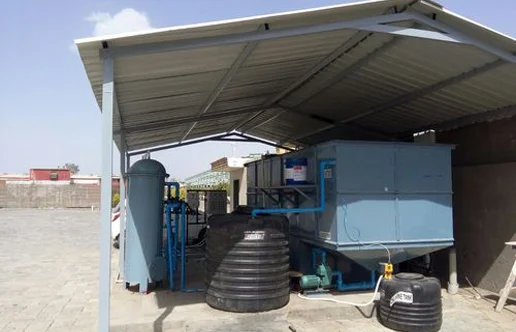
Heritage buildings weren't built for modern treatment infrastructure. Many lakeside hotels occupy centuries-old structures with limited space for a conventional plant. Compact, modular STP configurations generally fit better than a standard footprint design.
Marble slurry needs dedicated pre-treatment, not an afterthought. Slurry-heavy wastewater from cutting and polishing will clog or overload a standard biological system if it isn't settled and filtered first. We treat this as a separate design stage rather than folding it into general ETP specifications.
Overlapping civic jurisdiction affects project coordination. With UMC, UIT, and RSPCB all holding some authority over water infrastructure in the city, we build documentation support into our process explicitly, since navigating multiple agencies is a genuine part of getting a plant formally consented here.
Areas We Cover Across Udaipur
We supply, install, and service STP and ETP systems across Udaipur city, including areas around Pichola, Fateh Sagar, and Udai Sagar, along with the wider marble processing belt extending toward Rajsamand.
Why Udaipur Projects Choose Trity Environ Solutions
Most manufacturers covering Udaipur run generic Rajasthan-wide content without engaging with what actually makes the city's wastewater challenge distinct, that discharge here affects a closed lake system rather than a flowing river, and that marble processing needs a treatment approach most standard ETP templates don't address.
We build slurry pre-treatment into marble industry designs from the start rather than as a retrofit, and we size hospitality STPs around real peak-season and wedding-season load. For a city where lake pollution studies get published regularly and public attention is high, that specificity matters more than a generic claim to serve "all of Rajasthan."
Quality, Certification, and After-Sales Support
Trity Environ Solutions is ISO 9001:2015 certified, and every plant we manufacture goes through in-house quality inspection before dispatch. After installation, we provide AMC support, spare parts availability, and remote troubleshooting. You can review our project history on our Achievement page, or read more about our full Services.
Frequently Asked Questions
1. What is the cost of an STP or ETP plant in Udaipur?
Cost depends on capacity, technology, and site conditions. A marble unit's ETP with dedicated slurry pre-treatment and a hotel's STP will differ significantly, since the treatment stages required are genuinely different. We provide a site-specific quote after reviewing your effluent profile.
2. Why are Udaipur's lakes more polluted than the standard discharge limit would suggest?
Standard discharge limits of around 30 mg/L BOD are far higher than the 3 mg/L bathing-quality threshold that a lake used for drinking water and recreation actually needs. Even compliant discharge can gradually push a closed lake system's water quality down if enough sources contribute to it over time.
3. Does marble processing wastewater need a different ETP design than other industries?
Yes. Marble slurry from cutting and polishing needs dedicated settling and filtration before it reaches any biological or chemical treatment stage, since the slurry itself will clog or overload a standard system.
4. How long does the RSPCB Consent to Establish and Consent to Operate process take?
Timelines vary by project scale, but generally run 60 to 90 days once your site plan and treatment design are submitted. We assist with documentation to avoid delays, particularly given the multiple agencies involved in Udaipur's water infrastructure.
5. Can an older heritage hotel around Pichola or Fateh Sagar install an STP given limited space?
Yes. Compact, modular STP configurations are specifically designed for sites where a conventional layout isn't practical, which is common among Udaipur's older lakeside properties.
6. Do you service marble processing units outside Udaipur city, closer to Rajsamand?
Yes. Our coverage extends across the wider Udaipur-Rajsamand marble processing belt, not just Udaipur city itself.
7. Can an existing STP or ETP be upgraded to reduce its lake-facing discharge impact instead of being rebuilt?
In many cases, yes. Adding a tertiary polishing stage or upgrading aeration capacity can bring an older plant's discharge quality closer to bathing-water standards without a full rebuild. We assess this during site evaluation.
Ready to discuss your Udaipur project? Get a free quote or explore our full product range for STP, ETP, and related water treatment systems.
WHY THIS SYSTEM?
Key Benefits of STP and ETP Plant Manufacturer in Udaipur
Engineered for high biological efficiency, full environmental compliance, and low lifecycle operational costs.
100% CPCB / SPCB Compliance
Strict adherence to national and state pollution control board parameters for BOD, COD, TSS, and heavy metals discharge.
Low Power & Operational Cost
Optimized hydraulic design and energy-efficient aeration reduce kilowatt consumption per cubic meter of treated water.
Compact & Modular Footprint
Skid-mounted and modular civil layouts save valuable industrial floor space and allow seamless capacity expansion.
Automated PLC / SCADA Control
Real-time water quality monitoring, automated dosing systems, and remote telemetry for hassle-free plant operation.
Zero Liquid Discharge (ZLD) Ready
Seamless integration with downstream RO and evaporator systems for maximum water recycling and recovery.
Robust Engineering & Longevity
Heavy-gauge anti-corrosive construction ensures 15+ years of reliable, uninterrupted service life.
SYSTEM CONFIGURATIONS
Types of STP and ETP Plant Manufacturer in Udaipur Configurations
Tailored industrial configurations matched to specific effluent composition, flow rates, and space constraints.
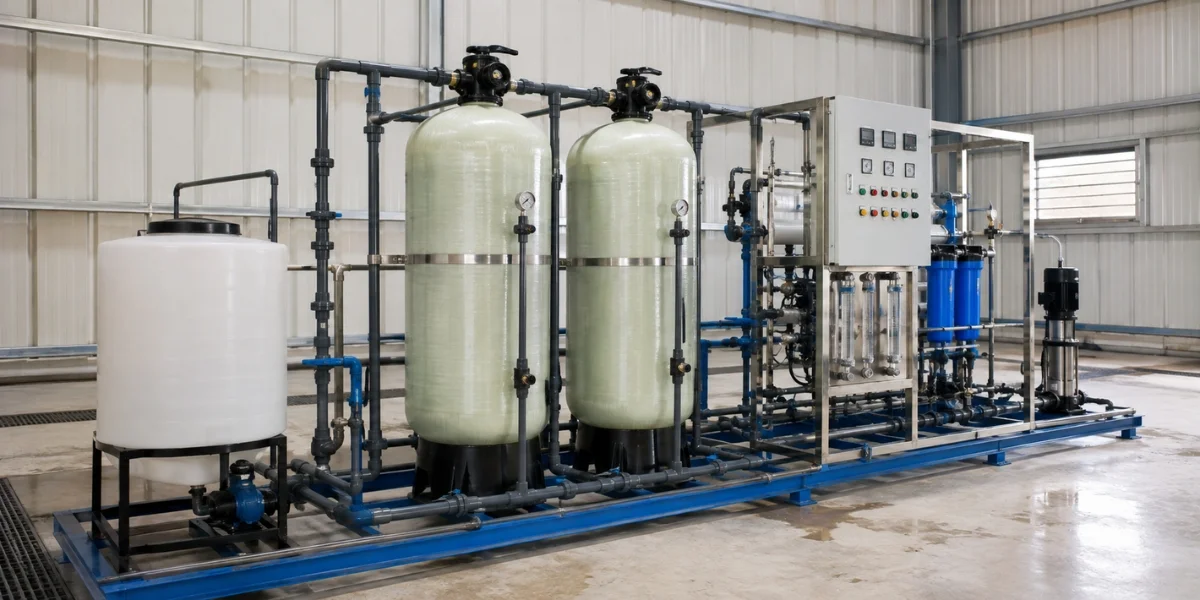
RO & Water Recycling Plant Manufacturer in India
Trity Environ Solutions manufactures RO and water recycling systems for industries and commercial facilities, engineered for reliable purity and reuse.
Explore Configuration
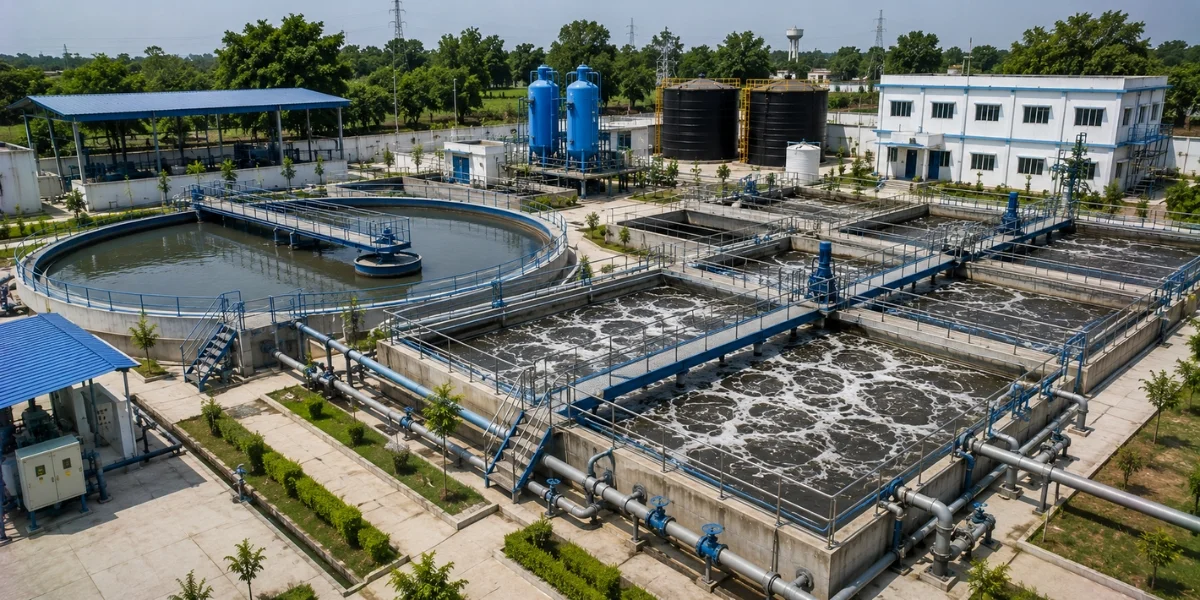
Tertiary Treatment Plant Manufacturer in India
Trity Environ Solutions manufactures tertiary treatment plants that polish treated water beyond secondary treatment, enabling genuine reuse and stricter discharge compliance.
Explore Configuration
Wastewater Recycling System Manufacturer in India
Trity Environ Solutions manufactures wastewater recycling systems using UF and RO technology, turning treated wastewater into reuse-grade water for cooling, flushing, and gardening.
Explore Configuration
STEP-BY-STEP WORKFLOW
How the STP and ETP Plant Manufacturer in Udaipur Process Works
A sequential, multi-stage treatment methodology engineered for maximum contaminant removal and water recovery.
01
Primary Collection & Screening
Raw effluent equalization, coarse bar screening, and pH neutralization to stabilize influent parameters.
02
Physico-Chemical Coagulation
Flash mixing of coagulants and flocculants followed by primary clarifier separation for heavy suspended solids.
03
Advanced Biological Digestion
Aerobic/anaerobic microbial digestion (MBBR / SBR / ASP) for drastic reduction of dissolved BOD & COD.
04
Tertiary Polishing & Disinfection
Dual media sand and activated carbon filtration with UV/ozonation for clean, reusable output water.
CATALOGUE
Related Engineering Products
RO & Water Recycling Plant Manufacturer in India
Trity Environ Solutions manufactures RO and water recycling systems for industries and commercial facilities, engineered for reliable purity and reuse.
Tertiary Treatment Plant Manufacturer in India
Trity Environ Solutions manufactures tertiary treatment plants that polish treated water beyond secondary treatment, enabling genuine reuse and stricter discharge compliance.
Wastewater Recycling System Manufacturer in India
Trity Environ Solutions manufactures wastewater recycling systems using UF and RO technology, turning treated wastewater into reuse-grade water for cooling, flushing, and gardening.
PAN-INDIA CAPABILITIES
Regional Solutions & State Coverage
TECHNICAL KNOWLEDGE
Related Insights & Engineering Guides
PROVEN EXCELLENCE
Featured Turnkey Installations



Need a Custom Water or Wastewater Treatment Solution?
Our engineering team can help design the right system for your capacity, industry, and compliance requirements.