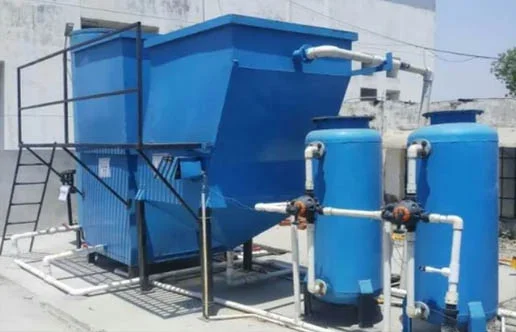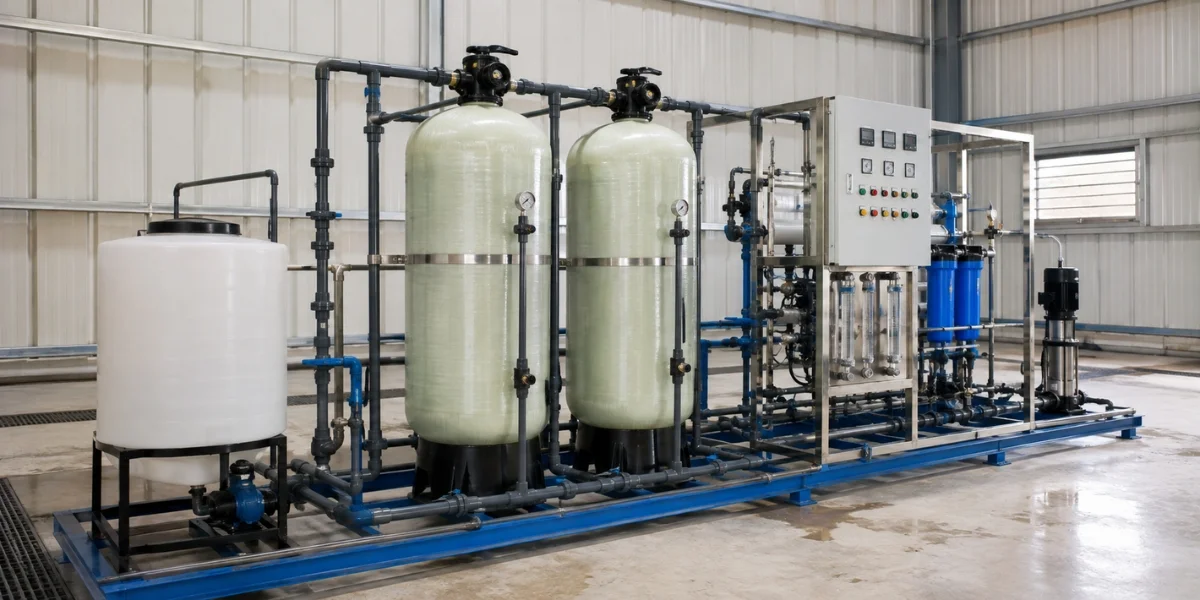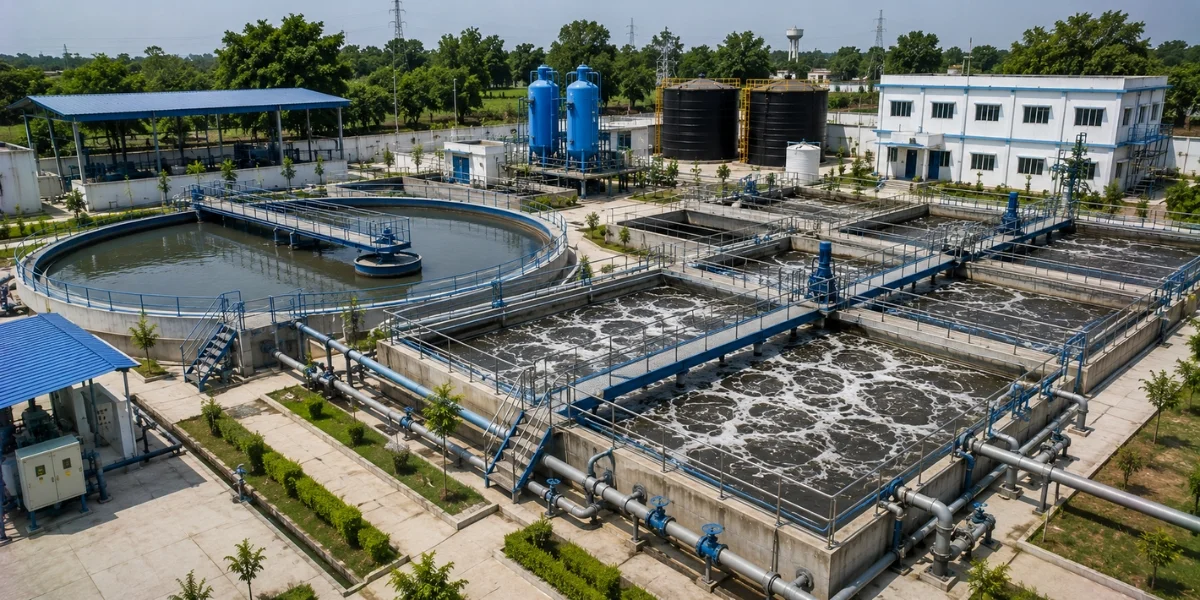
STP and ETP Plant Manufacturer in Bhiwadi

Trity Environ Solutions is a trusted STP and ETP plant manufacturer serving Bhiwadi, RIICO Industrial Area, Chopanki, Khushkhera, Tapukara, and nearby industrial regions. We design, manufacture, install, and maintain customized wastewater treatment systems that help industries achieve RSPCB compliance, reduce water consumption through reuse, and ensure reliable long-term performance.

Get a Free Quote

STP and ETP Plant Manufacturer Serving Bhiwadi and Surrounding Industrial Areas

Trity Environ Solutions is a specialist STP and ETP plant manufacturer supplying engineered wastewater treatment systems to industries, commercial establishments, and infrastructure projects across Bhiwadi, RIICO Industrial Area, Chopanki, Khushkhera, Tapukara, Pathredi, and the broader Alwar district industrial belt. We design, manufacture, supply, install, and commission Sewage Treatment Plants (STP) and Effluent Treatment Plants (ETP) built to your specific capacity, effluent characteristics, space constraints, and RSPCB compliance requirements.

Every plant we deliver is a turnkey solution. From initial site assessment and process design through fabrication, installation, testing, commissioning, and long-term AMC support, we manage the complete project. You deal with one engineering team from start to finish.

RSPCB Compliance and Water Reuse: What Bhiwadi Units Need

Industrial and commercial units in Bhiwadi operating under Consent to Operate (CTO) conditions issued by the Rajasthan State Pollution Control Board (RSPCB) are legally required to treat sewage and trade effluent before discharge. Non-compliance results in show-cause notices, consent suspension, and forced production shutdowns. Our plants are designed from the outset to meet your specific RSPCB outlet norms, giving you a compliant, auditable treatment system backed by proper documentation.

Beyond compliance, a correctly designed STP or ETP enables treated water reuse within your facility for cooling tower makeup, toilet flushing, floor washing, gardening, and fire protection. For units in RIICO Bhiwadi where freshwater availability is constrained, this directly reduces water procurement costs and dependence on external supply. We design for both compliance and reuse from the first stage of engineering.

Effluent Treatment for Bhiwadi's Diverse Industrial Sectors

Every industry in Bhiwadi's RIICO zones generates wastewater with a distinct pollutant profile. Automobile and auto-component units discharge oils, greases, suspended solids, and heavy metals that require physico-chemical pre-treatment before biological stages. Chemical and pharmaceutical manufacturers generate high-COD, high-TDS effluents that may need advanced oxidation or ZLD treatment. Textile and dyeing units produce colored, high-pH wastewater requiring chemical treatment and colour removal. Food processing units generate high-BOD organic loads needing aerobic biological treatment with adequate aeration capacity.

We characterise your specific effluent before recommending any process. A plant sized and designed for your actual discharge profile costs less to operate, performs reliably, and holds up under RSPCB inspection. Generic or catalogue-based designs that do not account for your actual influent quality are the primary reason STP and ETP plants fail audits.

Our STP Solutions

Our Sewage Treatment Plants are designed for residential complexes, commercial buildings, hotels, hospitals, educational institutions, and mixed-use developments in and around Bhiwadi. Sewage treatment is essential wherever on-site sanitation is required and municipal sewer connectivity is unavailable or unreliable.

We engineer STP systems that treat domestic sewage to standards specified under Central Pollution Control Board (CPCB) norms and RSPCB consent conditions. The treated water can be reused for horticulture, flushing, and non-contact applications, reducing freshwater demand substantially. Plant capacities are sized on the basis of daily sewage generation estimates, population equivalent calculations, and available civil space.

Key design considerations we evaluate for every STP include peak flow factors, equalization requirements, sludge generation rates, and the feasibility of water reuse within the facility.

Our ETP Solutions

Industrial units in Bhiwadi's RIICO zones and satellite industrial clusters need Effluent Treatment Plants that address the specific pollutant profile of their process discharge. A standard ETP design is rarely adequate for complex industrial effluents.

We carry out detailed characterization of your raw effluent before selecting a treatment scheme. Parameters such as pH, COD, BOD, TSS, TDS, oil and grease, heavy metals, and specific industrial contaminants determine the unit processes required. An automobile plant needs a very different ETP from a food processing unit, even if the daily discharge volume is the same.

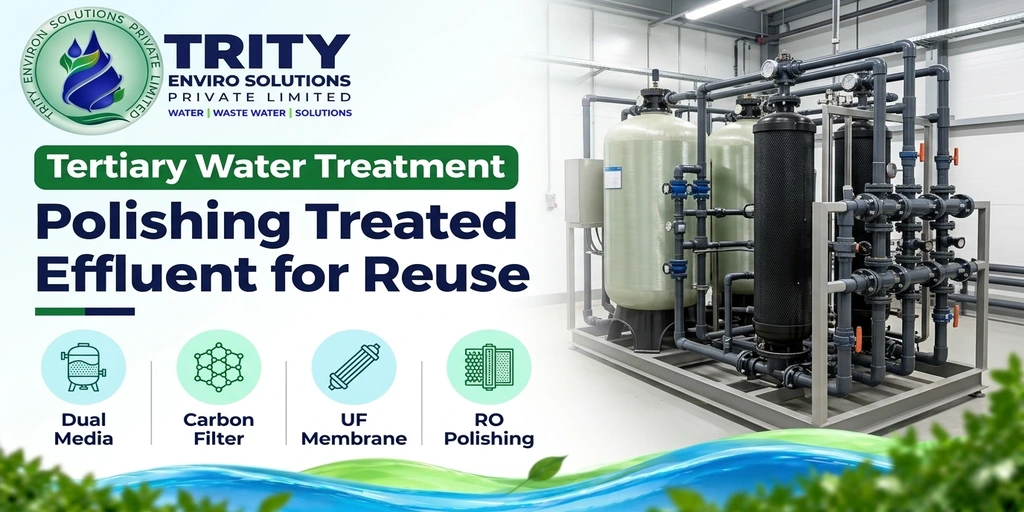
Our ETPs for Bhiwadi's industrial clients typically include physico-chemical pre-treatment, biological treatment, and tertiary polishing stages, with the specific combination determined by the effluent characteristics and the required outlet quality.

Plant Capacity Options

We manufacture and supply STP and ETP systems across a wide capacity range, from small-scale plants for standalone commercial units to large treatment facilities for industrial parks and township developments. Typical capacity ranges include:

  • Small commercial and residential: 5 KLD to 50 KLD
  • Mid-scale industrial and institutional: 50 KLD to 500 KLD
  • Large industrial complexes and EPC projects: 500 KLD and above

Capacity is always selected based on actual flow data and projected growth requirements, not on thumb rules. Undersizing leads to compliance failures; oversizing creates unnecessary capital expenditure and higher operating costs.

Treatment Technologies We Offer

We are technology-agnostic, meaning we select the treatment process based on what is most appropriate for your site conditions, effluent quality, space constraints, and budget. Technologies we work with include:

For STP:

  • Moving Bed Biofilm Reactor (MBBR)
  • Sequential Batch Reactor (SBR)
  • Extended Aeration Activated Sludge Process (ASP)
  • Membrane Bio Reactor (MBR)

For ETP:

  • Physico-chemical treatment with clarification and filtration
  • Aerobic biological treatment (activated sludge, MBBR, SBR)
  • Anaerobic treatment for high-strength organic effluents
  • Advanced oxidation processes for refractory compounds
  • Reverse osmosis and Zero Liquid Discharge (ZLD) systems for closed-loop treatment

Among biological treatment technologies, MBBR is widely used for its compact footprint and resistance to load fluctuations. SBR offers excellent treated water quality and operational flexibility. MBR is the preferred choice where space is severely constrained and high-quality reuse water is required.

Industries We Serve in Bhiwadi

Our client base in the Bhiwadi industrial corridor includes:

  • Automobile and auto-component manufacturers
  • Chemical and specialty chemical producers
  • Pharmaceutical and API manufacturers
  • Food and beverage processing units
  • Textile and garment manufacturing facilities
  • Electronics and semiconductor units
  • Packaging and container manufacturers
  • Hotels, hospitals, and healthcare facilities
  • Residential townships and housing societies
  • Educational campuses and institutional complexes
  • Government and infrastructure projects
  • Paper and pulp processing units

Each of these sectors presents different treatment challenges, and our engineering team has hands-on experience with the effluent profiles and compliance requirements specific to each.

Turnkey Project Execution

We handle every phase of your STP or ETP project from initial assessment to final handover. Our wastewater treatment plant execution follows a structured process:

Site Assessment: Our engineers visit your facility to assess wastewater generation points, available plant space, discharge locations, and collect effluent samples for laboratory analysis.

Process Design: Based on site data and effluent characterisation, we develop a process flow diagram (PFD), size each unit operation, and select equipment matched to your specific treatment requirements.

Engineering and Manufacturing: Detailed engineering drawings, equipment specifications, and automation schematics are prepared in-house. We fabricate key equipment including tanks, clarifiers, filter vessels, blowers, pumps, and control panels under controlled quality conditions.

Quality Inspection: All fabricated equipment undergoes dimensional verification, pressure testing where required, and functional checks before dispatch. This reduces on-site installation issues and commissioning delays.

Installation, Testing, and Commissioning: Our site team manages equipment installation and civil coordination. The plant is tested progressively from clean water to live effluent, with dosing systems calibrated and process parameters verified until consistent outlet quality is achieved.

Operator Training and AMC: Your operators receive hands-on training covering startup, monitoring, process adjustment, and maintenance. Post-commissioning, we offer Annual Maintenance Contracts (AMC) covering preventive maintenance schedules, consumable supply, process audits, and priority breakdown response.

Customization Options

We do not supply catalogue plants. Every system is configured to your site. Customisation covers process design matched to your effluent profile, civil layout adapted to available footprint, automation level from manual to full SCADA, corrosion-resistant material selection, modular design for future expansion, energy-optimised aeration using VFDs and efficient blowers, and integration of Water Softener or Commercial RO systems for treated water reuse.

Our Engineering Approach: Designed for Performance and Low Operating Cost

Every STP and ETP we deliver is engineered to meet outlet norms at the lowest sustainable operating cost over the plant's service life. We do not use standard templates. Our design approach is driven by your site data, effluent profile, and reuse objectives.

Hydraulic design ensures even flow distribution across treatment units, preventing short-circuiting that reduces effective treatment volume. Aeration systems are sized on actual oxygen demand calculations, not rules of thumb. Over-aeration wastes energy; under-aeration causes process failure. We size correctly the first time.

Sludge management is built into the design from day one. We incorporate thickening and dewatering into the plant layout using filter press systems or equivalent equipment sized to actual sludge generation volumes. Chemical dosing systems use flow-paced or feedback-controlled automation to minimise chemical consumption while maintaining consistent outlet quality.

Factors That Influence STP and ETP Plant Selection

When selecting an STP or ETP plant for your facility in Bhiwadi, the following technical and site factors directly determine which system is right for you and what it will cost to operate:

Effluent characteristics: The pollutant profile of your discharge determines which treatment processes are technically feasible. This is the most important factor and should be established through proper sampling and analysis.

Flow variability: Industrial effluent generation is rarely uniform across the day or week. Plants must be designed with adequate equalization capacity to handle peak flows without process upsets.

Space availability: Compact technologies such as MBR or MBBR allow smaller footprints, while conventional activated sludge processes need more land. Your available space constrains the technology options.

Reuse objectives: If you intend to reuse treated water, the outlet quality targets are higher, which may require additional polishing stages such as ultrafiltration or demineralization.

Regulatory requirements: RSPCB consent conditions specify the outlet parameters for each industry category. The treatment system must be designed to consistently meet these norms, including during monsoon or process upset conditions.

Budget: Capital cost and operating cost must both be considered. A low-cost plant with high energy consumption and frequent chemical dosing may cost more over five years than a well-engineered system with higher upfront investment.

Benefits of Choosing High-Quality STP and ETP Plants

A correctly specified and installed STP or ETP delivers the following to your facility:

  • Uninterrupted manufacturing operations without consent suspension risk
  • Significant reduction in freshwater procurement through treated water reuse
  • Lower effluent disposal charges and reduced freshwater purchase costs
  • Protection against RSPCB penalties, closure notices, and legal liability
  • Improved environmental credentials for ESG reporting and buyer audits
  • Reduction in groundwater contamination risk around your facility
  • Stable sludge output that can be managed and disposed of in compliance with Hazardous Waste rules

Why Choose Trity Environ Solutions as Your STP and ETP Partner in Bhiwadi

We are a dedicated wastewater treatment engineering company. Our entire operation, from process design and fabrication to site installation and AMC, is focused exclusively on water and wastewater treatment. You are not dealing with a general contractor or a trading house. You are working with a specialist engineering team.

Our in-house capabilities cover process design, mechanical engineering, fabrication, electrical and instrumentation, and field installation. We do not subcontract core project functions. This keeps project timelines, fabrication quality, and technical outcomes directly under our control.

We are ISO 9001:2015 certified, and our manufacturing follows established quality standards for materials, fabrication, and inspection. Plant capacity handled ranges from 10 KLD commercial units to large-scale turnkey ETP and STP projects for industrial complexes, each designed with the same engineering discipline.

What Sets Our Service Apart for Bhiwadi Clients

Our Delhi NCR base gives us fast mobilisation for site visits to Bhiwadi and the surrounding RIICO zones, with short equipment delivery timelines and prompt AMC response. We are not a remote supplier. Our team is on-site when needed.

We understand RSPCB consent conditions and the discharge norms applicable to each industry category in Bhiwadi's RIICO areas. Compliance documentation, treated water quality records, and handover reports are prepared as standard deliverables. You receive an audit-ready system from day one.

Our project experience covers the sector mix across RIICO Bhiwadi, Chopanki, Khushkhera, and Tapukara: automobile ancillaries, chemicals, pharmaceuticals, food processing, textiles, and packaging. Every process recommendation is based on comparable effluent experience, not catalogue specifications.

Environmental Compliance

Every plant we design is engineered to meet CPCB general standards and RSPCB site-specific discharge conditions applicable to your industry. Treated water quality targets are built into the process design from the start, not added as an afterthought.

We assist clients with consent-related documentation including treated water quality reports, operation logs, and process performance records for RSPCB compliance submissions. For units requiring Zero Liquid Discharge systems to eliminate effluent discharge entirely, we provide end-to-end ZLD engineering covering evaporation, crystallization, and brine management.

Operation and Maintenance Support

We offer structured O&M support covering preventive maintenance visits, treated water quality audits, consumable supply (media, chemicals, membranes, filter cartridges), electromechanical servicing of pumps and blowers, and emergency breakdown response. Our AMC programs are designed for units that need consistent compliance performance without maintaining a dedicated in-house treatment team.

Plant Upgradation and Retrofit Services

Many industrial units in Bhiwadi have older STP or ETP systems that were installed under different consent conditions or designed for lower production volumes. If your existing plant is not meeting current RSPCB norms, or your production has scaled up beyond the original design capacity, we offer plant assessment and retrofitting services.

We evaluate the existing plant, identify the performance gaps, and propose targeted upgrades rather than recommending full replacement where it is not necessary. This can include adding biological treatment stages, upgrading aeration systems, adding tertiary filtration, or integrating activated carbon filters or multi-grade filtration for polishing.

STP and ETP Plant Cost in Bhiwadi: What Determines Your Budget

STP and ETP plant costs vary substantially based on treatment capacity, technology selected, civil construction requirements, automation level, and the complexity of the influent characteristics. Standardized packages for simple domestic sewage treatment have different cost structures compared to customized industrial ETP systems handling complex multi-stream effluents.

Operating costs include energy, chemicals, consumables, labor, and periodic maintenance. Technology choices made at the design stage have a direct and long-term impact on operating expenditure. We discuss all of these factors transparently during the project development phase so that you can make an informed investment decision.

We do not quote prices without a proper site assessment and effluent characterization because doing so leads to either overpriced solutions or under-designed plants. A detailed proposal with clear scope, specifications, and commercial terms is provided after site evaluation.

Return on Your STP and ETP Investment

An STP or ETP is a capital asset, not just a compliance expense. The financial and operational returns it delivers include:

  • Reduced freshwater purchase costs through treated effluent reuse
  • Elimination of RSPCB penalty risk
  • Uninterrupted manufacturing with no consent suspension exposure
  • Reduced legal liability under the Environment Protection Act
  • Stronger positioning in buyer audits and ESG assessments

For units in Bhiwadi where RIICO water supply is constrained, treated effluent reuse delivers measurable cost savings over the plant's operating life.

Areas We Serve Around Bhiwadi

We serve clients across the broader Bhiwadi industrial region including:

  • RIICO Industrial Area Bhiwadi (Phase I, II, III, and IV)
  • Chopanki Industrial Area
  • Khushkhera Industrial Area
  • Tapukara Industrial Area
  • Pathredi Industrial Cluster
  • Neemrana
  • Rewari
  • Alwar
  • Tijara
  • Kotputli

We mobilise from our Delhi NCR base and serve the full Bhiwadi-Alwar industrial corridor with site visits, installation support, and AMC response.

Frequently Asked Questions

What is the difference between an STP and an ETP?

An STP (Sewage Treatment Plant) treats domestic sewage generated from toilets, kitchens, and bathing areas. An ETP (Effluent Treatment Plant) treats industrial process wastewater and trade effluent. While both involve biological and physical treatment steps, the process design differs significantly based on the pollutant characteristics of the wastewater stream.

Which treatment technology is best for my facility in Bhiwadi?

There is no universal best technology. The right choice depends on your effluent characteristics, the daily volume of wastewater generated, the space available for the plant, the treated water quality required, and your budget. After a site assessment and effluent analysis, we recommend the technology that offers the best balance of performance, cost, and long-term reliability for your specific situation.

How long does it take to commission an STP or ETP in Bhiwadi?

Timelines depend on plant capacity and complexity. Small to mid-scale plants typically require 8 to 16 weeks from order confirmation to commissioning, including fabrication, civil work, and installation. Large industrial plants may require 20 to 30 weeks or longer depending on civil construction timelines.

Do you provide AMC services for existing plants not supplied by you?

Yes. We offer operation and maintenance support for existing STP and ETP systems regardless of the original manufacturer. Our team assesses the plant condition, identifies gaps, and proposes a maintenance schedule aligned with the plant design and your compliance requirements.

What if my existing ETP is not meeting RSPCB discharge norms?

We offer plant assessment and retrofit services. Our engineers evaluate the existing system, identify the root cause of non-compliance, and recommend targeted upgrades or process modifications. In many cases, performance can be restored or improved without full plant replacement.

Get in Touch with Our Wastewater Treatment Experts

If you are setting up a new facility in Bhiwadi, upgrading an existing plant, or looking for reliable operation and maintenance support, Trity Environ Solutions is ready to assist.

Our engineering team will visit your site, assess your wastewater treatment requirements, and prepare a detailed technical and commercial proposal tailored to your facility. We believe that informed clients make better investment decisions, and we invest time in understanding your requirements before recommending a solution.

Contact Trity Environ Solutions to schedule a site visit, discuss your project requirements, or request a budgetary quotation. You can also reach out to speak with one of our senior engineers about technology selection, compliance obligations, or plant upgradation options.

Let us help you build a wastewater treatment system that works for your plant, meets regulatory requirements, and delivers long-term value.

Related Products

whatsapp-image