
 ISO 9001:2015 & QCI Approved
STP and ETP Plant Manufacturer in Paradip
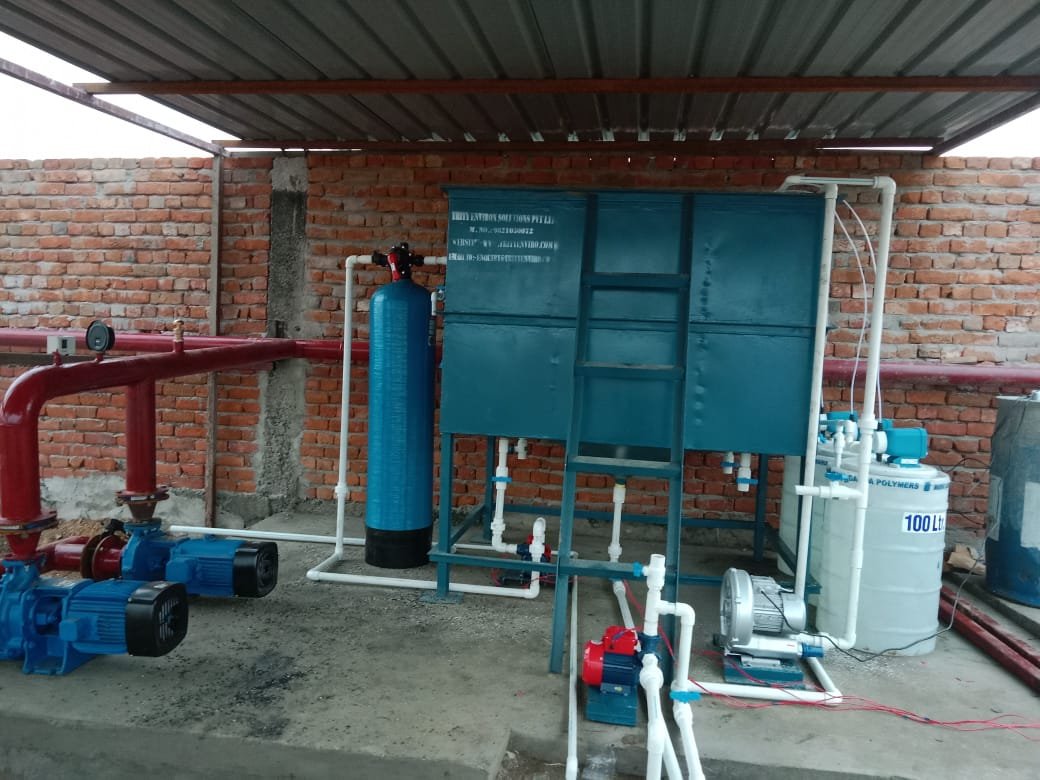
Trity Environ Solutions is a leading STP and ETP plant manufacturer in Paradip, engineering turnkey wastewater treatment systems for IOCL refinery, IFFCO, Paradeep Phosphates, and port logistics hubs. We build heavy-duty effluent treatment plants and sewage treatment plants engineered for strict OSPCB compliance across the Mahanadi estuary and Bay of Bengal coastal zone, backed by pan India installation support.
CRZ Marine Discharge Norms
High Salinity & Sulfate Tolerance
Coastal and Marine CRZ Compliant Wastewater Engineering for Odisha's Major Deepwater Seaport
Paradip, situated in the Jagatsinghpur district on the Bay of Bengal, is eastern India's premier maritime trade and petrochemical hub. Centered around the Paradip Port Trust, Indian Oil Corporation Limited (IOCL) mega 15 MMTPA refinery and petrochemical complex, Paradeep Phosphates Limited (PPL), IFFCO fertilizer complex, and sprawling bulk cargo and container terminals, the city handles massive hydraulic volumes of complex chemical wastewater.
Operations generate effluents laden with high ammoniacal nitrogen, heavy phosphates, sulfates, petrochemical hydrocarbons, phenolic residues, and high total dissolved solids (TDS).
Positioned along the sensitive Mahanadi River estuary and Bay of Bengal coastline, Paradip is governed by stringent Coastal Regulation Zone (CRZ) rules, the Marine Coastal Environmental Standards, and strict oversight from the Odisha State Pollution Control Board (OSPCB) and Central Pollution Control Board (CPCB). Surface and marine discharge requires rigorous compliance with marine ecological standards to protect delicate mangrove ecosystems, local fisheries, and the nesting habitats of Olive Ridley sea turtles along the Odisha coast.
As a specialized STP and ETP plant manufacturer in Paradip, Trity Enviro engineers heavy-duty wastewater systems built to withstand corrosive saline environments and complex petrochemical chemistries.
Our engineered effluent treatment plant systems combine multi-stage chemical coagulation, dissolved air flotation, biological nitrification-denitrification, and tertiary membrane filtration to handle harsh chemical effluents. For port logistics townships, container freight stations, and residential sectors, our automated sewage treatment plant units convert domestic sewage into sparkling recycled water for coal dust suppression at port cargo berths and green belt irrigation. Partnering with Trity Enviro guarantees total regulatory compliance and robust water security in Paradip.
Engineering Highlights
Why Petrochemical, Fertilizer, and Port Complexes in Paradip Trust Trity Enviro
Engineered for marine coastal environments, high chemical toxicity, elevated salinity, and strict CRZ compliance.
Strict CRZ and Marine Environmental Compliance
Engineered to satisfy stringent coastal marine discharge limits for ammoniacal nitrogen, total phosphorus, oil and grease, and phenolic compounds.
Marine-Grade Corrosion Resistant Fabrication
Constructed with SS316L stainless steel, high-build epoxy-glass flake coatings, and UV-stabilized FRP composites designed to withstand corrosive coastal saline air.
Advanced Biological Nitrogen and Phosphate Removal
Multi-stage anoxic-aerobic biological systems and chemical precipitation achieving deep removal of ammoniacal nitrogen and phosphates from fertilizer effluents.
Petrochemical Hydrocarbon and DAF Separation
High-efficiency dissolved air flotation (DAF) and automated oil skimmers removing emulsified and free hydrocarbons to below 5 mg/L.
Turnkey Port Berths Dust Suppression Recycling
Tertiary filtration yielding recycled water dedicated to mechanized coal and iron ore handling berths for intensive dust suppression spraying.
Handling Complex Chemical and Petrochemical Effluent Streams in Paradip
The industrial landscape of Paradip presents some of the most demanding wastewater treatment challenges in eastern India. Petroleum refining, polypropylene manufacturing, and petrochemical processing generate spent caustic, oily condensates, and phenolic wastewater.
Simultaneously, large phosphatic fertilizer plants produce effluents carrying elevated fluoride, sulfate, and phosphate concentrations. Discharging these streams without exhaustive treatment damages the sensitive Mahanadi estuarine ecology and triggers severe penalties under coastal environmental protection laws.
Trity Enviro builds specialized chemical effluent treatment plant setups featuring API oil-water separators, dissolved air flotation (DAF) units, automated flash coagulation, and biological extended aeration. For petrochemical maintenance terminals and tank farms, our mechanical oil skimmer systems efficiently recover tramp oils and floating oily sludge before biological digestions, protecting microbial cultures and preventing membrane fouling.
Sewage Treatment for Port Townships, Terminals, and Logistics Hubs
Alongside mega chemical and refining complexes, Paradip hosts sprawling port authority townships, logistics parks, container freight stations, and commercial shipping centers housing a large workforce. Domestic sewage generated across these facilities carries substantial organic and microbial contamination.
Meanwhile, mechanized port handling operations for coal, iron ore pellets, and limestone consume millions of liters of water daily for dust suppression misting.
Our automated Moving Bed Biofilm Reactor (MBBR) and Sequential Batch Reactor (SBR) sewage treatment plant units provide an ideal circular solution. With tertiary dual media filtration, activated carbon polishing, and chlorination, treated domestic sewage achieves BOD under 10 mg/L and TSS under 10 mg/L.
This water is directly recirculated for mechanized conveyor dust suppression, stockpile water spraying, and port perimeter green belt cultivation, saving valuable municipal water reserves.
Zero Liquid Discharge Engineering and Proactive Coastal AMC Services
With increasing regulatory restrictions on coastal marine outfalls, industrial leaders in Paradip are actively deploying zero liquid discharge architectures. Trity Enviro engineers high-recovery zero liquid discharge plant systems integrating ultrafiltration, brackish and seawater RO water recycling plant stages, and multi-effect or mechanical vapor recompression evaporators to recover up to 95 percent of wastewater as pure boiler-grade condensate.
To withstand the punishing coastal saline climate, Trity Enviro delivers reliable on-ground annual maintenance contract services across Paradip, Kujang, and Jagatsinghpur. Our technical teams manage cathode protection checks, membrane clean-in-place (CIP) protocols, chemical dosing calibration, and real-time OCEMS telemetry with OSPCB servers. Contact our specialized coastal environmental engineering team today through our contact us page to schedule an engineering consultation.
Specialized Architectures
Industrial Treatment Systems Engineered for Paradip
Engineered treatment configurations tailored to marine CRZ standards, petrochemical wastewater, and high salinity conditions.
API Separators and Dissolved Air Flotation (DAF)
High-efficiency hydrocarbon removal systems combining gravity separation and micro-bubble flotation for refinery and petrochemical wastewater.
Explore Configuration
Biological Nitrification and Denitrification Plants
Specialized multi-stage anoxic-aerobic bioreactors designed for deep removal of ammoniacal nitrogen and nitrates from fertilizer effluents.
Explore Configuration
Port Township Sequential Batch Reactors (SBR)
Automated cyclic biological systems delivering sparkling treated water for mechanized port conveyor dust spraying and green belts.
Explore Configuration
High Salinity RO and ZLD Evaporator Plants
Advanced multi-stage membrane filtration coupled with forced-circulation crystallizers to achieve complete zero liquid discharge in coastal zones.
Explore Configuration
Engineering Excellence
Turnkey Project Delivery Workflow in Paradip
Structured engineering methodology from initial effluent testing to installation, telemetry integration, and operational handover.
01
Chemical Toxicity and Salinity Characterization
Detailed laboratory assays of ammoniacal nitrogen, phosphates, hydrocarbons, phenols, sulfides, and TDS at your Paradip industrial plant.
02
Process Engineering and Marine Metallurgy Selection
Custom sizing of flash mixers, DAF skids, bioreactors, and material selection including SS316L and glass flake coatings for coastal conditions.
03
Off-Site Marine-Grade Skid Fabrication
Precision fabrication using corrosion-resistant alloys, heavy epoxy coatings, and premium chemical pumps with full hydrostatic testing.
04
Turnkey Erection and OCEMS Integration
On-site mechanical installation, piping hookups, PLC panel cabling, and continuous telemetry transmitter setup connected to OSPCB portals.
05
Process Stabilization and Operator Training
Fine-tuning of coagulant, polymer, and nutrient dosing, biological nitrifier culture stabilization, and complete operator training.
Common Queries
Frequently Asked Questions About Paradip Wastewater Plants
Practical insights regarding coastal CRZ regulations, technology selection, and maintenance in Paradip.
Q1. What are the specific CRZ and marine discharge standards in Paradip?
Coastal marine discharge standards strictly regulate ammoniacal nitrogen (under 50 mg/L), total Kjeldahl nitrogen (under 100 mg/L), oil and grease (under 10 mg/L), biochemical oxygen demand (under 30 mg/L), and phenolic compounds (under 1 mg/L) to prevent marine ecological damage.
Q2. How does Trity Enviro protect wastewater equipment from coastal marine corrosion?
We utilize SS316L stainless steel, UV-stabilized FRP composites, and heavy high-build epoxy-glass flake coating systems on all exposed carbon steel structures to prevent pitting and marine corrosion.
Q3. Can treated sewage water be used for coal dust suppression at port cargo berths?
Yes. Treated sewage from our SBR and MBR plants undergoes multi-grade filtration and chlorination, producing odor-free, pathogen-free water ideal for coal conveyor misting and stockpile dust suppression.
Q4. How is high ammoniacal nitrogen treated in fertilizer wastewater?
We utilize a two-stage biological nitrification-denitrification system with anoxic and aerobic zones, converting toxic ammoniacal nitrogen into harmless nitrogen gas, supplemented by chemical phosphate precipitation.
Q5. Does Trity Enviro provide round-the-clock O&M support in Paradip?
Yes. We offer complete round-the-clock operation and maintenance contracts staffed with qualified environmental chemists and mechanical technicians across Paradip and Jagatsinghpur.
Q6. How long does it take to deploy an industrial ETP in Paradip?
Standard packaged units take 3 to 4 weeks for fabrication and 7 to 10 days for site erection, while large custom ZLD plants require 6 to 8 weeks for complete engineering and commissioning.
CATALOGUE
Related Engineering Products
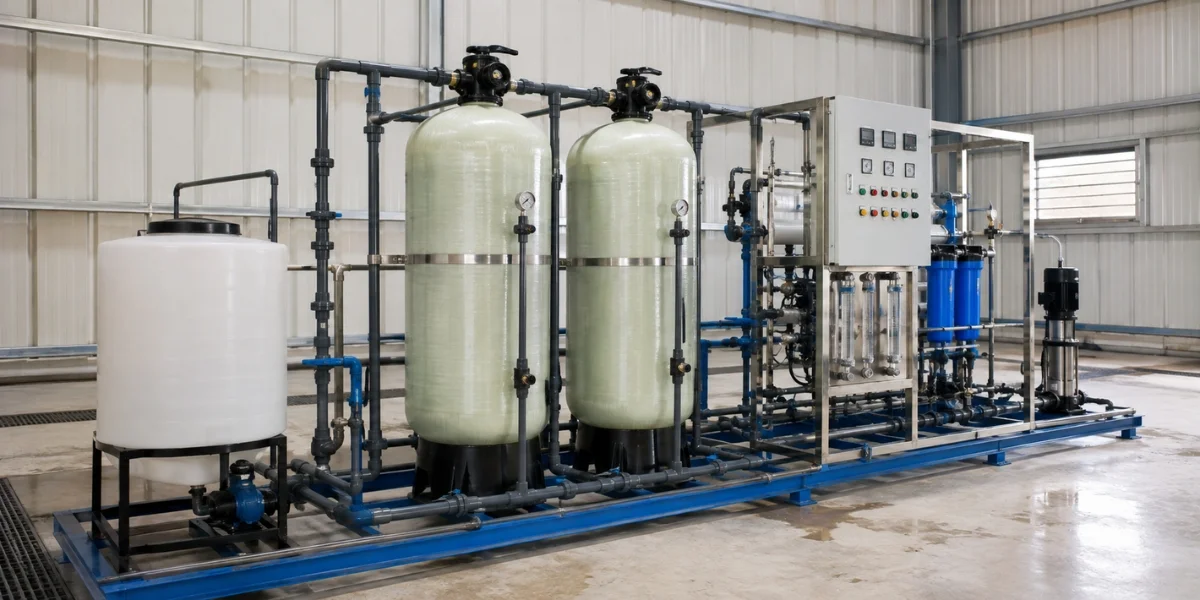
RO & Water Recycling Plant Manufacturer in India
Trity Environ Solutions manufactures RO and water recycling systems for industries and commercial facilities, engineered for reliable purity and reuse.
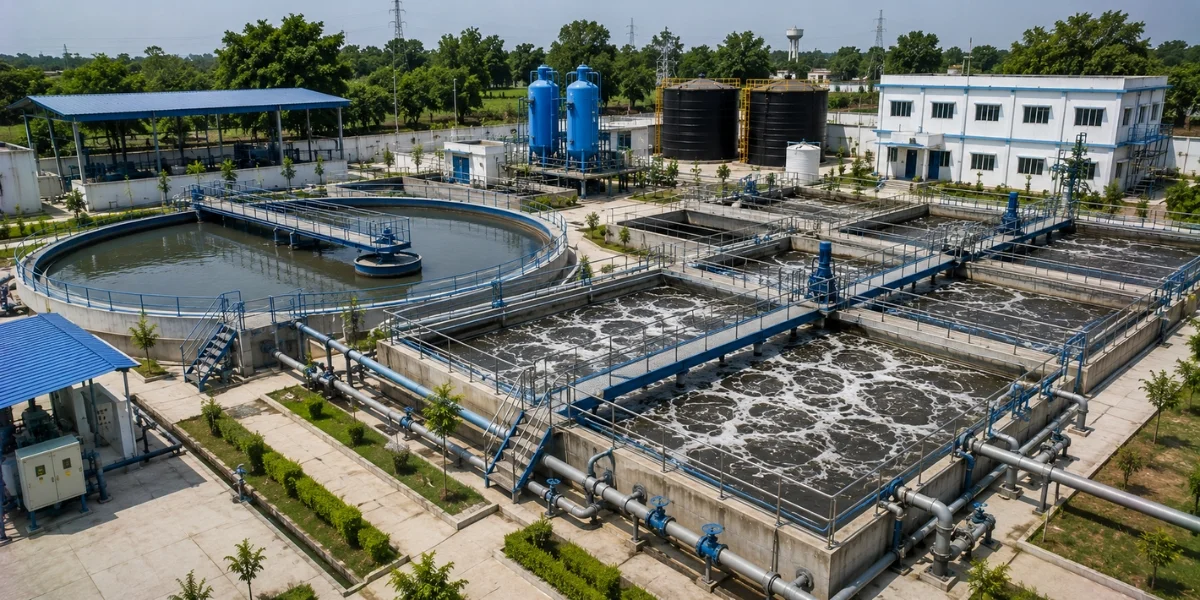
Tertiary Treatment Plant Manufacturer in India
Trity Environ Solutions manufactures tertiary treatment plants that polish treated water beyond secondary treatment, enabling genuine reuse and stricter discharge compliance.
Wastewater Recycling System Manufacturer in India
Trity Environ Solutions manufactures wastewater recycling systems using UF and RO technology, turning treated wastewater into reuse-grade water for cooling, flushing, and gardening.
PAN-INDIA CAPABILITIES
Regional Solutions & State Coverage
TECHNICAL KNOWLEDGE
Related Insights & Engineering Guides
PROVEN EXCELLENCE
Featured Turnkey Installations



Need a Custom Water or Wastewater Treatment Solution?
Our engineering team can help design the right system for your capacity, industry, and compliance requirements.