
 ISO 9001:2015 & QCI Approved
Zero Liquid Discharge (ZLD) System Manufacturer in India
Trity Environ Solutions is a trusted Zero Liquid Discharge (ZLD) system manufacturer in India, engineering RO, evaporator, and crystallizer based systems that recover 95 to 99 percent of industrial wastewater while eliminating liquid discharge entirely. Our ZLD systems are built for Red Category and water-stressed zone compliance, with pan India installation support.
SPCB / CPCB Norm Compliant
Heavy Fabrication
When Recycling Water Stops Being Optional
India's 2023 National Water Policy now obliges thermal power stations in water-stressed zones to recycle 90 percent of process water by 2030, and CPCB has extended similar zero-discharge expectations to chemical, textile, and pharmaceutical Red Category industries. A Zero Liquid Discharge (ZLD) system meets this head-on, combining reverse osmosis, evaporation, and crystallization to recover up to 99 percent of wastewater as reusable process water while converting remaining dissolved solids into disposable solid salts. Trity Environ Solutions builds ZLD as the final stage in a treatment sequence, following an industrial reverse osmosis stage or tertiary polishing system, rather than as an isolated add-on.
Facing a Consent to Operate condition mandating zero discharge? Request a free technical assessment and our engineering team will design the right ZLD sequence for your effluent.
WHY THIS SYSTEM?
Key Benefits of Zero Liquid Discharge (ZLD) System Manufacturer in India
Engineered for 95 to 99% water recovery, complete liquid discharge elimination, and Consent to Operate compliance.
95 to 99% Water Recovery
Recovers 95 to 99 percent of wastewater as reusable process water, eliminating freshwater dependency for industries operating in water-stressed regions across India.
Complete Liquid Discharge Elimination
Achieves complete elimination of liquid discharge, converting dissolved solids into disposable solid salts rather than releasing pollutants into rivers or groundwater.
Supports CTO Renewal Compliance
Supports Consent to Operate renewal for Red Category and water-stressed zone industries, where CPCB and SPCB increasingly mandate zero discharge as a licensing condition.
Byproduct Recovery Potential
Recovers valuable byproducts such as sodium sulfate and other crystallized salts, offsetting a portion of operating costs through resale or reuse where feasible.
Lower Evaporation Energy Cost
Mechanical vapor recompression technology reduces evaporation energy costs significantly compared to conventional steam-driven evaporators, improving long-term operating economics.
Pretreatment Quality Determines Your Evaporator's Energy Bill
Every dissolved solid that reaches the evaporator has to be boiled off, which means poor upstream RO recovery directly inflates evaporation energy cost, the single largest ongoing expense in a ZLD system. Trity Environ Solutions maximizes RO recovery before concentrate ever reaches the thermal stage, since every percentage point improvement in upstream recovery meaningfully reduces the volume, and cost, of what the evaporator has to process.
Scaling Is the Operational Risk Nobody Mentions Until It Happens
Silica, calcium sulfate, and other scale-forming compounds concentrate rapidly as water is recovered, and undersized antiscalant dosing or poor pretreatment leads to fouled evaporator tubes and unplanned shutdowns within months of commissioning. Trity Environ Solutions designs scaling control specifically around your feed water chemistry, backed by operator training and an Annual Maintenance Contract. Talk to our team about AMC coverage for your ZLD system.
ZLD Is a Sequence, Not a Single Machine
A genuine ZLD system depends on everything upstream performing correctly, since the evaporator and crystallizer only handle what earlier stages fail to remove or recover. Trity Environ Solutions sequences demineralization systems and hardness removal softeners for pretreatment, industrial RO membranes for bulk recovery, and evaporation-crystallization only for the final concentrated stream, rather than oversizing thermal equipment to compensate for weak upstream design.
SYSTEM CONFIGURATIONS
Types of Zero Liquid Discharge (ZLD) System Manufacturer in India Configurations
Configurations selected to match your effluent TDS, energy availability, and recovery targets.
RO-Based Pretreatment Stage
Reverse osmosis and pretreatment stages remove the bulk of dissolved solids before concentrate reaches the evaporator, reducing thermal load and energy cost significantly.
MVR Evaporator System
Steam or mechanical vapor recompression evaporators concentrate RO reject into dense brine, recovering distilled water for reuse in process applications.
Crystallizer Finishing Stage
Final stage converts concentrated brine into solid crystallized salts, achieving true zero liquid discharge with byproducts sent for safe disposal.
Compact ZLD for Mid-Sized Units
Compact evaporator and crystallizer configuration for smaller effluent volumes, suited to mid-sized industrial units pursuing ZLD compliance without large capital outlay.
STEP-BY-STEP WORKFLOW
How the Zero Liquid Discharge (ZLD) System Manufacturer in India Process Works
A multi-stage recovery process engineered for consistent 95 to 99% water recovery.
01
Pretreatment
Effluent passes through softening, filtration, and biological treatment to remove suspended solids and organic load before membrane treatment.
02
Reverse Osmosis Concentration
RO membranes recover the majority of clean water, concentrating remaining dissolved solids into a smaller reject stream for further processing.
03
Evaporation
MVR or steam-driven evaporators further concentrate the RO reject, recovering distilled water and reducing volume before crystallization.
04
Crystallization & Solid Disposal
Crystallizers convert the final concentrated brine into solid salts, achieving zero liquid discharge with solids sent for safe disposal or reuse.
COMMON INQUIRIES
Frequently Asked Questions
Q1. What is Zero Liquid Discharge (ZLD)?
ZLD is a wastewater treatment approach that combines RO, evaporation, and crystallization to recover 95 to 99 percent of water for reuse while converting remaining dissolved solids into solid waste, eliminating liquid discharge entirely.
Q2. Which industries are required to implement ZLD in India?
CPCB and various SPCBs mandate ZLD for many Red Category industries including textiles, dyeing, chemicals, distilleries, and increasingly for thermal power stations in water-stressed zones under the 2023 National Water Policy.
Q3. What is the typical water recovery rate of a ZLD system?
Well-designed ZLD systems typically achieve 95 to 99 percent water recovery, with the exact figure depending on feed water TDS, scaling potential, and the specific technology combination used.
Q4. Why is ZLD more expensive to operate than conventional ETP treatment?
Evaporation and crystallization are energy-intensive processes, since dissolved solids must be thermally separated rather than simply filtered, though maximizing upstream RO recovery significantly reduces this operating cost.
Q5. Can an existing ETP be upgraded to achieve Zero Liquid Discharge?
Yes, ZLD is typically added as a final stage to an existing ETP, incorporating RO, evaporation, and crystallization on the concentrated reject stream the existing plant already produces.
Q6. What happens to the solid salts recovered from a ZLD system?
Crystallized salts are either disposed of at authorized hazardous waste facilities or, depending on purity and composition, sold or reused in certain industrial applications.
CATALOGUE
Related Engineering Products
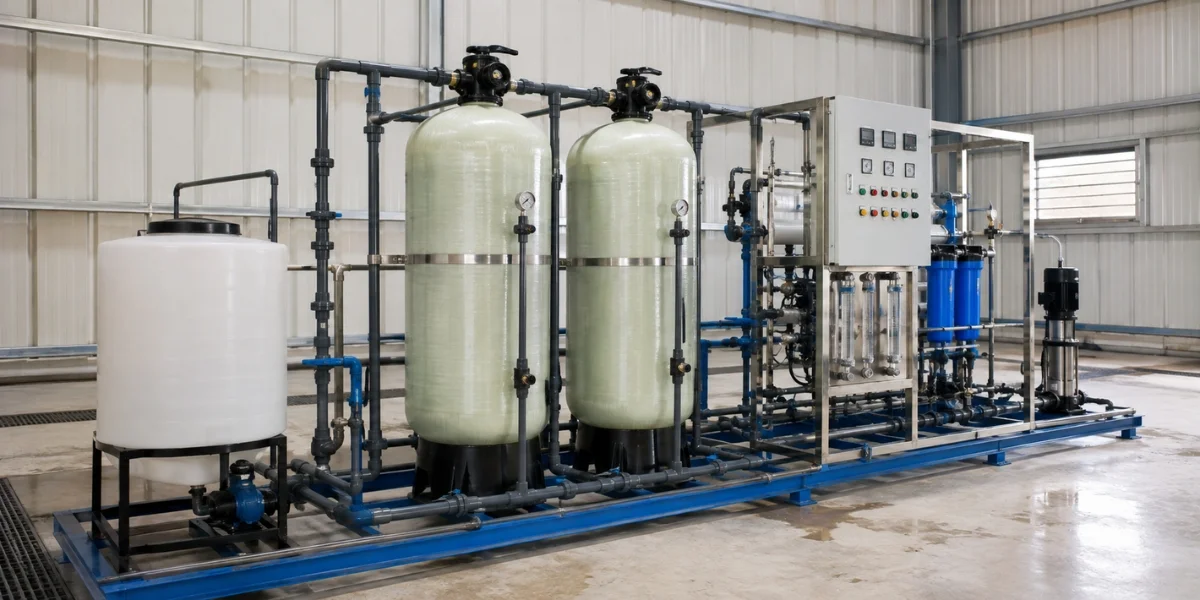
RO & Water Recycling Plant Manufacturer in India
Trity Environ Solutions manufactures RO and water recycling systems for industries and commercial facilities, engineered for reliable purity and reuse.
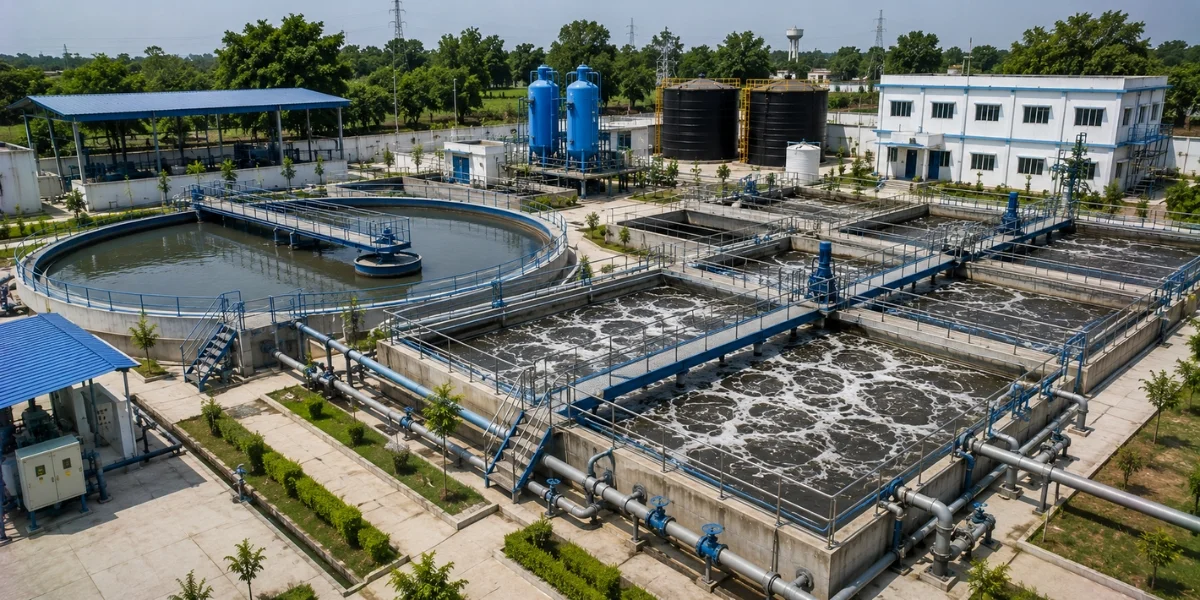
Tertiary Treatment Plant Manufacturer in India
Trity Environ Solutions manufactures tertiary treatment plants that polish treated water beyond secondary treatment, enabling genuine reuse and stricter discharge compliance.
Wastewater Recycling System Manufacturer in India
Trity Environ Solutions manufactures wastewater recycling systems using UF and RO technology, turning treated wastewater into reuse-grade water for cooling, flushing, and gardening.
PAN-INDIA CAPABILITIES
Regional Solutions & State Coverage
TECHNICAL KNOWLEDGE
Related Insights & Engineering Guides
PROVEN EXCELLENCE
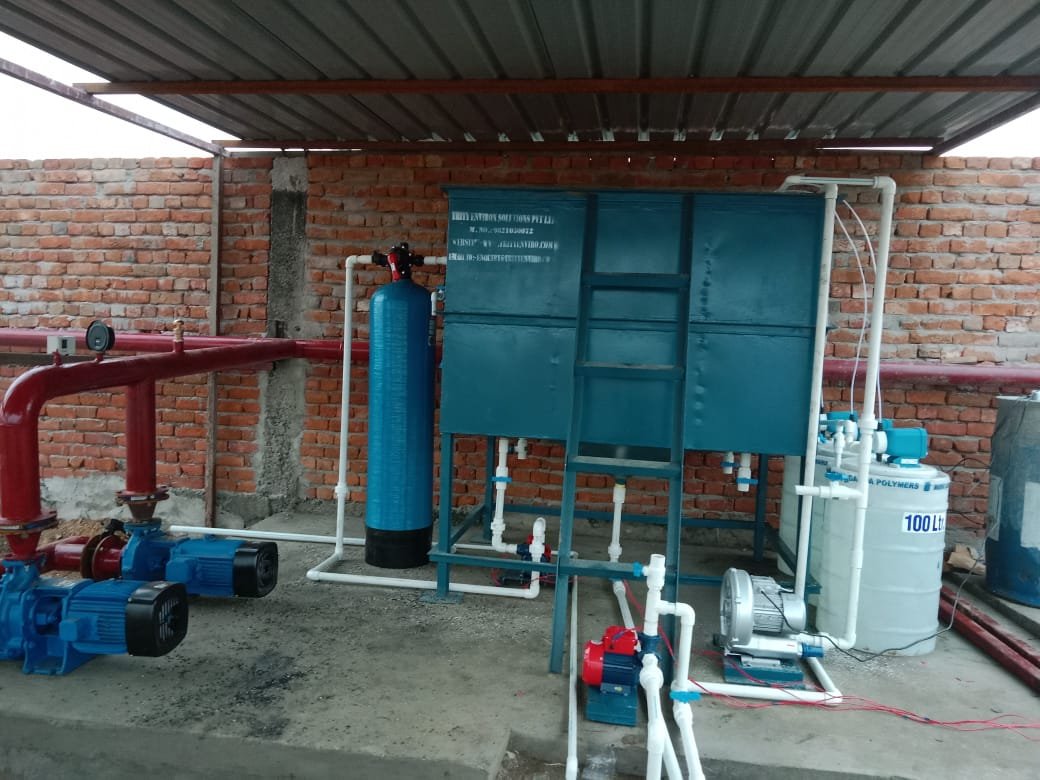
Featured Turnkey Installations



Need a Custom Water or Wastewater Treatment Solution?
Our engineering team can help design the right system for your capacity, industry, and compliance requirements.