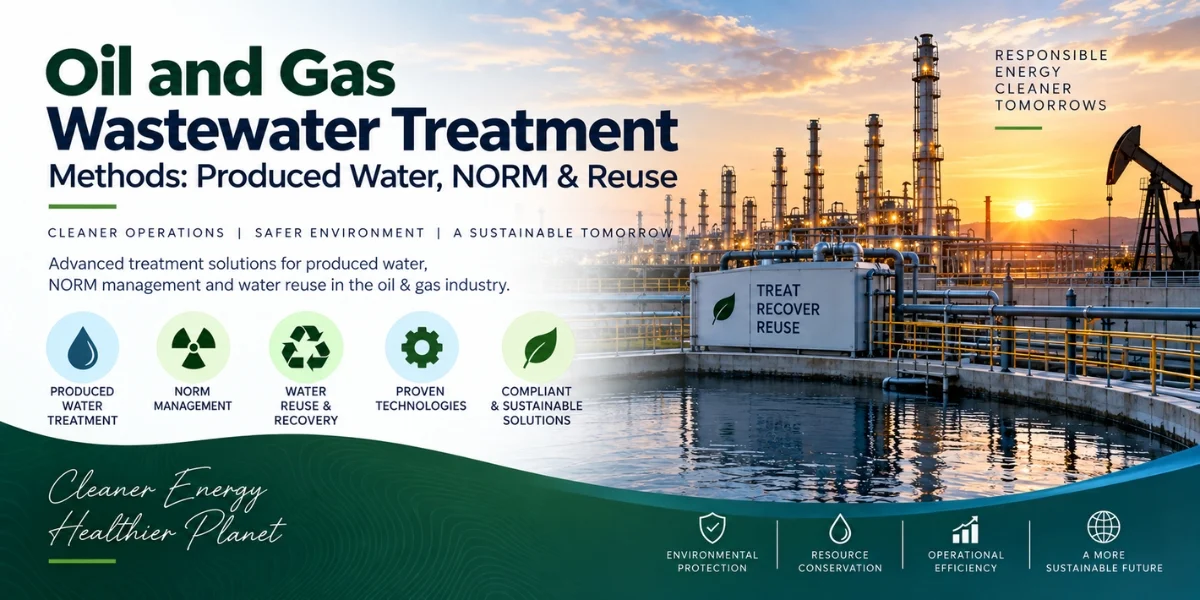
Oil and Gas Wastewater Treatment Methods: Produced Water, NORM & Reuse
A complete guide to oil and gas wastewater treatment, produced water, de-oiling, NORM removal, and desalination, from an experienced ETP manufacturer.

 ISO 9001:2015 & QCI Approved
Water is becoming a permitting and planning issue for data centres. Learn how to size demand, treat cooling water and plan reuse from day one.
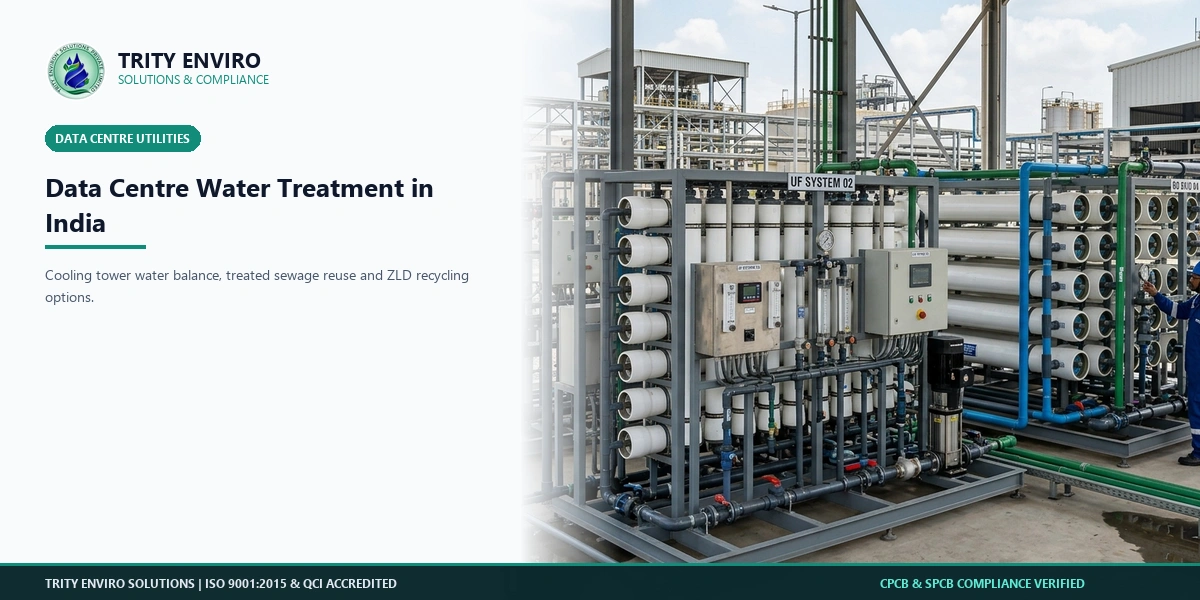
India's data centre capacity is expanding quickly, driven by cloud services, artificial intelligence, digital payments and data localisation. Most of the attention goes to electricity and land. Water, quietly, is becoming just as important. A large data centre removes a lot of heat, and the cheapest way to do that in most Indian cities is to evaporate water in cooling towers.
Industry estimates give a sense of scale. One white paper reported that India's data centres used around 150 billion litres of water in 2025, with demand expected to more than double by 2030. In another development, Amazon Web Services said it plans to use treated sewage water for cooling at future data centres in cities including Mumbai and Hyderabad, while some state governments are reviewing data centre policies with water use in mind. In Hyderabad, the water board has proposed public private partnership projects to supply treated water to industrial and commercial hubs, with data centres named among possible users, as described in our article on treated wastewater reuse in Telangana.
For an owner or developer, this changes the planning order. Water supply, wastewater disposal and local permits can decide whether a site is approved, how large it can grow and what it costs to run. A water strategy that treats cooling water well, reuses what it can and reduces discharge is becoming a basic part of a data centre project.
This guide explains where data centres use water, how to estimate demand with a worked example, how to treat make-up and blowdown, how to use treated sewage safely and when ZLD makes sense. It is written for data centre developers, facility managers, MEP consultants and sustainability teams.
The largest water use in most data centres is evaporative cooling. Chilled water or condenser water loops carry heat from the server halls to cooling towers, where a portion of the water evaporates. That evaporation, plus drift and blowdown, has to be replaced with make-up water.
Smaller uses include humidification in some halls, domestic water for staff and facilities, fire water storage, landscaping, cleaning and, in some designs, water for fuel and generator cooling. Wastewater streams include cooling tower blowdown, sewage from the building and sometimes RO reject or filter backwash.
Designers can trade water for electricity. Air cooled chillers and dry coolers use little or no water but consume more power, especially in hot weather. Evaporative towers use water but less power. Hybrid systems use dry cooling in cool conditions and evaporation when it is hot. Direct liquid cooling and immersion cooling, which are spreading with high density AI racks, remove heat more efficiently and can reduce the need for evaporation, but they bring their own heat rejection needs.
There is no single best choice. The right design depends on local water availability and price, power cost and carbon goals, climate and the heat load. A site in a water stressed area may accept higher power use to cut water, and a site with cheap reclaimed water may use evaporative cooling confidently.
Almost all electricity consumed by IT equipment turns into heat that must be rejected. Evaporating one kilogram of water absorbs about 2,257 kJ. So one megawatt of heat rejected by evaporation needs about:
3,600,000 kJ per hour ÷ 2,257 kJ per kg = about 1,600 kg per hour, or about 1.6 m3 per hour
Consider a 10 MW IT load facility with a cooling system rejecting roughly 10 MW of heat entirely through cooling towers. Evaporation is about 16 m3/h, or about 384 m3 per day. In practice, only part of the heat goes through evaporation in many designs, and the real figure depends on the cooling system and the climate, so treat this as an upper bound for planning.
Blowdown prevents dissolved solids from building up in the tower. With drift ignored for simplicity, blowdown equals evaporation divided by the cycles of concentration (COC) minus one, and make-up equals evaporation plus blowdown.
Moving from 3 to 5 cycles saves about 4 m3/h of make-up, which is about 35,000 m3 a year. Raising cycles needs better make-up quality, for example softened or RO treated water, since hardness, silica and chloride limit how concentrated the tower water can get. The same logic applies to any cooling tower, as explained in our guide on designing a water recycling system for cooling towers.
These numbers show why water strategy matters. A single 10 MW facility could need several hundred cubic metres per day, and a campus of many halls multiplies that. At such volumes, borewell or tanker supply is neither dependable nor popular with neighbours.
Cooling water needs treatment to prevent scale, corrosion and biological growth, which would reduce heat transfer and damage equipment. A typical programme combines:
Data centres also demand reliability. A cooling water failure can shut down servers, so the treatment plant needs redundancy, bypass lines, storage tanks and automation with alarms. Design with N+1 equipment for critical stages, and keep a storage tank that gives hours of buffer.
Treated sewage from municipal plants or from the campus's own sewage treatment plant is an attractive make-up source, especially where fresh water is scarce. It needs additional treatment, because it carries ammonia, organics, phosphate and bacteria that cause scaling, corrosion and biofouling in cooling systems. A typical train includes tertiary filtration, UF and RO, as explained in our guide on tertiary water treatment for industrial reuse. Check the supply reliability and quality with the provider, and keep a fresh water backup.
Treat water as a project risk from the first day of site selection. Check the source, quantity, quality and permit for water supply. Check how wastewater will be disposed of, including blowdown, sewage and reject. Ask about local policy on data centres and water, which is evolving. Plan storage tanks for continuity. Estimate the cost of treated water over the life of the facility, including the cost of water, treatment, energy, chemicals, membranes and labour.
A reuse system does not need to be built at full scale on day one. Design the layout and utilities so that tertiary treatment and RO can be added in phases as capacity grows, and install metering that records each water stream. Good data supports reporting on water use effectiveness (WUE) and sustainability disclosures that customers increasingly ask for.
Our wastewater recycling system and wastewater treatment plant offerings, project execution services and an annual maintenance contract cover design, supply, commissioning and long-term support.
Meter every stream: make-up, blowdown, domestic, treated sewage, RO permeate and reject. Track water use effectiveness against IT load and review it monthly. Good data supports permits, sustainability reports and customer audits, and it shows quickly when a cooling tower is running at too few cycles.
Also check how local policy treats data centre water. Some authorities are reviewing permissions and may ask for water sourcing plans, reuse commitments or monitoring data, so build these into the design and the approval file early.
| Parameter / Stage | Target Optimal Range | Failure Impact / Risk | Corrective Engineering Action |
|---|---|---|---|
| Evaporation per MW of heat rejected | About 1.6 m3/h per MW if fully evaporative | Underestimated make-up demand and supply risk | Calculate from heat load and cooling design, add margin |
| Cycles of concentration | Set by make-up quality, often 3 to 8 with good treatment | Scaling at high cycles, wasted water at low cycles | Treat make-up, control blowdown by conductivity |
| Reuse water quality (treated sewage) | Ammonia, organics, hardness and silica controlled before the tower | Scale, corrosion and biofouling | Add tertiary filtration, UF and RO and monitor continuously |
| Water supply reliability | Redundant sources with storage for hours of buffer | Cooling failure and downtime | Add storage tanks, N+1 treatment equipment, backup supply |
Trity Environ Solutions is an ISO 9001:2015 certified and QCI-approved wastewater recycling system and water treatment plant manufacturer and supplier in India, delivering robust, high-efficiency systems engineered for CPCB and SPCB regulatory compliance.
Every installation is supported by pan-India Annual Maintenance Contract and Operation and Maintenance services.
A complete guide to oil and gas wastewater treatment, produced water, de-oiling, NORM removal, and desalination, from an experienced ETP manufacturer.
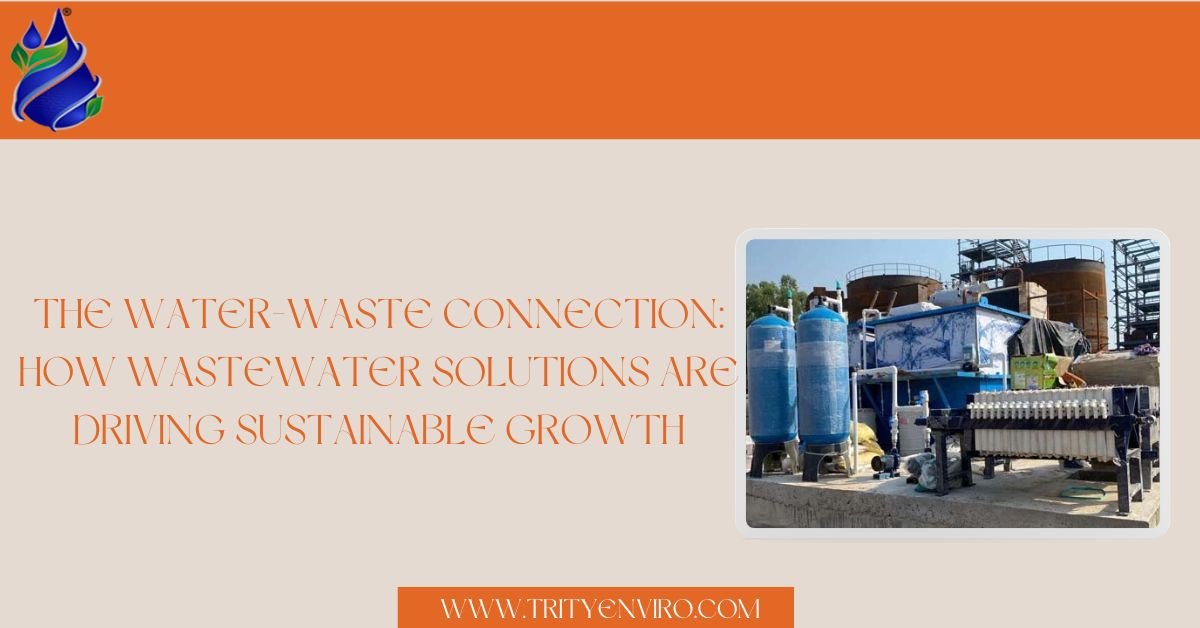
Explore how wastewater treatment drives sustainability in industries, reducing costs and protecting ecosystems. Learn about innovative solutions and real-world applications.
Where ETP and STP technology is headed: decentralization, energy-positive plants, circular economy, and India's specific opportunity gap.











Discuss your requirements with our engineering team and get practical guidance for your project.

