
 ISO 9001:2015 & QCI Approved
Food & Beverage Effluent Treatment Plant Manufacturer in India
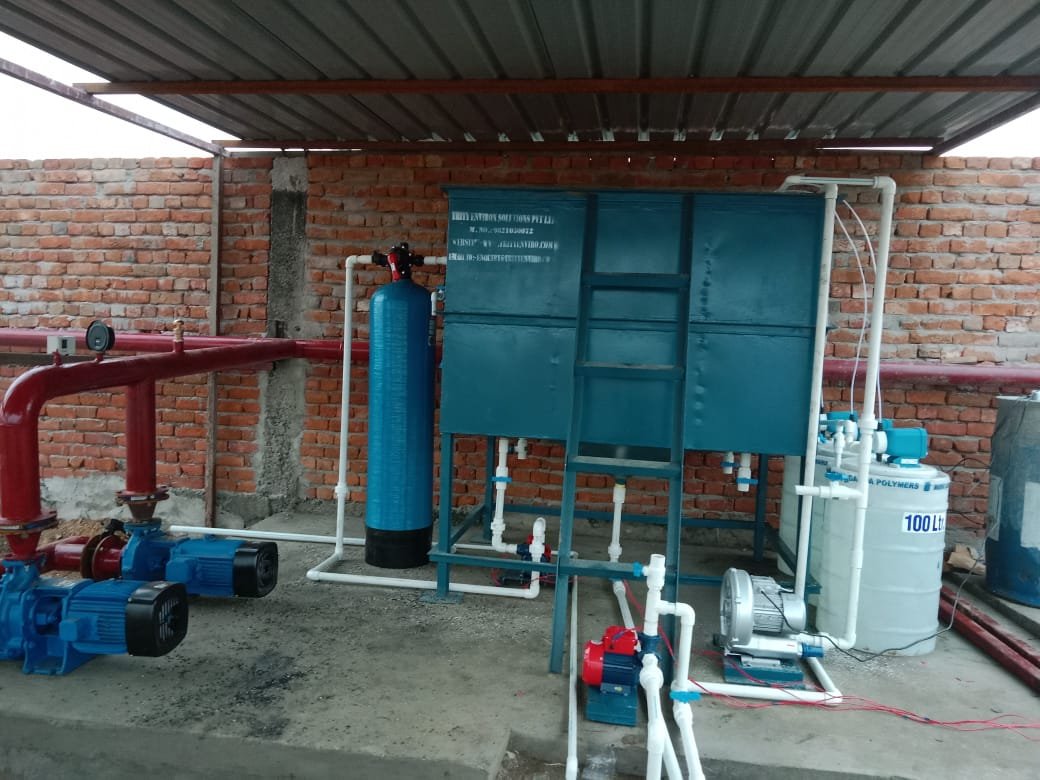
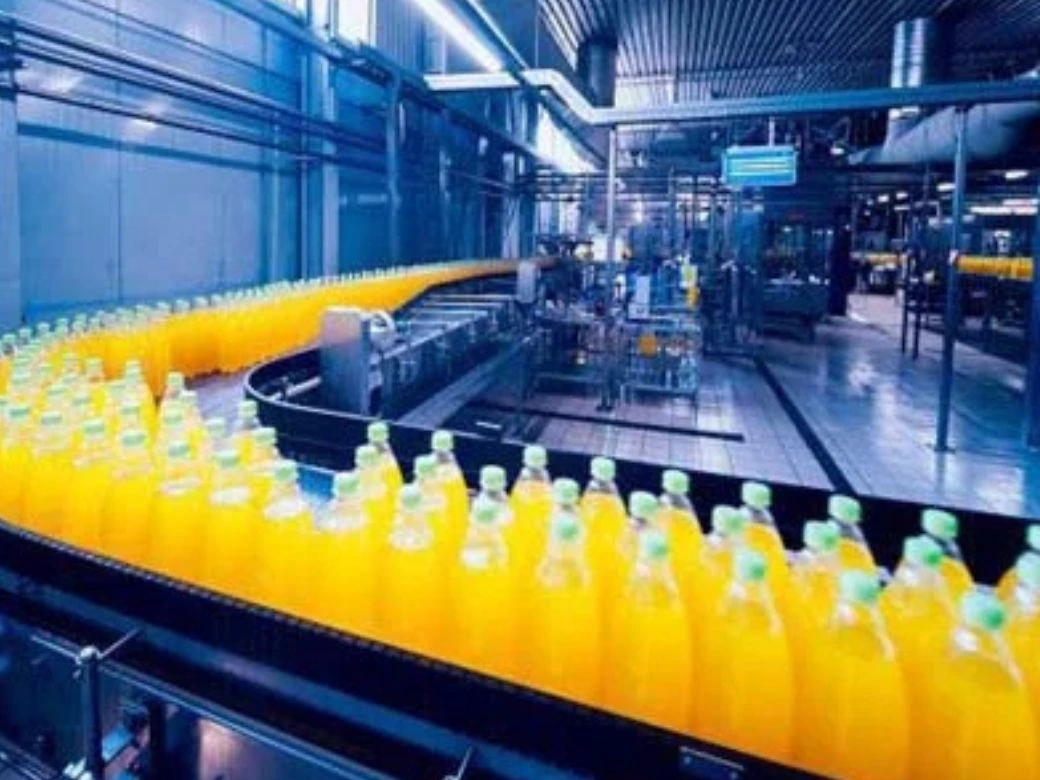
Trity Environ Solutions is a trusted food and beverage effluent treatment plant manufacturer in India, engineering systems built for fats, oils, and grease (FOG) removal and high BOD load typical of dairy, beverage, and packaged food processing. Our plants are designed around your actual production and CIP cycle, with pan India installation support.
SPCB / CPCB Norm Compliant
Heavy Fabrication
Why Food Processing Effluent Needs More Than a Generic BOD Assumption
Food and beverage effluent looks harmless compared to chemical or pharma wastewater, but its BOD, FOG, and CIP cycle surges can overwhelm an undersized industrial effluent treatment plant fast. Trity Environ Solutions studies your actual production cycles, not a textbook BOD table, sequencing physico-chemical pretreatment for oil and grease removal with biological BOD reduction sized for your sub-sector, whether dairy, beverage, meat, or packaged food.
Running a dairy, beverage, or food processing unit and need a properly sized ETP? Request a free technical assessment and our engineering team will design around your actual effluent load.
KEY BENEFITS
Key Benefits of Food & Beverage Effluent Treatment Plant Manufacturer in India
Engineered for reliable *FOG removal, stable BOD reduction, and consistent performance through CIP cycle* surges.
Effective FOG Removal
Removes fats, oils, and grease before they coat biological treatment media, preventing the systematic treatment failures common in food industry effluent.
Handles CIP Cycle Surges
Equalization is designed to absorb the high pH, high chemical load surge from CIP cleaning cycles, protecting the biological stage from load shock.
Manages High Strength Effluent
Anaerobic pretreatment handles high strength effluent above 2000 mg/L BOD efficiently, reducing organic load before secondary biological treatment begins.
Stable Under Variable Load
MBBR and SBR biological stages tolerate the variable loading typical of food processing, maintaining stable treatment across production and downtime cycles.
Supports Water Reuse
Treated water can be reused for cleaning, cooling, and boiler feed, reducing freshwater intake and lowering overall operating costs over time.
Built Around Real Influent Data, Not a Generic Assumption
Food processing wastewater varies significantly by sub-sector, and a design based on generic BOD and COD tables often fails once real production and CIP cycles hit the plant. Trity Environ Solutions studies your actual effluent characteristics across production runs and cleaning cycles before finalizing equalization capacity, FOG interception, and biological treatment sizing, so the system is built for your process rather than a textbook average.
Support That Understands Production Downtime and Seasonal Load
Food and beverage units often run seasonal production cycles, with load, and sometimes downtime, changing significantly across the year. Trity Environ Solutions backs every food industry ETP with operator training, seasonal load monitoring, and an Annual Maintenance Contract, so performance stays consistent whether you are at peak or off season production. Talk to our team about AMC coverage for your unit.
SYSTEM CONFIGURATIONS
Types of Food & Beverage Effluent Treatment Plant Manufacturer in India Configurations
Treatment configurations selected to match your *sub-sector, FOG load, and CIP cycle* characteristics.

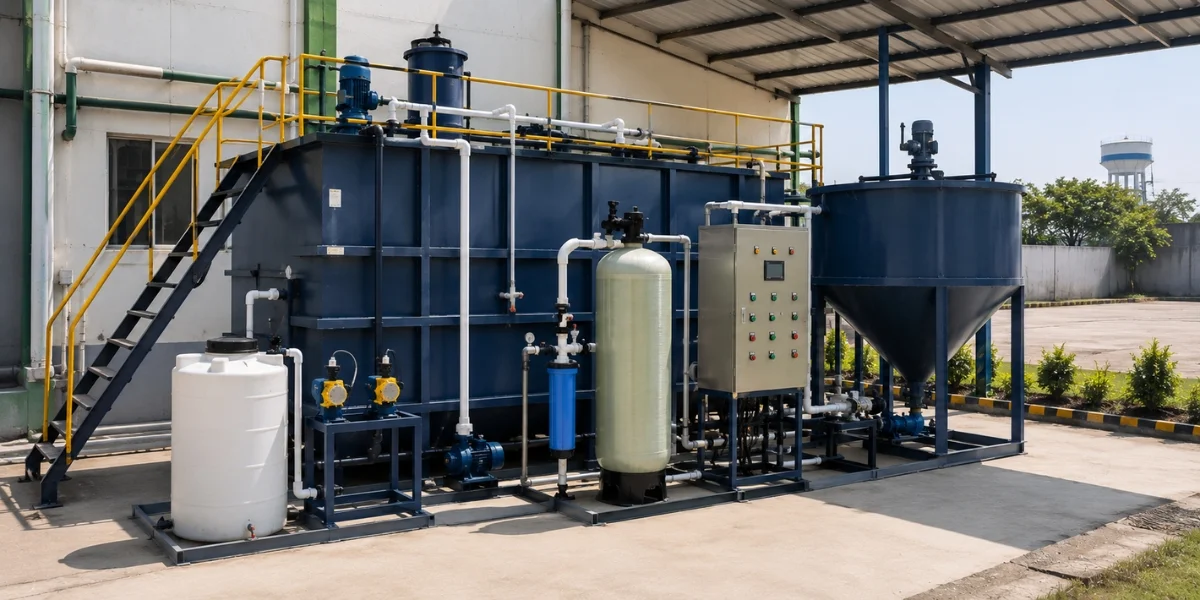
DAF Based FOG Removal System
Intercepts fats, oils, and grease at the source using dissolved air flotation, preventing them from fouling downstream biological treatment media entirely.
Anaerobic Pretreatment System
Handles high strength effluent above 2000 mg/L BOD through controlled anaerobic digestion, reducing organic load before secondary treatment stages begin.
MBBR / SBR Biological Treatment
MBBR or SBR based biological treatment tolerates the variable flow and organic load typical of dairy, beverage, and packaged food processing.
CIP Load Equalization System
Absorbs the high pH, high chemical load surge from CIP cleaning cycles, protecting biological treatment from shock loading and instability.
HOW IT WORKS
How the Food & Beverage Effluent Treatment Plant Manufacturer in India Process Works
A multi-stage treatment process engineered for consistent *BOD and FOG reduction* across production and CIP cycles.
01
Screening & FOG Interception
Solid waste is screened out and fats, oils, and grease are intercepted early, protecting downstream treatment stages from fouling.
02
Equalization
Flow and load from production runs and CIP cycles are balanced, preventing shock loading of the biological treatment stage.
03
Biological Treatment
Anaerobic pretreatment for high strength streams, followed by MBBR or SBR based aerobic treatment, reduces BOD and COD levels.
04
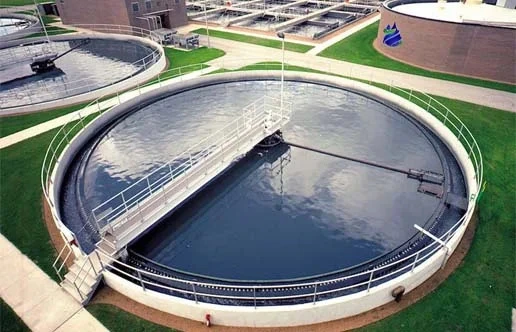
Clarification & Discharge
Treated water is clarified and polished to meet discharge norms, or prepared for reuse in cleaning, cooling, or boiler feed applications.
FREQUENTLY ASKED QUESTIONS
Frequently Asked Questions
Everything you need to know about food & beverage effluent treatment, FOG removal, and CIP surge management.
Q1. Why does food and beverage effluent need special treatment design?
Food processing effluent carries high BOD, fats, oils, and grease, along with sudden pH and chemical surges from CIP cleaning cycles, which a generic ETP design often cannot handle reliably.
Q2. What is FOG and why does it matter in food industry ETPs?
FOG stands for fats, oils, and grease, which coat biological treatment media and can cause systematic treatment failure if not intercepted early in the process.
Q3. What BOD levels are typical in food and beverage effluent?
BOD levels vary widely by sub-sector, ranging from around 500 mg/L in beverage plants to over 10,000 mg/L in high-strength processing units such as slaughterhouses.
Q4. Why do CIP cycles affect ETP performance?
CIP, or clean-in-place, cycles release a high pH, high chemical load surge that can disrupt biological treatment if the equalization system is not designed to absorb it.
Q5. Can treated food industry effluent be reused?
Yes, with proper treatment, water can often be reused for cleaning, cooling, and boiler feed applications, reducing freshwater dependency and operating costs.
Q6. Is anaerobic treatment necessary for all food processing units?
Anaerobic pretreatment is typically recommended for high strength effluent above 2000 mg/L BOD, while lower strength streams may proceed directly to aerobic biological treatment. ---
CATALOGUE
Related Engineering Products
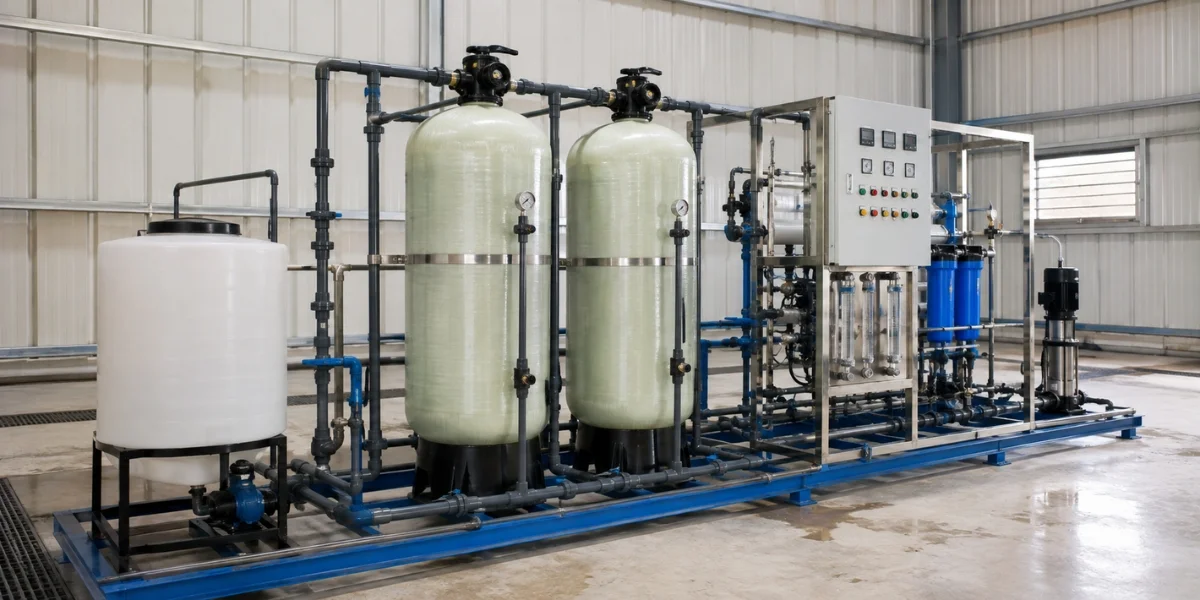
RO & Water Recycling Plant Manufacturer in India
Trity Environ Solutions manufactures RO and water recycling systems for industries and commercial facilities, engineered for reliable purity and reuse.
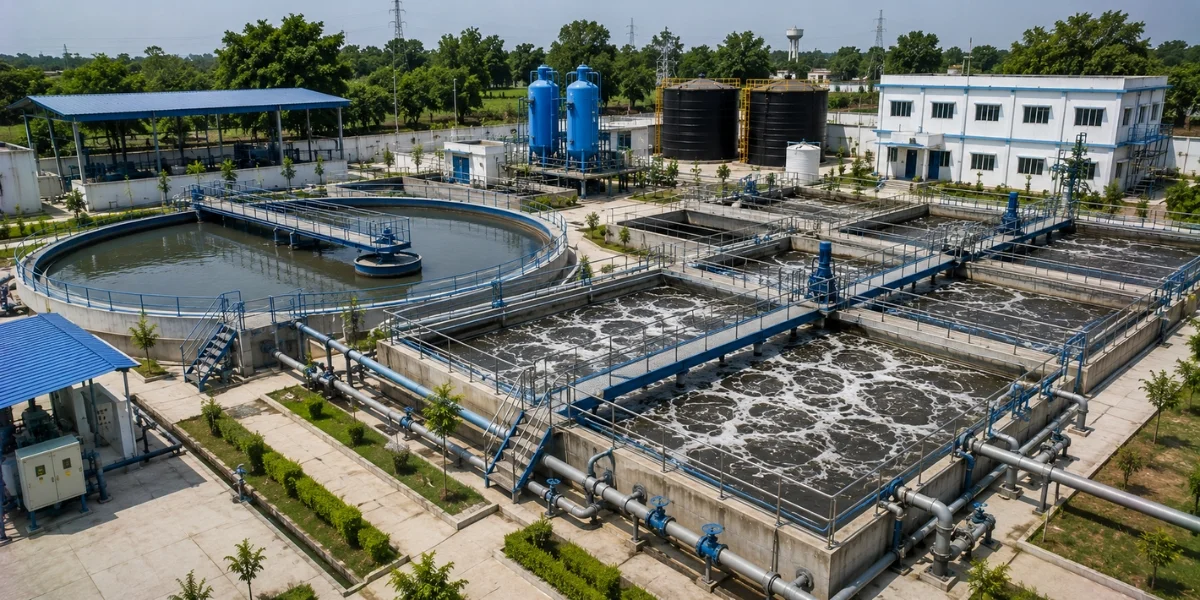
Tertiary Treatment Plant Manufacturer in India
Trity Environ Solutions manufactures tertiary treatment plants that polish treated water beyond secondary treatment, enabling genuine reuse and stricter discharge compliance.
Wastewater Recycling System Manufacturer in India
Trity Environ Solutions manufactures wastewater recycling systems using UF and RO technology, turning treated wastewater into reuse-grade water for cooling, flushing, and gardening.
PAN-INDIA CAPABILITIES
Regional Solutions & State Coverage
TECHNICAL KNOWLEDGE
Related Insights & Engineering Guides
PROVEN EXCELLENCE
Featured Turnkey Installations




Need a Custom Water or Wastewater Treatment Solution?
Our engineering team can help design the right system for your capacity, industry, and compliance requirements.