
 ISO 9001:2015 & QCI Approved
Oil Water Separator (OWS) Manufacturer in India
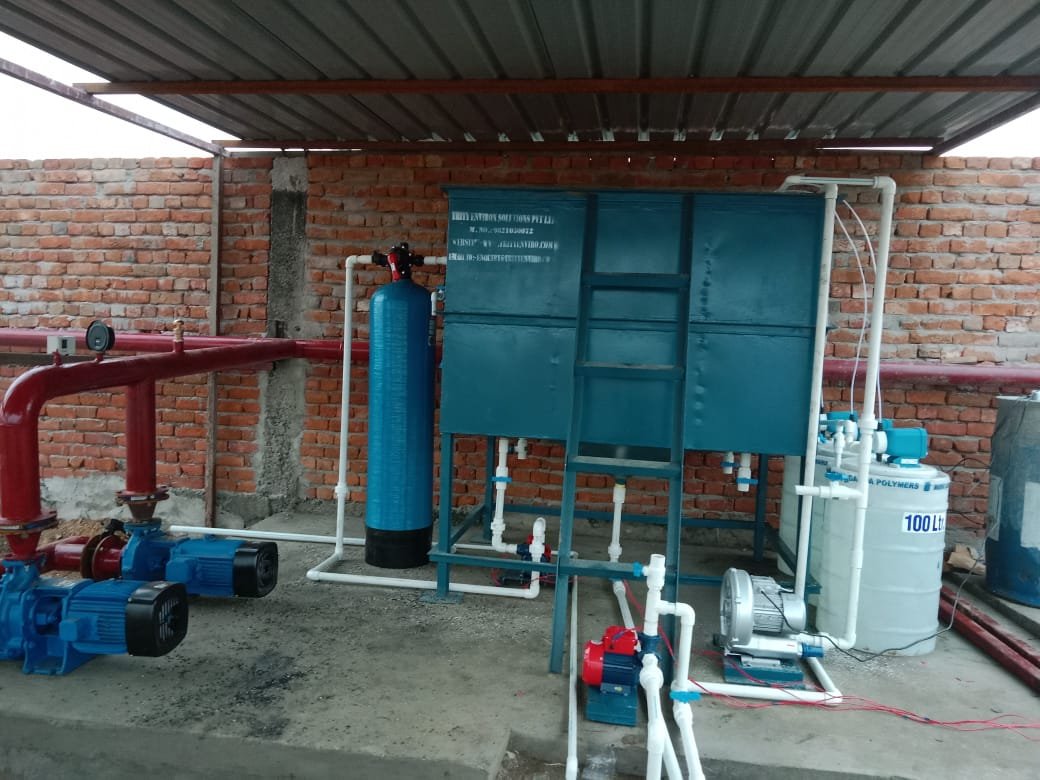
Trity Environ Solutions is a trusted oil water separator manufacturer in India, engineering TPI and CPI based systems that use gravity separation and coalescing plates to remove free floating oil from industrial wastewater. Our OWS units are built as a reliable primary treatment stage, with pan India installation support.
SPCB / CPCB Norm Compliant
Heavy Fabrication
Why Oil Removal Should Happen Before Everything Else
Free floating oil is one of the most damaging pollutants to let reach downstream treatment, coating biological media and fouling equipment if it isn't intercepted early. An oil water separator (OWS), using TPI or CPI plate technology, is typically the first stage in an effluent treatment setup wherever oil and grease are present, ahead of physico-chemical treatment or biological stages. Trity Environ Solutions also manufactures oil skimmers as a complementary mechanical solution, and our team can recommend whether plate separation, skimming, or both fit your effluent profile.
Dealing with oil contaminated wastewater and need the right pretreatment stage? Request a free technical assessment and our engineering team will recommend the right OWS configuration for your site.
KEY BENEFITS
Key Benefits of Oil Water Separator (OWS) Manufacturer in India
Engineered for reliable *free floating oil removal, compact footprint, and low maintenance gravity separation*.
Removes Up to 99% of Free Floating Oil
Removes up to 99 percent of free floating oil using gravity separation and coalescing plates, protecting downstream treatment stages from oil fouling.
Compact, Space Efficient Footprint
Requires far less space than conventional settling tanks, since inclined plate packs increase settling area significantly within a compact footprint.
Low Maintenance, No Moving Parts
Coalescing plates have no moving parts, resulting in low maintenance requirements and long service life even under continuous industrial operation.
Enables Oil Recovery
Recovered oil can often be reused or sold, turning a waste stream into a partial resource recovery opportunity for the facility.
Protects Downstream Treatment
Protects biological treatment stages from oil coating and fouling, preventing performance loss across downstream ETP or STP treatment processes.
The Difference Between an Oil Water Separator and an Oil Skimmer
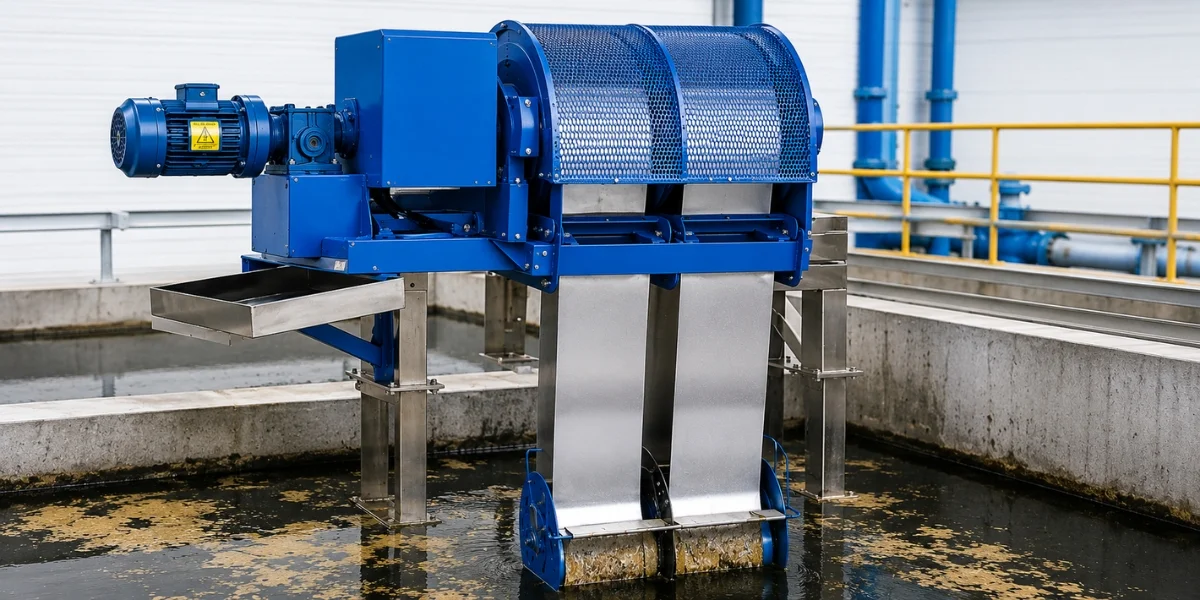
These two products are often confused but solve slightly different problems. An oil water separator uses static plate packs and gravity to continuously separate oil from a flowing wastewater stream, while an oil skimmer is a mechanical device that physically lifts surface oil from a tank or sump. Trity Environ Solutions manufactures both, and our engineers can recommend the right fit, or combination, based on your oil load and site layout.
Oil Separation Performance Depends on Regular Plate Cleaning
Coalescing plates gradually accumulate sludge and residual oil film over time, and performance can decline if cleaning schedules are neglected. Trity Environ Solutions backs every OWS installation with operator guidance, plate maintenance schedules, and an Annual Maintenance Contract, so separation efficiency stays consistent over the system's service life. Talk to our team about AMC coverage for your OWS.
SYSTEM CONFIGURATIONS
Types of Oil Water Separator (OWS) Manufacturer in India Configurations
Configurations selected to match your *oil load, droplet size, and space availability*.
TPI (Tilted Plate Interceptor)
Inclined plate packs use gravity separation and coalescence to remove oil droplets of 50 microns or larger from industrial wastewater streams.
CPI (Corrugated Plate Interceptor)
A variant of TPI using corrugated plates to increase surface area further, effective for facilities with higher oil loading requirements.
DAF Integrated OWS
Combines plate separation with dissolved air flotation for finer oil droplet removal, suited to effluent with emulsified or fine oil content.
Underground / Below Grade OWS
Installed below grade for facilities with space constraints, commonly used at fuel stations, workshops, and light industrial processing units.
STEP-BY-STEP WORKFLOW
How the Oil Water Separator (OWS) Manufacturer in India Process Works
A gravity-based separation process engineered for consistent *free floating oil removal* before further treatment.
01
Inlet & Solids Settling
Wastewater enters the separator, where heavier solids and sludge settle to the bottom of the vessel first.
02
Flow Through Plate Pack
Water flows evenly through the inclined plate pack, where oil droplets begin to rise and coalesce with other droplets.
03
Oil Coalescence & Rise
Coalesced oil droplets rise to the oil-water interface and collect at the surface, separate from the treated water below.
04
Oil & Water Discharge
Recovered oil is skimmed off through the oil outlet, while clarified water exits for further treatment or safe discharge.
COMMON INQUIRIES
Frequently Asked Questions
Q1. What is an oil water separator (OWS)?
An oil water separator uses gravity separation and coalescing plates to remove free floating oil from industrial wastewater, typically as a primary treatment stage before further processing.
Q2. What is the difference between TPI and CPI separators?
TPI (Tilted Plate Interceptor) and CPI (Corrugated Plate Interceptor) both use inclined plate packs for oil separation, with CPI using corrugated plates to further increase surface area for higher oil loads.
Q3. What size oil droplets can an OWS remove?
Standard TPI and CPI separators typically remove oil droplets of 50 microns or larger, while units with a secondary coalescer screen can capture particles down to around 20 microns.
Q4. Is an oil water separator the same as an oil skimmer?
No, an OWS uses static plate packs for continuous gravity separation, while an oil skimmer is a mechanical device that physically removes surface oil, and the two are often used together.
Q5. Where is an OWS typically installed in a treatment system?
An OWS is usually installed as an early pretreatment stage, ahead of physico-chemical or biological treatment, wherever oil and grease are present in the effluent stream.
Q6. How much maintenance does an OWS require?
Coalescing plates have no moving parts, but they do require periodic cleaning to remove accumulated sludge and oil film for consistent separation performance. ---
CATALOGUE
Related Engineering Products
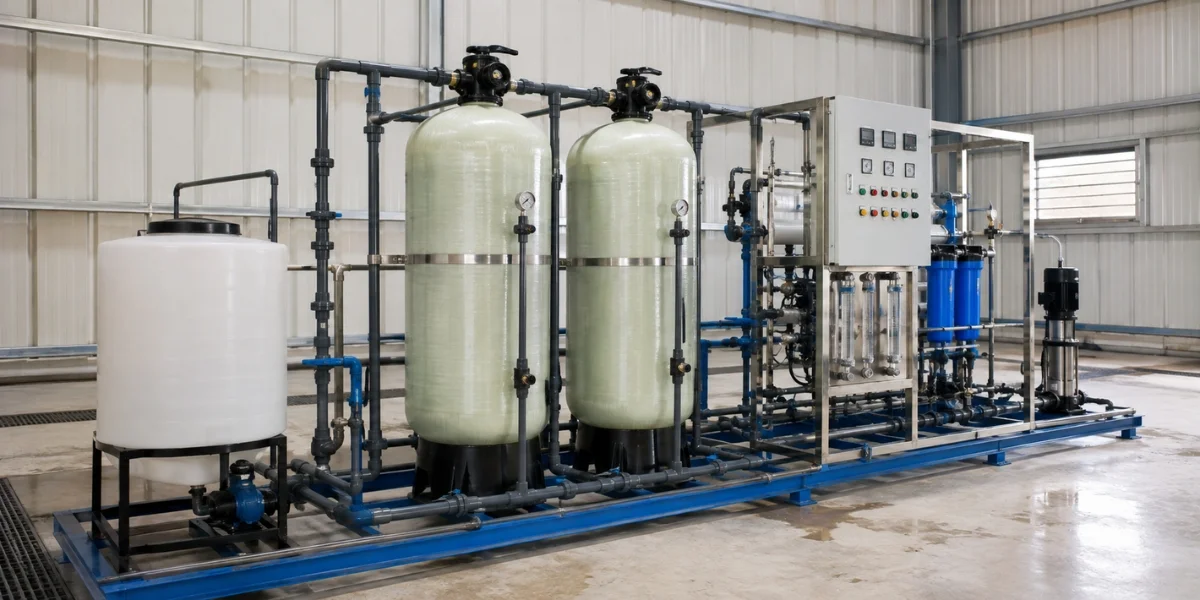
RO & Water Recycling Plant Manufacturer in India
Trity Environ Solutions manufactures RO and water recycling systems for industries and commercial facilities, engineered for reliable purity and reuse.
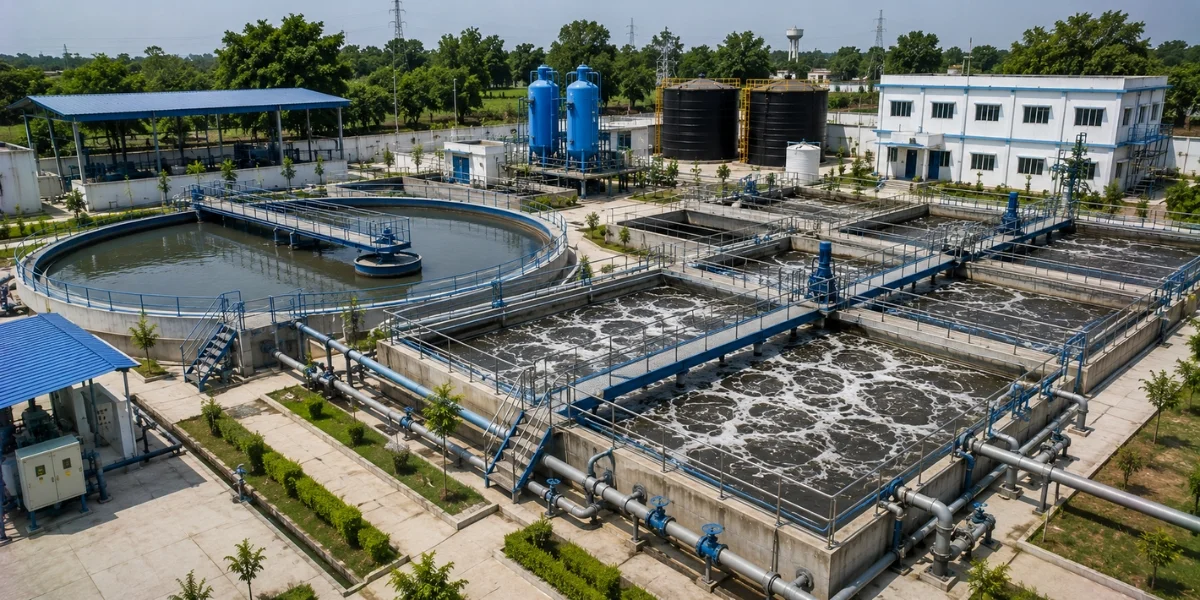
Tertiary Treatment Plant Manufacturer in India
Trity Environ Solutions manufactures tertiary treatment plants that polish treated water beyond secondary treatment, enabling genuine reuse and stricter discharge compliance.
Wastewater Recycling System Manufacturer in India
Trity Environ Solutions manufactures wastewater recycling systems using UF and RO technology, turning treated wastewater into reuse-grade water for cooling, flushing, and gardening.
PAN-INDIA CAPABILITIES
Regional Solutions & State Coverage
TECHNICAL KNOWLEDGE
Related Insights & Engineering Guides
PROVEN EXCELLENCE
Featured Turnkey Installations




Need a Custom Water or Wastewater Treatment Solution?
Our engineering team can help design the right system for your capacity, industry, and compliance requirements.