Redefining Clean Water: How Wastewater Is Shaping the Future of Global Resources
Wastewater is no longer waste—it’s a valuable resource for global water sustainability. Advanced treatment technologies are reshaping water reuse, tackling scarcity.

 ISO 9001:2015 & QCI Approved
Measure first, then reduce. Learn how a water audit works, what it costs and how it connects to recycling, ZLD and groundwater compliance.
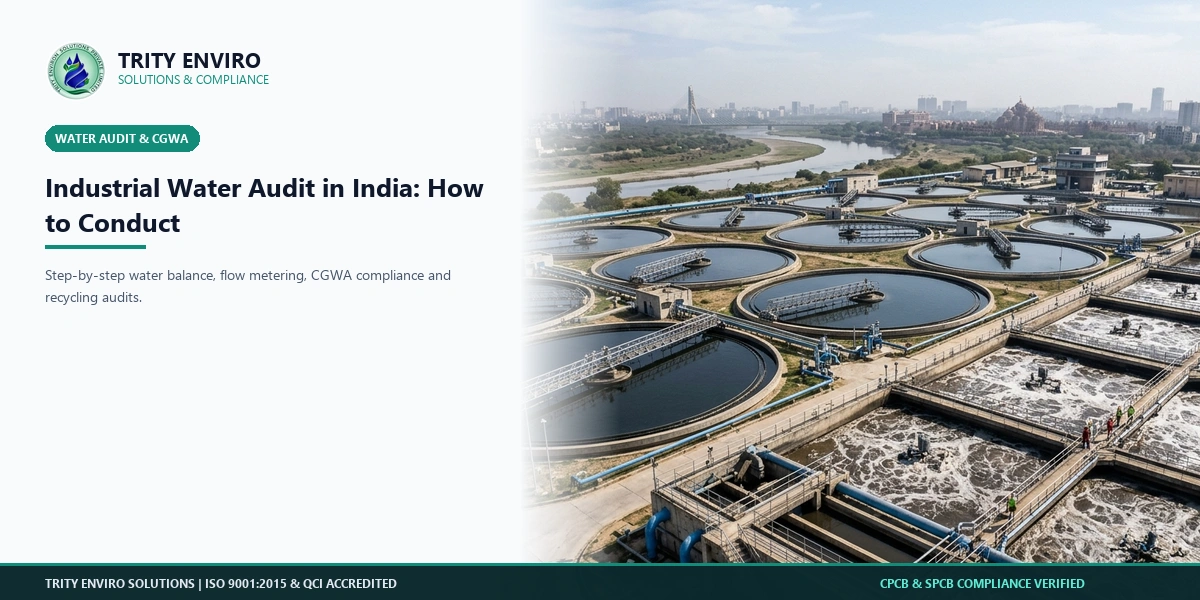
Ask a plant manager how much water the factory uses, and you will usually get one number: the total on the incoming meter, or the number of tanker trips. Ask where that water goes, and the answers get vague. Some goes to cooling, some to the process, some to washing, some to boilers, some to the canteen. Some leaks. Some evaporates. Some leaves as effluent. Nobody knows the shares with confidence.
A water audit closes that gap. It measures the water entering the plant, tracks it through every use, accounts for losses and discharge and then identifies what can be saved, reused or recycled. It produces a water balance, a set of ranked actions with costs and payback and a baseline for later improvement.
Water audits are moving from good practice to expectation. The Central Ground Water Authority (CGWA) has issued guidelines for industries that abstract groundwater, and the Ministry of Jal Shakti has told Parliament that industries drawing more than 100 kilolitres a day of groundwater are required to carry out a water audit every two years and to reduce groundwater use. Listed companies are also asked to disclose water withdrawal, consumption and discharge in their sustainability reports. Whether you are driven by compliance, cost or reputation, the audit is the first step.
This guide explains who needs an audit, how to carry it out step by step with a worked water balance, what it typically costs and how to turn the findings into projects such as reuse, recycling and ZLD. It is written for plant heads, EHS and sustainability managers and project teams in industries, hotels, hospitals and large campuses.
CGWA's guidelines for regulating groundwater extraction, issued in 2020 and amended in 2023, apply to industries and other users that abstract groundwater. According to a reply by the Ministry of Jal Shakti in Parliament, industries abstracting more than 100 kilolitres per day must undertake a water audit every two years, reduce groundwater use by at least 20 percent in the next period and follow other conditions such as recycling, rainwater harvesting and installing meters. Some consultancy pages quote different thresholds, such as monthly volume limits, so confirm the figure in the latest CGWA notification and in the conditions of your own no-objection certificate.
Audits are normally carried out by approved water auditors and submitted to CGWA or the state authority as required. If you hold a groundwater NOC, read the conditions carefully and calendar the audit due date.
Consultancy reports often claim savings of around 15 to 25 percent from audit driven measures. Treat such figures as indicative, since results depend on how wasteful the starting point was.
Start by defining the scope: the whole site or selected units, the time period, the target accuracy and the deliverables. Gather drawings of the water network, equipment lists, production data, bills, meter records, wastewater records and the consent and NOC conditions.
Then check metering. Many plants have a main meter and nothing else. Install or rent flow meters, such as portable ultrasonic meters, at the main intake, at each major user and at the effluent outlet. Measure over at least a week, ideally over a full production cycle, including peak days. Record production alongside, so that you can calculate specific water consumption, such as litres per unit of product.
A water balance is a simple equation: water in equals water out plus accumulation. List every inflow and every outflow, in kilolitres per day, then compare.
Effluent and sewage: 30 + 90 + 15 + 40 + 32 = 207 KLD. A gap of about 5 percent is a sign of leaks, unmetered use or measurement error, and many auditors treat unexplained differences of 5 percent or more as a flag for investigation. In this example, the cooling tower is the largest user at 40 percent, so that is where the biggest opportunity sits.
Express the balance as a diagram, and calculate indicators such as specific water consumption and the share of reused water.
Check for leaks on pipelines, valves, tanks, cooling circuits and underground lines. Use ultrasonic or acoustic detectors, night flow checks (flow when the plant is idle) and pressure tests. Look for overflows, taps left running, poorly maintained hoses and washing practices that waste water.
Review each major process: Can washing be done with a high pressure low volume nozzle? Can rinsing be done in counter current stages? Can cooling water be reused? Can boiler blowdown heat and water be recovered? Is the cooling tower running at sensible cycles of concentration? Our article on designing a water recycling system for cooling towers shows how much a few cycles can save.
Also characterise your wastewater streams. Test pH, COD, TDS and other relevant parameters at each, because reuse potential depends on quality. This links the audit to your effluent treatment plant and sewage treatment plant.
Typical opportunities that audits uncover:
A wastewater recycling system or RO water recycling plant delivers many of these. If discharge is restricted, evaluate ZLD, as explained in our article on ZLD plant cost, technology and mandates.
Rank the findings by saving, cost and difficulty. Group them as no-cost, low-cost and capital projects. For each, estimate the water saved in KLD, the capital cost, the running cost and the payback. Include the value of avoided effluent treatment and discharge. Assign owners and dates. Then measure the result after implementation, and compare it with the baseline.
The audit report should include the scope, methodology, meter data, water balance diagram, findings, recommendations with cost and savings, an implementation schedule and compliance items for CGWA or other authorities. Keep it, because it supports NOC conditions, consent renewals, sustainability reports and expansion applications.
Audit cost depends on the size and complexity of the site, the number of water users and streams, whether metering exists, the duration of measurement, whether the audit must be done by an approved auditor for CGWA submission and the depth of reuse design included. A simple audit of a small unit may take a few days, and a large, multi-unit site may take weeks. Ask for a quotation based on scope, with measurement equipment, site visits, analysis, reporting and presentation clearly listed.
The audit itself is small compared with the savings it can unlock, but only if the plant acts on the findings. Budget for implementation, and for follow-up measurement.
A partner that both audits and builds treatment systems keeps findings practical. Our project execution team, and an annual maintenance contract, support implementation and long-term performance.
Do not audit without meters, treat a single day's reading as typical, ignore night flows, skip the wastewater analysis or stop at a report without an action plan. Plan the follow-up from the start.
| Parameter / Stage | Target Optimal Range | Failure Impact / Risk | Corrective Engineering Action |
|---|---|---|---|
| Water balance closure | Unaccounted difference ideally below about 5 percent of input | Hidden leaks, unmetered use, poor data | Add meters, repeat measurement, run leak survey |
| Groundwater use (where CGWA conditions apply) | Biennial audit for abstraction above 100 KLD, with reduction targets | Non-compliance with NOC, risk of penalty | Calendar audits, implement reuse and recharge measures |
| Cooling tower cycles of concentration | As high as make-up quality allows | Excess make-up and blowdown, high water cost | Treat make-up, automate blowdown, recover blowdown water |
| Specific water consumption | Tracked per unit of product and falling over time | No benchmark, no way to prove improvement | Log water and production together, review monthly |
Trity Environ Solutions is an ISO 9001:2015 certified and QCI-approved wastewater recycling system and water treatment plant manufacturer and supplier in India, delivering robust, high-efficiency systems engineered for CPCB and SPCB regulatory compliance.
Every installation is supported by pan-India Annual Maintenance Contract and Operation and Maintenance services.
Wastewater is no longer waste—it’s a valuable resource for global water sustainability. Advanced treatment technologies are reshaping water reuse, tackling scarcity.
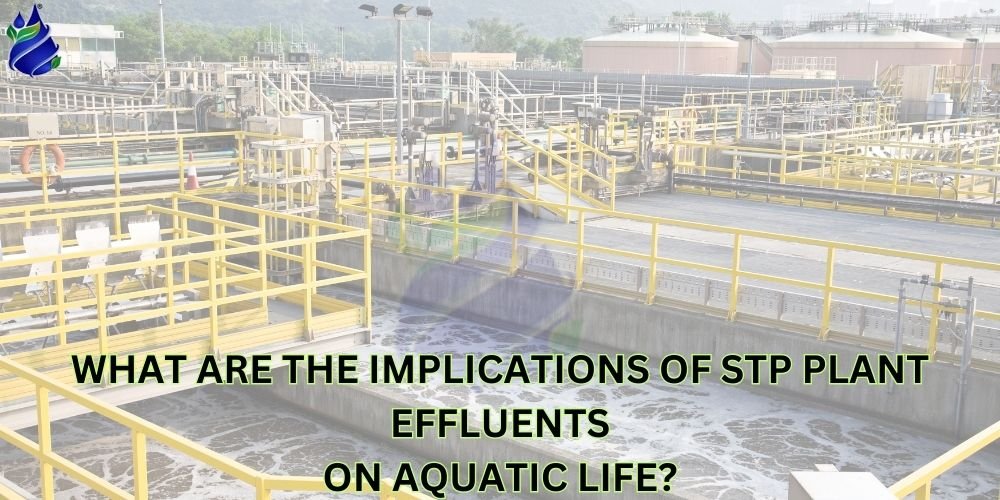
How STP effluent affects aquatic life through endocrine disruption, with real fish studies showing sex ratio and reproductive impacts.
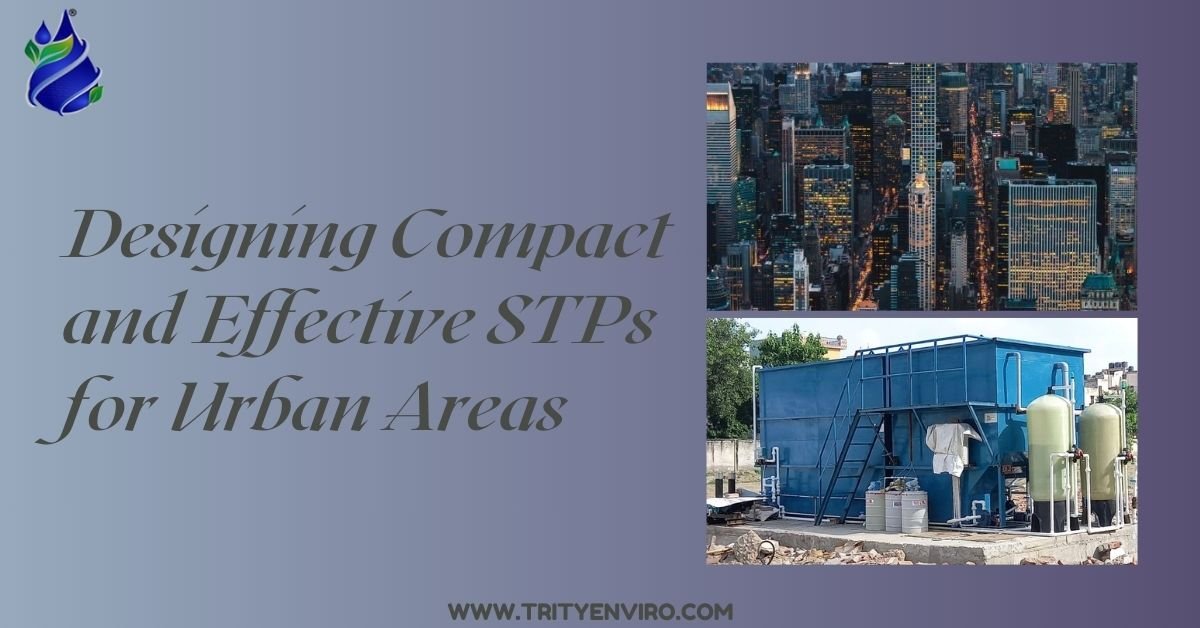
Compact STP design strategies for urban areas with real space-saving data: MBBR, MBR technology, basement integration, and odour control.

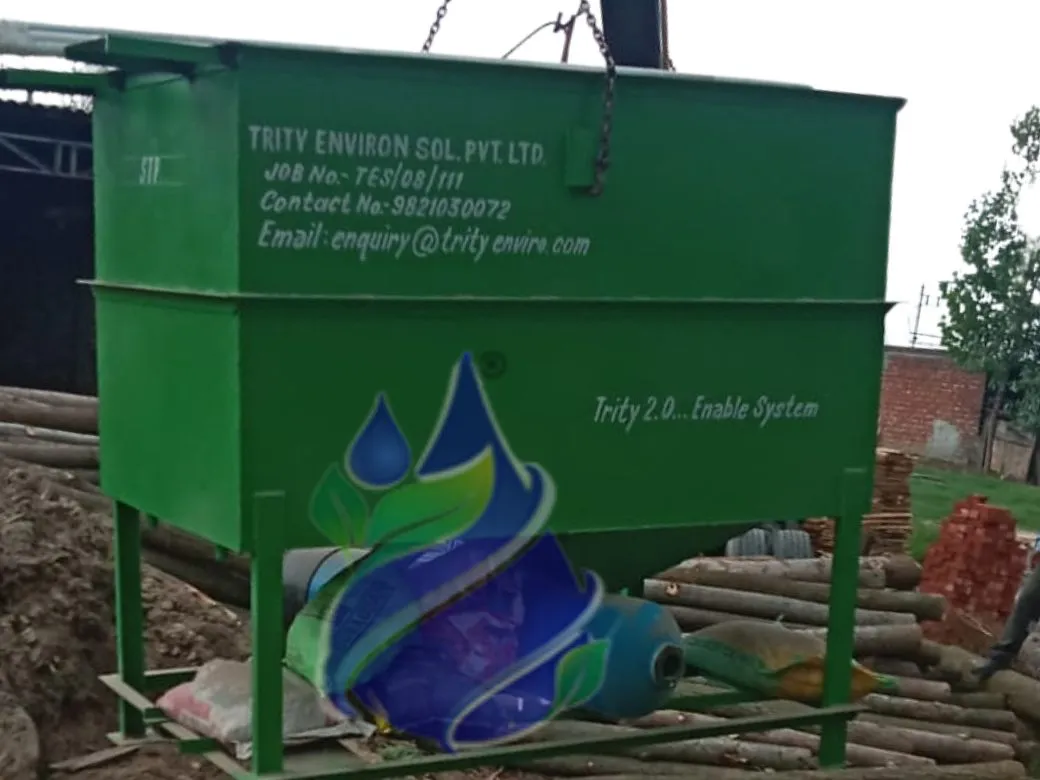



Discuss your requirements with our engineering team and get practical guidance for your project.