Why Water Treatment Plants Are the Backbone of India's Public Health Infrastructure
Why water treatment plants matter in India, how they work, real Jal Jeevan Mission and AMRUT 2.0 data, and the contamination challenges still unresolved.

 ISO 9001:2015 & QCI Approved
Join the CETP, build your own ETP, or do both? Use this checklist to decide for your unit, your cluster and your effluent.
Small and medium industries face an awkward truth about wastewater treatment. The rules apply to them just as they apply to large plants, but the economics do not. A modest dyeing unit, a small chemical formulator or an electroplating workshop may generate only a few kilolitres of effluent a day, yet a full ETP with its tanks, equipment, operators and laboratory is a heavy burden for that volume.
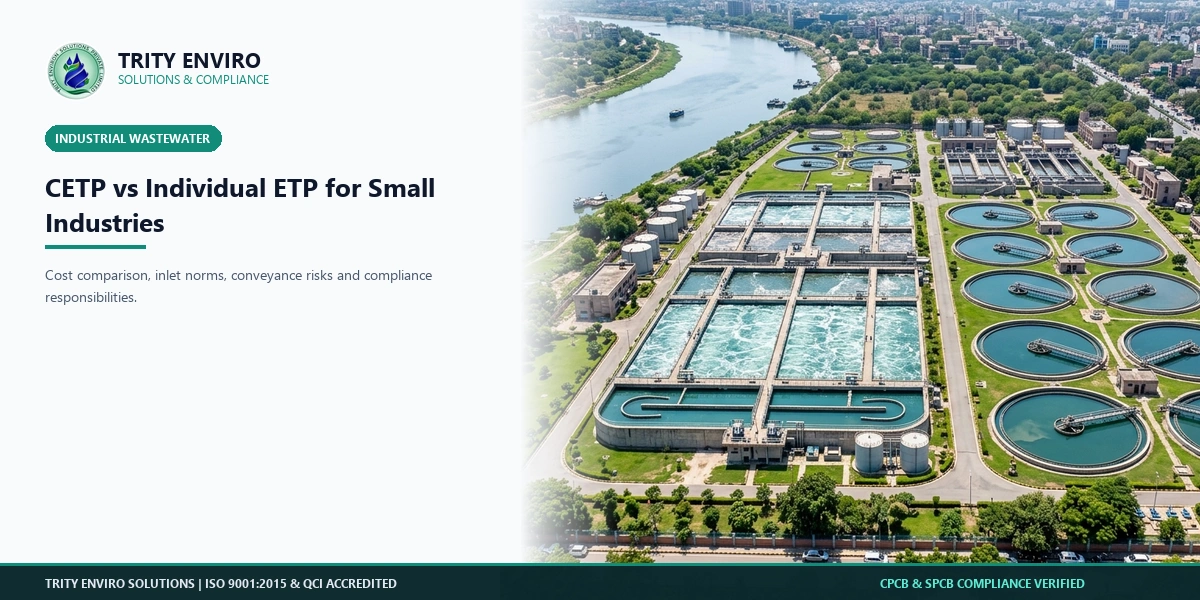
India's answer, for decades, has been the common effluent treatment plant (CETP): a shared facility, usually in an industrial estate or cluster, that collects effluent from many small units, treats it together and discharges it or reuses it. The central government has supported CETPs through a scheme for small industry clusters, and a CPCB study in the early 2010s counted 193 CETPs serving 212 industrial areas, with more built since.
CETPs are not a magic solution. Members must pre-treat their effluent to meet inlet norms before it reaches the common plant. They share costs, and disputes over payment are common. A badly run CETP drags down every member, and regulators have acted against both CETP operators and the units that feed them. Meanwhile, an individual ETP gives control and independence, but at higher cost per kilolitre for a small unit, plus the need for space, skill and operating discipline.
This guide compares the two routes, explains how CETP membership works, shows what pre-treatment you still need and gives a decision checklist. It is written for owners and managers of small and medium industries, industry associations and consultants.
A CETP receives effluent from member units, usually through a collection network or by tanker, and treats it in a central plant. Members join under an agreement with the CETP society or operator and pay a membership fee and a recurring charge, often based on the volume or strength of the effluent.
The key condition is the inlet norm. Each member must treat its effluent at source until it meets the quality limits the CETP can handle, and the limits are set by the SPCB through consent and, nationally, through central notifications on CETP inlet standards. If a member sends strong, toxic or high TDS effluent beyond the norm, it harms the CETP's biology and raises costs for everyone. Responsible CETPs sample inlets, penalise violators and can disconnect them.
Funding often came from a mix of central and state support and member contributions under the scheme's guidelines, though terms have varied over time and by state. Check the current arrangement for your cluster.
Reports and tribunal records show recurring problems:
When a CETP fails, every member suffers. Regulators have issued closure and compensation orders against CETPs and, in some cases, members. This is why a good CETP, well funded and well governed, is an asset, and a poor one is a liability.
Building your own ETP gives you control. You design it for your effluent, run it to your schedule, decide on reuse and do not depend on the behaviour of other members. You can integrate recycling, RO and ZLD into your own plant. It may be the only option if no CETP serves your location or if your effluent is not accepted by the CETP.
The burdens are real. Capital cost per kilolitre is higher for a small plant. You need land, power, trained operators, chemicals, laboratory support and sludge disposal. You are responsible for consent, monitoring and compliance without any shared help. See our guide to ETP plant cost in India for what drives the numbers.
A CETP does not replace on-site treatment. Typically you need to provide:
Our guide on industrial wastewater pre-treatment before the ETP describes each stage. An oil water separator and an equalization tank are frequently the first items a CETP member must install.
| Factor | CETP membership | Individual ETP |
|---|---|---|
| Capital cost | Low to moderate, mostly membership and pre-treatment | Higher, full plant for your effluent |
| Running cost | Pay per volume or strength, plus pre-treatment | You pay for power, chemicals, staff and sludge |
| Control | Limited, depends on CETP operation | Full control |
| Compliance risk | Shared, can be hurt by other members | Your own responsibility |
| Space needed | Small, for pre-treatment | Larger, for the full plant |
| Reuse and ZLD | Depends on the CETP | You can design it in |
| Best for | Small volumes, similar effluents, a well run CETP | Larger volumes, difficult effluent, no CETP, need for reuse |
Answer these questions honestly:
1. Is there a CETP in your cluster, and is it accepting new members? If not, you may have no choice.
2. How well is it run? Check its compliance record, outlet quality, online monitoring and financial health. Ask existing members.
3. Does your effluent fit? If it carries heavy metals, solvents, very high TDS or strong colour, the CETP may not accept it or may charge heavily.
4. How much effluent do you generate? Small volumes favour a CETP. Larger volumes may justify your own plant.
5. What does your consent say? Some consents require CETP membership, and others require an individual ETP or ZLD.
6. What is the five year cost of each? Include membership, pre-treatment, per kilolitre charges, penalties and your own plant's capex and opex.
7. Do you want to recycle water or reduce water cost? An individual plant gives more control over reuse.
8. What is the risk if the CETP fails? If you would be shut down along with it, factor that in.
Many units choose a hybrid: strong pre-treatment at the unit to meet inlet norms, membership of the CETP for final treatment and, if water is expensive, a small recycling unit for rinse water. See our guide to the wastewater recycling system for options.
For a CETP member, budget for the membership fee, the pre-treatment plant and its operation, the per kilolitre charge, laboratory tests, sampling and the cost of penalties if the inlet fails. For an individual ETP, budget for the full plant, civil works, power, chemicals, operators, laboratory, sludge handling, consent and monitoring. Add a filter press or other sludge dewatering if you produce sludge, and read our guide to filter press sizing.
Check whether any subsidy or support scheme is available for your sector and state at the time, and treat older scheme terms as a guide only. If your effluent needs ZLD, compare the cost of your own ZLD with the CETP's charge, as discussed in our article on ZLD plant cost, technology and mandates.
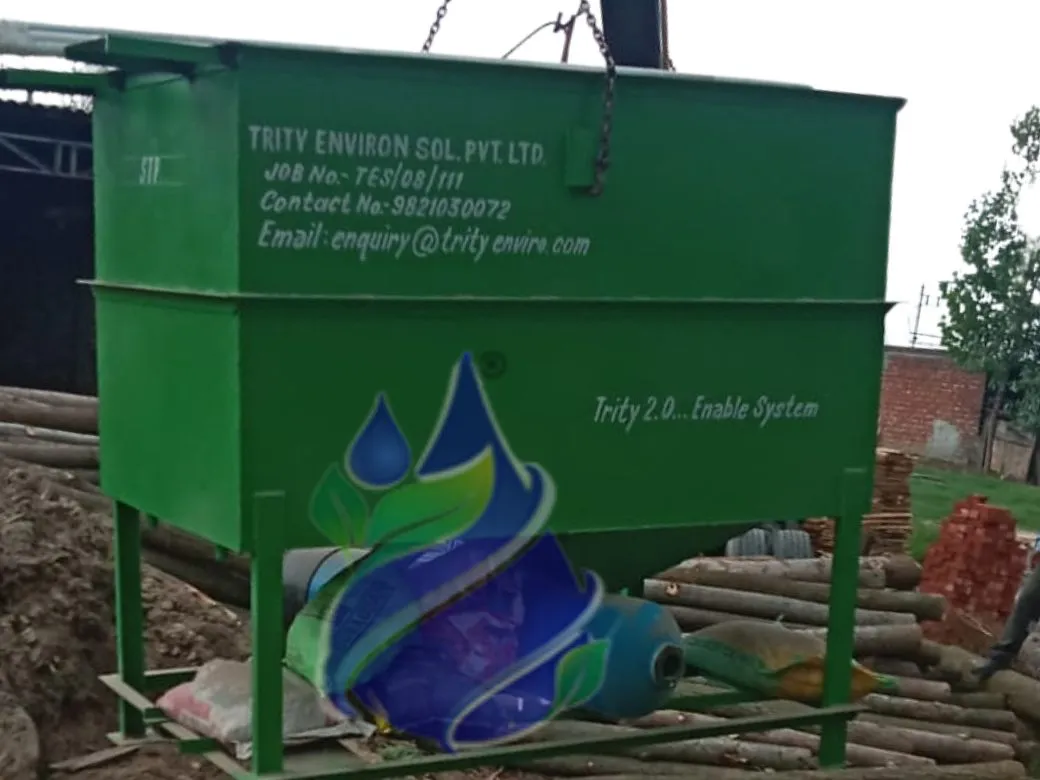
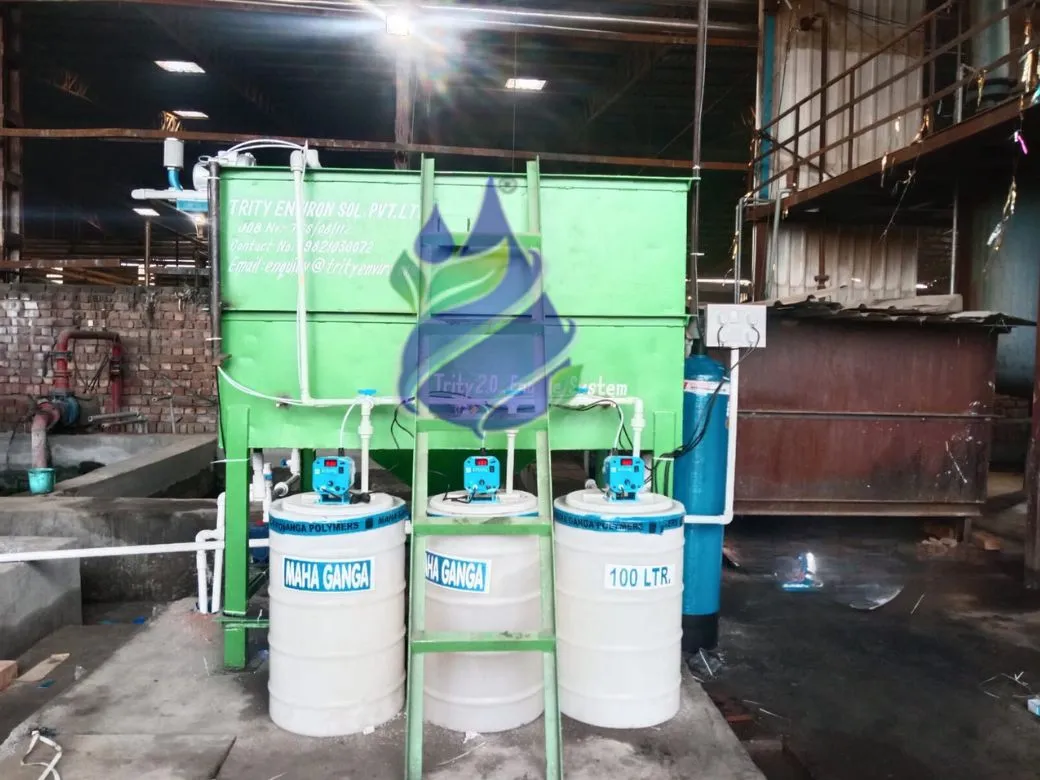
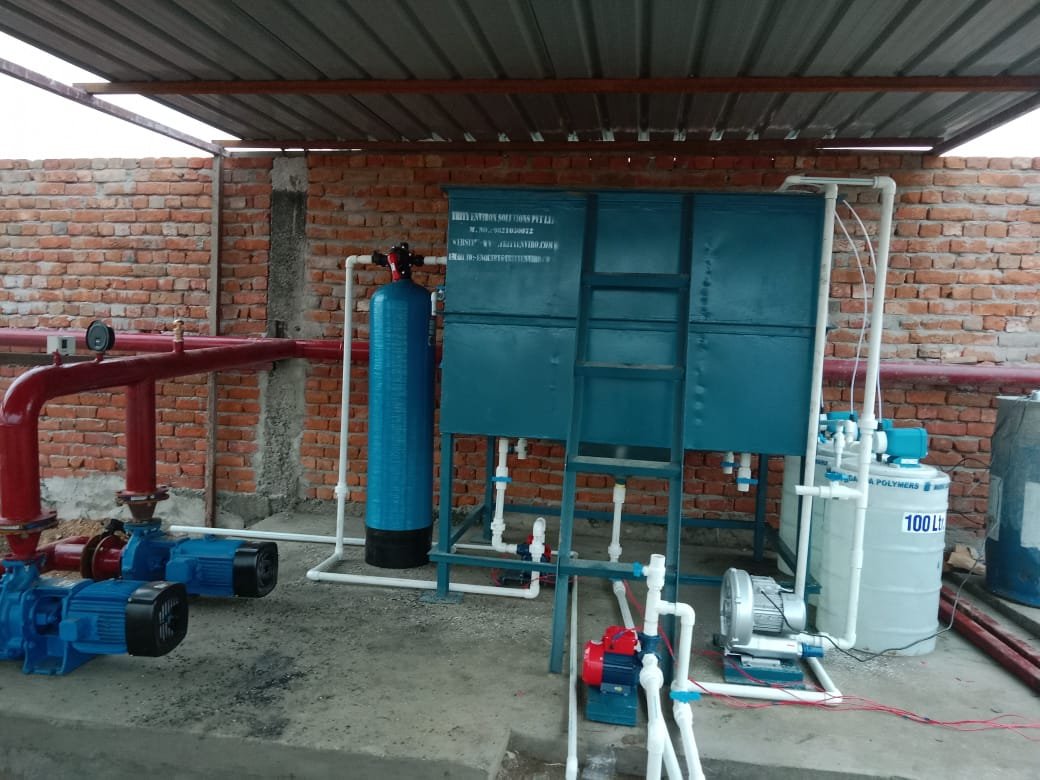
Our effluent treatment plant designs cover individual ETPs and unit-level pre-treatment for CETP members, with sector plants for textile, chemical and pharmaceutical units. An annual maintenance contract keeps the plant working, and our CTE and CTO guide explains how to handle consent for either route.
If you are joining or already inside a CETP, ask how it is governed. Who runs the plant, and how are they chosen? How are charges set, collected and spent, and are accounts shared with members? How often is the inlet of each member sampled, and what happens when a member fails? Is there online monitoring at the CETP outlet, and who sees the data? What reserve exists for repairs and upgrades, and how are expansion costs shared? What does the agreement say about leaving the CETP? A CETP that answers these clearly is more likely to stay compliant, and compliance of the CETP protects every member's licence to operate.
Keep records of every sample taken at your outlet to the CETP, and retain your own split samples. If the CETP claims a violation, your data helps you respond, and it shows regulators that you take inlet quality seriously.
| Parameter / Stage | Target Optimal Range | Failure Impact / Risk | Corrective Engineering Action |
|---|---|---|---|
| CETP inlet quality from a member | Within the CETP's inlet norms in the consent | Penalty, disconnection, damage to CETP biology | Install pre-treatment, test regularly, segregate toxic streams |
| Effluent volume for individual ETP viability | Large enough to justify capex and operators | High cost per kilolitre, unstable operation | Compare five year cost with CETP, consider phased design |
| CETP governance and finances | Regular payments, shared monitoring, clear rules | Plant failure, closure orders affecting all members | Audit the CETP, push for online monitoring and transparency |
| Dissolved salts and colour | Treated to the outlet norm, possibly with RO and ZLD | Failed samples, directions to upgrade | Add RO or ZLD at the CETP or at your own plant |
Trity Environ Solutions is an ISO 9001:2015 certified and QCI-approved effluent treatment plant manufacturer and supplier in India, delivering robust, high-efficiency systems engineered for CPCB and SPCB regulatory compliance.
Every installation is supported by pan-India Annual Maintenance Contract and Operation and Maintenance services.
Why water treatment plants matter in India, how they work, real Jal Jeevan Mission and AMRUT 2.0 data, and the contamination challenges still unresolved.

Sand filtration in STP plants improves treated water quality by removing suspended solids. Learn its importance, working, and role in wastewater treatment.

Practical STP modernization guide: MBBR retrofits, automation, and plug-and-play FRP upgrades that avoid a costly full rebuild of aging infrastructure.




Discuss your requirements with our engineering team and get practical guidance for your project.