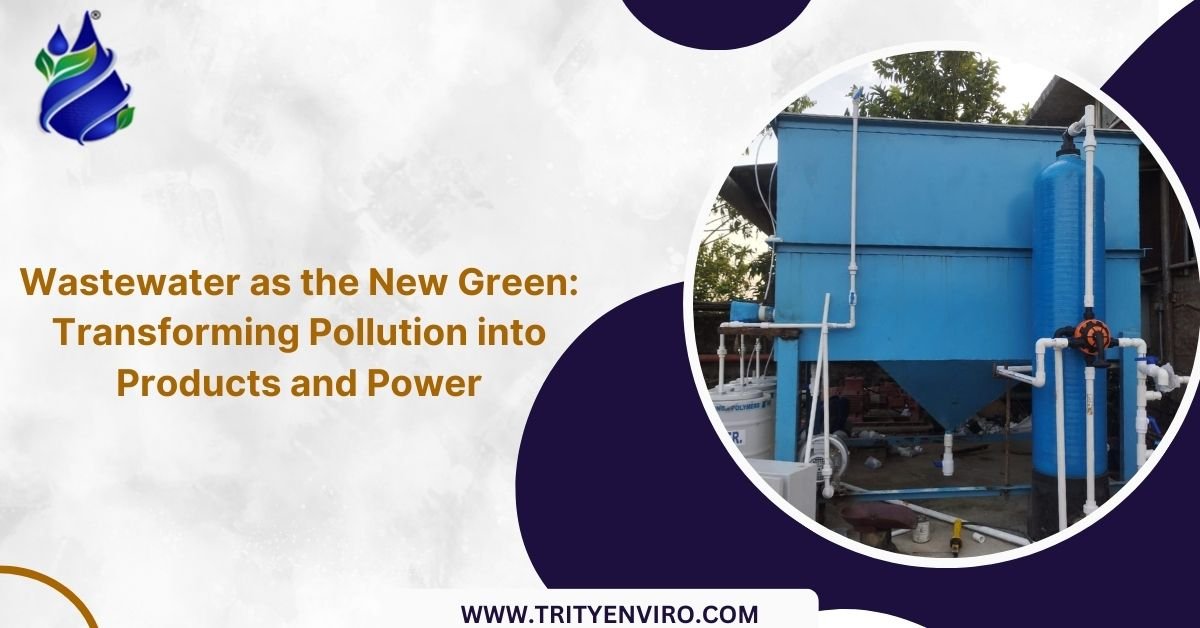
Wastewater as the New Green: Transforming Pollution into Products and Power
Discover how wastewater is transformed into valuable products and clean energy. Learn about sustainability, resource recovery, and its economic and environmental benefits.

 ISO 9001:2015 & QCI Approved
The right STP format depends on capacity, site and timeline. Use this guide to compare package and RCC plants and decide with confidence.
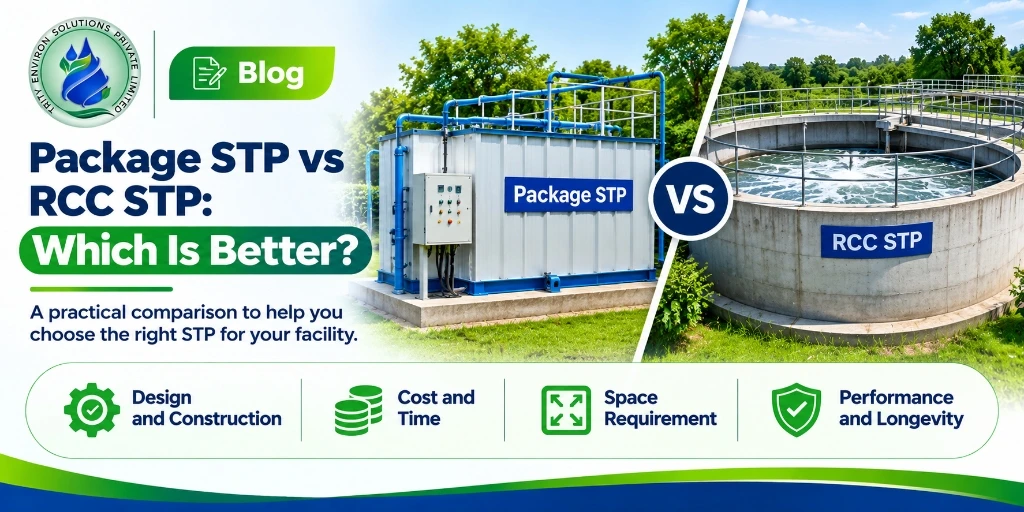
When a builder, society or hotel decides to install a sewage treatment plant, an early question comes up: should it be a package STP or an RCC STP? Suppliers have their own preferences. One says prefabricated plants are faster, cleaner and modern. Another says reinforced concrete lasts for decades and is the only serious choice. Both are partly right, and both can be wrong for your site.
The two formats are not different in biology. The same processes, such as MBBR, SBR, MBR and extended aeration, can be built either way. What changes is the container. A package STP arrives from the factory as a fabricated plant in a tank or container made of steel, stainless steel or fibre reinforced plastic, with equipment, piping and often controls pre-installed. An RCC STP is built on site from reinforced cement concrete, with tanks cast in place and equipment installed afterwards.
The choice affects cost, time, space, durability, expansion and the quality control you can expect. Compact package plants have become popular for tight sites and fast timelines, and large projects with generous space and long design lives often prefer concrete. In between lies a wide range where either could work, and the right answer depends on your own conditions.
This guide compares the two formats honestly. It covers capacity ranges, cost and time, space and layout, durability and maintenance, risks and a decision checklist. At Trity Enviro, we design plants in both styles, and the comparison reflects that experience. It is written for builders, architects, RWA committees, hotel and hospital owners and consultants.
A package STP is manufactured in a workshop. Tanks are fabricated from mild steel with protective coating, stainless steel or FRP, and sized to be transported to the site by road. Blowers, pumps, diffusers, media, panels and piping are fitted at the factory, and the plant is tested before dispatch. On site, it is placed on a prepared foundation, connected to inlet, outlet, power and water and commissioned. Larger capacities are built as several modules placed side by side. Containerised versions fit within a shipping container footprint and are transportable. Our packaged containerized sewage treatment plant page describes these.
An RCC plant is built on site. Excavation, reinforced concrete tanks, internal baffles, walkways and equipment foundations are constructed by a civil contractor, and mechanical and electrical equipment is installed once the tanks are cured and tested. The design is bespoke, and tanks can be any shape and size, which suits irregular sites, basements and large capacities. The civil quality, curing, waterproofing and leak testing depend on the site team.
Capacity. Package plants are common from small capacities up to a few hundred KLD, and multiple modules extend them. Very large projects, such as big townships and municipal plants, usually go for RCC, where tank sizes are limited only by structure and site. The cut-over point is not fixed, and it depends on the supplier and the site.
Cost. At small and medium sizes, package plants often cost less overall because they cut civil work, shuttering, labour and site supervision, and they can be cheaper per KLD when site conditions are difficult. At large sizes, concrete usually becomes cheaper per unit of capacity because the plant is built from cheap materials with economies of scale. Compare total installed cost, not only the supplier's price, since excavation, foundations, dewatering, crane hire, power and piping vary widely. Add lifecycle cost over the design life.
Time. A package plant is built in a factory while the site is prepared, so installation on site can take days to a few weeks. RCC plants take longer: excavation, reinforcement, casting, curing and waterproofing run to months in sequence. For projects with a tight handover, such as hotels and commercial buildings, this difference can be decisive.
Package plants are compact and can be placed overground, semi-buried or in a basement if access allows. They suit sites where excavation is difficult, groundwater is high or space is limited. Their shapes are usually standard, which can create awkward gaps.
RCC plants can be shaped to fit an irregular plot, built under driveways, podiums and landscaped areas and designed as part of the building structure. They can also be deep, which helps with gravity flow. But they need excavation, shoring and, in high groundwater areas, dewatering and buoyancy control, and the structure must resist soil and water pressure.
RCC tanks, properly built with good concrete cover, waterproofing and protective coatings on wet surfaces, can last several decades. Cracks, leaks and corrosion at splash zones and in the headspace above water, where hydrogen sulphide attacks concrete, are the usual problems. Repairs are possible but may involve draining the tank.
Package plants depend on the material. Coated mild steel needs careful surface preparation and periodic recoating, and lifespan depends on coating quality and maintenance, often measured in one to two decades. Stainless steel and FRP resist corrosion better but cost more. A damaged package tank can sometimes be replaced as a module. Equipment access is usually good in package plants, with pumps, blowers and panels within one frame.
For expansion, package plants can add modules if the site has space and the layout allows. RCC plants can be designed with provision for expansion, though modifying a concrete structure later is difficult.
| Factor | Package STP | RCC STP |
|---|---|---|
| Typical range | Small to medium, expandable by modules | Medium to very large |
| Build time on site | Days to weeks | Months |
| Civil work | Light, foundation slab | Heavy |
| Footprint | Compact, fixed shapes | Flexible, can fit irregular sites |
| Design life | Depends on material and coating | Long if well built and maintained |
| Quality control | Factory, tested before dispatch | Site, depends on contractor |
| Relocation | Possible | Not possible |
| Cost trend | Often lower at small and medium sizes | Often lower at large sizes |
Treat the table as a guide. Real quotes can reverse these trends on a given site.
For either format, the process design matters more than the container. Check the design basis, capacity and treated water quality, as covered in our guides on how to calculate STP capacity and MBBR vs SBR vs MBR.
Answer these questions:
Many projects use a hybrid: RCC for equalization and collection tanks that are part of the building structure, and package modules for the biological and tertiary stages.
Trity Enviro designs sewage treatment plants to suit the site, including MBBR and MBR systems, and an annual maintenance contract keeps either format in good order. If you are unsure whether you need an STP at all, read our guide on whether an STP is mandatory for your building.
If you are shown a running package plant, look closely at a few things. Check the plate thickness and the coating inside the tank, especially at the waterline and the headspace, where corrosion starts. Look at the welds, the pipe supports and the quality of the panel wiring. Open the access covers and check whether you can reach the diffusers, the pump and the blower without dismantling anything. Ask how long the plant has been running, what repairs it has needed and how the operator finds it. A package plant that is neat, accessible and a few years old without major repairs is a good sign. One that is already stained, leaking or hard to reach tells you what to expect.
| Parameter / Stage | Target Optimal Range | Failure Impact / Risk | Corrective Engineering Action |
|---|---|---|---|
| Material and coating (package) | Adequate plate thickness with a durable coating system, or stainless or FRP | Early corrosion, leaks, replacement | Specify thickness and coating, inspect and recoat on schedule |
| Water tightness (RCC) | Passes a full water test before backfill | Leaks, groundwater ingress, odour | Test, repair joints, apply waterproofing and coatings |
| Process design basis | Matched to real flow, load and peak, in either format | Poor treated water quality | Verify design with metered data and design calculations |
| Maintenance access | Clear access to pumps, blowers, diffusers and panels | Delayed repairs, unsafe work | Review layout, add walkways, lifting points and ventilation |
Trity Environ Solutions is an ISO 9001:2015 certified and QCI-approved sewage treatment plant and packaged STP manufacturer and supplier in India, delivering robust, high-efficiency systems engineered for CPCB and SPCB regulatory compliance.
Every installation is supported by pan-India Annual Maintenance Contract and Operation and Maintenance services.
Looking to install a high-performance package or RCC STP with Trity Enviro? Call +91-9821030072 or email enquiry@trityenviro.com, or request a free engineering consultation from our technical team.
Discover how wastewater is transformed into valuable products and clean energy. Learn about sustainability, resource recovery, and its economic and environmental benefits.

An 8-step guide to designing a genuinely sustainable STP plant: site investigation, technology choice, energy efficiency, and resource recovery.
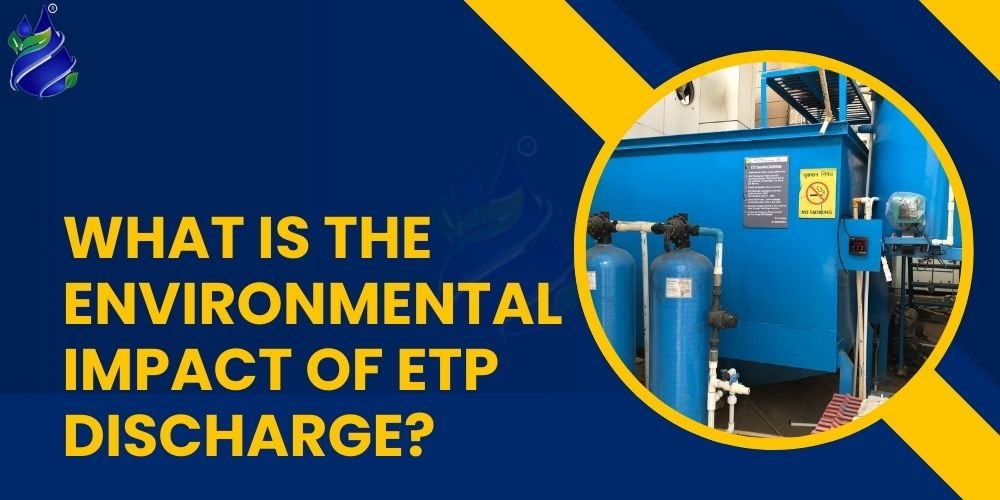
How poorly treated ETP discharge damages Indian rivers and ecosystems, with real pollution data, and what genuinely protective treatment looks like.











Discuss your requirements with our engineering team and get practical guidance for your project.

