
 ISO 9001:2015 & QCI Approved
Grey Water Treatment Plant Manufacturer in India
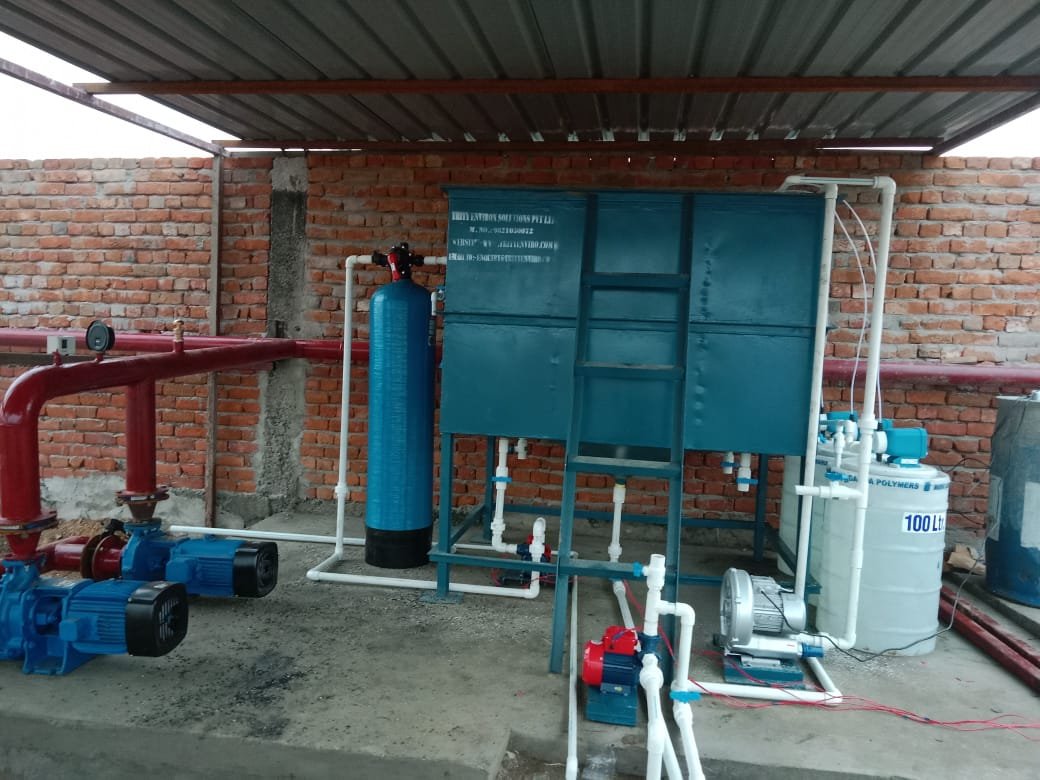
Trity Environ Solutions is a trusted grey water treatment plant manufacturer in India, engineering MBBR, MBR, and SBR based systems that recover wastewater from sinks, showers, and laundry for reuse in flushing, irrigation, and cooling. Our plants are built around your actual source composition, with pan India installation support.
SPCB / CPCB Norm Compliant
Heavy Fabrication
The Water Being Wasted While You Pay for Tanker Supply
A large residential complex or hotel spending 80 to 150 rupees per kilolitre on tanker water is often simultaneously draining hundreds of kilolitres of grey water, wastewater from sinks, showers, and laundry, straight into the sewer every day. Grey water typically accounts for 50 to 70 percent of a building's total wastewater flow, and it's cleaner and more consistent than sewage. A properly engineered grey water treatment plant recovers a meaningful share of it for flushing, irrigation, and cooling, with savings that show up directly in the monthly water bill rather than staying theoretical.
Grey water isn't uniformly "clean," though, and BOD can range from 50 to 250 mg/L depending on the source, which is why proper site characterisation before design matters more than most buyers expect.
Spending heavily on tanker water while grey water goes to waste? Request a free technical assessment and our engineering team will size the right system for your source composition.
WHY THIS SYSTEM?
Key Benefits of Grey Water Treatment Plant Manufacturer in India
Engineered for direct tanker cost savings, high freshwater recovery, and stronger green building compliance.
Direct Tanker Cost Savings
Cuts freshwater procurement costs directly, replacing tanker water priced at 80 to 150 rupees per kilolitre with treated grey water at a fraction of that cost.
30 to 60% Freshwater Recovery
Recovers 30 to 60 percent of daily freshwater consumption for flushing, irrigation, and washing, turning a wasted daily discharge into a measurable operating saving.
Compact, Simpler Treatment Train
Requires a smaller footprint and simpler treatment train than full sewage treatment, since grey water carries lower pathogen load and more moderate BOD.
Supports Green Building Ratings
Supports IGBC Green Homes and GRIHA rating credits, strengthening green building certification and long-term asset valuation for developers and facility owners.
Lower Downstream Sewage Load
Reduces sewage discharge volume and downstream treatment load, lowering both compliance risk and the operating cost of full-scale sewage treatment.
Undersized Equalisation Is Where Most Grey Water Plants Actually Fail
Buildings don't generate grey water uniformly, and morning shower and laundry peaks can push 3 to 4 times the average hourly flow through a system for a couple of hours at a time. An undersized equalisation tank can't buffer this surge, causing hydraulic shock to the biological stage that takes days to stabilise. Trity Environ Solutions consistently sizes equalisation volume above the bare minimum calculation, particularly for residential projects where morning loading spikes are severe and predictable.
Hotel Laundry Foam and Membrane Neglect Are the Two Recurring Field Problems
Hotel laundry rooms generate high surfactant loads that produce foam in equalisation and aeration tanks if the system isn't designed with a defoaming arrangement, a detail that gets missed in template-based designs. Separately, MBR membranes need disciplined cleaning schedules, since a few neglected weeks lets transmembrane pressure climb and flux drop, leading to replacement costs of 3 to 6 lakh rupees well ahead of design life. Trity Environ Solutions specifies both defoaming provisions and written membrane cleaning protocols upfront, backed by an Annual Maintenance Contract. Talk to our team about AMC coverage for your plant.
Sludge Still Needs Handling, Even at Grey Water Scale
Biological tanks in a grey water system generate sludge, less than a full STP but consistently, and if nobody withdraws it regularly, mixed liquor suspended solids climb and treatment efficiency drops. Trity Environ Solutions integrates sludge dewatering equipment into the plant design from the outset, since dewatered sludge is far easier and cheaper to dispose of than liquid sludge left to accumulate. Kitchen washing sinks feeding into the same system also need a grease trap or DAF pretreatment upstream, since unremoved grease clogs the biological stage quickly.
SYSTEM CONFIGURATIONS
Types of Grey Water Treatment Plant Manufacturer in India Configurations
Biological technologies selected to match your source composition, operator availability, and reuse application.
MBBR Based Grey Water Treatment
Plastic biofilm carriers treat grey water in a compact footprint, forgiving of load fluctuations, a practical choice for sites without full-time operators.
MBR Based Grey Water Treatment
Combines biological treatment with membrane filtration for the highest treated water quality, suited to cooling tower reuse where consistent output matters most.
SBR Based Grey Water Treatment
Batch cycle operation gives flexibility for intermittent or variable flow, well suited to hotels and educational institutions with irregular daily patterns.
Grey Water with ZLD Integration
Grey water treatment integrated with a Zero Liquid Discharge system for facilities pursuing complete water recovery and zero freshwater discharge on site.
STEP-BY-STEP WORKFLOW
How the Grey Water Treatment Plant Manufacturer in India Process Works
A multi-stage treatment process engineered for consistent freshwater recovery and reuse.
01
Screening & Collection
Coarse screens remove hair, lint, and fibrous material at the inlet, protecting pumps and preventing clogging in downstream units.
02
Equalisation
Flow is buffered to absorb morning shower and laundry peaks, preventing hydraulic shock to the biological treatment stage that follows.
03
Biological Treatment
MBBR, MBR, or SBR technology breaks down organic load, with technology selection matched to your operator availability and quality targets.
04
Filtration & Disinfection
Sand and carbon filtration or ultrafiltration, followed by UV or chlorine disinfection, prepares water for its intended reuse application.
COMMON INQUIRIES
Frequently Asked Questions
Q1. How long does a grey water treatment plant last?
A well-designed, consistently maintained system typically performs reliably for 15 to 20 years, though UV lamps need annual replacement and MBR membrane modules generally last 5 to 8 years with proper cleaning.
Q2. How much water can a grey water recycling system realistically save?
Most residential and commercial buildings can replace 30 to 55 percent of daily freshwater consumption with treated grey water, depending on how many reuse applications are connected.
Q3. Is a grey water treatment plant legally required for my project?
It depends on state, project type, and size, with many states requiring on-site treatment for residential complexes above certain unit thresholds and commercial establishments beyond defined discharge volumes.
Q4. Can treated grey water be used for drinking?
No, grey water treatment, even with MBR and UV disinfection, does not produce potable water. Treated output is suitable for flushing, irrigation, cooling, and cleaning only.
Q5. How long does installation take?
A 10 to 25 KLD system on a ready site typically commissions in 4 to 6 weeks, while larger systems with significant underground civil work may take 12 to 18 weeks.
Q6. What is the typical operating cost?
For a 50 KLD MBBR-based system, monthly operating costs typically range from 8,000 to 18,000 rupees, covering power, chemicals, and routine maintenance, with MBR systems running slightly higher due to membrane cleaning costs.
CATALOGUE
Related Engineering Products
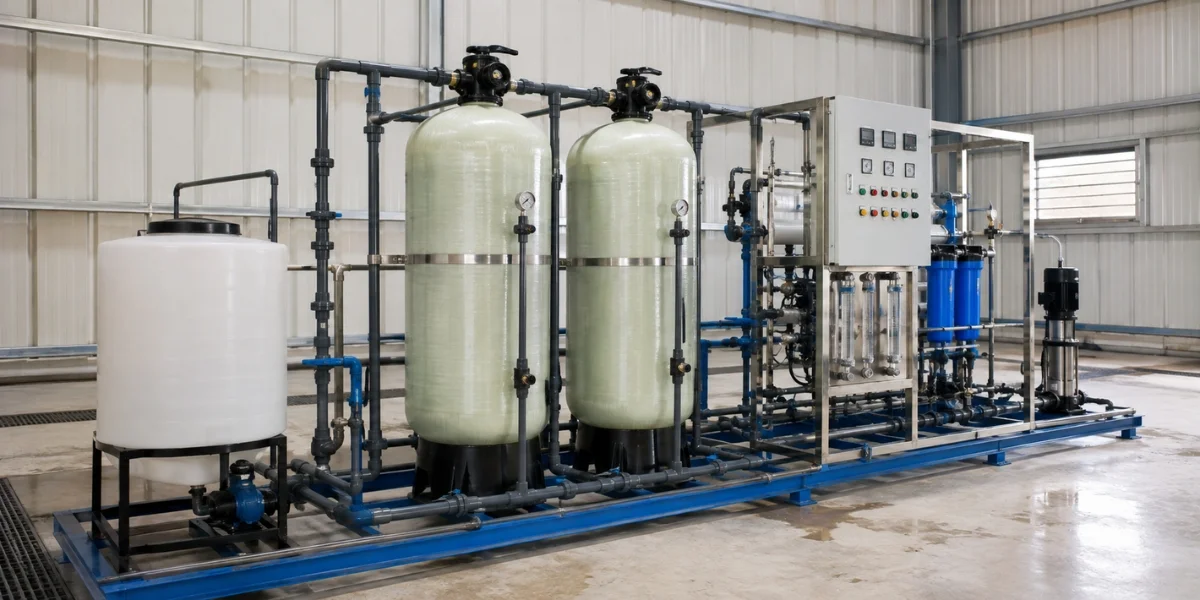
RO & Water Recycling Plant Manufacturer in India
Trity Environ Solutions manufactures RO and water recycling systems for industries and commercial facilities, engineered for reliable purity and reuse.
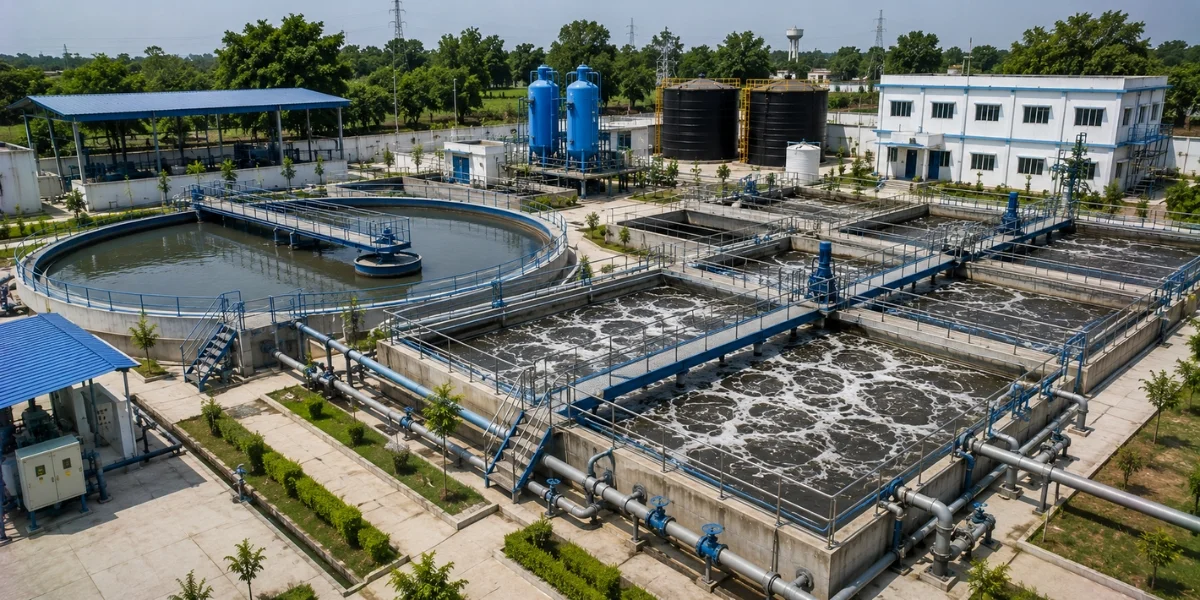
Tertiary Treatment Plant Manufacturer in India
Trity Environ Solutions manufactures tertiary treatment plants that polish treated water beyond secondary treatment, enabling genuine reuse and stricter discharge compliance.
Wastewater Recycling System Manufacturer in India
Trity Environ Solutions manufactures wastewater recycling systems using UF and RO technology, turning treated wastewater into reuse-grade water for cooling, flushing, and gardening.
PAN-INDIA CAPABILITIES
Regional Solutions & State Coverage
TECHNICAL KNOWLEDGE
Related Insights & Engineering Guides
PROVEN EXCELLENCE
Featured Turnkey Installations



Need a Custom Water or Wastewater Treatment Solution?
Our engineering team can help design the right system for your capacity, industry, and compliance requirements.