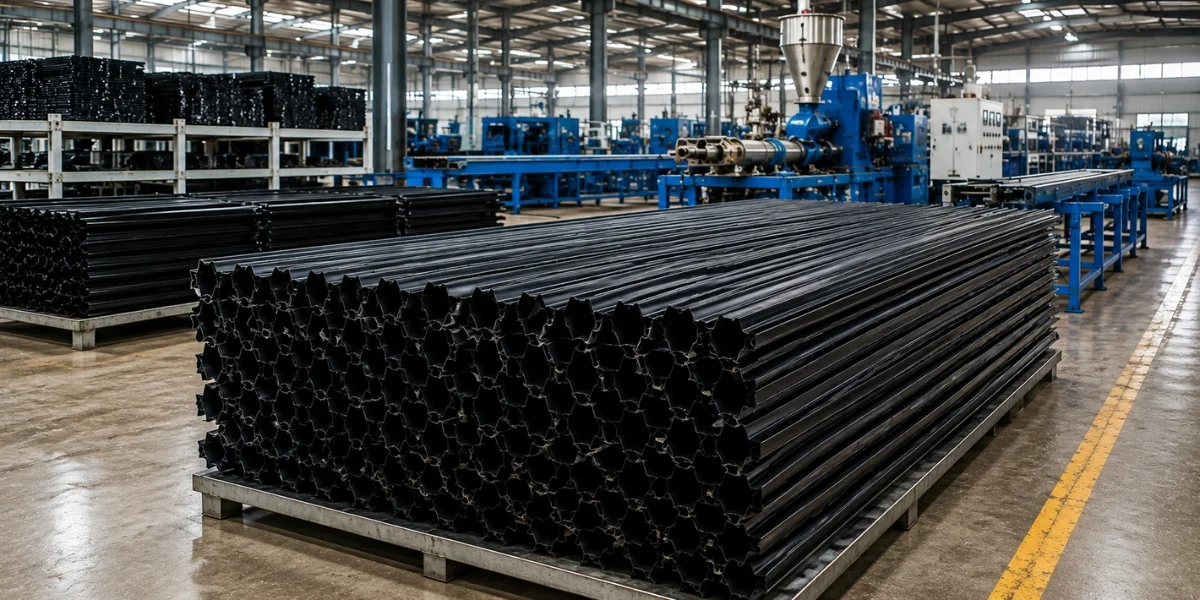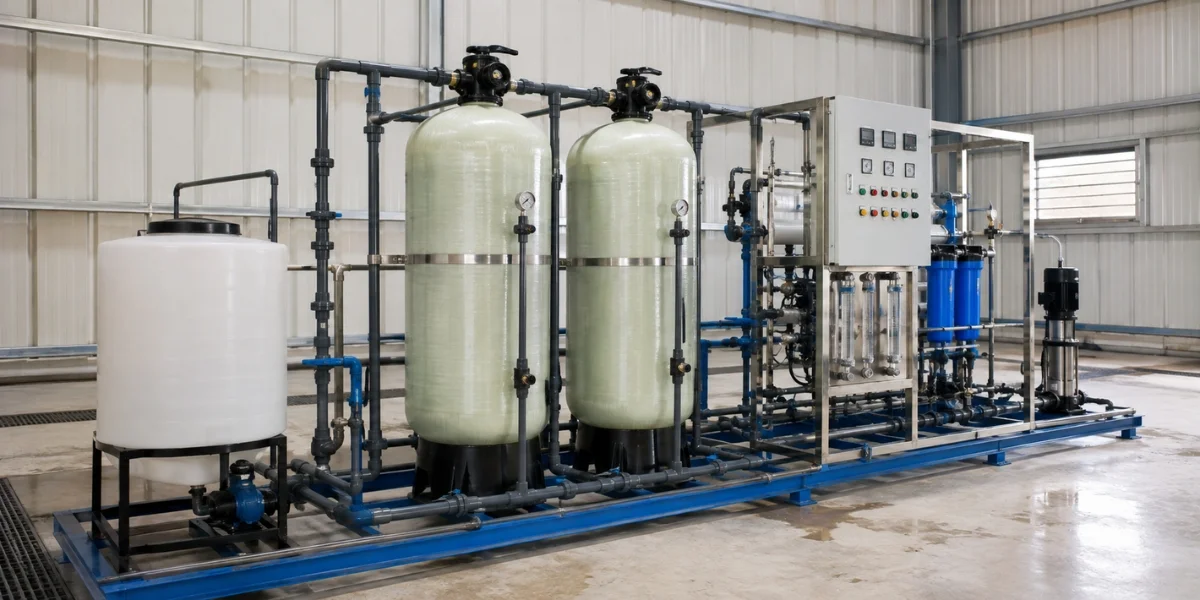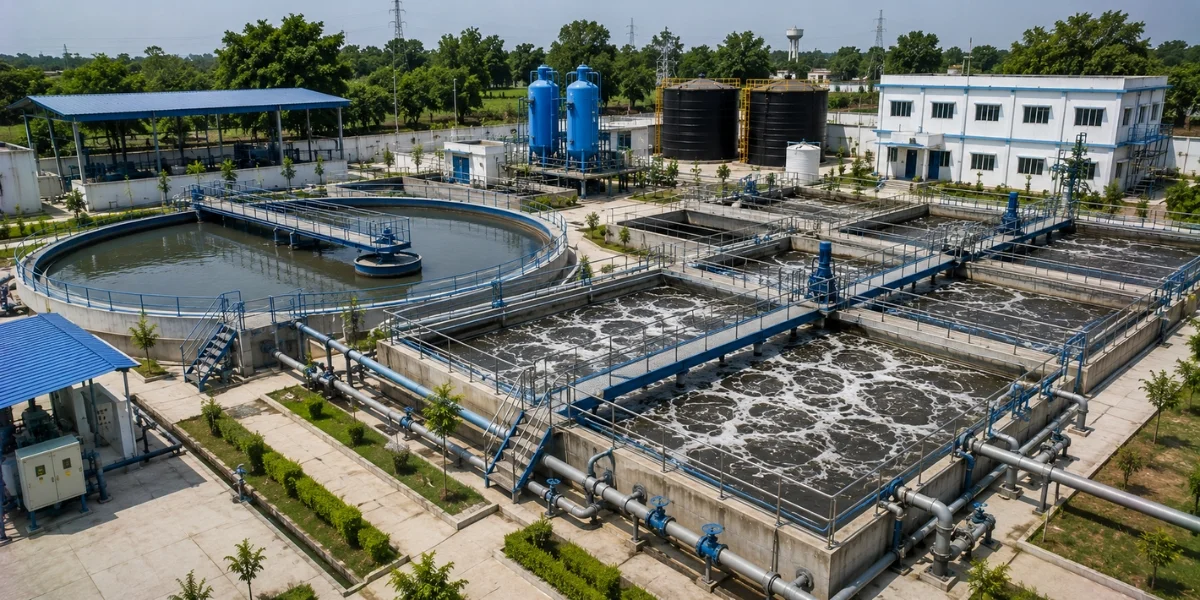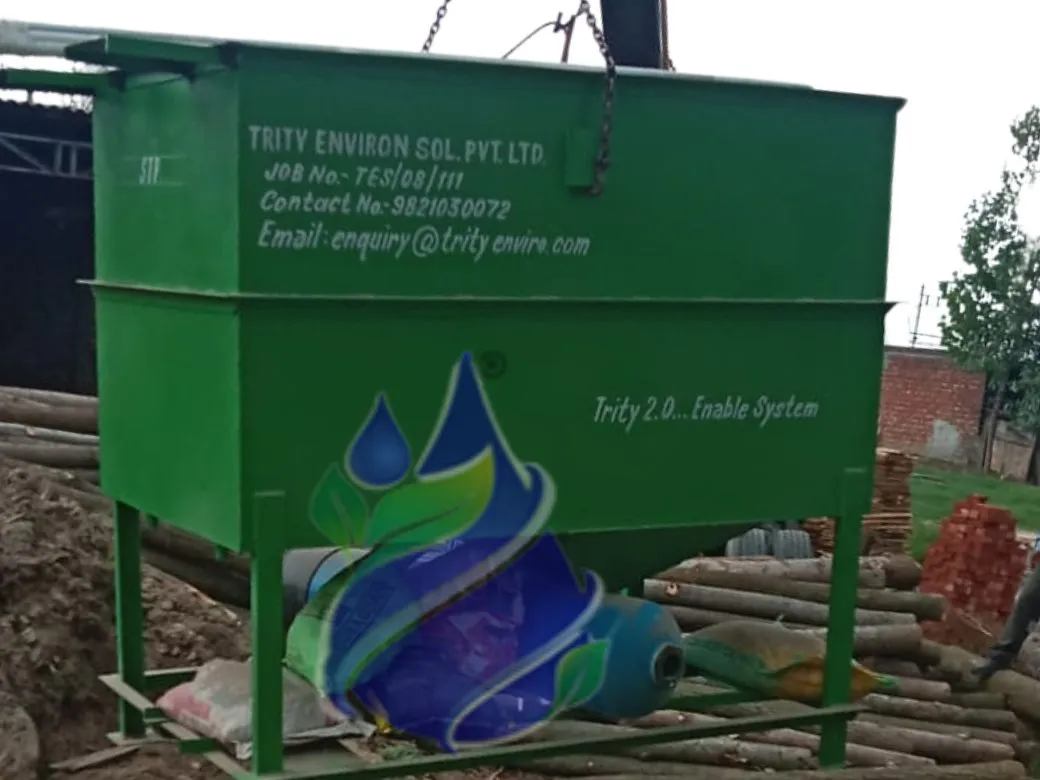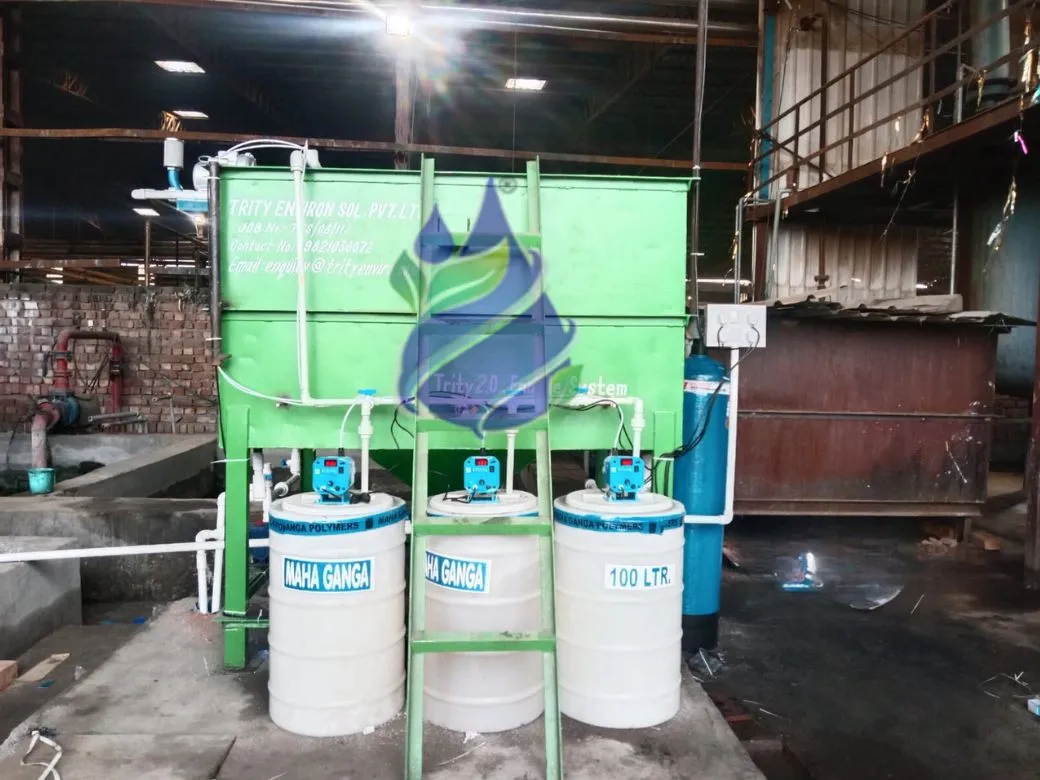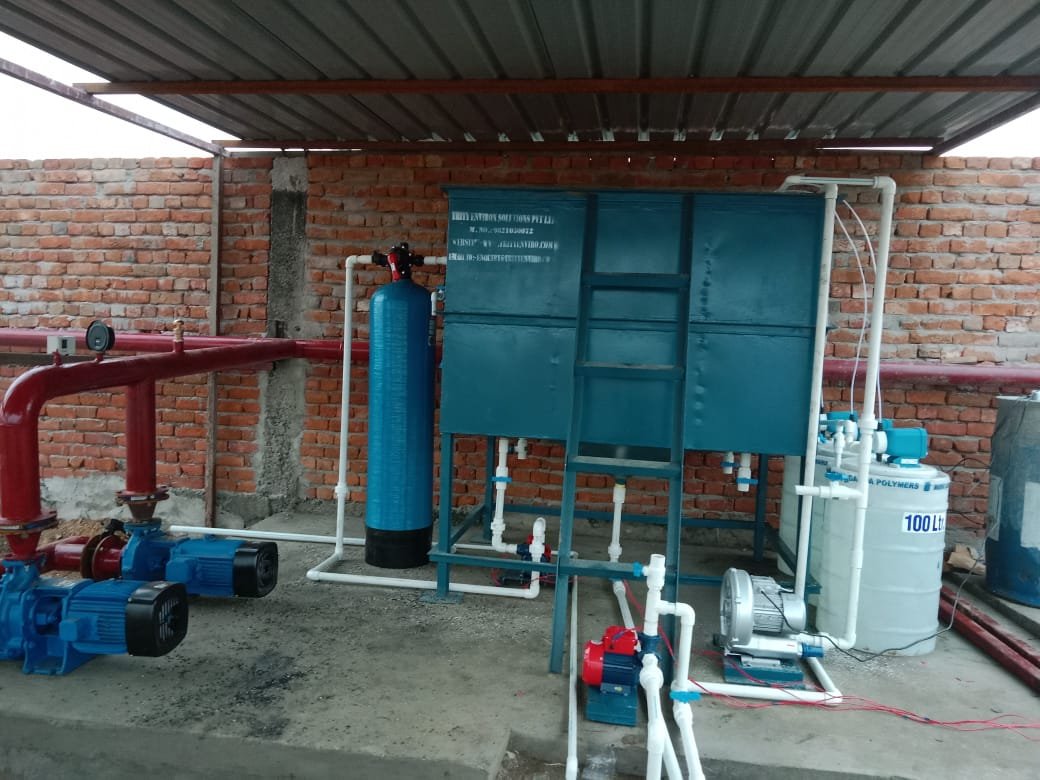
Trity Environ is one of the best tube settler media manufacturers and suppliers in India. We have in...
| Automation Grade | : Automatic |
| Country of Origin | : Made in India |
| Inlet Flow Rate(m3/day) | : 100 m3/day |
| Air Blower Count | : 2 Blowers |
| Capacity (KLD) | : 100 KLD |
Sedimentation is one of the most critical unit operations in any water or wastewater treatment process. Whether you are running a municipal sewage treatment plant, an industrial effluent treatment plant, or a process water clarifier, the efficiency of your settling zone directly determines the quality of treated water and the overall plant footprint. When conventional clarifiers fall short on performance or space, tube settler media offers an engineered solution that improves settling rates without proportionally increasing tank volume.
Tube Settler Media works by dividing a large settling zone into multiple shallow settling channels, each with a very short settling distance. This is the principle behind lamella settling: the effective settling area increases dramatically within the same tank footprint, allowing operators to handle higher flow rates with better suspended solids removal. For plant operators dealing with space constraints, retrofit requirements, or performance improvement targets, tube settlers are among the most cost-effective upgrades available.
Trity Environ Solutions is a specialised Tube Settler Media Manufacturer in India, supplying engineered tube settler modules to sewage treatment plants, effluent treatment plants, and industrial wastewater treatment plants across the country. Our manufacturing focus is precision: consistent tube geometry, correct inclination angle, and material selection appropriate for the chemical environment in which the media will operate.
Tube Settler Media is a modular, inclined-tube system installed inside a clarifier or sedimentation tank to enhance the rate and efficiency of solid-liquid separation. Each module consists of multiple small-diameter tubes or channels arranged in a parallel configuration and inclined at a fixed angle, typically 60 degrees to the horizontal.
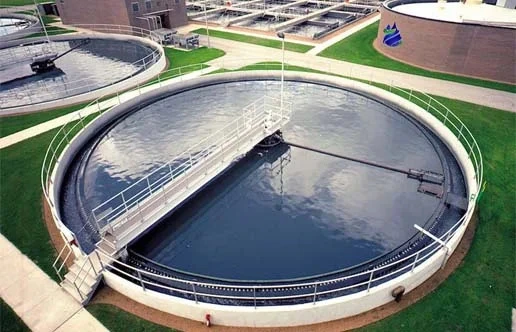
The working principle is rooted in lamella settling theory, first formally described in sedimentation research as a method to reduce the effective settling depth. When raw water or wastewater enters the tube settlers, the inclined geometry forces solids particles to travel only a fraction of the distance they would need to cover in an open settling tank before contacting the tube wall and sliding down toward the sludge hopper. The clarified water continues upward and exits through a collection channel or launder above the settler zone.
The key insight from Lamella Tube Settler Media design is that settling efficiency depends on the surface area available for settling, not the tank volume. By stacking multiple inclined channels inside a single tank, you can multiply the effective settling area severalfold. In practical terms, a clarifier equipped with tube settlers can process 2 to 4 times the flow of a similarly sized conventional unit under equivalent inlet conditions.
For engineers evaluating inclined tube settlers, the critical design parameters are the tube hydraulic diameter, tube length, inclination angle, and the surface overflow rate of the clarifier. These parameters collectively determine whether laminar flow conditions are maintained within the tubes, which is essential for the settlers to function as designed. Trity Environ Solutions provides full technical support to help you size tube settler modules for your specific operating conditions.
As a dedicated Tube Settler Manufacturer, Trity Environ Solutions produces tube settler modules using food-grade and industrial-grade raw materials processed on precision tooling. Our manufacturing facility maintains consistent production quality across batch sizes, supporting both small retrofit projects and large greenfield treatment plants.
Our Tube Settler Media Supplier capabilities include:
For procurement teams evaluating Tube Settler Media Supplier India options, we provide material test certificates, dimensional inspection reports, and technical data sheets with each supply.
You may also review our MBBR media range and filter press equipment for complementary treatment process components.
Understanding the operating mechanism of Clarifier Tube Settler systems helps plant operators manage performance and troubleshoot issues before they affect effluent quality.
Raw water or settled water enters the tube settler zone from below, typically through a perforated inlet pipe or distribution channel designed to create uniform upflow velocity across the full cross-section of the settler. Non-uniform inlet distribution is one of the most common causes of poor tube settler performance, and Trity Environ Solutions includes inlet design guidance as part of our supply package.
Once water enters the inclined tubes, suspended solids begin settling onto the lower surface of each tube under gravity. The inclined angle, combined with the low hydraulic radius of the tube cross-section, creates near-laminar flow conditions inside each channel. Particles settle quickly because the distance between the water surface and the tube wall is very short, typically 25 to 50 mm depending on tube diameter. The sedimentation system within the tubes is far more efficient than open-tank settling because turbulence is suppressed.
Settled solids accumulate on the lower walls of each inclined tube and slide downward by gravity toward the sludge hopper located below the tube settler zone. Periodic sludge withdrawal prevents accumulation that could block tubes or reduce settled zone volume. Proper sludge blanket management is essential for maintaining clarifier efficiency.
Clarified water rising through the tubes exits at the top of the settler zone and is collected by a surface launder or trough system. The effluent quality from a well-designed clarification system using tube settlers routinely achieves suspended solids concentrations below 20 mg/L when the settler is operating within its design surface overflow rate.
| Parameter | Specification |
|---|---|
| Material | PVC (Polyvinyl Chloride) / PP (Polypropylene) |
| Cell Shape | Hexagonal / Square / Circular |
| Tube Inclination Angle | 60 degrees |
| Specific Surface Area | 150 to 200 m²/m³ |
| Operating Temperature | Up to 60°C (PVC), up to 80°C (PP) |
| Wall Thickness | 0.4 mm to 0.6 mm |
| Color | Grey (PVC), Natural/White (PP) |
| Standard Module Size | 1000 mm x 500 mm x 60 mm |
| Tube Cell Size | 25 mm, 35 mm, 50 mm (diameter) |
| Bulk Density | 35 to 50 kg/m³ |
| Compressive Strength | As per IS and ASTM applicable standards |
| Chemical Resistance | Resistant to dilute acids, alkalis, and common industrial solvents |
| Recommended Surface Overflow Rate | 1.5 to 3.0 m/hr |
Custom specifications available on request for non-standard applications.
PVC Tube Settler Media and PP Tube Settler Media offer measurable advantages over conventional sedimentation approaches. The following benefits are consistently observed in properly designed and installed systems:
| Parameter | Tube Settler Media | Conventional Clarifier |
|---|---|---|
| Effective Settling Area | 150 to 200 m²/m³ | Limited to tank surface area only |
| Tank Footprint | 40 to 60 percent smaller | Full-size tank required |
| Surface Overflow Rate | 2 to 4x higher permissible | Limited to 1.0 to 1.5 m/hr |
| Effluent TSS | Typically below 20 mg/L | Typically 30 to 60 mg/L |
| Civil Construction Cost | Lower for equivalent capacity | Higher |
| Retrofitability | Easily retrofitted into existing tanks | Structural modification required to improve capacity |
| Maintenance | Periodic washing only | Sludge scraper maintenance, drive units |
| Energy Requirement | None (gravity settling) | Sludge scraper drives consume power |
| Performance During Peak Flow | More stable | More sensitive to hydraulic overload |
For plant engineers comparing these two approaches, the decision typically comes down to land availability, existing tank geometry, and capital budget. On new plants where land is constrained, Tube Settler Media almost always provides a better lifecycle cost. For retrofit projects on underperforming conventional clarifiers, tube settlers are frequently the most practical path to meeting tightened discharge standards.
If your project involves sludge dewatering downstream of the clarifier, review our decanter centrifuge and oil skimmer equipment ranges as well.
Tube Settler for STP and Tube Settler for ETP are the most common deployment contexts, but the range of applications is broad across water and wastewater treatment.
In municipal and residential sewage treatment systems, tube settlers are used in the secondary clarifier following biological treatment to separate activated sludge from treated effluent. They are also used in primary settling tanks to reduce the load on the biological stage. For sewage treatment plant operators seeking to increase capacity within existing footprints, tube settler installation is among the most practical options.
Industrial effluent often carries higher suspended solids concentrations than domestic sewage, and the chemical nature of the solids varies with the production process. Tube Settler Media can be specified in materials compatible with the effluent chemistry. For effluent treatment plants handling acidic or caustic streams, PP tube settlers provide better chemical resistance than PVC.
Settling tank media improves raw water clarification performance at intake treatment plants, surface water treatment facilities, and groundwater treatment systems with turbidity issues. Tube settlers are particularly effective at handling seasonal turbidity spikes that challenge conventional floc-settling tanks.
For general industrial wastewater treatment applications, tube settlers reduce suspended solids before discharge to drain or before reuse in the process. They work effectively downstream of coagulation and flocculation systems.
Chemical plant effluents frequently contain inorganic precipitates and fine particles that are difficult to settle in open tanks. PP tube settlers resist the chemical environments typically found in chemical manufacturing effluent.
Wash water, processing effluent, and cooling water from food plants carry organic suspended solids and fats. Tube settlers installed in pre-treatment clarifiers reduce the organic load reaching biological treatment stages.
Pharmaceutical manufacturing generates effluents with fine suspended solids from fermentation and synthesis processes. Tube settlers improve clarifier performance in pre-treatment and final polishing stages.
Dye-bath effluent, rinse water, and sizing chemicals all contribute suspended solids loads in textile mill effluent. Clarifier media in textile effluent treatment plants helps meet increasingly stringent colour and TSS discharge standards.
Water utilities use tube settlers in conventional treatment trains following coagulation to remove floc before filtration. Installing inclined tube settlers in an existing flocculation-sedimentation tank can allow the plant to increase production without building additional settling capacity.
Selecting the right settling media for your application requires matching the media specification to the hydraulic and chemical conditions in your clarifier. The following parameters should be evaluated before specifying tube settler modules.
Material selection: PVC is adequate for most municipal sewage and general industrial wastewater applications operating below 55°C and at near-neutral pH. PP should be specified for elevated temperatures, strongly acidic or alkaline environments, or where long-term chemical resistance is a priority.
Tube cell size: Smaller tube diameters (25 mm) provide higher specific surface area but require better inlet flow distribution and are more prone to fouling in high-solids applications. Larger diameters (50 mm) are more forgiving in poorly controlled conditions and in applications with fibrous or sticky solids.
Module depth and surface area: The required tube settler coverage area is calculated from the clarifier surface area and the desired surface overflow rate. A hydraulic engineer should calculate the number of modules required rather than estimating. Trity Environ Solutions provides free hydraulic sizing review for all enquiries.
Flow rate and clarifier dimensions: The surface overflow rate of the tube settler zone must be within the design range. Oversizing is inefficient; undersizing leads to carry-over of solids into the effluent launder.
Wastewater characteristics: High-turbidity raw water, chemically coagulated effluent, and biological sludge-containing streams all have different settling behaviours. The type and concentration of solids influence the choice of tube diameter and the surface loading rate.
Sludge withdrawal frequency: Tube settlers accumulate sludge in the hopper below. If the hopper cannot be withdrawn frequently enough to prevent sludge blanket rise into the tube settler zone, performance degrades. Clarifier design must account for sludge storage volume.
Trity Environ Solutions has built its reputation as a Tube Settler Manufacturer through consistent product quality, honest technical consultation, and reliable supply performance. We do not overstate system capabilities or guarantee performance figures that depend on operating variables outside our control. What we do commit to is supplying accurately manufactured media, correctly specified for the conditions you describe.
Key reasons procurement teams and EPC contractors choose us:
For plant construction and commissioning, explore our project execution and STP plant installation services. For ongoing plant performance, our operation and maintenance team can assist post-commissioning.
| Plant Capacity | Recommended Application Context |
|---|---|
| 10 KLD to 100 KLD | Small residential STP, boutique hotel ETP, institutional treatment plants. Standard module sizes typically sufficient. Compact rectangular tanks with manual sludge withdrawal. |
| 100 KLD to 500 KLD | Medium residential townships, small to mid-size industrial ETPs, municipal cluster schemes. Multiple module rows. Mechanised sludge scraper recommended. |
| 500 KLD to 2000 KLD | Large industrial effluent systems, urban sewage treatment plants, water treatment intake clarifiers. Hydraulic design review critical. Multiple clarifier units typical. |
| 2000 KLD and above | Municipal water treatment plants, large-scale industrial wastewater reuse systems, regional sewage treatment infrastructure. Detailed hydraulic modelling, inlet diffuser design, and launder sizing are essential. Trity Environ Solutions can coordinate with the project's civil and process engineers. |
For any capacity above 500 KLD, we recommend a joint technical review meeting before module sizing is finalised, as inlet distribution design and sludge management have a significant influence on final performance.
Selecting the correct Tube Settler Media for your project requires more than choosing between PVC and PP. The right specification depends on your actual flow rate, clarifier geometry, wastewater characteristics, surface loading rate, and project objectives. Undersized or incorrectly configured tube settlers will not deliver the settling performance your project requires.
Trity Environ Solutions evaluates each project individually before recommending a solution.
Our standard enquiry process covers:
✓ Technical consultation based on your process flow diagram and clarifier drawings
✓ Media sizing support including surface area calculation and module quantity estimation
✓ Capacity assessment for existing tanks being retrofitted
✓ Custom fabrication for non-standard tank dimensions
✓ PAN India supply with documented quality records
✓ Installation guidance including support structure and inlet distribution recommendations
✓ After-sales support for performance monitoring and troubleshooting
To begin the technical review process, share your clarifier dimensions, design flow rate, and available wastewater characterisation data. Our engineering team will respond with a preliminary sizing recommendation and a competitive commercial proposal.
Contact Trity Environ Solutions through https://trityenviro.com to submit your enquiry.
Trity Environ Solutions manufacturers and suppliers of STP and ETP Plants in Dehradun. Sewage Treatment...
Trity Environ Solutions expanded the sewage treatment plant in Dubai. We are one of the best manufacturers...
Trity Environ Solutions manufacturers and suppliers of STP and ETP Plant in Jodhpur. Sewage Treatment...
We manufacture high-quality FRP Multi Grade Filters with installations across India and overseas. Designed for superior filtration efficiency, our systems ensure consistent water quality for STP, ETP, and industrial use.
STP and ETP Manufacturer in Solan
Trity Environ Solutions manufacturers and suppliers of STP and ETP Plants in Bhadohi. Sewage Treatment...
Trity Environ Solutions is a leading manufacturer of Filter Press for sludge dewatering in Delhi-NCR...
Trity Environ Solutions manufacturers and suppliers of STP and ETP Plants in Bulandshahr...
Trity Environ Solutions manufacturers and suppliers of STP and ETP Plant in Kundli. Sewage Treatmen...
Trity Environ Solutions manufacturers and suppliers of STP and ETP Plant in Gorakhpur. Sewage Treatment...