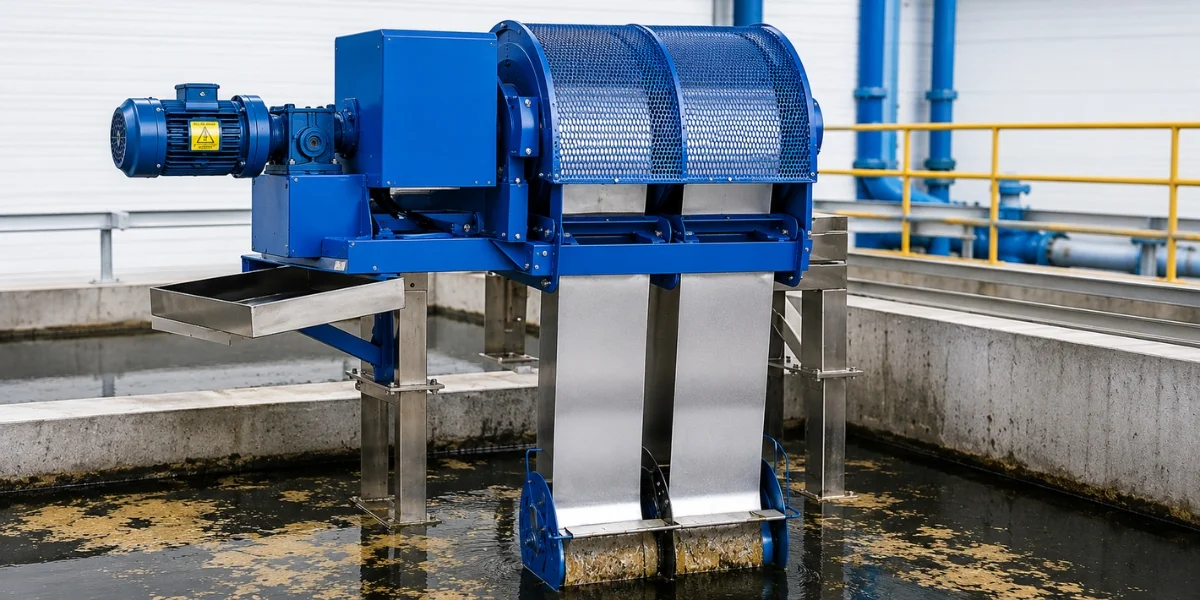
Trity Enviro Solutions is a leading manufacturer of oil skimmers. We provide innovative oil skimming...
| Power Source | : Electric |
| Country of Origin | : Made in India |
| Type | : Belt type |
| Usage/Application | : Oil Removing |
| Material | : Stainless Steel |
Oil and grease contamination is one of the most persistent challenges in modern wastewater treatment operations. Every day, industrial facilities, food processing plants, metalworking shops, and municipal sewage systems struggle with floating oil layers that refuse to stay contained. These oily surface films create operational headaches they clog equipment, reduce biological treatment efficiency, jam filter media, and violate environmental discharge standards set by regulatory bodies.
Traditional settling and chemical treatment methods often fail to capture the full extent of free-floating oil before it reaches downstream treatment zones. This is where an efficient oil skimmer for ETP becomes indispensable. Unlike passive separation methods, an active oil skimmer for STP or industrial oil separation system works continuously, automatically removing floating oil and grease from the water surface preventing costly operational disruptions and regulatory violations.
At Trity Enviro Solutions, we've engineered oil skimmers specifically designed for the harsh realities of Indian wastewater treatment operations. Our systems combine proven mechanical principles with robust industrial construction, delivering consistent oil removal performance that integrates seamlessly into existing ETP and STP treatment infrastructure.
Most operators understand that oil and grease contamination is a problem. Few fully grasp how severely it compromises treatment plant performance. Floating oil layers represent a silent efficiency killer in wastewater systems.
When oil enters an equalization tank or primary settling basin, it doesn't behave like suspended solids. Instead, it floats forming a tenacious surface film that interferes with aeration, blocks sunlight from reaching biological cultures, and eventually migrates downstream into critical treatment zones. Once oil reaches biological treatment reactors, aerobic microorganisms struggle. The oily surface film prevents oxygen transfer. Nutrient cycling becomes inefficient. BOD and COD removal rates decline measurably.
Beyond performance degradation, floating oil creates compliance nightmares. Environmental regulations demand oil concentrations below specific limits in treated effluent. When oil-laden water exits your discharge point, inspection agencies notice. Fines follow. Your environmental credentials suffer. Downstream municipalities receiving treated water face their own treatment challenges.
The economic impact is equally significant. Each day that oil remains in your system, it forces downstream chemical treatments to work harder, consumes additional aeration energy, and potentially damages expensive membrane filters or clarifiers. A single week of high oil loading can cost thousands in wasted chemicals and excess power consumption.
This is the reality that an industrial oil skimmer directly addresses not as a luxury addition, but as a fundamental component of optimized wastewater treatment.
Understanding how an oil skimmer actually works reveals why it's so effective. The technology, while sophisticated in application, relies on straightforward mechanical principles refined through decades of industrial practice.
An oil skimmer system works on a fundamental principle: oil and water naturally separate by density difference. The challenge isn't separation it's continuous, active collection of the separated oil layer before it spreads or resettles into the water column.
Our industrial oil skimmer uses a moving belt or disk mechanism that rises through the water surface. As the belt lifrates through the oil layer, oil adheres to the material's surface due to preferential wetting. The belt continues rising out of the water, carrying the captured oil upward. At the top of the stroke, the oil is scraped off the belt by a squeegee mechanism, dropping into a dedicated collection trough. This elegant mechanical process repeats continuously sometimes hundreds of times per hour creating an unstoppable oil removal cycle.
The beauty of this approach is that it doesn't require chemical additives. It doesn't demand high-energy ultrasonication. It simply leverages oil's natural tendency to preferentially wet hydrophobic materials, then mechanically removes what's captured. For facilities in India dealing with varied industrial effluents, this simplicity is invaluable.
What distinguishes an effective oil removal system for industries from a mediocre one is sustained recovery performance under real operational conditions. Industrial wastewater isn't constant. Oil loading fluctuates. Composition changes. Temperature swings.
Our systems employ variable-speed drive mechanisms that adapt to changing oil concentrations. When oil loading increases, the skimmer automatically increases recovery rate. When oil concentration drops, the system moderates its operation, conserving energy. This adaptive behavior ensures consistent, reliable oil removal across varying operating conditions critical for facilities dealing with batch processes or fluctuating waste streams.
The collected oil flows continuously into a separate storage tank, completely isolated from the treated water stream. This segregation is important: it prevents re-emulsification and allows the collected oil to be disposed of properly or, in some cases, recovered for reuse adding economic value to what would otherwise be waste.
Proper oil disposal requires that collected material be segregated completely from the treatment stream. Our systems maintain dedicated collection pathways with gravity-assisted flow into dedicated storage. The collection tank is designed for easy access and periodic emptying by waste disposal contractors.
For operations requiring greater automation, we integrate level-sensing switches that trigger alerts when the collection tank reaches capacity. Some facilities choose to pump collected oil to central holding areas for periodic batch processing. The flexibility to adapt collection logistics to your specific waste management procedures is a key design consideration in our surface oil skimmer systems.
Engineering principles are one thing. Real-world performance in operational treatment plants is another. Let's walk through how our oil skimmer integrates into typical wastewater treatment scenarios.
Most modern treatment plants employ equalization tanks—large basins that receive raw wastewater and allow initial settling before water moves to primary treatment stages. This is the optimal location for an oil skimmer. Oil naturally floats to the surface in these tanks. Installing a skimmer for ETP oil control in the equalization zone intercepts oil before it progresses downstream.
Our systems mount on the tank's edge or integrate with tank covers, requiring minimal structural modification. The skimmer operates continuously, keeping the water surface free of floating oil. This upstream position provides several operational advantages: oil concentration is highest here, making skimmer efficiency maximum. Downstream treatment zones remain oil-free, improving their performance. And because oil is captured early, it never reaches final effluent quality ensuring regulatory compliance automatically.
Unlike batch-based oil removal methods that operate intermittently, our oil skimmers function continuously throughout operating hours. This constant operation offers two critical advantages: first, no oil ever accumulates to problematic concentrations. Second, the system operates under stable, controlled conditions—making performance predictable and measurable.
The floating oil removal system maintains adjustable recovery rates, typically ranging from 10 to 50 liters per hour depending on model size and configuration. This range accommodates diverse industrial scenarios—from lightly contaminated municipal sewage to heavily oiled metalworking effluent.
Flow control mechanisms allow operators to adjust skimming intensity based on observed oil concentration and collection tank status. Manual adjustment or automated feedback control—you select the approach matching your operational preference and automation budget.
Wastewater environments are inherently harsh. Corrosive vapors, temperature extremes, chemical splashes, and mechanical vibration challenge equipment durability. Our oil skimmers are engineered for this reality.
The drive motor is either direct-connected (for space efficiency) or belt-driven (for vibration isolation). The belt or disk mechanism uses materials specifically selected for petroleum-contaminated aqueous environments. All wetted surfaces resist corrosion. The collection mechanism employs robust squeegee materials that maintain effectiveness over thousands of operational cycles.
For facilities operating continuously, we offer fully automated systems with minimal operator intervention. For semi-automatic operations, regular monitoring checkpoints allow operators to verify system performance and respond to changing conditions.
How a piece of equipment is constructed determines how long it will serve you reliably. Our design philosophy reflects years of field experience in Indian industrial and municipal treatment environments.
Oil skimmers operate in chemically complex, corrosive environments. We don't compromise on materials. Tank mounting brackets use stainless steel or hot-dip galvanized carbon steel. The belt or disk mechanism is either rubber-based or specialized synthetic material, both proven in petroleum-contaminated water applications.
The collection trough and piping are Schedule 80 PVC or stainless steel materials that resist both the oils being handled and the aqueous environment. Even fasteners are either stainless steel or nylon never bare steel that would corrode within weeks.
This material discipline extends to the drive mechanism. The motor is TEFC (Totally Enclosed Fan Cooled), protecting internal windings from caustic vapors. Bearing materials are sealed, filled with appropriate greases for industrial environments. Everything from material selection to sealing philosophy reflects an engineering approach that says: "This system will still operate reliably five years from now."
An oil skimmer operating 24 hours daily accumulates significant operating hours. Energy efficiency isn't a luxury feature it directly impacts your facility's operational cost structure.
Our systems use efficient motors coupled to speed reduction mechanisms (gear drives or variable-frequency drives) that convert electrical input into consistent, controllable skimming action. The belt or disk moves at optimized speeds fast enough to capture oil effectively, but not so fast as to create unnecessary energy waste.
Variable-speed operation is available for facilities wanting adaptive efficiency. When oil loading decreases, the system automatically reduces speed, consuming less energy while maintaining full removal capability. Over a year of operation, this adaptive approach yields measurable electrical cost reductions compared to fixed-speed alternatives.
Industrial wastewater composition varies dramatically across sectors and even between operating shifts within the same facility. Our oil skimmers are engineered for this variability.
The belt or disk material can be specified based on your specific wastewater characteristics. Metal-cutting coolants require different surface properties than kitchen grease. Automotive washing effluent has different characteristics than mineral oil contamination. We select and configure our systems specifically for your documented wastewater profile—ensuring optimized performance rather than generic "one-size-fits-all" inadequacy.
Generic descriptions of "applications" miss the specific operational challenges different industries face. Here are real scenarios where our oil skimmers deliver tangible benefits.
Metalworking facilities generate wastewater heavily laden with cutting oils, machining fluids, and emulsified coolant concentrate. Traditional settling methods fail these formulations stay emulsified, resisting passive separation. Without active oil removal, the wastewater reaches biological treatment with persistently high oil concentrations, overwhelming treatment capacity.
Our industrial oil skimmer continuously extracts floating oil layers from equalization tanks, preventing oil accumulation that would cripple downstream processes. Metal finishing shops using our systems report cleaner biological treatment performance and improved final effluent quality.
Food processing whether meat processing, oil refining, or dairy operations—generates grease-laden wastewater. The thermal nature of food processing often keeps grease partially emulsified. As it cools in treatment tanks, grease separates and floats to the surface.
A surface oil skimmer removes this separated grease continuously, preventing the formation of thick grease crusts that block aeration and interfere with treatment. Facilities report reduced grease-related treatment challenges and more stable biological reactor performance after installing oil skimmers.
Municipal sewage contains oils from vehicles, cooking, industrial connections, and household sources. While concentrations are lower than in pure industrial waste, the sheer volume of sewage processed daily means significant total oil loading.
An active oil skimmer positioned in the preliminary treatment stage removes floating oil before it reaches primary settling or biological zones. The improvement in treatment stability and final effluent quality though incremental in any single day compounds over operational years into substantial performance gains.
Real-world performance data tells a compelling story. Facilities implementing oil skimmers consistently report measurable operational improvements.
A common concern: can an oil skimmer retrofit into an existing plant without major modifications? The answer is consistently yes.
Our systems mount externally on existing tank structures. No need to drain tanks. No requirement for extensive civil work. Installation takes days, not weeks. The oil skimmer connects to the equalization tank via simple piping typically PVC or stainless steel that routes collected oil to a designated holding area.
For facilities with space constraints, we offer compact configurations that mount vertically or integrate with existing tank covers. The flexibility to adapt to various tank geometries and existing plant layouts is fundamental to our design approach.
Power requirements are modest typically 0.5 to 2 kW depending on skimmer size making electrical integration straightforward. No specialized power infrastructure is required.
This ease of retrofitting means that facilities recognizing oil removal needs midway through their operational history can implement solutions without capital reconstruction of treatment infrastructure. The cost-benefit equation strongly favors adding an oil skimmer to an existing plant.
Our oil skimmer portfolio accommodates facilities from small industrial ETPs to large municipal STPs.
| Specification | Range |
|---|---|
| Skimming Capacity | 10 to 50 liters/hour (model dependent) |
| Oil Collection Rate | Up to 98% of floating surface oil |
| Power Requirement | 0.5 to 2 kW (depending on model) |
| Material of Construction | SS/Stainless Steel or Galvanized Carbon Steel frame, Synthetic/Rubber belt, PVC/SS collection trough |
| Operational Method | Continuous belt or disk mechanism |
| Control Options | Manual, Semi-automatic with level sensing, or Fully automatic |
| Typical Installation | Equalization tanks, primary settling tanks, ETP/STP treatment basins |
| Collection Tank Capacity | 50 to 500 liters (customizable) |
| Maintenance Interval | 3-6 months for squeegee inspection, annual belt/disk review |
For your specific tank dimensions and oil loading characteristics, we provide detailed technical configurations and capacity projections.
The wastewater treatment equipment market has no shortage of vendors. Distinguishing a truly capable manufacturer from a parts assembler matters.
Floating oil is more than an aesthetic concern in wastewater treatment. It's an operational challenge that compromises treatment efficiency, increases chemical consumption, risks regulatory violations, and damages expensive downstream equipment. An efficient oil skimmer for ETP and STP directly addresses this persistent operational problem.
Our engineering approach combining proven mechanical principles with robust construction and application-specific configuration delivers consistent, reliable oil removal across diverse industrial and municipal scenarios. The performance advantages translate to cleaner treatment operations, improved compliance, lower operating costs, and extended equipment lifespan.
Contact Trity Enviro Solutions to discuss how an oil skimmer can optimize your wastewater treatment performance. Our team will assess your specific oil removal challenges, recommend appropriately-scaled solutions, and support successful integration into your existing treatment infrastructure. Call us at +91-9821030072 or email enquiry@trityenviro.com to explore how active oil removal can transform your treatment plant reliability.
Trity Environ Solutions manufacturers and suppliers of STP and ETP Plants in Ghaziabad. Sewage Treatment...
We are a manufacturer of multigrade filters FRP, all India and overseas installation, - multigrade s...
Trity Environ Solutions manufacturers and suppliers of STP and ETP Plant Manufacturer in Patna. Sewage Treatment...
Top Leading ETP Plant Manufacturer in India. Trity Enviro Solutions manufactures ace machines...
We are the leading manufacturer & supplier of Effluent Treatment Plants for Hospitals.....
We are a leading manufacturer of Fine Bubble Diffusers and Membrane Diffusers in India, offering high-quality air diffuser solutions designed for efficient aeration in wastewater treatment systems.
Sequential Batch Reactors or Sequencing batch reactors (SBR) are industrial processing tanks for the...
Trity Environ Solutions manufacturers and suppliers of STP and ETP Plant in Jaipur.
We are Industrial RO Plant Manufacturer in Delhi/NCR, Best Commercial RO Plant...
Trity Environ Solutions manufacturers and suppliers of STP and ETP Plants in Bulandshahr...