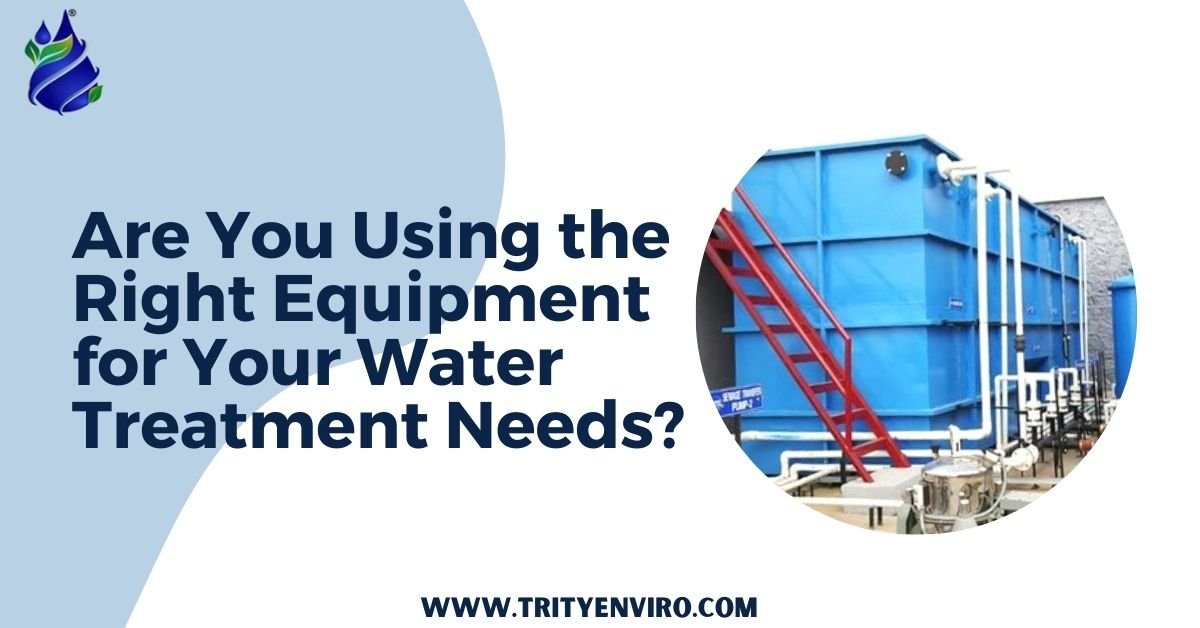
Are You Using the Right Equipment for Your Water Treatment Needs?
Ensure effective water treatment by selecting the right equipment. Learn how to choose, maintain, and optimize your system for clean water and cost savings.

 ISO 9001:2015 & QCI Approved
The cheaper plant is not always the better choice. Compare feed water, purity needs and chemical use to decide between demineralisation and reverse osmosis.
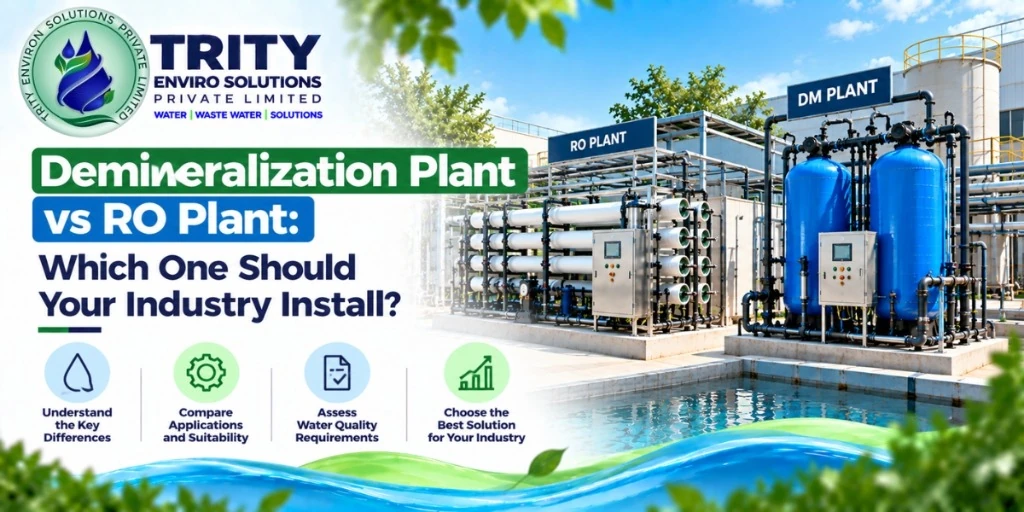
Boilers, pharma process lines, electronics, power plants and laboratories all need water with very little dissolved mineral content. For decades the standard answer was a demineralization plant, usually called a DM plant. Then reverse osmosis became cheaper and more reliable, and many industries switched. Today the choice is not obvious, and plant engineers often hear conflicting advice from suppliers who sell only one of the two.
The honest answer is that neither is better in all cases. A DM plant can be very economical when raw water has low TDS and the volume is moderate. An RO plant is usually the better choice when raw water has higher TDS or when you want to avoid handling acid and alkali. In a large number of industrial plants, the best answer is neither alone but a combination: RO first to remove most of the salt, followed by a polishing step such as a mixed bed or electrodeionisation.
This guide explains how each system works, compares them on the factors that decide the investment and shows where each fits. It is written for plant heads, utility engineers and procurement teams in power, pharma, chemical, textile, food, automobile and electronics industries who need to choose between a DM plant vs RO plant and defend the decision.
A DM plant passes water through beds of ion exchange resin. A strong acid cation resin swaps positive ions such as calcium, magnesium and sodium for hydrogen ions. A strong base anion resin then swaps negative ions such as chloride, sulphate, bicarbonate and silica for hydroxide ions. The hydrogen and hydroxide combine to form pure water. A degasser between the beds can remove carbon dioxide to reduce load on the anion resin. For very low conductivity, a mixed bed polishing unit holds cation and anion resin together in one vessel.
When the resin is exhausted, it is regenerated with acid, commonly hydrochloric or sulphuric, for the cation bed, and with caustic soda for the anion bed. Regeneration produces acidic and alkaline wastewater that must be neutralised before discharge. A well run two bed plant can give product water in the low microsiemens range, and a mixed bed can reach well below that.
An RO plant pushes water at high pressure through semi-permeable membranes that reject most dissolved salts, organics and microorganisms. The membrane typically rejects 95 to 99 percent of dissolved salts per pass, and permeate quality depends on feed TDS, temperature, pressure and membrane condition. A portion of the feed leaves as reject, carrying the concentrated salts. Recovery of permeate commonly runs between 50 and 80 percent depending on design and scaling risk.
RO needs good pre-treatment, since suspended solids, iron, chlorine and hardness harm the membranes. It also needs regular cleaning, antiscalant dosing and eventually membrane replacement. See our industrial RO plant range for typical configurations.
A two bed DM plant produces low conductivity water, but its quality changes as resin approaches exhaustion, so regeneration timing matters. A mixed bed gives very high purity and is often used as a polisher. Single pass RO produces water with a conductivity that is a small percentage of the feed, which may not be low enough for high pressure boilers or sensitive processes without a second pass or a polishing step. DM beds are especially good at removing silica, which matters for boilers and turbines, while RO removal of silica is good but depends on feed and recovery.
The cost structure is very different.
At low feed TDS, such as soft surface water or municipal supply under a few hundred mg/L, DM running cost is modest and often lower than RO. As TDS rises, RO becomes more economical, because its energy use grows slowly with salinity while DM chemical use grows in proportion to the salts removed. Many engineers place the break-even somewhere in the range of a few hundred to around a thousand mg/L, though it depends on local chemical prices, power cost and effluent handling.
RO systems are compact, skid mounted and easy to automate, and they produce water continuously. DM plants need resin vessels, regeneration tanks, chemical storage and neutralisation facilities, so they usually occupy more space and need more operator attention, though automatic regeneration with PLC control is common. RO needs consistent pre-treatment and monitoring. DM needs disciplined regeneration and chemical handling. Reliability in both depends on training and maintenance.
Also consider the feed variation. If your raw water changes widely, RO copes more gracefully than a DM plant whose regeneration cycle is set for a particular ion load.
In many industrial plants, the best solution is RO followed by a mixed bed or electrodeionisation. RO removes most of the salts so that the mixed bed regenerates rarely, cutting chemical use and effluent. EDI replaces chemical regeneration with electricity, and it needs clean RO permeate to work well. This hybrid design delivers high purity at lower running cost than a pure DM system on higher TDS water. For a complete view of the supporting treatment train, see our guide on how to select a water treatment plant for industries.
If you already run a DM plant that has become expensive to operate, replacement may not be necessary. Adding an RO unit ahead of the existing ion exchange train often cuts the ionic load on the resin so sharply that regeneration happens far less often. The old cation, anion and mixed bed vessels then work as polishers, and acid and alkali use fall. This approach reuses vessels, piping and the regeneration system, and it can be done in stages. Before deciding, check the condition of the vessels and internals, the age and capacity of the resin and the available space for the RO skid and its pre-treatment. Compare the cost of the retrofit with the saving in chemicals and effluent handling, and ask your supplier to show the numbers for your plant.
Compare options on a five to ten year basis. Include capital cost, chemicals, power, water used for rinse and reject, membrane and resin replacement, effluent treatment, manpower, safety equipment for chemical handling and downtime risk. A cheap DM plant on high TDS water can become expensive within a couple of years because of acid and alkali bills. A cheap RO plant without pre-treatment can lose membranes within a year.
Take effluent seriously. If you cannot neutralise DM regeneration waste or dispose of RO reject, the project cost changes. Reject can sometimes be used for gardening or cooling where quality allows, or it may need concentration through a zero liquid discharge system.
You can explore our DM plant design along with our RO systems, and ask for a comparison on your own water data. A planned operation and maintenance arrangement or an annual maintenance contract keeps regeneration schedules, cleaning and checks on time, which is where most failures begin.
| Parameter / Stage | Target Optimal Range | Failure Impact / Risk | Corrective Engineering Action |
|---|---|---|---|
| Product water conductivity | Low microsiemens for two bed DM or RO; far lower with mixed bed or EDI | Boiler carryover, scale, off-spec process water | Add polishing stage, regenerate on time, check membranes |
| Silica in product water | As set by boiler or turbine requirements | Silica deposits on turbine blades and heat surfaces | Use strong base anion and mixed bed, monitor silica regularly |
| Resin condition and regeneration | Timely regeneration at set throughput or conductivity trigger | Early breakthrough, poor water quality, high chemical use | Calibrate regeneration trigger, replace fouled resin, test dosing |
| RO feed pre-treatment | SDI below about 5, chlorine below about 0.1 mg/L, low iron | Membrane fouling, scaling or oxidation damage | Improve filtration, carbon filter, antiscalant and softening |
Trity Environ Solutions is an ISO 9001:2015 certified and QCI-approved DM plant and RO plant manufacturer and supplier in India, delivering robust, high-efficiency systems engineered for CPCB and SPCB regulatory compliance.
Every installation is supported by pan-India Annual Maintenance Contract and Operation and Maintenance services.
Speak directly with our environmental engineering specialists for system sizing, CPCB/SPCB compliance review, or a tailored technical proposal.
Request Free Engineering ConsultationCall: +91-9821030072 | Email: enquiry@trityenviro.com
Ensure effective water treatment by selecting the right equipment. Learn how to choose, maintain, and optimize your system for clean water and cost savings.
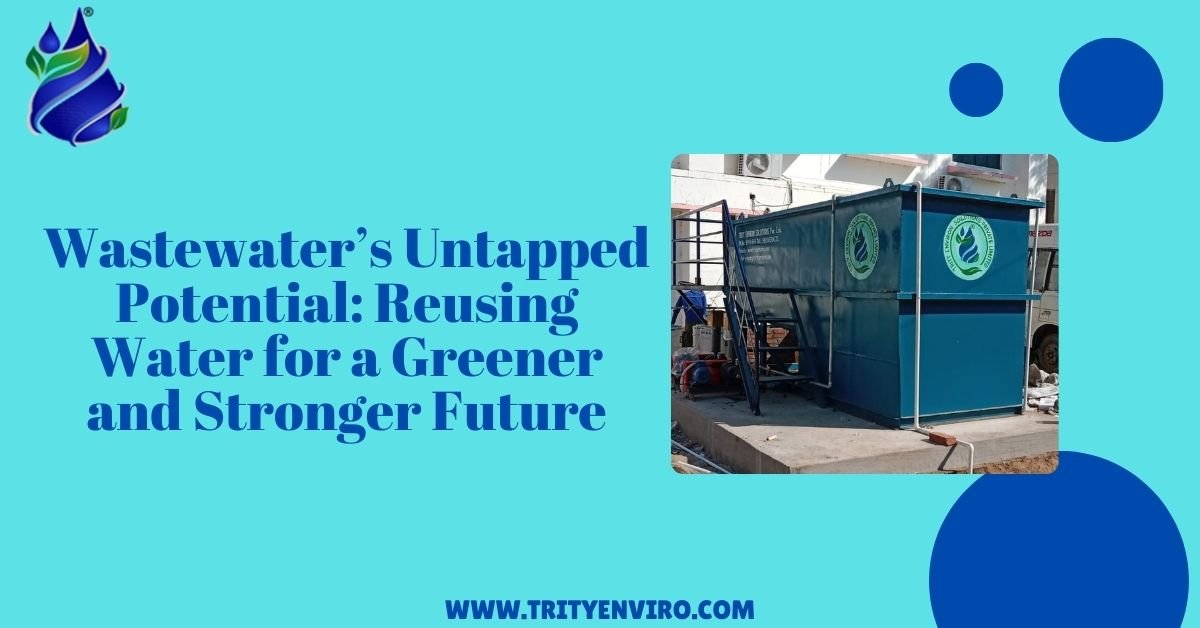
Explore the benefits, challenges, and innovations of wastewater reuse. Learn how it supports industries, agriculture, and green energy for a sustainable future.
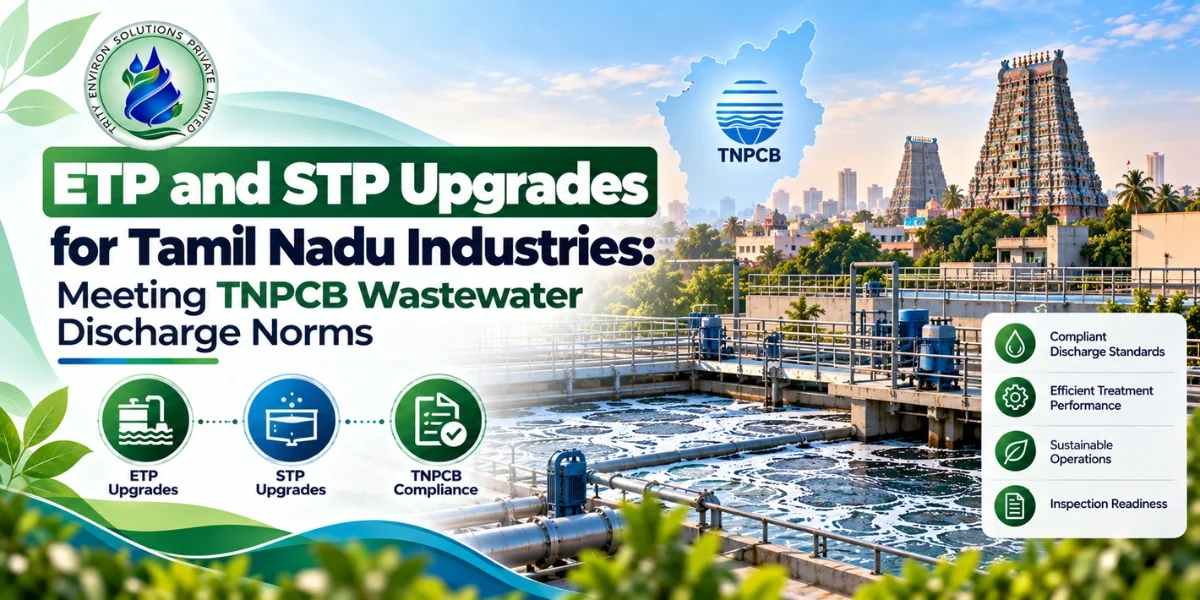
Upgrade your ETP or STP to meet TNPCB norms in Tamil Nadu. Learn the warning signs, textile cluster challenges, reuse and ZLD options and upgrade costs.




Discuss your requirements with our engineering team and get practical guidance for your project.