
 ISO 9001:2015 & QCI Approved
DM (Demineralized Water) Plant Manufacturer in India
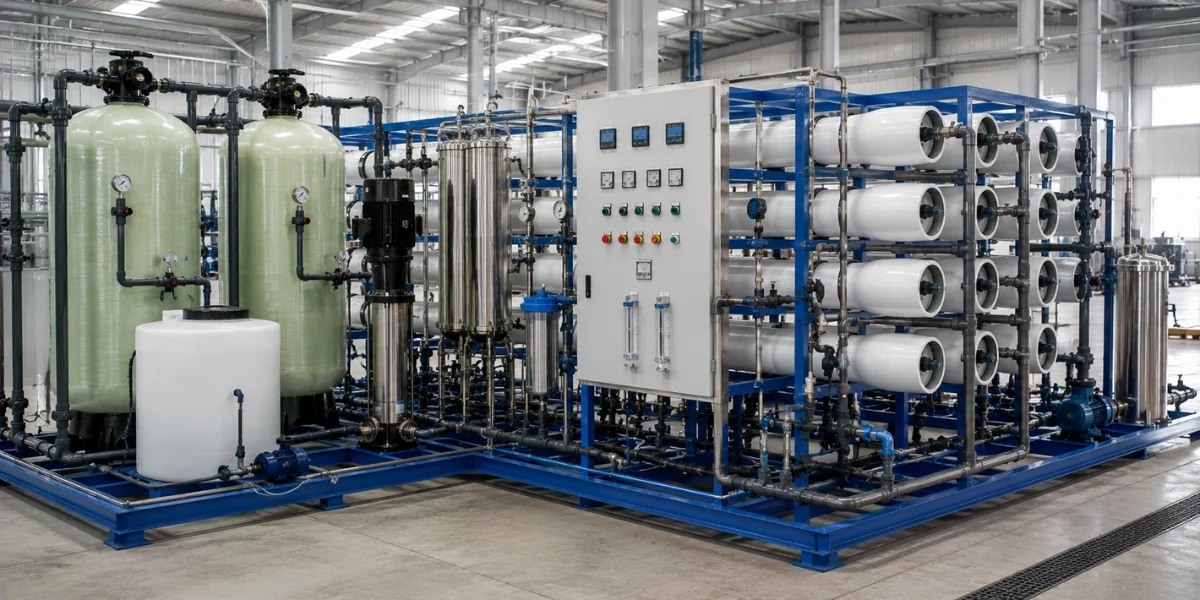
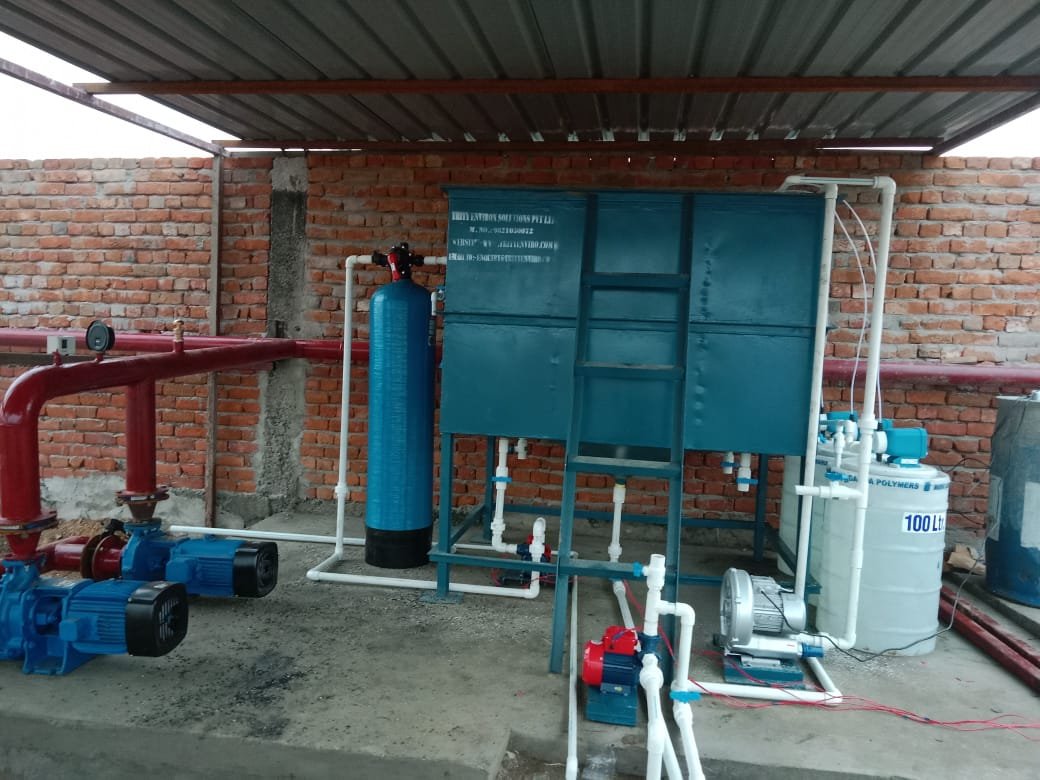
Trity Environ Solutions is a trusted DM plant manufacturer in India, engineering systems that use ion exchange resins to remove both cations and anions, producing extremely low conductivity demineralized water. Our DM plants are built for power, pharmaceutical, and process industries, with pan India installation support.
SPCB / CPCB Norm Compliant
Heavy Fabrication
Why DM Water Goes Further Than RO or Softening Alone
A DM plant, or demineralization plant, uses cation and anion exchange resins to remove dissolved mineral salts almost completely, producing water purity that goes beyond what reverse osmosis or a water softener alone can achieve. This makes it the standard choice wherever boiler feed water, pharmaceutical processes, or electronics manufacturing demand extremely low conductivity water. Trity Environ Solutions configures the resin bed arrangement, whether two-bed or mixed-bed, around your specific purity target and regeneration frequency preferences.
Need genuinely low conductivity water for your boiler or process? Request a free technical assessment and our engineering team will recommend the right DM configuration.
WHY THIS SYSTEM?
Key Benefits of DM Plant Manufacturer in India
Engineered for extremely *low conductivity water, reliable ion exchange treatment, and long-term resin regenerability*.
Extremely Low Conductivity Water
Produces extremely low conductivity water, typically under 10 micro-siemens, meeting the stringent purity requirements of power plants, pharmaceuticals, and electronics manufacturing applications.
Complete Cation & Anion Removal
Removes both cations and anions completely through ion exchange resins, unlike softening alone, which only addresses hardness without touching other dissolved mineral content.
Regenerable, Long Service Life
Regenerable resin beds allow the system to be restored to full capacity repeatedly using hydrochloric acid and caustic soda, extending resin life significantly over the plant lifecycle.
Protects Boilers & Process Equipment
Protects boilers, turbines, and high-purity process equipment from scale and corrosion, since mineral-free feed water eliminates the primary cause of scale deposit buildup.
Two-Bed or Mixed-Bed Options
Available in two-bed or mixed-bed configurations, allowing the exact purity level and system complexity to be matched precisely to your specific application requirements.
DM Water Isn't Always the Right Answer
DM plants deliver excellent purity, but they aren't always the most cost-effective choice, particularly where reverse osmosis or softening alone would satisfy your actual application requirements. Trity Environ Solutions evaluates your target conductivity, feed water hardness, and regeneration chemical handling capacity honestly before recommending DM, rather than positioning it as the default answer for every water purity need.
Resin Regeneration Quality Determines Long-Term Output Purity
DM plant performance depends heavily on correct, consistent resin regeneration using hydrochloric acid and caustic soda, and poor regeneration practice gradually degrades output water quality over time. Trity Environ Solutions backs every DM plant with operator training on regeneration procedure, conductivity monitoring guidance, and an Annual Maintenance Contract, so purity stays consistent. Talk to our team about AMC coverage for your plant.
SYSTEM CONFIGURATIONS
Types of DM Plant Manufacturer in India Configurations
Configurations selected to match your *purity target, feed water quality, and application* requirements.
Two-Bed DM Plant
Separate cation and anion exchange columns arranged in series, offering a cost-effective, widely used configuration for standard demineralized water requirements.
Mixed-Bed DM Plant
Cation and anion resins combined within a single vessel, producing higher purity water with lower conductivity than a standard two-bed system.
DM Plant with EDI
DM plant paired with electrodeionization for continuous, chemical-free polishing, suitable for facilities seeking to minimize acid and caustic regeneration chemical use.
DM Plant with Degasser
DM system paired with a degasser unit to remove dissolved carbon dioxide from feed water, reducing chemical load on downstream anion resin beds.
STEP-BY-STEP WORKFLOW
How the DM Plant Manufacturer in India Process Works
An ion exchange based treatment process engineered for consistent, *low conductivity demineralized water*.
01
Pretreatment
Raw water passes through filtration to remove suspended solids and organic matter before entering the resin columns.
02
Cation Exchange
Water flows through the cation resin column, where positively charged mineral ions are exchanged for hydrogen ions.
03
Anion Exchange
Water then passes through the anion resin column, where negatively charged ions are exchanged for hydroxide ions.
04
Regeneration
Once resin capacity is exhausted, columns are regenerated using hydrochloric acid and caustic soda, restoring full treatment capacity.
COMMON INQUIRIES
Frequently Asked Questions
Q1. What is a DM plant?
A DM plant, or demineralization plant, uses ion exchange resins to remove dissolved mineral salts from water, producing extremely low conductivity water for boiler feed, pharma, and process applications.
Q2. How is DM water different from RO water?
DM water typically achieves lower conductivity than RO water, since ion exchange resins remove nearly all dissolved ions, while RO relies on membrane filtration that retains some dissolved salt passage.
Q3. What is the difference between two-bed and mixed-bed DM plants?
Two-bed systems use separate cation and anion columns in series, while mixed-bed systems combine both resins in a single vessel, achieving higher purity output than two-bed alone.
Q4. How often does DM plant resin need regeneration?
Regeneration frequency depends on feed water hardness and daily water demand, with resin capacity typically requiring regeneration every few hundred to few thousand bed volumes treated.
Q5. What industries commonly use DM plants?
DM plants are widely used in power generation, pharmaceuticals, electronics manufacturing, textiles, and laboratories, wherever extremely low conductivity, mineral-free water is required.
Q6. Can a DM plant be combined with RO for better efficiency?
Yes, RO is often used as a pretreatment stage before DM, reducing the dissolved solid load on ion exchange resins and extending regeneration intervals significantly.
CATALOGUE
Related Engineering Products
RO & Water Recycling Plant Manufacturer in India
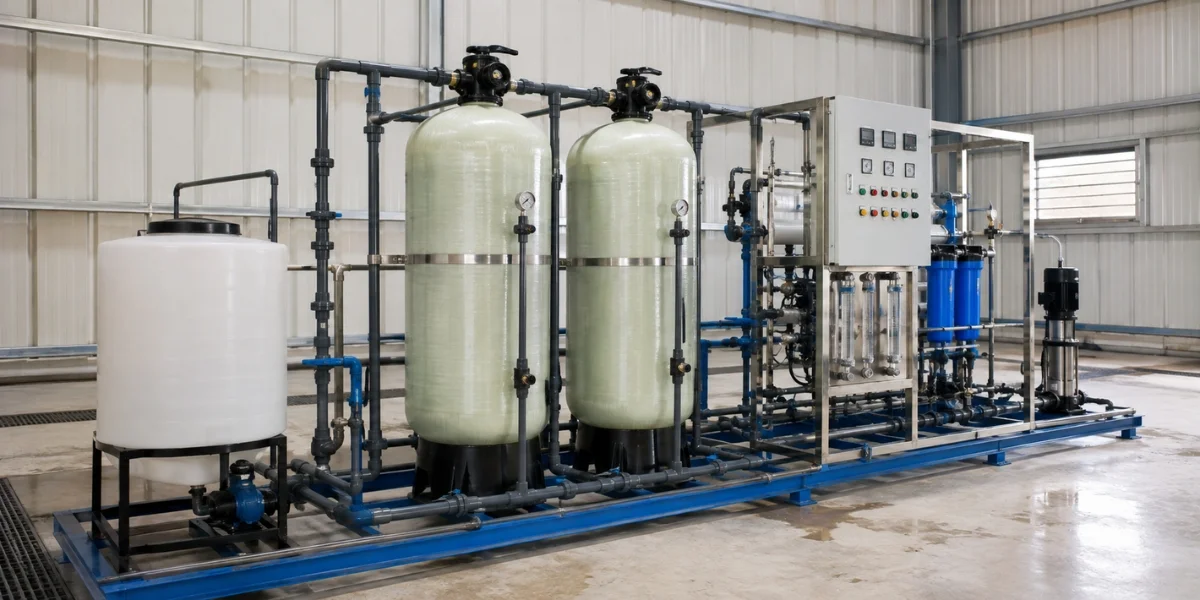
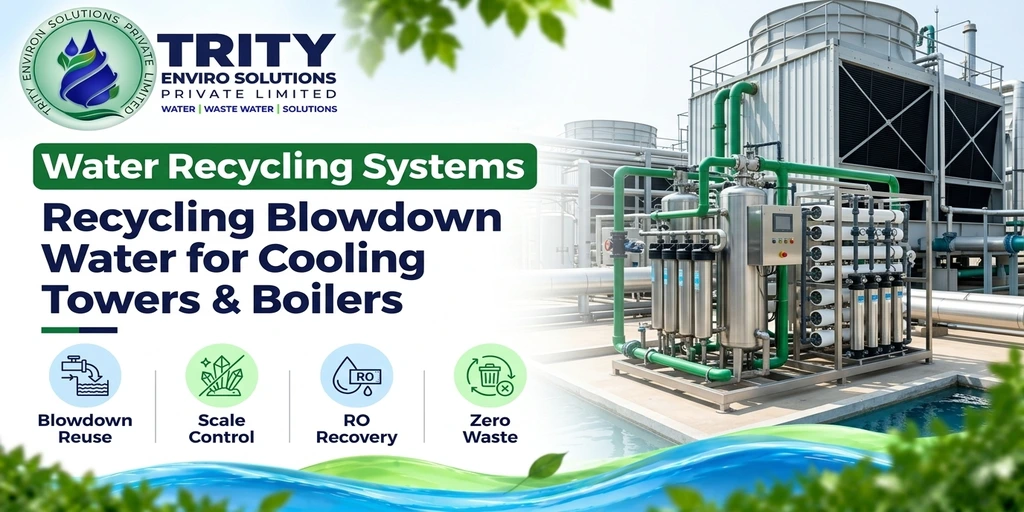
Trity Environ Solutions manufactures RO and water recycling systems for industries and commercial facilities, engineered for reliable purity and reuse.
Tertiary Treatment Plant Manufacturer in India
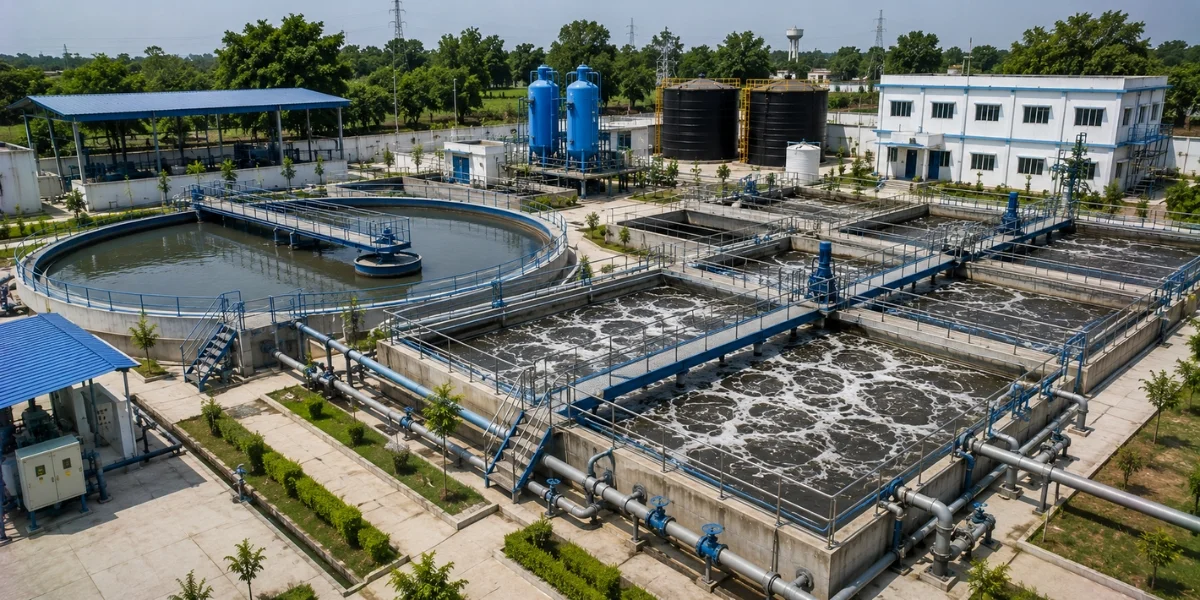
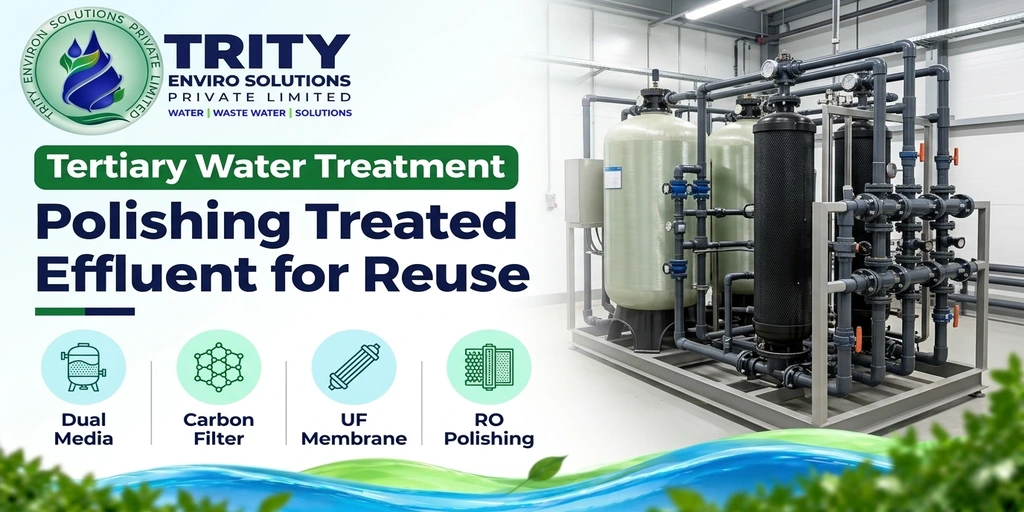
Trity Environ Solutions manufactures tertiary treatment plants that polish treated water beyond secondary treatment, enabling genuine reuse and stricter discharge compliance.
Wastewater Recycling System Manufacturer in India
Trity Environ Solutions manufactures wastewater recycling systems using UF and RO technology, turning treated wastewater into reuse-grade water for cooling, flushing, and gardening.
PAN-INDIA CAPABILITIES
Regional Solutions & State Coverage
TECHNICAL KNOWLEDGE
Related Insights & Engineering Guides
PROVEN EXCELLENCE
Featured Turnkey Installations




Need a Custom Water or Wastewater Treatment Solution?
Our engineering team can help design the right system for your capacity, industry, and compliance requirements.