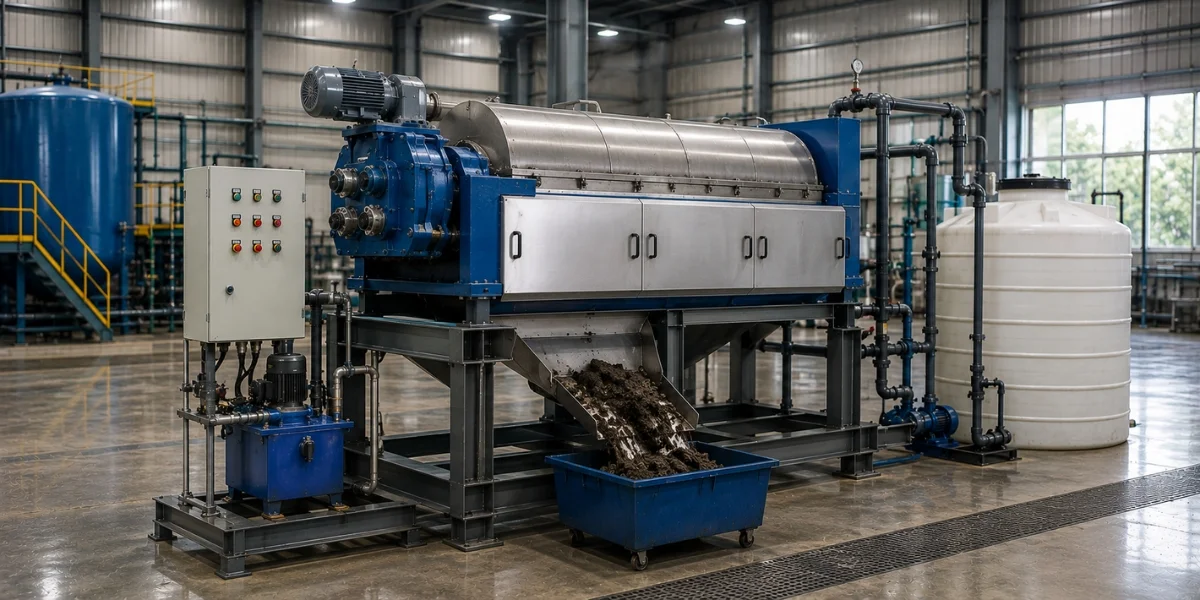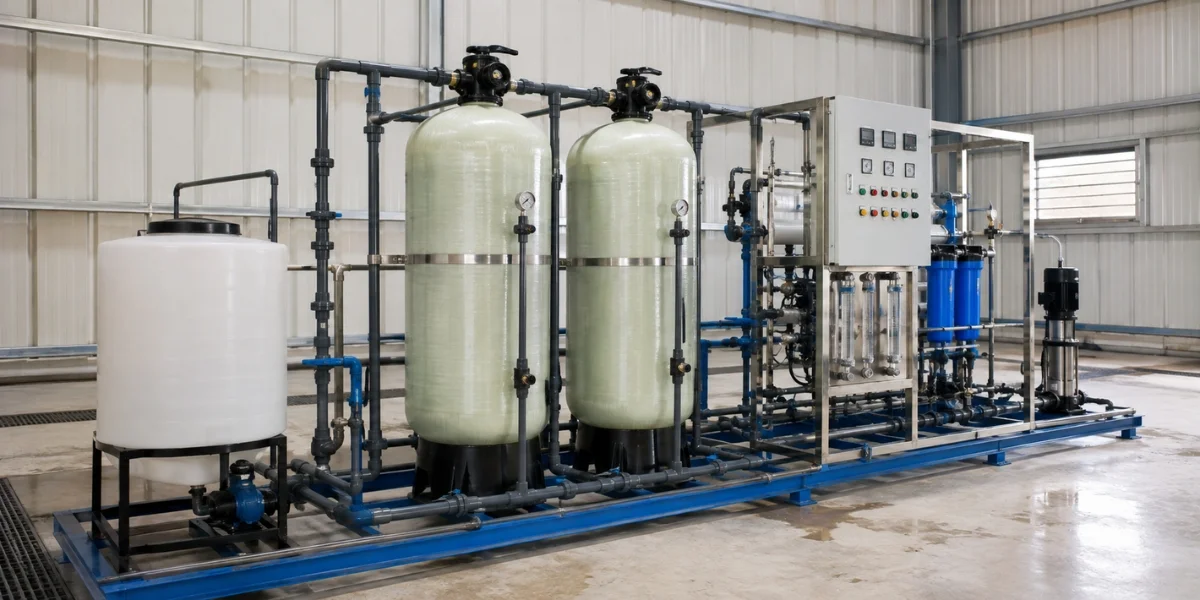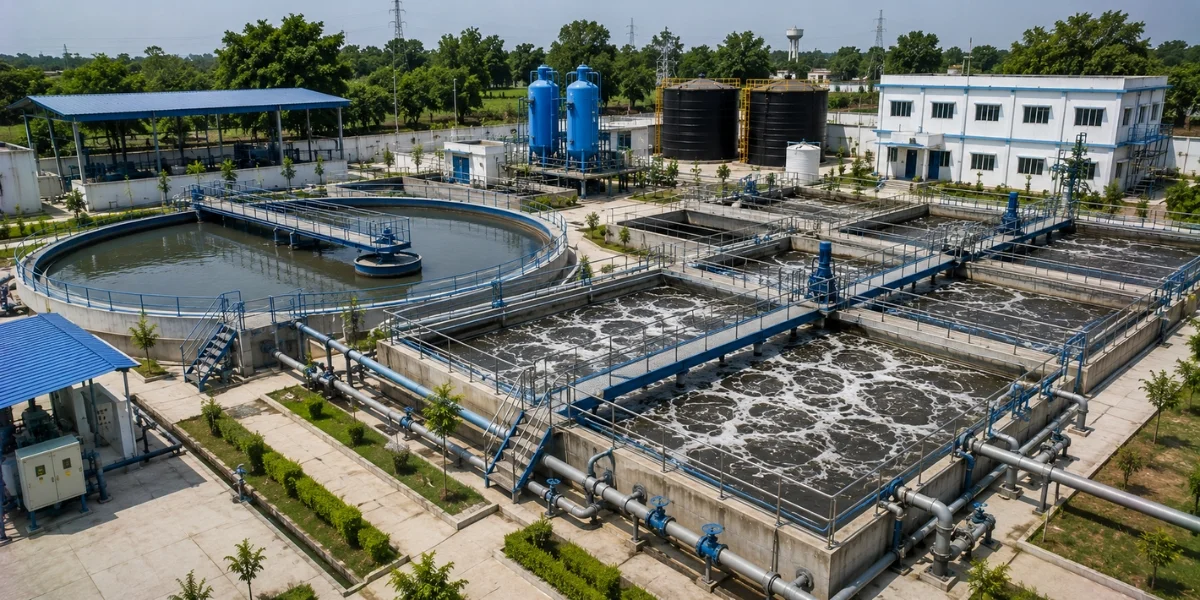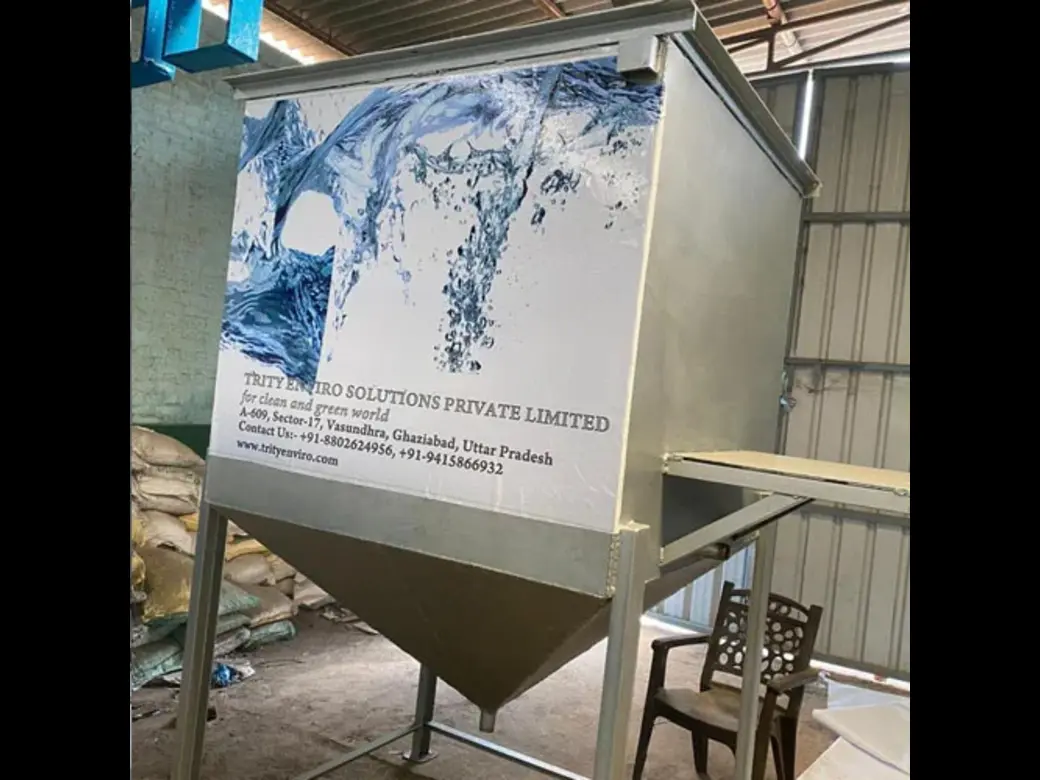
Trity Enviro Solutions provides industrial Sludge Dewatering Systems for ETP, STP, and wastewater plants across India. Reduce sludge disposal costs with CPCB-compliant sludge handling solutions and turnkey support.
| Treatment Technology | : Mixed Bed Bio Reactor(MBBR) |
| Country of Origin | : Made in India |
| Service Coverage | : PAN India |
| Application Industry | : Commercial Buildings, Hotels, Malls, Residential Societies & Institutions |
| Capacity (KLD/MLD) | : 500 KLD |
Wet sludge management is one of the most overlooked yet operationally expensive problems in industrial wastewater treatment. As CPCB compliance norms tighten and sludge disposal regulations grow stricter, plant operators across manufacturing, pharmaceutical, food processing, and municipal sectors face mounting pressure increasing haulage costs, landfill rejection of high-moisture sludge, regulatory notices, and disrupted plant operations.
If your ETP plant or STP plant is generating sludge volumes that are difficult to handle, transport, or legally dispose of, the core problem is almost always the same: inadequate or absent sludge dewatering capability.
Trity Enviro Solutions engineers, manufactures, and commissions industrial-grade Sludge Dewatering Systems across India customized to your sludge type, plant capacity, automation requirements, and long-term operational goals.
Most plant managers focus on treated water quality which is correct. But the cost of mismanaged sludge compounds silently, quarter after quarter, until it becomes impossible to ignore.
Transportation Cost Inflation: Wet sludge at 95–98% moisture is charged by weight and volume. Tanker trips, driver costs, and fuel expenditure scale directly with sludge volume. A plant generating 10 KL/day of wet sludge may be spending 8–12 times more on transport than it would with properly dewatered cake a structurally avoidable operating cost.
TSDF Disposal Charges: Treatment, Storage, and Disposal Facilities (TSDFs) charge on a per-tonne basis. For hazardous waste categories, TSDF charges in India currently range from ₹3,000 to ₹12,000 per MT depending on classification, moisture content, and disposal method. Reducing moisture from 95% to 75% can reduce disposable tonnage by 70–80% producing proportional cost savings month after month.
Landfill and TSDF Rejection Risk: TSDF operators are increasingly refusing intake of sludge above specified moisture thresholds. Rejection at the gate creates immediate operational crisis sludge accumulates on-site, plant operations back up, and regulatory exposure increases significantly.
Handling Difficulty and Safety Risk: Liquid sludge requires tankers, pumps, and hoses for movement. It is prone to spillage, creates slip hazards, and requires significantly more manual intervention than solid cake. Dewatered cake can be moved by conveyor, skip loader, or bag far safer and less labour-intensive.
Odour, Hygiene, and Workforce Welfare: Stored wet sludge undergoes rapid anaerobic decomposition, generating hydrogen sulphide and malodorous compounds. This creates a hazardous working environment, drives workforce complaints, and attracts community and regulatory attention.
Regulatory Risk: SPCB inspections increasingly examine sludge management practices, not just effluent quality. An inability to demonstrate proper sludge characterisation, dewatering, and manifested disposal can result in show-cause notices, consent suspension, or direction orders regardless of how well the liquid treatment stages perform.
The engineering solution to all of the above is consistent and proven: a correctly specified and maintained Sludge Dewatering System transforms sludge from a liability into a manageable, compliant, and cost-controllable output.
Concerned about your current sludge disposal costs? Talk to our process engineers for a no-obligation operational review. Request a Technical Consultation →
A Sludge Dewatering System is mechanical equipment used to separate water from wet sludge generated during industrial wastewater treatment, effluent treatment, or sewage treatment processes. The primary output is a semi-solid sludge cake with significantly reduced moisture content, which is far easier to handle, transport, and dispose of at considerably lower cost.
In practical terms, wastewater treatment generates sludge as a by-product of biological, chemical, and physical treatment stages. This sludge contains 95–99% water by volume, making it expensive, hazardous to transport, and difficult to landfill or process. A properly designed sludge dewatering machine reduces this moisture content to anywhere between 65–85%, depending on the technology deployed and sludge characteristics compressing what might be 100 cubic metres of wet sludge into a fraction of that volume.
For industries operating under the Environment Protection Act, Water (Prevention and Control of Pollution) Act, and CPCB/SPCB norms, efficient sludge handling is not optional it is a statutory obligation.
The table below reflects standard performance parameters for industrial-grade sludge dewatering equipment as supplied and commissioned by Trity Enviro Solutions. Actual specifications are engineered to order based on sludge characterisation data and plant-specific requirements.
| Parameter | Specification / Range |
|---|---|
| Capacity Range | 0.5 m³/hr – 50 m³/hr (sludge feed); scalable with multiple units |
| Sludge Type Compatibility | Biological, chemical-physical, mixed, inorganic, oily, fibrous |
| Inlet Sludge Solids Content | 0.2% – 6% DS (varies by technology; pre-thickening recommended below 0.5%) |
| Cake Moisture Output | 65% – 82% moisture (technology-dependent; filter press lowest, screw press higher) |
| Cake Solids Content | 18% – 35% DS depending on sludge type and dewatering technology |
| Polymer Consumption | 2 – 10 kg active polymer / tonne DS (varies by sludge type and conditioning requirement) |
| Power Consumption | 1.5 kW – 22 kW (multi-disc screw press: 1.5–5 kW; filter press: 5–15 kW; centrifuge: up to 22 kW) |
| Operating Mode | Batch (filter press) / Continuous (screw press, multi-disc, belt press, centrifuge) |
| Automation Level | Semi-automatic to fully automatic PLC-controlled with SCADA integration |
| Control System | PLC with HMI touchscreen; remote monitoring-ready; alarm and auto-shutdown functions |
| Material of Construction | Mild steel (epoxy-coated), SS 304, SS 316 for wetted parts; PP filter plates; SS screens |
| Filter Media | Polypropylene / polyester / nylon filter cloths (press); SS wedge wire / perforated screens (screw press) |
| Installation Type | Skid-mounted (plug-and-play) or structural floor-mounted; indoor installation standard |
| Footprint | Compact (multi-disc screw press: 1.5 m² – 4 m²); larger for filter press and belt press configurations |
| Wash Water Requirement | Minimal for screw press / multi-disc; cloth wash system standard on filter press and belt press |
| Suitable Industries | Textile, pharma, food processing, dairy, chemical, electroplating, paper mills, municipal STP/ETP |
| Compliance Alignment | Designed to support CPCB, SPCB, and Hazardous Waste Management Rules requirements |
| Maintenance Requirement | Low to moderate; filter cloth replacement: 6–18 months; screen inspection: quarterly; lubrication: monthly |
| Expected Service Life | 10–15 years with structured preventive maintenance |
Need a project-specific datasheet? Request a Technical Datasheet for your sludge type and capacity requirement.
Understanding the operational sequence helps plant managers and procurement teams select the right technology and manage systems more effectively.
Step 1 Sludge Collection: Wet sludge from clarifiers, secondary settling tanks, dissolved air flotation (DAF) units, or biological treatment stages is collected into a sludge holding tank. Consistent feed conditions improve dewatering performance.
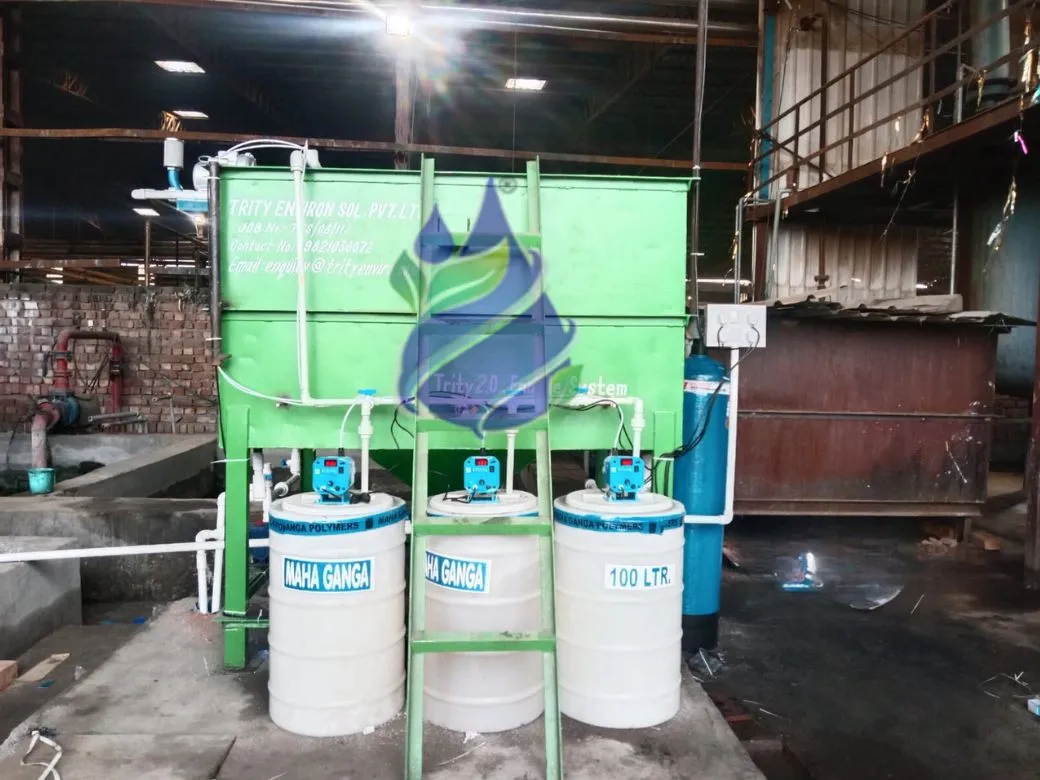
Step 2 Polymer Dosing: A polymer (flocculant) is dosed into the sludge stream using a chemical dosing system. Polymer selection is critical incorrect dosing leads to poor flocculation, reduced cake dryness, and higher chemical costs.
Step 3 Flocculation & Conditioning: The polymer-dosed sludge passes through a flocculation chamber where gentle agitation promotes the formation of larger, denser flocs that are easier to dewater mechanically.
Step 4 Thickening: In some configurations, a gravity thickener or pre-thickener concentrates the sludge ahead of the dewatering unit, improving feed consistency and reducing load on the dewatering machine.
Step 5 Mechanical Dewatering: The conditioned sludge enters the dewatering unit a filter press, screw press, multi-disc screw press, or belt press where mechanical pressure separates the remaining water from solid particles.
Step 6 Sludge Cake Discharge: Dewatered sludge is discharged as a semi-solid cake onto a conveyor, hopper, or collection trolley, ready for transport to a TSDF facility or composting plant.
Step 7 Filtrate Recovery: The separated liquid (filtrate) is recovered and typically returned to the head of the ETP or wastewater treatment plant for further treatment preventing secondary contamination.
Not sure which dewatering configuration suits your process? Talk to a Process Engineer we size systems around your actual sludge data, not generic assumptions.
Selecting the right technology requires a thorough assessment of sludge characteristics, throughput volume, footprint availability, and expected cake dryness. Each dewatering technology has specific strengths.
Working Principle: Slurry is pumped into sealed filter chambers formed between polypropylene filter plates. High feed pressure forces water through filter cloths, leaving behind a dewatered sludge cake. The press is then opened hydraulically and the cake discharged.
Best For: Chemical sludge, inorganic sludge, pharmaceutical effluent, electroplating, paint manufacturing, and any application requiring very low cake moisture (as low as 65–70%).
Advantages: Excellent cake dryness, low filtrate suspended solids, minimal chemical consumption, proven technology with low operating cost.
Limitations: Batch process (not continuous), higher maintenance on filter cloths and plates, requires skilled operator for cloth cleaning and cycle management.
Operational Note: Filter cloth selection whether polypropylene, polyester, or nylon significantly impacts filtration rate and cloth life. Correct cloth specification for sludge type is essential.
Working Principle: Sludge is fed into a cylindrical screen drum containing a rotating screw conveyor. As the screw advances, it compresses the sludge progressively against a conical resistance cone, squeezing out water through the screen gaps.
Best For: Biological sludge from STP, food processing effluent, textile wastewater sludge, and lower-volume industrial applications.
Advantages: Continuous operation, lower energy consumption, relatively simple maintenance, suitable for fibrous sludge types, compact footprint.
Limitations: Cake dryness typically lower than filter press (moisture 75–82%), not ideal for fine inorganic particles that pass through screen gaps.
Working Principle: An advanced variation of the screw press using multiple fixed and movable discs around the screw shaft. The gaps between discs allow filtrate to escape while the screw generates progressive compression.
Best For: Low-concentration sludge (0.2–1.0% DS), biological sludge, STP sludge, food processing waste, and applications where energy efficiency is a priority.
Advantages: Very low power consumption (some models as low as 1–3 kW), minimal water requirement for self-cleaning, fully automatic operation, low noise, handles fluctuating sludge concentration well.
Limitations: Lower throughput per unit compared to belt press or filter press; multiple units needed for large-volume applications.
Working Principle: Conditioned sludge is spread across two porous conveyor belts that pass through a series of rollers. Progressive roller pressure mechanically squeezes water from the sludge sandwiched between the belts.
Best For: Large-volume municipal sludge, biological sludge, paper mill sludge, continuous high-throughput applications.
Advantages: Continuous high-volume dewatering, moderate capital cost, suitable for fibrous and biological sludges.
Limitations: Requires significant wash water for belt cleaning, higher chemical conditioning demand, larger footprint, filtrate quality typically lower than filter press.
Working Principle: Sludge is fed into a rotating bowl where centrifugal force separates solids from liquid at high speed. The solid cake is conveyed to one end by a screw conveyor while clarified liquid overflows separately.
Best For: Fine particle sludge, oily sludge, pharmaceutical sludge, and applications where very high throughput and automated continuous operation are needed.
Advantages: High throughput, continuous operation, compact design relative to capacity, suitable for difficult-to-filter sludge.
Limitations: High capital cost, energy-intensive, requires precision maintenance, not ideal for abrasive sludge without wear-resistant liners.
A complete sludge dewatering system is not a single piece of equipment it is an integrated assembly of components, each of which must be correctly sized and specified.
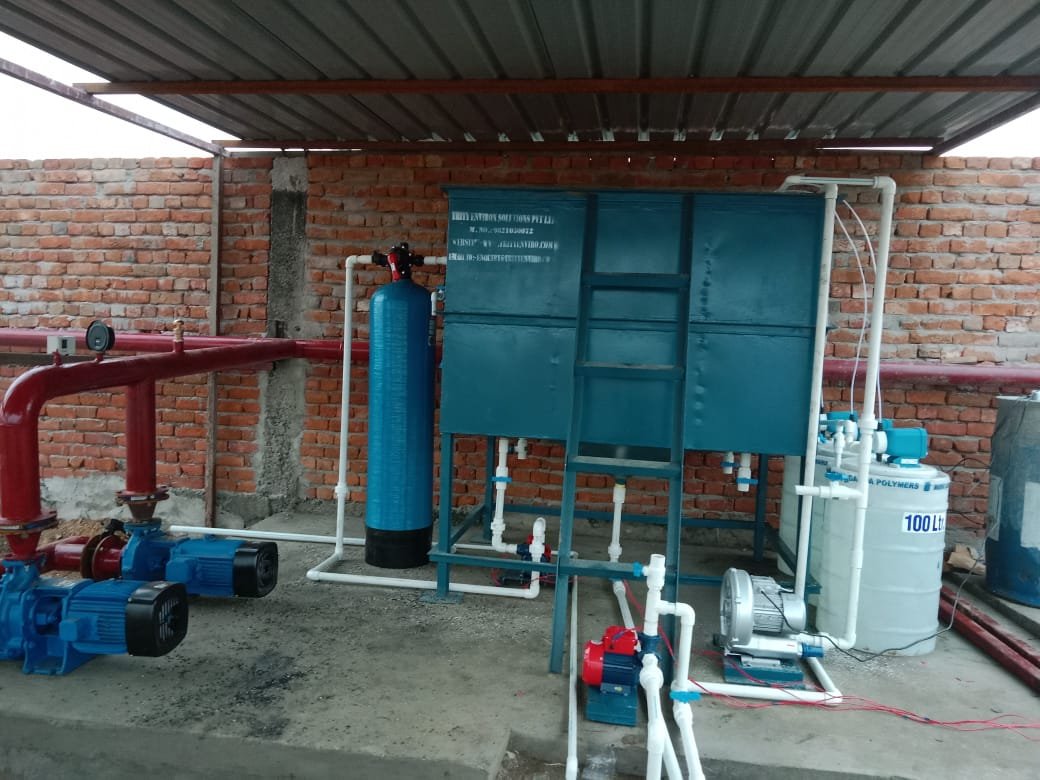
Feed Pump: Typically a progressive cavity (mono) pump, designed to handle high-viscosity, abrasive sludge without damage. Pump sizing must match peak sludge generation volumes.
Polymer Dosing System: Includes a polymer preparation unit (auto-makeup system), dosing pump, and inline mixer. Correct polymer type and dose directly determines cake dryness and chemical cost.
Flocculation Tank / Conditioning Unit: A mixing chamber where polymer and sludge are blended under controlled turbulence to promote floc formation prior to dewatering.
Dewatering Unit: The core mechanical component filter press, screw press, or belt press selected based on sludge type and process requirements.
Filter Media: Filter cloths (filter press), screen drums (screw press), or filter belts each requiring correct material selection for chemical resistance, pore size, and mechanical durability.
Sludge Hopper / Cake Collection System: Receives the dewatered sludge cake for temporary storage and subsequent removal by conveyor, trolley, or skip loader.
Screw Conveyor: Transfers dewatered cake from the dewatering unit discharge to the collection hopper or skip, particularly in high-volume continuous systems.
Control Panel (PLC/SCADA): Manages cycle timing, pump speeds, polymer dosing, press pressure, and alarm functions. Modern systems support remote monitoring and SCADA integration for unattended operation.
An industrial sludge dewatering system finds application across a wide range of sectors wherever wastewater treatment generates settleable solids.
Textile & Dyeing Industries: High-volume coloured sludge with residual dyes and chemical precipitates requires reliable filter press dewatering before TSDF disposal.
Pharmaceutical Manufacturing: Complex organic and inorganic sludge from API manufacturing ETPs demands precise cake dryness and zero liquid discharge (ZLD) compatibility.
Food & Beverage Processing: High BOD/COD biological sludge from food processing ETPs benefits from screw press or multi-disc dewatering for compostable cake output.
Dairy Plants: Fat-rich biological sludge from dairy ETPs requires conditioned dewatering to produce stackable cake for biogas or landfill disposal.
Electroplating & Metal Finishing: Heavy-metal-bearing chemical sludge classified as hazardous waste under Hazardous Waste Management Rules requires filter press dewatering to meet TSDF intake specifications.
Chemical & Petrochemical Industries: Complex mixed sludge with variable characteristics requires robust, adaptable dewatering systems with intelligent polymer dosing control.
Paper & Pulp Mills: High-fibre sludge from paper mill ETPs is well-suited to belt press dewatering for volume reduction ahead of boiler combustion or landfill.
Municipal Sewage Treatment Plants: Large-volume biological sludge from sewage treatment plants requires continuous dewatering capacity, typically via multi-disc screw press or centrifuge.
Common Effluent Treatment Plants (CETPs): Variable mixed sludge from multiple industrial contributors requires flexible, robust wastewater sludge dewatering technology capable of handling inconsistent feed quality.
Infrastructure & Real Estate Projects: On-site STP plants for large residential or commercial developments generate biological sludge requiring compact dewatering solutions with minimal operator involvement.
Trity Enviro Solutions designs and installs sludge dewatering equipment across the full breadth of Indian industry. If your process generates wastewater sludge, we have a proven solution for it.
| Industry Sector | Typical Sludge Type | Recommended Technology |
|---|---|---|
| Textile & Dyeing | Colour sludge, chemical precipitate | Filter Press |
| Pharmaceuticals & API | Organic/inorganic mixed sludge | Filter Press / Centrifuge |
| Food & Beverage Processing | High-BOD biological sludge | Screw Press / Multi-Disc |
| Dairy Plants | Fat-rich biological sludge | Screw Press / Belt Press |
| Chemical & Petrochemical | Mixed inorganic/organic sludge | Filter Press / Centrifuge |
| Electroplating & Metal Finishing | Heavy-metal hazardous sludge | Filter Press |
| Paper & Pulp Mills | High-fibre biological sludge | Belt Press / Screw Press |
| Municipal STP | Biological sludge (WAS/RAS) | Multi-Disc Screw Press |
| Common ETPs (CETPs) | Variable mixed sludge | Filter Press / Screw Press |
| Commercial Buildings & Hospitality | Domestic biological sludge | Multi-Disc (compact, automated) |
| Manufacturing & Engineering | Mixed process sludge | Filter Press / Screw Press |
| Infrastructure Projects | On-site STP biological sludge | Compact Screw Press |
Don't see your sector listed? Most industrial wastewater processes generate dewatering-amenable sludge. Schedule a Site Assessment and our engineers will evaluate your specific requirements.
For plant managers, EHS heads, and procurement teams, the business case for a Sludge Dewatering System is straightforward and measurable.
Dramatically Reduced Sludge Disposal Cost: Wet sludge at 95% moisture is charged by volume and weight for transport and TSDF disposal. Dewatered cake at 75–80% moisture reduces sludge volume by 80–90%, directly slashing disposal contracts and haulage trips.
Lower Transportation Cost: Fewer truckloads of sludge per month translates to significant freight savings a recurring operational benefit compounding across the life of the plant.
Reduced Landfill Dependency: CPCB-compliant TSDF facilities increasingly restrict intake of high-moisture sludge. Dewatered cake meeting TSDF inlet specifications avoids rejection, compliance notices, and demurrage costs.
Improved Plant Housekeeping: Eliminating liquid sludge pooling, spillage, and odour inside the plant boundary improves workforce welfare and reduces risk of SPCB inspection penalties.
Easier Manual Handling: Semi-solid dewatered cake is stackable, baggable, and manageable without specialised liquid waste handling equipment.
Support for CPCB & SPCB Compliance: Demonstrating effective sludge management to regulatory authorities during inspections reduces compliance risk and supports consent renewal applications.
Filtrate Reuse: Recovered filtrate from the dewatering stage, if sufficiently treated, can be recycled within the Commercial RO plant or ETP loop, reducing fresh water consumption.
Long-Term Operational Savings: A well-maintained sludge dewatering machine with a 10–15-year service life delivers compounding savings in disposal cost, manpower, and compliance management that far exceed the capital investment.
Want to estimate your disposal cost savings? Share your current sludge volume and disposal spend with our team. Request a Budgetary Quotation with projected ROI.
Even correctly installed sludge dewatering equipment encounters performance challenges in real plant environments. Experienced engineering teams recognise these early.
Problem: Low Cake Dryness Likely Cause: Insufficient polymer dose, incorrect polymer type, worn filter media, excessive feed rate. Engineering Response: Conduct a jar test to re-optimise polymer type and dose. Inspect filter cloths or screen drums for blinding or damage. Check feed pump consistency irregular feed destroys filter performance.
Problem: Filter Cloth / Screen Blinding (Clogging) Likely Cause: Oily or sticky sludge components coating filter media; inadequate wash cycles. Engineering Response: Increase cloth wash frequency and pressure. Consider enzymatic or alkaline cloth cleaning treatments. For chronic blinding, evaluate whether a pre-thickener or DAF can reduce fat/oil load ahead of the dewatering unit.
Problem: Foul Odour from Sludge Likely Cause: Anaerobic digestion occurring in holding tanks due to long retention times; biological sludge septicity. Engineering Response: Reduce holding tank retention time. Add controlled aeration to sludge holding tanks. Dewater fresh sludge rather than stored sludge where possible.
Problem: Inconsistent Sludge Feed Likely Cause: Upstream ETP process upsets, variable biological treatment output, pump wear. Engineering Response: Install feed flow meters and level controllers in the sludge holding tank. Establish upstream process controls to stabilise sludge generation rate. Inspect progressive cavity pump stator condition worn stators cause erratic flow.
Problem: Polymer Overdosing Likely Cause: Poorly calibrated dosing pump, outdated jar test data, variable sludge characteristics. Engineering Response: Implement automatic polymer dosing control with feedback from sludge conductivity or flow measurement. Repeat jar tests seasonally or when raw material inputs change sludge characteristics evolve with production changes.
Problem: Excessive Maintenance Frequency Likely Cause: Abrasive or chemically aggressive sludge damaging components beyond design specification; poor initial material selection. Engineering Response: Verify that all wetted components pump liners, stators, filter cloths are correctly specified for the actual sludge chemistry. This is a system specification issue, not an operational one, and must be corrected at the design stage.
Procurement decisions for sludge dewatering equipment should not be driven by price alone. The wrong technology selection generates years of operational problems, higher chemical costs, poor cake quality, and regulatory risk.
Key selection parameters include:
Sludge Type and Characteristics: Inorganic chemical sludge, biological sludge, mixed sludge, and oily sludge each have different dewatering behaviour. Laboratory testing of actual sludge samples is mandatory before technology selection.
Sludge Volume (m³/day or kg DS/day): Daily sludge generation volumes determine equipment sizing. Under-sizing creates bottlenecks; over-sizing wastes capital and inflates operating cost.
Required Cake Dryness: TSDF intake specifications, disposal method (landfill, composting, incineration), and transport economics determine the target cake dryness which in turn drives technology selection.
Automation Level: Unattended plants or facilities with limited skilled operators require high-automation systems (PLC-controlled, auto cake discharge). Manually operated systems may be appropriate for smaller facilities with adequate staffing.
Available Footprint: Filter presses and belt presses have significant footprint requirements. Multi-disc screw presses offer compact installation for constrained plant layouts.
Operating Cost vs. Capital Cost: Energy consumption, polymer consumption, filter media replacement frequency, and maintenance labour must be modelled over a 10-year lifecycle not just evaluated on capital purchase price.
Future Expansion: Specifying a modular system that can be scaled by adding press capacity without major civil or piping changes reduces future capital expenditure as plant capacity grows.
Our engineering team conducts site assessments and sludge characterisation before recommending any system ensuring that the solution delivered matches real plant conditions, not assumed parameters.
Ready to select the right system for your plant? Request a Sludge Analysis we evaluate your sludge characteristics and return a technology recommendation with supporting data.
A sludge dewatering system is only as reliable as the support structure behind it. Trity Enviro Solutions remains actively engaged through every stage of the plant lifecycle from day-one commissioning to long-term operational continuity.
Installation Supervision: Our engineers supervise mechanical installation on-site, ensuring correct alignment, piping connections, and electrical integration before any equipment is started. This eliminates the risk of premature failures caused by incorrect installation.
Commissioning Assistance: Every system undergoes a structured commissioning process including feed pump calibration, polymer dosing optimisation, filter press cycle programming, and first-run cake quality verification. We do not hand over a system until it is producing target cake dryness under real sludge conditions.
Operator Training: Plant operators receive hands-on training covering system start-up and shutdown sequences, polymer preparation and dosing adjustment, routine maintenance procedures, and fault identification. Training documentation is provided in the operator's preferred language where required.
Spare Parts Support: Critical consumable spares filter cloths, pump stators, screen elements, dosing pump diaphragms are maintained in our inventory for rapid dispatch. We advise clients on recommended on-site spare holdings to minimise downtime risk.
Preventive Maintenance Support: Structured AMC programmes include scheduled preventive maintenance visits, filter cloth inspection and replacement, hydraulic system servicing, lubrication programmes, and system performance reviews. Preventive maintenance consistently outperforms reactive maintenance in terms of system uptime and lifecycle cost.
Troubleshooting Support: When performance issues arise poor cake dryness, screen blinding, pump inconsistencies our technical team provides remote and on-site troubleshooting support. Root-cause analysis is documented so corrective actions address the underlying problem rather than the symptom.
Lifecycle Operational Reliability: Our systems are engineered for 10–15 years of productive service. With correct installation, structured maintenance, and responsive spares support, sludge dewatering equipment delivers consistent performance across this lifecycle without major capital reinvestment.
Trity Enviro Solutions brings deep engineering expertise to every Sludge Dewatering System project from initial technical consultation and system design through to installation, commissioning, operator training, and long-term after-sales support.
Engineering-First Approach: Every system is designed around actual sludge data not catalogue assumptions. We conduct laboratory dewatering trials and process simulations before finalising technology selection and system configuration.
Full Customisation: We do not offer off-the-shelf packages where plant conditions don't fit. Every system from polymer dosing to control philosophy is engineered for your specific sludge type, volume, and operational constraints.
Turnkey Execution: From civil design inputs and mechanical installation to electrical integration and SCADA commissioning, we manage the complete project scope reducing coordination burden on plant teams.
PAN India Project Capability: With a track record of successful installations across industrial clusters, municipalities, and infrastructure projects throughout India, our project execution teams are experienced in nationwide deployment under varying site conditions, utility availability, and regulatory environments.
Operator Training: Every commissioned system is accompanied by a structured operator training programme ensuring plant personnel understand system operation, routine maintenance, polymer dosing management, and troubleshooting protocols.
After-Sales Support & AMC Services: We offer structured Annual Maintenance Contracts (AMC) covering preventive maintenance schedules, consumable supply, emergency breakdown response, and performance monitoring ensuring sustained system efficiency over the operational lifecycle.
Compliance-Focused Design: All systems are designed with CPCB and SPCB compliance frameworks in mind. Where required, we assist clients in documenting sludge management practices for Hazardous Waste Manifests, Form 3/4 submissions, and consent-to-operate renewals.
Integrated Wastewater Solutions: Our expertise extends beyond sludge dewatering to complete Effluent Treatment Plants, Sewage Treatment Plants, Filter Press Systems, Tube Settler Media, and Oil Skimmers enabling us to design complete wastewater and sludge management solutions from a single source.
Working with an EPC contractor or consultant? We support project design from concept through commissioning. Submit a Project Enquiry with your process parameters and we will respond with a technical proposal within 48 hours.
If your plant is generating sludge volumes that are difficult to manage, expensive to dispose of, or creating compliance risk the solution begins with an honest engineering conversation.
Our wastewater treatment experts work with plant heads, EHS managers, EPC contractors, and procurement teams across India to design and deliver Sludge Dewatering Systems that solve real operational problems not just on paper, but on the plant floor.
Contact us to:
We provide project consultation support for greenfield ETP/STP plants, brownfield upgrades, capacity expansions, and emergency dewatering system replacements across all major industrial sectors, PAN India.
Talk to a sludge dewatering specialist today.
Trity Environ Solutions expanded the sewage treatment plant in Dubai. We are one of the best manufacturers...
Ultra filtration systems use advanced membrane technology to remove suspended solids, bacteria, and fine particles from water. These systems help improve water quality for treatment plants, commercial facilities, and process applications.
Trity Environ Solutions manufacturers and suppliers of STP and ETP Plant in Noida. Sewage Treatment...
We are the best manufacturers and suppliers of MBBR Media in India. Moving bed biofilm reactor manuf...
Trity Environ Solutions manufacturers and suppliers of STP and ETP Plants in Ghaziabad. Sewage Treatment...
Trity Environ Solutions manufacturers and suppliers of STP and ETP Plant in Jodhpur. Sewage Treatment...
Trity Environ Solutions manufacturers and suppliers of STP and ETP Plant in Lucknow. Sewage Treatment...
Trity Environ Solutions manufacturers and suppliers of STP and ETP Plants in Delhi/NCR. Sewage Treatment...
Trity Environ Solutions manufacturers and suppliers of STP and ETP Plants in Firozabad. Sewage Treatment...
Trity Environ Solutions manufacturers and suppliers of STP and ETP Plants in Udaipur. Sewage Treatme...