Effluent Treatment for Small-Scale Industries: Practical Solutions, CETP Options & Subsidies
Practical, budget-friendly effluent treatment for small-scale industries: compact ETP systems, CETP options, and government subsidy schemes.

 ISO 9001:2015 & QCI Approved
In late 2025, contaminated municipal water in Indore killed dozens of people. Here's what actually goes into water purification, the real health and industrial stakes, and how Trity Environ Solutions builds systems that address them.
In late December 2025, contaminated municipal water in Bhagirathpura, a locality in Indore, triggered a bacterial contamination outbreak that killed at least 32 people and hospitalised more than 1,400 others by the time authorities brought it under control. This wasn't a remote village with no infrastructure. Indore is one of India's larger, better-resourced cities, and the incident is a direct illustration of what happens when water purification fails, or was never adequate in the first place, even in an urban system.
That single event sits inside a much larger pattern. India loses an estimated 73 million working days a year to waterborne disease, with roughly 37.7 million people affected annually and 1.5 million children dying from diarrhoeal illness alone, according to figures cited across multiple public health studies. The World Health Organization estimates that 21 percent of communicable diseases in India are water-related. The economic burden runs to roughly 600 million US dollars a year. Water purification isn't a background utility function. It's infrastructure with a measurable body count when it fails.
Purification isn't a single step, it's a sequence of stages, each targeting a different category of contaminant, and skipping or under-engineering any one of them is usually where real-world failures like Indore's originate.
Primary treatment removes large solids and debris through screening and sedimentation, physical separation rather than chemical or biological action.
Secondary treatment targets dissolved and suspended organic matter through biological processes, activated sludge systems, trickling filters, or sequencing batch reactors, where microorganisms break down organic pollutants that physical separation alone can't touch.
Tertiary treatment goes further still, using chemical coagulation and flocculation, membrane filtration, or advanced oxidation to remove specific contaminants that biological treatment leaves behind, this is typically where a commercial RO plant or dedicated filtration system does its work.
Disinfection, through chlorination, UV irradiation, or ozonation, is the final stage that actually neutralises the bacteria and viruses responsible for outbreaks like Indore's. This is also, notably, the stage that appears to have failed or been absent in that specific incident, since bacterial contamination reaching consumers points directly to a disinfection or distribution-integrity failure.
India's primary benchmark for drinking water quality is the Bureau of Indian Standards' IS 10500:2012, which sets acceptable limits across more than 50 parameters, biological, chemical, and physical, and is broadly aligned with WHO's Guidelines for Drinking Water Quality. Meeting this standard isn't optional for any facility supplying water for human consumption, and it's the benchmark against which any purification system, whether a municipal plant or an industrial facility's own supply, should actually be measured, not just described as producing "clean" water in vague terms.
Reverse osmosis is one of the most effective purification technologies available, and it's core to what Trity Environ Solutions manufactures for both commercial and residential clients. But RO systems remove dissolved solids broadly, including beneficial minerals like calcium and magnesium alongside contaminants, which is why a properly specified system pairs RO with a mineraliser or TDS controller to restore essential mineral content after filtration rather than producing water that's technically clean but nutritionally stripped. This is a genuine design consideration, not a minor technical footnote, and it's part of why choosing a system based on brand or price alone, without understanding what configuration your actual water source needs, often produces disappointing results.
Most articles on this topic stop at drinking water, but purification matters just as much, arguably more, for industrial process water. Manufacturing, pharmaceuticals, food and beverage processing, and power generation all depend on water quality that goes beyond what's safe to drink, since dissolved minerals that pose no health risk in drinking water can still scale boilers, foul membranes, and damage precision equipment.
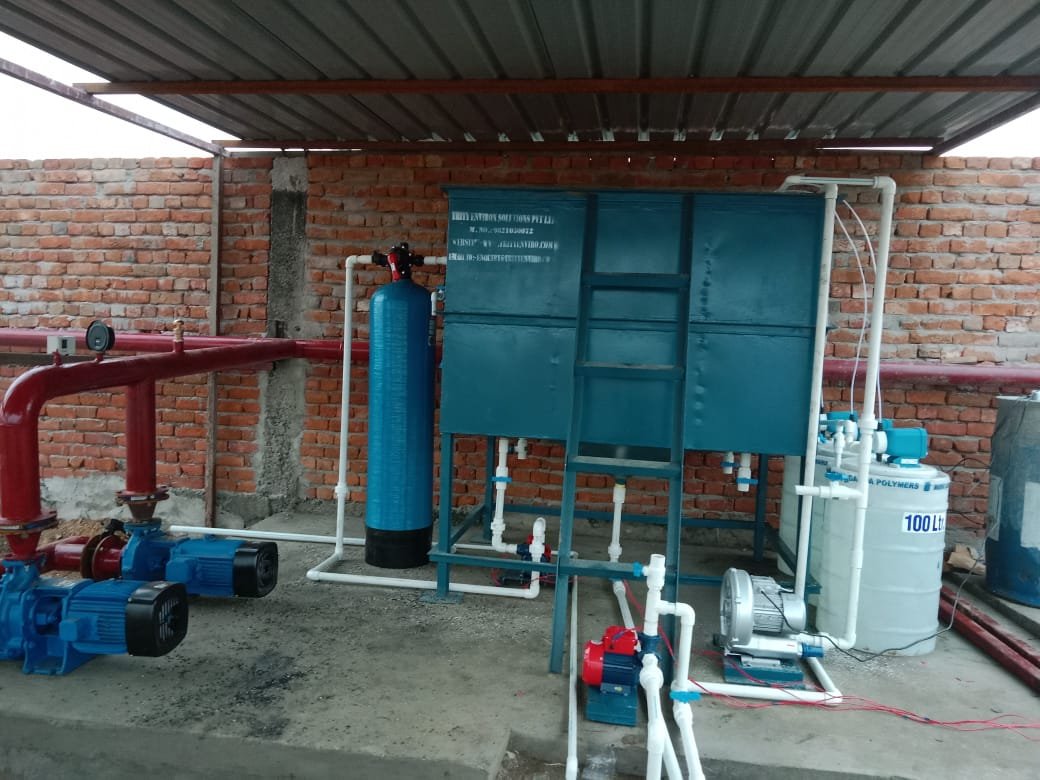
Trity Environ Solutions manufactures a full range of systems addressing this: demineralized water plants for facilities needing mineral-free process water, water softener plants for hardness removal ahead of boilers and cooling systems, and commercial RO plants sized for everything from a mid-sized facility to large industrial operations. A facility that treats industrial water purification as an afterthought tends to pay for that decision later, through equipment scaling, membrane fouling, and product quality issues that trace directly back to inadequate feedwater treatment.
Water purification, and its close relative, wastewater treatment, also protects the water bodies India's ecosystems and agriculture depend on. CPCB data from 2021 recorded roughly 72,368 million litres of sewage generated daily nationwide, with only about 44 percent actually treated, and 351 polluted river stretches identified across 323 rivers. Untreated discharge doesn't just fail a compliance check, it directly degrades the same water sources that downstream communities, farms, and industries eventually draw from, creating a cycle where inadequate treatment upstream becomes someone else's contamination problem downstream.
This is why purification and treatment need to be thought of as one connected system rather than separate concerns: drinking water purification protects public health directly, while proper sewage and effluent treatment before discharge prevents the contamination that makes purification necessary for the next community downstream in the first place.
Whether you're evaluating drinking water treatment for a residential development, a commercial building, or process water treatment for an industrial facility, the practical questions are similar: what does your actual source water contain, what BIS or industry-specific standard does your output need to meet, and what configuration, RO alone, RO paired with demineralization, or a softening stage ahead of either, actually matches your water's specific composition. A system specified without answering these questions properly is how facilities end up with results that look adequate on paper but underperform in practice, precisely the gap that turns a routine water supply into an incident like Indore's.
A purification system that's correctly specified on paper can still underperform in practice, and most of the reasons come down to a handful of recurring issues.
Treating purification as a one-time installation rather than an ongoing process. Membranes foul, resin beds exhaust, and disinfection equipment needs calibration and replacement on a schedule. A system installed correctly and then left unmaintained degrades gradually, often without an obvious warning sign until output quality has already slipped meaningfully below standard.
Skipping proper source water characterisation before selecting equipment. Every water source carries a different combination of hardness, dissolved solids, and biological contaminants. A system specified without first testing the actual source water is essentially a guess, and mismatched equipment either underperforms against real contamination levels or costs more than necessary by over-engineering for problems the source water doesn't actually have.
Assuming a single treatment stage covers every contaminant category. RO handles dissolved solids well but isn't primarily a disinfection technology. Biological treatment handles organic load but doesn't remove dissolved minerals. Real purification, for drinking water or industrial process water alike, almost always requires multiple stages working together, not one technology treated as a complete solution.
Underestimating distribution system integrity. Even water that's properly treated at the plant can become contaminated afterward if the distribution network itself, pipes, storage tanks, connection points, isn't maintained and protected from cross-contamination. This is a genuine possibility in incidents like Indore's, where the point of failure may sit anywhere between initial treatment and the point of consumption.
A well-designed demineralized water plant or commercial RO plant that's poorly maintained will eventually perform no better than an inadequate one, which is why Trity Environ Solutions builds annual maintenance contracts and spare parts availability into every system we manufacture, rather than treating installation as the end of the relationship. For facilities managing drinking water supply or process water for manufacturing, this ongoing support is what actually keeps output quality consistent with BIS or process-specific standards over years of operation, not just at the moment of commissioning.
Bacterial contamination reached the municipal water supply in Bhagirathpura, Indore, killing at least 32 people and hospitalising over 1,400 others. While full investigation details determine the exact point of failure, bacterial contamination reaching consumers typically points to a breakdown in disinfection or in distribution system integrity, allowing pathogens to bypass or survive the treatment process.
RO is highly effective at removing dissolved solids, including most contaminants and pathogens, but it removes beneficial minerals too. A properly designed system pairs RO with a mineraliser or TDS controller to restore essential minerals, and disinfection stages still matter for biological contamination specifically.
It's India's primary drinking water quality standard, covering more than 50 biological, chemical, and physical parameters, broadly aligned with WHO guidelines. It's the benchmark any purification system supplying water for human consumption should be measured against.
No. Industrial processes, manufacturing, pharmaceuticals, food and beverage production, and power generation, need water treated to standards that address scaling, corrosion, and process contamination, which is a different and often more demanding requirement than drinking water safety alone.
Coverage and quality are different things. Programmes like the Jal Jeevan Mission have extended piped water access significantly, but a tap connection doesn't guarantee the water quality meets BIS standards consistently, which is why ongoing testing, monitoring, and properly maintained treatment infrastructure remain essential even where access exists.
It depends on your source water's specific contamination profile and what your intended use requires, whether that's BIS-compliant drinking water, boiler-grade demineralized water, or general process water. A proper assessment of source water characteristics should come before selecting equipment, not after.
Yes. Distribution system integrity, the pipes, storage tanks, and connection points between the treatment plant and the point of use, matters as much as the treatment itself. Contamination can be introduced anywhere along that path if the distribution network isn't properly maintained and protected.
Yes. Every system we manufacture comes with annual maintenance contract options, spare parts availability, and remote troubleshooting support, since consistent output quality depends on ongoing maintenance, not just correct initial installation.
Whether you need a drinking water solution or industrial-grade process water treatment, Trity Environ Solutions designs and manufactures systems built around your actual water quality needs. Get in touch with our team, or explore our full product range including RO plants, DM plants, and water softening systems.
Practical, budget-friendly effluent treatment for small-scale industries: compact ETP systems, CETP options, and government subsidy schemes.

Both Deionization and Reverse osmosis is water purification methods and can be purchased through a wastewater treatment plant manufacturer so that the impurities can be removed from the water.

Explore the water pollution diagram highlighting sources and effects of pollutants. Understand how industrial, agricultural, and residential waste impacts water.

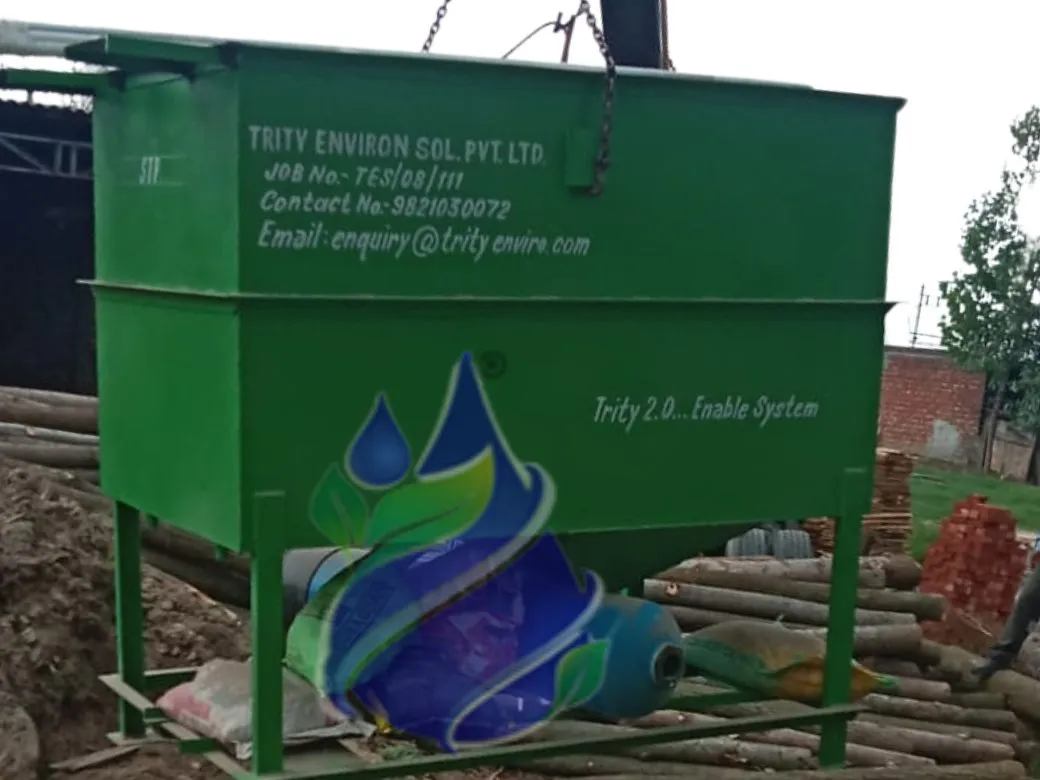
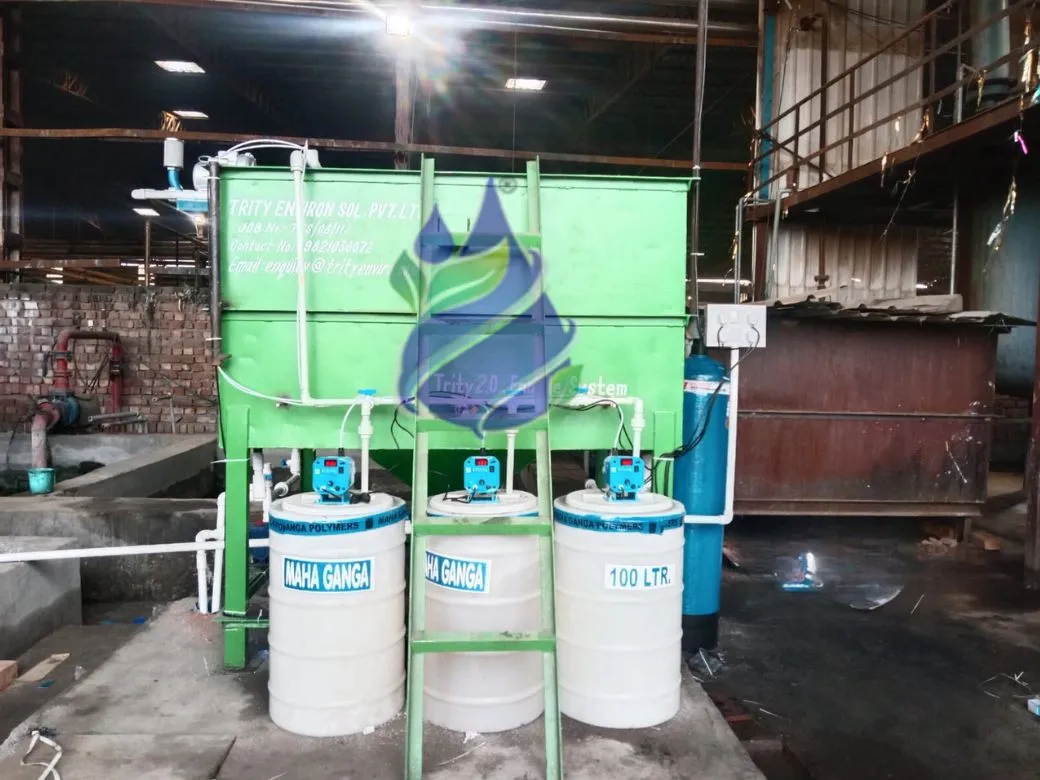


Discuss your requirements with our engineering team and get practical guidance for your project.