
 ISO 9001:2015 & QCI Approved
Wastewater Treatment Plant Manufacturer in India
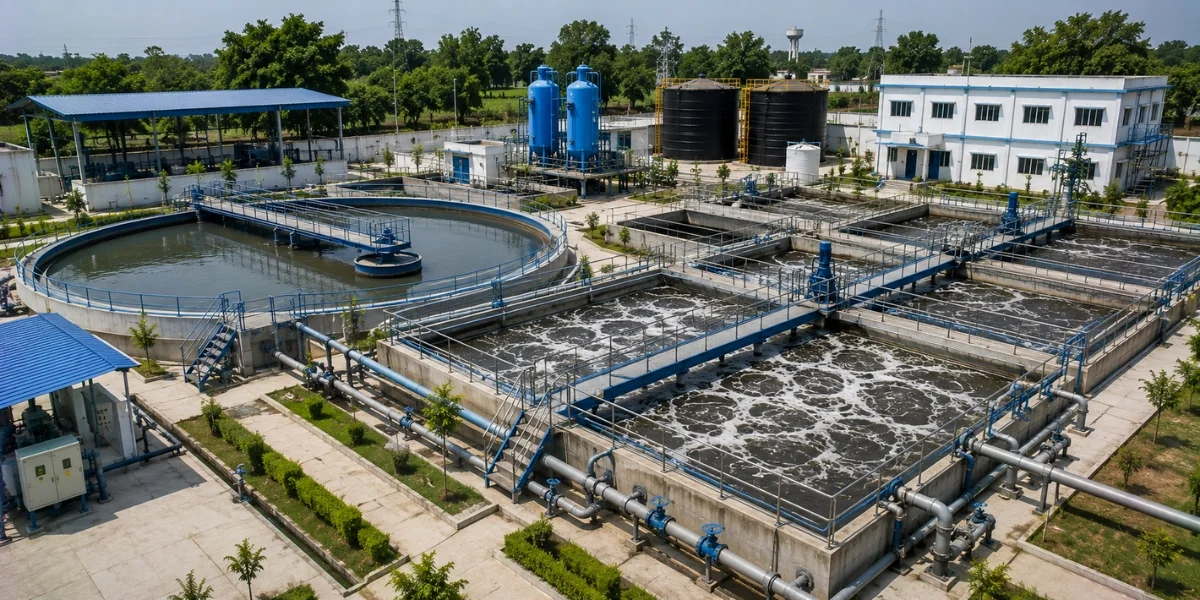
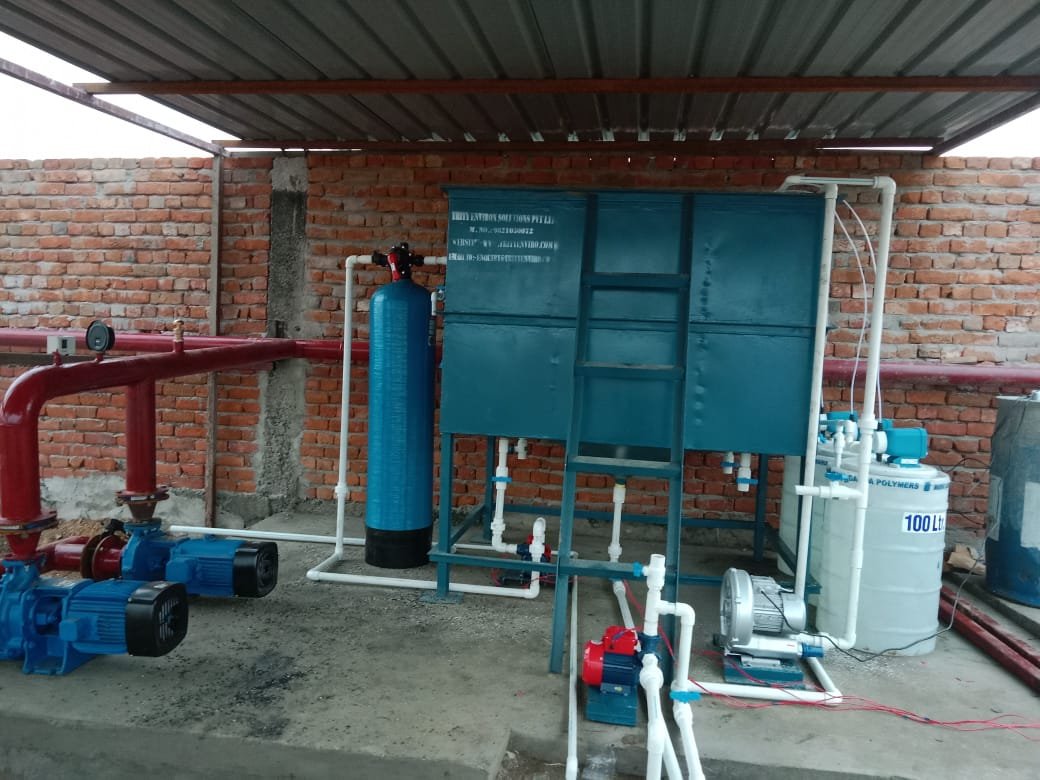
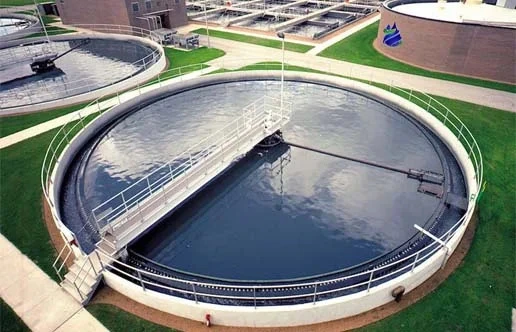
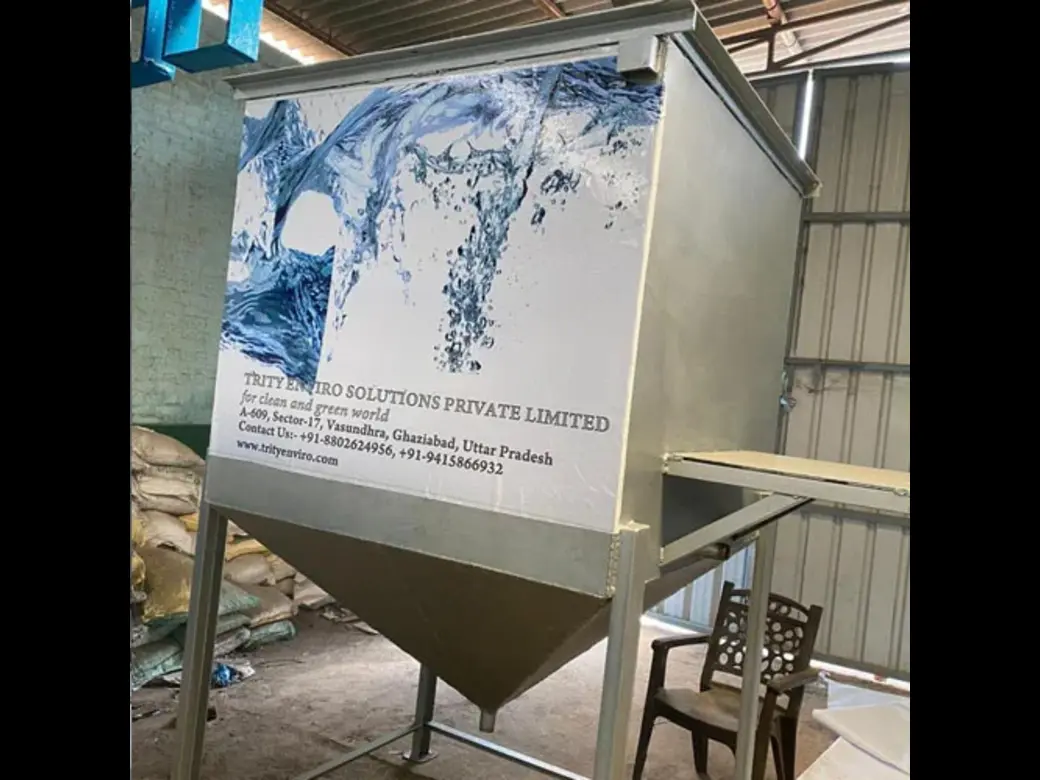
Trity Environ Solutions is a leading wastewater treatment plant manufacturer in India, covering the full spectrum from industrial effluent treatment to domestic sewage and water recycling. Since 2015, we've designed, manufactured, and commissioned systems from our Ghaziabad base for industries, institutions, and residential projects, with pan India installation support.
SPCB / CPCB Norm Compliant
Heavy Fabrication
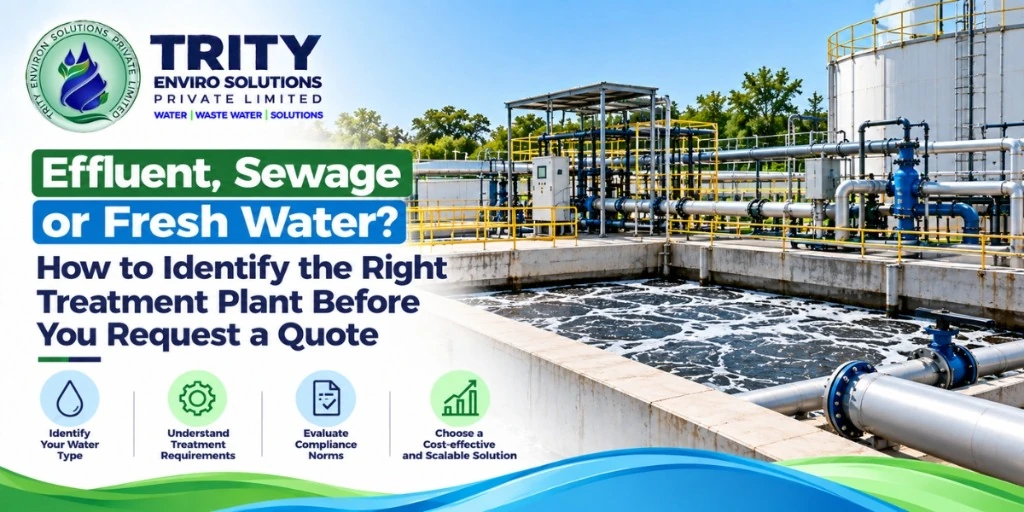
One Term, Three Genuinely Different Problems
"Wastewater treatment plant" gets used as a catch-all term, but it actually covers three distinct problems: industrial effluent carrying chemical and process-specific contaminants, domestic sewage with more predictable organic load, and purification or reuse systems for producing clean water or recovering it after treatment. Trity Environ Solutions works across all three, which means we recommend based on what your project actually is, not which category happens to be our specialty.
Not sure which category your project actually falls into? Request a free technical assessment and our engineering team will point you to the right solution.
WHY THIS SYSTEM?
Key Benefits of Wastewater Treatment Plant Manufacturer in India
Engineered for CPCB and SPCB compliance, lower lifecycle operating cost, and consistent treatment performance across every category.
One Accountable Supplier Across Categories
Consolidates ETP, STP, and RO expertise under a single accountable manufacturer, avoiding the coordination gaps that arise from splitting industrial and domestic treatment across separate vendors.
Technology Matched to Your Effluent
Reduces long term operating costs through technology selection matched to your actual effluent, not a default recommendation chosen for supplier convenience.
Genuinely Custom Engineering
Custom engineered around your actual wastewater characteristics and reuse goals rather than a generic template applied across every project type.
Compact & Modular Footprint
Compact, modular plant layouts reduce space requirements without compromising treatment capacity, ideal for facilities with limited available installation area.
Automated PLC / SCADA Control
Automated PLC and SCADA control systems provide real time monitoring and reduce manual operator dependency for consistent plant performance.
Choosing the Wrong Category Wastes More Time Than Choosing the Wrong Technology
Buyers sometimes approach us asking for an "ETP" when their site actually needs an STP, or the reverse, simply because the terminology gets used loosely across the industry. Getting this classification wrong early on cascades into wasted time on technology comparisons that don't apply to their actual wastewater. Trity Environ Solutions starts every enquiry by confirming what's actually in the wastewater and where it originates, before any technology discussion begins.
Technology Selection Should Follow a Comparison, Not a Sales Pitch
MBBR, SBR, ASP, MBR, and anaerobic treatment each carry genuine trade-offs across space, capital cost, operating cost, and automation requirements, and no single technology wins on every metric. Trity Environ Solutions walks clients through this comparison honestly, backed by operator training and an Annual Maintenance Contract regardless of which technology fits your project. Talk to our team about the right technology for your effluent.
Sludge Handling Is Frequently the Underestimated Line Item
Screening, equalization, aeration, and clarification get most of the design attention, but sludge management, thickening, dewatering, and disposal, has a direct and recurring impact on operating cost that's easy to underestimate at the proposal stage. Trity Environ Solutions integrates plate press dewatering or continuous centrifuge dewatering into plant design from the outset, not as an afterthought once the biological stages are finalized.
SYSTEM CONFIGURATIONS
Types of Wastewater Treatment Plant Manufacturer in India Configurations
Three distinct treatment categories, each engineered around genuinely different effluent characteristics and compliance requirements.
Effluent Treatment Plant (ETP)
Industrial effluent treatment systems engineered for CPCB and SPCB compliant discharge across textile, chemical, pharmaceutical, and food processing sectors.
Sewage Treatment Plant (STP)
Domestic and institutional sewage treatment systems using MBBR, SBR, MBR, and other proven biological technologies matched to your building type.
RO & Water Recycling Plant
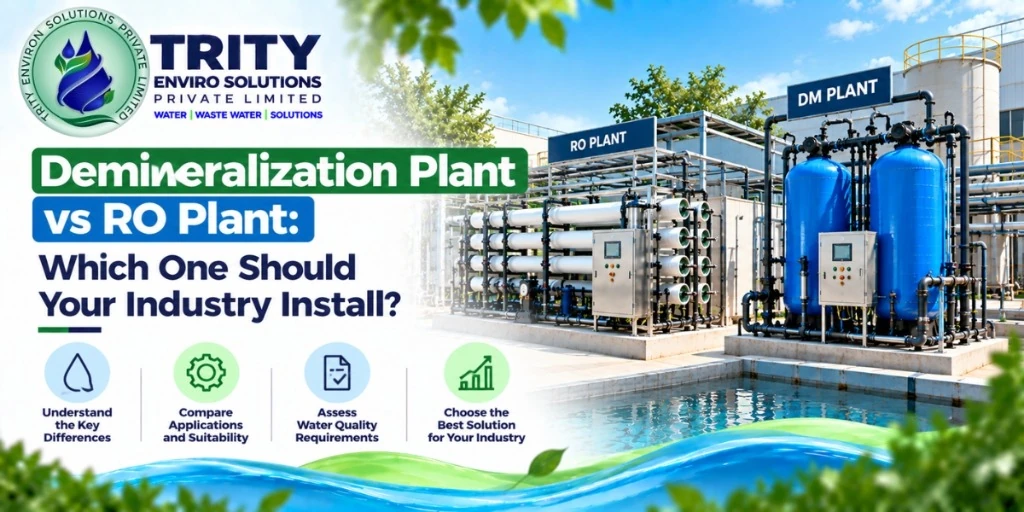
RO, DM, softener, and water recycling systems engineered for drinking water purity, process water quality, and genuine wastewater reuse.
STEP-BY-STEP WORKFLOW
How the Wastewater Treatment Plant Manufacturer in India Process Works
A sequential, multi-stage treatment approach engineered for consistent, compliant water quality across every category.
01
Screening & Equalization
Raw wastewater passes through screening to remove solids, then flows into equalization to balance flow and load before treatment begins.
02
Physico-Chemical Treatment
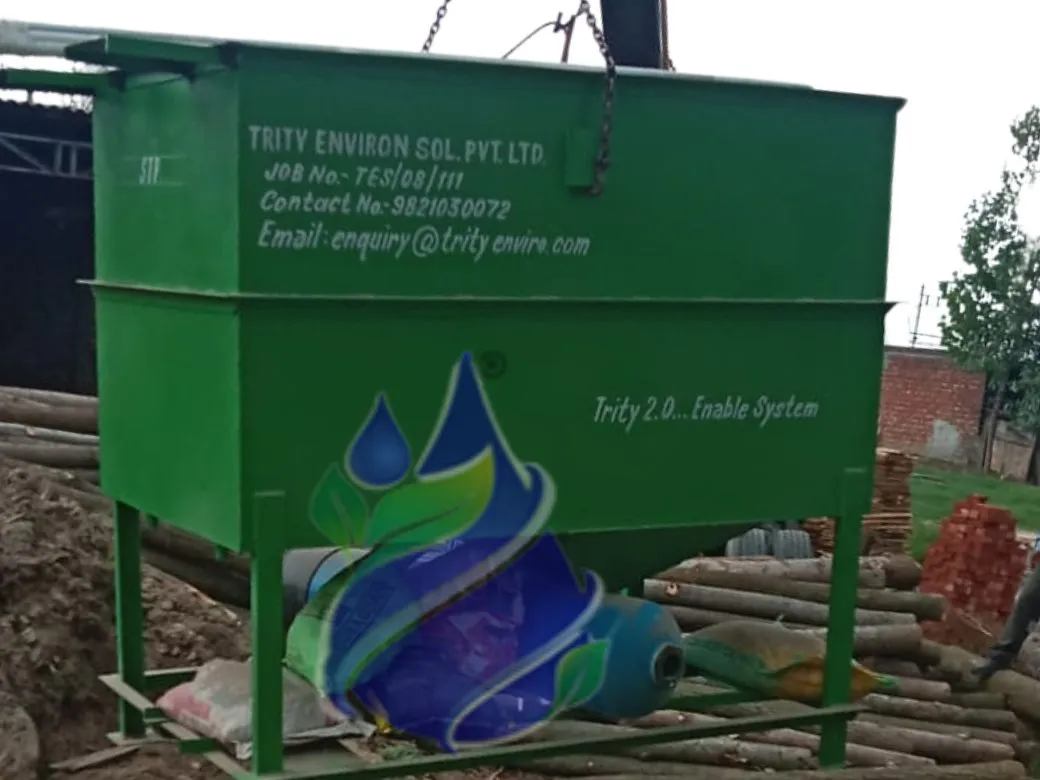
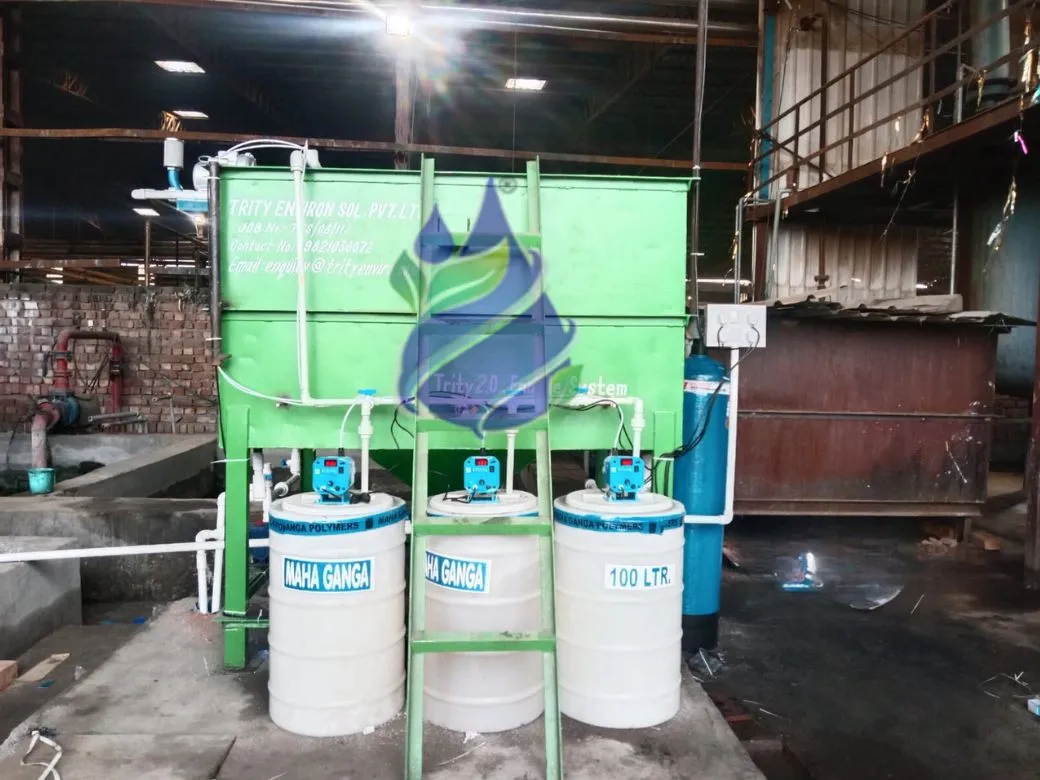
Coagulant and flocculant dosing removes suspended solids, oil, and heavy metals ahead of biological treatment where applicable.
03
Biological Treatment
Aerobic or anaerobic biological processes reduce BOD and COD load, using MBBR, SBR, ASP, or anaerobic digestion depending on effluent strength.
04
Tertiary Polishing & Discharge
Filtration and disinfection prepare treated water for discharge or reuse, meeting CPCB and state PCB norms for the applicable category.
COMMON INQUIRIES
Frequently Asked Questions
Q1. What is the difference between a wastewater treatment plant, an ETP, and an STP?
Wastewater treatment plant is a broad term covering both categories. An ETP treats industrial effluent with chemical and process-specific contaminants, while an STP treats domestic sewage, which is generally more consistent in composition and organic load.
Q2. Which wastewater treatment technology is best for my industry?
There's no universal answer, since the right technology depends on your effluent's BOD, COD, TDS, toxicity, flow rate, and reuse goals. MBBR suits compact retrofits, SBR suits batch discharge patterns, and anaerobic treatment suits high-COD streams.
Q3. Can treated wastewater be reused?
Yes, depending on treatment level, treated wastewater can be reused for cooling tower makeup, toilet flushing, irrigation, or process applications, with membrane-based systems producing consistently higher reuse-grade quality.
Q4. How much space does a wastewater treatment plant require?
Space requirements vary by technology and capacity. MBBR and MBR systems are generally more compact than conventional ASP for equivalent capacity, and modular or underground installations are possible for constrained sites.
Q5. What factors affect the cost of a wastewater treatment plant?
Key cost drivers include treatment capacity, inlet effluent quality, technology selected, automation level, civil construction requirements, and whether the project targets discharge compliance or a higher reuse standard.
Q6. How often does a wastewater treatment plant need maintenance?
Routine tasks like blower checks, media inspection, and dosing system servicing are typically daily or weekly, while major servicing of pumps and control systems is usually quarterly or annual, ideally covered under an AMC.
CATALOGUE
Related Engineering Products
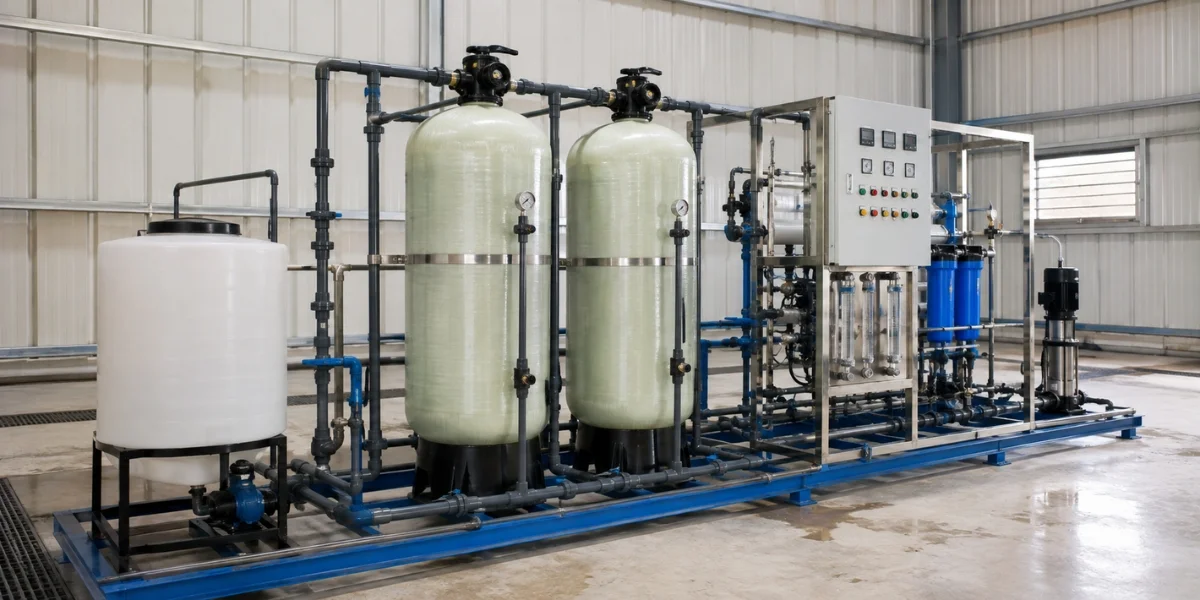
RO & Water Recycling Plant Manufacturer in India
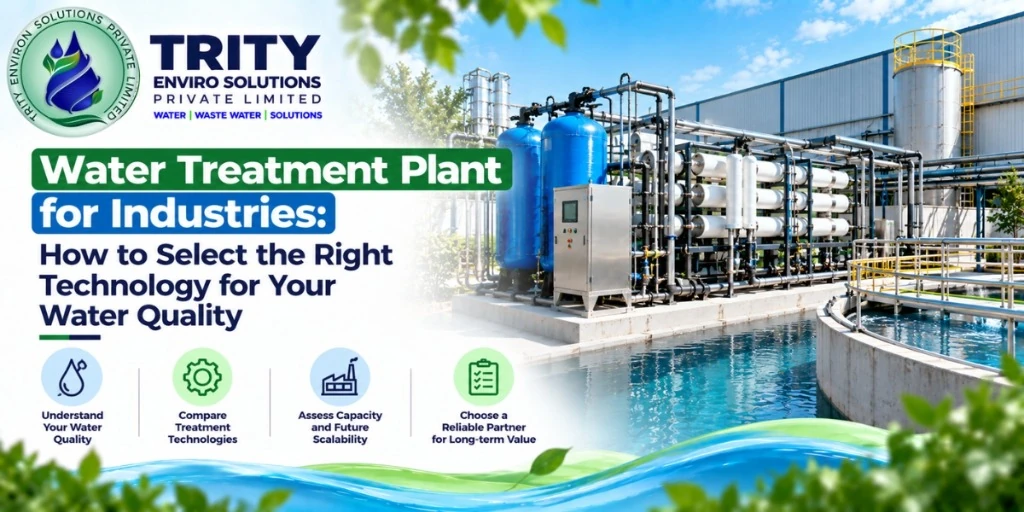
Trity Environ Solutions manufactures RO and water recycling systems for industries and commercial facilities, engineered for reliable purity and reuse.
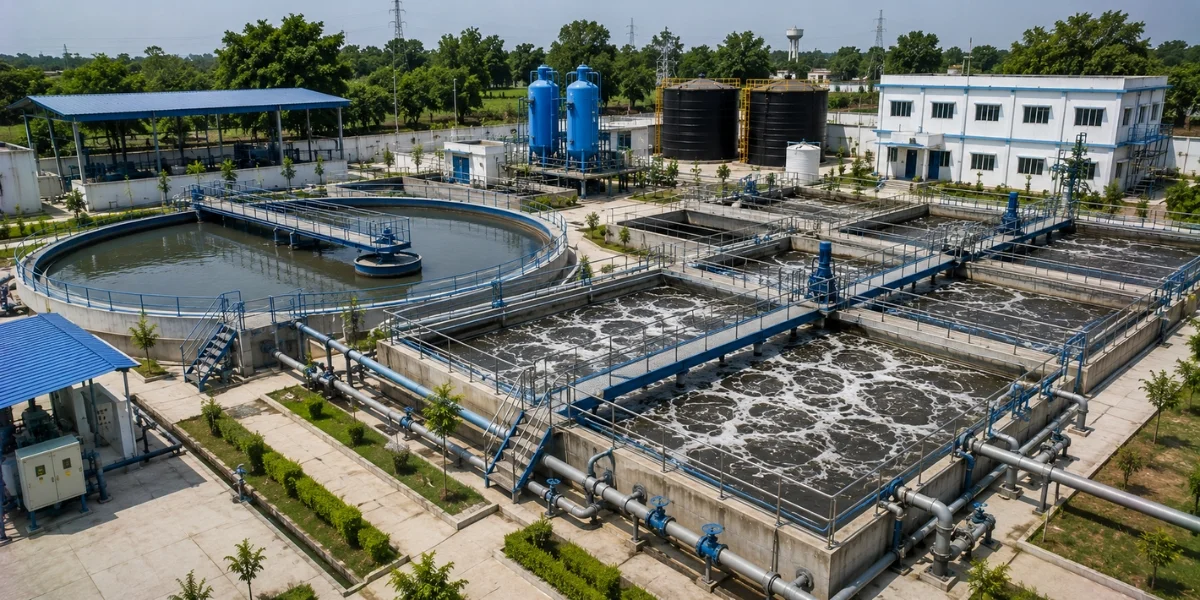
Tertiary Treatment Plant Manufacturer in India
Trity Environ Solutions manufactures tertiary treatment plants that polish treated water beyond secondary treatment, enabling genuine reuse and stricter discharge compliance.
Wastewater Recycling System Manufacturer in India
Trity Environ Solutions manufactures wastewater recycling systems using UF and RO technology, turning treated wastewater into reuse-grade water for cooling, flushing, and gardening.
PAN-INDIA CAPABILITIES
Regional Solutions & State Coverage
TECHNICAL KNOWLEDGE
Related Insights & Engineering Guides
PROVEN EXCELLENCE
Featured Turnkey Installations



Need a Custom Water or Wastewater Treatment Solution?
Our engineering team can help design the right system for your capacity, industry, and compliance requirements.