
 ISO 9001:2015 & QCI Approved
Multi Grade Filter (MGF) Manufacturer in India
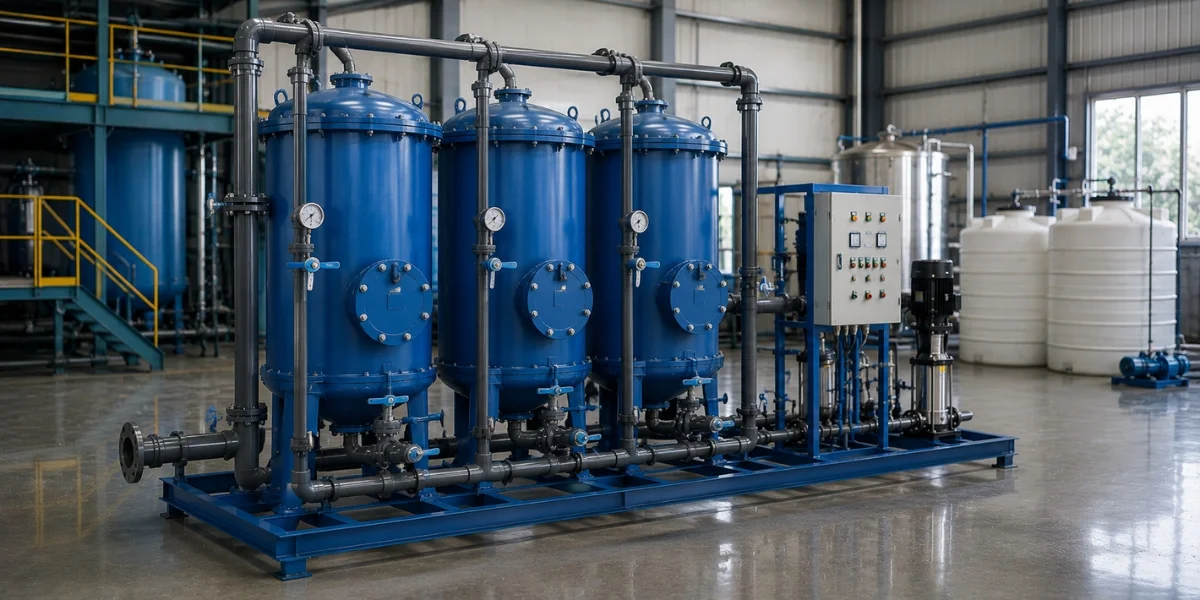
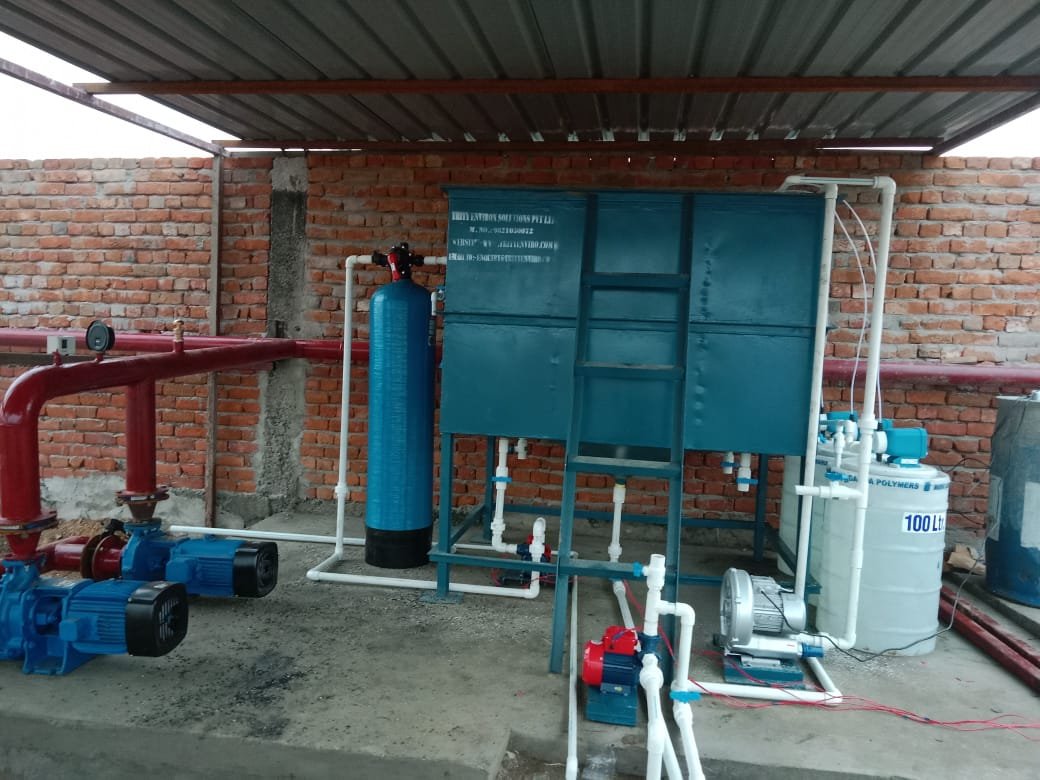
Trity Environ Solutions is a trusted multi grade filter manufacturer in India, engineering four-layer depth filtration systems that consistently deliver turbidity below 1 NTU and SDI below 3, the exact water quality RO membranes need to reach rated life. Our MGF systems are custom-engineered to your water report, with pan India installation support.
SPCB / CPCB Norm Compliant
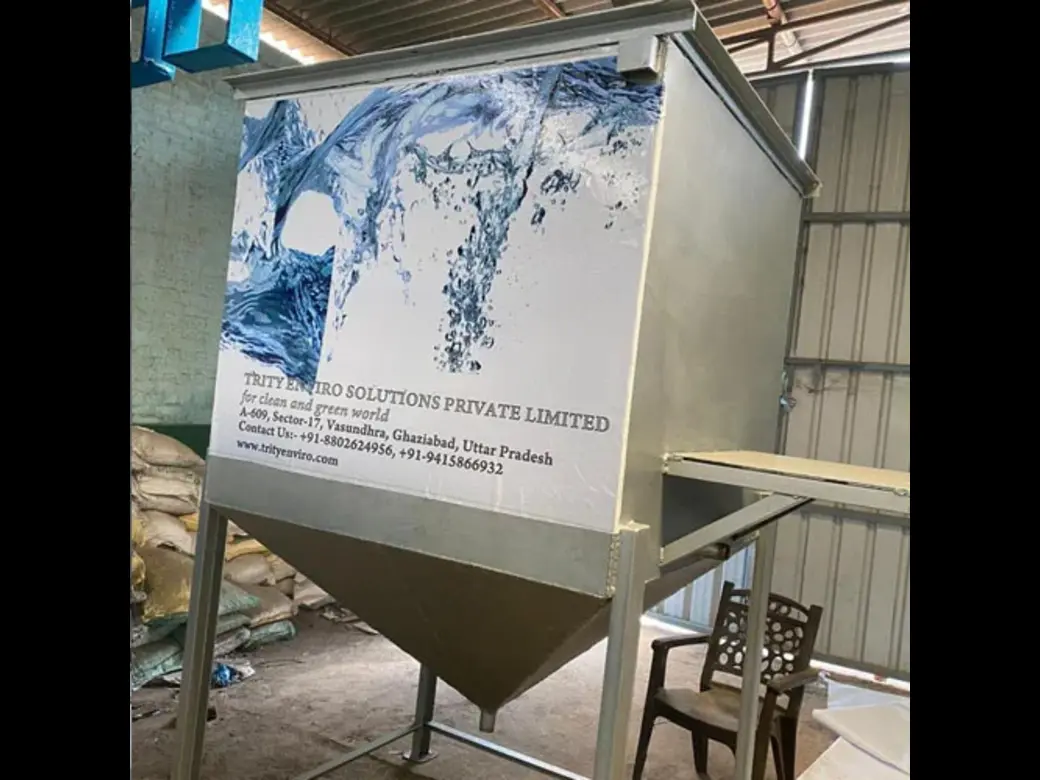
Heavy Fabrication
The Filtration Stage That Decides How Long Your RO Membranes Actually Last
Most RO membrane failures trace back to one overlooked stage: inadequate pretreatment filtration. A multi grade filter (MGF) uses four precisely arranged media layers, anthracite, coarse silica sand, fine sand and silex, and graded pebbles, working across the entire bed depth rather than trapping particles only at the surface like a conventional pressure sand filter. This depth filtration approach is why MGF is the standard pretreatment stage ahead of any industrial reverse osmosis system or commercial reverse osmosis system, and why our clients report up to 40 percent fewer membrane cleaning cycles after switching to a correctly specified system.
Dealing with rising SDI or frequent membrane cleaning? Request a free technical assessment and our engineering team will size the right MGF based on your actual water report.
WHY THIS SYSTEM?
Key Benefits of Multi Grade Filter (MGF) Manufacturer in India
Engineered for reliable SDI and turbidity reduction, high filtration velocity, and lower backwash water consumption.
RO-Ready Effluent Quality
Achieves turbidity below 1 NTU and SDI below 3 through full-depth filtration, the exact water quality RO membranes need to reach their rated service life.
High Filtration Velocity
Operates at 15 to 25 m per hour filtration velocity, nearly double a pressure sand filter, meaning a smaller vessel footprint for the same flow duty.
30% Less Backwash Water
Uses roughly 30 percent less backwash water than equivalent pressure sand filters, a meaningful saving for facilities on metered or water-stressed supply.
Built for Monsoon Turbidity Spikes
Sized with 20 to 30 percent additional dirt-holding reserve for monsoon turbidity spikes, when Indian raw water sources can jump from 10 to 500 NTU within hours.
Self Re-Stratifying Media
Media re-stratifies automatically after every backwash cycle due to specific gravity differences between layers, requiring no manual rearrangement or operator intervention.
SDI Is the Number That Actually Predicts Membrane Fouling
Turbidity alone doesn't tell the full story, since Silt Density Index specifically measures the fine colloidal fouling potential that damages RO membranes over time. Trity Environ Solutions sizes every MGF against your target SDI, not just turbidity, because a filter that looks clean on a turbidity meter can still be sending membrane-damaging colloids downstream if the media grading isn't matched to your actual raw water.
Backwash Timing Should Follow Differential Pressure, Not the Calendar
A fixed time-based backwash schedule ignores the fact that feed turbidity varies day to day, sometimes hour to hour during monsoon season, which means a calendar-based approach either backwashes too often or not often enough. Trity Environ Solutions configures every MGF with DP-triggered backwash initiation at 0.8 kg/cm² above clean baseline, backed by operator training and an Annual Maintenance Contract. Talk to our team about AMC coverage for your system.
What an MGF Cannot Do, and What It Should Be Paired With
An MGF removes suspended solids and turbidity only, it does not touch dissolved salts or hardness, which is a common point of confusion. For hardness, a cation exchange softener sits downstream, and for dissolved solids, an ion exchange DM system or RO system follows after. MGF's role is specifically to protect those downstream systems from particulate fouling, along with our activated carbon filters which handle chlorine and organic removal in the same pretreatment train.
SYSTEM CONFIGURATIONS
Types of Multi Grade Filter (MGF) Manufacturer in India Configurations
Configurations selected to match your raw water turbidity, hygiene requirements, and automation needs.
FRP / MS-RL Vessel MGF
FRP or MS rubber-lined vessel construction for standard industrial water sources, offering corrosion resistance at a lower capital cost than stainless steel options.
Stainless Steel MGF
SS 304 or SS 316 vessel construction for pharmaceutical, food processing, and hygienic-grade applications requiring material certification and stricter cleanliness standards.
Manual Multiport MGF
Manual multiport valve operation for facilities with dedicated operator staffing, offering a lower cost entry point for smaller or less automated installations.
Fully Automatic PLC MGF
Fully automatic PLC-controlled backwash with DP-triggered initiation, minimizing operator dependency for continuous, unattended industrial filtration operation across long duty cycles.
STEP-BY-STEP WORKFLOW
How the Multi Grade Filter (MGF) Manufacturer in India Process Works
A four-layer depth filtration process engineered for consistent SDI and turbidity reduction.
01
Top Layer: Anthracite Coal
Water enters the vessel and passes through anthracite coal, capturing large debris and coarse suspended solids first.
02
Second Layer: Coarse Silica Sand
Coarse silica sand removes iron flocs, fine clay, and medium organic matter as water continues downward.
03
Third Layer: Fine Sand and Silex
Fine sand and silex capture fine colloidal particles and residual turbidity before water reaches the support layer.
04
Bottom Layer & Backwash
Graded pebbles support uniform underdrain collection, and periodic backwash flushes accumulated solids, with media re-stratifying automatically afterward.
COMMON INQUIRIES
Frequently Asked Questions
Q1. What is the difference between an MGF and a pressure sand filter?
A pressure sand filter uses a single sand layer and filters only at the surface, achieving 30 to 50 micron filtration, while an MGF uses four graded layers achieving 10 to 15 micron filtration across the full bed depth.
Q2. Does an MGF remove TDS, hardness, or dissolved salts?
No, an MGF removes suspended solids and turbidity only. Dissolved salts and hardness require a downstream RO system, water softener, or DM plant, with the MGF protecting those systems from particulate fouling.
Q3. How do I know when my MGF needs backwashing?
Monitor the differential pressure gauge across the vessel and initiate backwash when DP rises to 0.8 kg/cm² above the clean baseline, rather than relying solely on a fixed time-based schedule.
Q4. How long does MGF media last?
With proper backwashing, high-quality anthracite and silica sand media typically lasts 3 to 5 years under continuous industrial duty, confirmed through periodic sieve analysis.
Q5. Can an existing manual MGF be upgraded to automatic operation?
Yes, manual multiport valves can typically be replaced with motorized valves and a PLC or timer-based control panel for fully automatic DP-triggered backwash operation.
Q6. What vessel material should I choose for my MGF?
FRP suits most standard industrial applications, MS rubber-lined suits higher pressure requirements with chemical resistance, while SS 304 or SS 316 is specified for pharmaceutical and food processing applications requiring material certification.
CATALOGUE
Related Engineering Products
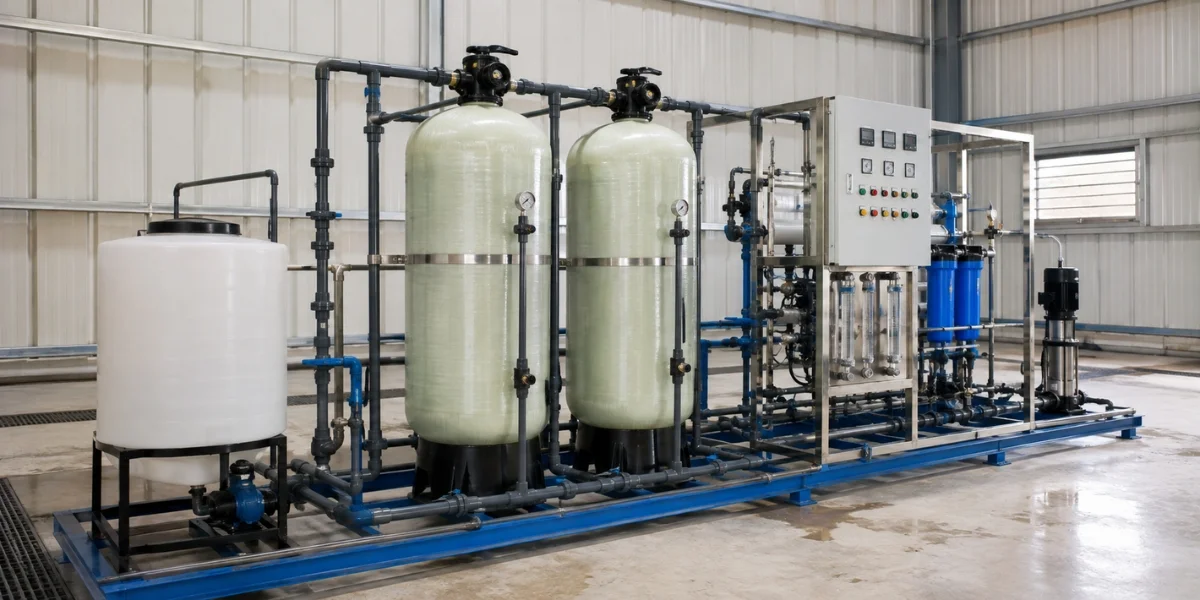
RO & Water Recycling Plant Manufacturer in India
Trity Environ Solutions manufactures RO and water recycling systems for industries and commercial facilities, engineered for reliable purity and reuse.
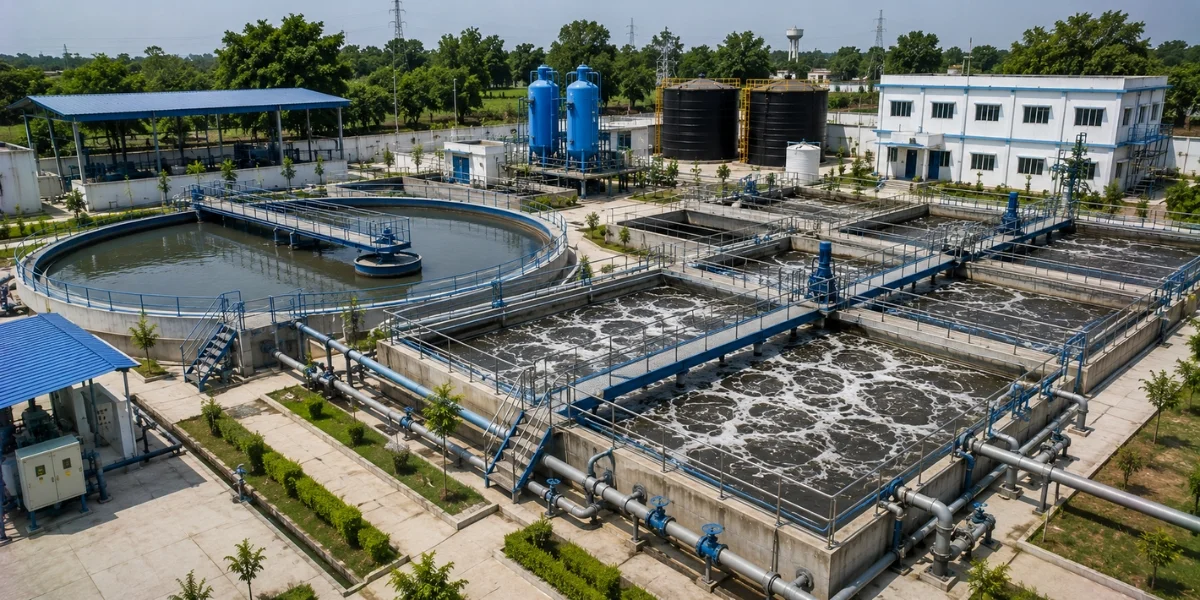
Tertiary Treatment Plant Manufacturer in India
Trity Environ Solutions manufactures tertiary treatment plants that polish treated water beyond secondary treatment, enabling genuine reuse and stricter discharge compliance.
Wastewater Recycling System Manufacturer in India
Trity Environ Solutions manufactures wastewater recycling systems using UF and RO technology, turning treated wastewater into reuse-grade water for cooling, flushing, and gardening.
PAN-INDIA CAPABILITIES
Regional Solutions & State Coverage
TECHNICAL KNOWLEDGE
Related Insights & Engineering Guides
PROVEN EXCELLENCE
Featured Turnkey Installations




Need a Custom Water or Wastewater Treatment Solution?
Our engineering team can help design the right system for your capacity, industry, and compliance requirements.