Types of Activated Carbon for Water Filtration: A Complete Guide to Choosing the Right Filter
When it comes to ensuring clean, safe drinking water at home or in your facility, understanding how activated carbon works becomes crucial. Activated carbon has become one of the most reliable and cost-effective water filtration solutions available today, trusted by water treatment facilities and homeowners alike for its exceptional ability to improve water quality.
In this comprehensive guide, we'll explore the different types of activated carbon filters available, their unique advantages, and how to select the right one for your specific water purification needs.
What Is Activated Carbon and How Does Water Filtration Work?
Activated carbon is essentially carbon that has been processed through a special activation treatment, creating an extensive network of microscopic pores. This unique porous structure is what makes activated carbon so effective as a water filtration media.
Here's how the magic happens: When contaminated water passes through an activated carbon filter, a process called adsorption takes place. This is different from absorption—in adsorption, pollutants physically adhere to the carbon's surface rather than being absorbed into it. A single gram of activated carbon can have a surface area of up to 1,400 square meters, providing an enormous capacity for trapping unwanted contaminants.
What can activated carbon remove?
- Chlorine and chlorine byproducts (trihalomethanes)
- Volatile organic compounds (VOCs)
- Pesticides and herbicides
- Sediment and particles
- Unpleasant tastes and odors
- Some heavy metals
- Organic pollutants
The effectiveness of your water purification system depends on three critical factors: the amount of carbon used, the contact time between water and carbon, and the specific carbon configuration in your filter.
The 4 Main Types of Activated Carbon for Water Treatment
1. Granular Activated Carbon (GAC): The High-Flow Solution
What is it? Granular activated carbon (GAC) consists of loose carbon particles typically ranging from 0.6 to 2.5 millimeters in diameter. These granules are packed into a cartridge or filter housing, creating a porous filtration bed.
How it works: When water flows through GAC, it passes relatively quickly through the loose granules. This design prioritizes flow rate over contact time, making it ideal for applications where water volume matters.
Best for:
- Point-of-entry (POE) water filters - treating water as it enters your home or building
- Whole-house water filtration systems - protecting all water-using appliances and fixtures
- Refrigerator filters and pitcher filters - convenient point-of-use solutions
- Pre-treatment for reverse osmosis systems - protecting RO membranes from oxidation damage
- Industrial wastewater treatment - handling larger water volumes
Advantages of GAC filters:
- Superior flow rate - minimal pressure drop, crucial for whole-house systems
- Cost-effective - one of the most affordable water treatment options
- Easy to replace - simple cartridge changes with minimal maintenance
- Excellent for chlorine removal - highly effective at improving taste and odor
- Versatile applications - works as a standalone filter or as part of a multi-stage system
Limitations:
- Lower surface area compared to compressed carbon options
- Shorter contact time means slightly reduced effectiveness against certain contaminants
- May need more frequent replacement in high-contamination situations
- Less effective against smaller molecules due to larger pore sizes
Real-world performance: Studies show that GAC filters can effectively remove over 90% of non-PFAS contaminants and completely eliminate chlorine, making them excellent for improving municipal drinking water quality.
2. Carbon Block Filters: Maximum Contaminant Removal Power
What is it? Carbon block filters are created by compressing powdered activated carbon (PAC) into dense, solid blocks under high pressure. The powder is typically bonded together and often wrapped in layers of polypropylene for additional structural support.
How it works: The compressed structure of carbon block filters creates a dense filtration barrier with significantly more surface area than granular filters. Water moves through more slowly, allowing extended contact time for superior contaminant removal.
Best for:
- Under-sink drinking water systems - targeted filtration for your kitchen tap
- Countertop water filtration units - portable solutions for renters or those with temporary needs
- Shower filters - removing chlorine and disinfection byproducts from bathing water
- High-priority contaminant removal - when you need to eliminate a broader range of chemicals
- Applications requiring finer filtration - achieving pore sizes as small as 3-20 micrometers
Advantages of carbon block filters:
- Comprehensive contaminant removal - superior effectiveness against a wider range of pollutants
- Extended contact time - water spends more time with the carbon, improving removal efficiency
- Better mechanical filtration - dual-action approach combining adsorption and physical filtration
- Removes finer particles - capable of filtering microplastics and cysts
- Higher removal capacity - longer time between replacements for many users
- Proven NSF certification - most carbon block filters meet NSF/ANSI standards for health-related contaminants
Limitations:
- Higher cost - more expensive upfront investment than GAC filters
- Slower flow rate - pressure drop can be an issue in high-flow applications
- May require pre-filters - sediment in water can cause premature clogging
- More frequent replacement in some cases - faster saturation with heavy sediment loads
Performance data: Testing shows that quality carbon block filters can remove up to 100% of chlorine, completely eliminate disinfection byproducts (like chloroform and brominated compounds), and significantly reduce PFAS, uranium, copper, and fluoride—achieving overall performance scores above 9.0 out of 10.
3. Powdered Activated Carbon (PAC): Emergency Treatment and Industrial Solutions
What is it? Powdered activated carbon (PAC) is created by crushing or grinding activated carbon particles into a fine powder, much smaller than granular activated carbon. The particle size typically ranges from very fine dust to particles smaller than 0.074 millimeters.
How it works: PAC is usually mixed directly into water as a slurry (powder suspended in water) rather than being used in a filter cartridge. The powder particles suspend in the water, allowing immediate contact between contaminants and the massive surface area of PAC.
Best for:
- Emergency water treatment - responding quickly to water contamination events
- Municipal water treatment plants - treating large volumes during contamination crises
- Industrial wastewater treatment - handling complex contamination scenarios
- Algae bloom removal - removing taste and odor from algal contamination
- Chemical spill remediation - rapid response to toxic chemical releases
- Batch treatment processes - controlled treatment in contained water supplies
Advantages of PAC:
- Immediate action - starts working instantly when mixed with water
- Maximum surface area - provides the largest contact surface for adsorption
- Flexibility in dosing - can adjust the amount used based on contamination severity
- Highly effective for acute problems - ideal for sudden contamination situations
- Cost-effective for emergency response - economical for one-time treatment needs
Limitations:
- Requires post-filtration - loose powder must be filtered out after treatment
- Not suitable for continuous filtration - requires constant powder addition
- Handling challenges - messy to work with and requires proper disposal
- Settled solids - may leave sediment in water if not properly filtered
- Less practical for home use - designed more for industrial/municipal applications
4. Extruded Activated Carbon (EAC): Heavy-Duty Filtration
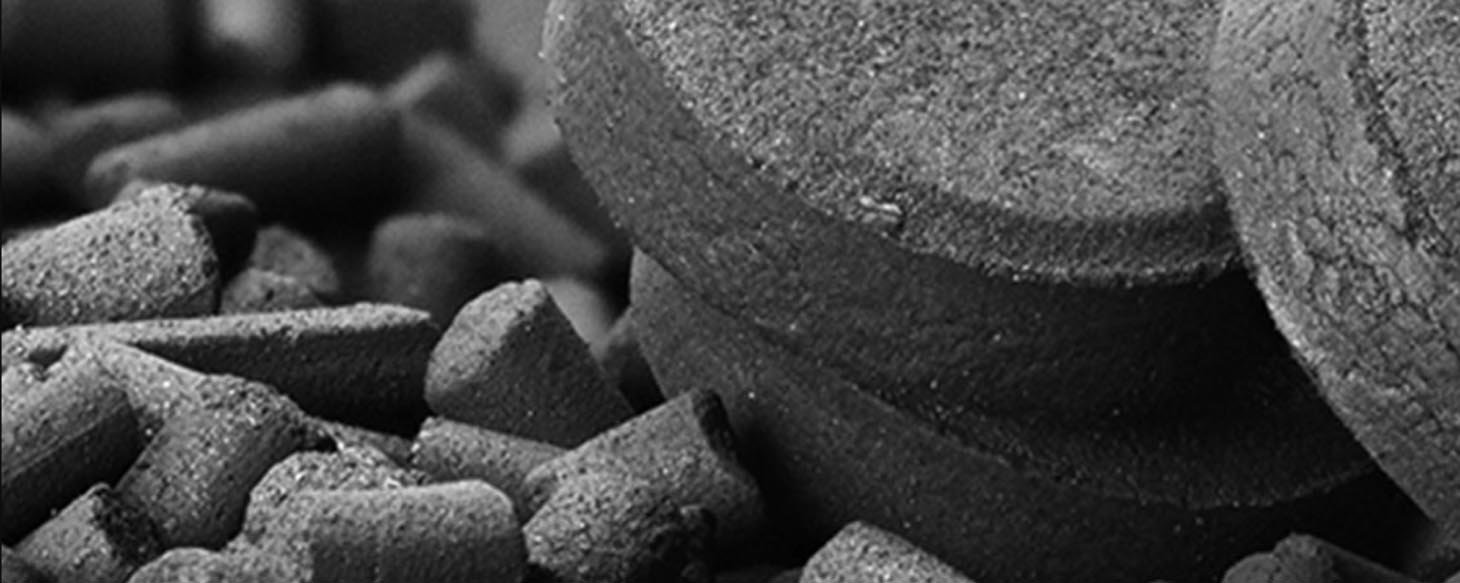
What is it? Extruded activated carbon is manufactured by forcing activated carbon paste through an extrusion process, creating cylindrical pellets or solid blocks. The resulting format has significantly greater density and mechanical strength than other activated carbon formats.
How it works: The dense, rigid structure of EAC allows it to withstand high pressures and flow rates without breaking down or releasing carbon fines into treated water. Water flows through the solid structure, with contaminants being adsorbed onto the carbon surface.
Best for:
- Point-of-entry (POE) whole-house systems - handling high water flow at home entry points
- Industrial water treatment - demanding applications requiring durability
- High-pressure filtration systems - applications where filter integrity is critical
- Purification of drinking water - producing superior quality treated water
- Contaminated groundwater remediation - removing organic pollutants from well water
- Commercial water treatment facilities - serving multiple users with consistent quality
Advantages of EAC:
- Superior mechanical strength - resists breakage, cracking, and disintegration
- Handles high flow rates - maintains structural integrity under pressure
- Minimal carbon fines - dense structure prevents loose particles in treated water
- Long-term reliability - proven durability in demanding applications
- Consistent performance - uniform density ensures predictable filtration
- Resistant to attrition - maintains effectiveness over extended service periods
Limitations:
- Highest cost - significantly more expensive than PAC or GAC alternatives
- More difficult installation - requires specialized equipment for some applications
- Pre-treatment may be needed - sediment can accelerate clogging
- Not ideal for point-of-use filters - overkill for simple household applications
- Higher replacement costs - expensive cartridges when replacement is needed
How to Choose the Right Activated Carbon Filter for Your Needs
Selecting the optimal water filtration solution depends on several factors:
Consider Your Water Quality Issues
Begin by understanding what contaminants you're dealing with. Different types of activated carbon excel at removing different pollutants:
- For chlorine and taste/odor issues: Any type works well
- For VOCs and pesticides: Carbon blocks or compressed formats perform better
- For emergency situations: Powdered activated carbon provides fastest results
- For heavy-duty, continuous use: Granular or extruded formats are ideal
Evaluate Your Water Volume Needs
- Individual drinking water: Carbon block or GAC pitcher filters
- Whole household: Granular activated carbon for flow rate
- High-demand facilities: Extruded activated carbon for pressure handling
- Large-volume treatment: Industrial-grade powdered or granular systems
Factor in Your Budget
- Most economical: Powdered activated carbon (per treatment)
- Best value: Granular activated carbon filters
- Premium option: Carbon block filters
- Investment choice: Extruded activated carbon for long-term reliability
Think About Maintenance
- Easiest maintenance: GAC filters (simple cartridge replacement)
- Moderate maintenance: Carbon block filters
- Complex maintenance: PAC systems (require professional handling)
- Minimal attention: EAC systems (long service life)
Emerging Technologies in Activated Carbon Water Filtration
The water filtration industry continues to evolve with innovations designed to overcome traditional limitations:
Silver-Impregnated Carbon Carbon filters embedded with silver particles actively inhibit bacterial growth within the filter itself, extending service life and preventing contamination between filter changes.
Graphene-Enhanced Carbon Graphene particles layered with activated carbon significantly boost adsorption capacity, particularly for heavy metals and emerging contaminants like PFAS (per- and polyfluoroalkyl substances).
Smart Filters with IoT Technology Next-generation filters equipped with Total Dissolved Solids (TDS) sensors and filter-life indicators provide real-time monitoring through smartphone apps, letting you know exactly when replacement is needed.
Activated Carbon Fiber (ACF) Ultra-fine carbon fiber mats offer rapid adsorption kinetics for specialized applications like medical facilities and pharmaceutical residue removal.
Installation and Maintenance: Ensuring Long-Term Effectiveness
Proper Installation
- Have your water tested before installation to determine the right system
- Install filters at appropriate points (POE for whole-house, POU for specific taps)
- Follow manufacturer specifications for housing and cartridge compatibility
- Ensure proper bypass switches are installed for maintenance periods
Regular Maintenance
- Replace cartridges according to manufacturer recommendations
- Monitor flow rate—decreasing pressure indicates cartridge saturation
- Test water periodically to confirm continued effectiveness
- For whole-house systems, consider pre-sediment filters to extend activated carbon life
- Keep records of usage to predict replacement timing
Replacement Frequency
- Pitcher filters: Every 2-3 months with regular household use
- Under-sink GAC: Every 6-12 months depending on water quality
- Carbon block filters: Every 6-12 months typically
- Whole-house GAC: Every 1-3 years based on water volume and contamination
- Extruded carbon: 1-3 years or longer with proper maintenance
Why Water Filtration Matters: Health and Quality Benefits
Activated carbon water filtration isn't just about improving taste—it's about protecting your family's health. Municipal water treatment, while generally safe, can still allow certain contaminants to pass through:
- Disinfection byproducts (formed when chlorine reacts with organic matter)
- Pharmaceutical residues from medications flushed or disposed in water systems
- Agricultural runoff containing pesticide and fertilizer residues
- Industrial discharge leaving trace chemicals in water supplies
- Aging infrastructure contributing iron, copper, and lead
A quality activated carbon water filtration system acts as a final safety barrier, removing these concerns and providing peace of mind with every glass of water.
Comparing Activated Carbon to Other Filtration Methods
While activated carbon is highly effective, other technologies offer different advantages:
Reverse Osmosis (RO)
- Removes more contaminants than carbon alone
- Includes activated carbon as first stage
- More expensive and wastes water
- Best for comprehensive purification
Ion Exchange
- Excellent for hardness and mineral removal
- Works differently than adsorption
- Often combined with carbon filters
- Requires regular regeneration
UV Filtration
- Kills bacteria and viruses
- Doesn't remove chemical contaminants
- Often paired with carbon filtration
- Requires electricity
Multi-Stage Systems
- Combine sediment, carbon, and RO
- Provide comprehensive treatment
- Higher cost and complexity
- Optimal for challenging water quality
Selecting Your Water Treatment Partner: Trity Environ Solutions
Finding the right water filtration solution requires expertise in water quality analysis and treatment technology. This is where professional guidance becomes invaluable.
About Comprehensive Water Treatment A proper water treatment system isn't one-size-fits-all. Different homes, businesses, and facilities have unique water quality challenges requiring customized solutions. Whether you're dealing with chlorine taste, VOC contamination, high sediment levels, or complex industrial wastewater challenges, the right approach combines proper diagnosis with appropriate technology selection.
RELATED: Understanding the Importance of Water Purification - Learn more about why water quality matters for your health and safety.
RELATED: What Are the 5 Basic Principles of Wastewater Treatment? - Understand how treatment facilities process water at scale.
RELATED: How to Watershed Protecting Our Natural Water Sources - Discover the broader context of water protection.
For businesses and facilities requiring industrial-scale water treatment, comprehensive solutions go beyond simple filtration:
- Sewage Treatment Plants (STP) for municipal and residential wastewater
- Effluent Treatment Plants (ETP) for industrial process water
- Commercial RO Plants for high-purity water production
- Water Softening Systems for hard water challenges
- Complete Wastewater Solutions customized to your industry
Conclusion: Making Your Water Safer, Cleaner, and Better Tasting
Understanding the different types of activated carbon for water filtration empowers you to make informed decisions about your water quality. Whether you need simple chlorine removal through a basic GAC filter, comprehensive contaminant removal with a carbon block system, or industrial-scale treatment with extruded activated carbon, the right solution exists for your specific situation.
The key takeaways:
- Granular Activated Carbon (GAC) offers the best balance of cost and effectiveness for most household applications
- Carbon Block Filters provide superior contaminant removal when dealing with multiple pollutants
- Powdered Activated Carbon (PAC) serves emergency and industrial treatment needs
- Extruded Activated Carbon (EAC) delivers durability and performance for demanding applications
Your water quality directly impacts your health, your family's wellbeing, and your quality of life. Investing in proper filtration is investing in your future.
Need expert guidance on your specific water treatment needs?
Trity Environ Solutions specializes in comprehensive water and wastewater treatment solutions. Our team of qualified water treatment experts can:
- Test and analyze your water quality
- Recommend the optimal filtration solution
- Install and maintain your system professionally
- Provide ongoing support and filter replacements
With years of experience serving industrial facilities, commercial establishments, and residential clients across India and internationally, Trity Environ Solutions is recognized as the leading manufacturer of water treatment plants, sewage treatment systems, and effluent treatment solutions.
Contact us today for your free water quality assessment:
- Phone: +91-9821030072
- Email: enquiry@trityenviro.com
- Hours: Monday to Saturday, 10:00 AM - 5:00 PM
- Location: A-6/26, South Side, GT Road Industrial Area, Ghaziabad, India
Let us help you achieve the clean, safe water your home or business deserves.
Frequently Asked Questions About Activated Carbon Water Filtration
Q: How long does an activated carbon filter last?
A: Filter lifespan depends on water quality and usage. Most household filters last 6-12 months, while some pitcher filters need replacement every 2-3 months. Industrial systems may last 1-3 years.
Q: Can activated carbon remove bacteria and viruses?
A: Standard activated carbon is not effective against bacteria and viruses. For microbial contamination, combine carbon with UV filtration or use reverse osmosis.
Q: Does activated carbon remove fluoride?
A: Most standard activated carbon filters don't effectively remove fluoride. Specialized fluoride-removal systems using activated alumina or bone char are required.
Q: What's the difference between activated carbon and activated charcoal?
A: They're essentially the same thing—activated charcoal is the colloquial term for activated carbon used in water filters.
Q: Can I reuse activated carbon filters?
A: No, once saturated, activated carbon cannot be regenerated for home use. Industrial systems may use thermal regeneration, but this requires specialized equipment.
Q: Are all activated carbon filters NSF certified?
A: Not all, but quality filters should carry NSF/ANSI certification (Standard 42 for aesthetic effects, Standard 53 for health-related contaminants).
Q: How do I know when to replace my filter?
A: Signs include decreased flow rate, changes in taste or odor returning, or reaching the manufacturer's recommended replacement time.
- By Trity Enviro
- Environ Solutions
- Published:
- Updated: