

 ISO 9001:2015 & QCI Approved
Sludge Dewatering Instrument (Screw Press) Manufacturer in India
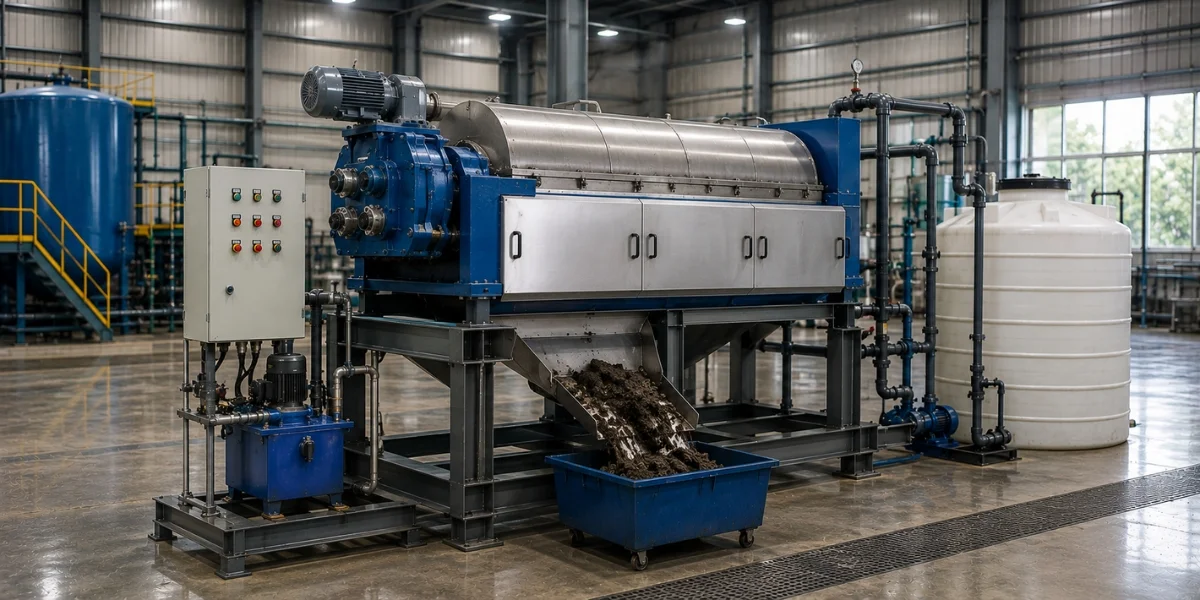
Trity Environ Solutions is a trusted sludge dewatering instrument manufacturer in India, engineering screw press systems that combine thickening and pressing in a single continuous unit. Our screw press machines run at low speed and low power, offering a genuinely different operating profile from centrifuge or filter press dewatering, with pan India installation support.
SPCB / CPCB Norm Compliant
Heavy Fabrication
A Third Way to Dewater Sludge, Not Just a Cheaper Filter Press
Most facilities default to a plate and frame filter press or high-speed decanter centrifuge without realizing a screw press based sludge dewatering instrument solves the same problem with a fundamentally different operating profile. Running at just 4 to 6 RPM rather than high pressure cycles or centrifugal force, a screw press combines gravity thickening and mechanical pressing in one continuous unit, consuming significantly less power and polymer than a centrifuge while requiring less manual cycling than a batch filter press.
Weighing screw press against centrifuge or filter press for your sludge volume? Request a free technical assessment and our engineering team will recommend the right technology based on your actual sludge characteristics.
WHY THIS SYSTEM?
Key Benefits of Sludge Dewatering Instrument (Screw Press) Manufacturer in India
Engineered for low power consumption, minimal wear at low RPM operation, and reduced polymer dosing.
6 to 10 Times Lower Power Consumption
Consumes 6 to 10 times less power than a decanter centrifuge for comparable sludge volumes, since the screw rotates at low speed rather than high centrifugal force.
Minimal Wear at Low RPM
Operates continuously at just 4 to 6 RPM, resulting in negligible wear on internal components and significantly longer service life between major overhauls.
Low Noise and Vibration
Runs with minimal noise and vibration compared to centrifuge based dewatering, making it a practical choice for sites near occupied buildings or offices.
Lower Polymer Consumption
Requires lower polymer dosing than comparable technologies, since the multi-disc or multi-ring design provides gradual, controlled pressure rather than aggressive mechanical force.
No Separate Thickening Stage Needed
Handles a wide range of sludge concentrations without a separate thickening stage, since the screw press combines gravity thickening and pressing in a single continuous unit.
Continuous Operation Changes the Maintenance Conversation Entirely
A screw press doesn't cycle through fill, press, and discharge phases the way a filter press does, it runs continuously, which shifts maintenance planning toward long-term wear monitoring rather than per-cycle inspection. Trity Environ Solutions selects ring and screw material specifically for your sludge's abrasiveness, since a mismatch here is the most common cause of premature wear in continuously operating dewatering equipment.
Choosing Screw Press Over Centrifuge Isn't Automatic, It Depends on Your Sludge
Screw press technology excels at lower to moderate throughput with meaningful power savings, but very high volume operations sometimes still favour a centrifuge's raw processing capacity despite the higher energy cost. Trity Environ Solutions evaluates your actual daily sludge volume and characteristics honestly, backed by operator training and an Annual Maintenance Contract regardless of which technology fits. Talk to our team about the right fit for your facility.
SYSTEM CONFIGURATIONS
Types of Sludge Dewatering Instrument (Screw Press) Manufacturer in India Configurations
Configurations selected to match your sludge volume, power availability, and automation requirements.
Multi-Disc Screw Press
Uses a series of fixed and moving rings along the screw shaft, gradually reducing volume to squeeze water from sludge as it advances through the unit.
Single-Cylinder Combined Thickener-Press
A single cylinder design that combines gravity thickening and mechanical pressing together, allowing operation directly on low-concentration slurry without a separate thickener.
Compact Skid-Mounted Unit
Compact, factory-assembled skid for smaller daily sludge volumes, suited to residential societies, small industrial units, and standalone commercial facilities.
PLC Automated Screw Press
PLC controlled system with automated polymer dosing and continuous operation monitoring, suited to larger municipal or industrial plants running around the clock.
STEP-BY-STEP WORKFLOW
How the Sludge Dewatering Instrument (Screw Press) Manufacturer in India Process Works
A continuous, low-speed dewatering process engineered for consistent cake solids output.
01
Polymer Dosing & Flocculation
Sludge is dosed with polymer and mixed in a flocculation chamber, forming larger flocs that dewater more easily under pressure.
02
Gravity Thickening
Flocculated sludge enters the initial section of the cylinder, where free water drains by gravity before mechanical pressing begins.
03
Progressive Screw Pressing
As the screw advances the sludge, progressively narrowing rings apply gradual, increasing pressure to squeeze out remaining water.
04
Cake Discharge
Dewatered cake discharges continuously at the outlet end, while filtrate exits through screen openings along the cylinder length.
COMMON INQUIRIES
Frequently Asked Questions
Q1. What is a screw press sludge dewatering instrument?
A screw press is a continuous dewatering machine that combines gravity thickening and mechanical pressing in a single unit, using a slowly rotating screw to squeeze water from sludge as it advances through progressively narrowing rings.
Q2. How is a screw press different from a decanter centrifuge?
A screw press operates continuously at low speed (4 to 6 RPM) with much lower power consumption, while a decanter centrifuge uses high-speed rotation for faster throughput at higher energy cost.
Q3. Does a screw press need a separate sludge thickening stage?
No, most screw press designs combine gravity thickening and mechanical pressing in one continuous cylinder, allowing direct operation on lower-concentration slurry without a separate thickener.
Q4. How much polymer does a screw press typically require?
Polymer dosing is generally lower than centrifuge based dewatering, since the gradual pressing action requires less aggressive floc strength, though exact dosing depends on sludge characteristics.
Q5. What cake dryness can a screw press achieve?
Cake dryness typically ranges from 15 to 25 percent solids for municipal sludge, varying based on sludge type, polymer dosing, and the specific ring configuration used.
Q6. How much maintenance does a screw press require?
Maintenance is generally low due to slow rotation speed, though ring and screw wear should be monitored periodically, especially for abrasive industrial sludge applications.
CATALOGUE
Related Engineering Products
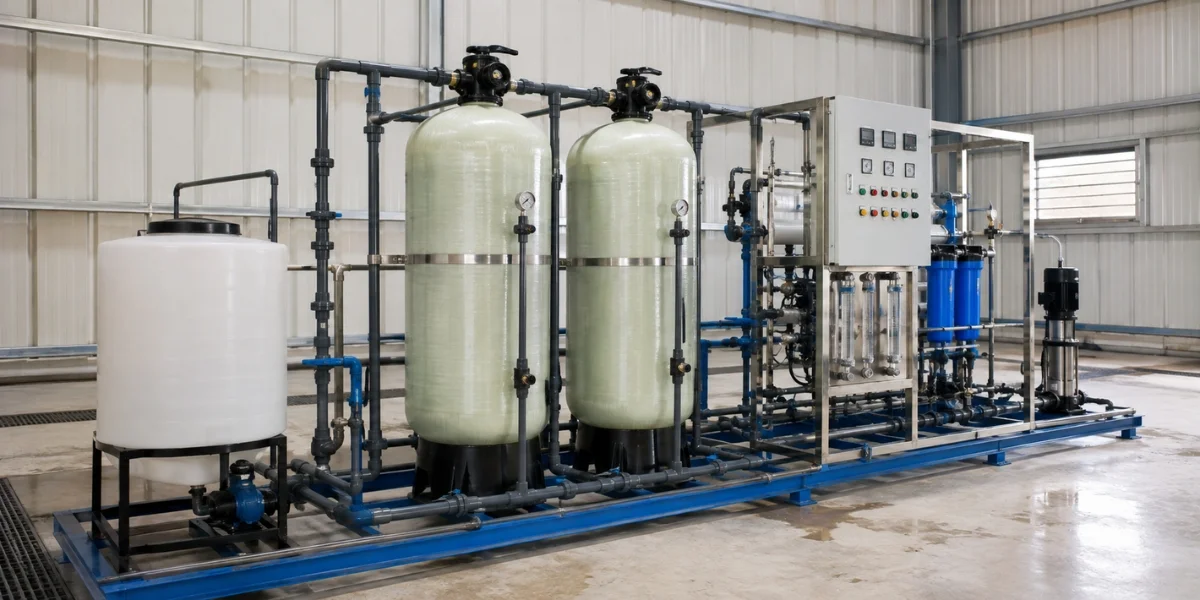
RO & Water Recycling Plant Manufacturer in India
Trity Environ Solutions manufactures RO and water recycling systems for industries and commercial facilities, engineered for reliable purity and reuse.
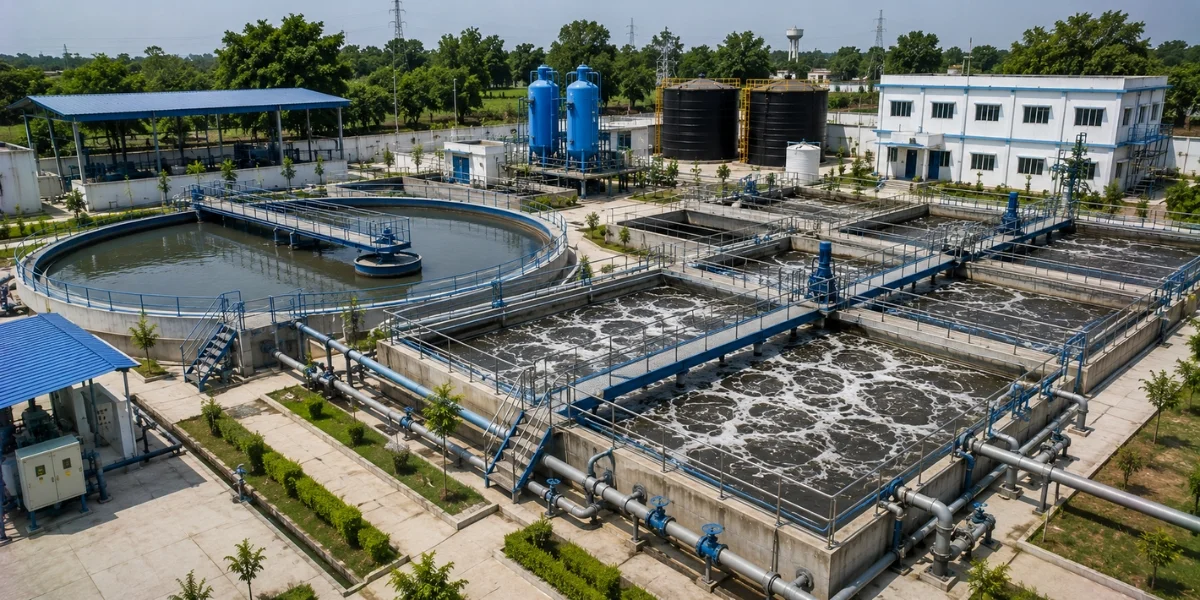
Tertiary Treatment Plant Manufacturer in India
Trity Environ Solutions manufactures tertiary treatment plants that polish treated water beyond secondary treatment, enabling genuine reuse and stricter discharge compliance.
Wastewater Recycling System Manufacturer in India
Trity Environ Solutions manufactures wastewater recycling systems using UF and RO technology, turning treated wastewater into reuse-grade water for cooling, flushing, and gardening.
PAN-INDIA CAPABILITIES
Regional Solutions & State Coverage
TECHNICAL KNOWLEDGE
Related Insights & Engineering Guides

PROVEN EXCELLENCE
Featured Turnkey Installations





Need a Custom Water or Wastewater Treatment Solution?
Our engineering team can help design the right system for your capacity, industry, and compliance requirements.