
Breaking Myths About ETP and STP Plants: Separating Fact from Fiction
Discover the truth about ETP & STP plants. Learn how they reduce costs, ensure environmental protection, and are suitable for businesses of all sizes.

 ISO 9001:2015 & QCI Approved
Most STPs are designed for a 30-50 year service life, but many are now processing 2-3 times their original capacity well before reaching it. Modernizing doesn't mean rebuilding from scratch, it means targeted, strategic upgrades.

Sewage treatment plants designed decades ago were built around the population and flow projections of their era, and that era has moved on faster than most plants can keep up with:
The compounding nature of this problem is what makes it worse than any single factor suggests on its own. A plant already running at double its design capacity has little margin left to absorb the efficiency losses that come with aging pumps and clogged screens, meaning the same equipment failure that a newer, correctly sized plant would shrug off as a minor maintenance event can push an overloaded older plant into visible non-compliance.
The preliminary treatment stage, screening and grit removal, is often the most overlooked upgrade opportunity:
For plants needing more capacity without a full rebuild, MBBR (Moving Bed Biofilm Reactor) retrofits are a well-proven path:
Modern control and monitoring systems address both efficiency and compliance simultaneously:
Most older STPs were built on limited real estate with little room to spare:
Unlike a new-build project, an STP upgrade has to happen while the plant keeps running, since sewage treatment cannot simply pause during construction:
This challenge extends to staffing and process stability as much as it does to construction logistics. Operators accustomed to one control system suddenly need to manage two in parallel during a phased transition, and the biological treatment process itself needs careful handling to avoid a shock to the microbial population every time flow gets rerouted between old and new treatment trains. Experienced modernization teams typically build in a genuine overlap period, running both old and new equipment together longer than strictly necessary, specifically to give operators time to adjust and to confirm the new system performs reliably before decommissioning the old infrastructure entirely.
Prefabricated, factory-built treatment modules have become a genuinely practical modernization option in recent years:
A successful STP modernization rarely comes down to picking the newest available technology; it comes down to sequencing the right upgrades in the right order for that specific plant's constraints. Starting with a proper condition assessment, identifying which equipment and civil structures are genuinely failing versus simply aging, prevents spending capital on components that still have useful service life left. Prioritizing upgrades by their impact-to-disruption ratio, tackling preliminary treatment and automation before a full biological process overhaul, for instance, typically delivers measurable improvement faster and with less risk to ongoing operations than attempting every upgrade simultaneously. And building in headroom for the next decade of growth during the upgrade itself, rather than resizing exactly to today's flow, avoids repeating the same undersizing problem that triggered the modernization project in the first place.
| Plant Condition | Priority Upgrade | Why It Fits |
|---|---|---|
| Overloaded beyond original design capacity | MBBR retrofit | Boosts capacity within existing tank footprint |
| Frequent clogging, unreliable screening | Automated preliminary treatment upgrade | High-impact, comparatively low-cost improvement |
| Manual operation, limited visibility | SCADA and automation integration | Real-time control, predictive maintenance, compliance data |
| Severe space constraints, tight budget/timeline | Plug-and-play FRP modular units | Minimal civil work, fast installation |
Trity Environ Solutions is an experienced sewage treatment plant manufacturer in India, and our engineering team specializes in modernizing aging STP infrastructure through targeted, phased upgrades rather than unnecessary full rebuilds. As a trusted STP manufacturer and supplier, we design retrofit solutions, including MBBR capacity upgrades and automation integration, that work around a live plant's operational continuity requirements.
Every installation is backed by pan-India Annual Maintenance Contract and operation and maintenance support. We are ISO 9001:2015 certified, QCI approved, and deliver CPCB-compliant engineering nationwide.
Call +91-9821030072 or email enquiry@trityenviro.com, or request a free site assessment from our engineering team.
Request Free Technical Assessment →
Discover the truth about ETP & STP plants. Learn how they reduce costs, ensure environmental protection, and are suitable for businesses of all sizes.
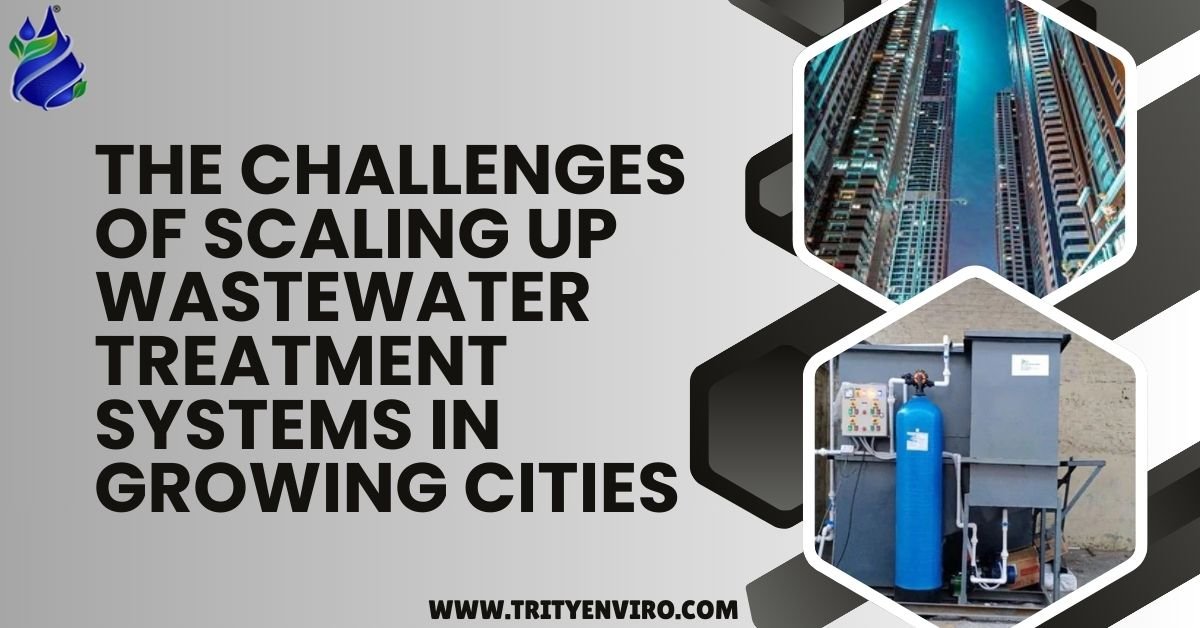
Explore the challenges cities face in scaling up wastewater treatment systems, including financial constraints, space shortages, and environmental regulations.

Wastewater treatment plants help fight antibiotic resistance by filtering out pharmaceutical residues, reducing contamination, and preventing harmful bacteria from spreading.











Discuss your requirements with our engineering team and get practical guidance for your project.

