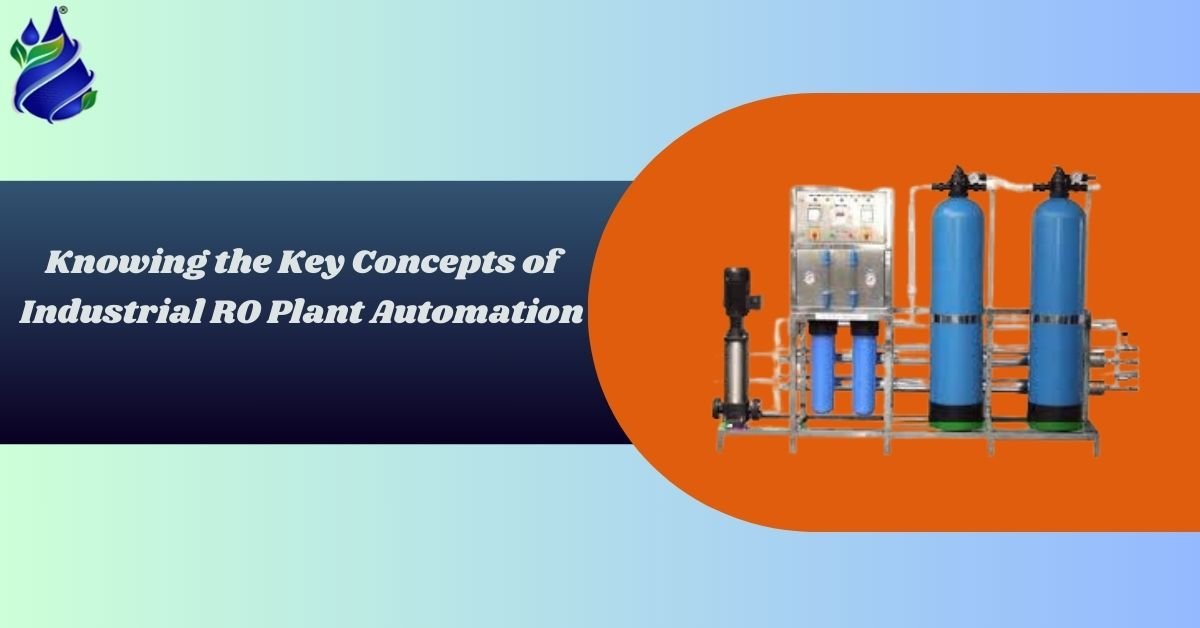
Knowing the Key Concepts of Industrial RO Plant Automation
Explore the key concepts of industrial RO plant automation, including PLCs and sensors. Learn how automation enhances water purification efficiency and reduces errors.

 ISO 9001:2015 & QCI Approved
Megacities face growing wastewater challenges. Innovative tech, strong policy, and public awareness are key to sustainable urban infrastructure solutions.

Urban areas of 10 million population or more are known as megacities. Every day, these cities produce a huge amount of wastewater. The sewage treatment infrastructure is under enormous burden as populations grow rapidly. However, many cities fail to expand their systems fast enough. Untreated sewage pollutes water bodies and groundwater sources. It is difficult to lay down networks in unplanned urban sprawl.
In some informal settlements, access to sanitation is lacking. Waste is also being discharged directly into nearby drains or rivers. Environmental and public health crises result due to lack of infrastructure. Also, outdated sewage systems are common in older megacity parts. These cannot handle the current wastewater load. Overflows, blockages, and contamination happen frequently. Climate change makes the situation worse with heavier rainfall and flooding. Combined sewer systems then overflow into natural water bodies.
1. Insufficient Infrastructure Expansion – Wastewater systems grow slower than urban populations. Excess water exceeds plant processing capacity. Many main sewers don’t reach several areas.
2. Aging and Underperforming Treatment Plants – Many plants are decades old with poor maintenance. They perform poorly during peak loads or monsoons.
3. Lack of Skilled Workforce – Treatment systems need skilled operators and technicians. A shortage results in inefficiencies and poor performance.
4. High Operational Costs – Energy, chemicals, and manpower make operations expensive. Cash-strapped municipalities struggle to manage systems efficiently.
5. Limited Land Availability – High land prices in megacities limit plant expansion. Compact or decentralized solutions are needed but not well-executed.
Urban growth adds pressure on existing systems. Wastewater planning is often missing during city expansion. New residential and industrial areas lack treatment connections, forming isolated pollution hotspots. Illegal constructions worsen the problem. They discharge untreated sewage into storm drains and rivers. Ecosystems suffer, and biodiversity is destroyed.
Public sanitation, drainage, and toilets face high demand. Waterlogging, foul smells, and disease outbreaks are common. Poorly planned high-rises mismanage sewage. Urbanization also increases impermeable surfaces. Groundwater recharge declines due to roads, buildings, and pavements. Stormwater runoff flows into lakes and rivers, adding to contamination and straining the wastewater management model.
1. Membrane Bioreactor (MBR) Systems – MBR combines biological treatment with membrane filtration. It produces reusable effluent. It’s ideal for space-constrained cities.
2. Decentralized Treatment Units – These small-scale plants serve local communities. They reduce load on central systems and can operate in informal settlements.
3. Constructed Wetlands – Nature-based systems using plants, gravel, and microbes to treat water. They support biodiversity and beautify spaces.
4. IoT-Based Monitoring Systems – Smart sensors track flow rates and performance in real time. They detect leaks and optimize treatment operations.
5. Energy Recovery Systems – Anaerobic digesters recover sludge and produce biogas. The energy runs the plant sustainably.
Strong policies and effective governance are essential. Cities must adopt a comprehensive strategy including planning, infrastructure, and finance. Discharge norms must be enforced. Effluent standards should apply to municipalities and industries. Regular audits and penalties should back enforcement.
Public-private partnerships help boost investments and efficiency. Private players bring innovation and expertise, while governments regulate and monitor. Coordination between urban development, water supply, and environment departments avoids duplication. Citizen engagement supports governance. Communities demand better services and report violations. This builds trust and transparency.
1. Promoting Household Wastewater Practices – People must avoid dumping grease and chemicals into drains. Awareness can change habits.
2. Encouraging Greywater Reuse – Kitchen, bath, and laundry water can be reused for gardening and flushing. Awareness speeds up adoption.
3. Building Support for Infrastructure Projects – Public backing helps ensure smooth project implementation. Awareness reduces delays and resistance.
4. Involving Schools and Institutions – Educational institutions can lead water literacy programs and clean water drives. Students influence family behavior.
5. Supporting Citizen-Led Initiatives – Communities can install and maintain decentralized systems. Awareness fosters ownership and sustainability.
A forward-looking, integrated approach is crucial. Cities must consider sewage treatment plant process flow diagram during urban planning. Investment should go into both centralized and decentralized systems. Recycling and reuse should be standard practices. Treated water can meet non-potable needs like flushing and landscaping, easing pressure on freshwater.
Financing is vital. Cities should explore climate funds, green bonds, and international aid. Clear budgeting and efficient spending bring results. Embracing technology boosts efficiency. Automation, AI, and real-time monitoring make systems smarter. Cities must train staff to use these tools. Public participation ensures system accountability and better maintenance. Together, we can create clean and healthy megacities for the future.
Explore the key concepts of industrial RO plant automation, including PLCs and sensors. Learn how automation enhances water purification efficiency and reduces errors.
Discover the impact of STP plant effluents on aquatic life and the environment. Uncover insights into the challenges and solutions for sustainable wastewater management.
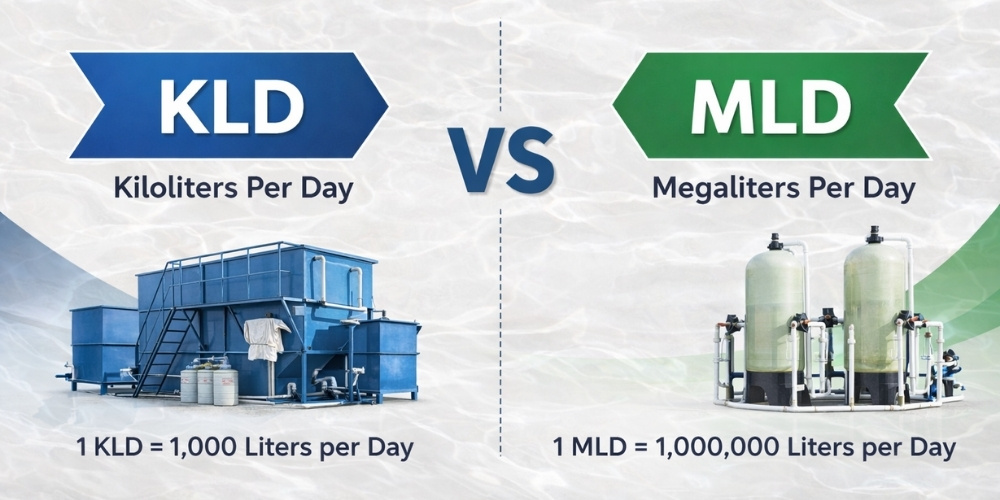
Confused about KLD and MLD in water treatment? Learn their full forms, key differences, conversion formula, and how they impact STP and ETP plant design in India.




Discuss your requirements with our engineering team and get practical guidance for your project.