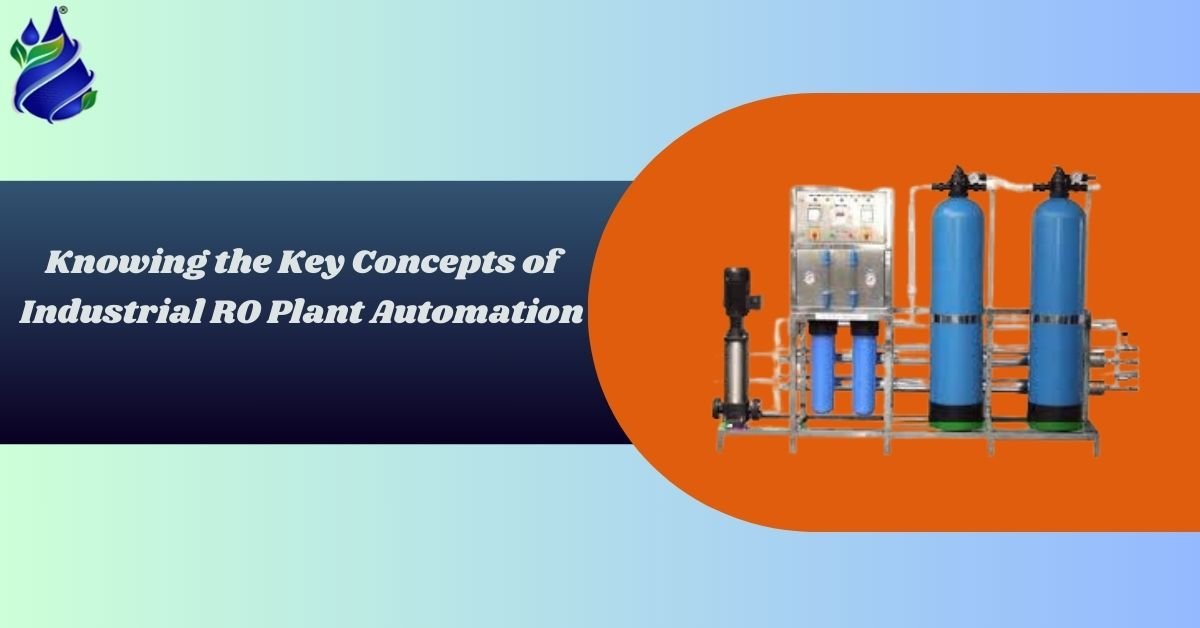
Knowing the Key Concepts of Industrial RO Plant Automation
Explore the key concepts of industrial RO plant automation, including PLCs and sensors. Learn how automation enhances water purification efficiency and reduces errors.

 ISO 9001:2015 & QCI Approved
Wastewater treatment plants are one of the main pathways through which microplastics reach rivers, farmland, and eventually the food chain, since particles smaller than 20 microns routinely slip through conventional treatment. This guide covers exactly which technologies actually work, and which gaps remain.
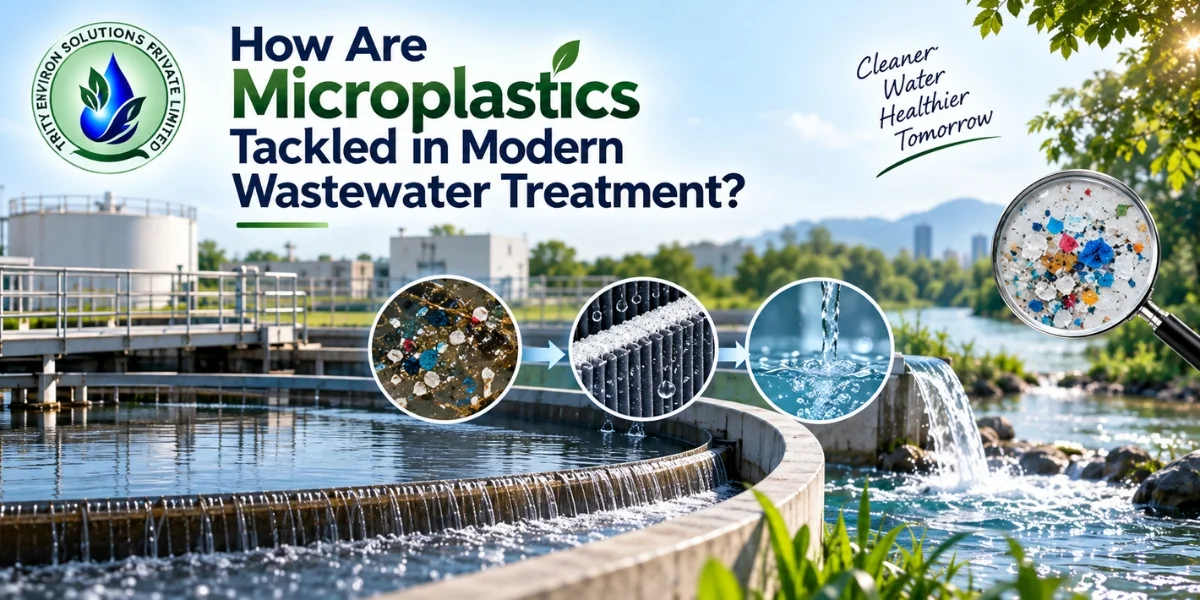
Microplastics, plastic fragments smaller than 5 millimetres, have become one of the most widespread and persistent pollutants in urban water systems, and wastewater treatment plants have been identified as one of their primary environmental sources. This might seem counterintuitive for facilities specifically built to clean water, but the reason is structural: most wastewater treatment plants were designed decades ago to remove organic matter, pathogens, and suspended solids, not particles as small and physically resilient as microplastics. As a result, even functioning treatment plants routinely allow a share of incoming microplastic load to pass straight through into the receiving environment.
Conventional wastewater treatment plants are generally not designed to retain particles smaller than about 20 microns, a size range where a significant share of microplastic fibres, fragments, and pellets fall. Screening, sedimentation, and standard activated sludge treatment were built around removing organic solids and pathogens at a much larger physical scale, leaving microplastics in this smaller size range largely unaddressed by the treatment stages most plants already have in place.
Research tracking microplastics through a working treatment plant found that particle counts dropped substantially between influent and effluent, but a meaningful share of the incoming load was retained in the sludge rather than destroyed, while a smaller but still significant share passed through in the treated effluent itself. In one documented case, average microplastic concentration fell from around 206 particles per litre entering the plant to about 94 particles per litre in the discharged effluent using standard treatment, illustrating that conventional treatment reduces the problem without coming close to eliminating it.
Membrane technologies, microfiltration (MF), ultrafiltration (UF), nanofiltration (NF), and reverse osmosis (RO), are now widely applied specifically because their pore sizes can physically block particles that pass straight through conventional treatment. Membrane Bioreactor (MBR) technology, which combines biological treatment with membrane filtration, has shown particularly strong results, with documented studies recording up to 98% reduction in microplastic particles when microfiltration membranes are applied as an additional treatment stage.
At the tighter end of the membrane spectrum, reverse osmosis and nanofiltration provide the highest level of particle rejection, making them the preferred choice where treated water is intended for sensitive reuse applications. A properly specified commercial RO plant or industrial RO plant effectively addresses microplastic contamination as part of its broader contaminant removal capability, since the membrane pore size involved is already far smaller than typical microplastic particles.
Membrane-based removal is not without operational cost. Microplastic particles interacting with membrane surfaces contribute to fouling, gradually reducing flow rate and treatment efficiency over time, which means membrane systems targeting microplastic removal need proper cleaning protocols and, in many cases, more frequent maintenance intervals than membranes used purely for dissolved solids removal.
Dissolved air flotation (DAF), a treatment process that attaches contaminants to air bubbles and lifts them to the surface for removal, has long been used in primary treatment, but a 2026 study from RMIT University's Water Effective Technology and Tools Research Center demonstrated a significantly enhanced version using micro-nanobubbles. This dual-bubble approach removed over 90% of microplastics from wastewater, meaningfully outperforming conventional DAF systems using only a single bubble size, and the researchers specifically noted the approach is straightforward to implement within existing primary treatment infrastructure rather than requiring a complete process redesign.
Nanocellulose, derived from plant-based cellulose, has shown strong microplastic removal performance in recent research, achieving up to 98% removal through a combination of adsorption and filtration mechanisms. Its appeal lies partly in its biodegradable nature and large surface area, making it an actively researched sustainable alternative to purely synthetic filtration media.
Biopolymers such as polysaccharides, lignin, and pectin have demonstrated the ability to remove up to 99% of microplastic particles by causing them to clump together and settle out of suspension, similar in principle to conventional coagulation but using naturally derived materials instead of synthetic coagulants. Combining different biopolymer materials, such as cellulose and chitosan together, has shown further improved removal efficiency in controlled studies, though researchers note that integrating these materials into existing treatment plants at scale still requires careful attention to compatibility, clogging risk, and long-term material durability under real wastewater conditions.
Beyond physical separation, advanced oxidation processes are being explored specifically to break down microplastic particles rather than simply relocating them. Electrochemical oxidation using specialized electrode materials has shown removal efficiencies ranging from roughly 65% to over 75% for specific plastic types in recent studies, while ozonation, already used as a tertiary treatment step in many plants to polish water after coagulation, also contributes to degrading residual microplastic and organic content before final discharge.
An important nuance often missing from discussions of microplastic removal is that physical separation methods, including membrane filtration and enhanced DAF, are inherently non-destructive. They do not eliminate microplastics, they transfer them from the water phase into a concentrated retentate or into the treatment plant's sludge. This means the sludge generated by a plant actively removing microplastics needs to be handled with this contamination in mind, since simply reducing effluent microplastic content by concentrating it into sludge that is later applied to agricultural land as biosolids can reintroduce the same pollutant into the environment through a different pathway. Proper sludge dewatering and disposal practices, using equipment like a properly specified filter press, become an essential part of a genuinely complete microplastic management strategy, not an afterthought once the water itself looks clean.
Even with the best currently available technology, complete elimination of microplastics from wastewater remains genuinely difficult, and significant quantities can still remain in treated effluent that is subsequently reused, particularly for agricultural irrigation. Facilities operating under Zero Liquid Discharge systems or planning extensive water reuse programs should factor microplastic removal capability into their treatment train design from the outset, rather than assuming standard secondary treatment or even basic tertiary polishing is sufficient for genuinely clean, reuse-grade water.
| Facility Type | Microplastic Concern | Recommended Approach |
|---|---|---|
| Municipal STPs | High volume, mixed source microplastics | MBR or membrane-based tertiary treatment |
| Textile and synthetic fibre units | Fibre-heavy microplastic load | Enhanced DAF plus membrane polishing |
| Facilities reusing treated water for irrigation | Biosolid and effluent recontamination risk | Full membrane treatment plus proper sludge handling |
| Industries pursuing ZLD or high-grade reuse | Near-zero contaminant tolerance | RO/NF as final polishing stage |
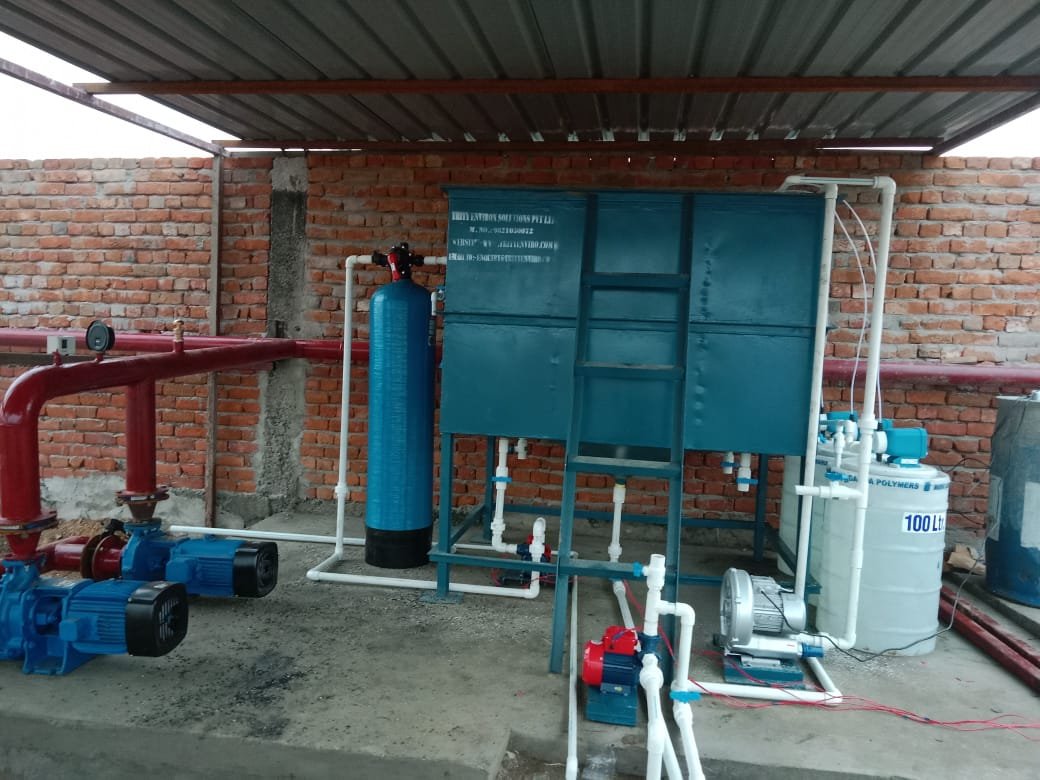
Trity Environ Solutions is an experienced wastewater treatment plant manufacturer designing treatment systems that go beyond basic secondary treatment to address emerging contaminants like microplastics, using membrane-based technology and properly engineered sludge handling. As a trusted STP and ETP manufacturer and supplier, our engineering team helps facilities planning water reuse or operating under strict discharge norms select the right combination of membrane filtration, enhanced physical separation, and sludge dewatering to genuinely address this contaminant, not just push it downstream into biosolids. Every installation is backed by pan-India Annual Maintenance Contract and operation and maintenance support. We are ISO 9001:2015 certified, QCI approved, and deliver CPCB-compliant engineering across municipal and industrial projects nationwide.
Explore the key concepts of industrial RO plant automation, including PLCs and sensors. Learn how automation enhances water purification efficiency and reduces errors.

Unlocking the potential of treated sewage water for drinking purposes. Explore the advancements and considerations in sewage treatment technology.

Integrate wastewater management with urban planning using Water-Sensitive Urban Design for sustainability, water reuse, and climate resilience




Discuss your requirements with our engineering team and get practical guidance for your project.