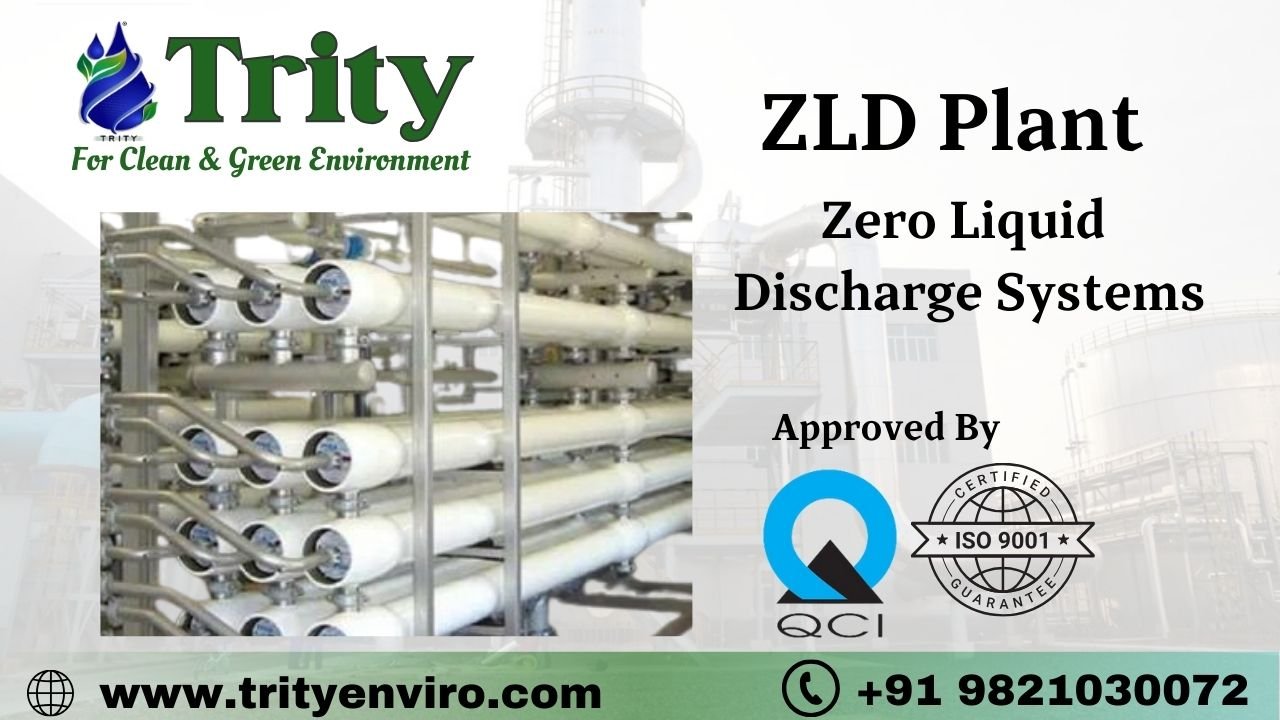
What Zero Liquid Discharge Really Means and How the Process Works
The core concept of Zero Liquid Discharge explained step by step: pretreatment, concentration, evaporation, crystallization, and what gets recovered.

 ISO 9001:2015 & QCI Approved
Municipal wastewater infrastructure isn't just an environmental obligation, it's an economic asset that can generate revenue, reduce healthcare costs, and directly support the industrial growth a city depends on. Here's the real case, backed by data.

A growing city generates more wastewater every single year, from expanding residential areas, new commercial development, and the industries that provide employment and tax revenue. Municipalities that fail to scale their wastewater treatment infrastructure alongside this growth don't just face an environmental compliance problem, they face a genuine constraint on the city's own economic future, since industries increasingly cannot expand or relocate into areas without adequate wastewater infrastructure to support them. Understanding why municipal investment in Effluent Treatment Plants and Sewage Treatment Plants matters requires looking beyond compliance obligations to the real economic and public health case underneath it.
India generates an estimated 72,000 million litres of sewage every day, yet the country's operational treatment capacity handles only a fraction of that volume, leaving a substantial gap that shows up directly in polluted rivers, groundwater contamination, and public health burden. This gap doesn't stay static as cities grow; it widens every year that infrastructure investment fails to keep pace with expanding urban population and industrial activity, making delayed investment progressively more expensive to catch up on later than addressing it proactively would have been.
Municipal wastewater investment is not purely a cost centre; in well-structured projects, it becomes a genuine revenue source. Nagpur Municipal Corporation's wastewater treatment plant sells treated sewage water to Mahagenco, a state power generation company, at approximately Rs 3.4 per cubic metre, a price point Mahagenco chose specifically because it is significantly cheaper than the roughly Rs 9.6 per cubic metre it would otherwise pay for fresh water from another municipal or irrigation source. This arrangement has generated an additional revenue stream estimated at nearly Rs 400 crore over the life of the project for Nagpur, income that directly helps cover the plant's ongoing operation and maintenance costs, turning what many municipalities still budget as a pure expense into a partially self-sustaining asset. This model demonstrates a broader principle: treated wastewater is a genuine resource for water-intensive industrial users, and municipalities that structure their investment to capture this value reduce their own long-term financial burden considerably.
Untreated or inadequately treated municipal sewage drives direct public health costs through waterborne disease, costs that fall on the same municipal and state health systems that could otherwise benefit from the funds spent treating preventable illness. Beyond direct healthcare spending, environmental remediation of severely polluted water bodies, an unavoidable consequence of decades of inadequate treatment, is dramatically more expensive than the treatment investment that would have prevented the contamination in the first place, a pattern well documented across major river cleanup programs in India that have required investment many times larger than proactive treatment infrastructure would have cost.
Recognizing that municipal budgets alone often cannot fund the scale of infrastructure investment needed, India has increasingly turned to public-private partnership models to bring in private capital and technical expertise. The southern port city of Mangalore developed a PPP arrangement connecting its municipal sewage treatment plants, capable of treating over 113 million litres per day, with industrial users through the Mangalore Special Economic Zone, creating an economically viable arrangement for both the city and the participating industries and serving as a replicable model other Indian municipalities have since studied.
More recently, the Government of India approved a Hybrid Annuity based PPP model specifically for wastewater infrastructure under the Namami Gange programme, structured so that up to 40% of capital investment is paid by government through construction-linked milestones, with the remaining balance paid through an annuity spread over a contract duration of up to 20 years. This model was introduced specifically to address a documented problem: CPCB monitoring found that roughly 30% of Sewage Treatment Plants across Uttar Pradesh, Uttarakhand, Bihar, and West Bengal were not even operational, and 94% of those that were operating failed to meet prescribed effluent standards. The annuity structure ties ongoing payment to actual performance over the contract period, directly incentivizing the private partner to keep the plant genuinely functional for decades, not just to complete construction and move on.
Adequate wastewater infrastructure is increasingly a precondition for industrial investment decisions, since manufacturers and large commercial developments need confidence that a city can handle their wastewater output before committing to expand or relocate there. Municipalities with modern, adequately scaled treatment infrastructure are better positioned to attract this investment than those where industries must factor in the cost and uncertainty of inadequate municipal wastewater capacity into their own site selection decisions. Treated water reuse for municipal parks, construction activity, and industrial cooling also reduces a growing city's overall freshwater draw, a genuinely important consideration as urban water demand continues rising faster than many regional freshwater sources can sustainably support.
The CPCB finding that 30% of monitored STPs across four states were non-operational, and that 94% of operating plants failed to meet effluent standards, reveals the single most important lesson for any municipality considering wastewater investment: building the plant is only the first half of the job. Without dedicated, adequately funded operation and maintenance, even a well-designed treatment plant degrades into non-compliance within a few years, and the capital already invested delivers little of its intended environmental or economic benefit. Municipalities planning new investment should budget for ongoing O&M as seriously as they budget for initial construction, and financing structures like the Hybrid Annuity Model that tie payment to sustained performance offer a genuine mechanism for avoiding this common and costly failure pattern.
| Municipal Context | Key Consideration | Recommended Approach |
|---|---|---|
| Growing cities with expanding industrial zones | Wastewater capacity as investment precondition | Scaled STP/ETP capacity matched to growth projections |
| Cities near water-intensive industrial users | Revenue generation potential | Treated water sale agreements, following the Nagpur model |
| Municipalities with limited capital budget | Financing constraint | PPP or Hybrid Annuity Model structures |
| Existing plants with compliance issues | Maintenance gap | Dedicated AMC/O&M budget tied to performance |
Trity Environ Solutions is an experienced sewage treatment plant manufacturer and effluent treatment plant manufacturer in India, and our engineering team works with municipal and institutional clients to design treatment infrastructure sized for genuine long-term urban growth, not just current demand. As a trusted STP and ETP manufacturer and supplier, we understand that a plant's real value depends on sustained performance over decades, which is why every installation is backed by pan-India Annual Maintenance Contract and operation and maintenance support, structured to keep plants genuinely compliant and functional long after commissioning, addressing exactly the maintenance gap that has left so many Indian municipal plants underperforming. We are ISO 9001:2015 certified, QCI approved, and deliver CPCB-compliant engineering across municipal and industrial projects nationwide.
Yes. Nagpur Municipal Corporation sells treated sewage water to a state power company at roughly Rs 3.4 per cubic metre, significantly cheaper than fresh water alternatives, generating an estimated Rs 400 crore in additional revenue over the project's life while helping cover ongoing O&M costs.
Public-private partnerships are increasingly common, including the Hybrid Annuity Model approved under the Namami Gange programme, where government pays up to 40% of capital cost through construction milestones and the remainder through a performance-linked annuity over up to 20 years.
CPCB monitoring found that roughly 30% of STPs across four major states were not even operational, and 94% of operating plants failed to meet effluent standards, largely due to inadequate ongoing operation and maintenance funding after initial construction.
Yes, increasingly. Industries need confidence that a municipality can handle their wastewater output before committing to expand or relocate, making adequate treatment infrastructure a genuine factor in urban economic competitiveness, not just an environmental consideration.
Treating construction as the finish line rather than budgeting seriously for ongoing operation and maintenance. Financing models that tie payment to sustained performance, like the Hybrid Annuity Model, directly address this by incentivizing long-term functionality over initial construction alone.
The core concept of Zero Liquid Discharge explained step by step: pretreatment, concentration, evaporation, crystallization, and what gets recovered.
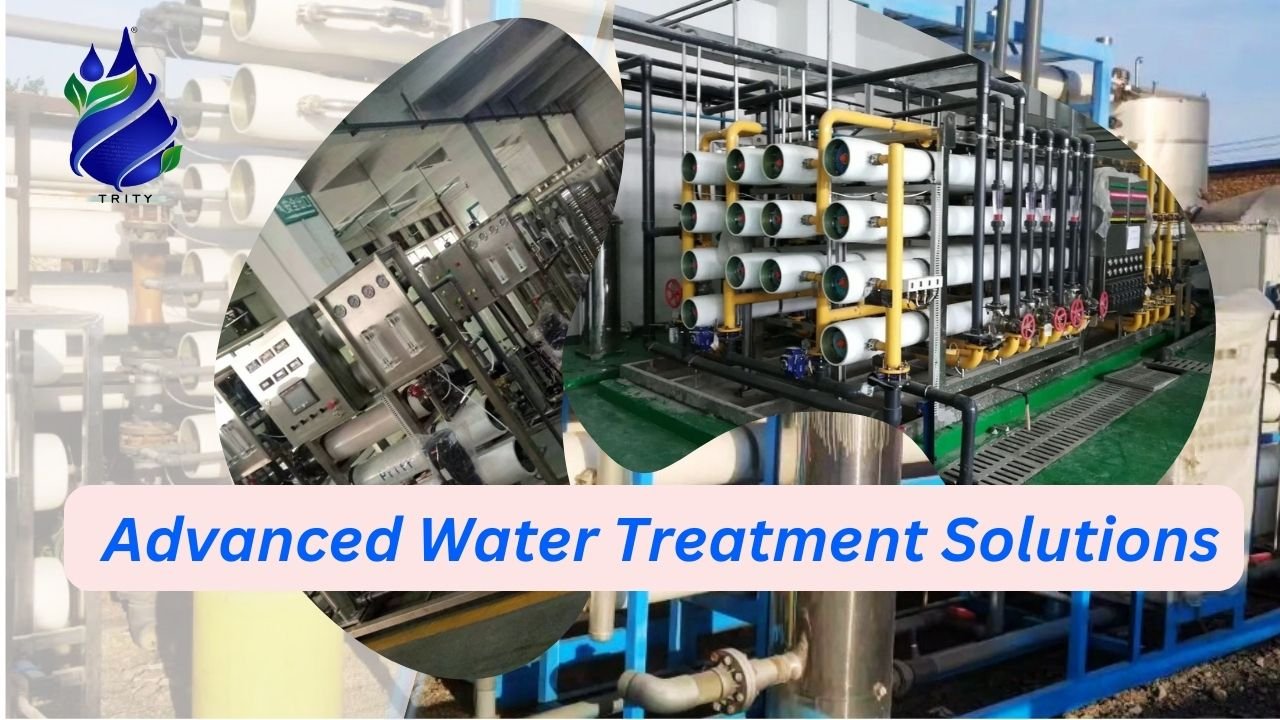
Top commercial RO plant manufacturers in Delhi NCR compared, plus the certifications, capacity range, and support to check before choosing one.
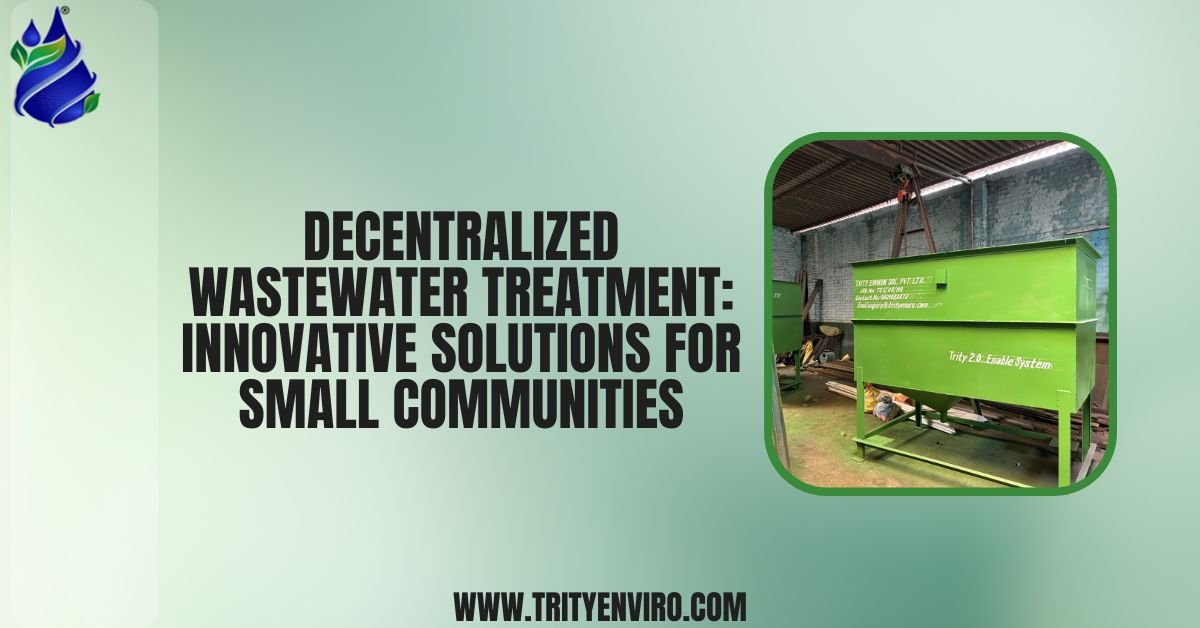
Explore decentralized wastewater treatment solutions for small communities. Affordable, eco-friendly systems reduce pollution and promote water conservation and reuse.

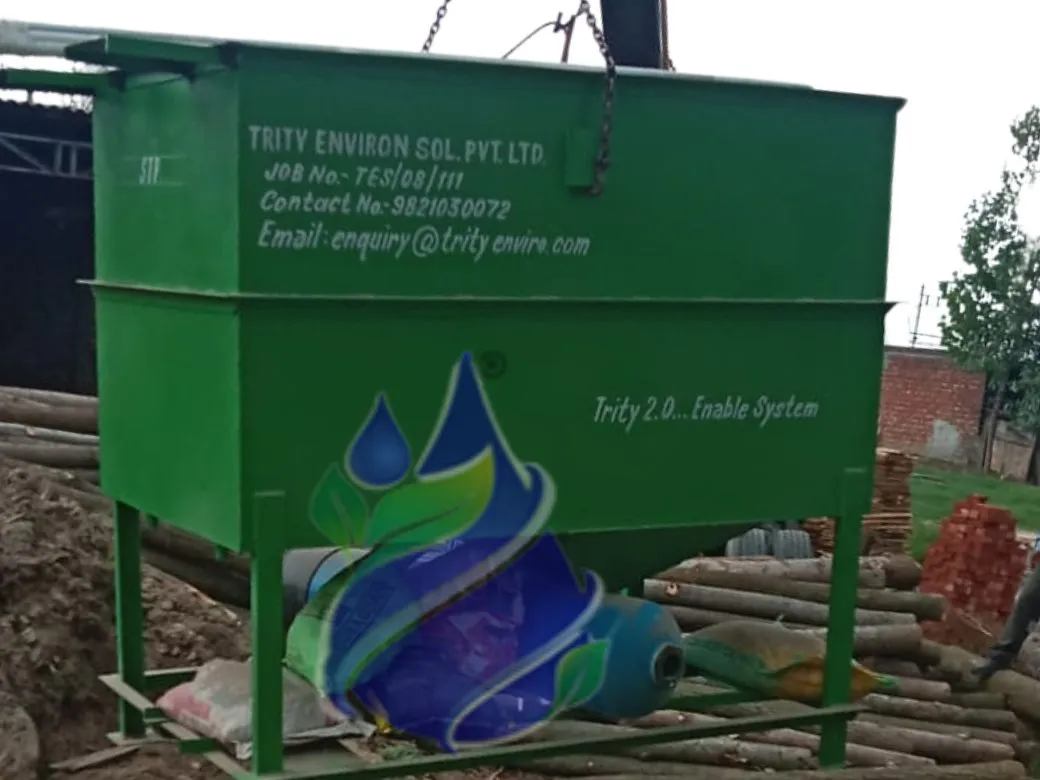



Discuss your requirements with our engineering team and get practical guidance for your project.