
 ISO 9001:2015 & QCI Approved
STP and ETP Plant Manufacturer in Agra
Leading STP and ETP plant manufacturer in Agra. Custom sewage and effluent treatment solutions for industries, hotels, hospitals, and housing projects. UPPCB compliant. Call now.
SPCB / CPCB Norm Compliant
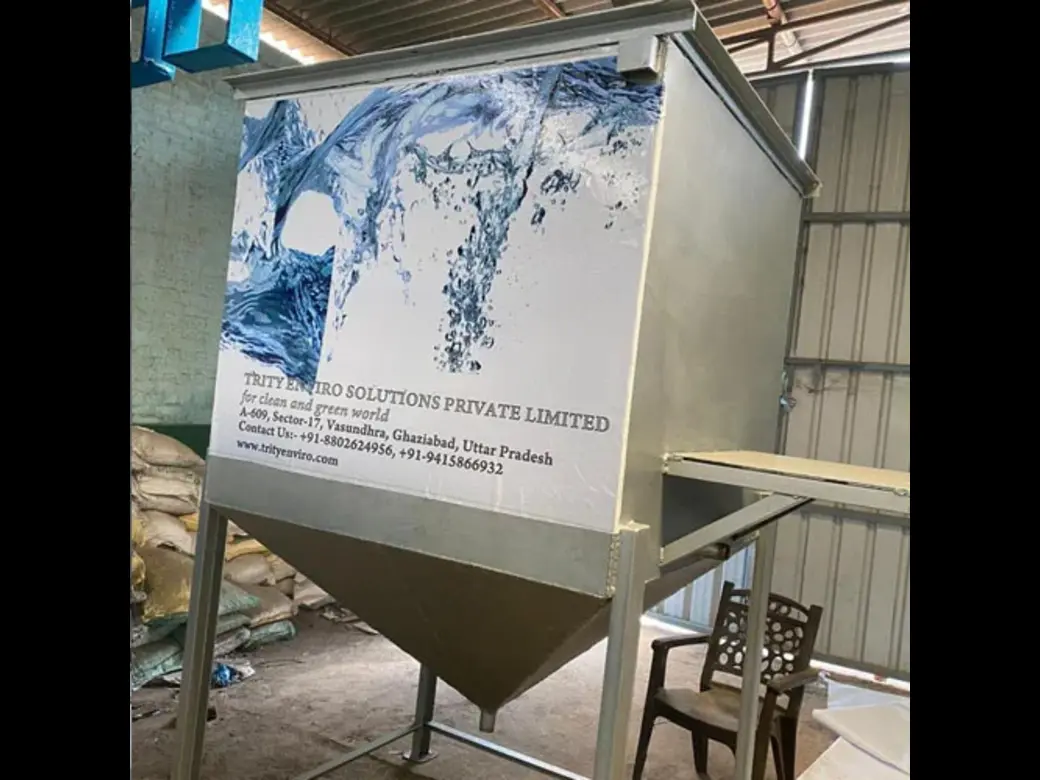
Heavy Fabrication
Introduction: Agra's Growing Need for Wastewater Treatment
Agra is one of Uttar Pradesh's most significant industrial and commercial centres. From leather tanning and chemical processing units in Foundry Nagar to large residential townships along Fatehabad Road, the city generates enormous volumes of both domestic sewage and industrial effluent every day. Rapid urbanisation, tightening UPPCB and CPCB norms, and a steady decline in groundwater levels have made professional wastewater treatment no longer optional for industries and commercial establishments operating here.
If you are looking for a reliable STP and ETP plant manufacturer in Agra, Trity Environ Solutions offers end-to-end sewage treatment solutions Agra industries and commercial establishments depend on, along with complete industrial wastewater treatment solutions Agra businesses need for UPPCB compliance. As a trusted wastewater management company in Agra, we cover everything from plant design and manufacturing to installation, commissioning, and long-term AMC support. We serve factories, hotels, hospitals, builders, educational institutions, and government projects across the city.
Leading STP and ETP Plant Manufacturer in Agra
As a trusted Sewage Treatment Plant Manufacturer in Agra and Effluent Treatment Plant Manufacturer in Agra, Trity Environ Solutions is a full-service wastewater treatment plant manufacturer with a proven track record of executing STP and ETP projects across Uttar Pradesh and beyond. We manage every stage of a project in-house: site assessment, wastewater characterisation, process design, equipment fabrication, civil coordination, installation, commissioning, operator training, and post-installation support.
Our approach is compliance-first. Every plant we design is benchmarked against current CPCB and UPPCB discharge norms, ensuring our clients do not face regulatory notices or operational shutdowns. We manufacture treatment systems using quality-grade structural steel, food-grade FRP, and corrosion-resistant materials suited to the specific wastewater characteristics of each application.
Whether you need a compact packaged STP plant in Agra for a mid-rise apartment complex or a large-scale industrial ETP plant in Agra for a chemical or food processing unit, our engineering team will deliver a solution that is technically sound, easy to operate, and built for long-term reliability. We are the STP Plant Manufacturer in Agra that industries and builders across the city choose for quality, compliance, and on-time delivery.
Sewage Treatment Plant Solutions in Agra
A Sewage Treatment Plant (STP) treats domestic wastewater generated from toilets, kitchens, and washrooms. In Agra, where housing societies, hotels, hospitals, and educational institutions are growing rapidly, a properly designed commercial STP plant in Agra ensures that wastewater is treated to safe levels before discharge into drains or reuse for landscaping and flushing.
We design and supply sewage treatment plants for:
- Residential societies and apartments: We design systems from 20 KLD to 1000 KLD for gated communities, cooperative housing societies, and large apartment blocks. Treated water can be reused for common area irrigation, reducing dependency on municipal supply.
- Hotels and resorts: Hotels in the Tajganj and Fatehabad Road belt generate high volumes of kitchen and sanitary wastewater. We supply compact, low-odour systems that integrate well with hotel infrastructure.
- Hospitals: Medical wastewater contains pharmaceutical compounds and pathogens that require specialised treatment. We supply hospital-grade STP systems with effective disinfection stages to ensure safe discharge.
- Educational institutions: Schools, colleges, and universities with large hostel populations require consistent, low-maintenance treatment systems. We provide easy-to-operate packaged and modular STPs for such applications.
- Commercial complexes and malls: High footfall commercial spaces generate significant sanitary wastewater. Our systems are designed for compact installation in limited underground space.
- Townships and real estate projects: For large integrated townships under RERA requirements, we supply scalable STP systems with treated water recycling provisions.
Technologies We Use for STP Plants
MBBR Technology (Moving Bed Biofilm Reactor) MBBR uses specially designed plastic carrier media suspended in aeration tanks. Bacteria colonise the surface of these carriers and biodegrade organic matter continuously. MBBR systems are compact, robust, and deliver consistent effluent quality even with fluctuating inlet loads. They are ideal for space-constrained installations in residential and commercial projects. Our MBBR media is manufactured in-house to precise specifications.
SBR Technology (Sequencing Batch Reactor) In SBR, wastewater treatment occurs in timed cycles within a single tank: fill, react, settle, and decant. This batch-based approach delivers excellent BOD and TSS removal with a smaller physical footprint. SBR is particularly suitable for applications with variable flow rates. See our Sequencing Batch Reactor product page for technical details.
ASP Technology (Activated Sludge Process) ASP is a widely proven aerobic biological process where microorganisms in a mixed liquor break down organic pollutants under aeration. It is suitable for large-capacity STPs above 200 KLD and delivers reliable performance for hotels, townships, and institutional campuses.
Packaged STP Plants For capacities between 10 KLD and 100 KLD where civil construction is not practical, we supply fully fabricated packaged STP plants pre-assembled on a skid. These arrive ready to connect, reducing installation time significantly.
Effluent Treatment Plant Solutions in Agra
An Effluent Treatment Plant (ETP) treats wastewater generated during industrial manufacturing processes. While domestic sewage treatment focuses on organic loads from human activity, industrial effluent treatment addresses complex chemical, physical, and biological contaminants specific to each sector. Industrial effluent typically contains high concentrations of BOD, COD, TSS, heavy metals, oils, dyes, and chemical compounds that cannot be discharged without treatment under UPPCB norms.
We design industrial ETP plants for the following sectors operating in and around Agra:
- Leather and tanning industries: Agra has one of India's largest leather clusters. Tannery effluent contains chromium, sulphides, and high BOD loads requiring specialised physico-chemical and biological treatment stages.
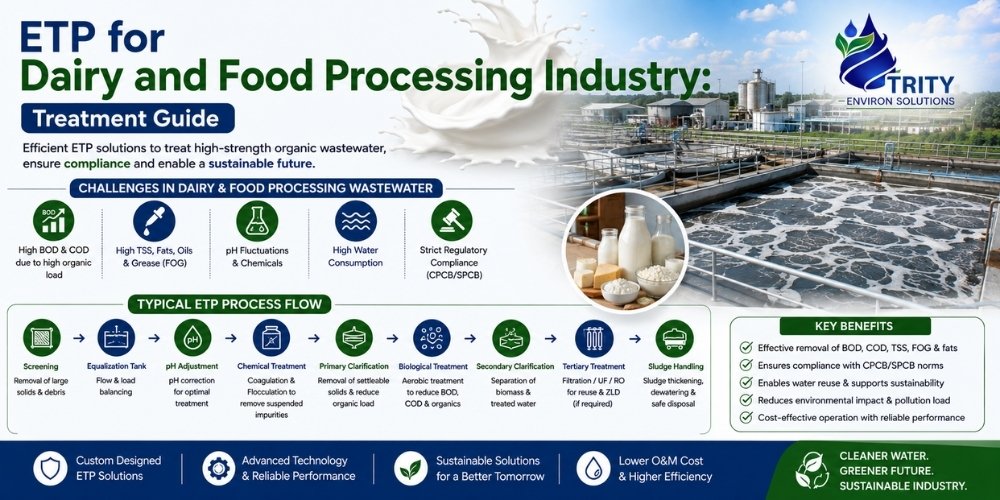
- Food processing and dairy: Units producing dairy products, beverages, and packaged foods generate organic-rich wastewater needing efficient BOD reduction through biological treatment.
- Pharmaceutical units: Pharma wastewater contains active pharmaceutical ingredients (APIs) and solvents requiring advanced treatment including biological oxidation and activated carbon polishing.
- Chemical industries: Effluent from chemical processing units may contain acids, alkalis, solvents, and heavy metals requiring neutralisation, coagulation, and multi-stage treatment.
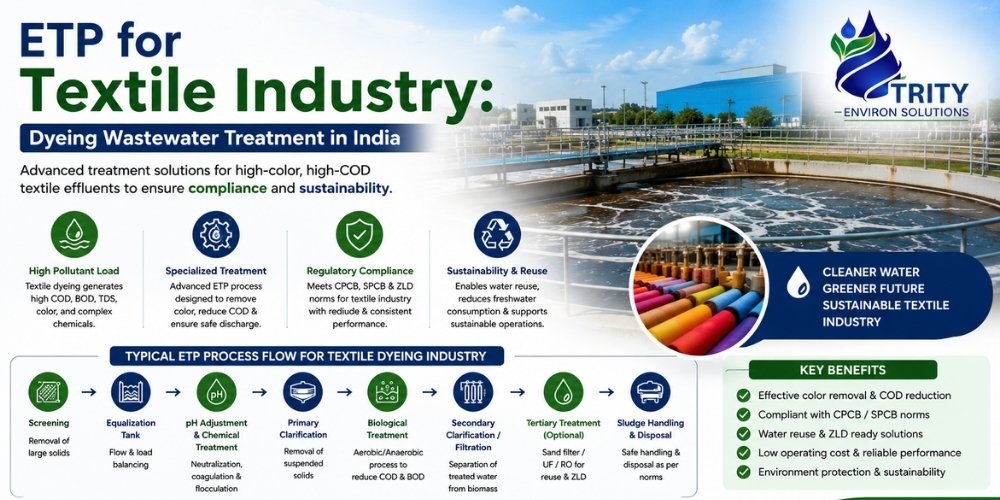
- Textile and dyeing units: High colour, COD, and TDS wastewater from textile operations requires coagulation, biological treatment, and in many cases tertiary treatment for colour removal.
- Automobile and engineering industries: Oily wastewater, coolant effluent, and metal-bearing wastewater from workshops and manufacturing units require oil removal and chemical treatment.
- Electroplating industries: Effluent containing chromium, nickel, zinc, and cyanide requires dedicated chemical treatment before safe disposal.
- General manufacturing facilities: Any unit generating process wastewater above 10 KLD requires an ETP under CPCB and UPPCB norms.
ETP Treatment Stages
Primary Treatment: Physical and chemical removal of suspended solids, oils, and gross pollutants. Includes bar screens, grit chambers, equalisation tanks, primary clarifiers, and chemical dosing for coagulation and flocculation.
Secondary Treatment: Biological oxidation of dissolved organic matter using processes such as ASP, MBBR, or SAFF. This stage achieves significant BOD and COD reduction.
Tertiary Treatment: Advanced polishing of treated water for reuse or achieving stringent discharge limits. Includes sand filtration, activated carbon filtration, tube settler media in clarifiers, ultrafiltration systems, and RO for high-purity reuse.
Industries We Serve in Agra
Agra's industrial landscape covers a wide spectrum. Our wastewater treatment solutions serve:
- Leather and footwear manufacturers in the Nunhai, Bodla, and Taj Industrial Estate areas, where complex effluent management is mandatory for UPPCB compliance.
- Marble and stone processing units generating slurry and suspended solid-laden wastewater.
- Food and agro-processing units requiring high BOD reduction for safe discharge.
- Hotels and hospitality businesses near the Taj Mahal and along Fatehabad Road, where municipal discharge norms are strict given the heritage zone.
- Private hospitals and nursing homes across Kamla Nagar, Shahganj, and Dayal Bagh.
- Residential builders and developers executing large-scale township projects under UPRERA mandates.
- Educational institutions with hostel infrastructure.
- Government projects and municipal bodies requiring turnkey plant execution.
Our STP and ETP Plant Technologies
MBBR Technology
Moving Bed Biofilm Reactor technology uses plastic carrier media with a high specific surface area. Microorganisms form a biofilm on the carriers and degrade organic pollutants continuously. MBBR systems require minimal sludge recirculation, making them simple to operate. They deliver consistent performance at BOD removal efficiencies above 90%.
SBR Technology
Sequencing Batch Reactors treat wastewater in defined batch cycles within a single reactor. The process handles variations in flow and load well and produces treated water of consistent quality. SBR is widely used for STPs in residential and institutional applications.
ASP Technology
Activated Sludge Process is a conventional aerobic biological process using fine bubble aeration. The process is suitable for large-capacity plants and has decades of proven performance across municipal and industrial applications.
SAFF Technology
Submerged Aeration Fixed Film combines suspended growth and attached growth in a single reactor. It delivers better BOD removal than conventional ASP in compact configurations. SAFF is effective for hotels, hospitals, and mid-scale industrial units.
Tube Settler Technology
Tube settler modules installed in clarifier tanks dramatically increase the effective settling area, allowing efficient removal of suspended solids at higher flow rates with smaller tank footprints. Our tube settler media is available in standard hexagonal configurations.
UF System
Ultrafiltration membranes with pore sizes in the 0.01 to 0.1 micron range effectively remove bacteria, viruses, colloids, and fine suspended particles from treated water. UF is commonly used as a polishing step before RO or treated water reuse. Our ultrafiltration systems are available as standalone units or integrated into ETP/STP tertiary stages.
RO System
Reverse Osmosis membranes reject dissolved salts, heavy metals, and micropollutants from treated effluent, enabling high-quality water reuse. RO is used in ZLD systems and industrial reuse applications. Our commercial RO plant range covers capacities from 500 LPH to 100 KLD.
Water Recycling System
Wastewater recycling is one of the most practical strategies for reducing freshwater dependency in industrial and commercial facilities. Our water reuse systems and wastewater recycling system solutions collect secondary or tertiary-treated water and condition it for specific reuse applications such as toilet flushing, cooling tower makeup, irrigation, or process water supply. This significantly reduces freshwater consumption, supports industrial water recycling goals, and lowers overall utility costs.
Zero Liquid Discharge System
A Zero Liquid Discharge plant combines biological treatment, UF, RO, and evaporation-crystallisation technologies to recover virtually all water from industrial wastewater, leaving only dry solid waste for disposal. ZLD is mandatory for several industries under NGT and CPCB directives, and increasingly adopted by industries in water-stressed regions. See our ZLD plant solutions.
Why Wastewater Treatment is Important in Agra
Agra faces compounding water challenges. The city draws heavily on Yamuna water and groundwater, both of which are under severe stress. Groundwater in large parts of Agra is overexploited, and the water table has fallen significantly over the past two decades. Simultaneously, rapid industrial and residential growth is generating larger volumes of untreated wastewater that finds its way into drains and the Yamuna river.
From an environmental compliance standpoint, the UPPCB has significantly tightened enforcement in recent years. Wastewater discharge standards under CPCB and UPPCB are now strictly enforced, and industries without valid Consent to Operate (CTO) linked to functional ETPs face closure notices, penalty proceedings, and reputational damage. Hotels, hospitals, and large residential societies without operational STPs risk NOCs being withheld or cancelled. Achieving CPCB compliance and UPPCB compliance is therefore a non-negotiable requirement for any operating business in Agra today.
Beyond compliance, wastewater recycling and water recovery solutions from treated sewage and effluent are now a practical necessity. Industries that install ETPs with tertiary treatment can reuse 70% to 90% of their treated water in process operations, cutting freshwater costs substantially. Installing a water recycling plant in Agra reduces dependency on groundwater and municipal supply. Residential societies that recycle STP-treated water for flushing and irrigation can reduce municipal water dependency by 30% to 40%.
Sustainable wastewater management also positions businesses favourably with ESG stakeholders, lending institutions, and export buyers increasingly focused on environmental credentials. A Zero Liquid Discharge plant in Agra and a wastewater recycling system in Agra are increasingly the preferred solutions for industries in the textile, chemical, and pharmaceutical sectors seeking to achieve zero effluent discharge. An industrial water treatment plant in Agra that integrates ETP, ZLD, and water recycling delivers the highest level of resource efficiency and regulatory safety.
Benefits of Installing STP and ETP Plants
- Regulatory compliance: Avoid UPPCB and CPCB notices, closure orders, and penalty proceedings.
- Reduced freshwater consumption: Reuse treated water for process, flushing, cooling, and irrigation.
- Lower operational costs: Cut municipal water bills and wastewater disposal charges.
- Environmental protection: Prevent pollution of groundwater, drains, and the Yamuna river.
- Improved brand reputation: Demonstrate environmental responsibility to customers, regulators, and investors.
- RERA and NOC compliance: Builders and developers can obtain occupancy certificates and NOCs without delays.
- Sustainable operations: Contribute to long-term water conservation and sustainable water management.
- Efficient sludge management: Properly designed plants include sludge dewatering systems for compliant solid waste disposal.
Our Project Execution Process
1. Site Visit and Assessment Our technical team visits the site to evaluate space availability, existing drainage infrastructure, soil conditions, and plant location.
2. Wastewater Analysis We collect and analyse wastewater samples to determine inlet parameters: BOD, COD, TSS, pH, TDS, heavy metals, and other relevant parameters depending on the application.
3. Plant Design Based on wastewater characterisation and flow requirements, our engineers prepare a process design including technology selection, equipment sizing, and layout drawings.
4. Equipment Manufacturing All structural and equipment components are fabricated at our manufacturing facility under quality controls aligned with ISO 9001:2015 standards.
5. Installation Our trained installation teams execute all civil, mechanical, electrical, and instrumentation work at site, coordinating with your civil contractor where required.
6. Testing and Commissioning We conduct a systematic commissioning programme including hydraulic testing, process performance trials, and effluent quality verification against regulatory discharge norms.
7. Operator Training We provide hands-on training to your on-site team covering daily operations, routine maintenance, troubleshooting, and record keeping required for UPPCB inspections.
8. AMC and Support Services We offer Annual Maintenance Contracts (AMC) covering preventive maintenance, consumable supply, emergency breakdown support, and UPPCB inspection assistance.
STP and ETP Plant Capacity Range
| Plant Type | Typical Capacity Range | Application |
|---|---|---|
| STP Plant | 20 KLD to 5 MLD | Apartments, townships, hospitals, hotels, institutions |
| Packaged STP Plant | 10 KLD to 100 KLD | Small apartments, resorts, clinics, offices |
| ETP Plant | 10 KLD to 500 KLD | Food, pharma, chemical, dairy, and auto industries |
| Industrial ETP Plant | 50 KLD to 2 MLD | Leather, textile, chemical, and large manufacturing units |
| Water Recycling Plant | 10 KLD to 500 KLD | Process water reuse, cooling, irrigation, flushing |
| ZLD Plant | 50 KLD to 1 MLD | Textile, chemical, pharma, electroplating industries |
Why Choose Trity Environ Solutions
Experienced engineers: Our technical team includes environmental engineers and process specialists with hands-on experience across hundreds of STP and ETP installations.
Customised solutions: We design every plant to the specific wastewater characteristics, capacity, space constraints, and compliance requirements of the project. No off-the-shelf templates.
Quality equipment: We manufacture using quality-grade materials. Our MBBR media, tube settler media, aeration systems, and process tanks are built for long service life in Indian operating conditions.
Advanced technologies: From MBBR and SBR to UF, RO, and ZLD systems, we offer the full range of proven wastewater treatment technologies.
Timely project delivery: We commit to realistic timelines and deliver on them. Our in-house manufacturing eliminates delays from third-party suppliers.
Competitive pricing: We deliver value-for-money solutions without compromising on quality or process performance.
Technical support: Our team remains available for technical guidance, process optimisation, and troubleshooting throughout the plant's operational life.
AMC services: Our Annual Maintenance Contract packages ensure your plant runs at peak performance consistently and passes regulatory inspections.
Compliance expertise: We understand UPPCB, CPCB, and NGT requirements in detail and design plants to meet current as well as anticipated future discharge norms.
We are also a leading STP and ETP plant manufacturer serving Delhi NCR and nearby cities including Mathura, giving us extensive on-ground presence in the Agra belt.
Service Areas in Agra
We provide STP installation services in Agra and ETP installation services in Agra across all major industrial and residential areas, along with STP AMC services Agra and ETP AMC services Agra for ongoing plant maintenance and compliance support. Areas we serve include:
- Foundry Nagar and Bodla Industrial Area: Serving foundry, casting, and manufacturing units with ETP solutions tailored to metal-bearing and oily wastewater.
- Taj Industrial Estate, Nunhai: Leather and footwear units requiring specialised tannery ETP systems.
- Fatehabad Road: Hotels, resorts, and residential projects requiring compact STPs with treated water recycling.
- Tajganj: Heritage zone hotels and guest houses needing low-footprint, low-odour packaged STP systems.
- Sikandra: Institutional and commercial projects requiring both STP and industrial water treatment systems.
- Dayal Bagh: Residential societies and educational institutions needing reliable STP systems.
- Kamla Nagar: Hospitals, clinics, and commercial complexes requiring compliant wastewater treatment.
- Shahganj: Industrial and mixed-use zones with diverse ETP requirements.
- Trans Yamuna: New residential and commercial development zones requiring scalable STP systems.
- Agra Cantonment and surrounding areas: Government and defence-linked projects.
Our proximity to Agra through our Ghaziabad manufacturing base ensures fast equipment delivery, responsive technical support, and competitive logistics costs for all projects in the region.
Get a Customised STP and ETP Plant Solution in Agra
Whether you are a builder planning an STP for your new residential township, a factory owner needing an ETP to secure your UPPCB CTO, or an institution looking to upgrade an underperforming treatment plant, Trity Environ Solutions can help.
Contact us today for:
- Free technical consultation with our environmental engineers
- Site assessment and wastewater characterisation
- Capacity and technology recommendation specific to your project
- Detailed process design and layout planning
- Transparent budget estimation with no hidden costs
- Compliance guidance covering UPPCB CTO and CPCB requirements
Our team has delivered successful wastewater treatment projects across Agra and the broader Uttar Pradesh region. We bring the same engineering rigour, quality equipment, and responsive support to every project, regardless of size.
Call us now or send an enquiry to get started. Our team typically responds within 24 hours and can schedule a site visit within 48 to 72 hours across Agra and nearby areas.
Conclusion
Agra's industrial growth, increasing environmental scrutiny, and groundwater challenges make professional wastewater management an urgent business priority. As a leading STP and ETP plant manufacturer in Agra, Trity Environ Solutions brings the technical expertise, manufacturing capability, and project execution experience to deliver compliant, efficient, and durable treatment systems. From compact packaged STP plants for apartments to large industrial ETP plants for leather and chemical units, we have the right solution for your specific requirement.
Partner with us for end-to-end sewage and effluent treatment in Agra. Contact Trity Environ Solutions today.
WHY THIS SYSTEM?
Key Benefits of STP and ETP Plant Manufacturer in Agra
Engineered for high biological efficiency, full environmental compliance, and low lifecycle operational costs.
100% CPCB / SPCB Compliance
Strict adherence to national and state pollution control board parameters for BOD, COD, TSS, and heavy metals discharge.
Low Power & Operational Cost
Optimized hydraulic design and energy-efficient aeration reduce kilowatt consumption per cubic meter of treated water.
Compact & Modular Footprint
Skid-mounted and modular civil layouts save valuable industrial floor space and allow seamless capacity expansion.
Automated PLC / SCADA Control
Real-time water quality monitoring, automated dosing systems, and remote telemetry for hassle-free plant operation.
Zero Liquid Discharge (ZLD) Ready
Seamless integration with downstream RO and evaporator systems for maximum water recycling and recovery.
Robust Engineering & Longevity
Heavy-gauge anti-corrosive construction ensures 15+ years of reliable, uninterrupted service life.
SYSTEM CONFIGURATIONS
Types of STP and ETP Plant Manufacturer in Agra Configurations
Tailored industrial configurations matched to specific effluent composition, flow rates, and space constraints.
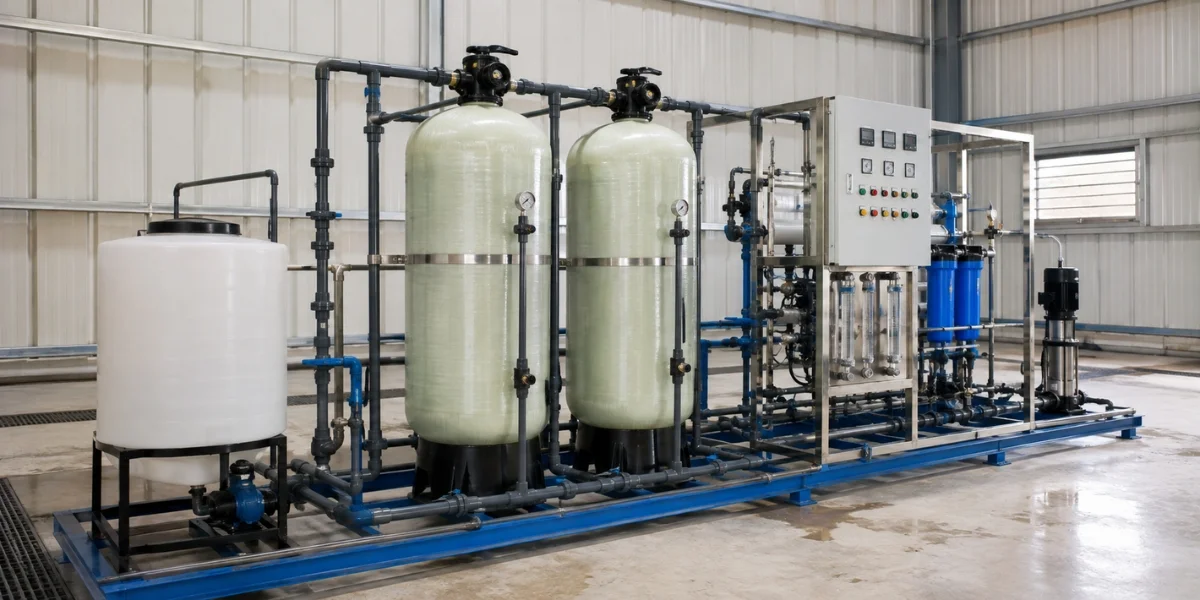
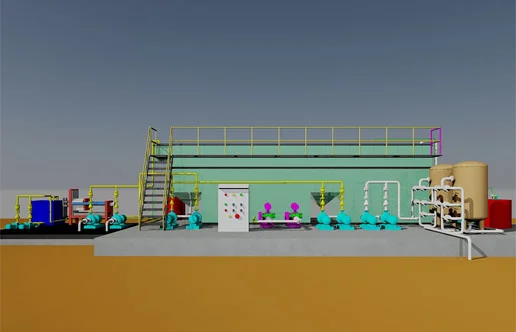
RO & Water Recycling Plant Manufacturer in India
Trity Environ Solutions manufactures RO and water recycling systems for industries and commercial facilities, engineered for reliable purity and reuse.
Explore Configuration
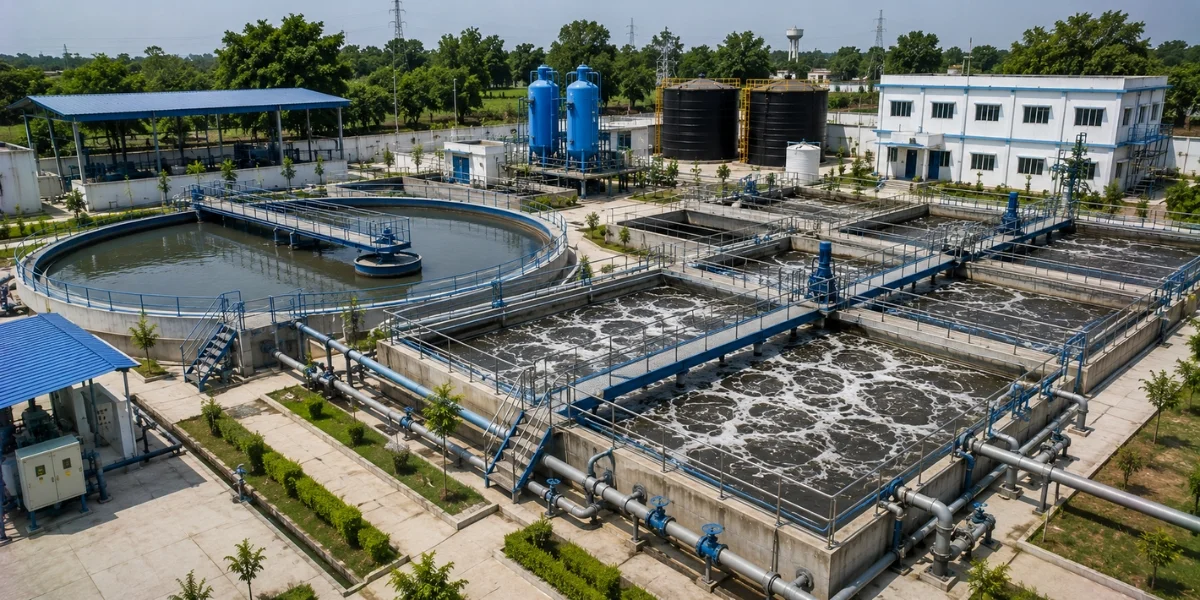
Tertiary Treatment Plant Manufacturer in India
Trity Environ Solutions manufactures tertiary treatment plants that polish treated water beyond secondary treatment, enabling genuine reuse and stricter discharge compliance.
Explore Configuration
Wastewater Recycling System Manufacturer in India
Trity Environ Solutions manufactures wastewater recycling systems using UF and RO technology, turning treated wastewater into reuse-grade water for cooling, flushing, and gardening.
Explore Configuration
STEP-BY-STEP WORKFLOW
How the STP and ETP Plant Manufacturer in Agra Process Works
A sequential, multi-stage treatment methodology engineered for maximum contaminant removal and water recovery.
01
Primary Collection & Screening
Raw effluent equalization, coarse bar screening, and pH neutralization to stabilize influent parameters.
02
Physico-Chemical Coagulation
Flash mixing of coagulants and flocculants followed by primary clarifier separation for heavy suspended solids.
03
Advanced Biological Digestion
Aerobic/anaerobic microbial digestion (MBBR / SBR / ASP) for drastic reduction of dissolved BOD & COD.
04
Tertiary Polishing & Disinfection
Dual media sand and activated carbon filtration with UV/ozonation for clean, reusable output water.
COMMON INQUIRIES
Frequently Asked Questions
Q1. What is the difference between an STP and an ETP?
A Sewage Treatment Plant (STP) is designed to treat domestic wastewater generated from toilets, kitchens, and bathrooms in residential, commercial, and institutional premises. An Effluent Treatment Plant (ETP) treats industrial process wastewater, which may contain chemical compounds, heavy metals, dyes, oils, and other industrial pollutants. The treatment processes differ significantly based on the nature of the wastewater. STPs primarily use biological treatment, while ETPs combine physical, chemical, and biological processes depending on the industry type. Some facilities require both an STP and an ETP installed together.
Q2. Which industries in Agra are required to install an ETP?
Under the Water (Prevention and Control of Pollution) Act and UPPCB norms, all industries that generate process wastewater above prescribed limits are required to install ETPs. In Agra, this includes leather and tannery units, food processing and dairy industries, pharmaceutical companies, chemical manufacturing units, textile and dyeing units, automobile workshops above a certain size, electroplating units, and any manufacturing facility generating industrial effluent. Units operating without a functional ETP are not eligible for Consent to Operate (CTO) renewal.
Q3. How much space is required for an STP or ETP plant?
The space requirement depends on plant capacity, technology selected, and layout configuration. A 50 KLD MBBR-based STP typically requires approximately 80 to 120 square metres of area including all process tanks and equipment. Packaged STP systems are more compact and can fit in smaller underground or ground-level spaces. For ETPs, space requirements vary considerably depending on the number of treatment stages and the nature of the effluent. We assess your available space during the site visit and optimise the plant layout accordingly.
Q4. What technologies are available for sewage treatment?
We offer MBBR (Moving Bed Biofilm Reactor), SBR (Sequencing Batch Reactor), ASP (Activated Sludge Process), SAFF (Submerged Aeration Fixed Film), and packaged STP technologies. Each technology has specific advantages related to footprint, energy consumption, effluent quality, and ease of operation. Our team recommends the most suitable technology based on your capacity, application, site constraints, and compliance requirements.
Q5. Can treated STP or ETP water be reused?
Yes. Treated water from STPs and ETPs can be reused for multiple purposes depending on the level of treatment. Secondary-treated STP water is commonly reused for garden irrigation, toilet flushing, and construction purposes. With tertiary treatment including UF and RO, treated water can meet process water quality standards for industrial reuse. Water reuse reduces freshwater consumption significantly and lowers operational costs.
Q6. How long does STP or ETP installation take?
A standard 50 to 100 KLD packaged STP typically takes 30 to 45 days from order confirmation to commissioning, assuming site civil work is ready. For larger civil-constructed STPs or multi-stage ETPs above 200 KLD, the timeline is typically 60 to 120 days depending on civil contractor progress. We provide realistic project schedules during the design stage and coordinate closely to meet agreed deadlines.
Q7. What regular maintenance is required for STP and ETP plants?
Routine maintenance activities include daily checks on aeration equipment, blowers, pumps, and dosing systems; weekly inspection of media beds, clarifiers, and filtration stages; monthly cleaning of screens and diffusers; and periodic calibration of instruments. Sludge dewatering and disposal must be managed regularly. We recommend enrolling in our AMC (Annual Maintenance Contract) programme, which covers preventive maintenance, spare parts supply, and emergency support, keeping your plant in optimal condition year-round.
Q8. What capacity STP or ETP should I choose?
Capacity is determined by the volume of wastewater generated daily. For STPs, this is estimated based on the number of occupants, water consumption norms, and return flow factors. For ETPs, it is based on daily production volumes and specific water consumption of your process. We conduct a detailed wastewater audit during the site assessment and recommend the appropriate capacity with a 10-15% buffer for peak loads and future expansion.
Q9. What are CPCB and UPPCB requirements for discharge
The Central Pollution Control Board (CPCB) sets national discharge standards for various parameters including BOD, COD, TSS, pH, and specific pollutants. The Uttar Pradesh Pollution Control Board (UPPCB) enforces these standards within UP and may impose additional restrictions based on the receiving water body. For consent to operate, your plant must demonstrate that treated effluent consistently meets these discharge limits. We design all our plants to meet current CPCB General Standards and UPPCB-specific requirements applicable to your industry and discharge point.
Q10. What is the approximate cost of an STP or ETP plant?
Cost depends on the capacity, technology, number of treatment stages, civil construction requirement, and site-specific factors. A 50 KLD packaged MBBR STP typically ranges from Rs. 12 to 20 lakhs depending on configuration. A 100 KLD industrial ETP with physico-chemical and biological treatment stages may range from Rs. 25 to 45 lakhs. For precise project cost estimation, we recommend contacting us for a free site assessment and detailed quotation based on your actual requirements.
Q11. Do you provide STP and ETP solutions for hospitals in Agra?
Yes. We have specific expertise in hospital and healthcare facility wastewater treatment. Hospital STP systems require careful design to handle pharmaceutical compounds, disinfectants, and biological contaminants. Our effluent treatment plant for hospitals is designed to meet the specific discharge standards applicable to healthcare facilities under CPCB and UPPCB norms.
Q12. What is a Zero Liquid Discharge plant and who needs it?
A Zero Liquid Discharge (ZLD) plant recovers all usable water from industrial effluent through a combination of biological treatment, membrane filtration, and evaporation technologies, producing only dry solid waste for disposal. ZLD is mandated by the NGT and CPCB for water-stressed areas and certain industries including textile, paper, and sugar. It is also adopted voluntarily by industries seeking to eliminate liquid effluent discharge entirely and maximise water reuse. Our ZLD plant solutions are customised for each industry's effluent characteristics.
Q13. Do you provide AMC services for existing STP and ETP plants in Agra?
Yes. We provide Annual Maintenance Contract (AMC) services for both plants installed by us and plants installed by third parties. Our AMC programme includes scheduled preventive maintenance visits, performance monitoring, consumables supply, and emergency breakdown support. We also assist with UPPCB inspection documentation and compliance records. Contact us to discuss an AMC plan for your existing plant.
Q14. Is STP installation mandatory for residential societies and builders in Agra?
Under UP RERA regulations and UPPCB norms, residential projects above a specified size are required to install STPs before receiving occupancy certificates. Gated communities and apartment complexes that discharge domestic wastewater without treatment are subject to regulatory action. Installing a properly designed STP ensures smooth clearance from UPPCB, RERA, and local authorities. Our STP plant installation services cover complete turnkey execution for residential and commercial projects.
Q15. Do you also supply water softener plants and DM water plants for industries in Agra?
Yes. Many industries require water softening or demineralisation as part of their water supply pre-treatment, particularly for boiler feed water and process applications. We supply water softener plants and demineralised water plants alongside our STP and ETP systems, allowing a single-vendor solution for all your water and wastewater treatment requirements.
CATALOGUE
Related Engineering Products
RO & Water Recycling Plant Manufacturer in India
Trity Environ Solutions manufactures RO and water recycling systems for industries and commercial facilities, engineered for reliable purity and reuse.
Tertiary Treatment Plant Manufacturer in India
Trity Environ Solutions manufactures tertiary treatment plants that polish treated water beyond secondary treatment, enabling genuine reuse and stricter discharge compliance.
Wastewater Recycling System Manufacturer in India
Trity Environ Solutions manufactures wastewater recycling systems using UF and RO technology, turning treated wastewater into reuse-grade water for cooling, flushing, and gardening.
PAN-INDIA CAPABILITIES
Regional Solutions & State Coverage
TECHNICAL KNOWLEDGE
Related Insights & Engineering Guides
PROVEN EXCELLENCE
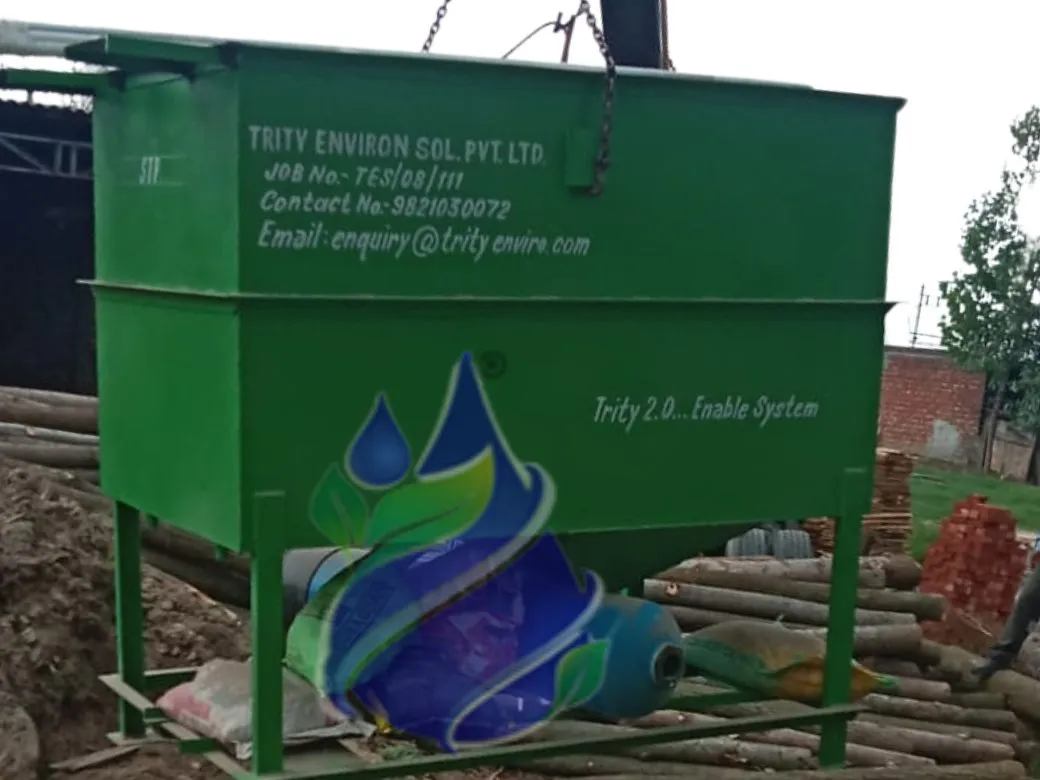
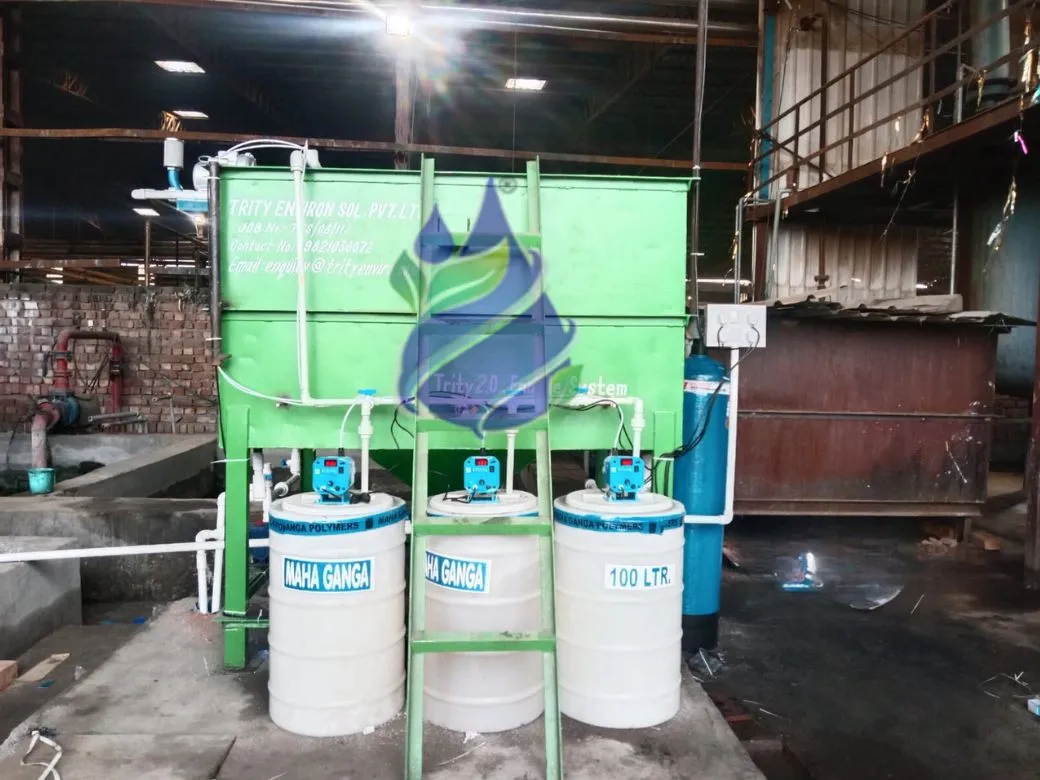
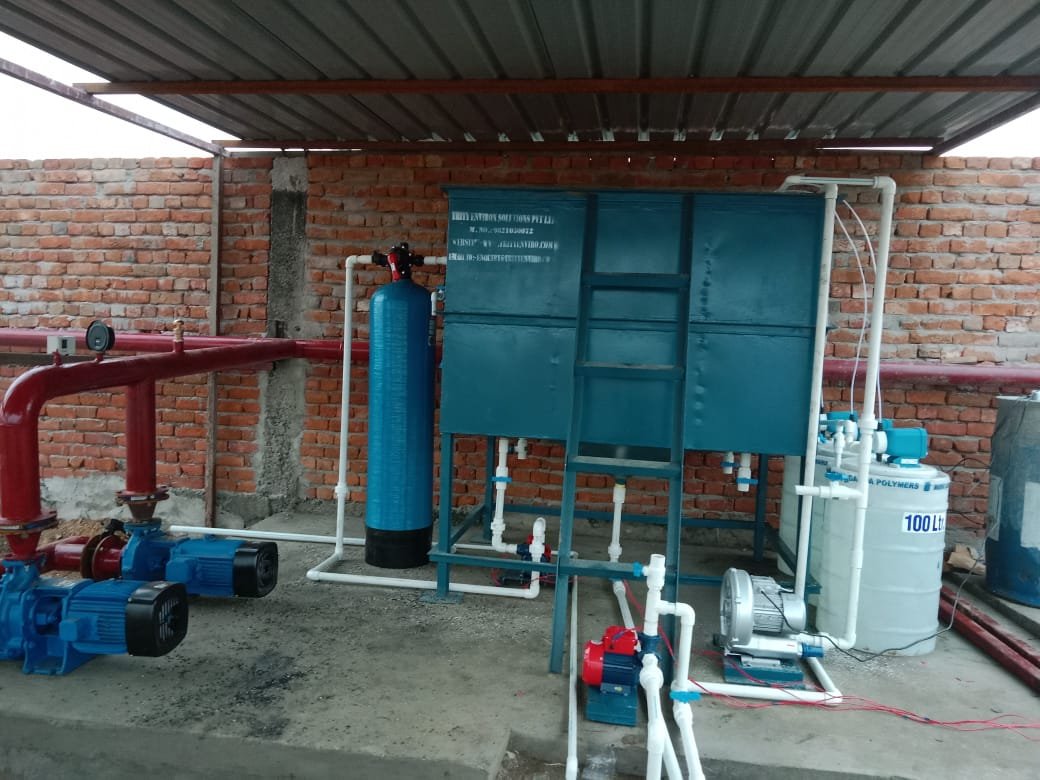
Featured Turnkey Installations




Need a Custom Water or Wastewater Treatment Solution?
Our engineering team can help design the right system for your capacity, industry, and compliance requirements.