
 ISO 9001:2015 & QCI Approved
Bubble Air Diffuser Manufacturer in India
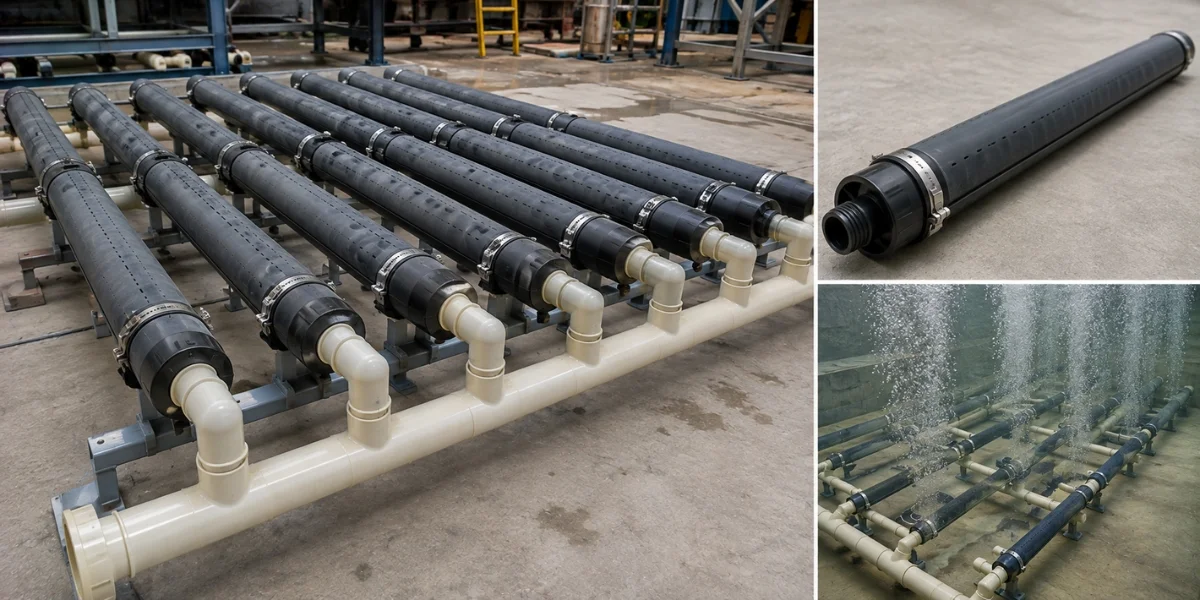
Trity Environ Solutions is a trusted bubble air diffuser manufacturer in India, engineering EPDM fine bubble disc and tube diffusers that deliver 20 to 35 percent Standard Oxygen Transfer Efficiency per meter of submergence. Our diffusers cut blower energy costs while supporting stable biological treatment, with pan India installation support.
SPCB / CPCB Norm Compliant
Heavy Fabrication
The Component That Decides Your Blower Electricity Bill
Aeration is the single most energy-intensive process in any wastewater treatment plant, and the diffuser you choose directly determines how much of that energy actually turns into dissolved oxygen versus wasted air. A bubble air diffuser releases pressurised air as fine or coarse bubbles at the tank bottom, and fine bubble EPDM diffusers achieve dramatically higher oxygen transfer efficiency than coarse bubble alternatives, cutting blower energy consumption by 30 to 50 percent for the same treatment outcome. Trity Environ Solutions supplies diffusers for STP plant installation projects and ETP aeration tanks, with technical assistance on layout density and airflow configuration during design.
Looking to cut aeration energy costs or upgrade an underperforming diffuser grid? Request a free technical assessment and our engineering team will size the right diffuser layout for your tank.
WHY THIS SYSTEM?
Key Benefits of Bubble Air Diffuser Manufacturer in India
Engineered for high oxygen transfer efficiency, lower blower energy consumption, and long EPDM membrane life.
High SOTE Performance
Delivers 20 to 35 percent Standard Oxygen Transfer Efficiency per meter of submergence, roughly triple what coarse bubble diffusers achieve at the same depth.
30 to 50% Lower Blower Energy
Cuts blower energy consumption by 30 to 50 percent versus surface aerators, since fine bubbles transfer oxygen far more efficiently per unit of air supplied.
Anti-Backflow Membrane Design
Self-closing EPDM membrane slits prevent wastewater from backing into the diffuser body when blowers stop, protecting internal components during shutdown cycles.
Long EPDM Membrane Life
EPDM membrane material resists ozone, heat, and chemical degradation, maintaining consistent pore size and airflow distribution across a 5 to 10 year service life.
Modular, Retrofit-Friendly Layout
Modular saddle-mount design fits standard lateral piping layouts, simplifying grid expansion and retrofit into existing aeration tanks without major civil rework.
Grid Layout Matters as Much as Diffuser Quality
Two tanks fitted with identical diffusers can perform very differently based purely on grid density and placement, since poor layout creates dead zones and short-circuiting that waste blower capacity regardless of individual diffuser efficiency. Trity Environ Solutions calculates oxygen demand from your actual BOD load before finalizing grid layout, rather than applying a generic diffuser count per tank volume.
Membrane Fouling Happens Gradually, Then Performance Drops Fast
Biological and mineral fouling accumulates on EPDM membranes slowly over months, and SOTE can decline noticeably before it becomes visually obvious during a routine inspection. Trity Environ Solutions backs every diffuser installation with a cleaning schedule, replacement membrane supply, and an Annual Maintenance Contract, so oxygen transfer efficiency stays close to design values. Talk to our team about AMC coverage for your aeration system.
Diffusers Rarely Work in Isolation From the Rest of the Tank
Aeration efficiency depends on more than the diffuser itself, since a poorly sized equalization tank upstream sends unpredictable shock loads that no diffuser grid can compensate for. Downstream, tube settler media in the clarifier stage works alongside well-aerated biology to deliver consistent effluent quality, and floating biofilm carrier media placement depends directly on diffuser mixing energy to keep carriers properly suspended.
SYSTEM CONFIGURATIONS
Types of Bubble Air Diffuser Manufacturer in India Configurations
Configurations selected to match your tank geometry, oxygen demand, and application type.
Fine Bubble Disc Diffuser
EPDM membrane discs mounted on a base plate deliver uniform fine bubble coverage across wide tank areas, the standard choice for STP aeration and SBR tanks.
Tube Diffuser
Cylindrical EPDM units cover more linear tank length per connection, well suited to narrow aeration basins requiring a continuous bubble curtain pattern.
Coarse Bubble Diffuser
Larger orifice diffusers prioritize mixing energy over oxygen transfer, used in anoxic zones and equalization tanks to keep solids in suspension.
MBBR-Matched Diffuser Grid
Diffuser grids matched specifically to MBBR carrier movement requirements, delivering both the oxygen and turbulence needed to keep biofilm media suspended.
STEP-BY-STEP WORKFLOW
How the Bubble Air Diffuser Manufacturer in India Process Works
A fine bubble aeration process engineered for consistent oxygen transfer efficiency.
01
Pressurised Air Supply
Blowers deliver pressurised air through lateral piping to the diffuser grid installed at the tank bottom.
02
Membrane Release
Air passes through EPDM membrane slits, breaking into fine or coarse bubbles depending on diffuser type and membrane design.
03
Oxygen Transfer
Bubbles rise through the liquid column, transferring dissolved oxygen to wastewater as they ascend, fuelling biological treatment.
04
Anti-Backflow Closure
When airflow stops, membrane slits close automatically, preventing wastewater from entering and fouling the diffuser body.
COMMON INQUIRIES
Frequently Asked Questions
Q1. What is the difference between a fine bubble and coarse bubble diffuser?
Fine bubble diffusers produce bubbles under 3 mm in diameter with much higher oxygen transfer efficiency, while coarse bubble diffusers produce larger bubbles suited to mixing rather than oxygen transfer.
Q2. How long do EPDM membrane diffusers last?
With proper operation and periodic cleaning, EPDM membrane diffusers typically last 5 to 10 years, with actual life depending on wastewater chemistry and maintenance frequency.
Q3. Can diffusers be retrofitted into an existing aeration tank?
Yes, diffuser systems are compatible with standard lateral piping configurations and can generally be adapted to existing tank geometries with proper engineering assessment.
Q4. How many diffusers does an aeration tank need?
The count depends on tank volume, oxygen demand calculated from BOD load, target dissolved oxygen levels, and submergence depth, which our engineering team calculates during design.
Q5. What is SOTE and why does it matter?
SOTE stands for Standard Oxygen Transfer Efficiency, the percentage of oxygen transferred per meter of submergence under standard conditions. Higher SOTE means less air is needed for the same oxygen demand, directly cutting blower energy cost.
Q6. Are diffusers suitable for MBBR aeration tanks?
Yes, fine bubble diffusers are integral to MBBR systems, providing both the oxygen for biological treatment and the mixing energy needed to keep carrier media in suspension.
CATALOGUE
Related Engineering Products
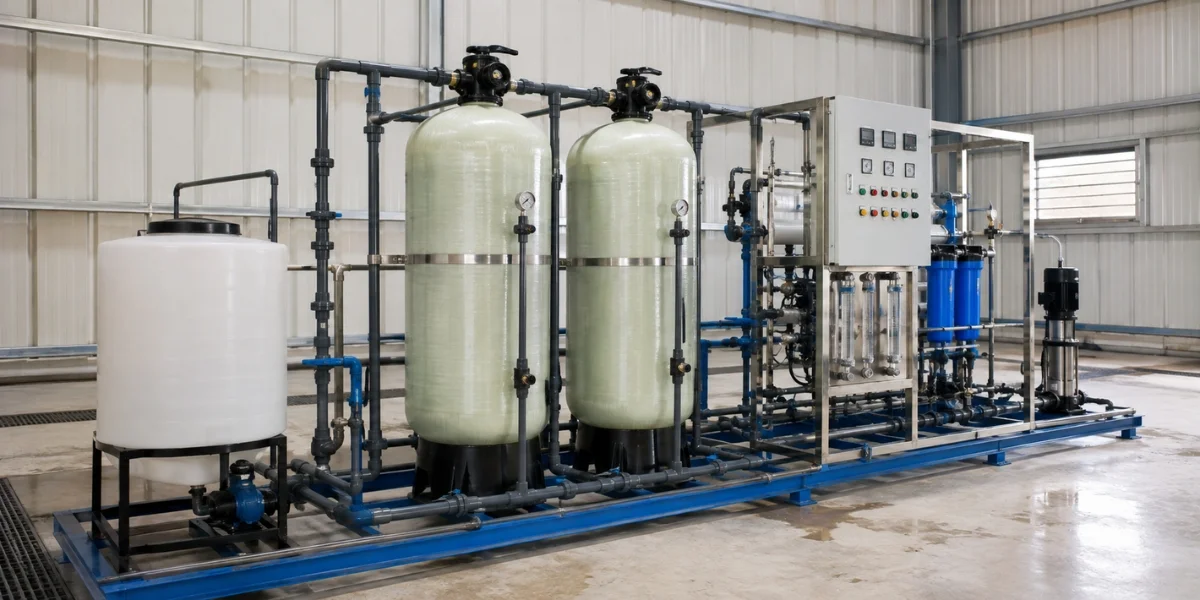
RO & Water Recycling Plant Manufacturer in India
Trity Environ Solutions manufactures RO and water recycling systems for industries and commercial facilities, engineered for reliable purity and reuse.
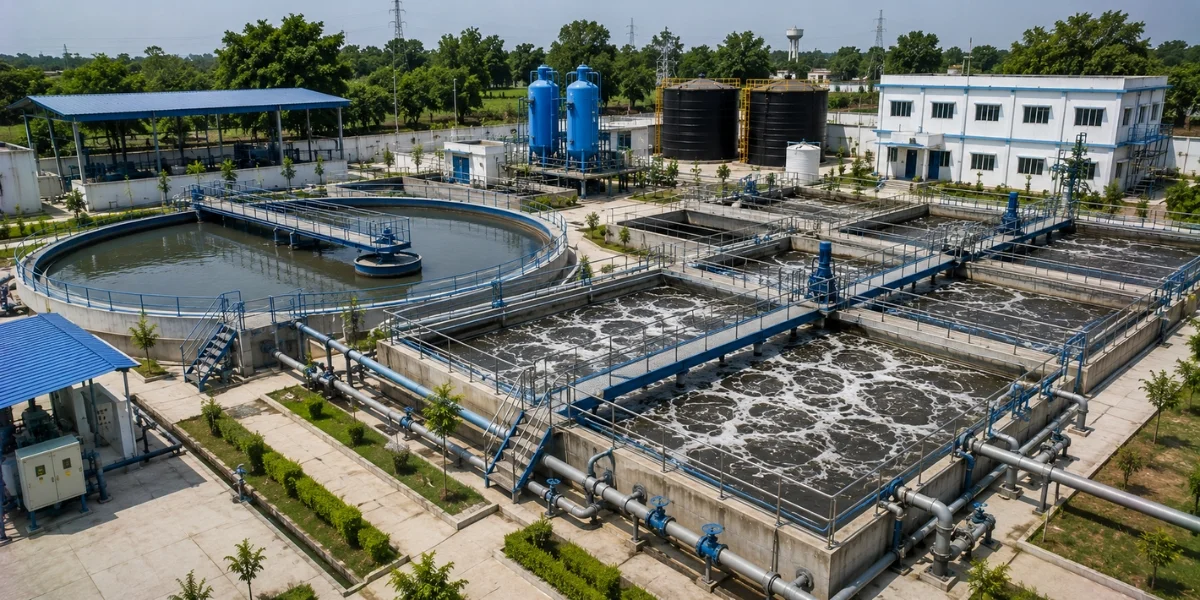
Tertiary Treatment Plant Manufacturer in India
Trity Environ Solutions manufactures tertiary treatment plants that polish treated water beyond secondary treatment, enabling genuine reuse and stricter discharge compliance.
Wastewater Recycling System Manufacturer in India
Trity Environ Solutions manufactures wastewater recycling systems using UF and RO technology, turning treated wastewater into reuse-grade water for cooling, flushing, and gardening.
PAN-INDIA CAPABILITIES
Regional Solutions & State Coverage
TECHNICAL KNOWLEDGE
Related Insights & Engineering Guides
PROVEN EXCELLENCE
Featured Turnkey Installations




Need a Custom Water or Wastewater Treatment Solution?
Our engineering team can help design the right system for your capacity, industry, and compliance requirements.